Coastal Strawberry
Its potential in regenerative agriculture is notable. Primarily, it functions as a groundcover, suppressing weeds and preventing soil erosion, especially in perennial systems. Its low-growing habit makes it an excellent understory plant in agroforestry or a living mulch in orchards, contributing to a diverse polyculture layer. Although not a primary nitrogen fixer, its dense root system helps build soil structure and organic matter, enhancing water infiltration and carbon sequestration. *Fragaria chiloensis* also offers significant benefits for pollinators, providing early-season nectar and pollen. Limited farmer experiences suggest its resilience in various conditions, though establishment can require patience. Integrating it as a groundcover alongside practices like no-till farming and rotational grazing can further amplify its soil-building and biodiversity-enhancing contributions. While coverage in our knowledge base is limited, the above represents documented uses in regenerative systems.
For a full botanical description see: Wikipedia↗(opens in new window) (external link)
Regenerative Quick Profile
All recommendations assume integrated, regenerative practices—not conventional inputs.
Climate & Soil Fit
Climate: Tropical Rainforest, Tropical Monsoon, Tropical Savanna, Hot Semi-Arid (Steppe), Cold Semi-Arid (Steppe), Hot Desert, Cold Desert, Humid Subtropical, Oceanic (Maritime Temperate), Hot-Summer Mediterranean, Warm-Summer Mediterranean, Monsoon-Influenced Humid Subtropical, Subtropical Highland, Hot-Summer Continental, Warm-Summer Continental, Subarctic, Monsoon-Influenced Hot-Summer Continental, Tundra
Zones: USDA 4-9, Australian Zones 3-5
Optimal Soil: Loam Soil
System Role & Functions
Primary: Cover Crop System
Secondary: Pollinator Support, Cash Crop With Services
Key Benefits: Low maintenance
Management Level
Experience: Advanced
Maintenance: Very low maintenance - This resilient plant thrives with minimal intervention, naturally managing its fertility through compost and mulch, and requiring little pest management due to its robust integration into the ecosystem.
Value Streams
- Cover crop (soil investment)
- Soil building and erosion control
- Pollinator habitat and support
Know the Debate
- Groundcover suppresses weeds and prevents erosion effectively.
- Enhances soil structure & water infiltration.
- Provides early season pollinator resources.
- Establishes dense cover in 1-2 seasons.
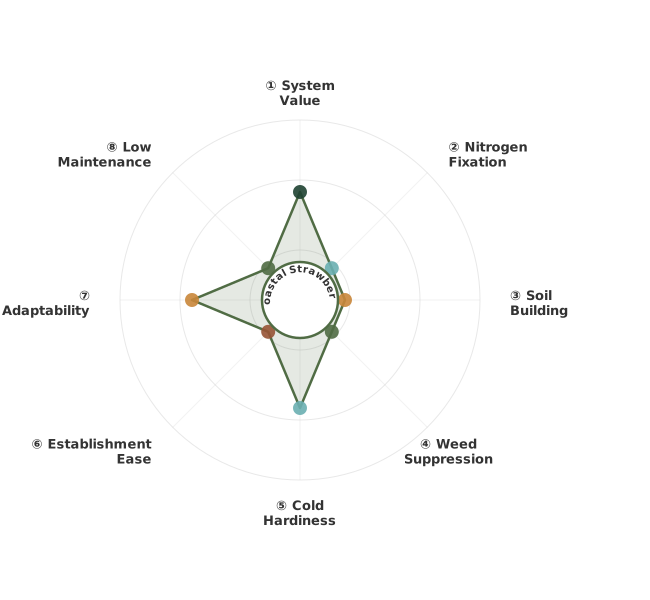
Regenerative Trait Ratings
How These Traits Are Calculated
Trait dimensions are ordered clockwise starting from the top of the chart (12 o'clock position):
1. System Value
Ecosystem service stacking across nitrogen, carbon, water, biodiversity
WHAT: Synthesizes the compounding value of multiple ecosystem services delivered simultaneously—nitrogen fixation, soil organic matter building, pollinator support, erosion control, and water infiltration improvement. This is the total regenerative impact beyond single-function metrics.
WHY: The highest-value cover crops deliver 3-5 significant ecosystem services at once. A legume that fixes nitrogen, builds biomass, supports pollinators, and improves water infiltration provides $150-300/acre in combined benefits versus $30-60 for single-function covers. This service stacking is the core principle of regenerative agriculture.
HOW: Scored via LLM synthesis of economics data, timeline benefits, and trait combinations. Exceptional (3.0): 4-5 major services stacked with strong economic value ratios. Typical (2.0): 2-3 moderate services. Limited (1.0): Single-function covers with minimal service stacking. Considers seed cost relative to benefit value.
2. Nitrogen Fixation
Biological nitrogen production via legume root nodule bacteria
WHAT: Measures the ability to convert atmospheric nitrogen (N₂) into plant-available ammonia through symbiotic bacteria in root nodules. Legumes form partnerships with rhizobium bacteria that fix 60-150 lbs N/acre/year, reducing or eliminating synthetic fertilizer needs for following crops.
WHY: Nitrogen is the most expensive fertilizer input in crop production ($0.50-1.00/lb). Cover crops with exceptional nitrogen fixation can provide $60-150/acre worth of fertility while building soil organic matter. This biological process also reduces groundwater contamination from nitrogen runoff and lowers farm carbon footprint.
HOW: Ratings based on annual nitrogen fixation capacity and reliability across soil conditions. Exceptional (3.0): Legumes like hairy vetch, crimson clover, and field peas fixing >100 lbs N/acre/year. Typical (2.0): Moderate fixers like red clover at 60-100 lbs N/acre/year. Limited (1.0): Non-legumes (grasses, brassicas) with zero fixation capacity.
3. Soil Building
Weighted: biomass production (60%) + root system depth (40%)
WHAT: Combines above-ground biomass production with root depth to measure total soil organic matter contribution. Biomass provides surface organic matter, while deep roots deposit carbon at depth and break up compaction layers.
WHY: Soil organic matter is the foundation of regenerative agriculture, improving water retention, nutrient cycling, and biological activity. Each 1% increase in soil organic matter holds an additional 20,000 gallons of water per acre and represents $500-1,000 in fertility value. Deep roots access subsoil nutrients and create channels for water infiltration.
HOW: Weighted formula prioritizes biomass production (60% weight) for immediate organic matter contribution, with root depth (40% weight) for long-term soil structure. Exceptional (3.0): High-biomass crops with deep roots like cereal rye (8+ tons biomass, 5+ ft roots). Typical (2.0): Moderate on both factors. Limited (1.0): Low biomass or shallow roots.
4. Weed Suppression
Physical competition through rapid establishment and dense growth
WHAT: Measures the ability to outcompete weeds through rapid germination, aggressive early growth, and dense canopy formation. Physical smothering and light competition reduce weed pressure without herbicides.
WHY: Weed management is a major labor and cost burden for farmers. Cover crops that effectively suppress weeds reduce herbicide costs ($20-60/acre), decrease cultivation passes (fuel + labor), and provide clean seedbeds for cash crops. This is especially valuable in organic systems where herbicide options are limited.
HOW: Ratings based on germination speed, tillering density, and canopy closure timing. Exceptional (3.0): Fast-establishing, dense-tillering crops like cereal rye, oilseed radish that close canopy within 3-4 weeks. Typical (2.0): Moderate establishment and coverage. Limited (1.0): Slow-establishing or sparse crops that allow weed competition.
5. Cold Hardiness
Winter survival for fall planting and spring green manure value
WHAT: Measures tolerance to freezing temperatures and ability to survive winter conditions. Winter-hardy cover crops can be fall-planted, overwinter as living mulch, and provide early spring growth before cash crop planting.
WHY: Fall-planted winter-hardy covers extend the growing season into unused months, capturing solar energy and preventing erosion during wet periods. Spring green manure from overwintered covers provides early nitrogen and biomass. This timing flexibility is critical in cold climates with short growing seasons.
HOW: Ratings based on minimum survival temperature and winter active growth. Exceptional (3.0): Winter-hardy crops like cereal rye, hairy vetch, crimson clover surviving to -20°F with active growth in spring. Typical (2.0): Moderate cold tolerance. Limited (1.0): Warm-season crops like buckwheat, cowpea killed by first frost.
6. Establishment Ease
Germination speed, soil requirement flexibility, planting window breadth
WHAT: Measures how easily the cover crop establishes from seed, including germination speed, tolerance for variable soil conditions, and flexibility in planting timing. Easy establishment means reliable stands without intensive management.
WHY: Difficult-to-establish covers increase risk of stand failure, wasted seed costs, and reduced benefits. Easy establishment crops tolerate late planting, poor seedbed preparation, and variable moisture—critical when cover cropping windows are narrow between cash crops. Reliable establishment ensures consistent soil building and weed suppression benefits.
HOW: Ratings based on days to emergence, soil condition sensitivity, and planting window breadth. Exceptional (3.0): Fast germinators like buckwheat (3-5 days) and cereal rye (5-7 days) with wide planting windows. Typical (2.0): Moderate establishment requirements. Limited (1.0): Slow or finicky establishers requiring precise conditions.
7. Adaptability
Weighted: climate tolerance (60%) + multi-benefit versatility (40%)
WHAT: Combines climate adaptability (temperature and rainfall range) with multi-benefit versatility (diverse ecosystem services) to measure overall system flexibility. High adaptability means the cover works across farm regions and provides multiple functions.
WHY: Farmers need cover crops that work reliably across diverse fields and provide stacked benefits. Climate-adaptable covers reduce risk in variable weather, while multi-benefit crops deliver nitrogen fixation + pollinator support + forage value simultaneously. This versatility maximizes return on cover crop investment.
HOW: Weighted formula prioritizes climate tolerance (60% weight) for geographic reliability, with multi-benefit value (40% weight) for functional stacking. Exceptional (3.0): Wide climate range + multiple significant benefits. Typical (2.0): Moderate on both factors. Limited (1.0): Narrow climate range or single-function crops.
8. Low Maintenance
Inverted from maintenance intensity—low inputs mean high scores
WHAT: Measures minimal input requirements for successful cover cropping. Low-maintenance covers require no irrigation, minimal fertility, easy termination, and tolerate variable management timing.
WHY: Cover crops compete for resources with cash crops in tight rotations. Low-maintenance covers fit easily into existing systems without adding labor, equipment, or input costs. Easy termination is especially critical—covers that are difficult to kill can become weeds and delay cash crop planting.
HOW: Inverted score from maintenance intensity trait (4.0 minus raw score). Exceptional (3.0): Self-sufficient crops like cereal rye, field peas requiring no irrigation or fertility, easily terminated by mowing or winter-kill. Typical (2.0): Moderate input needs. Limited (1.0): High-maintenance crops needing irrigation, heavy fertility, or difficult termination (herbicides, multiple tillage passes).
Ratings are based on documented performance in regenerative systems, not conventional high-input scenarios. All traits assume integrated management practices focused on soil health and ecosystem services.
1
Climate Suitability Assessment
Will this plant thrive in your climate?
Climate Suitability Assessment
Will this plant thrive in your climate?
Köppen Zone: Af (Tropical Rainforest), Am (Tropical Monsoon), Cfa (Humid Subtropical), Csb (Warm-Summer Mediterranean)
USDA Zone: 8a, 9a, 10a, 11a, 12a
Australian Zone: temperate
EU Climate Region: atlantic
Coastal Strawberry thrives in climates with mild winters and moderate summers, offering 180-240 frost-free days and optimal temperatures between 50-75°F (10-24°C). These conditions are met in Köppen zones Cfb, and regional zones like USDA 5b-8b, Australian temperate, and EU Atlantic. In these regions, establishment is highly reliable, with plants readily forming dense ground cover and persisting for multiple years as a cover crop. Fruit production is consistent and of good quality, supporting its function as a cash crop alongside its ecological services. Minimal supplemental irrigation is typically needed due to adequate rainfall, and disease pressure is low. This allows for high establishment success rates (>85%) and minimal management inputs, making it an excellent choice for regenerative agriculture systems seeking reliable ground cover, pollinator support, and a supplementary income stream.
Köppen Zone: Aw (Tropical Savanna), Cfb (Oceanic (Maritime Temperate)), Csa (Hot-Summer Mediterranean), Cwa (Monsoon-Influenced Humid Subtropical)
USDA Zone: 7a
Australian Zone: subtropical
Coastal Strawberry can perform adequately in zones with longer growing seasons but potentially warmer summers or slightly colder winters, such as Köppen Cfa, Cfc, and regional zones like USDA 4b-5a, 9a-10b, Australian subtropical, and EU Mediterranean. These areas typically offer 120-180 frost-free days, but summer heat above 80°F (27°C) or humidity can increase disease susceptibility and require more diligent water management. While establishment is generally good (70-85%), perennial persistence may be reduced compared to ideal zones, and fruit yields can be moderate. Supplemental irrigation is often necessary during dry spells, and proactive disease management might be required. These factors increase management inputs and costs, but the plant still provides valuable cover cropping benefits, pollinator support, and some cash crop potential, making it economically viable with careful planning and adaptation.
Köppen Zone: ET (Tundra), BSh (Hot Semi-Arid (Steppe)), BSk (Cold Semi-Arid (Steppe)), BWh (Hot Desert), BWk (Cold Desert), Cwb (Subtropical Highland), Dfa (Hot-Summer Continental), Dfb (Warm-Summer Continental), Dfc (Subarctic), Dwa (Monsoon-Influenced Hot-Summer Continental)
USDA Zone: 2a, 3a, 3b, 4a, 5a, 5b, 6a
Coastal Strawberry is not recommended for zones with extreme cold winters or very short growing seasons, including Köppen Dfb, Dfc, and regional zones like USDA 1a-4a, and EU Boreal. These areas experience winter temperatures far below the plant's survival threshold (below 0°F/-18°C) and/or growing seasons too short for meaningful establishment and productivity. For instance, in USDA zones 1-3, winter kill is nearly guaranteed, rendering perennial cover crop function impossible and cash crop production unreliable. In Dfb/Dfc zones, short seasons and cold winters prevent adequate growth and overwintering. While technically possible to grow in a greenhouse, this is impractical for regenerative agriculture. Establishment success rates drop below 70%, and the plant would likely fail to establish or persist, requiring constant replanting or intensive, uneconomical protection. Alternative, more cold-hardy cover crops are significantly better suited for these challenging environments.
Note: Zones listed above represent climates where this plant can produce reliably with reasonable management. Climate zones not mentioned would require intensive climate modification (greenhouses, extensive infrastructure) and are not economically viable for regenerative agriculture purposes.
2
Soil Suitability Assessment
Which soil types work best for this plant?
Soil Suitability Assessment
Which soil types work best for this plant?
Loam Soil
This plant thrives in these soil types without requiring amendments or remediation. Natural soil conditions support optimal growth and productivity.
Acidic Soil, Alkaline Soil, Clay Soil, Desert Soil, Rich Soil, Rocky Soil, Sandy Soil
This plant performs acceptably in these soil types with moderate, manageable remediation such as pH adjustment, compost addition, or drainage improvement. The required amendments are practical and cost-effective for regenerative agriculture.
Saline Soil, Wet Soil
Growing this plant in these soil types would require impractical remediation such as complete soil replacement, extensive amendments, or cost-prohibitive infrastructure. These conditions are not economically viable for regenerative agriculture.
Note: Soil suitability assessments focus on remediation requirements. "Ideally Suited" means the plant generally thrives without the need for substantial amendments, "Adequate" means manageable remediation (lime, compost, mulch), and "Not Recommended" means impractical soil changes would be required. Climate factors like rainfall and temperature also influence success.
3
Seasonal Considerations
Planting timing, growth duration, and harvest windows
Seasonal Considerations
Planting timing, growth duration, and harvest windows
For coastal strawberry, timing is key to maximizing its benefits as a cover crop. Spring planting is viable once the soil has warmed sufficiently after the last expected frost, allowing for good establishment before summer heat. Aim for planting in early spring for maximum growth before fall.
Fall planting is most effective when done in late summer or early autumn, at least several weeks before the first expected frost. This allows Fragaria Chiloensis to establish a strong root system before winter dormancy. In colder zones (Dfb, Dfc), it can overwinter, providing valuable ground cover and soil protection. Termination should occur in spring, several weeks before planting your main cash crop, to allow the soil to settle and nutrients to become available. Peak biomass is typically achieved in the late spring or early summer following a fall planting.
While not ideal for a true summer cover crop in hot climates, it can tolerate some summer conditions if adequately watered. Consider it for winter cover in Cfa, Cfb, and Cfc zones, planting in early fall to ensure overwinter survival and early spring growth for incorporation. Its ability to thrive in cooler coastal conditions makes it a resilient choice for extending the growing season and improving soil health.
4
System Role & Multi-Benefit Value
Functional roles, integration strategies, and stacked benefits
System Role & Multi-Benefit Value
Functional roles, integration strategies, and stacked benefits
Functional Role
Total System Value
Coastal strawberry offers significant system value through multi-benefit stacking. Its primary contribution is as a resilient, low-growing groundcover that enhances soil health by preventing erosion and retaining moisture. This living mulch reduces the need for imported organic matter, contributing to a closed-loop system. As a pollinator attractant, it supports beneficial insect populations, which can improve pollination for other crops and natural pest control. While not a nitrogen fixer or a significant shade provider, its dense growth habit is effective for weed suppression, reducing labor and the need for herbicides. Risk diversification comes from its perennial nature and its role in stabilizing soil, making the farm more resilient to extreme weather events. The direct harvest of its fruit, though often secondary in regenerative systems compared to its ecological functions, adds a valuable, albeit potentially niche, food production component.
Integration Characteristics
Multi-Benefit Value: Adequate - Offers edible fruit and excellent erosion control, while its spreading habit improves soil structure and its living mulch supports soil biodiversity and moisture retention.
5
Management & Care Requirements
Integration guidance, maintenance needs, and care practices
Management & Care Requirements
Integration guidance, maintenance needs, and care practices
How to Integrate This Plant
Coastal strawberry (Fragaria chiloensis) can be integrated into regenerative systems primarily as a groundcover and erosion control agent. Its roles include providing living mulch to suppress weeds, retain soil moisture, and prevent erosion, especially on slopes or in high-traffic areas. It can also serve as a pollinator attractant, drawing beneficial insects to the farm ecosystem. Compatible practices include food forests, where it can act as a lower-story perennial groundcover, and potentially alley cropping systems as a living mulch between tree rows. It can also be used in hedgerows for its groundcover benefits and pollinator support. Contribution to the system begins in Year 1 with groundcover establishment and erosion control. By Year 5, it will provide robust weed suppression and significant pollinator support. Beyond its direct harvest value (if cultivated for fruit), its multi-benefit stacking includes soil health improvement, increased biodiversity through pollinator attraction, and reduced need for external inputs like mulch and herbicides.
Integration Practices & Management
Information regarding the specific integration methods of *Fragaria chiloensis* within regenerative agriculture systems is limited within the provided knowledge base. While the plant is mentioned, detailed insights into establishment techniques such as seeding rates, optimal timing, companion planting strategies, or its role in no-till versus minimal tillage systems are not elaborated upon. Similarly, the knowledge base does not offer specific guidance on how *Fragaria chiloensis* is integrated with grazing practices, including mob grazing, rotational systems, or the timing and duration of grazing and rest periods. Termination strategies, like natural winterkill, grazing down, crimping, mowing, or herbicide use, are also not detailed. Furthermore, management considerations such as fertility needs, competition control, succession planning, and its integration with cash crops through relay cropping, intercropping, or rotation sequences are absent from the available texts. Consequently, practical farmer experiences and direct insights into the application of *Fragaria chiloensis* in regenerative farming practices cannot be extracted from this knowledge base.
Management Profile
Maintenance Intensity: Ideally Suited - This resilient plant thrives with minimal intervention, naturally managing its fertility through compost and mulch, and requiring little pest management due to its robust integration into the ecosystem.
6
Economics & Value Streams
Direct harvest, system benefits, ecosystem services, and risk diversification
Economics & Value Streams
Direct harvest, system benefits, ecosystem services, and risk diversification
Comprehensive economic analysis including direct harvest value, system enhancement contributions, ecosystem services, value timeline, and risk diversification strategies.
Cover Crop Investment
| Metric | Value |
|---|---|
| Seed Cost | $40-80/acre $99-198/ha |
| Termination Cost | 20-50 49-124 |
| Biomass Production | 2-5 4-11 |
| N Fixation Value | N/A N/A |
| Weed Control Savings | 15-30 37-74 |
Cover crops are soil investments, not cash crops. Economics measured in soil health gains, input reduction, and subsequent crop performance. Values show direct costs and estimated benefits.
System Enhancement Value
Beyond cost recovery: soil building, nitrogen, biomass, and weed suppression
Soil Building & Weed Suppression
Coastal strawberry (Fragaria chiloensis) offers significant value beyond direct harvest by acting as a crucial pollinator support system and contributing to biodiversity. The knowledge base notes its ability to attract beneficial insects and pollinators, with its flowers providing a food source. This is particularly important in integrated farm systems where maintaining healthy pollinator populations is vital for the success of other crops. Furthermore, as a ground cover, it enhances soil health by increasing organic matter through decomposition and improving soil structure through root activity. Its rapid spread and dense mat formation help suppress weeds, reducing the need for mechanical or chemical weed control. The edible fruits also provide a supplementary food source for wildlife, further enhancing the farm's ecological function and potentially offering a small, supplementary harvest for the farmer or local community, as suggested by the potential for 'strawberry picking with neighbors'.
Erosion Control
Variable, dependent on density and area covered. Estimated 5-15% reduction in soil erosion and potential for improved moisture retention in the immediate vicinity.
Coastal strawberry (Fragaria chiloensis) contributes to windbreak and erosion control through its dense, low-growing mat formed by rapid stolon spread. As highlighted in the knowledge base, it forms a 'dense, low mat, aiding erosion control'. This ground cover effectively intercepts rainwater runoff, reducing soil displacement, particularly in areas prone to heavy rainfall following disturbances. Its ability to quickly establish and spread makes it an excellent choice for stabilizing slopes and exposed soil surfaces. While not a structural windbreak like trees, its dense foliage can offer some reduction in direct wind impact at ground level, protecting more delicate crops or seedlings from desiccation and physical damage. The low profile also means it can be integrated into existing systems without significantly impeding sunlight for other plants, while still providing valuable soil cover. Its drought resistance once established also ensures continued ground cover even during drier periods, maintaining soil integrity.
Ecosystem Service Contributions
Environmental contributions: carbon, pollinators, wildlife, and water
- Carbon Sequestration: As a low-growing perennial ground cover, Fragaria chiloensis contributes to carbon sequestration primarily through the accumulation of organic matter in the soil via its root system and decaying biomass. Its dense mat formation helps build soil carbon over time.
- Pollinator Support: High. Fragaria chiloensis produces flowers that attract and support a range of pollinators, as noted in the knowledge base.
- Wildlife Habitat: Provides habitat and a food source (fruit) for small birds, insects, and potentially small mammals.
- Water Quality: Not applicable
Value Timeline: Soil Building Process
When you'll see results: immediate soil benefits, compounding over seasons
Years 1-2
Erosion control, weed suppression, initial pollinator support (flowering), and ground cover establishment.
Years 3-5
Established ground cover with consistent erosion control, enhanced pollinator support, potential for first significant edible fruit harvest, and contribution to soil organic matter buildup.
Years 10-20
Mature, resilient ground cover system providing consistent ecosystem services, reliable supplementary fruit production, and significant contribution to soil health and biodiversity.
20+ Years
Long-term soil health benefits, continued robust ecosystem services, and potential for very long-term resilience as a ground cover.
Farm Risk Reduction
How this reduces farm risk: lower input costs and better soil resilience
- Multiple Revenue Streams: Supplementary cash crop (edible fruit), ecosystem services (pollinator support, erosion control), soil health improvement.
- Temporal Income Spread: Ongoing provision of ecosystem services (erosion control, pollinator support) with seasonal availability of edible fruit.
- Market Risk Hedge: Reduces reliance on single cash crops by providing supplementary income and valuable ecological services that enhance the productivity and resilience of other farm components. Its drought resistance once established offers a buffer against water scarcity.
7
Regenerative Suitability Details
Comprehensive trait ratings for system integration assessment
Regenerative Suitability Details
Comprehensive trait ratings for system integration assessment
Comparative ratings for this plant across key regenerative agriculture traits.
| Trait | Suitability | Explanation |
|---|---|---|
| Cold Hardiness | Adequate | Beach strawberry demonstrates moderate resilience to cold, thriving in zones 4-5 by providing robust ground cover through milder winters, while its survival in harsher conditions is supported by living mulches and soil organic matter. |
| Weed Suppression | Not Recommended | This low-growing groundcover spreads effectively via runners, building soil structure and contributing to a healthy soil food web that naturally outcompetes many weed species. |
| Nitrogen Fixation | Not Recommended | As a non-legume, beach strawberry does not fix nitrogen but excels at soil stabilization and erosion control, forming a living mulch that enhances the soil ecosystem. |
| Root System Depth | Not Recommended | Coastal strawberry possesses a shallow, spreading root system that effectively binds surface soil and enhances moisture retention, contributing to a healthy upper soil profile. |
| Biomass Production | Not Recommended | Beach strawberry is a low-growing plant that prioritizes soil stabilization and erosion control, contributing to soil health through its living mulch and root activity rather than substantial biomass. |
| Establishment Ease | Not Recommended | Establishing coastal strawberry from seed benefits from rich compost and consistent moisture management, with transplanting often used to accelerate its integration into a diverse planting system. |
| Multi Benefit Value | Adequate | Offers edible fruit and excellent erosion control, while its spreading habit improves soil structure and its living mulch supports soil biodiversity and moisture retention. |
| Climate Adaptability | Adequate | Coastal strawberry thrives in cool, coastal climates and tolerates salt spray, demonstrating resilience in zones 4-9; its adaptation to specific microclimates is enhanced by healthy soil biology and water management. |
| Maintenance Intensity | Ideally Suited | This resilient plant thrives with minimal intervention, naturally managing its fertility through compost and mulch, and requiring little pest management due to its robust integration into the ecosystem. |
Comparative System: Ratings compare plants within their economic category (e.g., cover crop nitrogen fixation compared to other cover crops, not to all plants). Individual farm conditions and management practices significantly influence actual performance.
8
Know the Debate
Integrating *Fragaria chiloensis* offers significant benefits for soil health, biodiversity, and weed suppression across various climates and scale...
Know the Debate
Integrating *Fragaria chiloensis* offers significant benefits for soil health, biodiversity, and weed suppression across various climates and scale...
Integrating *Fragaria chiloensis* offers significant benefits for soil health, biodiversity, and weed suppression across various climates and scales. It excels as a groundcover in perennial systems, orchards, and agroforestry, improving water infiltration and reducing erosion with its dense root system. While not a primary nutrient provider, it enhances nutrient cycling and organic matter build-up. Its establishment is generally consistent within 1-2 seasons in optimal conditions, though marginal environments may extend this timeline.
Does Fragaria chiloensis contribute meaningful nutrients?
Enhances availability, doesn't provide direct nutrients
Academic sources focus on soil structure and organic matter building, without quantifying direct nutrient contributions. Field experience suggests it scavenges residual nutrients and improves soil's ability to cycle what's present, reducing input needs.
Sources behind this view
-
Market gardening guide for fennel: marketing strategies, variety selection (Preludio, Feno), seed starting (late Feb/early Mar, 75-80°F), transplanting with frost protection, pest management (swallowtails, deer, rabbits), soil prep (compost, feather meal), interplanting with lettuce, spacing (8" grid), watering, harvesting, storage (fronds on vs. off), and profitability ($3-4/lb potential).
-
Effect of Cultivar and Temperature on Disease Development of Macrophomina Root Rot in Strawberry (opens in new window)
This study found: A five-year study in California looked at how different strawberry varieties and temperatures affect charcoal rot, a serious root disease. Researchers found that some strawberry plants, like 'Osceola', were very resistant, while others, such as 'Festival', were highly susceptible. The study showed that both the warmth of the soil soon after planting and the air temperature in the middle of the growing season are key drivers of how severe the disease becomes. This means that managing temperatures, especially early on, could help reduce charcoal rot. The researchers recommend continuously testing new strawberry varieties for their resistance to this disease.
-
Role of Soil Moisture in Disease Development of Charcoal Rot of Strawberries Caused by <i>Macrophomina phaseolina</i> (opens in new window)
This study found: A two-year study in California looked at how watering levels affect charcoal rot disease in strawberries, a major problem caused by a fungus called Macrophomina phaseolina. Researchers found that keeping strawberry plants too dry significantly increased plant death by 16-24% compared to watering them optimally. While the fungus did infect the plants' crowns more when they were dry, the watering levels didn't seem to affect how much the fungus infected the roots. The study suggests that maintaining consistent, optimal soil moisture is a key strategy for farmers to help prevent excessive crop loss from charcoal rot.
-
Cultivating perennial fruits in cold climates requires selecting hardy varieties and using season extension tools like hoop houses. Recommended fruits include brambles, strawberries, Juneberries, gooseberries, and currants. Cover crops can aid in establishing clean beds for fruit plantings.
Making Sense of the Differences
The primary role of *Fragaria chiloensis* is in enhancing the soil's capacity to hold and cycle nutrients through improved structure and organic matter, rather than direct nutrient provision. While field practitioners observe reduced reliance on external inputs due to its beneficial soil interactions, academic sources lack specific measurements of its nutrient output. Farmers should anticipate improved overall soil fertility and nutrient availability rather than direct fertilization benefits from this groundcover.
How quickly does Fragaria chiloensis establish dense groundcover?
Established in 1-2 seasons
Academic and field reports consistently indicate that *Fragaria chiloensis* establishes dense groundcover within 1-2 growing seasons under optimal conditions, with proper spacing and early moisture.
Sources behind this view
-
Market gardening guide for fennel: marketing strategies, variety selection (Preludio, Feno), seed starting (late Feb/early Mar, 75-80°F), transplanting with frost protection, pest management (swallowtails, deer, rabbits), soil prep (compost, feather meal), interplanting with lettuce, spacing (8" grid), watering, harvesting, storage (fronds on vs. off), and profitability ($3-4/lb potential).
-
Role of Soil Moisture in Disease Development of Charcoal Rot of Strawberries Caused by <i>Macrophomina phaseolina</i> (opens in new window)
This study found: A two-year study in California looked at how watering levels affect charcoal rot disease in strawberries, a major problem caused by a fungus called Macrophomina phaseolina. Researchers found that keeping strawberry plants too dry significantly increased plant death by 16-24% compared to watering them optimally. While the fungus did infect the plants' crowns more when they were dry, the watering levels didn't seem to affect how much the fungus infected the roots. The study suggests that maintaining consistent, optimal soil moisture is a key strategy for farmers to help prevent excessive crop loss from charcoal rot.
-
Cultivating perennial fruits in cold climates requires selecting hardy varieties and using season extension tools like hoop houses. Recommended fruits include brambles, strawberries, Juneberries, gooseberries, and currants. Cover crops can aid in establishing clean beds for fruit plantings.
Making Sense of the Differences
Establishment speed for *Fragaria chiloensis* is consistently reported as 1-2 growing seasons for dense groundcover under optimal conditions. Academic and field reports align on this timeline, with potential extensions to 3+ years in marginal environments. Key factors influencing speed include initial plant spacing, soil moisture during establishment, and the quality of the planting site. Farmers can expect relatively rapid coverage if planting is done in early spring or autumn into well-prepared, adequately moist soil with recommended densities.
9
Learn More
Why farmers use this plant and additional resources
Learn More
Why farmers use this plant and additional resources
Why Regenerative Farmers Use This Plant
Fragaria chiloensis, commonly known as the Chilean strawberry or beach strawberry, offers significant regenerative benefits when integrated into farming systems. While not a nitrogen fixer, its dense, spreading growth habit makes it an exceptional groundcover for erosion control, particularly on slopes and sandy soils. Its extensive root system, reaching depths of 12-24 inches (30-60 cm), effectively binds soil particles, preventing wind and water erosion. This robust root structure also contributes to soil aggregation, improving water infiltration and aeration, which are crucial for long-term soil health. By outcompeting weeds and providing continuous soil cover, Fragaria chiloensis significantly reduces the need for bare fallow periods, thereby increasing the effective cropping area and minimizing soil disturbance. Its vigorous growth habit can contribute 3-6 tons of dry matter per acre (6.7-13.4 metric tons/ha) annually.
Integrating Fragaria chiloensis into agricultural landscapes offers multiple system benefits beyond soil health. As a perennial groundcover, it can act as a living mulch in orchards, vineyards, and perennial vegetable systems, suppressing weeds and retaining soil moisture, thereby reducing irrigation needs by an estimated 15-25%. Its low-growing, spreading habit makes it an ideal candidate for intercropping or as a companion plant, particularly in systems where its shade tolerance is advantageous. It can also serve as a valuable component in pollinator habitats, providing early spring blooms that attract a variety of beneficial insects, including bees and hoverflies, which can then aid in pest control for nearby cash crops. Its ability to thrive in less fertile or marginal soils means it can be used to reclaim and improve degraded land, transforming it into productive ecological space. Its dense foliage and extensive root system are exceptional at scavenging residual nutrients from the soil, preventing leaching and making them available for subsequent crops.
The quantitative ecosystem benefits of Fragaria chiloensis are notable. Its dense foliage and extensive root system contribute to carbon sequestration in the soil. Its ability to form a thick mat of vegetation can improve soil water holding capacity by up to 10-30%, reducing irrigation needs and enhancing drought resilience. The continuous addition of organic matter from its decomposing foliage and roots builds soil organic matter levels, which can sequester carbon and improve the soil's water-holding capacity. This biomass also acts as a natural mulch, significantly suppressing weed competition by up to 70% compared to bare fallow, thereby reducing the need for mechanical or chemical weed control. Over a 3-5 year rotation, its biomass enriches soil organic matter by 0.5-1.5%, enhancing soil structure and water-holding capacity. Its dense root network improves soil aggregation, leading to a 15-30% increase in water infiltration rates. The decomposition of its biomass releases essential micronutrients and contributes to a more resilient soil microbial community.
Regional success stories highlight the versatility of Fragaria chiloensis. In the Pacific Northwest of the USA, it is used in silvopasture systems and along forest edges to prevent erosion and provide forage for livestock. Farmers in the region also use it as a living mulch in berry farms, interseeded into established rows after the harvest of the primary crop, providing erosion control and weed suppression over winter. In coastal regions of Europe, such as Brittany, France, it is cultivated for its edible berries and its effectiveness in stabilizing sand dunes. In the UK, it can be integrated into the understory of young orchards, providing groundcover and contributing to soil health without competing excessively with the trees, and is established in orchards or vineyards in early spring, acting as a low-maintenance groundcover that improves soil structure and supports beneficial insect populations. Australian farmers in cooler, wetter coastal areas have explored its use as a groundcover in orchards to manage soil moisture and suppress weeds in a regenerative manner. In Australian dryland systems, its drought tolerance once established makes it suitable for stabilizing vineyard rows or as a groundcover in olive groves, requiring minimal supplemental irrigation after establishment. In parts of South America, particularly Chile, it is a native species that can be integrated into agroforestry systems to enhance biodiversity and soil stability, and is used to stabilize slopes and improve soil fertility in agricultural landscapes. In New Zealand's kiwifruit orchards, it is employed as a living mulch to suppress weeds, retain soil moisture, and provide habitat for beneficial arthropods.
10
How to Integrate This Plant
Practical guidance for regenerative systems
How to Integrate This Plant
Practical guidance for regenerative systems
Establishing Fragaria chiloensis can be achieved through seed, runners, divisions, or transplants. For groundcover applications, planting density is key to rapid establishment and effective weed suppression. Transplants are recommended at a spacing of 12-18 inches (30-45 cm), which typically requires 4,000-7,000 plants per acre (9,800-17,300 plants/ha). If using runners, they can be planted in rows 18-24 inches (45-60 cm) apart, with plants spaced 6-12 inches (15-30 cm) within the row, allowing them to spread and fill in. For seeding, a rate of 0.25-1 lb/acre (0.28-1.12 kg/ha) is typically recommended, sown at a shallow depth of 0.125-0.25 inches (0.3-0.6 cm or 3-6 mm) in well-prepared soil. For optimal establishment from seed, ensure it is lightly pressed into the soil surface or covered with no more than 0.125 inches (0.3 cm) of fine soil, as seeds require light to germinate. Planting is best done in early spring (March-April in the Northern Hemisphere, September-October in the Southern Hemisphere) or early autumn (September-October in the Northern Hemisphere, April-May in the Southern Hemisphere) to allow for adequate root development before extreme temperatures. This typically results in a dense groundcover within 1-2 growing seasons.
Once established, Fragaria chiloensis requires minimal management, aligning with regenerative principles. It prefers well-drained soils and benefits from consistent moisture, especially during the first growing season, with approximately 1-1.5 inches (2.5-3.8 cm) of water per week. Fertility management should prioritize biological approaches; incorporating compost or well-rotted manure at planting provides a slow-release nutrient source. Annual compost incorporation, utilizing residue from rotational grazing, or allowing the decomposition of its own biomass will provide sufficient nutrients. Synthetic inputs should be used only as a transitional measure while building soil biology, aiming to reduce reliance by 40-60%. Its perennial nature means it does not require annual replanting, and it can live for many years, providing continuous ground cover. Mature plants can reach a height of 6-12 inches (15-30 cm) with a spread of 1-2 feet (0.3-0.6 m). Pest and disease management should focus on cultural practices such as ensuring good air circulation and avoiding overhead watering to reduce fungal issues. Companion planting with aromatic herbs can also deter common pests.
Termination and residue management for Fragaria chiloensis, when used as a cover crop or living mulch, typically involves minimal intervention due to its perennial nature and desirable groundcover characteristics. If it needs to be managed or removed to prepare for a new cash crop, the regenerative hierarchy should be followed. Natural winterkill can be effective in colder climates where temperatures consistently drop below -10°C (14°F). In milder regions, grazing with livestock, such as sheep or poultry, can effectively reduce biomass and incorporate residue into the soil surface, followed by mowing. Crimping is generally ineffective for this low-growing species compared to taller cover crops. If chemical termination is deemed absolutely necessary, it should be a last resort during a transition phase, applied after exhausting biological and mechanical methods, and timed to allow for decomposition before planting the next crop. Biomass decomposition typically takes 4-8 weeks, releasing scavenged nutrients back into the soil. If Fragaria chiloensis is being used as a living mulch, the goal is not termination but management, allowing it to persist and provide ongoing benefits. Relay or intercropping is not typically applicable as it is a perennial groundcover.