
Sea Buckthorn
Hippophae rhamnoides, commonly known as sea buckthorn, is recognized as a valuable nitrogen-fixing shrub in regenerative agriculture, particularly suited for poor, dry, and even salty soils. Its ability to fix nitrogen contributes to soil building and fertility. Studies indicate its role in soil organic carbon (SOC) sequestration, with SOC content and stocks increasing in areas where it has been used for vegetation restoration over several years. While not explicitly mentioned with rotational grazing or no-till, its soil-building and carbon sequestration benefits align with these practices. Mixed-species plantations including sea buckthorn showed less soil moisture depletion compared to monocultures, suggesting a benefit in polyculture systems. Farmer experience highlights the importance of selecting thornless varieties for ease of management and ensuring both male and female plants for fruit production. While the knowledge base provides moderate context on its soil benefits and use in restoration, further exploration into its integration with specific regenerative farming systems like agroforestry or its direct use as forage could offer broader insights.
For a full botanical description see: Plants For A Future(opens in new window) (external link)
Regenerative Quick Profile
All recommendations assume integrated, regenerative practices—not conventional inputs.
Climate & Soil Fit
Climate: Tropical Rainforest, Tropical Monsoon, Tropical Savanna, Hot Semi-Arid (Steppe), Cold Semi-Arid (Steppe), Hot Desert, Cold Desert, Humid Subtropical, Oceanic (Maritime Temperate), Hot-Summer Mediterranean, Warm-Summer Mediterranean, Monsoon-Influenced Humid Subtropical, Subtropical Highland, Hot-Summer Continental, Warm-Summer Continental, Subarctic, Monsoon-Influenced Hot-Summer Continental, Tundra
Zones: USDA 3-7, Australian Zones 2-4
Optimal Soil: Loam Soil
System Role & Functions
Primary: Nitrogen Fixer
Secondary: Cover Crop System, Cash Crop With Services
Key Benefits: Multi-benefit value, Climate adaptable, Low maintenance
Management Level
Experience: Beginner-Friendly
Maintenance: Very low maintenance - Sea buckthorn, a nitrogen-fixing shrub, flourishes in nutrient-poor and dry environments, naturally reducing the need for external fertility management or pest intervention.
Value Streams
- Nitrogen fixation
Know the Debate
- Nitrogen fixation varies from moderate to high based on conditions.
- Soil improvements and carbon sequestration occur over 5-10 years.
- Best suited for poor, dry, or salty marginal lands.
- Requires male and female plants for fruit production.
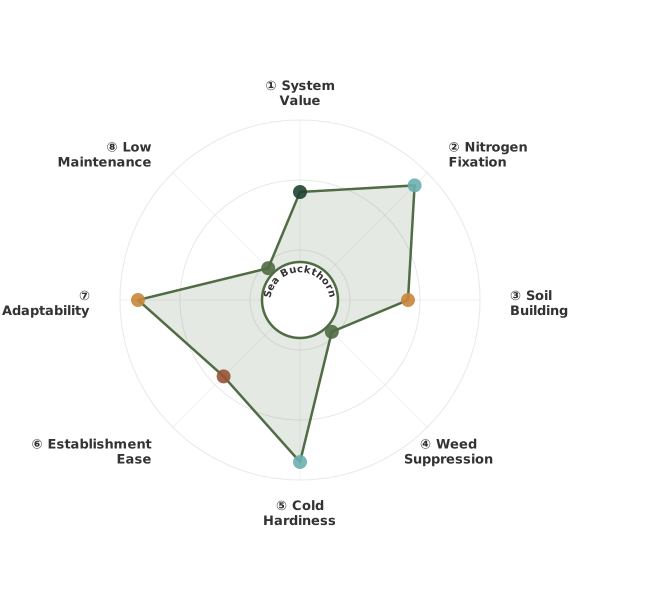
How These Traits Are Calculated
Trait dimensions are ordered clockwise starting from the top of the chart (12 o'clock position):
1. System Value
Ecosystem service stacking across nitrogen, carbon, water, biodiversity
WHAT: Synthesizes the compounding value of multiple ecosystem services delivered simultaneously—nitrogen fixation, soil organic matter building, pollinator support, erosion control, and water infiltration improvement. This is the total regenerative impact beyond single-function metrics.
WHY: The highest-value cover crops deliver 3-5 significant ecosystem services at once. A legume that fixes nitrogen, builds biomass, supports pollinators, and improves water infiltration provides $150-300/acre in combined benefits versus $30-60 for single-function covers. This service stacking is the core principle of regenerative agriculture.
HOW: Scored via LLM synthesis of economics data, timeline benefits, and trait combinations. Exceptional (3.0): 4-5 major services stacked with strong economic value ratios. Typical (2.0): 2-3 moderate services. Limited (1.0): Single-function covers with minimal service stacking. Considers seed cost relative to benefit value.
2. Nitrogen Fixation
Biological nitrogen production via legume root nodule bacteria
WHAT: Measures the ability to convert atmospheric nitrogen (N₂) into plant-available ammonia through symbiotic bacteria in root nodules. Legumes form partnerships with rhizobium bacteria that fix 60-150 lbs N/acre/year, reducing or eliminating synthetic fertilizer needs for following crops.
WHY: Nitrogen is the most expensive fertilizer input in crop production ($0.50-1.00/lb). Cover crops with exceptional nitrogen fixation can provide $60-150/acre worth of fertility while building soil organic matter. This biological process also reduces groundwater contamination from nitrogen runoff and lowers farm carbon footprint.
HOW: Ratings based on annual nitrogen fixation capacity and reliability across soil conditions. Exceptional (3.0): Legumes like hairy vetch, crimson clover, and field peas fixing >100 lbs N/acre/year. Typical (2.0): Moderate fixers like red clover at 60-100 lbs N/acre/year. Limited (1.0): Non-legumes (grasses, brassicas) with zero fixation capacity.
3. Soil Building
Weighted: biomass production (60%) + root system depth (40%)
WHAT: Combines above-ground biomass production with root depth to measure total soil organic matter contribution. Biomass provides surface organic matter, while deep roots deposit carbon at depth and break up compaction layers.
WHY: Soil organic matter is the foundation of regenerative agriculture, improving water retention, nutrient cycling, and biological activity. Each 1% increase in soil organic matter holds an additional 20,000 gallons of water per acre and represents $500-1,000 in fertility value. Deep roots access subsoil nutrients and create channels for water infiltration.
HOW: Weighted formula prioritizes biomass production (60% weight) for immediate organic matter contribution, with root depth (40% weight) for long-term soil structure. Exceptional (3.0): High-biomass crops with deep roots like cereal rye (8+ tons biomass, 5+ ft roots). Typical (2.0): Moderate on both factors. Limited (1.0): Low biomass or shallow roots.
4. Weed Suppression
Physical competition through rapid establishment and dense growth
WHAT: Measures the ability to outcompete weeds through rapid germination, aggressive early growth, and dense canopy formation. Physical smothering and light competition reduce weed pressure without herbicides.
WHY: Weed management is a major labor and cost burden for farmers. Cover crops that effectively suppress weeds reduce herbicide costs ($20-60/acre), decrease cultivation passes (fuel + labor), and provide clean seedbeds for cash crops. This is especially valuable in organic systems where herbicide options are limited.
HOW: Ratings based on germination speed, tillering density, and canopy closure timing. Exceptional (3.0): Fast-establishing, dense-tillering crops like cereal rye, oilseed radish that close canopy within 3-4 weeks. Typical (2.0): Moderate establishment and coverage. Limited (1.0): Slow-establishing or sparse crops that allow weed competition.
5. Cold Hardiness
Winter survival for fall planting and spring green manure value
WHAT: Measures tolerance to freezing temperatures and ability to survive winter conditions. Winter-hardy cover crops can be fall-planted, overwinter as living mulch, and provide early spring growth before cash crop planting.
WHY: Fall-planted winter-hardy covers extend the growing season into unused months, capturing solar energy and preventing erosion during wet periods. Spring green manure from overwintered covers provides early nitrogen and biomass. This timing flexibility is critical in cold climates with short growing seasons.
HOW: Ratings based on minimum survival temperature and winter active growth. Exceptional (3.0): Winter-hardy crops like cereal rye, hairy vetch, crimson clover surviving to -20°F with active growth in spring. Typical (2.0): Moderate cold tolerance. Limited (1.0): Warm-season crops like buckwheat, cowpea killed by first frost.
6. Establishment Ease
Germination speed, soil requirement flexibility, planting window breadth
WHAT: Measures how easily the cover crop establishes from seed, including germination speed, tolerance for variable soil conditions, and flexibility in planting timing. Easy establishment means reliable stands without intensive management.
WHY: Difficult-to-establish covers increase risk of stand failure, wasted seed costs, and reduced benefits. Easy establishment crops tolerate late planting, poor seedbed preparation, and variable moisture—critical when cover cropping windows are narrow between cash crops. Reliable establishment ensures consistent soil building and weed suppression benefits.
HOW: Ratings based on days to emergence, soil condition sensitivity, and planting window breadth. Exceptional (3.0): Fast germinators like buckwheat (3-5 days) and cereal rye (5-7 days) with wide planting windows. Typical (2.0): Moderate establishment requirements. Limited (1.0): Slow or finicky establishers requiring precise conditions.
7. Adaptability
Weighted: climate tolerance (60%) + multi-benefit versatility (40%)
WHAT: Combines climate adaptability (temperature and rainfall range) with multi-benefit versatility (diverse ecosystem services) to measure overall system flexibility. High adaptability means the cover works across farm regions and provides multiple functions.
WHY: Farmers need cover crops that work reliably across diverse fields and provide stacked benefits. Climate-adaptable covers reduce risk in variable weather, while multi-benefit crops deliver nitrogen fixation + pollinator support + forage value simultaneously. This versatility maximizes return on cover crop investment.
HOW: Weighted formula prioritizes climate tolerance (60% weight) for geographic reliability, with multi-benefit value (40% weight) for functional stacking. Exceptional (3.0): Wide climate range + multiple significant benefits. Typical (2.0): Moderate on both factors. Limited (1.0): Narrow climate range or single-function crops.
8. Low Maintenance
Inverted from maintenance intensity—low inputs mean high scores
WHAT: Measures minimal input requirements for successful cover cropping. Low-maintenance covers require no irrigation, minimal fertility, easy termination, and tolerate variable management timing.
WHY: Cover crops compete for resources with cash crops in tight rotations. Low-maintenance covers fit easily into existing systems without adding labor, equipment, or input costs. Easy termination is especially critical—covers that are difficult to kill can become weeds and delay cash crop planting.
HOW: Inverted score from maintenance intensity trait (4.0 minus raw score). Exceptional (3.0): Self-sufficient crops like cereal rye, field peas requiring no irrigation or fertility, easily terminated by mowing or winter-kill. Typical (2.0): Moderate input needs. Limited (1.0): High-maintenance crops needing irrigation, heavy fertility, or difficult termination (herbicides, multiple tillage passes).
Ratings are based on documented performance in regenerative systems, not conventional high-input scenarios. All traits assume integrated management practices focused on soil health and ecosystem services.
5
Management & Care Requirements
Integration guidance, maintenance needs, and care practices
Management & Care Requirements
Integration guidance, maintenance needs, and care practices
How to Integrate This Plant
Sea buckthorn (Hippophae rhamnoides) is a valuable non-tree shrub for regenerative systems, primarily functioning as a nitrogen fixer and soil improver. Integrate it into silvopasture, alley cropping, or food forest designs, especially on marginal lands due to its tolerance for dry and salty conditions. Its nitrogen-fixing capability enhances soil fertility for companion crops or forage. Plant thornless varieties to facilitate management and ensure pollination by planting male and female specimens. Year 1-2 contributions include soil stabilization and initial nitrogen input. By Year 3-5, it begins contributing to soil organic carbon (SOC) sequestration, as noted in studies on the Loess Plateau, and can offer early fruit production. Long-term, it builds soil health and provides habitat. Stack its benefits by using it as a windbreak, erosion control, and a source of nutrient-rich berries, thereby improving overall farm resilience and reducing reliance on external inputs.
Integration Practices & Management
Sources indicate Hippophae rhamnoides, commonly known as seabuckthorn or sea berry, is integrated into regenerative systems primarily for its nitrogen-fixing capabilities and resilience in challenging conditions. While specific establishment methods like seeding rates, timing, or tillage practices are not detailed, its adaptation to dry, salty, and poor soils suggests a role in soil improvement and erosion control, particularly in degraded areas. The plant is noted for its potential in vegetation restoration and afforestation projects, where it contributes to soil organic carbon sequestration over time, alongside species like Caragana korshinskii and Robinia pseudoacacia. Its high nitrogen-fixing capacity is highlighted, making it a valuable component for enhancing soil fertility. Practical farmer insights from the knowledge base are limited regarding integration with grazing, cash crops, or termination strategies. However, its mention in degraded plantation contexts implies it can be part of a succession plan or a component within mixed-species plantings aimed at ecological recovery and soil health improvement, especially in regions like the Loess Plateau.
Management Profile
Maintenance Intensity: Ideally Suited - Sea buckthorn, a nitrogen-fixing shrub, flourishes in nutrient-poor and dry environments, naturally reducing the need for external fertility management or pest intervention.
Sources behind this view
 Community
-
Established sea buckthorn is highly invasive with vicious thorns, making harvesting difficult. However, it fixes nitrogen, provides habitat, and can be used for juice, though berries are very sour and
Read more (opens in new window) permies.com
6
Economics & Value Streams
Direct harvest, system benefits, ecosystem services, and risk diversification
Economics & Value Streams
Direct harvest, system benefits, ecosystem services, and risk diversification
Comprehensive economic analysis including direct harvest value, system enhancement contributions, ecosystem services, value timeline, and risk diversification strategies.
Cover Crop Investment
| Metric | Value |
|---|---|
| Seed Cost | $25-60/acre $62-148/ha |
| Termination Cost | 15-40 37-99 |
| Biomass Production | 2-6 4-13 |
| N Fixation Value | N/A N/A |
| Weed Control Savings | 20-50 49-124 |
Cover crops are soil investments, not cash crops. Economics measured in soil health gains, input reduction, and subsequent crop performance. Values show direct costs and estimated benefits.
System Enhancement Value
Beyond harvest: nitrogen fixation replacing fertilizer costs
Nitrogen Fixation Value
40-90 lbs N/acre/year = $48-135/acre fertilizer replacement (assuming $0.60/lb N, based on 40-90 lbs N/acre/year range)
Sea buckthorn (Hippophae rhamnoides) is a legume that fixes atmospheric nitrogen through a symbiotic relationship with actinomycetes in its root nodules. This process significantly enriches the soil with bioavailable nitrogen, reducing the need for synthetic fertilizers. Knowledge base excerpts and highlight its role as a nitrogen-fixing shrub in various agricultural and horticultural contexts, including home orchards and cold-climate perennial systems. The ability to improve soil fertility naturally makes it a valuable component in regenerative farming systems, particularly in areas where nitrogen inputs are costly or environmentally undesirable. This nitrogen contribution directly benefits neighboring plants, promoting their growth and reducing nutrient deficiencies, thereby enhancing overall system productivity and resilience.
Additional Soil Building Benefits
Beyond nitrogen fixation and potential erosion control, sea buckthorn offers multiple system benefits. Its fruit, noted for medicinal properties (), provides a high-value cash crop with a distinct harvest window. As a cover crop system, it can improve soil structure and health. The plant's shade intolerance () suggests it thrives in open areas, potentially filling niches where other plants struggle. Its dioecious nature () implies a need for careful management for fruit production. Furthermore, its potential to form dense thickets could provide valuable habitat and foraging opportunities for wildlife and pollinators, though this needs careful consideration regarding invasiveness in specific regions ().
Erosion Control
Variable, depends on planting density and row configuration. Potential for 5-15% crop yield improvement in protected areas. Protects soil from erosion.
While not explicitly detailed as a windbreak in the provided excerpts, sea buckthorn's dense, shrubby growth habit, as suggested by its potential for monoculture formation in excerpt, indicates a capacity for wind reduction and erosion control. Its deep root system, typical of many nitrogen-fixing shrubs, would further stabilize soil, especially on slopes. In integrated farm systems, strategically planted rows of sea buckthorn could act as effective windbreaks, protecting sensitive crops, livestock, and soil from damaging winds. This protection can lead to reduced soil erosion, improved moisture retention by minimizing wind-driven evaporation, and a more favorable microclimate for adjacent agricultural activities. The physical barrier can also mitigate wind damage to crops, potentially increasing yields and reducing post-harvest losses.
Ecosystem Service Contributions
Environmental contributions: carbon, pollinators, wildlife, and water
- Carbon Sequestration: Sea buckthorn has demonstrated significant soil organic carbon (SOC) sequestration potential, with studies in China showing substantial increases in SOC stocks over time (excerpt). While sequestration rates are high, the stability of this carbon in the upper soil layers can decrease with recovery time, suggesting a need for ongoing management to maintain long-term soil health.
- Pollinator Support: Medium. While not explicitly mentioned as a primary pollinator plant, its flowering and fruiting cycle can provide supplementary resources for pollinators. The dense growth can also offer nesting and shelter opportunities.
- Wildlife Habitat: Provides potential food and shelter for wildlife, particularly birds that may consume the berries. Its dense growth habit can offer cover. However, its aggressive spread in some regions () warrants careful consideration regarding its impact on native biodiversity.
- Water Quality: Potentially beneficial in riparian areas due to its robust root system for soil stabilization and nutrient uptake, which can help mitigate nutrient runoff. However, its invasive potential in riparian zones () necessitates caution and local ecological assessment.
Value Timeline: N Fixation & Production
When you'll see results: nitrogen fixation begins immediately, harvest at maturity
Years 1-2
Initial nitrogen fixation begins, contributing to soil fertility. Establishment of ground cover, offering some erosion control. Potential for early establishment of microclimate benefits if planted in strategic locations.
Years 3-5
Nitrogen fixation becomes more substantial. First commercial or significant harvests of berries may begin. Established cover crop benefits are evident, including improved soil structure. Windbreak effects start to become noticeable.
Years 10-20
Full production capacity for berries. Significant contribution to soil organic matter and nitrogen cycling. Mature windbreak and erosion control benefits. Potential for increased wildlife habitat value.
20+ Years
Long-term soil health improvements are well-established. Continued high-value berry production. Mature ecosystem services, including enhanced biodiversity support and stable soil structure. Potential for sustainable harvesting of older woody material if managed.
Farm Risk Reduction
How this reduces farm risk: fertilizer cost hedge and rotation benefits
- Multiple Revenue Streams: High-value berry production (fresh, dried, juices, supplements), nitrogen fixation (fertilizer replacement), soil health improvement (reduced input costs, increased resilience), potential for biomass use, ecosystem services (carbon sequestration, habitat).
- Temporal Income Spread: Provides ongoing soil fertility benefits, with harvests occurring annually during the fruiting season. Ecosystem services are continuous. Long-term value is established through soil improvement and mature plant growth.
- Market Risk Hedge: Diversifies income streams beyond traditional crops. Its nitrogen-fixing ability reduces reliance on volatile synthetic fertilizer markets. Its resilience and contribution to soil health can buffer against climate variability and reduce the impact of extreme weather events.
Sources behind this view
Community
-
Established sea buckthorn is highly invasive with vicious thorns, making harvesting difficult. However, it fixes nitrogen, provides habitat, and can be used for juice, though berries are very sour and
Read more (opens in new window) permies.com -
Explains the strategic choice and management of Sea Buckthorn (seaberry) for a suburban food forest, focusing on cold climate suitability, nutritional value, propagation, and potential income.
Read more (opens in new window) permies.com
8
Know the Debate
Sea buckthorn (Hippophae rhamnoides) is a hardy, nitrogen-fixing shrub well-suited for marginal lands in various climates, from the Canadian Prairi...
Know the Debate
Sea buckthorn (Hippophae rhamnoides) is a hardy, nitrogen-fixing shrub well-suited for marginal lands in various climates, from the Canadian Prairi...
Sea buckthorn (Hippophae rhamnoides) is a hardy, nitrogen-fixing shrub well-suited for marginal lands in various climates, from the Canadian Prairies to Central Asia. Its value lies in soil building, erosion control, and wildlife habitat. While its nitrogen fixation can reduce fertilizer needs and its biomass improves soil organic matter, actual rates vary significantly with climate and management. Farmers often debate the precise nitrogen contribution and the timeline for observable soil carbon gains. Its integration into farming systems, especially silvopasture and agroforestry, requires careful planning regarding scale, labor for establishment and pruning, and the need for both male and female plants for fruit production.
How much nitrogen does sea buckthorn fix annually?
Moderate contribution (20-60 lbs N/acre)
Under typical farm conditions and varied soil health, sea buckthorn provides beneficial nitrogen contributions that reduce fertilizer needs. This range reflects observed benefits in established plants where symbiotic relationships are healthy but not always optimized as in highly controlled research settings.
Sources behind this view
Sources behind this view
 Videos & Podcasts
-
Integrates nitrogen-fixing woody plants (Siberian pea shrub, sea berry, Autumn Olive) as nurse crops in agroforestry systems using chop-and-drop mulch techniques. Plants are managed via coppicing or pollarding to provide biomass and nitrogen for fruit/nut crops.
 Research
-
Research on the Sea-Buckthorn (Hippophae rhamnoides L.) Eco-Restoration Value in Avoiding Erosion and Supporting Soil Fixation (opens in new window)
This study found: A three-year study in Romania looked at how sea-buckthorn plants (Hippophae rhamnoides L.) help prevent soil erosion and stabilize land. Researchers examined plants from two landslide areas, focusing on their extensive root systems, the number of root suckers, and swellings on the roots (nodosities). They concluded that the strong root structure and these root features play a key role in holding soil in place, making sea-buckthorn valuable for restoring eroded areas.
-
High Frankia abundance and low diversity of microbial community are associated with nodulation specificity and stability of sea buckthorn root nodule (opens in new window)
This study found: IntroductionActinorhizal symbioses are gaining attention due to the importance of symbiotic nitrogen fixation in sustainable agriculture. Sea buckthorn (Hippophae L.) is an important actinorhizal plant, yet research on the microbial community and nitrogen cycling in its nodules is limited. In addition, the influence of environmental differences on the microbial community of sea buckthorn nodules and whether there is a single nitrogen-fixing actinomycete species in the nodules are still unknown.MethodsWe investigated the diversity, community composition, network associations and nitrogen cycling pathways of the microbial communities in the root nodule (RN), nodule surface soil (NS), and bulk soil (BS) of Mongolian sea buckthorn distributed under three distinct ecological conditions in northern China using 16S rRNA gene and metagenomic sequencing. Combined with the data of environmental factors, the effects of environmental differences on different sample types were analyzed. ResultsThe results showed that plants exerted a clear selective filtering effect on microbiota, resulting in a significant reduction in microbial community diversity and network complexity from BS to NS to RN. Proteobacteria was the most abundant phylum in the microbiomes of BS and NS. While RN was primarily dominated by Actinobacteria, with Frankia sp. EAN1pec serving as the most dominant species. Correlation analysis indicated that the host determined the microbial community composition in RN, independent of the ecological and geographical environmental changes of the sea buckthorn plantations. Nitrogen cycle pathway analyses showed that RN microbial community primarily functions in nitrogen fixation, and Frankia sp. EAN1pec was a major contributor to nitrogen fixation genes in RN.DiscussionThis study provides valuable insights into the effects of eco-geographical environment on the microbial communities of sea buckthorn RN. These findings further prove that the nodulation specificity and stability of sea buckthorn root and Frankia sp. EAN1pec may be the result of their long-term co-evolution.
Highly variable/potential for higher fixation (up to 150 lbs N/acre)
In optimal conditions with well-established symbiotic relationships and specific soil types, sea buckthorn can fix higher amounts of nitrogen, potentially reducing synthetic fertilizer needs significantly. This potential is often cited in research contexts with ideal establishment.
Sources behind this view
Sources behind this view
Videos & Podcasts
-
Recommends sea berry, especially thornless Russian/Ukrainian selections, as a top nitrogen-fixing shrub for dry, salty, poor soils. Notes the need for both male and female plants for fruit production.

Research
-
Nodulation and symbiotic nitrogen fixation of Seabuckthorn (Hippophae rhamnoides L.) in the cold desert of Himachal Pradesh (opens in new window)
This study found: Seabuckthorn (Hippophae rhamnoides L.) is a valuable plant resource of cold desert, occurring between 2500 to 4000 m amsl and bearing actinorhizal association. Frankia Strain isolation was done with section culture from three ecological areas viz. Lari, Shego and Lingthi. Growth of strain body protein was the highest in S3 (Lingthi) in comparison to other strains when grown on media with different sources of C & N. Average days to nodulation was 23 and extend of nodulation was also highest in S3 (96%). Growth of Seabuckthorn seedlings after nodulation was observed highest in isolated strains in comparsion to other strains used as strandards. Results show that Frankia has no clear infective specificity to Seabuckthorn. The study concluded that it is important to select strains with high infective ability and high nitrogen fixation activity. Lingthi ecological area has shown significant impact over other strains selected and isolated. Lingthi (S3) strain selected on river side plantation of Seabuckthron is recommeded for nodulation and symbiotic nitrogen fixation in the cold desert of Himachal Pradesh.
Making Sense of the Differences
Nitrogen fixation rates for sea buckthorn vary significantly based on soil conditions, establishment success, microbial presence, climate, and management. While specific research sites show higher potential, typical farm conditions may result in lower, but still beneficial, contributions. Farmers should expect moderate nitrogen contributions (20-60 lbs/acre) once established, rather than highly variable or the highest research figures, and monitor soil tests for confirmation.
What are the soil carbon sequestration rates of sea buckthorn?
Steady soil improvement over 5-10 years
Sea buckthorn soil improvement is a long-term process, leading to increased soil organic matter over 5-10 years, particularly on degraded lands where it aids restoration. While carbon sequestration occurs, rapid gains are unlikely, and farmers should focus on visible soil health indicators and consistent management.
Sources behind this view
Sources behind this view
Videos & Podcasts
-
Integrates nitrogen-fixing woody plants (Siberian pea shrub, sea berry, Autumn Olive) as nurse crops in agroforestry systems using chop-and-drop mulch techniques. Plants are managed via coppicing or pollarding to provide biomass and nitrogen for fruit/nut crops.
Research
-
Research on the Sea-Buckthorn (Hippophae rhamnoides L.) Eco-Restoration Value in Avoiding Erosion and Supporting Soil Fixation (opens in new window)
This study found: A three-year study in Romania looked at how sea-buckthorn plants (Hippophae rhamnoides L.) help prevent soil erosion and stabilize land. Researchers examined plants from two landslide areas, focusing on their extensive root systems, the number of root suckers, and swellings on the roots (nodosities). They concluded that the strong root structure and these root features play a key role in holding soil in place, making sea-buckthorn valuable for restoring eroded areas.
-
Effect of monospecific and mixed sea-buckthorn (Hippophae rhamnoides) plantations on the structure and activity of soil microbial communities. (opens in new window)
This study found: A study on China's Loess Plateau found that planting a mix of trees, specifically sea-buckthorn with Chinese pine or oriental arborvitae, significantly improved soil health compared to planting only sea-buckthorn. The mixed stands had higher levels of soil organic matter, nitrogen, and ammonium. They also supported more total soil microbes, bacteria, and beneficial Gram-positive bacteria. The research showed that these soil improvements are linked to better soil nutrient levels and increased activity of key soil enzymes like urease, peroxidase, and phosphatase. The study suggests that combining different tree species can indirectly boost soil life and fertility by improving the soil's physical and chemical properties. Planting sea-buckthorn with Chinese pine or oriental arborvitae is recommended as a good strategy for improving soil conditions in this region.
-
Reproduction of soil fertility in adaptive landscape farming systems of the foothill zone of the RNO-Alania (opens in new window)
This study found: A study in the RNO-Alania region focused on rebuilding soil health in farming systems. They tested crop mixes like oats with peas, or oats, peas, and sunflowers, followed by buckwheat. Importantly, they found that planting green manure crops like winter rye, oilseed radish, or mustard before plowing significantly improved soil structure, increased organic matter by up to 0.05%, balanced soil acidity (making it less acidic), and boosted crop yields by 15-20%. This approach is described as resource-saving and cost-effective for improving land productivity.
Variable or declining sequestration in neglected systems
In conditions where sea buckthorn plantations become degraded or are not properly managed, soil carbon levels may not increase or could even decline. This suggests a dependency on plant health and management practices for sustained sequestration benefits.
Sources behind this view
Sources behind this view
Videos & Podcasts
-
Recommends fall/winter planting of nitrogen-fixing species like sea buckthorn for food forests, using sheet mulching and heavy mulch rings to build soil and ensure plant survival. Also provides tips for growing potatoes in instant gardens.

Research
-
Seabuckthorn (Hippophae rhamnoides L.) plantation degradation aggravates microbial metabolic C and P limitations on the Northern Loess Plateau in China. (opens in new window)
This study found: In a degraded seabuckthorn (Hippophae rhamnoides L.) plantation area on China's Loess Plateau, researchers found that as the shrubs declined (indicated by canopy dieback), the soil's ability to cycle nutrients became more limited for microbes. Specifically, the soil became more deficient in carbon and phosphorus for microbial use, which is crucial for nutrient cycling in arid and semi-arid regions. The study showed that the decline of the seabuckthorn plants themselves was a major cause of carbon limitation for microbes. Soil conditions like pH, moisture, and the amount of plant litter on the ground were also important for phosphorus limitations. This research highlights how the health of above-ground plants directly impacts the health of soil microbes and nutrient availability below ground, suggesting that managing plantation health is key for nutrient management in dry areas.
Making Sense of the Differences
Sea buckthorn demonstrably improves soil structure and organic matter over the long term, contributing to carbon sequestration, particularly on degraded lands where it aids restoration. Quantifiable carbon sequestration rates vary significantly; initial gains are modest but increase over 5-10 years as the plant matures and its root system deepens. Neglected or declining stands may show less benefit, highlighting the importance of active management. Farmers should expect steady soil improvement rather than rapid carbon credits, and monitor soil tests over 5+ years for confirmation.
9
Learn More
Why farmers use this plant and additional resources
Learn More
Why farmers use this plant and additional resources
Why Regenerative Farmers Use This Plant
Hippophae rhamnoides, commonly known as Sea Buckthorn, is a hardy, nitrogen-fixing shrub that offers multifaceted benefits within regenerative agriculture systems. Its primary regenerative value lies in its symbiotic relationship with Frankia bacteria, allowing it to fix atmospheric nitrogen. While not a legume, this capability contributes an estimated 20-40 lbs N/acre (22-45 kg/ha) annually once established, reducing reliance on synthetic nitrogen fertilizers and potentially saving farmers $10-30/acre per year, depending on current fertilizer prices. Some estimates suggest nitrogen fixation can range from 50-150 lbs/acre (56-168 kg/ha) depending on soil conditions and establishment, potentially reducing synthetic nitrogen fertilizer needs by 40-60% and saving $30-$120 per acre annually.
Sea Buckthorn produces significant above-ground biomass, with mature plants reaching 10-20 feet (3-6 m) in height and yielding 5-15 tons of biomass per acre (11-33 metric tons/ha) over several years. Upon decomposition, this biomass enriches the soil with organic matter. Its extensive root system, capable of reaching depths of 6-15+ feet (1.8-4.5+ m), plays a crucial role in soil stabilization, preventing erosion on slopes, improving water infiltration, breaking up compacted soils, and scavenging nutrients from lower soil profiles. This deep rooting also contributes to carbon sequestration, anchoring carbon in the soil for extended periods. Its thorny branches provide excellent physical protection against wind erosion, holding soil in place even in exposed landscapes, and offer excellent habitat and protection for beneficial insects and birds, contributing to on-farm biodiversity and natural pest management.
Integrating Sea Buckthorn into farming operations offers numerous system benefits. As a cover crop, component of a hedgerow, or windbreak, it effectively suppresses weeds through dense growth and competition, reducing the need for mechanical or chemical weed control. In silvopasture systems, managed grazing can incorporate its biomass into the soil, further enhancing fertility, or it can serve as browse for livestock, offering nutritious berries rich in vitamins and antioxidants. Companion planting with Sea Buckthorn can enhance the growth and health of adjacent crops by improving soil structure and nutrient availability. Its ability to thrive in marginal lands, including sandy or saline conditions, makes it an excellent candidate for land reclamation and ecological restoration projects.
The quantitative ecosystem benefits of Sea Buckthorn are substantial. Its flowers attract a variety of bees and other beneficial insects, contributing to local pollinator populations. The dense foliage and extensive root network significantly improve soil organic matter over time, with studies indicating contributions of 0.5-1.5% increase in soil organic matter in established systems over 5-10 years. This improvement in soil structure leads to enhanced water infiltration rates, reducing runoff and improving drought resilience. The shrub's vibrant orange berries are a valuable food source for a wide array of birds and other wildlife, particularly during winter months, supporting local fauna populations. By sequestering carbon in its biomass and deep root system, sea buckthorn contributes to long-term carbon storage in the soil.
Sea Buckthorn has demonstrated success across diverse agricultural landscapes. In the Canadian Prairies, farmers have established it in windbreaks and shelterbelts, benefiting from its erosion control and nitrogen-fixing properties in cereal grain rotations and dryland farming systems. European agroforestry systems, particularly in countries like Germany, Sweden, and Denmark, utilize Sea Buckthorn in mixed plantings for fruit production, ecological enhancement, and as part of organic farming systems, contributing to biodiversity and soil health. In Central Asian countries such as Kazakhstan and Kyrgyzstan, where it is native, it has long been a staple in traditional farming practices for its resilience and multiple uses, including erosion control on slopes. Its adaptability also makes it suitable for Australian dryland farming systems, where its drought tolerance and soil-binding capabilities are highly valued, and it is being explored in cooler, drier regions for its potential to improve soil structure and water retention. In New Zealand, it's being explored for its potential in riparian plantings and on marginal lands to improve soil health and biodiversity, and in United Kingdom agroforestry designs and wildlife corridors. In Brazil, it can be integrated into coffee plantations as an understory plant in the southern, cooler regions as part of agroforestry systems, providing shade, improving soil fertility through nitrogen fixation, and offering a secondary fruit crop. In the United States, it is used in the northern states (e.g., North Dakota, Minnesota) for windbreaks and conservation plantings.
Sources behind this view
Research
-
Carbon Farming: Calculation of Emitted and Sequestered Carbon for an Agricultural Enterprise Field Farming (opens in new window)
This study found: Research explores carbon farming, calculating carbon capture potential of sea buckthorn and farm operations to identify sustainable practices and reduce greenhouse gas emissions.
-
Research on the Sea-Buckthorn (Hippophae rhamnoides L.) Eco-Restoration Value in Avoiding Erosion and Supporting Soil Fixation (opens in new window)
This study found: Sea-buckthorn's extensive root system and root nodules significantly improve soil fixation and prevent erosion, making it valuable for restoring eroded lands, according to a 3-year Romanian study.