Its potential in regenerative agriculture is suggested by its inclusion in studies of organic soils and its role in water management. Excerpt indicates Juncus effusus is a component of peatland vegetation, which plays a crucial role in carbon sequestration and water regulation, key aspects of soil health in regenerative systems. Although not explicitly stated as a cover crop or forage, its presence in diverse vegetation suggests it could contribute to polyculture systems. Excerpt highlights its suitability for rain gardens, demonstrating its capacity to manage stormwater runoff, a practice that prevents soil erosion and nutrient loss, aligning with regenerative principles. Understanding its interaction with soil, particularly regarding dissolved organic carbon as noted in, could inform soil-building strategies. Further research is needed to fully define its primary uses and regenerative benefits within specific agricultural contexts such as rotational grazing or no-till systems. While coverage in our knowledge base is limited, the above represents documented uses in regenerative systems.

Regenerative Quick Profile

All recommendations assume integrated, regenerative practices—not conventional inputs.

Climate & Soil Fit

Climate: Tropical Rainforest, Tropical Monsoon, Tropical Savanna, Hot Semi-Arid (Steppe), Cold Semi-Arid (Steppe), Hot Desert, Cold Desert, Humid Subtropical, Oceanic (Maritime Temperate), Hot-Summer Mediterranean, Warm-Summer Mediterranean, Monsoon-Influenced Humid Subtropical, Subtropical Highland, Hot-Summer Continental, Warm-Summer Continental, Subarctic, Monsoon-Influenced Hot-Summer Continental, Tundra

Zones: USDA 3-9, Australian Zones 1-11

Optimal Soil: Wet Soil

System Role & Functions

Primary: Soil Remediation

Secondary: Cover Crop System, Riparian

Key Benefits: Climate adaptable, Low maintenance

Management Level

Experience: Beginner-Friendly

Maintenance: Very low maintenance - This adaptable wetland grass thrives with minimal intervention, self-sufficient in moist conditions and requiring no external fertility management or pest interventions, integrating seamlessly into the system.

Value Streams
1

Climate Suitability Assessment

Will this plant thrive in your climate?

IDEALLY SUITED

Köppen Zone: Af (Tropical Rainforest), Am (Tropical Monsoon), Cfa (Humid Subtropical), Cfb (Oceanic (Maritime Temperate))
USDA Zone: 6a, 7a, 8a, 9a, 10a, 11a, 12a
Australian Zone: Zone 1, Zone 2, Zone 3, temperate, subtropical
EU Climate Region: atlantic

Common Rush demonstrates exceptional suitability across a broad range of climates, performing optimally in regions with consistent moisture and moderate to warm temperatures. This includes humid subtropical (Köppen Cfa), oceanic (Köppen Cfb), and temperate to subtropical zones globally. In the US, USDA Zones 5 through 10 are ideal, offering sufficient growing season length and winter hardiness. Australian Zones 1, 2, and 3, along with its subtropical and temperate regions, provide excellent conditions. In Europe, the Atlantic climate is perfectly suited, and continental climates are generally adequate. Common Rush thrives with ample rainfall (30-60 inches annually) and temperatures ranging from 60-85°F (15-29°C) during its active growth period. It establishes rapidly, tolerates waterlogged soils, and is highly effective for soil remediation, erosion control, and as a cover crop in riparian and wetland areas. Its perennial nature ensures long-term benefits with minimal management, making it a highly reliable choice for regenerative agriculture in these favorable environments.

ADEQUATE

Köppen Zone: Aw (Tropical Savanna), Csa (Hot-Summer Mediterranean), Csb (Warm-Summer Mediterranean), Cwa (Monsoon-Influenced Humid Subtropical), Cwb (Subtropical Highland), Dfa (Hot-Summer Continental), Dfb (Warm-Summer Continental)
USDA Zone: 4a, 5a, 5b
EU Climate Region: continental

Common Rush is adequately suited to climates that present some limitations but still allow for successful establishment and function. This includes subpolar oceanic (Köppen Cfc), humid continental (Köppen Dfa, Dfb, Dwa), and continental European regions. In the US, USDA Zones 4a and 4b are considered adequate, offering a longer growing season but with more challenging winters. Australian Zone 3 and European continental climates provide moderate conditions where the plant can perform its roles in soil remediation and cover cropping, especially if moisture is consistent. While it may not achieve the same level of vigor or perennial persistence as in ideal zones, Common Rush can still provide significant benefits. Management considerations may include ensuring adequate moisture during drier periods and selecting sites where winter conditions are less extreme. Its tolerance for damp soils remains a key advantage, allowing it to be utilized effectively in specific niches within these broader climate categories.

NOT RECOMMENDED

Köppen Zone: ET (Tundra), BSh (Hot Semi-Arid (Steppe)), BSk (Cold Semi-Arid (Steppe)), BWh (Hot Desert), BWk (Cold Desert), Dfc (Subarctic), Dwa (Monsoon-Influenced Hot-Summer Continental)
USDA Zone: 2a, 3a, 3b

Common Rush is not recommended for climates characterized by extreme cold, very short growing seasons, or prolonged drought, making its perennial survival and functional efficacy highly questionable. This includes subarctic (Köppen Dfc, Dwc), extremely cold continental (Köppen Dfd, Dwd), and alpine (Köppen H) zones. In the US, USDA Zones 1, 2, and 3 (including 1a, 1b, 2a, 2b, 3a, 3b) are too cold for reliable perennial establishment and survival due to extreme winter lows and short growing seasons. The plant's preference for moisture is also a challenge in arid or semi-arid regions not explicitly covered but implied by the exclusion of these extreme cold zones. In these unsuitable climates, Common Rush would likely fail to establish or persist, rendering its soil remediation and cover crop functions ineffective. Alternative plants adapted to extreme cold, such as hardy grasses, sedges, or mosses, are far more appropriate for these challenging environments.

Better alternatives for these "not recommended" zones: Arctic Meadow Grass (various species) (adapted to extreme cold and short growing seasons), Sedge (various species) (tolerates cold, wet conditions and provides ground cover), Mosses (highly resilient in cold, damp environments for soil stabilization), Hairy Vetch (cold-hardy annual legume for nitrogen fixation in colder zones), Winter Rye (extremely cold-hardy cover crop for biomass and soil protection)

Note: Zones listed above represent climates where this plant can produce reliably with reasonable management. Climate zones not mentioned would require intensive climate modification (greenhouses, extensive infrastructure) and are not economically viable for regenerative agriculture purposes.

2

Soil Suitability Assessment

Which soil types work best for this plant?

IDEALLY SUITED

Wet Soil

This plant thrives in these soil types without requiring amendments or remediation. Natural soil conditions support optimal growth and productivity.

ADEQUATE

Acidic Soil, Alkaline Soil, Clay Soil, Loam Soil, Rich Soil, Sandy Soil

This plant performs acceptably in these soil types with moderate, manageable remediation such as pH adjustment, compost addition, or drainage improvement. The required amendments are practical and cost-effective for regenerative agriculture.

NOT RECOMMENDED

Desert Soil, Rocky Soil, Saline Soil

Growing this plant in these soil types would require impractical remediation such as complete soil replacement, extensive amendments, or cost-prohibitive infrastructure. These conditions are not economically viable for regenerative agriculture.

Note: Soil suitability assessments focus on remediation requirements. "Ideally Suited" means the plant generally thrives without the need for substantial amendments, "Adequate" means manageable remediation (lime, compost, mulch), and "Not Recommended" means impractical soil changes would be required. Climate factors like rainfall and temperature also influence success.

3

Seasonal Considerations

Planting timing, growth duration, and harvest windows

Juncus effusus offers versatile timing options for regenerative systems. For spring planting, sow after the last expected frost when soil temperatures consistently reach 50°F (10°C) or higher. This allows for robust establishment before the heat of summer. In the fall, planting should occur at least 4-6 weeks before the first expected frost, providing sufficient time for root development and some top growth before winter dormancy. While not typically a summer cover crop due to its preference for moisture, it can be used in very wet areas during warmer months if managed carefully.

Expect Juncus effusus to establish within 2-4 weeks under favorable conditions. It exhibits excellent overwinter survival across most of its climate zone range, acting as a dependable winter cover. Termination is best achieved in late winter or very early spring, several weeks before planting your primary cash crop, to allow for decomposition and avoid competition. Peak biomass is generally reached in the late summer or early fall after a spring planting. Consider frost-seeding in early spring for areas with reliable winter moisture and soil contact, allowing germination as conditions permit. This rush thrives in moist environments, making it ideal for areas where water management is a consideration.

4

System Role & Multi-Benefit Value

Functional roles, integration strategies, and stacked benefits

Functional Role

Total System Value

Common rush (Juncus effusus) offers significant value in regenerative agriculture by enhancing ecosystem services, particularly in water management and soil stabilization. While it doesn't offer direct harvestable products like fruits or grains, its dense root system is invaluable for preventing soil erosion and managing water runoff, as hinted at by its use in constructed wetlands or rain gardens (Excerpt 3). This helps maintain soil structure and fertility, crucial for long-term farm resilience. Furthermore, its capacity to absorb excess nutrients from water can improve water quality downstream, supporting aquatic ecosystems. By stabilizing soil and managing water, it indirectly supports the health and productivity of surrounding agricultural areas, contributing to a more robust and diversified farming system that is less vulnerable to extreme weather events. Its contribution is primarily through ecological functions that support the overall farm ecosystem.

Integration Characteristics

Multi-Benefit Value: Adequate - Excellent for wetland erosion control and water filtration, it also provides habitat for beneficial aquatic insects and amphibians, enhancing biodiversity within the landscape.

5

Management & Care Requirements

Integration guidance, maintenance needs, and care practices

How to Integrate This Plant

Juncus effusus, or common rush, can be integrated into regenerative systems primarily for its soil remediation and water management capabilities. Its dense root system makes it excellent for erosion control along waterways or in areas prone to waterlogging. It can be incorporated into constructed wetlands or bio-swales, which are components of systems like food forests or integrated farmscaping designed to manage water runoff and improve soil health. While not directly providing nitrogen fixation or significant shade, its ability to process excess nutrients and stabilize soil contributes indirectly to system health. Its primary role is in ecological enhancement rather than direct agricultural output. It begins providing value immediately upon establishment for erosion control and water management.

Integration Practices & Management

The provided knowledge base offers limited direct insight into how regenerative farmers specifically integrate Juncus effusus into their practices. While Juncus effusus is mentioned as a vegetation litter in a study on drought impacts on peatland soil, and implicitly as a shoreline plant suitable for water gardens, the sources do not detail its establishment methods, integration with grazing, termination strategies, or management considerations within a regenerative agriculture framework. There is no information on seeding rates, timing, companion planting, tillage practices, mob grazing, rotational systems, fertility needs, competition management, or succession planning related to Juncus effusus. Furthermore, its integration with cash crops through relay cropping, intercropping, or specific rotation sequences is not discussed. The available information does not include practical farmer experiences or insights regarding the use of Juncus effusus in regenerative systems. Therefore, based solely on these sources, a comprehensive explanation of its integration is not possible.

Management Profile

Maintenance Intensity: Ideally Suited - This adaptable wetland grass thrives with minimal intervention, self-sufficient in moist conditions and requiring no external fertility management or pest interventions, integrating seamlessly into the system.

6

Economics & Value Streams

Direct harvest, system benefits, ecosystem services, and risk diversification

Comprehensive economic analysis including direct harvest value, system enhancement contributions, ecosystem services, value timeline, and risk diversification strategies.

Cover Crop Investment

Metric Value
Seed Cost $25-75/acre $62-185/ha
Termination Cost 15-50 37-124
Biomass Production 5-15 11-34
N Fixation Value N/A N/A
Weed Control Savings 20-60 49-148

Cover crops are soil investments, not cash crops. Economics measured in soil health gains, input reduction, and subsequent crop performance. Values show direct costs and estimated benefits.

System Enhancement Value

Beyond harvest: soil healing, contamination removal, and land restoration

Soil Remediation & Building

Common rush (Juncus effusus) offers significant system value primarily through its soil remediation and water management capabilities. As indicated in, Juncus effusus tussocks are associated with permanent grasslands and can influence methane fluxes, suggesting its role in soil biogeochemistry. More directly, in permaculture contexts, it's explored as a cover crop and mulch material, where chopping and leaving it in situ can contribute to soil building. Its use in rain gardens highlights its capacity for water absorption and filtration, managing stormwater runoff and preventing oversaturation in boggy areas. This ability to manage water flow and potentially filter pollutants makes it valuable in riparian buffer systems, reducing sediment and nutrient runoff into waterways. Furthermore, its integration into no-dig vegetable beds as a mulch can improve soil structure and moisture retention, reducing the need for external inputs like hay and potentially suppressing weeds. While direct harvest revenue is not the focus, its role in maintaining soil health and managing water makes it a key component for ecological resilience and input reduction on a farm.

Ecosystem Service Contributions

Environmental contributions: carbon, pollinators, wildlife, and water

  • Carbon Sequestration: Juncus effusus, as a wetland and grassland species, contributes to soil carbon sequestration, particularly in peatlands where it can be a significant component. Its fibrous root system helps stabilize soil and incorporate organic matter, enhancing long-term carbon storage in the soil profile.
  • Pollinator Support: Low. While it provides habitat, it is not typically recognized as a primary nectar or pollen source for significant pollinator activity.
  • Wildlife Habitat: Provides habitat for various wetland invertebrates and small fauna. Its dense tussock structure can offer nesting sites and shelter. In riparian zones, it contributes to bank stabilization and can support aquatic insect life.
  • Water Quality: High. Juncus effusus is well-suited for riparian buffer zones and constructed wetlands (rain gardens). Its root system effectively filters sediment, nutrients (like nitrogen and phosphorus), and other pollutants from runoff, improving water quality before it enters larger water bodies.

Value Timeline: Soil Healing Process

When you'll see results: remediation timeline varies by contamination type

Years 1-2

Initial soil stabilization and water management benefits begin in years 1-2 as plants establish. Begins contributing to soil remediation and acts as a cover crop, preventing erosion. Water filtration capacity starts to manifest in riparian or rain garden applications.

Years 3-5

Established Juncus effusus stands provide more robust soil remediation and water regulation. Mulching applications begin to show significant soil organic matter improvement. Riparian functions become more pronounced, with enhanced pollutant removal.

Years 10-20

Mature stands exhibit maximum soil stabilization and water management effectiveness. Long-term benefits of soil remediation and organic matter accumulation are realized. The plant's role in maintaining healthy riparian ecosystems becomes a significant, ongoing service.

20+ Years

Sustained ecosystem services related to soil health, water quality, and habitat provision. The plant's resilience contributes to long-term farm system stability and reduced reliance on external inputs for soil and water management.

Farm Risk Reduction

How this reduces farm risk: future land value and production potential

  • Multiple Revenue Streams: Primarily indirect value through enhanced farm resilience and reduced input costs (e.g., reduced need for soil amendments, improved water management reducing drought or flood damage). Potential for niche product markets (e.g., biomass for mulch or biofiltration media).
  • Temporal Income Spread: Value is primarily through ongoing ecosystem services (soil remediation, water filtration) that are continuous from establishment. Biomass for mulch can be harvested periodically. The plant's resilience offers long-term, stable benefits.
  • Market Risk Hedge: Reduces reliance on external inputs for soil fertility and water management, hedging against price volatility of fertilizers and water. Its role in water filtration protects against risks associated with water pollution regulations. Its presence in boggy areas mitigates risks of waterlogging and its associated crop losses.
7

Regenerative Suitability Details

Comprehensive trait ratings for system integration assessment

Comparative ratings for this plant across key regenerative agriculture traits.

Trait Suitability Explanation
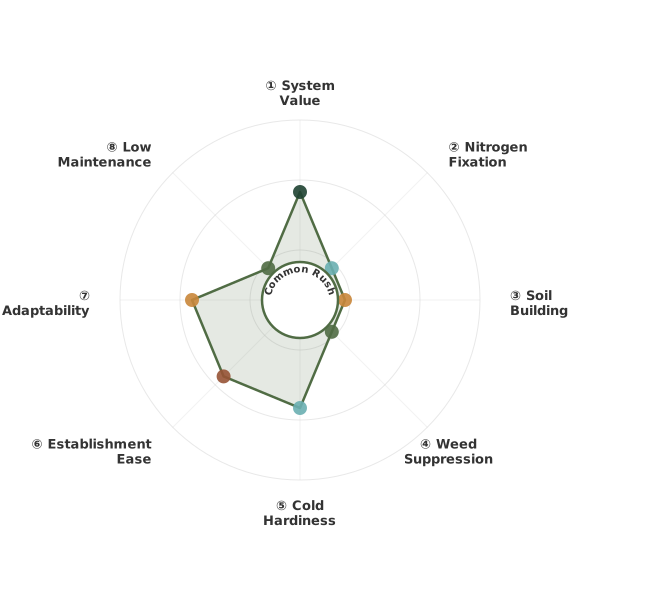
Cold Hardiness Adequate As a wetland species, it provides valuable cool-season ground cover and overwintering in moist, temperate zones (6-8), contributing to soil protection during cooler periods.
Weed Suppression Not Recommended Forms dense clumps in its preferred wet habitats, offering some competitive cover that can help manage weeds within those specific niches.
Nitrogen Fixation Not Recommended This rush is a wetland plant that primarily scavenges existing soil nutrients, contributing to nutrient cycling within the ecosystem rather than fixing atmospheric nitrogen.
Root System Depth Adequate Develops dense mats with extensive fibrous roots, enhancing topsoil structure and promoting water infiltration and retention, thereby building soil health.
Biomass Production Not Recommended Primarily a wetland plant, Juncus effusus contributes to the soil organic matter through its decomposition process, though its above-ground biomass is less significant for broad-scale soil building.
Establishment Ease Adequate Establishes reliably in moist conditions with minimal soil disturbance, and its vigorous growth once established can contribute to system resilience.
Multi Benefit Value Adequate Excellent for wetland erosion control and water filtration, it also provides habitat for beneficial aquatic insects and amphibians, enhancing biodiversity within the landscape.
Climate Adaptability Ideally Suited Tolerates a wide range of conditions, from wet to moderately dry, and thrives across many USDA zones (3-9), demonstrating resilience and broad ecological integration.
Maintenance Intensity Ideally Suited This adaptable wetland grass thrives with minimal intervention, self-sufficient in moist conditions and requiring no external fertility management or pest interventions, integrating seamlessly into the system.

Comparative System: Ratings compare plants within their economic category (e.g., cover crop nitrogen fixation compared to other cover crops, not to all plants). Individual farm conditions and management practices significantly influence actual performance.

8

Learn More

Why farmers use this plant and additional resources

Why Regenerative Farmers Use This Plant

Juncus effusus, commonly known as soft rush, is a valuable perennial plant for regenerative agriculture, primarily utilized for its exceptional soil-building, erosion control, and water management capabilities. While not a nitrogen fixer, its dense, fibrous root system is unparalleled in its ability to stabilize soil, prevent wind and water erosion, and improve soil structure. This robust root network can extend 12-36 inches (30-90 cm) deep, effectively binding soil particles and increasing water infiltration rates by an estimated 20-40% in degraded areas. Its substantial biomass production, often reaching 2-6 tons per acre (4.5-13 tonnes/ha) of dry matter annually, contributes significantly to soil organic matter when managed appropriately, with decomposition releasing valuable nutrients over a 60-90 day period. This continuous addition of organic material enhances soil fertility and water-holding capacity, reducing reliance on synthetic inputs over a 3-5 year rotation.

Integrating Juncus effusus into farming systems offers multifaceted benefits beyond soil health. As a cover crop or component of a perennial pasture, it provides excellent forage for livestock, particularly in wet or poorly drained areas where other grasses struggle. Its dense growth habit offers significant weed suppression, outcompeting many common annual weeds and reducing the need for mechanical or chemical weed control. Juncus also serves as a critical habitat and food source for beneficial insects and pollinators, supporting on-farm biodiversity. In silvopasture systems, it can be planted in riparian buffer zones or lower-lying areas to manage runoff and provide grazing, creating a synergistic ecosystem that enhances both agricultural productivity and ecological resilience.

The quantitative ecosystem benefits of Juncus effusus are substantial. Its root system acts as a natural filter, reducing nutrient and sediment runoff into waterways, thereby improving water quality. Studies have shown that dense stands of Juncus can reduce soil erosion by up to 90% compared to bare ground. The decomposition of its substantial biomass contributes to soil carbon sequestration, with estimates suggesting it can sequester 1-2 tons of carbon per acre per year (2.5-5 tonnes/ha) in well-managed systems. Furthermore, its presence can attract a diverse array of insect life, including predatory beetles and parasitic wasps that help manage pest populations in adjacent cash crops, potentially reducing pest damage by 15-25%. Its nutrient scavenging capacity can significantly reduce the need for synthetic fertilizer inputs in adjacent agricultural areas, leading to potential savings of $20-50 per acre annually by capturing excess phosphorus and nitrogen. In constructed wetlands or along field edges, it efficiently removes excess nutrients, pesticides, and sediment from agricultural runoff. Reductions in nitrate and phosphate levels by 50-70% within a single growing season have been observed in constructed wetlands.

Across the globe, farmers are leveraging Juncus effusus for its resilience and regenerative properties. In the UK's wetter regions, it is often used in pasture improvement schemes on heavy clay soils to enhance drainage and provide durable forage, supporting livestock carrying capacities of 1.5-2 Animal Units per acre (0.6-0.8 AU/ha) in managed swards. In the Australian Murray-Darling Basin, it is planted in riparian zones and on erosion-prone slopes to stabilize soil and filter agricultural runoff. Brazilian farmers are exploring its use in degraded pastures and as a component of wetland restoration projects to improve soil health and water management. In the southeastern United States, it is planted along drainage ditches and in low-lying areas to prevent soil erosion and filter runoff from row crop operations. In Australia, it is employed in constructed wetlands for dairy farm effluent management.

9

How to Integrate This Plant

Practical guidance for regenerative systems

Establishing Juncus effusus is typically achieved through seeding or vegetative propagation. For seeding, rates can vary significantly: 1-2 lbs per acre (1.1-2.2 kg/ha) are common when broadcast sown into prepared moist soil. When drilled, rates of 30-50 lbs/acre (34-56 kg/ha) are often sufficient. For broadcast seeding, rates of 50-100 lbs/acre (56-112 kg/ha) are also common to ensure good ground cover. The planting depth should be shallow, around 0.125-0.25 inches (0.3-0.6 cm), as the seeds require light for germination. Alternatively, divisions or plugs can be planted at a spacing of 12-24 inches (30-60 cm) apart, which provides quicker establishment and denser cover. For drilled rows, spacing can range from 6-12 inches (15-30 cm).

The ideal planting time is in early spring, from March to May in the Northern Hemisphere, or September to November in the Southern Hemisphere, coinciding with increasing soil moisture and temperatures. Late spring (April-May) or early autumn (August-September) are also prime planting times in the Northern Hemisphere, while the Southern Hemisphere benefits from late spring (October-November) or early autumn (March-April) sowings. Juncus effusus germinates and establishes within 30-60 days under optimal conditions.

Once established, Juncus effusus requires consistent moisture for optimal growth but demonstrates good drought tolerance once mature due to its deep root system. It thrives in consistently moist to wet conditions and can tolerate standing water up to 6 inches (15 cm) deep. Fertility management should prioritize biological approaches; compost applications, incorporation of animal manures, or the residue from preceding cover crops are excellent starting points. While Juncus is not a nitrogen fixer, it efficiently scavenges available nutrients from the soil, particularly in wet conditions, and its decomposition releases these nutrients back into the system. Supplemental fertilization is rarely necessary, especially in areas with residual nutrients from agricultural runoff. Growth timelines are generally rapid, with the plant reaching a mature height of 3-5 feet (0.9-1.5 m) within its first growing season. Pest and disease management is typically minimal, with its robust nature and preference for wetter sites deterring most common agricultural pests.

Termination and residue management for Juncus effusus as a cover crop or pasture component should follow the regenerative termination hierarchy. Natural winterkill can be effective in colder climates where temperatures consistently drop below -18°C (0°F). Where winterkill is insufficient, grazing with livestock is a highly effective method for biomass reduction and incorporation, ideally timed when the plant is mature but before seed set if volunteer establishment is to be managed. Mowing can also be employed, with the resulting residue left on-site to decompose and contribute to soil organic matter. Crimping is less common for Juncus due to its fibrous nature but can be used in specific contexts. Herbicide termination is a last resort, typically considered only during a transition phase where biological termination methods are being developed or are temporarily infeasible. For areas where Juncus effusus is used in biofiltration, regular harvesting of the excess biomass every 1-2 years helps to remove accumulated nutrients and organic matter from the system, preventing saturation and maintaining filtration efficiency. Residue decomposition typically occurs over 60-90 days, releasing scavenged nutrients back into the soil.

Regional adaptations highlight Juncus effusus's versatility. In the Pacific Northwest of the USA, it is often planted in pasture renovation on poorly drained soils, established in early spring with drilled seed. In the UK, it's a common feature in marginal pastures and wet areas, sown in autumn to provide winter cover and spring forage, and widely used in constructed wetlands for treating agricultural wastewater, with stands established from plugs in autumn. Australian farmers in regions with high rainfall and poor drainage, such as Tasmania, establish Juncus in early autumn to stabilize stream banks and improve water quality. In the humid subtropical regions of Brazil, it can be integrated into pasture systems on low-lying areas to improve soil structure and forage availability, or along stream banks to stabilize soil and improve water quality. In Iowa, USA, farmers might integrate it into drainage ditches or buffer strips, allowing it to thrive year-round with minimal intervention.

View Full Document (Printable single-page version)