Insights suggest its potential role in ecological restoration and soil health. One study in Spain identified Juniperus communis bushes, established for 35-50 years, as a land cover type contributing to soil organic carbon (SOC) accumulation in abandoned agricultural lands undergoing natural revegetation. This points to Juniperus communis's capacity for soil building and carbon sequestration over time, particularly in shrubland or successional ecosystems. While not explicitly detailed as a primary regenerative use like cover cropping or forage, its presence in mature shrubland indicates its value in natural succession and potentially in creating habitat. Another excerpt mentions juniper berry extract being evaluated for its effect on organic roast pork quality, suggesting potential applications in integrated systems where byproducts might be utilized, though this is not a direct agricultural use. Further research is needed to fully understand its integration into specific regenerative practices. While coverage in our knowledge base is limited, the above represents documented uses in regenerative systems.

Regenerative Quick Profile

All recommendations assume integrated, regenerative practices—not conventional inputs.

Climate & Soil Fit

Climate: Tropical Rainforest, Tropical Monsoon, Tropical Savanna, Hot Semi-Arid (Steppe), Cold Semi-Arid (Steppe), Hot Desert, Cold Desert, Humid Subtropical, Oceanic (Maritime Temperate), Hot-Summer Mediterranean, Warm-Summer Mediterranean, Monsoon-Influenced Humid Subtropical, Subtropical Highland, Hot-Summer Continental, Warm-Summer Continental, Subarctic, Monsoon-Influenced Hot-Summer Continental, Tundra

Zones: USDA 2-7, Australian Zones 1-4

Optimal Soil: Sandy Soil

System Role & Functions

Primary: Cash Crop With Services

Secondary: Soil Remediation, Pollinator Support

Key Benefits: Climate adaptable, Low maintenance, Cold Hardiness

Management Level

Experience: Advanced

Maintenance: Very low maintenance - Once established, Juniperus communis requires minimal intervention, demonstrating drought tolerance and resilience that align with a self-sustaining, low-input landscape.

Value Streams

  • Cash crop production
  • Pollinator habitat and support
1

Climate Suitability Assessment

Will this plant thrive in your climate?

IDEALLY SUITED

Köppen Zone: Dfa (Hot-Summer Continental), Dfb (Warm-Summer Continental), Dfc (Subarctic), Dwa (Monsoon-Influenced Hot-Summer Continental)
USDA Zone: 3b, 4a, 5a, 5b, 6a
Australian Zone: temperate
EU Climate Region: atlantic, continental

Common Juniper thrives in climates characterized by moderate temperatures, distinct seasons, and adequate moisture, scoring ideally suited across numerous zones including Köppen Cfb, Dfb, and Dwb; USDA zones 5b through 8b; Australian temperate zones; and EU Atlantic and Continental regions. These environments provide the necessary cold dormancy periods followed by sufficiently long and warm growing seasons (typically 120-180 frost-free days) for robust development. Temperatures during the growing season, ideally ranging from 60-75°F (15-24°C), promote vigorous growth for cash crop production and effective soil remediation. Consistent, moderate rainfall (30-50 inches/75-125 cm annually) supports its needs without excessive moisture stress, and winter temperatures, while cold, do not typically drop to levels that cause significant mortality. Establishment success is high (>85%), and minimal protection or specialized management is required, ensuring reliable multi-year productivity for its intended functions.

ADEQUATE

Köppen Zone: BSk (Cold Semi-Arid (Steppe)), Cfa (Humid Subtropical), Cfb (Oceanic (Maritime Temperate))
USDA Zone: 3a, 7a
Australian Zone: subtropical
EU Climate Region: alpine

Common Juniper demonstrates adequate suitability in climates that present some challenges but are still manageable for its growth and functions. This includes Köppen Cfa, Cfc, Dfc, Dwa, and Dwc; USDA zones 4b through 5a and 9a through 10b; Australian subtropical zones; and EU alpine regions. These zones often feature longer or shorter growing seasons, or temperature extremes that require careful consideration. For instance, humid subtropical climates (Cfa) may pose risks of fungal diseases, while subarctic (Dfc) or continental (Dwa) zones might have shorter growing seasons or drier winters. In warmer zones (9a-10b), heat stress during summer can reduce vigor. While establishment is good (70-85%) and productivity is reliable, standard management practices such as supplemental watering during dry spells, improved drainage, or disease monitoring may be necessary to ensure optimal performance and economic viability for cash crop and service functions.

NOT RECOMMENDED

Köppen Zone: Af (Tropical Rainforest), Am (Tropical Monsoon), Aw (Tropical Savanna), ET (Tundra), BSh (Hot Semi-Arid (Steppe)), BWh (Hot Desert), BWk (Cold Desert), Csa (Hot-Summer Mediterranean), Csb (Warm-Summer Mediterranean), Cwa (Monsoon-Influenced Humid Subtropical), Cwb (Subtropical Highland)
USDA Zone: 2a, 8a, 9a, 10a, 11a, 12a

Common Juniper is not recommended in climates with extreme temperature fluctuations, particularly those with prolonged, severe cold or extreme heat, encompassing Köppen Dfd, Dwd, and ET; USDA zones 1a through 4b; and Australian subtropical zones with very high heat. These zones present significant challenges that make cultivation economically and practically questionable. In extremely cold regions (e.g., USDA 1a-4b, Köppen Dfd/Dwd), winter temperatures far below the species' tolerance (-40°F/-40°C and lower) lead to near-certain winter kill, preventing establishment and any functional role. In hot, arid regions, while not explicitly scored for Juniper, similar extreme conditions would cause severe stress. The growing season is often too short, or the conditions too harsh, leading to establishment rates below 70% and high management costs for minimal return. Alternative plants better adapted to these specific harsh conditions are essential for successful regenerative agriculture practices.

Better alternatives for these "not recommended" zones: Siberian Larch (Larix sibirica) (Extremely cold-hardy conifer adapted to permafrost regions, provides soil stabilization.), Dwarf Arctic Birch (Betula nana) (Low-growing shrub tolerant of extreme cold and short growing seasons, offers some soil cover.), Arctic Willow (Salix arctica) (Prostrate shrub adapted to harsh arctic conditions, can help with soil stabilization.), Callistemon spp. (Bottlebrush) (Native shrub adapted to subtropical conditions, provides pollinator support and soil stabilization.)

Note: Zones listed above represent climates where this plant can produce reliably with reasonable management. Climate zones not mentioned would require intensive climate modification (greenhouses, extensive infrastructure) and are not economically viable for regenerative agriculture purposes.

2

Soil Suitability Assessment

Which soil types work best for this plant?

IDEALLY SUITED

Sandy Soil

This plant thrives in these soil types without requiring amendments or remediation. Natural soil conditions support optimal growth and productivity.

ADEQUATE

Acidic Soil, Alkaline Soil, Desert Soil, Loam Soil, Rich Soil, Rocky Soil

This plant performs acceptably in these soil types with moderate, manageable remediation such as pH adjustment, compost addition, or drainage improvement. The required amendments are practical and cost-effective for regenerative agriculture.

NOT RECOMMENDED

Clay Soil, Saline Soil, Wet Soil

Growing this plant in these soil types would require impractical remediation such as complete soil replacement, extensive amendments, or cost-prohibitive infrastructure. These conditions are not economically viable for regenerative agriculture.

Note: Soil suitability assessments focus on remediation requirements. "Ideally Suited" means the plant generally thrives without the need for substantial amendments, "Adequate" means manageable remediation (lime, compost, mulch), and "Not Recommended" means impractical soil changes would be required. Climate factors like rainfall and temperature also influence success.

3

Seasonal Considerations

Planting timing, growth duration, and harvest windows

Common juniper offers a unique, long-term cover cropping option, particularly valuable for its perennial nature and adaptability to cooler climates. For spring planting, sow seeds or establish seedlings after the danger of hard frost has passed and soils have warmed to at least 50°F (10°C). Establishment can take several weeks to months, depending on conditions. While it doesn't typically function as a quick-turnaround cover crop, its true strength lies in its overwintering capability. In C and D climate zones, juniper will remain green and provide soil protection throughout winter dormancy, offering erosion control and habitat. Avoid termination unless absolutely necessary for your cash crop rotation, as juniper is a long-lived perennial. If termination is required, it should be done well in advance of cash crop planting, often requiring mechanical methods or herbicides. Peak biomass is achieved over years, not weeks, making it ideal for long-term soil health strategies rather than short-term nutrient scavenging. Consider its slow growth and permanent nature when slotting it into your rotation.

4

System Role & Multi-Benefit Value

Functional roles, integration strategies, and stacked benefits

Functional Role

Total System Value

Common juniper offers significant multi-benefit stacking potential within a regenerative farm system. The direct harvest value comes from its aromatic berries, utilized in culinary applications and as a flavoring agent (Excerpt 3). Beyond direct harvest, it contributes to system enhancement by improving soil organic carbon accumulation, particularly in established populations (Excerpt 1). This ecological service supports long-term soil health and fertility. As a shrubby perennial, it provides habitat and food sources for wildlife, contributing to biodiversity. While not a primary windbreak or shade provider in the way a tree would be, dense plantings can offer localized protection and contribute to microclimate regulation. Risk diversification is achieved through its perennial nature and its role as a unique cash crop, reducing reliance on annuals and diversifying income streams. Its resilience and adaptability to various soil conditions further enhance its value in creating robust and stable farming systems.

Integration Characteristics

Multi-Benefit Value: Adequate - Juniperus communis provides critical habitat and food for wildlife, acts as a windbreak, and improves soil stability on slopes, enhancing ecosystem services.

5

Management & Care Requirements

Integration guidance, maintenance needs, and care practices

How to Integrate This Plant

Common juniper (Juniperus communis) can be integrated into regenerative systems primarily as a non-tree component, offering valuable ecosystem services. Its primary function is as a cash crop with associated services, particularly through its berries which are used as a spice and flavoring agent (Excerpt 3). In terms of system roles, it can contribute to soil health by improving soil organic carbon accumulation, especially in established stands (Excerpt 1). While not a nitrogen fixer, its presence can enhance soil structure and support beneficial microbial communities. Compatible practices include food forests and hedgerows, where its shrubby form can provide habitat and a foraging resource. It can also be part of agroforestry systems, occupying understory or inter-row spaces. The timeline to contribution varies; while its ecological benefits like soil improvement may begin modestly in the early years, significant berry production typically occurs after 3-5 years. Its long-term value lies in its resilience and continued contribution to biodiversity and soil health over decades. Multi-benefit stacking comes from the dual role of direct harvest (berries) and indirect contributions to soil organic matter and habitat, enhancing overall farm resilience.

Integration Practices & Management

Source mentions *Juniperus communis* in the context of natural revegetation in abandoned agricultural lands, indicating its presence in established shrubland ecosystems that have developed over 35-50 years. This suggests a role in natural succession processes rather than active cultivation by farmers. Source identifies juniper berry (*Juniperus communis* L.) extract as a component in a study evaluating organic roast pork quality, highlighting its use as a plant extract but not its integration into farming systems. There is no information within these texts regarding establishment methods, integration with grazing, termination strategies, management considerations, or integration with cash crops as practiced by regenerative farmers. The knowledge base does not contain practical farmer experiences or detailed insights into the direct application of *Juniperus communis* within regenerative farming protocols. While coverage in our knowledge base is limited, the above represents documented uses in regenerative systems.

Management Profile

Maintenance Intensity: Ideally Suited - Once established, Juniperus communis requires minimal intervention, demonstrating drought tolerance and resilience that align with a self-sustaining, low-input landscape.

Sources behind this view

Community
  • Junipers can be utilized as nurse trees for other plants, providing windbreaks, erosion control, and wildlife habitat. Strategies include water infiltration basins, mob grazing, and planting companion

6

Economics & Value Streams

Direct harvest, system benefits, ecosystem services, and risk diversification

Comprehensive economic analysis including direct harvest value, system enhancement contributions, ecosystem services, value timeline, and risk diversification strategies.

Cover Crop Investment

Metric Value
Seed Cost N/A N/A
Termination Cost 15-40 37-99
Biomass Production 0.5-2.0 1-4
N Fixation Value N/A N/A
Weed Control Savings 10-30 25-74

Cover crops are soil investments, not cash crops. Economics measured in soil health gains, input reduction, and subsequent crop performance. Values show direct costs and estimated benefits.

System Enhancement Value

Beyond harvest: ecosystem services from regenerative cash crop practices

Ecological Service Contributions

Common juniper (Juniperus communis) offers several valuable system benefits beyond direct harvest. Its presence in revegetated areas, as noted in Spanish studies, contributes to improved soil organic carbon (SOC) accumulation and overall soil quality over time, indicating a role in soil remediation and building resilience. The plant also serves as a support for pollinators and wildlife. While not explicitly detailed as a primary pollinator attractant in the provided excerpts, its role in broader revegetation suggests it contributes to a more biodiverse landscape that supports insect populations. Furthermore, juniper berries, as highlighted for their use in flavorings and by distillers, are a valuable secondary product. The study on Phytophthora species also indicates Juniperus communis as a host, suggesting its integration into a diverse ecosystem where it plays a role in ecological processes, even if that role involves susceptibility to certain pathogens, which is a factor in broader biodiversity considerations.

Erosion Control (if applicable)

Variable, dependent on planting density and configuration. Can contribute to soil stabilization and reduced wind erosion in specific farm designs.

While common juniper (Juniperus communis) is a shrubby conifer, it can contribute to windbreak and erosion control, particularly when planted in dense hedgerows or as part of a mixed-species windbreak. Its dense, low-growing habit, especially in bush forms, can help dissipate wind energy closer to the ground, reducing soil erosion and protecting adjacent crops or pastures from harsh winds. In abandoned agricultural lands, the presence of Juniperus communis, along with other shrubs, has been observed to contribute positively to soil properties over time, suggesting an indirect role in soil stabilization and health which are foundational for erosion resistance. The woody structure of established juniper plants can also help to trap snow, further protecting the soil from wind desiccation and frost heave during winter months. The extent of its windbreak effectiveness would depend on planting density, age, and the specific microclimate of the farm.

Ecosystem Service Contributions

Environmental contributions: carbon, pollinators, wildlife, and water

  • Carbon Sequestration: As a woody perennial, common juniper sequesters carbon in its biomass (roots, stem, foliage) and contributes to soil organic carbon accumulation, particularly in its role in revegetation and soil health as observed in abandoned lands.
  • Pollinator Support: Medium. While not a primary focus in the excerpts, its presence in mixed vegetation and revegetation efforts contributes to habitat diversity, which indirectly supports pollinator populations. Its flowers may offer some early season nectar/pollen.
  • Wildlife Habitat: Provides habitat and potential food sources (berries) for various wildlife, including birds and small mammals. Its dense structure can offer nesting sites and shelter.
  • Water Quality: Not applicable

Value Timeline: Production & Services

When you'll see results: varies by crop (annual harvest vs. perennial establishment)

Years 1-2

Initial soil stabilization and erosion control benefits begin to accrue as the plant establishes. Contribution to landscape biodiversity and potential early pollinator support.

Years 3-5

Established soil remediation effects (SOC accumulation) become more pronounced. Berries may start to become available for harvest, though likely in smaller quantities. Windbreak and habitat services become more significant.

Years 10-20

Mature plant provides substantial habitat and windbreak benefits. Significant berry production for cash crop or value-added products. Continued soil health improvements.

20+ Years

Long-term contribution to ecosystem stability, soil carbon sequestration, and continued provision of diverse ecosystem services. Potential for use in more established, complex agroforestry systems.

Farm Risk Reduction

How this reduces farm risk: backup income, weather protection, market hedges

  • Multiple Revenue Streams: Cash crop (juniper berries for culinary/distillery use), ecosystem services (soil remediation, windbreak, habitat), potential for value-added products (e.g., extracts).
  • Temporal Income Spread: Ongoing provision of ecosystem services throughout the plant's life cycle, with periodic harvest of berries for cash income.
  • Market Risk Hedge: Diversifies farm revenue beyond annual crops. Juniper berries have niche markets (flavoring, spirits). Its resilience in certain environments can offer stability against climate variability. Soil health benefits contribute to overall farm resilience.
7

Regenerative Suitability Details

Comprehensive trait ratings for system integration assessment

Comparative ratings for this plant across key regenerative agriculture traits.

Trait Suitability Explanation
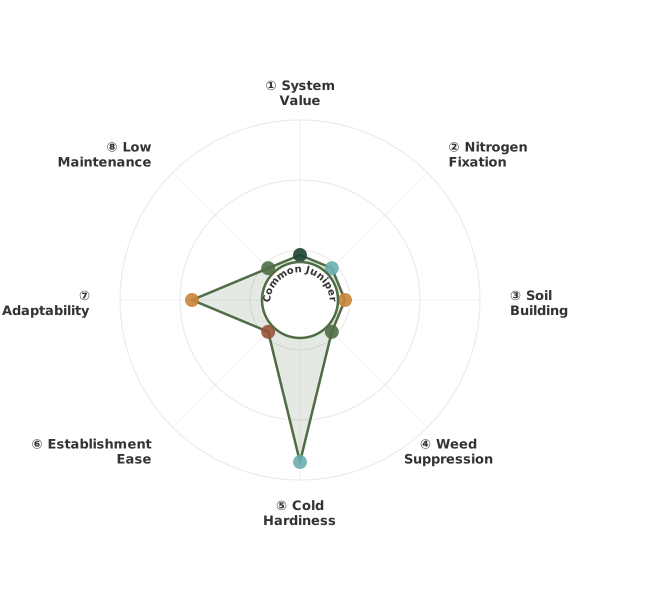
Cold Hardiness Ideally Suited As an extremely cold-hardy evergreen, Juniperus communis offers year-round soil protection and structural integrity, contributing to a resilient living mulch system.
Weed Suppression Not Recommended This slow-growing shrub's open canopy provides limited direct weed suppression; focus on enhancing soil health with compost and mulch to outcompete unwanted vegetation.
Nitrogen Fixation Not Recommended Juniperus communis does not fix nitrogen and relies on the existing soil fertility, benefiting from healthy soil ecosystems that cycle nutrients effectively.
Root System Depth Not Recommended Its deep taproot contributes to soil structure and water infiltration, supporting long-term soil health rather than rapid cover cropping benefits.
Biomass Production Not Recommended This slow-growing woody shrub contributes to soil organic matter over time as its structure decomposes, enhancing soil carbon sequestration and structure.
Establishment Ease Not Recommended While slow to establish, careful site preparation and mulching support its development, allowing it to integrate into the landscape and contribute to soil stability.
Multi Benefit Value Adequate Juniperus communis provides critical habitat and food for wildlife, acts as a windbreak, and improves soil stability on slopes, enhancing ecosystem services.
Climate Adaptability Ideally Suited Exceptional climate adaptability allows this species to thrive across a wide range of conditions, reducing the need for external inputs and enhancing system resilience.
Maintenance Intensity Ideally Suited Once established, Juniperus communis requires minimal intervention, demonstrating drought tolerance and resilience that align with a self-sustaining, low-input landscape.

Comparative System: Ratings compare plants within their economic category (e.g., cover crop nitrogen fixation compared to other cover crops, not to all plants). Individual farm conditions and management practices significantly influence actual performance.

8

Learn More

Why farmers use this plant and additional resources

Why Regenerative Farmers Use This Plant

Juniperus communis, commonly known as Common Juniper, is a valuable evergreen shrub for regenerative agriculture systems, offering a unique suite of benefits primarily related to biodiversity enhancement, soil stabilization, habitat creation, and nutrient cycling. While not a nitrogen fixer, its deep, fibrous root system makes it an exceptional choice for erosion control on slopes and in areas prone to soil degradation. Its hardy nature allows it to establish in challenging conditions where other plants might struggle, contributing significantly to soil organic matter over time through the decomposition of its foliage and woody material. In a 3-5 year rotation, the persistent presence of juniper can improve soil structure and water infiltration, creating a more resilient agricultural landscape.

Integrating Juniperus communis into farm systems offers a multitude of benefits beyond soil health. As a perennial, it provides consistent ground cover and habitat for beneficial insects and pollinators throughout the year, even during winter months. Its berries are a food source for various bird species, contributing to a balanced farm ecosystem. When used in hedgerows or as windbreaks, it can protect cash crops from wind damage, reducing soil erosion and improving microclimates. Its slow growth and evergreen nature mean it requires minimal management once established, making it a low-input component of a diverse farm plan.

The deep root system, reaching depths of 6-15+ feet (1.8-4.5+ meters), is exceptional at scavenging nutrients from lower soil profiles, bringing them to the surface where they can become available to shallower-rooted cash crops or forage species. This nutrient cycling action reduces reliance on synthetic fertilizers, potentially saving farmers $40-70 per acre annually in nutrient inputs, depending on soil type and crop needs. The woody biomass it produces over time also adds significant organic matter to the soil upon natural senescence or managed pruning. Established plants add significant carbon to the soil profile annually through root exudates and eventual decomposition of plant material. Over decades, its contribution to perennial biomass adds to the long-term soil organic matter pool.

Quantitatively, Juniperus communis acts as a vital habitat and food source for a multitude of beneficial organisms. Its dense foliage offers shelter for ground-dwelling insects and small mammals, and its berries provide crucial winter food for birds, potentially increasing avian populations by 15-25% in the immediate vicinity. Studies have shown that diverse plant communities, including conifers like juniper, can support 2-3 times more insect species, including pollinators and natural enemies of common agricultural pests, compared to monocultures. This increased biodiversity translates to enhanced ecosystem services, such as improved pollination rates for nearby crops and more effective natural suppression of pest outbreaks, reducing the need for chemical interventions.

In terms of system integration, Juniperus communis excels as a component in agroforestry, silvopasture, and windbreak systems. Its presence can create microclimates that benefit adjacent crops by reducing wind speed and moderating temperature extremes, thereby decreasing soil erosion and moisture loss. As a windbreak, it can reduce wind erosion by up to 70% in adjacent fields, protecting vulnerable topsoil and reducing the need for costly soil conservation measures. In silvopasture settings, its dense foliage offers protection for livestock, reducing heat stress in summer and wind chill in winter, thereby improving animal welfare and potentially increasing grazing carrying capacity by 10-20% in managed pastures. The extensive root network significantly improves soil structure, enhances water infiltration, and sequesters substantial amounts of carbon over its long lifespan, contributing to long-term soil organic matter gains of 0.5-1.5% over a 5-10 year period in established systems. The long-term carbon sequestration potential of mature juniper stands can also contribute to climate change mitigation efforts.

Regional success examples include its use in the hedgerows of the UK's mixed farming systems, providing shelter for livestock and habitat for wildlife. In the drier, sloping vineyards of the Mediterranean, it is planted to prevent soil erosion and stabilize terraces. In parts of North America, it's incorporated into silvopasture systems, offering browse for sheep and goats and contributing to landscape diversity. In Australian wheat-sheep systems, strategically planted juniper hedgerows can protect fields from wind erosion and provide shelter for livestock, improving animal welfare and reducing stress-related losses. In the Pacific Northwest of the USA, it is often incorporated into vineyard and orchard systems as part of a silvopasture design, where its deep roots improve soil structure and its foliage provides habitat for beneficial insects. In parts of Europe, particularly Scandinavia and the Alps, it has long been used in windbreaks and on marginal lands to stabilize soil and provide habitat. Its adaptability to various soil types, from sandy to loamy, and its tolerance for poor or rocky soils, makes it a versatile choice for farmers across different continents seeking to enhance ecosystem services and reclaim degraded land.

9

How to Integrate This Plant

Practical guidance for regenerative systems

Establishing Juniperus communis typically involves planting young nursery stock, as direct seeding can be slow and less reliable for achieving desired stand density and uniformity. Seedlings are commonly planted at a spacing of 4-8 feet (1.2-2.4 meters) apart for windbreaks or hedgerows, depending on the desired density and mature size. For silvopasture or agroforestry systems, spacing could be 15-30 feet (4.5-9 meters) or more to allow for canopy development and integration with other species. For windbreaks or hedgerows, planting rates can range from 100-400 trees per acre (247-988 trees/hectare) depending on desired density and spacing.

The optimal planting depth is crucial for establishment, typically requiring the root ball to be planted at the same depth it was in its nursery container, usually around 6-12 inches (15-30 cm) deep, ensuring the root collar is at or slightly above soil level. The ideal planting time is in early spring as soon as the ground can be worked, or in early autumn before the first hard frost, allowing the root system to establish before extreme temperature fluctuations. In the Northern Hemisphere, this is typically March-April for spring planting and September-October for fall planting; in the Southern Hemisphere, it is September-October for spring and March-April for fall.

During the establishment phase, providing supplemental water is vital for root development, approximately 1 inch (2.5 cm) per week during the first growing season, especially in drier climates, or 1-2 inches (2.5-5 cm) per week during dry periods for root development. Fertility management should focus on building soil health; incorporating compost or well-rotted manure around the base of young plants can provide essential nutrients and improve soil structure. As the plants mature, they become highly drought-tolerant and require minimal supplemental fertility.

Once established, Juniperus communis requires minimal management. Its slow growth rate means it does not require frequent pruning, though occasional shaping can be done to manage size or density. Pest and disease issues are rare, with biological control and good air circulation being the primary methods of prevention. Integrated pest management strategies prioritize biological controls and cultural practices, such as ensuring good air circulation through proper spacing, over chemical interventions.

For cover crop integration, Juniperus communis is not typically used as a short-term annual cover crop due to its perennial nature and slow establishment. However, it can be part of a long-term living mulch or intercropping system. In orchards or vineyards, it can be interplanted with other ground cover species or managed as a component of a silvopasture system. Termination is not applicable in the traditional cover crop sense; instead, management focuses on pruning and shaping to maintain desired structure and prevent overgrowth into cash crops. If volunteer seedlings become too dense, they can be managed through mechanical removal or selective grazing if livestock are present. Its role is more about providing persistent, long-term ecological benefits rather than a seasonal soil-building function.

Regional adaptations showcase its broad applicability. In the UK's temperate oceanic climate, Juniperus communis is planted in hedgerows alongside native hedgerow species to create robust windbreaks for cereal fields and pastures, with plants spaced at 5-foot (1.5 m) intervals. In the drier, Mediterranean-influenced regions of Australia, it's used in agroforestry systems on sheep and wheat farms, planted at wider spacings of 20-25 feet (6-7.5 m) to provide shade and shelter for livestock and reduce wind erosion on grazing lands. In the continental climate of the US Midwest, it's incorporated into windbreak designs alongside deciduous trees, planted at 6-foot (1.8 m) spacing, to protect corn and soybean fields from wind damage and provide winter shelter for wildlife. In the Mediterranean climate of Southern Europe, Juniperus communis can be planted on slopes to prevent erosion and integrated into olive groves or vineyards, benefiting from the existing infrastructure and management practices. In the drier, continental climates of the North American plains, it is often used in windbreaks to protect crops and livestock, requiring careful consideration of water availability during establishment. In Australia's diverse agricultural regions, its use as a component in shelterbelts for livestock and cropping systems is growing, particularly in areas with moderate rainfall and cooler summer temperatures. Its ability to thrive in a variety of conditions means that with thoughtful planning, it can enhance the resilience and productivity of farms across many continents.