Sweet pea (Lathyrus odoratus) has limited mentions in our knowledge base, suggesting its role in regenerative agriculture is not extensively documented here, though its botanical characteristics offer potential. As a legume, its primary regenerative function would be nitrogen fixation, contributing valuable fertility to the soil, a key benefit in regenerative systems aiming to reduce synthetic inputs. This nitrogen-fixing capability makes it a candidate for use as a cover crop or as a component in polyculture systems, where it can support companion plants. While not explicitly detailed in the knowledge base, its use could integrate with practices like no-till by providing ground cover and subsequent organic matter. The plant’s flowers also offer potential for pollinator support. However, without more specific knowledge base data, direct farmer experiences and detailed integration strategies within regenerative practices like rotational grazing or agroforestry remain unclear. Further research or documentation is needed to fully understand its practical applications and benefits in these contexts.

Regenerative Quick Profile

All recommendations assume integrated, regenerative practices—not conventional inputs.

Climate & Soil Fit

Climate: Tropical Savanna, Hot Semi-Arid (Steppe), Cold Semi-Arid (Steppe), Cold Desert, Humid Subtropical, Oceanic (Maritime Temperate), Hot-Summer Mediterranean, Warm-Summer Mediterranean, Monsoon-Influenced Humid Subtropical, Subtropical Highland, Hot-Summer Continental, Warm-Summer Continental, Subarctic, Monsoon-Influenced Hot-Summer Continental

Zones: USDA 6-10, Australian Zones 3-10

Optimal Soil: Loam Soil

System Role & Functions

Primary: Nitrogen Fixer

Secondary: Cover Crop System, Pollinator Support

Management Level

Experience: Advanced

Maintenance: Moderate maintenance - Maintaining sweet pea's aesthetic and bloom involves providing structural support and managing nutrient cycling through compost and mulch, aligning with integrated garden system practices.

Value Streams

  • Nitrogen fixation
  • Pollinator habitat and support
1

Climate Suitability Assessment

Will this plant thrive in your climate?

IDEALLY SUITED

Köppen Zone: Cfa (Humid Subtropical), Csb (Warm-Summer Mediterranean), Dfa (Hot-Summer Continental), Dfb (Warm-Summer Continental)
USDA Zone: 6a, 7a, 8a
EU Climate Region: atlantic

Sweet peas perform optimally in regions with mild summers and consistent moisture, characterized by growing seasons of 150-200 frost-free days and average temperatures between 60-70°F (15-21°C). These conditions are met in Köppen Cfb zones, USDA zones 7a-7b, and the EU Atlantic climate region. Establishment is reliable when soil temperatures reach 50-60°F (10-15°C), typically 2-4 weeks before the last frost. The mild summers prevent heat stress, allowing for continuous flowering and efficient nitrogen fixation, contributing significantly to soil fertility. Minimal supplemental irrigation is usually required due to adequate rainfall. These zones provide the longest and most reliable periods for sweet peas to express their full potential as a nitrogen-fixing cover crop and for pollinator support, with minimal management inputs needed beyond standard agricultural practices.

ADEQUATE

Köppen Zone: BSk (Cold Semi-Arid (Steppe)), Cfb (Oceanic (Maritime Temperate)), Csa (Hot-Summer Mediterranean), Cwa (Monsoon-Influenced Humid Subtropical), Cwb (Subtropical Highland)
USDA Zone: 5a, 5b, 9a, 10a
Australian Zone: temperate
EU Climate Region: continental

Sweet peas are adequately suited to climates with moderate temperature fluctuations and a growing season of 120-160 frost-free days, including Köppen Cfa, Csb, and Dfb zones, USDA zones 5b-6b, Australian temperate zones, and the EU Continental climate region. While they can establish and grow, they may experience limitations due to summer heat (above 75°F/24°C) which can reduce flowering and nitrogen fixation by 10-25%, or shorter growing seasons requiring careful timing. Supplemental irrigation is often necessary to manage dry spells, especially in Csb and Continental zones, increasing operational costs. Despite these challenges, they can still provide valuable nitrogen fixation and cover crop benefits, with yields and performance being economically viable with appropriate management strategies and variety selection. Stand persistence is generally good for annual growth cycles.

NOT RECOMMENDED

Köppen Zone: Af (Tropical Rainforest), Am (Tropical Monsoon), Aw (Tropical Savanna), ET (Tundra), BSh (Hot Semi-Arid (Steppe)), BWh (Hot Desert), BWk (Cold Desert), Dfc (Subarctic), Dwa (Monsoon-Influenced Hot-Summer Continental)
USDA Zone: 2a, 3a, 3b, 4a, 11a, 12a
Australian Zone: subtropical

Sweet peas are not recommended for climates with extreme heat or very short, cold growing seasons, encompassing Köppen Csa, Dfa zones, USDA zones 3a-5a, 9a-10b, Australian subtropical zones, and the EU Continental climate region. In hot climates (USDA 9-10, subtropical Australia), sustained temperatures above 80°F (27°C) cause severe heat stress, drastically reducing flowering, nitrogen fixation (by 50-70%), and overall plant vigor, making them impractical as a cover crop. In very cold climates (USDA 3-4, parts of Continental EU), short growing seasons and risk of frost limit establishment and productivity, with minimal nitrogen fixation achieved. These zones require intensive management, such as extensive irrigation and shade in hot areas, or are simply too short for successful annual growth in cold areas. Alternative nitrogen-fixing plants better adapted to these specific extreme conditions are strongly advised.

Better alternatives for these "not recommended" zones: Cowpea (heat and drought tolerant nitrogen fixer for hot climates), Sunn Hemp (tropical legume that thrives in heat and fixes nitrogen), Hairy Vetch (cold-hardy annual legume for nitrogen fixation in cold climates), Winter Rye (extremely cold-hardy cover crop for biomass and soil protection)

Note: Zones listed above represent climates where this plant can produce reliably with reasonable management. Climate zones not mentioned would require intensive climate modification (greenhouses, extensive infrastructure) and are not economically viable for regenerative agriculture purposes.

2

Soil Suitability Assessment

Which soil types work best for this plant?

IDEALLY SUITED

Loam Soil

This plant thrives in these soil types without requiring amendments or remediation. Natural soil conditions support optimal growth and productivity.

ADEQUATE

Clay Soil, Rich Soil, Sandy Soil

This plant performs acceptably in these soil types with moderate, manageable remediation such as pH adjustment, compost addition, or drainage improvement. The required amendments are practical and cost-effective for regenerative agriculture.

NOT RECOMMENDED

Acidic Soil, Alkaline Soil, Desert Soil, Rocky Soil, Saline Soil, Wet Soil

Growing this plant in these soil types would require impractical remediation such as complete soil replacement, extensive amendments, or cost-prohibitive infrastructure. These conditions are not economically viable for regenerative agriculture.

Note: Soil suitability assessments focus on remediation requirements. "Ideally Suited" means the plant generally thrives without the need for substantial amendments, "Adequate" means manageable remediation (lime, compost, mulch), and "Not Recommended" means impractical soil changes would be required. Climate factors like rainfall and temperature also influence success.

3

Seasonal Considerations

Planting timing, growth duration, and harvest windows

Sweet peas, or Lathyrus odoratus, can offer valuable nitrogen fixation and biomass as a cover crop, particularly in milder climates. For a spring planting, sow seeds as soon as the soil is workable, as they possess good frost tolerance. They typically establish within 2-3 weeks. If aiming for a fall cover, plant 6-8 weeks before the first expected frost to allow for adequate growth and establishment before winter dormancy. In suitable zones (Cfa, Cfb, Csa, Csb), they can overwinter and resume growth vigorously in early spring.

Termination should occur when sweet peas reach peak biomass, typically 8-12 weeks after establishment, and critically, at least 2-3 weeks before planting your main cash crop to allow for decomposition. Avoid planting in hot, dry summer conditions unless supplemental irrigation is available, as their growth is favored by cooler temperatures. While not a primary choice for intense winter cover in colder Dfa/Dfb zones without protection, they can provide a light cover if fall-planted early enough. Frost-seeding in early spring, once snowmelt begins, is another option given their cold tolerance.

4

System Role & Multi-Benefit Value

Functional roles, integration strategies, and stacked benefits

Functional Role

Total System Value

Sweet peas offer a compelling case for multi-benefit stacking within regenerative agriculture. Their direct harvest value is primarily aesthetic and aromatic, enhancing farm appeal and potentially supporting niche markets for cut flowers. More importantly, their role as a nitrogen fixer significantly enhances system value by enriching soil fertility, reducing reliance on external nitrogen inputs, and improving the growth of companion plants. This nitrogen contribution is a key ecosystem service, directly benefiting subsequent crops. They also provide crucial pollinator support, attracting bees and other beneficial insects that contribute to broader farm biodiversity and pest control. While not a primary carbon sequestration species due to their annual nature, they contribute to soil organic matter when incorporated back into the soil. Risk diversification is achieved through improved soil health and reduced input costs, making the farm more resilient to market fluctuations and environmental stresses. Their rapid establishment in Year 1 provides immediate benefits, making them a versatile tool for enhancing overall farm ecosystem function.

Integration Characteristics

Multi-Benefit Value: Not Recommended - Sweet pea's primary value lies in its ornamental beauty and fragrance, with secondary benefits including the potential to support beneficial insect populations when grown within a biodiverse landscape.

5

Management & Care Requirements

Integration guidance, maintenance needs, and care practices

How to Integrate This Plant

Sweet peas (Lathyrus odoratus) are valuable annuals that can be integrated into regenerative systems primarily as nitrogen fixers and for pollinator support. Their System Roles include enriching soil nitrogen, attracting beneficial insects, and providing a beautiful, fragrant ground cover or vertical element. Compatible Practices where they can be utilized include alley cropping as a cover crop between rows of trees or perennial vegetables, or within food forests to enhance soil health and biodiversity. They can also be incorporated into hedgerows or intercropping systems. The Timeline to Contribution is rapid; they begin providing nitrogen fixation and attracting pollinators within their first growing season (Year 1). While they don't offer long-term structural benefits like trees, their annual contribution to soil fertility and pest management is significant. Multi-benefit stacking includes improved soil structure, reduced need for synthetic nitrogen fertilizers, enhanced biodiversity, and aesthetic appeal, contributing to a more resilient and productive farm ecosystem.

Integration Practices & Management

Direct information on the integration of *Lathyrus odoratus* (sweet pea) into regenerative agriculture systems is limited within the provided knowledge base. The sources do not detail specific establishment methods such as seeding rates, optimal timing, or preferred tillage practices (no-till vs. minimal tillage) for this species. Similarly, its role in grazing systems, including mob or rotational grazing, timing of introduction, and necessary rest periods, is not discussed. Termination strategies, whether through natural winterkill, grazing, crimping, mowing, or herbicide use, are also absent from the knowledge base. Management considerations like fertility requirements, competition management with other cover crops or cash crops, and succession planning involving *Lathyrus odoratus* are not elaborated upon. Furthermore, its integration with cash crops through relay cropping, intercropping, or specific rotation sequences is not covered. Consequently, practical farmer experiences and insights specifically regarding the use of *Lathyrus odoratus* in regenerative agriculture are not available in the given excerpts.

Management Profile

Maintenance Intensity: Adequate - Maintaining sweet pea's aesthetic and bloom involves providing structural support and managing nutrient cycling through compost and mulch, aligning with integrated garden system practices.

6

Economics & Value Streams

Direct harvest, system benefits, ecosystem services, and risk diversification

Comprehensive economic analysis including direct harvest value, system enhancement contributions, ecosystem services, value timeline, and risk diversification strategies.

Cover Crop Investment

Metric Value
Seed Cost $25-50/acre $62-124/ha
Termination Cost 20-40 49-99
Biomass Production 1.5-3.0 3-7
N Fixation Value 50-100 56-112
Weed Control Savings 15-30 37-74

Cover crops are soil investments, not cash crops. Economics measured in soil health gains, input reduction, and subsequent crop performance. Values show direct costs and estimated benefits.

System Enhancement Value

Beyond harvest: nitrogen fixation replacing fertilizer costs

Nitrogen Fixation Value

30-100 lbs N/acre/year = $18-100/acre fertilizer replacement (based on a hypothetical $1/lb N cost)

As a member of the legume family, sweet peas (*Lathyrus odoratus*) possess the inherent ability to fix atmospheric nitrogen through a symbiotic relationship with soil bacteria. This biological process significantly enhances soil fertility, reducing the need for synthetic nitrogen fertilizers. The quantitative data indicates a fixation range of 30-100 lbs N/acre/year. This contribution directly benefits subsequent crops by providing a readily available nutrient source, improving soil structure, and promoting healthier plant growth. In integrated systems, this nitrogen contribution can be directed towards companion crops or cover crops, creating a closed-loop nutrient cycle and reducing external input costs. The consistent addition of organic nitrogen also supports a more robust soil microbiome, further enhancing overall soil health and resilience. This makes sweet peas a valuable component in regenerative farming systems aiming for self-sufficiency and reduced environmental impact.

Additional Soil Building Benefits

Beyond nitrogen fixation, sweet peas offer significant value as a cover crop system and for pollinator support, as indicated by the knowledge base. Their growth habit can help suppress weeds and prevent soil erosion, particularly when grown as a dense ground cover or intercropped. The fragrant blooms, noted for their suitability for cutting, attract a wide array of pollinators, including bees and other beneficial insects. This increased pollinator activity benefits not only the sweet peas themselves but also surrounding crops that rely on insect pollination, leading to improved yields and quality. The plant's aesthetic appeal, stemming from its fragrant and colorful flowers, can also contribute to farm biodiversity and potentially support agritourism ventures. Furthermore, their role in a cover crop mix can improve soil structure and organic matter content over time.

Ecosystem Service Contributions

Environmental contributions: carbon, pollinators, wildlife, and water

  • Carbon Sequestration: Sweet peas, as annual herbaceous plants, contribute to carbon sequestration primarily through the incorporation of above-ground biomass into the soil upon senescence. While not a long-lived perennial or woody species, their rapid growth and nitrogen-fixing capabilities can enhance the overall soil organic matter content over time, especially when managed within a cover cropping rotation. The amount sequestered is moderate and dependent on cultivation practices and biomass production.
  • Pollinator Support: High. Sweet peas are highly attractive to a wide range of pollinators due to their abundant, fragrant flowers, supporting biodiversity and enhancing pollination services for other crops.
  • Wildlife Habitat: Provides limited direct wildlife habitat value in terms of mast or browse, as they are primarily grown for ornamental or nitrogen-fixing purposes. However, their dense foliage could offer some temporary cover for small invertebrates and insects.
  • Water Quality: Not applicable

Value Timeline: N Fixation & Production

When you'll see results: nitrogen fixation begins immediately, harvest at maturity

Years 1-2

Nitrogen fixation begins, contributing to soil fertility. Establishment as a cover crop offers initial erosion control and weed suppression. Pollinator support commences with flowering.

Years 3-5

Established nitrogen contribution enhances soil health, potentially reducing fertilizer needs for subsequent crops. Cover cropping benefits (soil structure, organic matter) become more pronounced. Continued pollinator support.

Years 10-20

Long-term benefits of consistent nitrogen fixation and soil improvement become evident, leading to enhanced farm resilience and reduced reliance on external inputs. The plant's role in a diversified system contributes to overall ecosystem stability.

20+ Years

Sustained soil fertility and improved soil structure from ongoing integration into crop rotations. Continued provision of ecosystem services like pollinator support and potential for seed saving for future plantings.

Farm Risk Reduction

How this reduces farm risk: fertilizer cost hedge and rotation benefits

  • Multiple Revenue Streams: Potential income from cut flowers (ornamental varieties), seed sales, and indirect value from reduced fertilizer costs due to nitrogen fixation.
  • Temporal Income Spread: Value is spread annually through cover cropping benefits, ongoing pollinator support, and potential seasonal harvest of cut flowers. Nitrogen contribution is a continuous soil improvement. Seed saving allows for self-propagation.
  • Market Risk Hedge: Reduces reliance on external synthetic fertilizers, mitigating price volatility and supply chain risks associated with fertilizer markets. Diversifies farm output with ornamental crops and soil-building functions, increasing resilience to market fluctuations for any single product.
7

Regenerative Suitability Details

Comprehensive trait ratings for system integration assessment

Comparative ratings for this plant across key regenerative agriculture traits.

Trait Suitability Explanation
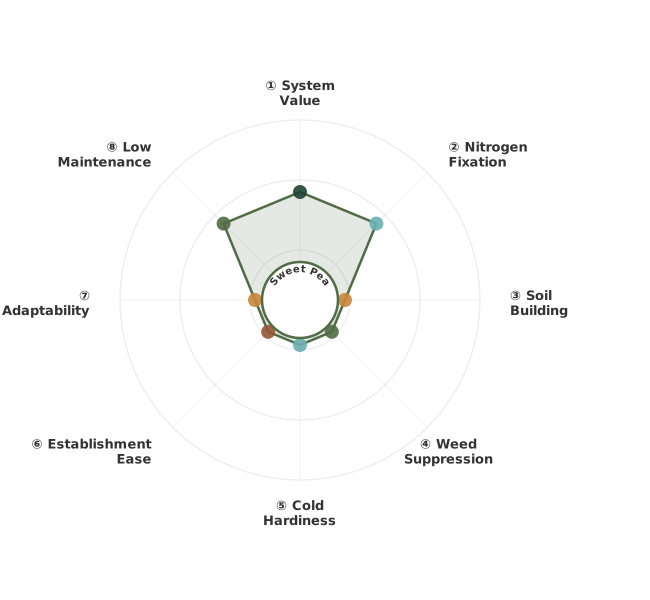
Cold Hardiness Not Recommended Sweet pea is a tender annual, best suited for milder climates where it thrives in specific growing seasons, contributing to above-ground aesthetics rather than winter soil resilience.
Weed Suppression Not Recommended As a vining plant with a more open growth habit, sweet pea offers limited canopy closure, thus playing a minor role in suppressing competing vegetation within a diverse planting.
Nitrogen Fixation Adequate Sweet pea, a legume, exhibits moderate nitrogen fixation potential, enhancing soil fertility when properly supported by beneficial microbial communities and appropriate compost applications.
Root System Depth Not Recommended The fibrous root system of sweet pea is relatively shallow, primarily influencing the upper soil layers by contributing organic matter upon decomposition.
Biomass Production Not Recommended Sweet pea produces moderate above-ground biomass that, upon decomposition, contributes to soil organic matter and supports beneficial fungal networks.
Establishment Ease Not Recommended Sweet peas benefit from well-prepared soil and supportive structures, showing improved establishment and vigor when integrated into a system that prioritizes soil health and moisture retention.
Multi Benefit Value Not Recommended Sweet pea's primary value lies in its ornamental beauty and fragrance, with secondary benefits including the potential to support beneficial insect populations when grown within a biodiverse landscape.
Climate Adaptability Not Recommended Sweet peas thrive within specific temperature ranges, indicating a need for thoughtful placement and microclimate considerations to optimize their growth and flowering within a regenerative system.
Maintenance Intensity Adequate Maintaining sweet pea's aesthetic and bloom involves providing structural support and managing nutrient cycling through compost and mulch, aligning with integrated garden system practices.

Comparative System: Ratings compare plants within their economic category (e.g., cover crop nitrogen fixation compared to other cover crops, not to all plants). Individual farm conditions and management practices significantly influence actual performance.

8

Learn More

Why farmers use this plant and additional resources

Why Regenerative Farmers Use This Plant

Sweet peas, while primarily grown for their ornamental value and fragrant blooms, offer surprising benefits when integrated into regenerative agricultural systems as a short-term cover crop or companion plant. As a legume, Lathyrus odoratus possesses the remarkable ability to fix atmospheric nitrogen through a symbiotic relationship with Rhizobium bacteria in its root nodules. This biological process can contribute valuable nitrogen to the soil, potentially reducing the need for synthetic nitrogen fertilizers in subsequent cash crops. While precise nitrogen fixation rates vary widely based on soil conditions and variety, a well-established sweet pea stand can contribute an estimated 40-80 lbs of nitrogen per acre (45-90 kg/ha) over its growth cycle, offering a tangible reduction in input costs for farmers transitioning to more sustainable practices. This contribution can translate to potential savings of $20-$60 per acre in fertilizer costs, depending on market prices.

Beyond nitrogen fixation, sweet peas can play a role in weed suppression, particularly when planted densely. Their rapid growth can outcompete early-season weeds, smothering them and preventing them from establishing. A well-established stand can suppress weed growth by up to 70% compared to bare fallow ground. Their extensive root systems, which can reach depths of 18-30 inches (45-75 cm), help to break up soil compaction, improve water infiltration, and create channels for air and water movement, enhancing soil structure and long-term organic matter accumulation. Their vining growth habit also produces a moderate amount of biomass, typically ranging from 2,000-5,000 lbs per acre (2,240-5,600 kg/ha) of dry matter, which enriches the soil with organic matter upon decomposition.

In mixed cropping systems, sweet peas can act as beneficial companions. Their climbing nature makes them ideal for trellising alongside vegetables like corn or beans, providing vertical growth support and potentially deterring certain pests. The vibrant flowers also attract a multitude of pollinators, including bees and butterflies, contributing to the overall biodiversity of the farm ecosystem and supporting beneficial insect populations that can prey on common agricultural pests. This attraction of beneficial insects can indirectly aid in the control of pest populations in nearby cash crops.

The contribution of sweet peas to soil organic matter, though less substantial than larger cover crops, is still noteworthy. As the plants senesce and their residues decompose, they add organic material to the topsoil, improving its structure, water-holding capacity, and nutrient availability over time. While not a primary soil-building crop like vetch or clover, their inclusion in shorter rotations or as a component in diverse cover crop mixes can incrementally enhance soil health.

Regional integration of sweet peas can be observed in various niche applications. In the UK's temperate climate, they are often grown in hedgerows, as a short-term cover between vegetable beds, or interseeded into established fruit orchards, providing aesthetic appeal alongside ecological benefits. In parts of Australia with mild winters, they can be sown in autumn to provide ground cover and nitrogen input before the main cropping season, or incorporated into annual pasture mixes in the wheat-sheep belt. In North America, gardeners and some small-scale farmers utilize them as a nitrogen-fixing companion for vegetables or as a component in pollinator strips, contributing to a more biodiverse and less input-dependent farming landscape. In Brazilian coffee plantations, they can be used as an understory cover crop or interseeded into rows to fix nitrogen and improve soil structure in inter-row spaces.

9

How to Integrate This Plant

Practical guidance for regenerative systems

Establishing sweet peas for cover cropping or companion planting involves careful consideration of seeding rates, depth, and timing. For broadcast seeding, a rate of 50-75 lbs/acre (56-84 kg/ha) is generally recommended to ensure adequate plant density for weed suppression and nitrogen fixation. When drilled, seeding rates can be slightly reduced to 30-50 lbs/acre (34-56 kg/ha). For ecological purposes or larger areas, rates can range from 10-20 lbs/acre (11-22 kg/ha). The optimal planting depth for sweet peas is shallow, typically between 0.25 to 1 inch (0.6 to 2.5 cm), as they require good seed-to-soil contact and some require light for germination.

In the Northern Hemisphere, sweet peas are typically sown in early spring, from March to May, as soon as the soil can be worked and the risk of hard frost has passed, or in late summer/early autumn (August-September) for fall growth and overwintering. In the Southern Hemisphere, this translates to sowing from September to November for spring planting, or February to March for overwintering. Their growth timeline is relatively quick, with germination occurring within 7-14 days and establishment of a dense stand typically achieved within 30-45 days. At maturity, they can reach heights of 3-8 feet (0.9-2.4 meters), depending on the variety and support provided. Spacing for drilled seed typically ranges from 6-12 inches (15-30 cm) between rows, allowing for good airflow and light penetration. Providing trellises, netting, or other structures at planting time is essential for their vining growth.

Management of sweet peas as a cover crop focuses on maximizing their ecological benefits while preparing for the subsequent cash crop. They generally require moderate moisture, with about 1 inch (2.5 cm) of water per week during their active growth phase, which can be met through rainfall or irrigation. Fertility needs are primarily met through the nitrogen they fix; however, phosphorus and potassium can be supplied through compost, aged manure, or by incorporating the residue of preceding cover crops. Pest and disease management should prioritize biological controls and cultural practices, such as crop rotation, ensuring good air circulation, avoiding overhead watering, and promptly removing any diseased foliage. Companion planting with aromatic herbs like rosemary or basil can sometimes deter aphids.

Termination and residue management for sweet peas should follow the regenerative termination hierarchy. In regions with reliably cold winters, natural winterkill is an effective and preferred termination method, eliminating the need for any intervention and leaving nutrient-rich residue to decompose. Where winterkill is not guaranteed, grazing by livestock, such as sheep or cattle, can be employed to reduce biomass and incorporate some residue into the soil surface. Mowing or crimping can also be used to terminate the stand, with crimping or roller-crimping at the onset of flowering (around 50% bloom) being particularly effective at creating a dense mulch layer that suppresses weeds and conserves soil moisture. Termination should ideally occur 2-3 weeks before planting the succeeding cash crop to allow for residue breakdown and nutrient release. While sweet peas do fix nitrogen, the amount released from their residue is generally less than that of larger, more robust legumes. Expect a nitrogen credit of approximately 30-50 lbs N/acre (34-56 kg/ha) from a well-established stand, with the potential for up to 40-80 lbs N/acre (45-90 kg/ha) depending on the stand's vigor and soil conditions. It is generally advisable to prevent sweet peas from setting seed if they are being used purely as a cover crop to avoid unwanted volunteer growth in subsequent seasons, although reseeding is not typically a major concern unless they become overly dominant. Relay or intercropping is less common with sweet peas due to their vining nature, but they can be sown into standing crops like corn at the V4-V6 stage, provided adequate light and support are available.