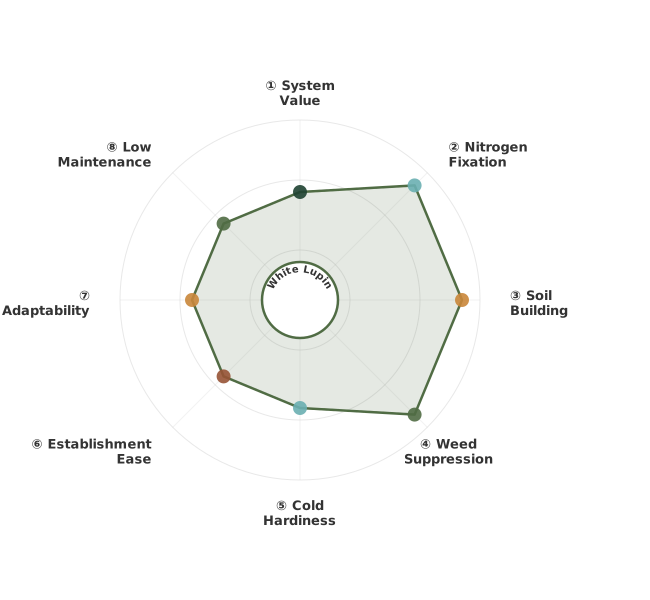
Existing excerpts highlight its value in regenerative agriculture primarily as a cover crop and nitrogen fixer. Studies indicate its potential for significant dry mass production and nutrient accumulation, outperforming other cover crops like bristle oat in some trials. White lupin's taproot penetration can alleviate soil compaction and reduce erosion. It plays a crucial role in soil improvement, contributing to increased soil organic matter and phosphorus levels when incorporated into rotations with crops like wheat. Integrating white lupin into sustainable management practices, alongside microorganisms, shows impacts on labile soil organic matter dynamics. Higher sowing densities can increase both biomass and seed yields. Its inclusion in minimum tillage and no-tillage systems further supports soil health. Although specific details on polyculture layering or pollinator support are not extensively covered, its nitrogen-fixing capability and soil-building potential are well-established within these regenerative contexts. While coverage in our knowledge base is limited, the above represents documented uses in regenerative systems.

Regenerative Quick Profile

All recommendations assume integrated, regenerative practices—not conventional inputs.

Climate & Soil Fit

Climate: Tropical Savanna, Hot Semi-Arid (Steppe), Cold Semi-Arid (Steppe), Cold Desert, Humid Subtropical, Oceanic (Maritime Temperate), Hot-Summer Mediterranean, Warm-Summer Mediterranean, Monsoon-Influenced Humid Subtropical, Subtropical Highland, Hot-Summer Continental, Warm-Summer Continental, Subarctic, Monsoon-Influenced Hot-Summer Continental

Zones: USDA 6-10, Australian Zones 3-8

Optimal Soil: Loam Soil

System Role & Functions

Primary: Cover Crop System

Secondary: Nitrogen Fixer, Cash Crop With Services

Key Benefits: Multi-benefit value, Weed Suppression, Nitrogen Fixation

Management Level

Experience: Beginner-Friendly

Maintenance: Moderate maintenance - White lupine contributes to soil fertility and biomass production with minimal external intervention, benefiting from healthy soil biology and consistent moisture retention practices.

Value Streams

  • Cover crop (soil investment)
  • Soil building and erosion control
1

Climate Suitability Assessment

Will this plant thrive in your climate?

IDEALLY SUITED

Köppen Zone: Cfa (Humid Subtropical), Cfb (Oceanic (Maritime Temperate)), Dfa (Hot-Summer Continental), Dfb (Warm-Summer Continental)
USDA Zone: 5a, 5b, 6a, 7a
EU Climate Region: atlantic

White lupin thrives in climates with mild temperatures, consistent moisture, and a growing season of 120-180 frost-free days, conditions met in Köppen Cfb, Dfb, and EU Atlantic regions, as well as USDA zones 7a-7b. These environments support reliable spring establishment when soil temperatures reach 45-50°F (7-10°C), allowing for robust root development. Optimal growth occurs with daytime temperatures between 60-75°F (15-24°C), with minimal stress from summer heat or humidity. Adequate annual rainfall (30-50 inches/75-125 cm) ensures consistent growth and nitrogen fixation, which can reach 80-150 lbs/acre (90-170 kg/ha). Stand persistence averages 2-3 years, with potential for longer in ideal conditions. Minimal management is required, primarily focused on proper soil preparation and seeding, keeping input costs low. These zones allow white lupin to maximize its benefits as a cover crop, contributing significantly to soil fertility and structure.

ADEQUATE

Köppen Zone: BSk (Cold Semi-Arid (Steppe)), Csa (Hot-Summer Mediterranean), Csb (Warm-Summer Mediterranean), Cwa (Monsoon-Influenced Humid Subtropical), Cwb (Subtropical Highland)
USDA Zone: 4a, 8a
Australian Zone: temperate
EU Climate Region: continental

White lupin can perform adequately in climates with moderate temperature fluctuations and variable moisture, including Köppen Cfa, Csb, Dfa, Dfb, EU Continental, Australian Temperate, and USDA zones 5b-6b, 8a-8b. These regions offer a growing season of 100-160 frost-free days, allowing for successful annual cultivation. However, challenges may arise from summer heat (above 80°F/27°C) which can reduce nitrogen fixation by 10-20% and increase disease susceptibility, or from periods of drought requiring supplemental irrigation (10-20 inches/25-50 cm). Winter survival is possible but not guaranteed, often limiting its use to annual or short-lived cover cropping. Yields and nitrogen contributions are generally good but may be 10-25% lower than in ideal climates. Management may involve careful timing of planting and potentially disease monitoring, increasing operational costs slightly.

NOT RECOMMENDED

Köppen Zone: Af (Tropical Rainforest), Am (Tropical Monsoon), Aw (Tropical Savanna), ET (Tundra), BSh (Hot Semi-Arid (Steppe)), BWh (Hot Desert), BWk (Cold Desert), Dfc (Subarctic), Dwa (Monsoon-Influenced Hot-Summer Continental)
USDA Zone: 2a, 3a, 3b, 9a, 10a, 11a, 12a
Australian Zone: subtropical

White lupin is not recommended for climates with extreme temperature ranges, prolonged heat, or insufficient moisture, encompassing Köppen Csa, BSh, and regional zones like USDA 3a-5a, 9a-10b, Australian Subtropical, and parts of EU Mediterranean. In hot, dry climates (USDA 9-10, Australian Subtropical), summer temperatures exceeding 90°F (32°C) for extended periods cause severe heat stress, drastically reducing nitrogen fixation (by 50-70%) and leading to poor stand establishment and survival. Water requirements increase significantly (40-50 inches/100-125 cm), necessitating intensive irrigation infrastructure, making it economically unfeasible. In very cold climates (USDA 3-5), extreme winter temperatures (-40 to -15°F) cause near-certain winter kill, negating its perennial benefits and limiting it to a risky annual. Establishment success rates can drop below 60% due to these challenging conditions. Alternative nitrogen-fixing legumes better adapted to heat (e.g., Cowpea, Sunn Hemp) or cold (e.g., Hairy Vetch, Winter Rye) are far more practical and cost-effective.

Better alternatives for these "not recommended" zones: Cowpea (highly heat and drought tolerant nitrogen-fixing legume for warm zones), Sunn Hemp (tropical nitrogen fixer adapted to hot, humid conditions), Hairy Vetch (cold-hardy annual legume for nitrogen fixation in cold zones), Winter Rye (extremely cold-hardy cover crop for biomass and soil protection)

Note: Zones listed above represent climates where this plant can produce reliably with reasonable management. Climate zones not mentioned would require intensive climate modification (greenhouses, extensive infrastructure) and are not economically viable for regenerative agriculture purposes.

2

Soil Suitability Assessment

Which soil types work best for this plant?

IDEALLY SUITED

Loam Soil

This plant thrives in these soil types without requiring amendments or remediation. Natural soil conditions support optimal growth and productivity.

ADEQUATE

Clay Soil, Rich Soil, Rocky Soil, Sandy Soil

This plant performs acceptably in these soil types with moderate, manageable remediation such as pH adjustment, compost addition, or drainage improvement. The required amendments are practical and cost-effective for regenerative agriculture.

NOT RECOMMENDED

Acidic Soil, Alkaline Soil, Desert Soil, Saline Soil, Wet Soil

Growing this plant in these soil types would require impractical remediation such as complete soil replacement, extensive amendments, or cost-prohibitive infrastructure. These conditions are not economically viable for regenerative agriculture.

Note: Soil suitability assessments focus on remediation requirements. "Ideally Suited" means the plant generally thrives without the need for substantial amendments, "Adequate" means manageable remediation (lime, compost, mulch), and "Not Recommended" means impractical soil changes would be required. Climate factors like rainfall and temperature also influence success.

3

Seasonal Considerations

Planting timing, growth duration, and harvest windows

White lupin offers flexible timing for regenerative systems. For a spring planting, aim for early spring, as soon as the soil can be worked and after the risk of hard frost has passed, benefiting from its frost tolerance. Establishment typically takes 2-4 weeks. If considering a fall planting, sow late summer to early fall, ensuring at least 6-8 weeks of growth before the first expected frost. This allows for good root development and biomass accumulation before winter dormancy.

In milder climates (Cfa, Cfb, Csa, Csb), white lupin can overwinter effectively, providing excellent winter cover and breaking dormancy in early spring. In colder zones (Dfa, Dfb), overwinter survival is less reliable, and it may act more as an annual. Termination is crucial and should occur when the plant reaches peak biomass but before it sets seed and becomes woody. This is typically 6-10 weeks after establishment in spring growth cycles, or in late spring before planting your main cash crop. For summer planting, it's generally not ideal due to heat sensitivity, but if pursued, it would be after your spring cash crop harvest and well before your fall cash crop planting, with termination before it impacts subsequent operations.

4

System Role & Multi-Benefit Value

Functional roles, integration strategies, and stacked benefits

Functional Role

Total System Value

White lupin offers significant whole-farm resilience through multiple benefit stacking. Its direct value lies in its potential as a protein-rich forage or grain, although its primary role in regenerative systems is as a cover crop. As a nitrogen fixer, it reduces the need for synthetic fertilizers, directly lowering input costs and enhancing soil fertility for subsequent crops. Its physical impact on soil, breaking up compaction and increasing organic matter, improves water infiltration and retention, a critical ecosystem service in variable climates. While not a primary pollinator support species, its biomass contributes to overall soil biodiversity. Risk diversification is achieved by improving soil health, making the farm less susceptible to drought, erosion, and pest outbreaks, and by providing an alternative nitrogen source, reducing reliance on external, volatile inputs.

Integration Characteristics

Multi-Benefit Value: Ideally Suited - This legume significantly boosts soil fertility through nitrogen fixation and enhances soil structure with its substantial biomass, while also offering effective weed suppression.

5

Management & Care Requirements

Integration guidance, maintenance needs, and care practices

How to Integrate This Plant

White lupin (Lupinus albus) serves as a valuable cover crop, primarily functioning to improve soil health and fix atmospheric nitrogen. Its deep taproot system helps alleviate soil compaction, while its biomass production contributes to organic matter accumulation, reducing erosion and improving weed control. Integrate white lupin into crop rotations, especially with grains like wheat, as demonstrated in studies showing yield and quality improvements. It can be used in minimum or no-tillage systems to enhance soil structure and nutrient cycling. While not explicitly mentioned for windbreaks or shade, its role in soil improvement is foundational. Year 1 contribution focuses on nitrogen fixation and initial soil structure improvement. By Year 3-5, its benefits in organic matter and reduced compaction become more pronounced, leading to better subsequent crop yields. The multi-benefit stacking includes nitrogen fixation, soil aeration, organic matter addition, erosion control, and potential weed suppression, all contributing to a more resilient and productive farming system.

Integration Practices & Management

It points to its role in soil health and crop rotation. Establishment methods are touched upon, with suggestions of seeding rates and its use in minimum tillage and no-tillage systems. White lupin has demonstrated superior dry mass production in some experiments, suggesting significant biomass generation for soil improvement. Integration with grazing is not detailed in the provided text. Termination strategies are also not explicitly described, though natural winterkill or termination methods used for other cover crops might be applicable. Management considerations are implicitly addressed through its nitrogen-fixing capabilities and its impact on soil organic matter and phosphorus. White lupin is shown to be a valuable component in rotation sequences with cash crops like wheat, positively influencing yield and quality. While specific farmer experiences are absent, the sources highlight its potential benefits for soil improvement, nutrient cycling, and enhancing the performance of subsequent crops within regenerative systems. While coverage in our knowledge base is limited, the above represents documented uses in regenerative systems.

Management Profile

Maintenance Intensity: Adequate - White lupine contributes to soil fertility and biomass production with minimal external intervention, benefiting from healthy soil biology and consistent moisture retention practices.

6

Economics & Value Streams

Direct harvest, system benefits, ecosystem services, and risk diversification

Comprehensive economic analysis including direct harvest value, system enhancement contributions, ecosystem services, value timeline, and risk diversification strategies.

Cover Crop Investment

Metric Value
Seed Cost $30-60/acre $74-148/ha
Termination Cost 20-50 49-124
Biomass Production 2-5 4-11
N Fixation Value 80-150 90-168
Weed Control Savings 15-40 37-99

Cover crops are soil investments, not cash crops. Economics measured in soil health gains, input reduction, and subsequent crop performance. Values show direct costs and estimated benefits.

System Enhancement Value

Beyond cost recovery: soil building, nitrogen, biomass, and weed suppression

Nitrogen Fixation & Cycling

80-150 lbs N/acre/year (derived from 34-112 kg N/ha/year reference data) = $48-135/acre fertilizer replacement (assuming $0.75/lb N fertilizer cost, variable based on N price and fixation efficiency)

White lupin (*Lupinus albus*) is a highly effective nitrogen fixer, a critical ecosystem service for integrated farm systems. As a legume, it forms symbiotic relationships with *Rhizobium lupini* bacteria to convert atmospheric nitrogen into plant-available forms. Knowledge base excerpts indicate significant nitrogen fixation potential, with values ranging from 250-450 kg N/ha cited for lupins in general, and white lupin specifically noted to fix up to 200 kg N/ha. This capability is particularly valuable in reducing reliance on synthetic nitrogen fertilizers, which are energy-intensive to produce and can have negative environmental impacts. Furthermore, white lupin's ability to fix nitrogen at pH levels below 5.5 makes it a resilient option for acidic soils, a common challenge in many agricultural regions. The deep taproots of lupins also contribute to soil aeration, which can enhance nutrient cycling and availability, including the phosphorus that white lupin can acquire through rhizosphere acidification, benefiting intercropped species like wheat. This natural nitrogen input directly lowers input costs and improves soil fertility for subsequent crops, contributing to a more sustainable and economically viable farming system.

Soil Building & Weed Suppression

White lupin offers several significant system benefits beyond direct harvest and nitrogen fixation. Its deep taproots not only aerate the soil but can also help to break up compaction layers, improving drainage and root penetration for subsequent crops, as mentioned in the context of intercropping with wheat. The alkaloids present in white lupin can act as natural herbicides, contributing to weed suppression and reducing the need for chemical weed control. Furthermore, studies indicate that white lupin can positively impact labile soil organic matter (CLSOM) dynamics, with potential to maintain or increase soil carbon pools, especially when managed with beneficial microorganisms. This improves soil health and fertility. As a cover crop, it reduces soil erosion, preventing nutrient loss and maintaining soil structure. White lupin can also enhance the uptake of phosphorus by intercropped plants through rhizosphere acidification. Its role in crop rotations, such as with wheat, has demonstrated improvements in wheat yield and quality, reduced disease and pest incidence, and a lower requirement for fertilizer application, leading to better environmental performance as assessed by Life Cycle Assessment.

Erosion Control

Variable, depends on integration into larger erosion control systems; contributes to soil stabilization which indirectly supports windbreak function.

While not a primary function of white lupin itself, its role as a cover crop system can contribute to erosion control and soil stabilization, which are foundational to windbreak and protective functions within an integrated farm. High-density plantings of lupins, as noted for blue lupin, can alleviate soil compaction through increased taproot penetration, leading to improved soil structure. This better soil structure enhances water infiltration and reduces runoff, thereby mitigating soil erosion caused by wind and water. The reduction in erosion protects valuable topsoil, which is essential for maintaining long-term agricultural productivity. By suppressing weeds through its natural alkaloids, white lupin also contributes to a healthier soil environment that is less susceptible to degradation. In systems where lupins are part of a broader cover cropping strategy, they contribute to building soil health, which indirectly supports the effectiveness of physical windbreaks or natural buffer zones by ensuring the underlying soil is stable and resilient. The increased biomass and root systems of cover crops like lupin can also help to slow wind speed at ground level, further reducing wind erosion.

Ecosystem Service Contributions

Environmental contributions: carbon, pollinators, wildlife, and water

  • Carbon Sequestration: White lupin, as a cover crop with significant biomass production potential (peak biomass up to 260 g/m² cited for blue lupin), contributes to carbon sequestration by incorporating atmospheric carbon into its plant tissues and root systems. The organic matter it adds to the soil, particularly when incorporated, enhances soil carbon content over time. Studies suggest potential for maintaining or increasing soil carbon pools, indicating a positive role in carbon storage.
  • Pollinator Support: High (Lupins are known to be attractive to a range of pollinators, including bees, due to their nectar and pollen resources. While specific data for white lupin's pollinator attraction is not detailed in the provided excerpts, the general genus is recognized for this benefit.)
  • Wildlife Habitat: Provides some habitat value through ground cover and potential for foraging, especially in the context of a diverse agricultural landscape. Its biomass can offer shelter for small ground-dwelling organisms.
  • Water Quality: Not applicable

Value Timeline: Soil Building Process

When you'll see results: immediate soil benefits, compounding over seasons

Years 1-2

Erosion control, soil aeration, weed suppression via allelopathy, initial nitrogen fixation, labile soil organic matter improvement, potential for some early harvest if grown as a cash crop.

Years 3-5

Established nitrogen contribution for subsequent crops, improved soil structure and water infiltration, continued weed suppression, potential for first significant cash crop harvest (if applicable), enhanced nutrient cycling.

Years 10-20

Sustained soil health benefits, long-term improvements in soil organic matter, continued resilience against erosion, potential for cascading benefits in crop rotations (e.g., improved yields in companion crops).

20+ Years

Mature soil health, potentially leading to reduced input needs across the entire system, creation of a more resilient and biodiverse farm ecosystem.

Farm Risk Reduction

How this reduces farm risk: lower input costs and better soil resilience

  • Multiple Revenue Streams: Cash crop revenue (grain), nitrogen fertilizer replacement value, soil health improvement (leading to future yield stability), weed management cost reduction, potential for reduced disease/pest control costs.
  • Temporal Income Spread: Annual cover crop benefits (erosion control, N fixation) provide immediate value, while the cash crop aspect offers a distinct harvest revenue stream. Long-term soil health improvements provide ongoing, compounding value.
  • Market Risk Hedge: Reduces reliance on volatile synthetic fertilizer markets. Provides a buffer against drought and soil degradation through improved soil structure and water retention. Diversifies farm revenue streams beyond primary commodity crops.
7

Regenerative Suitability Details

Comprehensive trait ratings for system integration assessment

Comparative ratings for this plant across key regenerative agriculture traits.

Trait Suitability Explanation
Cold Hardiness Adequate White lupine exhibits moderate resilience (Zone 6-8), supporting robust fall growth and enriching soil biology through nitrogen fixation. It can persist through mild winters, contributing to system continuity.
Weed Suppression Ideally Suited White lupine quickly forms a dense ground cover, outcompeting weeds and potentially releasing beneficial compounds that suppress their growth, contributing to a balanced soil ecosystem.
Nitrogen Fixation Ideally Suited As a highly effective legume, white lupine significantly enhances soil fertility by fixing substantial amounts of atmospheric nitrogen, leaving behind beneficial residues for subsequent crops.
Root System Depth Ideally Suited Its deep taproot penetrates compacted soil, improving aeration and water infiltration while accessing nutrients from lower soil profiles, creating a more resilient soil structure.
Biomass Production Ideally Suited White lupine generates abundant organic matter, enriching the soil with nutrients and improving its structure, making it a valuable component for building soil health and fertility.
Establishment Ease Adequate White lupine establishes readily with appropriate soil preparation, demonstrating strong early vitality and contributing to weed management as it matures.
Multi Benefit Value Ideally Suited This legume significantly boosts soil fertility through nitrogen fixation and enhances soil structure with its substantial biomass, while also offering effective weed suppression.
Climate Adaptability Adequate White lupine thrives in moderate climates (USDA zones 6-10) with well-drained soils, performing best when its moisture needs are met through effective water management.
Maintenance Intensity Adequate White lupine contributes to soil fertility and biomass production with minimal external intervention, benefiting from healthy soil biology and consistent moisture retention practices.

Comparative System: Ratings compare plants within their economic category (e.g., cover crop nitrogen fixation compared to other cover crops, not to all plants). Individual farm conditions and management practices significantly influence actual performance.

8

Learn More

Why farmers use this plant and additional resources

Why Regenerative Farmers Use This Plant

Lupinus albus, commonly known as white lupin, is a highly valuable legume cover crop for regenerative agriculture, primarily recognized for its exceptional nitrogen-fixing capabilities. As a legume, it forms a symbiotic relationship with Rhizobium bacteria, converting atmospheric nitrogen into a plant-available form. Under optimal conditions, it can fix between 60-120 lbs of atmospheric nitrogen per acre (67-134 kg/ha) annually, significantly reducing the need for synthetic nitrogen fertilizers in subsequent cash crops. This biological nitrogen input translates to direct cost savings for farmers, potentially reducing fertilizer expenditures by $30-$90 per acre annually, depending on current market prices.

Beyond nitrogen, white lupin produces substantial above-ground biomass, typically ranging from 2,000 to 8,000 lbs/acre (2,240 to 8,960 kg/ha) of dry matter when allowed to mature. This organic matter, when incorporated into the soil, contributes to building soil organic matter over time, enhancing soil structure, water holding capacity, and nutrient cycling in rotations of 3-5 years. Its deep taproot system, reaching depths of 3-6 feet (0.9-1.8 m), also helps to break up soil compaction and bring up immobile nutrients from lower soil profiles, making them available to subsequent crops. Over a 3-5 year rotation, consistent use of legumes like white lupin can increase soil organic matter by 0.1-0.3% annually.

Integrating white lupin into farming systems offers a suite of ecological and economic benefits. As a cover crop, it provides excellent ground cover and weed suppression, outcompeting many common annual weeds through its rapid growth and dense canopy, thereby reducing reliance on costly and environmentally impactful herbicides. This weed suppression is particularly effective during its growth phase, leaving fields cleaner for the following cash crop. Furthermore, the extensive root system of white lupin plays a crucial role in erosion control, binding soil particles and protecting against wind and water erosion, especially on sloping land or during periods of bare soil.

The ecological contributions of white lupin are significant for long-term soil health and farm resilience. Its flowers provide a valuable nectar and pollen source for a variety of pollinators, including bees, hoverflies, and other beneficial insects, supporting local biodiversity and enhancing natural pest control mechanisms within the agroecosystem. The decomposition of its substantial biomass enriches the soil microbiome, fostering a more diverse and active soil ecosystem. This improved soil biology leads to better nutrient cycling and increased water infiltration, reducing water runoff and improving drought resilience. By contributing to soil organic matter, white lupin actively sequesters carbon, playing a role in climate change mitigation efforts.

For livestock operations, white lupin can serve as a high-protein forage, offering nutritional benefits for grazing animals while simultaneously managing crop residue and preparing the land for future planting. Its role in a rotation can also help break disease cycles and improve the performance of subsequent crops.

Farmers across various regions have successfully integrated white lupin into their regenerative practices. In the wheat-growing regions of Western Australia, it is often grown in rotation with cereals to improve soil fertility and break disease cycles, with farmers experiencing improved grain yields in subsequent wheat crops. In the Mediterranean basin, particularly in Spain and Italy, it has a long history of cultivation as a food crop and is increasingly utilized as a cover crop in olive and vineyard systems to enhance soil health and reduce erosion. In parts of the United States, such as the Mid-Atlantic and parts of the Midwest, farmers are incorporating it into corn and soybean rotations to build nitrogen fertility and improve soil structure, observing better soil tilth and reduced pest pressure in following cash crops. In the UK's temperate climate, it is often grown as a winter cover crop in cereal rotations, providing nitrogen for the following wheat crop and being terminated in spring. In Australia's Mediterranean climate, it is used in wheat-sheep systems, fixing nitrogen and providing valuable forage during the dry summer months before being grazed or terminated. Brazilian coffee growers also utilize white lupin as an intercrop, enhancing soil fertility and reducing erosion on slopes.

Sources behind this view

Research
9

How to Integrate This Plant

Practical guidance for regenerative systems

Establishing white lupin requires careful attention to seeding rates, depth, and timing to maximize its benefits. For broadcast seeding, rates typically range from 75-120 lbs/acre (84-134 kg/ha), while drilled seeding can be slightly lower, around 40-70 lbs/acre (45-78 kg/ha) in the US Midwest context or 60-90 lbs/acre (67-101 kg/ha) more generally, depending on seed quality and desired stand density. The optimal planting depth is crucial for germination and is generally between 0.5-1.5 inches (1.3-3.8 cm).

Planting timing varies by hemisphere and region. In the Northern Hemisphere, spring planting is common, occurring from March to May, while in the Southern Hemisphere, planting typically takes place from March to May. In the UK, farmers might sow white lupin in early spring or late summer after cereal harvest. In the southeastern United States, it can be planted in the fall (September-October) as a winter cover crop. In the US Midwest, it can be interseeded into standing corn at the V4-V6 stage. Optimal growth occurs when temperatures are between 10-24°C (50-75°F). Spacing for drilled seed is generally between 6-12 inches (15-30 cm) row width, allowing for good plant development.

Management of white lupin focuses on maximizing its soil-building potential while integrating it seamlessly into the farming operation. It requires moderate moisture, with approximately 1-1.5 inches (2.5-3.8 cm) of rainfall or irrigation per week during establishment and active growth. While white lupin is a legume and fixes its own nitrogen, it benefits from adequate phosphorus and potassium, which can be supplied through compost, manure integration, or crop residue decomposition. The plant typically establishes within 30-45 days and reaches maturity in 90-120 days, with a mature height of 2-5 feet (0.6-1.5 m). Pest and disease management should prioritize biological control and cultural practices; for instance, crop rotation helps prevent the buildup of soil-borne diseases, and intercropping with a grass can sometimes deter certain insect pests. Beneficial insects are often attracted to lupin, aiding in natural pest control.

Termination and residue management are critical for realizing the full benefits of white lupin as a cover crop. The preferred termination hierarchy begins with natural winterkill in regions with sufficiently cold winters (below -9°C/15°F or -18°C/0°F depending on the variant's specific threshold). Where winterkill is unreliable, grazing with livestock in late winter or early spring can effectively reduce biomass and incorporate residue through hoof action, ideally done before flowering. Mowing or crimping at the flower bud stage, full bloom, or the 50% bloom stage is the next best mechanical option, creating a mulch that suppresses weeds and conserves soil moisture. Roller-crimping at the late-flowering or early-seed set stage is a highly effective mechanical termination method that creates a dense mulch mat. Termination should ideally occur 2-3 weeks before planting the subsequent cash crop to allow for initial residue breakdown and nitrogen release. Expect the residue to decompose over 30-60 days (or 4-8 weeks), releasing 50-70% of the fixed nitrogen. This provides a significant nitrogen credit for the following crop, typically estimated at 60-80 lbs N/acre (67-90 kg/ha), though this can vary based on soil type, climate, and termination method. Farmers should consider whether to allow for volunteer lupin establishment in subsequent years or to actively prevent reseeding, depending on their cropping system and weed management goals. If self-reseeding is undesirable, ensure termination occurs before significant seed set.