Available data suggests its potential role in regenerative agriculture, particularly in soil improvement and ecosystem restoration. Studies indicate its presence in shrubland ecosystems alongside other vegetation, contributing to soil organic carbon (SOC) and plant-derived lignin phenols (LPs), especially in topsoil layers. Further research in saline-alkali soils highlights its potential for soil improvement, with *L. chinense* showing promise for adaptation and growth in challenging conditions. Investigations into its growing regions also reveal variations in soil organic matter and nitrate concentrations, suggesting an interaction with soil fertility. Although direct applications like cover cropping or nitrogen fixation aren't explicitly detailed in these excerpts, its inclusion in ecological restoration and soil improvement studies points to its utility in building soil health and potentially contributing to carbon sequestration. Farmer experiences are not detailed in the provided text, but its observed resilience in saline-alkali soils indicates a potential for integration into degraded land reclamation efforts. While coverage in our knowledge base is limited, the above represents documented uses in regenerative systems.

Regenerative Quick Profile

All recommendations assume integrated, regenerative practices—not conventional inputs.

Climate & Soil Fit

Climate: Tropical Rainforest, Tropical Monsoon, Tropical Savanna, Hot Semi-Arid (Steppe), Cold Semi-Arid (Steppe), Hot Desert, Cold Desert, Humid Subtropical, Oceanic (Maritime Temperate), Hot-Summer Mediterranean, Warm-Summer Mediterranean, Monsoon-Influenced Humid Subtropical, Subtropical Highland, Hot-Summer Continental, Warm-Summer Continental, Subarctic, Monsoon-Influenced Hot-Summer Continental, Tundra

Zones: USDA 4-9, Australian Zones 3-8

Optimal Soil: Loam Soil

System Role & Functions

Primary: Soil Remediation

Secondary: Cash Crop With Services, Specialty

Key Benefits: Climate adaptable, Cold Hardiness

Management Level

Experience: Beginner-Friendly

Maintenance: Moderate maintenance - With appropriate fertility management through compost and mulch, and mindful water management, Chinese wolfberry thrives, integrating seamlessly into the farm ecosystem.

Value Streams

  • Diversifies farm income
  • Enhances biodiversity
1

Climate Suitability Assessment

Will this plant thrive in your climate?

IDEALLY SUITED

Köppen Zone: Af (Tropical Rainforest), Am (Tropical Monsoon), Aw (Tropical Savanna), Cfa (Humid Subtropical), Cwa (Monsoon-Influenced Humid Subtropical)
USDA Zone: 6a, 7a, 8a, 9a, 10a, 11a, 12a
Australian Zone: temperate

Chinese Wolfberry thrives in climates with mild winters and warm to hot summers, offering 180-240 frost-free days and average summer temperatures between 70-85°F (21-29°C). These conditions are met in USDA Zones 7a-8b, Australian Temperate zones, and Köppen Cfa (with caveats). Winters provide sufficient chill for dormancy without causing severe damage (0-20°F / -18 to -7°C), promoting robust perennial growth. Long growing seasons ensure ample time for fruit development and ripening, leading to high yields and consistent quality. Establishment is very reliable, with minimal need for special protection or intensive management. Soil remediation potential is high due to its hardy nature and ability to fix nitrogen, contributing to soil health. These zones offer the most reliable and economically viable cultivation for both fruit production and ecological benefits.

ADEQUATE

Köppen Zone: BSh (Hot Semi-Arid (Steppe)), BSk (Cold Semi-Arid (Steppe)), Cfb (Oceanic (Maritime Temperate)), Csa (Hot-Summer Mediterranean), Csb (Warm-Summer Mediterranean), Cwb (Subtropical Highland), Dfa (Hot-Summer Continental), Dfb (Warm-Summer Continental)
USDA Zone: 5a, 5b
Australian Zone: subtropical
EU Climate Region: atlantic

Chinese Wolfberry can be grown successfully in climates with adequate growing seasons and manageable temperature extremes, though with some considerations. These include USDA Zones 5b-6b, 9a-10b, Australian Subtropical, Köppen Cfb, and EU Atlantic regions. While these zones offer sufficient warmth and length of season for fruit production, they may present challenges such as insufficient winter chill (in warmer zones) leading to reduced dormancy and vigor, or occasional extreme summer heat and humidity (in subtropical/humid zones) increasing disease risk. Establishment is generally good, but occasional management for winter protection or disease control might be necessary. Yields and perennial health are typically good but may not reach the peak potential seen in 'ideally suited' zones. These regions offer a balance of feasibility and productivity, making it a viable option with appropriate site selection and management practices.

NOT RECOMMENDED

Köppen Zone: ET (Tundra), BWh (Hot Desert), BWk (Cold Desert), Dfc (Subarctic), Dwa (Monsoon-Influenced Hot-Summer Continental)
USDA Zone: 2a, 3a, 3b, 4a
EU Climate Region: continental

Chinese Wolfberry is not recommended for cultivation in climates with extreme winter cold or very short growing seasons, specifically Köppen Dfa, Dfb, Dwa, Dwb, USDA Zones 3a-5a, and EU Continental regions. These zones experience winter temperatures far below the plant's survival threshold (-15°F / -26°C), leading to high rates of winter kill and unreliable perennialization. The extreme cold makes establishment risky and requires significant, often uneconomical, winter protection. In very short growing seasons, fruit production and ripening are severely limited. While technically possible to grow as an annual in some of these zones, the economic viability is questionable due to low yields, high failure rates, and the need for intensive management. Alternative cold-hardy and adaptable berry species are better suited for these challenging environments.

Better alternatives for these "not recommended" zones: Honeyberry (Lonicera caerulea) (Extremely cold-hardy, ripens early in short growing seasons.), Aronia Berry (Aronia melanocarpa) (Very cold-hardy and adaptable, produces nutritious berries.), Serviceberry (Amelanchier spp.) (Cold-hardy native shrub with edible berries.), Lingonberry (Vaccinium vitis-idaea) (Adapted to cold climates and short growing seasons.)

Note: Zones listed above represent climates where this plant can produce reliably with reasonable management. Climate zones not mentioned would require intensive climate modification (greenhouses, extensive infrastructure) and are not economically viable for regenerative agriculture purposes.

2

Soil Suitability Assessment

Which soil types work best for this plant?

IDEALLY SUITED

Loam Soil

This plant thrives in these soil types without requiring amendments or remediation. Natural soil conditions support optimal growth and productivity.

ADEQUATE

Clay Soil, Desert Soil, Rich Soil, Rocky Soil, Sandy Soil

This plant performs acceptably in these soil types with moderate, manageable remediation such as pH adjustment, compost addition, or drainage improvement. The required amendments are practical and cost-effective for regenerative agriculture.

NOT RECOMMENDED

Acidic Soil, Alkaline Soil, Saline Soil, Wet Soil

Growing this plant in these soil types would require impractical remediation such as complete soil replacement, extensive amendments, or cost-prohibitive infrastructure. These conditions are not economically viable for regenerative agriculture.

Note: Soil suitability assessments focus on remediation requirements. "Ideally Suited" means the plant generally thrives without the need for substantial amendments, "Adequate" means manageable remediation (lime, compost, mulch), and "Not Recommended" means impractical soil changes would be required. Climate factors like rainfall and temperature also influence success.

3

Seasonal Considerations

Planting timing, growth duration, and harvest windows

Lycium chinense offers flexible cover cropping options across a range of climates. For spring planting, sow seeds after the danger of hard frost has passed, allowing them to establish before warmer summer temperatures arrive. In fall, aim to plant several weeks before the first expected frost to give seedlings a chance to develop a robust root system before winter dormancy. While not ideal for a true summer cover, if initiated in early summer, it can provide ground cover through warmer months, though irrigation may be crucial for establishment.

Expect Lycium chinense to establish within a few weeks under favorable conditions. In colder zones (Dfa, Dfb), it will likely enter dormancy over winter, with survival depending on the severity of the freeze. Termination is best achieved in spring, well before planting your main cash crop, using mechanical methods or targeted tillage. Its peak biomass period generally occurs in mid-to-late summer of its first full growing season. Consider it as a winter cover in milder climates (Cfa, Cfb) or as a component in a longer-term rotation, recognizing its perennial nature and eventual transition into production.

4

System Role & Multi-Benefit Value

Functional roles, integration strategies, and stacked benefits

Functional Role

Total System Value

Chinese wolfberry offers significant value in regenerative agriculture by addressing soil health challenges and providing a dual-benefit harvest. Its ability to thrive in saline-alkali soils makes it a key species for remediating degraded land, directly improving soil structure and fertility, as evidenced by its role in soil organic matter and nutrient cycling studies. The direct harvest of its nutrient-rich berries provides an economic return and valuable food source. System enhancement comes from its role in soil stabilization and its contribution to shrubland ecosystems, which can support biodiversity and provide habitat. As a hardy shrub, it contributes to water infiltration and reduces erosion. This plant diversifies farm income streams through its fruit and enhances the resilience of the agricultural landscape by improving soil conditions and supporting ecological functions, making the overall system more robust against environmental stresses.

Integration Characteristics

Multi-Benefit Value: Adequate - Edible fruit offers food for wildlife and humans, while its moderate drought tolerance and soil stabilization capabilities benefit landscape resilience.

5

Management & Care Requirements

Integration guidance, maintenance needs, and care practices

How to Integrate This Plant

Chinese wolfberry (Lycium chinense) can be integrated into regenerative systems primarily for soil remediation and as a component of shrublands. The plant demonstrates a capacity for soil improvement, particularly in saline-alkali soils, as noted in studies evaluating its suitability for such environments. It can be established in areas requiring ecological restoration, contributing to soil organic carbon and potentially improving soil fertility over time, as indicated by its presence in shrubland restoration studies. SYSTEM ROLES: Soil remediation, erosion control, potential habitat for beneficial insects, and a source of harvestable fruit. COMPATIBLE PRACTICES: Shrubland restoration, agroforestry systems, and potentially as a component in hedgerows or windbreaks where shrub dominance is desired. TIMELINE TO CONTRIBUTION: Year 1-2: Establishment and initial soil stabilization. Year 3-5: Begins contributing to soil organic matter and fruit production. Year 5+: Established plant provides significant soil improvement and consistent harvest. MULTI-BENEFIT STACKING: Beyond its direct fruit harvest, wolfberry enhances soil health, particularly in challenging saline-alkali conditions. It contributes to biodiversity by providing habitat and can be part of larger ecological restoration efforts, improving overall landscape resilience.

Integration Practices & Management

While the knowledge base indicates *L. chinense* has been studied in ecological restoration and for its potential in saline-alkali soils, detailed information on establishment methods, integration with grazing, termination strategies, or management considerations within a regenerative framework is not present. Source mentions *Lycium chinense* as a shrubland vegetation type in an ecological restoration study, providing data on soil organic carbon, amino sugars, and lignin phenols across soil depths. Source investigates soil properties and microbial communities in *Lycium chinense* growing regions, noting variations in soil organic matter and nitrate concentrations. Source evaluates *L. chinense* for its suitability and soil improvement potential in saline-alkali soils alongside other economic plants. However, none of these excerpts describe how regenerative farmers practically establish, manage, or terminate this plant, nor how it is integrated with cash crops or grazing systems. Therefore, specific farmer experiences and detailed integration strategies for *Lycium chinense* within regenerative agriculture are not discernible from this knowledge base. While coverage in our knowledge base is limited, the above represents documented uses in regenerative systems.

Management Profile

Maintenance Intensity: Adequate - With appropriate fertility management through compost and mulch, and mindful water management, Chinese wolfberry thrives, integrating seamlessly into the farm ecosystem.

Sources behind this view

Research
6

Economics & Value Streams

Direct harvest, system benefits, ecosystem services, and risk diversification

Comprehensive economic analysis including direct harvest value, system enhancement contributions, ecosystem services, value timeline, and risk diversification strategies.

Cover Crop Investment

Metric Value
Seed Cost $20-50/acre $49-124/ha
Termination Cost 20-60 49-148
Biomass Production 1.5-3 3-7
N Fixation Value N/A N/A
Weed Control Savings 15-40 37-99

Cover crops are soil investments, not cash crops. Economics measured in soil health gains, input reduction, and subsequent crop performance. Values show direct costs and estimated benefits.

System Enhancement Value

Beyond harvest: soil healing, contamination removal, and land restoration

Soil Remediation & Building

The primary function of Lycium chinense is soil remediation, with studies indicating its influence on soil organic carbon (SOC), amino sugars (ASs), and lignin phenols (LPs). It thrives in high pH soils (7.6-8.2), potentially improving soil structure and nutrient availability in alkaline or degraded lands. The plant's root system is implicated in influencing microbial community composition and nutrient cycling, particularly nitrogen fixation, nitrification, and denitrification. Furthermore, both young leaves and berries are edible and highly valued in traditional Chinese medicine, offering a dual benefit as a food source and a medicinal ingredient. The berries are rich in vitamins and flavonoids, with ongoing investigation into their potential for cancer prevention. This medicinal value, coupled with its potential to improve soil health, positions Lycium chinense as a multi-functional component in integrated farm systems, contributing to both ecological resilience and economic diversification beyond direct harvest.

Erosion Control

Variable, dependent on planting density and scale. Potential for 5-15% crop yield improvement in protected areas.

While Lycium chinense is described as a shrub that can grow up to 12 feet tall, its primary function as a soil remediator and its dense, thorny growth habit suggest potential for windbreak and erosion control. The shrubland category in the ecological restoration study included Lycium chinense, implying its use in vegetative cover that influences soil properties. Its ability to establish in challenging soil conditions, as indicated by its high pH tolerance (7.6-8.2), suggests resilience in areas prone to wind erosion. The thorny nature can also deter livestock from overgrazing, further protecting the soil. In systems seeking to stabilize soil on slopes or in exposed areas, a dense planting of wolfberry could create a physical barrier against wind, reducing soil particulate movement and potentially improving microclimate conditions for other crops or pasture. The root system, though not explicitly detailed for its depth in the provided excerpts, would contribute to soil binding.

Ecosystem Service Contributions

Environmental contributions: carbon, pollinators, wildlife, and water

  • Carbon Sequestration: As a shrub that can grow up to 12 feet tall, Lycium chinense contributes to carbon sequestration through biomass accumulation in both above-ground and below-ground tissues. Its role in ecological restoration studies suggests it can increase soil organic carbon (SOC) over time, particularly in the topsoil layers.
  • Pollinator Support: High. Produces purple flowers from June to September, providing a long blooming period that supports a variety of pollinators throughout the growing season.
  • Wildlife Habitat: Moderate. The scarlet berries are edible and can be a food source for birds and small mammals. The dense, thorny shrub structure can offer nesting sites and protective cover for wildlife.
  • Water Quality: Not applicable

Value Timeline: Soil Healing Process

When you'll see results: remediation timeline varies by contamination type

Years 1-2

Initial soil remediation benefits begin, with establishment of root systems contributing to soil stabilization and potential for early windbreak effects. First year fruit harvest is possible from rooted cuttings.

Years 3-5

Established windbreak and erosion control benefits become more pronounced. Continued soil improvement through organic matter accumulation and microbial community enhancement. Consistent fruit and leaf production for harvest and medicinal use.

Years 10-20

Mature shrub providing significant soil remediation and ecosystem services. Potential for denser, more robust windbreak. Maximized medicinal and cash crop potential.

20+ Years

Long-term soil health improvement and stable provision of ecosystem services. Continued medicinal and cash crop value, potentially with reduced management needs as the system matures.

Farm Risk Reduction

How this reduces farm risk: future land value and production potential

  • Multiple Revenue Streams: Cash crop revenue from berries, medicinal ingredient sales (berries and root bark), potential sales of young edible leaves, and ecosystem services (soil health improvement, potential windbreak value).
  • Temporal Income Spread: Annual harvest of berries and leaves, with ongoing soil remediation and ecosystem services provided continuously. Value is generated both through periodic harvests and continuous ecological contributions.
  • Market Risk Hedge: Diversifies income streams beyond traditional crops, reducing reliance on single markets. Its medicinal value offers a niche market. Its resilience to high pH soils and potential for soil remediation makes it suitable for marginal or degraded lands, increasing farm adaptability.
7

Regenerative Suitability Details

Comprehensive trait ratings for system integration assessment

Comparative ratings for this plant across key regenerative agriculture traits.

Trait Suitability Explanation
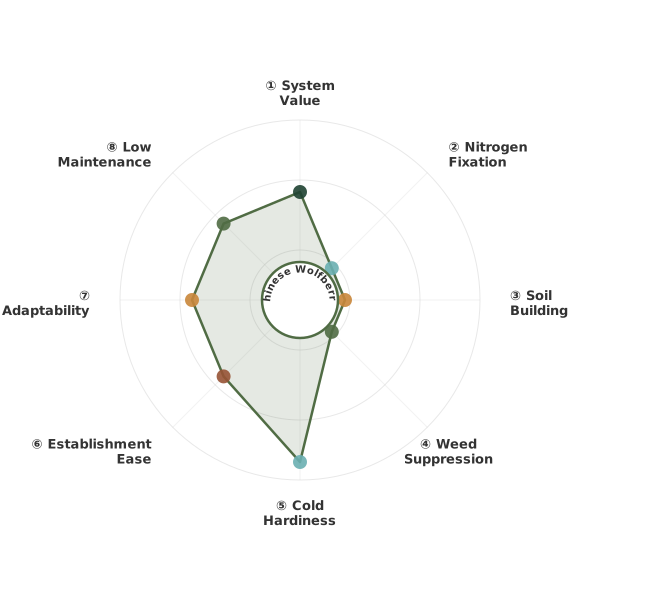
Cold Hardiness Ideally Suited Chinese wolfberry is exceptionally cold-hardy (Zone 3-9), forming a robust perennial shrub that provides consistent winter ground cover and habitat.
Weed Suppression Not Recommended As a shrub with an open structure, Chinese wolfberry offers limited immediate weed suppression, but its perennial nature contributes to soil health over time.
Nitrogen Fixation Not Recommended Chinese wolfberry is not a nitrogen-fixing species; its value lies in its fruit production and contribution to the overall farm ecosystem.
Root System Depth Not Recommended This woody shrub possesses a deep root system that enhances soil structure and water infiltration, contributing to improved soil health.
Biomass Production Not Recommended The slow-decomposing woody biomass from Chinese wolfberry contributes to long-term soil organic matter and habitat, rather than immediate cover cropping benefits.
Establishment Ease Adequate Chinese wolfberry establishes reliably, tolerates marginal conditions, and develops good vigor, naturally outcompeting weeds as the system matures.
Multi Benefit Value Adequate Edible fruit offers food for wildlife and humans, while its moderate drought tolerance and soil stabilization capabilities benefit landscape resilience.
Climate Adaptability Ideally Suited Chinese matrimony vine demonstrates broad climate adaptability, thriving across USDA zones 4-9 with resilience to temperature and moisture fluctuations.
Maintenance Intensity Adequate With appropriate fertility management through compost and mulch, and mindful water management, Chinese wolfberry thrives, integrating seamlessly into the farm ecosystem.

Comparative System: Ratings compare plants within their economic category (e.g., cover crop nitrogen fixation compared to other cover crops, not to all plants). Individual farm conditions and management practices significantly influence actual performance.

8

Learn More

Why farmers use this plant and additional resources

Why Regenerative Farmers Use This Plant

Lycium chinense, commonly known as Chinese wolfberry or Goji berry, offers significant regenerative benefits when integrated into agricultural systems, particularly as a perennial cover crop or a component of agroforestry. While not a legume, its deep root system contributes substantially to soil health by improving aeration and water infiltration, reaching depths of 6-15 feet (1.8-4.5 meters) over time. This extensive root network helps to break up compacted soils, making them more amenable to subsequent cash crops and reducing the need for mechanical tillage. The plant's ability to scavenge nutrients from deeper soil profiles also makes it valuable for nutrient cycling, bringing essential elements closer to the surface where they can be utilized by shallower-rooted plants. Over a 3-5 year rotation, the decomposition of its woody biomass and leaf litter, along with its extensive root system, contributes to soil organic matter, enhancing soil structure, water-holding capacity, and microbial activity. Its persistent nature means it contributes to soil health year-round, reducing erosion and sequestering carbon.

Beyond soil building, Lycium chinense provides substantial ecosystem services. It is a magnet for pollinators, with its abundant small, purple flowers, which bloom from early summer to fall, attracting a wide array of bees, butterflies, and other beneficial insects throughout its blooming period. This increased pollinator activity can benefit adjacent cash crops, enhancing yields and fruit set. The dense, shrubby growth habit also offers excellent habitat and protection for beneficial insects and ground-dwelling organisms, contributing to natural pest control within the farm ecosystem. The berries themselves are a valuable food source for birds and other wildlife. Its ability to thrive in marginal conditions and its drought tolerance make it a robust choice for erosion control on slopes and in areas prone to degradation, stabilizing soil and preventing nutrient runoff.

The integration of Lycium chinense can lead to tangible economic and ecological advantages. The berries themselves are a high-value crop with a growing global market, offering a direct income stream. Furthermore, its role in improving soil fertility and reducing the need for synthetic inputs translates into significant cost savings for farmers. By improving soil structure and nutrient availability, it can contribute to a potential reduction in fertilizer costs by 15-30% for companion or rotational crops over several years. Its longevity also means it requires less frequent replanting compared to annual crops, further reducing labor and establishment costs. In mixed farming operations, it can be incorporated into hedgerows or buffer strips, providing a dual role of erosion control and habitat for natural pest predators.

Regional success stories highlight the adaptability of Lycium chinense. In Chinese agricultural landscapes, it has been cultivated for centuries, often intercropped with other species or grown in agroforestry systems, demonstrating its compatibility and benefits in diverse farming contexts. In the arid and semi-arid regions of Northwest China and Central Asia, it has been cultivated for centuries, demonstrating its drought tolerance and ability to thrive in sandy soils, contributing to desertification control and stabilization on sandy soils, requiring minimal irrigation once established. Farmers in the southwestern United States have explored its use in permaculture designs and drought-tolerant landscaping. In the corn-soybean rotations of the US Midwest, it can be incorporated into buffer strips or field borders to enhance biodiversity and soil stability. In the UK's mixed farming systems, it can be integrated into hedgerows or silvopasture designs, providing forage for livestock and habitat for beneficials. In Australian dryland farming regions, its drought tolerance makes it suitable for establishing windbreaks or erosion control plantings, and farmers are exploring its use in dryland farming systems for its soil-stabilizing properties and potential as a drought-tolerant cash crop. In Brazilian coffee plantations, it can be used as an understory plant in agroforestry systems, contributing to soil cover and nutrient cycling, or planted on field edges to attract beneficial insects.

9

How to Integrate This Plant

Practical guidance for regenerative systems

Establishing Lycium chinense can be achieved through direct seeding, cuttings, root divisions, or transplants, offering flexibility for different farm scales and goals. For direct seeding, a rate of 0.5-1 lb/acre (0.56-1.12 kg/ha) is typically recommended, with seeds planted at a depth of 0.25-0.5 inches (0.6-1.3 cm). For faster establishment and to ensure genetic consistency, cuttings or root divisions are often preferred, planted at a spacing of 6-10 feet (1.8-3 meters) apart, which translates to approximately 400-700 plants per acre. When planting young shrubs, spacing can range from 4 to 8 feet (1.2 to 2.4 meters) apart, depending on the desired density and management system. Planting depth should ensure the root ball is covered, with the top of the root ball level with or slightly below the soil surface. For cuttings, they are typically planted directly into the soil or a propagation medium at a depth of 4-6 inches (10-15 cm). Optimal planting times vary by hemisphere: late spring to early summer (April-June) in the Northern Hemisphere and mid-spring to early summer (September-November) in the Southern Hemisphere. In Mediterranean climates, early autumn planting is beneficial. This timing allows for good establishment before extreme heat or cold.

Once established, Lycium chinense is a relatively low-maintenance perennial. It prefers well-drained soils and benefits from consistent moisture during its first year, requiring approximately 1 inch (2.5 cm) of water per week if rainfall is insufficient. Mature plants are drought-tolerant but benefit from supplemental irrigation during prolonged dry spells. Fertility management should prioritize biological approaches. Incorporating compost or well-rotted manure into the planting area at establishment, or annually around the base of the plants, can provide a slow-release nutrient source and enhance soil organic matter. Pruning is important for managing plant size, encouraging fruit production, and maintaining plant health. This can be done in late winter or early spring before new growth begins. Pruning can also help manage plant size and prevent overcrowding, which can lead to increased disease pressure. As a perennial, it matures over several years, with fruiting beginning in the second or third year and reaching full production by the fourth or fifth year. Plants typically reach a height of 5-10 feet (1.5-3 meters) and a spread of 3-6 feet (0.9-1.8 meters) depending on pruning and variety. Pest and disease management should prioritize biological controls and cultural practices; healthy plants are generally resistant, but monitoring for common issues like aphids or spider mites and encouraging beneficial insect populations is recommended, rather than resorting to chemical interventions.

As a perennial shrub, Lycium chinense is not typically terminated in the same way as annual cover crops. Instead, its integration focuses on its continuous presence and the management of its biomass. Its deep root system is a primary contributor to soil health, and the decomposition of fallen leaves and pruned branches adds organic matter. If interplanted with annual cash crops, management involves ensuring the Lycium chinense does not outcompete the cash crop. This can be achieved through strategic pruning or by allowing it to establish in buffer zones or hedgerows adjacent to fields. In systems where it is grown as the primary crop, managing its spread and ensuring adequate sunlight penetration to the base are key. If its removal is desired, several regenerative methods can be employed. Natural winterkill is an option in regions with prolonged, deep freezes below 0°F (-18°C), though Lycium chinense is generally quite hardy. Mowing or grazing by livestock, such as sheep or goats, can be effective to reduce biomass and incorporate nutrients into the soil, ideally done before seed set to prevent unwanted spread. Crimping is less effective on woody shrubs like Lycium chinense compared to herbaceous cover crops. Herbicide use is a last resort, typically considered only during a transitional phase where establishing a more robust perennial system is the long-term goal, and should always be contextualized within a plan to move towards biological termination methods. The woody residue will decompose slowly, contributing to soil organic matter over a longer period.