
Maiden Grass
The available data highlights its significant potential in regenerative agriculture. Primarily, it functions as a highly effective pioneer species for ecological restoration, demonstrating remarkable success in revegetating degraded lands like mine tailings and tailing ponds. Its rapid growth and high biomass production contribute significantly to soil carbon sequestration, with studies indicating substantial soil carbon accumulation over time. *Miscanthus sinensis* also enhances soil multifunctionality, improving soil structure and fostering beneficial microbial communities, which is crucial for rebuilding soil health on damaged sites. The plant's ability to establish quickly accelerates revegetation compared to natural processes. Furthermore, its cultivation on marginal lands suggests utility in systems that aim to maximize land use efficiency without compromising soil health, potentially as a biomass source for extracting valuable compounds. While not explicitly detailed as a nitrogen fixer or forage in these excerpts, its robust growth and soil-building capabilities position it as a valuable component in strategies for land remediation and carbon farming. While coverage in our knowledge base is limited, the above represents documented uses in regenerative systems.
For a full botanical description see: Plants For A Future(opens in new window) (external link)
Regenerative Quick Profile
All recommendations assume integrated, regenerative practices—not conventional inputs.
Climate & Soil Fit
Climate: Tropical Rainforest, Tropical Monsoon, Tropical Savanna, Hot Semi-Arid (Steppe), Cold Semi-Arid (Steppe), Hot Desert, Cold Desert, Humid Subtropical, Oceanic (Maritime Temperate), Hot-Summer Mediterranean, Warm-Summer Mediterranean, Monsoon-Influenced Humid Subtropical, Subtropical Highland, Hot-Summer Continental, Warm-Summer Continental, Subarctic, Monsoon-Influenced Hot-Summer Continental, Tundra
Zones: USDA 4-9, Australian Zones 3-11
System Role & Functions
Primary: Soil Remediation
Secondary: Cover Crop System, Cash Crop With Services
Key Benefits: Climate adaptable, Low maintenance, Root System Depth
Management Level
Experience: Beginner-Friendly
Maintenance: Very low maintenance - Once established, Chinese silvergrass requires minimal intervention, thriving with natural fertility and effective moisture management, showcasing its integration into a low-input system.
Value Streams
- Diversifies farm income
- Enhances biodiversity
Know the Debate
- Soil carbon sequestration potential varies greatly.
- Low fertility needs, focus on biological inputs.
- Establishment requires warm soils and moisture.
- Perennial nature builds soil and reduces disturbance.
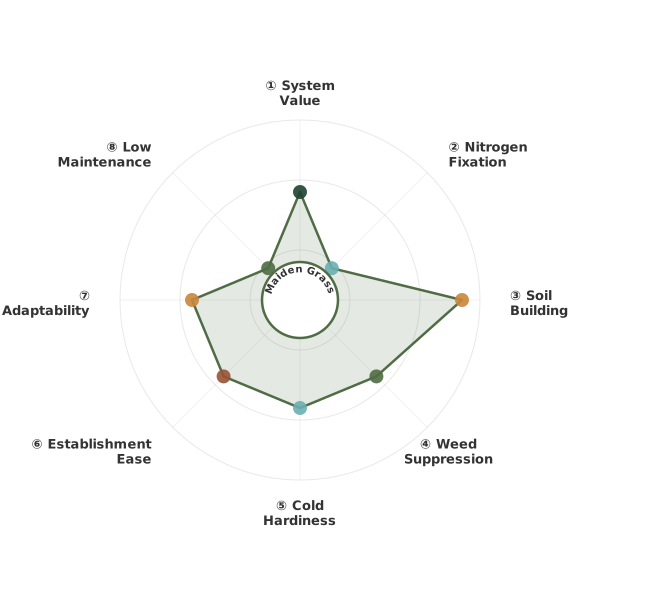
How These Traits Are Calculated
Trait dimensions are ordered clockwise starting from the top of the chart (12 o'clock position):
1. System Value
Ecosystem service stacking across nitrogen, carbon, water, biodiversity
WHAT: Synthesizes the compounding value of multiple ecosystem services delivered simultaneously—nitrogen fixation, soil organic matter building, pollinator support, erosion control, and water infiltration improvement. This is the total regenerative impact beyond single-function metrics.
WHY: The highest-value cover crops deliver 3-5 significant ecosystem services at once. A legume that fixes nitrogen, builds biomass, supports pollinators, and improves water infiltration provides $150-300/acre in combined benefits versus $30-60 for single-function covers. This service stacking is the core principle of regenerative agriculture.
HOW: Scored via LLM synthesis of economics data, timeline benefits, and trait combinations. Exceptional (3.0): 4-5 major services stacked with strong economic value ratios. Typical (2.0): 2-3 moderate services. Limited (1.0): Single-function covers with minimal service stacking. Considers seed cost relative to benefit value.
2. Nitrogen Fixation
Biological nitrogen production via legume root nodule bacteria
WHAT: Measures the ability to convert atmospheric nitrogen (N₂) into plant-available ammonia through symbiotic bacteria in root nodules. Legumes form partnerships with rhizobium bacteria that fix 60-150 lbs N/acre/year, reducing or eliminating synthetic fertilizer needs for following crops.
WHY: Nitrogen is the most expensive fertilizer input in crop production ($0.50-1.00/lb). Cover crops with exceptional nitrogen fixation can provide $60-150/acre worth of fertility while building soil organic matter. This biological process also reduces groundwater contamination from nitrogen runoff and lowers farm carbon footprint.
HOW: Ratings based on annual nitrogen fixation capacity and reliability across soil conditions. Exceptional (3.0): Legumes like hairy vetch, crimson clover, and field peas fixing >100 lbs N/acre/year. Typical (2.0): Moderate fixers like red clover at 60-100 lbs N/acre/year. Limited (1.0): Non-legumes (grasses, brassicas) with zero fixation capacity.
3. Soil Building
Weighted: biomass production (60%) + root system depth (40%)
WHAT: Combines above-ground biomass production with root depth to measure total soil organic matter contribution. Biomass provides surface organic matter, while deep roots deposit carbon at depth and break up compaction layers.
WHY: Soil organic matter is the foundation of regenerative agriculture, improving water retention, nutrient cycling, and biological activity. Each 1% increase in soil organic matter holds an additional 20,000 gallons of water per acre and represents $500-1,000 in fertility value. Deep roots access subsoil nutrients and create channels for water infiltration.
HOW: Weighted formula prioritizes biomass production (60% weight) for immediate organic matter contribution, with root depth (40% weight) for long-term soil structure. Exceptional (3.0): High-biomass crops with deep roots like cereal rye (8+ tons biomass, 5+ ft roots). Typical (2.0): Moderate on both factors. Limited (1.0): Low biomass or shallow roots.
4. Weed Suppression
Physical competition through rapid establishment and dense growth
WHAT: Measures the ability to outcompete weeds through rapid germination, aggressive early growth, and dense canopy formation. Physical smothering and light competition reduce weed pressure without herbicides.
WHY: Weed management is a major labor and cost burden for farmers. Cover crops that effectively suppress weeds reduce herbicide costs ($20-60/acre), decrease cultivation passes (fuel + labor), and provide clean seedbeds for cash crops. This is especially valuable in organic systems where herbicide options are limited.
HOW: Ratings based on germination speed, tillering density, and canopy closure timing. Exceptional (3.0): Fast-establishing, dense-tillering crops like cereal rye, oilseed radish that close canopy within 3-4 weeks. Typical (2.0): Moderate establishment and coverage. Limited (1.0): Slow-establishing or sparse crops that allow weed competition.
5. Cold Hardiness
Winter survival for fall planting and spring green manure value
WHAT: Measures tolerance to freezing temperatures and ability to survive winter conditions. Winter-hardy cover crops can be fall-planted, overwinter as living mulch, and provide early spring growth before cash crop planting.
WHY: Fall-planted winter-hardy covers extend the growing season into unused months, capturing solar energy and preventing erosion during wet periods. Spring green manure from overwintered covers provides early nitrogen and biomass. This timing flexibility is critical in cold climates with short growing seasons.
HOW: Ratings based on minimum survival temperature and winter active growth. Exceptional (3.0): Winter-hardy crops like cereal rye, hairy vetch, crimson clover surviving to -20°F with active growth in spring. Typical (2.0): Moderate cold tolerance. Limited (1.0): Warm-season crops like buckwheat, cowpea killed by first frost.
6. Establishment Ease
Germination speed, soil requirement flexibility, planting window breadth
WHAT: Measures how easily the cover crop establishes from seed, including germination speed, tolerance for variable soil conditions, and flexibility in planting timing. Easy establishment means reliable stands without intensive management.
WHY: Difficult-to-establish covers increase risk of stand failure, wasted seed costs, and reduced benefits. Easy establishment crops tolerate late planting, poor seedbed preparation, and variable moisture—critical when cover cropping windows are narrow between cash crops. Reliable establishment ensures consistent soil building and weed suppression benefits.
HOW: Ratings based on days to emergence, soil condition sensitivity, and planting window breadth. Exceptional (3.0): Fast germinators like buckwheat (3-5 days) and cereal rye (5-7 days) with wide planting windows. Typical (2.0): Moderate establishment requirements. Limited (1.0): Slow or finicky establishers requiring precise conditions.
7. Adaptability
Weighted: climate tolerance (60%) + multi-benefit versatility (40%)
WHAT: Combines climate adaptability (temperature and rainfall range) with multi-benefit versatility (diverse ecosystem services) to measure overall system flexibility. High adaptability means the cover works across farm regions and provides multiple functions.
WHY: Farmers need cover crops that work reliably across diverse fields and provide stacked benefits. Climate-adaptable covers reduce risk in variable weather, while multi-benefit crops deliver nitrogen fixation + pollinator support + forage value simultaneously. This versatility maximizes return on cover crop investment.
HOW: Weighted formula prioritizes climate tolerance (60% weight) for geographic reliability, with multi-benefit value (40% weight) for functional stacking. Exceptional (3.0): Wide climate range + multiple significant benefits. Typical (2.0): Moderate on both factors. Limited (1.0): Narrow climate range or single-function crops.
8. Low Maintenance
Inverted from maintenance intensity—low inputs mean high scores
WHAT: Measures minimal input requirements for successful cover cropping. Low-maintenance covers require no irrigation, minimal fertility, easy termination, and tolerate variable management timing.
WHY: Cover crops compete for resources with cash crops in tight rotations. Low-maintenance covers fit easily into existing systems without adding labor, equipment, or input costs. Easy termination is especially critical—covers that are difficult to kill can become weeds and delay cash crop planting.
HOW: Inverted score from maintenance intensity trait (4.0 minus raw score). Exceptional (3.0): Self-sufficient crops like cereal rye, field peas requiring no irrigation or fertility, easily terminated by mowing or winter-kill. Typical (2.0): Moderate input needs. Limited (1.0): High-maintenance crops needing irrigation, heavy fertility, or difficult termination (herbicides, multiple tillage passes).
Ratings are based on documented performance in regenerative systems, not conventional high-input scenarios. All traits assume integrated management practices focused on soil health and ecosystem services.
6
Economics & Value Streams
Direct harvest, system benefits, ecosystem services, and risk diversification
Economics & Value Streams
Direct harvest, system benefits, ecosystem services, and risk diversification
Comprehensive economic analysis including direct harvest value, system enhancement contributions, ecosystem services, value timeline, and risk diversification strategies.
Cover Crop Investment
| Metric | Value |
|---|---|
| Seed Cost | $50-150/acre $124-371/ha |
| Termination Cost | 50-100 124-247 |
| Biomass Production | 5-15 11-34 |
| N Fixation Value | N/A N/A |
| Weed Control Savings | 20-50 49-124 |
Cover crops are soil investments, not cash crops. Economics measured in soil health gains, input reduction, and subsequent crop performance. Values show direct costs and estimated benefits.
System Enhancement Value
Beyond harvest: soil healing, contamination removal, and land restoration
Soil Remediation & Building
Miscanthus sinensis demonstrates significant value in soil remediation, a crucial service in degraded agricultural landscapes. Studies show its ability to drastically accelerate revegetation on challenging substrates like tailing ponds, increasing vegetation coverage and improving soil nutrient levels, including total organic carbon, nitrogen, phosphorus, and potassium. This highlights its potential to reclaim and improve infertile or contaminated soils. Furthermore, its dense biomass production contributes to substantial carbon sequestration. Research indicates long-term soil carbon accumulation under Miscanthus sinensis grasslands, with accumulation rates varying by site and catena position. While not explicitly mentioned as a pollinator attractor in the provided excerpts, its dense structure could provide habitat for beneficial insects. However, caution is advised regarding its invasive potential in some ecosystems, as it can outcompete native flora.
Erosion Control
Variable, site-specific. Potential for localized erosion control and minor wind buffering.
While Miscanthus sinensis is not typically planted as a primary windbreak species due to its ornamental focus and potential for invasiveness in some regions (as noted in excerpt), its dense growth habit could offer some degree of wind buffering and erosion control, particularly when established in mass plantings for other purposes. Its deep root system, as implied by its use in soil remediation and carbon sequestration studies, would contribute to soil stabilization, reducing wind and water erosion. In integrated systems, strategically placed stands could offer localized protection to more sensitive crops or livestock areas, though dedicated windbreak species would likely be more effective for large-scale protection. The economic value would be highly site-specific and dependent on the extent of protection offered and the value of the protected asset.
Ecosystem Service Contributions
Environmental contributions: carbon, pollinators, wildlife, and water
- Carbon Sequestration: Miscanthus sinensis shows a strong potential for carbon sequestration, with studies indicating long-term soil carbon accumulation rates in grasslands, modulated by factors such as catena position and vegetation amount. Its dense biomass contributes significantly to this process.
- Pollinator Support: Low. While it may offer some incidental habitat, it is not primarily recognized for pollinator support, and its potential invasiveness can displace native plants that do support pollinators.
- Wildlife Habitat: Provides some structural habitat due to its dense, perennial growth. Its biomass could offer shelter and nesting material for some small wildlife, though it is not a primary food source for most species.
- Water Quality: Not applicable
Value Timeline: Soil Healing Process
When you'll see results: remediation timeline varies by contamination type
Years 1-2
Initial soil stabilization and early stages of soil remediation. Establishment of biomass for potential future carbon sequestration and biomass use. Minimal to no direct harvest revenue.
Years 3-5
Established soil remediation leading to improved soil structure and nutrient cycling. Significant biomass production for carbon sequestration. Potential for initial biomass harvest for niche markets (e.g., bioenergy feedstock, landscaping mulch).
Years 10-20
Mature soil remediation and robust carbon sequestration. Consistent biomass production for various uses. Potential for integrated use as a cover crop system component, providing ongoing soil health benefits.
20+ Years
Long-term soil health enhancement and sustained carbon sequestration. Continued biomass production. Potential for established benefits as a cash crop with services, particularly if managed to avoid invasiveness.
Farm Risk Reduction
How this reduces farm risk: future land value and production potential
- Multiple Revenue Streams: Biomass for bioenergy, landscaping material, soil remediation services, potential cover crop benefits, carbon credits (if applicable).
- Temporal Income Spread: Provides ongoing ecosystem services (soil remediation, carbon sequestration) while offering potential for periodic biomass harvests, creating a diversified revenue stream that spans short-term operational needs and long-term environmental benefits.
- Market Risk Hedge: Reduces reliance on single commodity markets by offering diverse revenue streams from biomass and environmental services. Its resilience and ability to grow on marginal lands can provide a buffer against crop failure in more sensitive systems. Its soil remediation capabilities can increase the productivity of adjacent, more valuable land.
Sources behind this view
 Research
-
Modelling the carbon and nitrogen balances of direct land use changes from energy crops in Denmark: a consequential life cycle inventory (opens in new window)
This study found: Miscanthus shows promise for Danish energy crops, reducing nitrogen pollution, capturing CO2, and increasing soil carbon. Winter wheat straw removal may be sustainable on sandy soils with manure.
-
Early impacts of marginal land‐use transition to<i>Miscanthus</i>on soil quality and soil carbon storage across Europe (opens in new window)
This study found: AbstractMiscanthus, a C4perennial rhizomatous grass, is a low‐input energy crop suitable for marginal land, which cultivation can improve soil quality and promote soil organic carbon (SOC) sequestrati
-
Miscanthus biomass productivity within US croplands and its potential impact on soil organic carbon (opens in new window)
This study found: Miscanthus grass grown on US croplands could yield 13 tons/acre/year, increase soil carbon by up to 0.82 tons/acre/year by reducing tillage, and require less land than corn for bioenergy.
-
Economics of Cover Crops (opens in new window)
This study found: Cover crops can be profitable if they produce enough biomass, offering economic benefits through grazing, reduced inputs, carbon credits, and monetization of soil services.
8
Know the Debate
Miscanthus sinensis offers a perennial biomass solution for land remediation and soil building. Its establishment thrives in warming soils with rhi...
Know the Debate
Miscanthus sinensis offers a perennial biomass solution for land remediation and soil building. Its establishment thrives in warming soils with rhi...
Miscanthus sinensis offers a perennial biomass solution for land remediation and soil building. Its establishment thrives in warming soils with rhizome planting, though cultivar selection is key for cold climates. Once established, it demands minimal fertility, acting as a nutrient scavenger and soil protector with deep roots that enhance aggregation and water infiltration. While its carbon sequestration potential is promising, actual rates depend on land history and climate. However, its primary role in regenerative systems is long-term soil health improvement and the efficient capture of residual nutrients.
How much soil carbon can Miscanthus sinensis sequester?
Significant sequestration potential (up to 0.82% annually)
Academic research suggests Miscanthus can sequester substantial amounts of soil organic carbon, especially when replacing tilled crops on marginal lands, with figures up to 0.82 tons/acre/year cited.
Sources behind this view
Sources behind this view
Research
-
Miscanthus biomass productivity within US croplands and its potential impact on soil organic carbon (opens in new window)
This study found: Research using computer models suggests that planting miscanthus, a type of energy grass, on US farmland could significantly boost crop yields and improve soil health. The models predict an average yield of about 13 tons of biomass per acre per year, with variations due to weather and sunlight. Growing miscanthus is expected to increase soil carbon by 0.16 to 0.82 tons per acre annually, mainly because it stops the need for tilling the soil and adds more plant material back into the ground. About 81 million acres across the US, especially in the eastern states, are suitable for growing miscanthus without needing extra irrigation. This could be a more efficient feedstock for biofuels than current corn production, requiring about 16% less land.
-
Early impacts of marginal land‐use transition to<i>Miscanthus</i>on soil quality and soil carbon storage across Europe (opens in new window)
This study found: AbstractMiscanthus, a C4perennial rhizomatous grass, is a low‐input energy crop suitable for marginal land, which cultivation can improve soil quality and promote soil organic carbon (SOC) sequestration. In this study, four promisingMiscanthushybrids were chosen to evaluate their short‐term potential, in six European marginal sites, to sequester SOC and improve physical, chemical, and biological soil quality in topsoil. Overall, no differences amongMiscanthushybrids were detected in terms of impacts on soil quality and SOC sequestration. SOC sequestration rate after 4 years was of +0.4 Mg C ha−1 year−1, but land‐use transition from former cropland or grassland showed contrasting SOC sequestration trajectories. In unfertilized marginal lands, cultivation of high‐yieldingMiscanthusgenotypes caused a depletion of K (−216 kg ha−1 year−1), followed by Ca (−56 kg ha−1 year−1), Mg (−102 kg ha−1 year−1) and to a lesser extent of N. On the contrary, the biological turnover of organic matter increased the available P content (+164 kg P2O5ha−1 year−1). SOC content was identified as the main driver of changes in biological soil quality. High input of labile plant C stimulated an increment of microbial biomass and enzymatic activity. Here, a novel approach was applied to estimate C input to soil from differentMiscanthusorgans. Despite the high estimated plant C input to soil (0.98 Mg C ha−1 year−1), with significant differences among sites andMiscanthushybrids, it was not identified as a driver of SOC sequestration. On the contrary, initial SOC and nutrients (N, P) content, as well as their elemental stoichiometric ratios with C, were the key factors controlling SOC dynamics. IntroducingMiscanthuson marginal lands impacts positively soil biological quality over the short term, but targeted fertilization plans are needed to secure crop yield over the long term as well as the C sink capacity of this perennial cropping system.
Variable carbon benefits, focus on biomass and soil health
Field and institute sources emphasize Miscanthus's role in biomass production, soil health improvement, and nutrient cycling, with carbon sequestration being a secondary benefit influenced by establishment and regional factors.
Sources behind this view
Sources behind this view
 Videos & Podcasts
-
Warm-season grasses discussed include Sorghum-Sudangrass (high biomass, regrowth), Sorghum (one-time harvest), Pearl Millet (safe alternative, high biomass), Brown-top Millet (filler), Foxtail Millet (short-season hay), Japanese Millet (wet areas), Proso Millet (birds), and Grazing Corn.

 From the Web
-
Switchgrass provides ecological benefits like soil health improvement, carbon sequestration, and erosion control due to its deep root system. While monocultures are common for biofuel feedstock, polycultures are more resilient. For ethanol, low nitrogen and high cellulose are key, achieved with minimal fertilizer and single annual harvest. Its feedstock cost is currently higher than corn ethanol.
-
Table compares subtropical cover crops (e.g., Sunn Hemp, Lablab, Pigeon Pea) on agronomic traits like nitrogen fixation, dry matter yield, soil pH, seeding rate, and weed suppression for hot, humid areas.
Making Sense of the Differences
Observed soil carbon sequestration rates for Miscanthus vary due to measurement depth, time since establishment, previous land use, and climate. Claims around 0.82 tons/acre/year often assume ideal conditions and continuous management. Farmers should expect initial gains as perennial roots establish on degraded land, with rates potentially moderating over time. Long-term monitoring of soil organic matter is key, and regional climate and the plant's primary role in biomass production should guide expectations.
What are the nutrient management needs for Miscanthus?
Low synthetic needs, focus on biological fertility
Research suggests Miscanthus requires minimal synthetic fertility, with biological sources like compost and manure being preferred to support soil health and its inherent nutrient scavenging abilities.
Sources behind this view
Sources behind this view
Videos & Podcasts
-
Sorghum-Sudangrass produces high biomass, scavenges nutrients, suppresses nematodes, and can be used for mulch. It thrives in warm conditions, benefits from legumes, and requires good fertility.

Research
-
Yield Potential and Nitrogen Requirements of <i>Miscanthus</i> × <i>giganteus</i> on Eroded Soil (opens in new window)
This study found: A three-year study in Missouri looked at how well Miscanthus (an energy crop often called elephant grass) grows on eroded soils, which are typically less productive. The research found that Miscanthus can produce good yields, similar to those on better soils. Surprisingly, fertilizer nitrogen was only needed at two out of three locations for young Miscanthus stands. The study identified that applying a moderate amount of nitrogen fertilizer (around 67 kg per hectare per year) was enough to maximize yields over three years. A simple test measuring leaf greenness (leaf chlorophyll concentration) in June accurately predicted whether the crop would benefit from additional nitrogen, saving farmers unnecessary fertilizer costs.
From the Web
-
Establish switchgrass for biomass using no-till or frost seeding, addressing seed dormancy via stratification or winter planting. Control weeds with mowing or companion crops. Harvest once annually in late fall/early winter, leaving a 6-inch stubble. Fertility needs are low; nitrogen cycling and legumes are key.
Minimal fertility, efficient nutrient utilization
Field and institute sources emphasize Miscanthus's excellent nutrient scavenging and efficient use once established, making supplemental synthetic fertility largely unnecessary and contrary to soil health goals.
Sources behind this view
Sources behind this view
Videos & Podcasts
-
Sorghum is a high-yield, drought-tolerant summer annual for winter stockpiling, offering advantages in biomass and water efficiency. Key traits for selection include non-grain production, standability, and brown midrib (BMR) for improved digestibility. Planting occurs in early summer or as a double crop. Protein is low, requiring supplementation.

From the Web
-
Switchgrass provides ecological benefits like soil health improvement, carbon sequestration, and erosion control due to its deep root system. While monocultures are common for biofuel feedstock, polycultures are more resilient. For ethanol, low nitrogen and high cellulose are key, achieved with minimal fertilizer and single annual harvest. Its feedstock cost is currently higher than corn ethanol.
Making Sense of the Differences
Miscanthus exhibits a low demand for supplemental fertility once established, primarily due to its deep roots scavenging nutrients and efficient nutrient cycling through biomass decomposition. While academic research suggests minimal nitrogen needs (e.g., 67 kg/ha/yr) to maximize yield, regenerative practices focus on biologically derived nutrients like compost or manure, applied judiciously in spring. Farmers should aim for biological fertility supplements rather than relying on synthetic inputs.
How best to establish Miscanthus sinensis in different regions?
Regional cultivar selection for cold climates
Academic research indicates that for cold regions, selecting Miscanthus sinensis varieties indigenous to cooler climates or possessing heavier seeds can improve early establishment and growth.
Sources behind this view
Sources behind this view
Research
-
Natural variation in <i>Miscanthus sinensis</i> seed germination under low temperatures (opens in new window)
This study found: Researchers studied 33 types of Miscanthus sinensis (a grass used for bioenergy) from different parts of Japan to see how well their seeds sprout in cool weather. They found that seeds from areas further north tended to sprout earlier than those from southern areas, especially in cooler temperatures. Interestingly, lighter seeds sprouted later, no matter where they came from. This information helps identify Miscanthus varieties that can reliably establish from seed in places with cold winters, making them a more dependable option for bioenergy production.
Rhizome planting with warming soils and moisture
Field and institute guidance emphasize planting rhizomes or divisions in warming soils (above 60°F) with adequate moisture, typically in spring, to ensure rapid and vigorous stand establishment.
Sources behind this view
Sources behind this view
Videos & Podcasts
-
Plant warm-season crops based on soil temperature: low-mid 40s°F for cool-season, low-mid 50s°F for transitional (corn, sunflowers), and low-mid 60s°F for true warm-season (sorghum, millet). Avoid planting in cool soil to prevent stunting.

-
Cover crops are categorized as cool-season/warm-season, grasses/broadleaves (legumes/brassicas). Selection factors include growth cycle, water use, and plant architecture for optimal sunlight capture. Specific species examples are given, with legumes providing significant nitrogen. Proper legume inoculation is crucial, requiring careful storage and handling of inoculants.

-
Discusses two perennial hay mixes ('heavy land' and 'light land') with specific species compositions for different soil types. Recommends tillage and seeding in May with companion crops, emphasizing early companion crop removal for establishment. Advises on first-year haying strategies prioritizing establishment over tonnage, and potential for grazing second cuts. Details individual species like alfalfa, red clover, tall fescue, orchard grass, and others, highlighting their unique traits.

Making Sense of the Differences
Establishing Miscanthus sinensis effectively requires tailoring the method to regional climate and soil conditions. Academic research highlights that varieties adapted to cooler climates or possessing specific seed characteristics can improve success in colder areas. However, the primary recommended establishment method across most sources involves planting rhizomes or divisions, necessitating warming soil temperatures and adequate moisture, typically in early spring in temperate zones. Success hinges on both material selection and appropriate timing for local conditions.
9
Learn More
Why farmers use this plant and additional resources
Learn More
Why farmers use this plant and additional resources
Why Regenerative Farmers Use This Plant
Miscanthus sinensis, commonly known as Chinese silvergrass, Maiden Grass, or Chinese Silver Grass, is a perennial grass that offers significant benefits in regenerative agricultural systems, primarily through its exceptional biomass production and deep root systems. While it does not fix nitrogen, its substantial vegetative growth acts as a powerful scavenger of residual nutrients, preventing their leaching. Established stands can yield between 10-20 tons of dry matter per acre (22-45 metric tons/ha) annually, providing substantial organic matter for soil building. Its extensive root system, reaching depths of 4-8 feet (1.2-2.4 meters), effectively scavenges nutrients from deeper soil profiles, preventing leaching and making them available to subsequent cash crops. This deep root structure also plays a crucial role in improving soil aggregation and water infiltration, and can break up compaction layers. Its perennial nature means it requires less frequent field disturbance compared to annual cover crops, further protecting soil health.
Integrating Miscanthus sinensis into crop rotations offers multifaceted advantages. As a non-leguminous cover crop, it excels at scavenging residual nutrients, particularly nitrogen, phosphorus, and potassium, that might otherwise be lost. Its dense growth habit provides excellent ground cover, suppressing weeds by outcompeting them for light, water, and nutrients, thereby reducing the need for costly and environmentally impactful herbicides. This erosion control is particularly valuable on sloped fields, where its extensive root system anchors the soil against wind and water erosion. Furthermore, its high biomass production makes it an ideal candidate for use in no-till or reduced-till systems, where the residue can be left on the surface to protect the soil. Its dense foliage also provides habitat and food sources for beneficial insects and ground-nesting birds, enhancing on-farm biodiversity.
The quantitative ecosystem benefits of Miscanthus sinensis are substantial. The decomposition of its high-biomass residue contributes significantly to soil organic matter over a 3-5 year rotation, improving soil structure, water-holding capacity, and microbial activity. Research indicates that incorporating such high-carbon residues can increase soil organic carbon by 0.5-1.5% over time. The decomposition cycle releases scavenged nutrients slowly over time, acting as a natural fertilizer bank for subsequent cash crops. Improved soil structure and water infiltration can lead to more resilient cropping systems that can better withstand extreme weather events, with potential increases in water infiltration rates by 20-30% in compacted soils. While not a primary pollinator attractant, its dense stands and substantial biomass can provide habitat for beneficial insects, overwintering sites for predatory arthropods, and contribute to on-farm biodiversity and natural pest control. It also sequesters carbon deep within the soil profile.
Miscanthus sinensis has demonstrated success in various regional farming systems. In the UK, it is used in arable rotations to build soil organic matter and suppress weeds between cereal crops, with farmers often terminating it via roller-crimping before planting spring cash crops. In the Midwestern United States, it is being explored for its potential in corn-soybean rotations as a biomass crop that can be harvested for bioenergy or incorporated into the soil to enhance fertility, and is also used as buffer strips or windbreaks along field edges. Australian farmers in dryland wheat-sheep systems are investigating its use in marginal areas for its drought tolerance and soil-building capabilities, often establishing it with autumn rains and managing it through grazing, and it is also used on non-arable land for soil rehabilitation. In Brazilian coffee plantations, it can be managed as a shade-tolerant cover crop, contributing to soil cover and nutrient cycling in the understory, and planted on contour lines or as part of a diversified ground cover to prevent soil erosion. In the humid subtropical regions of the southeastern USA, it is planted for biomass production and erosion control on agricultural lands. In the temperate oceanic climates of New Zealand, farmers are utilizing it in riparian zones and on steeper slopes for its exceptional soil stabilization capabilities. In the continental climates of Eastern Europe, it is being explored for its potential in bioenergy production and as a long-term soil improver in crop rotations.
Sources behind this view
Research
-
<i>Miscanthus</i>
×
<i>giganteus</i>
increases soil maximum water holding capacity compared to maize (opens in new window)
This study found: Miscanthus increased soil water holding capacity by 14.7% over corn in Iowa after three years, likely due to improved soil structure, not organic matter.
-
Miscanthus biomass productivity within US croplands and its potential impact on soil organic carbon (opens in new window)
This study found: Miscanthus grass grown on US croplands could yield 13 tons/acre/year, increase soil carbon by up to 0.82 tons/acre/year by reducing tillage, and require less land than corn for bioenergy.
-
Nutrient Uptake of Miscanthus in vitro Cultures (opens in new window)
This study found: The large biomass production and the low necessary input fertilizer make Miscanthus an interesting, potential non-food crop with broad applications, e.g. for fuel and energy, for thatching, fiber prod