Regenerative Quick Profile

All recommendations assume integrated, regenerative practices—not conventional inputs.

Climate & Soil Fit

Climate: Tropical Rainforest, Tropical Monsoon, Tropical Savanna, Hot Semi-Arid (Steppe), Cold Semi-Arid (Steppe), Hot Desert, Cold Desert, Humid Subtropical, Oceanic (Maritime Temperate), Hot-Summer Mediterranean, Warm-Summer Mediterranean, Monsoon-Influenced Humid Subtropical, Subtropical Highland, Hot-Summer Continental, Warm-Summer Continental, Subarctic, Monsoon-Influenced Hot-Summer Continental, Tundra

Zones: USDA 6-11, Australian Zones 10-24

Optimal Soil: Loam Soil

System Role & Functions

Primary: Cover Crop System

Secondary: Nitrogen Fixer, Cash Crop With Services

Key Benefits: Nitrogen Fixation

Management Level

Experience: Beginner-Friendly

Maintenance: Moderate maintenance - As a key nitrogen-fixing component of the rotation, soybeans benefit from healthy soil organic matter and balanced nutrient cycling through compost and cover cropping, integrating pest and disease management within the broader farm ecosystem.

Value Streams

  • Cover crop (soil investment)
  • Soil building and erosion control
1

Climate Suitability Assessment

Will this plant thrive in your climate?

IDEALLY SUITED

Köppen Zone: Cfa (Humid Subtropical), Cwa (Monsoon-Influenced Humid Subtropical), Dfa (Hot-Summer Continental), Dfb (Warm-Summer Continental)
USDA Zone: 6a, 7a, 8a
Australian Zone: Zone 4, Zone 5, tropical, subtropical

Soybean thrives in climates with long, warm growing seasons and consistent moisture, conditions met by Köppen zones Cfa and Aw, and Australian subtropical and tropical zones. USDA zones 6b through 13a, and Australian zones 4, 5, and tropical, also provide ideal environments with ample frost-free days (160-365+) and optimal temperatures (70-85°F/21-29°C) for robust growth, nitrogen fixation, and full maturity. These regions typically receive 40-60 inches (100-150 cm) of annual rainfall, sufficient for crop development without excessive irrigation. Establishment is reliable when soil temperatures reach 50°F (10°C) in spring. High yields (40-60+ bushels/acre or 2.7-4.0+ tonnes/ha) are consistently achievable with minimal management beyond standard agricultural practices. The long growing seasons allow for full maturation of a wide range of soybean varieties, maximizing economic returns and fulfilling its role as a cash crop and nitrogen fixer in regenerative systems.

ADEQUATE

Köppen Zone: Aw (Tropical Savanna), BSh (Hot Semi-Arid (Steppe)), BSk (Cold Semi-Arid (Steppe)), Cfb (Oceanic (Maritime Temperate)), Csa (Hot-Summer Mediterranean), Csb (Warm-Summer Mediterranean), Cwb (Subtropical Highland), Dwa (Monsoon-Influenced Hot-Summer Continental)
USDA Zone: 5a, 5b, 9a, 10a
Australian Zone: Zone 3, temperate
EU Climate Region: atlantic, continental

Soybean can be adequately cultivated in regions with moderate growing seasons and temperatures, including Köppen zones Cfb, Cwa, Dfa, Dfb, Dwa, and Australian temperate and subtropical zones. USDA zones 5b through 6a, and Australian zones 3, also fall into this category, offering 140-160 frost-free days and summer temperatures generally between 60-75°F (15-24°C). While these conditions support growth and nitrogen fixation, yields may be reduced by 10-20% compared to ideal zones due to shorter seasons or cooler summers. Early to mid-season maturing varieties are crucial to ensure crop success before early fall frosts. Rainfall is generally sufficient, but supplemental irrigation may be beneficial in drier years or during critical growth stages to optimize performance. Standard management practices are required, with a slightly higher risk of yield variability due to climatic fluctuations. These zones are suitable for cover cropping and as a secondary cash crop with careful planning.

NOT RECOMMENDED

Köppen Zone: Af (Tropical Rainforest), Am (Tropical Monsoon), ET (Tundra), BWh (Hot Desert), BWk (Cold Desert), Dfc (Subarctic)
USDA Zone: 2a, 3a, 3b, 4a, 11a, 12a
EU Climate Region: mediterranean

Soybean cultivation is not recommended in zones with extreme temperature limitations or insufficient growing seasons, including Köppen zones Csb, Dwb, and the EU Mediterranean region. USDA zones 3a through 5a, and Australian zones not explicitly listed as suitable, also present significant challenges. These areas experience severe winter cold (below -15°F/-26°C) and very short growing seasons (60-130 days), or hot, dry summers with insufficient rainfall (less than 25 inches/65 cm annually). In cold regions, frost risk is high throughout the short summer, making maturation improbable and yields unreliable, leading to economic unviability. In hot, dry regions, the lack of water during critical reproductive stages necessitates extensive irrigation, increasing costs prohibitively. Establishment is risky, and yields are significantly compromised, often resulting in crop failure. Alternative, more resilient crops better adapted to these specific climatic constraints are strongly advised for regenerative agriculture practices in these zones.

Better alternatives for these "not recommended" zones: Spring Wheat (cold-hardy grain crop with shorter maturation), Barley (highly cold-tolerant grain crop for short seasons), Buckwheat (fast-growing, cool-season grain crop), Chickpea (drought-tolerant legume adapted to dry summers), Lentil (cool-season legume that can tolerate drier conditions), Durum Wheat (drought-tolerant grain crop for drier Mediterranean climates)

Note: Zones listed above represent climates where this plant can produce reliably with reasonable management. Climate zones not mentioned would require intensive climate modification (greenhouses, extensive infrastructure) and are not economically viable for regenerative agriculture purposes.

2

Soil Suitability Assessment

Which soil types work best for this plant?

IDEALLY SUITED

Loam Soil

This plant thrives in these soil types without requiring amendments or remediation. Natural soil conditions support optimal growth and productivity.

ADEQUATE

Acidic Soil, Alkaline Soil, Clay Soil, Desert Soil, Rich Soil, Rocky Soil, Sandy Soil

This plant performs acceptably in these soil types with moderate, manageable remediation such as pH adjustment, compost addition, or drainage improvement. The required amendments are practical and cost-effective for regenerative agriculture.

NOT RECOMMENDED

Saline Soil, Wet Soil

Growing this plant in these soil types would require impractical remediation such as complete soil replacement, extensive amendments, or cost-prohibitive infrastructure. These conditions are not economically viable for regenerative agriculture.

Note: Soil suitability assessments focus on remediation requirements. "Ideally Suited" means the plant generally thrives without the need for substantial amendments, "Adequate" means manageable remediation (lime, compost, mulch), and "Not Recommended" means impractical soil changes would be required. Climate factors like rainfall and temperature also influence success.

3

Seasonal Considerations

Planting timing, growth duration, and harvest windows

Soybeans, as a cover crop, are a versatile warm-season annual best suited for planting after the last expected frost in spring. This allows ample time for establishment and growth before cooler temperatures arrive. Aim for planting when soil temperatures consistently reach 60°F (15°C) to ensure rapid germination and vigorous early growth, typically taking 1-3 weeks to establish a good stand.

For a fall cover crop, soybeans must be planted well before the first expected frost to allow for sufficient biomass accumulation. However, they are not reliably winter-hardy in most climates, meaning they will likely winter-kill in colder regions, leaving the soil surface clear for early spring cash crop planting. In milder climates, they may survive as a green manure crop.

Peak biomass is usually achieved in late summer to early fall. Termination should occur several weeks before planting your next cash crop, allowing for decomposition and nutrient release. While not typically frost-seeded, soybeans can be incorporated into summer-fallow systems or planted as a relay crop with shorter-season cash crops if managed carefully. Their nitrogen-fixing capabilities make them valuable in building soil health.

4

System Role & Multi-Benefit Value

Functional roles, integration strategies, and stacked benefits

Functional Role

Integration Characteristics

Multi-Benefit Value: Adequate - A valuable legume for soil fertility, soybeans also provide significant biomass for soil health and can offer moderate support for beneficial insects when integrated thoughtfully.

5

Economics & Value Streams

Direct harvest, system benefits, ecosystem services, and risk diversification

Comprehensive economic analysis including direct harvest value, system enhancement contributions, ecosystem services, value timeline, and risk diversification strategies.

Cover Crop Investment

Metric Value
Seed Cost $30-60/acre $74-148/ha
Termination Cost 20-50 49-124
Biomass Production 1.5-3.0 3-7
N Fixation Value 50-100 56-112
Weed Control Savings 15-40 37-99

Cover crops are soil investments, not cash crops. Economics measured in soil health gains, input reduction, and subsequent crop performance. Values show direct costs and estimated benefits.

System Enhancement Value

Beyond cost recovery: soil building, nitrogen, biomass, and weed suppression

Nitrogen Fixation & Cycling

50-100 lbs N/acre/year = $30-90/acre fertilizer replacement (assuming $0.60/lb N)

Soybeans (Glycine max), as a legume, possess a significant capacity for biological nitrogen fixation, a key regenerative practice. Through symbiosis with Rhizobium bacteria in their root nodules, they convert atmospheric nitrogen (N2) into a usable form for plants. This process directly contributes to soil fertility, reducing the reliance on synthetic nitrogen fertilizers. Knowledge base excerpts highlight the importance of cover crops, especially legumes, for soybean nodulation. This intrinsic nitrogen-fixing ability is a cornerstone of regenerative systems, as it builds soil health and nutrient availability for subsequent crops. The nitrogen supplied by soybeans can significantly reduce or eliminate the need for nitrogen inputs for the following cash crop, leading to substantial cost savings and a more sustainable nutrient cycle. This contribution is particularly valuable in integrated crop-livestock systems where manure application might not always perfectly align with crop nitrogen demands.

Soil Building & Weed Suppression

Soybeans offer substantial system value beyond direct harvest. As a cash crop with services, they are integrated into systems that reduce input costs, such as a 75% decrease in herbicide use and elimination of pesticides by relying on beneficial insects. Their role in cover crop systems, like mung beans fixing nitrogen and legumes aiding nodulation, enhances soil health and nutrient cycling. The knowledge base also points to the critical role of zinc during R4-R6 growth stages for seed fill, with foliar applications potentially doubling yields, indicating a responsiveness to targeted nutrient management. Furthermore, soybeans can contribute to a more resilient farming system by diversifying income streams and providing a market hedge. Their integration with livestock, as seen in systems where cattle graze cover crops before soybeans are planted, transforms crop residues into manure, further enriching the soil.

Erosion Control

Variable, but contributes to soil cover and organic matter in systems that achieve 5-15% crop yield improvement due to erosion control from cover crops.

While soybeans themselves are a relatively low-growing crop and do not function as a traditional windbreak or provide significant direct erosion control in the manner of perennial grasses or trees, their role within a cover cropping system is crucial for erosion prevention. As noted in the knowledge base, cereal rye is used as a cover crop to stop erosion, especially on rolling hills and soybean fields. When soybeans are planted after effective cover crops, they benefit from the improved soil structure and reduced soil disturbance inherent in no-till and cover cropping systems. The presence of soybean biomass and roots, even if annual, contributes to soil organic matter and surface cover, which, in conjunction with preceding or succeeding cover crops, enhances water infiltration and reduces surface runoff, thereby mitigating erosion. The emphasis is on the soybean's place within a broader system that prioritizes soil protection.

Ecosystem Service Contributions

Environmental contributions: carbon, pollinators, wildlife, and water

  • Carbon Sequestration: Soybeans, as an annual crop with significant biomass production, contribute to soil organic matter accumulation when managed within regenerative systems, particularly no-till and cover cropping. Their root systems add carbon below ground, and residue management on the surface further enhances carbon storage. The rate is variable depending on management practices and climate, but the integration into systems that increase soil organic matter from ~2% to 3.5% or 2.5% to 3.2% indicates a positive contribution.
  • Pollinator Support: Medium. Soybean flowers do provide some nectar and pollen, attracting a range of pollinators, including bees. While not a primary pollinator attractant like some other crops or wildflowers, they offer a supplementary food source in agricultural landscapes.
  • Wildlife Habitat: Low to Medium. Soybean fields can offer some foraging opportunities for wildlife, particularly for birds and small mammals, due to the seeds and residual plant material. However, their primary value is as a food source rather than as extensive habitat for nesting or shelter, especially when managed intensively.
  • Water Quality: Not applicable

Value Timeline: Soil Building Process

When you'll see results: immediate soil benefits, compounding over seasons

Years 1-2

Erosion control benefits from preceding cover crops, initial nitrogen fixation from soybean nodules, and early stages of soil organic matter improvement. Reduced reliance on herbicides and pesticides may begin.

Years 3-5

First harvest revenue from soybeans. Established nitrogen contribution from legumes. Increased soil organic matter and improved soil structure become more apparent. Potential for reduced input costs (fertilizer, pesticides) to become significant.

Years 10-20

Mature soil health benefits, including enhanced water infiltration and retention. Consistent and significant nitrogen contribution. Stronger resilience to environmental stresses due to improved soil biology and structure. Diversified income streams become more established.

20+ Years

Long-term soil health and ecosystem service provision. Potential for legacy benefits in soil fertility and structure. Continued economic resilience and reduced reliance on external inputs.

Farm Risk Reduction

How this reduces farm risk: lower input costs and better soil resilience

  • Multiple Revenue Streams: Direct cash crop revenue from soybean harvest. Potential revenue from selling soybean seed. Value from reduced input costs (fertilizer, pesticides, herbicides). Economic benefits from improved soil health (yield stability, reduced erosion losses).
  • Temporal Income Spread: Annual harvest revenue from soybeans. Ongoing system services from nitrogen fixation and soil health improvement, which compound over time. Reduced input costs provide a consistent economic benefit year after year.
  • Market Risk Hedge: Diversifies farm revenue beyond a single commodity. As a legume, it offers a natural hedge against volatile synthetic fertilizer prices. Integration into cover cropping and no-till systems enhances drought tolerance and resilience to extreme weather events, reducing yield risk compared to conventional systems.
6

Regenerative Suitability Details

Comprehensive trait ratings for system integration assessment

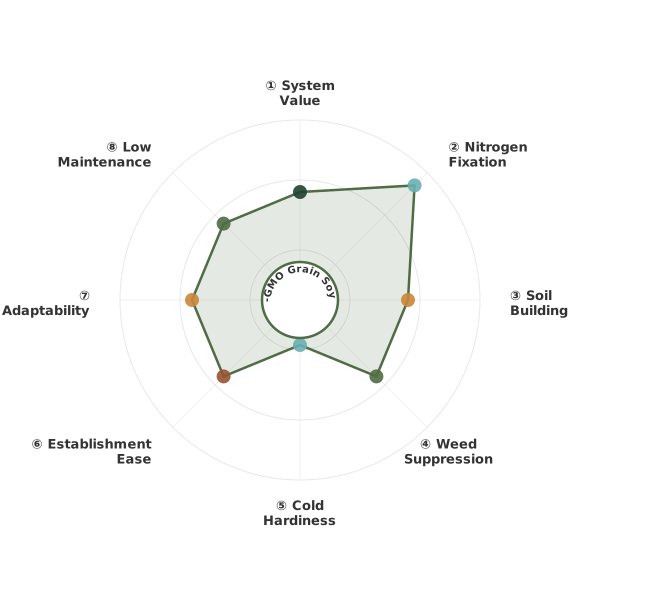
Comparative ratings for this plant across key regenerative agriculture traits.

Trait Suitability Explanation
Cold Hardiness Not Recommended A warm-season annual, soybeans require consistent warmth and are sensitive to frost. They do not provide winter ground cover, necessitating complementary winter-hardy cover crops for soil protection.
Weed Suppression Adequate Once established with a dense canopy, soybeans effectively outcompete many weeds, contributing to a cleaner field for subsequent rotations. Early-season weed management can be integrated through mulching or companion planting.
Nitrogen Fixation Ideally Suited As a highly effective legume, soybeans significantly enhance soil fertility by fixing substantial amounts of atmospheric nitrogen, leaving beneficial residual nitrogen for following crops and building soil organic matter.
Root System Depth Adequate Soybeans possess a moderately deep root system that improves soil structure and aeration, facilitating water infiltration and nutrient cycling while supporting nitrogen fixation.
Biomass Production Adequate Soybeans contribute valuable biomass and nitrogen to the soil system, enhancing soil organic matter and providing nutrients for subsequent crops when managed within an integrated system.
Establishment Ease Adequate Soybeans readily germinate and establish with adequate soil warmth and moisture, exhibiting good early vigor that integrates well into diverse cropping systems.
Multi Benefit Value Adequate A valuable legume for soil fertility, soybeans also provide significant biomass for soil health and can offer moderate support for beneficial insects when integrated thoughtfully.
Climate Adaptability Adequate Widely adapted to temperate and subtropical regions, soybeans thrive with sufficient warmth and moisture, requiring careful selection of cultivars suited to local microclimates and integrated pest management strategies.
Maintenance Intensity Adequate As a key nitrogen-fixing component of the rotation, soybeans benefit from healthy soil organic matter and balanced nutrient cycling through compost and cover cropping, integrating pest and disease management within the broader farm ecosystem.

Comparative System: Ratings compare plants within their economic category (e.g., cover crop nitrogen fixation compared to other cover crops, not to all plants). Individual farm conditions and management practices significantly influence actual performance.

7

Learn More

Why farmers use this plant and additional resources

Why Regenerative Farmers Use This Plant

This versatile cover crop is a cornerstone for regenerative agriculture, valued for its exceptional nitrogen-fixing capabilities and its role in building soil health and reducing input costs. As a legume, it forms symbiotic relationships with Rhizobium bacteria, converting atmospheric nitrogen into plant-available forms. In typical temperate conditions, it can fix between 80-130 lbs of nitrogen per acre (90-146 kg/ha) over its growth cycle. This significant nitrogen contribution directly translates into substantial fertilizer cost savings for subsequent cash crops, potentially reducing synthetic nitrogen inputs by 40-60% and saving farmers an estimated $36-90 per acre annually, depending on current fertilizer prices. Beyond nitrogen, it produces abundant biomass, typically ranging from 4,000-8,000 lbs/acre (4,500-9,000 kg/ha) of dry matter, which, upon decomposition, enriches the soil with organic matter and improves soil structure.

Integrating this plant into farming systems offers a suite of ecological and economic benefits. Its dense foliage effectively suppresses weeds by outcompeting them for light, water, and nutrients, significantly reducing the need for chemical herbicides. The extensive root system, which can reach depths of 2-4 feet (0.6-1.2 m), plays a crucial role in preventing soil erosion by binding soil particles and improving water infiltration. This makes it an ideal candidate for use in rotations with crops like corn and soybeans in the US Midwest, or in cereal rotations across Europe. Its value as a forage crop for livestock is also notable, providing nutritious feed while simultaneously contributing to soil health.

The ecological impact extends to enhancing beneficial insect populations and supporting pollinators. The flowers, when allowed to bloom, attract a variety of bees and other beneficial insects that can aid in pest control for cash crops. The decomposition of its substantial biomass contributes significantly to soil organic matter over time, typically adding 0.5-1.5% to the topsoil organic matter content within a 3-5 year rotation. This increase in soil organic matter improves water-holding capacity, enhances nutrient cycling, and fosters a more resilient soil ecosystem capable of withstanding extreme weather events. Its ability to scavenge residual nutrients from deeper soil layers also prevents nutrient leaching, protecting water quality.

Farmers across diverse agricultural landscapes have successfully integrated this plant to build soil health and economic resilience. In the corn-soy rotations of the US Midwest, it's often planted in the fall after harvest to scavenge nutrients and fix nitrogen for the following season, with termination typically occurring in the spring. In the UK's mixed farming systems, it's sown in early autumn to provide overwinter ground cover and is terminated in spring before planting a cash crop, often wheat or barley. Brazilian coffee plantations utilize it as an understory cover crop to improve soil fertility and reduce erosion on slopes, while in Australian dryland farming regions, it's established with autumn rains to build soil moisture and fertility for subsequent cereal crops. In Iowa's corn-soy rotations, farmers often interseed this plant into standing corn at the V4-V6 stage in early summer, allowing it to establish before corn harvest, providing overwinter cover and nitrogen fixation. In Brazilian coffee agroforestry systems, it's interplanted as a nitrogen-fixing ground cover, improving soil health and reducing erosion.

8

How to Integrate This Plant

Practical guidance for regenerative systems

Establishment is straightforward, with seeding rates typically ranging from 50-100 lbs/acre (56-112 kg/ha) when broadcast, and slightly lower, 30-50 lbs/acre (34-56 kg/ha), when drilled for optimal seed-to-soil contact. The ideal planting depth is shallow, between 0.25-0.5 inches (0.6-1.3 cm), ensuring good moisture for germination. Spacing is generally not a primary concern for broadcast seeding, but when drilled, rows can be set at 6-12 inches (15-30 cm) apart.

In the Northern Hemisphere, planting typically occurs from late August through early October for overwintering stands, allowing sufficient time for establishment before winter. For a summer cover, early spring planting (March-April) is suitable. In the Southern Hemisphere, these timings are reversed, with planting from late February through April for overwintering, or September-October for spring/summer growth. The establishment period typically takes 20-45 days, with significant biomass accumulation occurring within 60-90 days. At maturity, plants can grow to a height of 1-5 feet (0.3-1.5 m), depending on growing conditions and variety.

Management practices should prioritize building soil health and biological activity. While the plant has moderate drought tolerance once established, it requires approximately 1 inch (2.5 cm) of moisture per week during its initial establishment phase. Fertility management should lead with biological sources; incorporating compost, utilizing the residue from previous cover crops, or integrating manure from livestock are preferred methods. Synthetic nitrogen inputs should only be considered as a transitional tool while biological fertility is being built. Pest and disease management should focus on biological controls and cultural practices, such as crop rotation and maintaining a diverse ecosystem, rather than chemical interventions.

Termination and residue management are critical for successful integration into a cropping system. The preferred termination hierarchy begins with natural winterkill in regions where temperatures consistently drop below -10°F (-23°C) or 0°F to 10°F (-18°C to -12°C), eliminating the need for any intervention. Where winterkill is unreliable, grazing with livestock or mowing can be effective, with hoof action from grazing helping to incorporate residue into the soil. Roller-crimping at the onset of flowering is another excellent mechanical termination method that creates a dense mulch mat, suppressing weeds and conserving moisture. Herbicide use should be considered a last resort, employed only during a transitional phase when regenerative methods are still being established, and always with careful consideration of its impact on soil biology. Termination should ideally occur 2-3 weeks before planting the subsequent cash crop to allow for initial decomposition and nitrogen release, typically around the 50% bloom stage for optimal biomass and nitrogen content. The residue generally breaks down within 30-60 days, releasing 50-70% of its fixed nitrogen for the following crop. Expect a nitrogen credit of 60-80 lbs N/acre (67-90 kg/ha) for the subsequent crop. Preventing reseeding is important unless volunteer establishment is desired for subsequent seasons; monitor for seed set and terminate before maturity if unwanted reseeding is a concern.

Regional adaptations highlight the plant's versatility. In Iowa's corn-soy rotations, farmers often broadcast seed at 15-20 lbs/acre (17-22 kg/ha) in late August, allowing it to overwinter and be terminated with a roller-crimper in late May before planting corn. In the UK, it's sown in October for termination in spring by mowing or grazing before planting wheat. Australian farmers in dryland systems establish it with autumn rains, often in a wheat-legume rotation, to build soil moisture and fertility. In Brazilian coffee plantations, it's used as a nitrogen-fixing understory cover, interseeded into established coffee rows to improve soil health and reduce erosion on slopes. In the UK's cereal systems, it's sown in September after wheat harvest and terminated with a roller-crimper in late May before planting maize, providing excellent weed suppression and soil organic matter. In Australian wheat-sheep systems, it's sown with the autumn rains at 20-30 lbs/acre (22-34 kg/ha) to provide grazing and improve soil fertility for wheat.

View Full Document (Printable single-page version)