Existing information highlights potential for soil health and nutrient cycling. The plant is noted for its high mineral content, including potassium, phosphorus, and calcium, suggesting potential as a nutrient accumulator. Although not explicitly stated as a cover crop or forage in these excerpts, its deep root system, common in biennials, could contribute to soil structure and carbon sequestration when managed appropriately. Caution is advised due to the sap's phytophotodermatitis-causing properties, necessitating protective gear during handling, a practical consideration for farmers. The excerpts focus on identification and hazard mitigation rather than specific regenerative uses like nitrogen fixation or integration into grazing systems. Further research would be needed to explore its broader applications within diverse regenerative farming contexts. While coverage in our knowledge base is limited, the above represents documented uses in regenerative systems.

Regenerative Quick Profile

All recommendations assume integrated, regenerative practices—not conventional inputs.

Climate & Soil Fit

Climate: Tropical Rainforest, Tropical Monsoon, Tropical Savanna, Hot Semi-Arid (Steppe), Cold Semi-Arid (Steppe), Hot Desert, Cold Desert, Humid Subtropical, Oceanic (Maritime Temperate), Hot-Summer Mediterranean, Warm-Summer Mediterranean, Monsoon-Influenced Humid Subtropical, Subtropical Highland, Hot-Summer Continental, Warm-Summer Continental, Subarctic, Monsoon-Influenced Hot-Summer Continental, Tundra

Zones: USDA 3-8, Australian Zones 3-5

Optimal Soil: Loam Soil

System Role & Functions

Primary: Cash Crop With Services

Secondary: Cover Crop System, Soil Remediation

Management Level

Experience: Advanced

Maintenance: Moderate maintenance - Parsnips integrate into the system with moderate labor for weeding and harvesting, relying on inherent soil fertility and consistent moisture for optimal performance.

Value Streams

  • Cash crop production
1

Climate Suitability Assessment

Will this plant thrive in your climate?

IDEALLY SUITED

Köppen Zone: Cfa (Humid Subtropical), Cfb (Oceanic (Maritime Temperate)), Dfa (Hot-Summer Continental), Dfb (Warm-Summer Continental)
USDA Zone: 5a, 5b, 6a, 7a
EU Climate Region: atlantic

Parsnips thrive in regions with a long, cool growing season and mild winters, conditions met by Köppen Cfb (in its milder variants), USDA zones 5b-7b, and EU Atlantic climates. These areas typically receive 150-200 frost-free days, allowing roots ample time to develop their characteristic sweetness and size. Optimal temperatures for growth range from 60-70°F (15-21°C), with cooler temperatures and frost actually enhancing sweetness. Adequate and consistent moisture is crucial, with annual rainfall of 25-35 inches (63-89 cm) generally sufficient, though supplemental irrigation may be needed during dry spells. Overwintering is highly reliable in these zones, enabling a prolonged harvest period from late fall through early spring. Establishment success is high (>85%) with minimal management beyond standard cultivation practices. These conditions support high yields of marketable roots with minimal risk of crop failure, making parsnips a highly productive cash crop and a valuable component of regenerative systems for soil health.

ADEQUATE

Köppen Zone: BSk (Cold Semi-Arid (Steppe)), Csa (Hot-Summer Mediterranean), Csb (Warm-Summer Mediterranean), Cwa (Monsoon-Influenced Humid Subtropical), Cwb (Subtropical Highland), Dwa (Monsoon-Influenced Hot-Summer Continental)
USDA Zone: 4a, 8a
Australian Zone: temperate
EU Climate Region: continental

Parsnips can be successfully cultivated in regions with adequate growing seasons and manageable temperature fluctuations, encompassing Köppen Dfb, USDA zones 4b-5a and 8a-8b, Australian temperate zones, and EU Continental climates. These areas typically offer 100-150 frost-free days, which is sufficient for root development, though roots may be smaller or less sweet than in 'ideally suited' zones without careful management. Summer temperatures can sometimes approach levels that cause stress, necessitating attention to soil moisture and potential for heat-tolerant varieties. Winter hardiness is generally good, allowing for overwintering in most of these zones, though extreme cold snaps in continental or higher USDA zones can pose a risk. Establishment success is good (70-85%) with proper timing of planting. Yields are economically viable with standard agricultural inputs, and the plant's ability to improve soil structure and break up compaction remains beneficial in regenerative systems. Careful variety selection and timing are key to maximizing success.

NOT RECOMMENDED

Köppen Zone: Af (Tropical Rainforest), Am (Tropical Monsoon), Aw (Tropical Savanna), ET (Tundra), BSh (Hot Semi-Arid (Steppe)), BWh (Hot Desert), BWk (Cold Desert), Dfc (Subarctic)
USDA Zone: 2a, 3a, 3b, 9a, 10a, 11a, 12a

Parsnips are not recommended for cultivation in regions with very short growing seasons, extreme temperature fluctuations, or prolonged periods of intense heat or cold, which includes Köppen Dfc, Dwb, Dwc, USDA zones 1a-4a and 9a-9b, and Australian temperate zones with extreme variations. These zones often have fewer than 90 frost-free days, making it impossible for parsnips to mature properly and develop their characteristic sweetness. In hot climates (USDA 9a-9b), summer heat above 80°F (27°C) can lead to woody roots, bolting, and reduced yield, requiring intensive irrigation and planting only as a fall/winter crop. In very cold climates (USDA 1a-4a and Köppen Dfc/Dwb/Dwc), the short growing season and risk of early/late frosts prevent adequate root development, and winter survival for a later harvest is highly improbable. Establishment success is often below 70%, and management costs increase significantly due to the need for intensive irrigation, protection from extreme temperatures, or repeated replanting. Alternative root crops with shorter maturation times or greater tolerance to specific extreme conditions are better suited for these challenging environments.

Better alternatives for these "not recommended" zones: Radish (winter varieties) (short maturation time, tolerates cooler soils), Turnip (faster growing root crop, more cold tolerant than parsnip), Rutabaga (cold-hardy root crop with a reasonable growing season), Beets (relatively quick growing root crop, tolerates cooler conditions)

Note: Zones listed above represent climates where this plant can produce reliably with reasonable management. Climate zones not mentioned would require intensive climate modification (greenhouses, extensive infrastructure) and are not economically viable for regenerative agriculture purposes.

2

Soil Suitability Assessment

Which soil types work best for this plant?

IDEALLY SUITED

Loam Soil

This plant thrives in these soil types without requiring amendments or remediation. Natural soil conditions support optimal growth and productivity.

ADEQUATE

Clay Soil, Rich Soil, Rocky Soil, Sandy Soil

This plant performs acceptably in these soil types with moderate, manageable remediation such as pH adjustment, compost addition, or drainage improvement. The required amendments are practical and cost-effective for regenerative agriculture.

NOT RECOMMENDED

Acidic Soil, Alkaline Soil, Desert Soil, Saline Soil, Wet Soil

Growing this plant in these soil types would require impractical remediation such as complete soil replacement, extensive amendments, or cost-prohibitive infrastructure. These conditions are not economically viable for regenerative agriculture.

Note: Soil suitability assessments focus on remediation requirements. "Ideally Suited" means the plant generally thrives without the need for substantial amendments, "Adequate" means manageable remediation (lime, compost, mulch), and "Not Recommended" means impractical soil changes would be required. Climate factors like rainfall and temperature also influence success.

3

Seasonal Considerations

Planting timing, growth duration, and harvest windows

Parsnip, a hardy biennial, can be a versatile cover crop across cool climate zones. For spring planting, sow as soon as the soil can be worked, as it tolerates light frosts and benefits from cool conditions for establishment. Expect several weeks until good ground cover develops. In the fall, planting before the first expected frost allows for some establishment before winter dormancy. While it can overwinter in zones Cfb and Dfb, and potentially Dfc and Dwc with good snow cover, its growth will be limited until spring. Parsnip’s peak biomass is typically achieved in its second year of growth, making it ideal for a longer-term cover crop strategy or as a forage in perennial systems. Termination should occur before it begins to bolt and set seed, ideally a few weeks before planting your next cash crop, to prevent unwanted spread. If aiming for a winter cover, ensure fall planting occurs early enough for decent root development before hard freezes. Summer planting is generally not recommended due to its slow initial growth and preference for cooler temperatures.

4

System Role & Multi-Benefit Value

Functional roles, integration strategies, and stacked benefits

Functional Role

Total System Value

Parsnip's primary systemic value in regenerative agriculture is as a marketable cash crop, contributing directly to farm income. While not a nitrogen fixer or a significant windbreak, its deep taproot can improve soil aeration and break up compaction, contributing to soil health and potentially reducing erosion in its first year of growth. As a biennial, if it reaches its second year and flowers, it can offer some support to pollinators. The nutritional profile, rich in minerals like potassium, phosphorus, and calcium, as well as vitamins A, B1, B2, B9, and C, also adds value as a nutrient-dense food. Risk diversification is achieved by adding a diverse range of crops to the farm's portfolio, making the operation less vulnerable to market fluctuations or pest pressures affecting other crops. Its integration is most straightforward in annual or short-term rotations within market gardens or as a component of alley cropping.

Integration Characteristics

Multi-Benefit Value: Adequate - Parsnip offers edible roots and attracts pollinators, with its moderate biomass contributing to soil health, complementing other system components.

5

Management & Care Requirements

Integration guidance, maintenance needs, and care practices

How to Integrate This Plant

Parsnip (Pastinaca sativa), a non-tree cash crop, can be integrated into regenerative systems primarily as a market garden vegetable. Its main function is direct harvest for sale, but its root system can also contribute to soil health and erosion control when managed appropriately. It fits well within market garden systems, potentially in alley cropping designs where it's grown between rows of slower-growing trees or shrubs, or within a diverse food forest understory. As a biennial, its contribution to perennial systems is limited to its first year of vegetative growth or its second year as it bolts. Early contributions (Year 1-2) focus on direct harvest and preliminary soil conditioning. By Year 3-5, if allowed to overwinter or replant, it continues as a harvestable crop. The multi-benefit stacking beyond direct harvest is minimal, but its deep taproot can improve soil structure, and it can attract pollinators in its second year if allowed to flower. Its value lies in its marketability as a nutritious root vegetable.

Integration Practices & Management

The provided knowledge base offers limited insight into the specific regenerative agriculture integration methods for *Pastinaca sativa* (parsnip). The sources primarily focus on its identification as a wild, invasive plant and its potential hazards, such as phytophotodermatitis caused by sap exposure to UV light, and its nutritional mineral content. There is no information within the knowledge base detailing establishment methods like seeding rates, timing, companion planting, or tillage practices. Similarly, integration with grazing systems, including mob grazing, rotational systems, timing, or rest periods, is not discussed. Termination strategies, management considerations for fertility or competition, and its integration with cash crops through relay cropping, intercropping, or rotation sequences are also absent from the provided texts. Therefore, based on this knowledge base, practical farmer experiences and specific regenerative management strategies for *Pastinaca sativa* cannot be detailed.

Management Profile

Maintenance Intensity: Adequate - Parsnips integrate into the system with moderate labor for weeding and harvesting, relying on inherent soil fertility and consistent moisture for optimal performance.

6

Economics & Value Streams

Direct harvest, system benefits, ecosystem services, and risk diversification

Comprehensive economic analysis including direct harvest value, system enhancement contributions, ecosystem services, value timeline, and risk diversification strategies.

Cover Crop Investment

Metric Value
Seed Cost $25-50/acre $62-124/ha
Termination Cost 15-30 37-74
Biomass Production 1.5-3.0 3-7
N Fixation Value N/A N/A
Weed Control Savings 20-40 49-99

Cover crops are soil investments, not cash crops. Economics measured in soil health gains, input reduction, and subsequent crop performance. Values show direct costs and estimated benefits.

System Enhancement Value

Beyond harvest: ecosystem services from regenerative cash crop practices

Ecological Service Contributions

Parsnip's secondary functions as a cover crop system and for soil remediation offer significant integrated value. Its deep root system, as noted in, can help break up compacted soils, improving aeration and water infiltration, which is a form of soil remediation. The abundant second-year biomass produced by wild parsnip can be utilized as organic matter, contributing to soil health and nutrient cycling when managed appropriately. Furthermore, parsnip flowers are noted for attracting pollinators, which is crucial for supporting biodiversity and the reproductive success of other crops on the farm. This pollinator support contributes to a more resilient and productive agroecosystem. While the plant's sap poses a hazard, careful management (e.g., evening weeding, protective gear) allows for its integration. Once dried, the plant material becomes safer, and its decomposition can further enrich the soil. The high mineral content of parsnip means that its biomass, when decomposed, returns valuable nutrients to the soil, reducing reliance on external inputs.

Ecosystem Service Contributions

Environmental contributions: carbon, pollinators, wildlife, and water

  • Carbon Sequestration: Parsnip, as a biennial with substantial root and above-ground biomass in its second year, has a moderate potential for carbon sequestration, particularly in its root system and soil organic matter contribution upon decomposition. Its role as a cover crop can enhance soil carbon storage.
  • Pollinator Support: High. Parsnip flowers are explicitly mentioned as attracting pollinators, which is a vital ecosystem service for the farm's overall biodiversity and the productivity of other flowering crops.
  • Wildlife Habitat: Parsnip's flowering stage can provide nectar and pollen for pollinators. While not a primary food source for larger wildlife, its seed production can offer some sustenance for certain bird species. Its dense growth in some areas might offer limited cover.
  • Water Quality: Not applicable

Value Timeline: Production & Services

When you'll see results: varies by crop (annual harvest vs. perennial establishment)

Years 1-2

Establishment as a cover crop, initial soil structure improvement through root penetration, early biomass production. Potential for early season pollinator support.

Years 3-5

Significant biomass accumulation in the second year, contributing to soil organic matter. Established pollinator support. Potential for first harvest if managed as a cash crop for its roots. Continued soil remediation benefits.

Years 10-20

Mature soil health benefits from consistent cover cropping and biomass decomposition. Established role in the farm's biodiversity support, particularly for pollinators. If integrated into longer-term perennial systems, potential for sustained cover and soil improvement.

20+ Years

Long-term enhancement of soil structure, fertility, and water-holding capacity. Sustained contribution to farm resilience through robust soil health and pollinator populations.

Farm Risk Reduction

How this reduces farm risk: backup income, weather protection, market hedges

  • Multiple Revenue Streams: Potential cash crop revenue from root harvest, cover crop biomass for soil amendment, ecosystem service provider (pollinator support), soil remediation service.
  • Temporal Income Spread: Value is spread across multiple years: initial soil improvement and biomass in early years, followed by potential harvest and continued soil benefits in subsequent years. Ongoing pollinator support.
  • Market Risk Hedge: Diversifies farm revenue beyond a single cash crop. Reduces reliance on synthetic inputs through soil improvement and nutrient cycling. Provides a resilient component to the farm system that can perform multiple functions simultaneously, hedging against single-function crop failures or market volatility.
7

Regenerative Suitability Details

Comprehensive trait ratings for system integration assessment

Comparative ratings for this plant across key regenerative agriculture traits.

Trait Suitability Explanation
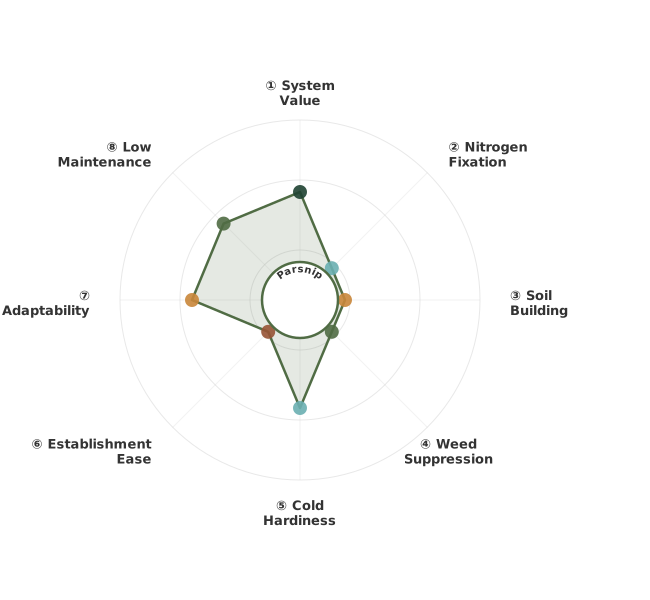
Cold Hardiness Adequate Parsnip is hardy to Zone 3-4, allowing for excellent overwintering and cool-season growth that contributes to soil cover, especially after harvest.
Weed Suppression Not Recommended Parsnip's slow early-season growth allows for significant weed establishment; its developing canopy later in the season offers some competitive suppression.
Nitrogen Fixation Not Recommended As a root vegetable, parsnip is a non-legume and does not contribute to nitrogen fixation, requiring integration with other soil-building components.
Root System Depth Adequate Parsnip's substantial taproot, reaching 2-4 feet, effectively breaks moderate soil compaction and enhances soil structure at depth.
Biomass Production Not Recommended Parsnip provides moderate top growth contributing organic matter to the soil, though its biomass production is less than dedicated soil-building cover crops.
Establishment Ease Not Recommended Parsnip's slow germination and establishment from seed necessitate excellent soil preparation and favorable conditions for successful integration into the system.
Multi Benefit Value Adequate Parsnip offers edible roots and attracts pollinators, with its moderate biomass contributing to soil health, complementing other system components.
Climate Adaptability Adequate Hardy to zone 3 and benefiting from frost, parsnips thrive in moist, well-drained soils and can be slow to mature, requiring careful consideration of summer heat.
Maintenance Intensity Adequate Parsnips integrate into the system with moderate labor for weeding and harvesting, relying on inherent soil fertility and consistent moisture for optimal performance.

Comparative System: Ratings compare plants within their economic category (e.g., cover crop nitrogen fixation compared to other cover crops, not to all plants). Individual farm conditions and management practices significantly influence actual performance.

8

Learn More

Why farmers use this plant and additional resources

Why Regenerative Farmers Use This Plant

Pastinaca Sativa, commonly known as parsnip, offers significant regenerative benefits when integrated into diverse agricultural systems, particularly as a component of crop rotations or as a late-season cover crop. While not a nitrogen-fixing legume, parsnips excel at scavenging residual nutrients from the soil, effectively reducing nutrient leaching and the need for synthetic fertilizer inputs in subsequent cash crops. Their deep taproot system, capable of reaching depths of 18-36 inches (45-90 cm), breaks up soil compaction, improves aeration, and enhances water infiltration, contributing to a more resilient soil structure. This root development also aids in bringing up deeper soil nutrients, such as phosphorus and potassium, to the surface, making them available to shallower-rooted plants in the rotation. Over a 3-5 year rotation, the improved soil structure and nutrient cycling facilitated by parsnips can lead to a measurable increase in soil organic matter and reduced tillage needs.

Beyond nutrient management and soil health, parsnips contribute to weed suppression by occupying the soil surface and outcompeting opportunistic weeds during their growth cycle. Their dense foliage can shade out emerging weed seedlings, reducing the pressure for mechanical or chemical weed control in the following season. While not primarily grown for biomass production in the same way as cover crops, the residual root matter left after harvest decomposes, adding organic material to the soil. The decomposition of parsnip residue provides a food source for a wide array of soil microorganisms, including bacteria and fungi that are crucial for nutrient cycling and soil aggregation. The deep root channels created by parsnips also enhance earthworm activity and provide habitat for beneficial soil invertebrates.

The quantitative ecosystem benefits of parsnip integration are primarily seen in improved soil physical properties and nutrient retention. The deep taproots create channels that significantly enhance water infiltration rates, reducing surface runoff and erosion, especially on sloping land. By scavenging nutrients like nitrogen, phosphorus, and potassium that might otherwise be lost to groundwater, parsnips contribute to cleaner waterways. While specific data on pollinator visits per flower is limited for parsnips compared to dedicated pollinator plants, their flowering in the second year can offer a valuable nectar and pollen source for late-season foraging insects, supporting biodiversity within the farm ecosystem. The addition of organic matter through root and shoot biomass is a fundamental process in building soil carbon.

Parsnips have found success in various regional agricultural contexts. In the UK and parts of Europe, they are a staple in traditional crop rotations, providing a nutrient-scavenging break crop between cereals and legumes, and their ability to overwinter means they can be harvested well into spring, extending the usable harvest window. In North American home gardens and market farms, they are often planted in late spring for a fall and winter harvest, with the frost improving their sweetness. In cooler climates like the northeastern United States and Canada, they are integrated into mixed vegetable farms and market gardens, and their residue is managed to benefit subsequent spring-planted grain crops. In Australian regions with cooler temperate climates (Australian Zones 2-3) and dryland farming systems, they can be sown in autumn for a winter and spring harvest, fitting into rotations with grains or legumes, and their deep roots help to alleviate soil compaction and improve water infiltration. In New Zealand, where mild winters are common, parsnips can be grown as a winter cash crop. In regions like the US Midwest, due to heat and humidity, they are not typical but could be grown in shoulder seasons or microclimates.

9

How to Integrate This Plant

Practical guidance for regenerative systems

Establishment methods Parsnips are typically established from seed. For optimal germination and early growth, seeding rates for broadcast seeding are recommended at 10-20 lbs/acre (11-22 kg/ha), while drilled seed rates can be slightly lower at 8-15 lbs/acre (9-17 kg/ha). For direct sowing into rows for harvest, 15-25 seeds per linear foot (49-82 seeds per meter) is generally recommended, translating to approximately 1-2 lbs/acre (1.1-2.2 kg/ha) depending on seed size and desired stand density. The planting depth is critical for successful emergence, with seeds needing to be sown at 0.25-0.5 inches (0.6-1.3 cm) deep in well-prepared, loose soil. Spacing for commercial production is generally 18-24 inches (45-60 cm) between rows to allow for root development and ease of harvest. In the Northern Hemisphere, parsnips are typically sown from early spring (March-April) as soon as the soil can be worked, extending into early summer for a later harvest. In the Southern Hemisphere, this translates to sowing from September to November. Parsnips require a long growing season, with maturity often taking 100-130 days.

Management practices Parsnips require consistent moisture, especially during establishment and root development, with approximately 1 inch (2.5 cm) of water per week being ideal, either from rainfall or irrigation. Fertility should be prioritized through biological means; incorporating compost or well-rotted manure into the soil prior to planting is ideal, as it provides a slow-release supply of nutrients and improves soil structure. Residual fertility from previous crops or legumes in the rotation can also contribute significantly. If supplemental fertility is needed, it should be applied cautiously, focusing on phosphorus and potassium, with any synthetic inputs used only as a transitional measure while biological fertility is built. Pest and disease management should prioritize cultural practices such as crop rotation to prevent soil-borne diseases and maintaining plant vigor through optimal growing conditions. Biological controls and resistant varieties are the first line of defense against common pests like carrot rust fly. Companion planting with aromatic herbs like rosemary or sage can help deter common parsnip pests. Parsnip plants typically reach a height of 2-3 feet (0.6-0.9 m) at maturity.

Termination and residue management Parsnip's termination and residue management are flexible. In regions with mild winters (USDA Zones 7-9), parsnips can be left in the ground and harvested throughout the winter and into early spring. This overwintering provides a natural form of soil cover, preventing erosion. In regions with consistently cold winters where temperatures drop below 20°F (-7°C), natural winterkill is the preferred and most regenerative termination method, leaving the residue to decompose over winter and spring. Where winterkill is not reliable, termination should follow the hierarchy: grazing or mowing can be effective in reducing top growth before decomposition. Roller-crimping at the appropriate growth stage, typically when the plant is senescing or before seed set, is an excellent mechanical method that preserves soil structure and creates a beneficial mulch. If regenerative methods are exhausted or during a transitional phase, herbicide can be used as a last resort, applied according to label instructions and with careful consideration of its impact on soil biology. The residue from a full parsnip crop, if left after harvest or termination, will decompose over 30-90 days, contributing to soil organic matter. If parsnips are grown for seed, they will flower in their second year, providing a late-season nectar source for pollinators before seed set. Preventing reseeding is important if parsnip is not desired as a volunteer crop in subsequent rotations.

Regional adaptations In the UK, parsnips are often grown in rotation with potatoes and brassicas, benefiting from the nutrient-rich soil left by previous crops and providing a valuable root vegetable for winter markets. Farmers in the Pacific Northwest of the USA (USDA Zones 7-9) can sow parsnips in early spring for a late fall harvest, with the ability to leave them in the ground for winter grazing by livestock or for harvest well into spring. In parts of Australia with cooler temperate climates (Australian Zones 2-3), parsnips can be sown in autumn for a winter and spring harvest, fitting into rotations with grains or legumes. In Canada (Canadian Zones 3-6), selecting cold-hardy varieties and sowing them in late spring allows for a mature crop before the onset of severe winter conditions, often requiring winterkill for termination. In the fertile valleys of Western Europe, parsnips are often interseeded into early spring cereals or sown after early-harvested legumes. In the cooler, shorter growing seasons of parts of Canada and the northern United States, parsnips are typically sown in early spring as a cash crop. In Australian dryland farming systems, parsnips can be sown with autumn rains as a winter cover crop. In regions like New Zealand, where mild winters are common, parsnips can be grown as a winter cash crop. In the corn-soy rotations of the US Midwest, parsnips are not a typical component due to the heat and humidity, but could be grown in shoulder seasons or in cooler microclimates. In Brazilian coffee plantations, parsnips are not a suitable understory crop due to the tropical climate, but could potentially be grown in higher altitude, cooler regions.