Existing information suggests potential roles in regenerative agriculture. Its deep, horizontal root system indicates a capacity for soil building and potentially improving soil structure over time, contributing to no-till systems. As a perennial herb, it could function as a groundcover, suppressing weeds and potentially contributing to carbon sequestration. Though not explicitly stated as a nitrogen fixer in the provided text, its perennial nature and root system may contribute to soil organic matter. Information regarding its use as a forage crop or in polyculture systems is absent from this specific knowledge base. Farmer experiences or specific integration strategies with practices like rotational grazing or agroforestry are not detailed within these excerpts, highlighting a need for further investigation into its practical applications within regenerative farming. Future research could explore its efficacy in these areas. While coverage in our knowledge base is limited, the above represents documented uses in regenerative systems.

Regenerative Quick Profile

All recommendations assume integrated, regenerative practices—not conventional inputs.

Climate & Soil Fit

Climate: Tropical Rainforest, Tropical Monsoon, Tropical Savanna, Hot Semi-Arid (Steppe), Cold Semi-Arid (Steppe), Hot Desert, Cold Desert, Humid Subtropical, Oceanic (Maritime Temperate), Hot-Summer Mediterranean, Warm-Summer Mediterranean, Monsoon-Influenced Humid Subtropical, Subtropical Highland, Hot-Summer Continental, Warm-Summer Continental, Subarctic, Monsoon-Influenced Hot-Summer Continental, Tundra

Zones: USDA 3-8, Australian Zones 3-7

Optimal Soil: Loam Soil

System Role & Functions

Primary: Cover Crop System

Secondary: Cash Crop With Services, Soil Remediation

Management Level

Experience: Beginner-Friendly

Maintenance: Moderate maintenance - As a self-establishing perennial, Clammy groundcherry requires minimal intervention, with its spread contributing to ground cover and soil health management.

Value Streams

  • Cover crop (soil investment)
  • Soil building and erosion control

Know the Debate

  • Regenerative benefits for soil health and weed suppression.
  • Aggressive spread raises concerns about becoming a weed.
  • Management trade-offs for different farming systems.
1

Climate Suitability Assessment

Will this plant thrive in your climate?

IDEALLY SUITED

Köppen Zone: Af (Tropical Rainforest), Am (Tropical Monsoon), Aw (Tropical Savanna), Cfa (Humid Subtropical), Cwa (Monsoon-Influenced Humid Subtropical)
USDA Zone: 6a, 7a, 8a, 9a, 10a, 11a, 12a
Australian Zone: temperate
EU Climate Region: atlantic

Climbing Ground Cherry thrives in regions with long, warm growing seasons and mild winters, scoring ideally suited across USDA zones 7a-9b, Australian temperate zones, and the EU Atlantic climate region. These areas provide 180-240 frost-free days with average summer temperatures between 70-85°F (21-29°C), optimal for fruit development and plant vigor. Consistent rainfall (30-50 inches/75-125 cm annually) or manageable irrigation supports healthy growth without excessive heat stress or disease pressure. Perennial survival is excellent, with minimal need for winter protection. Fruit yields are consistently high, with plants producing abundantly for multiple years. These conditions minimize the need for intensive management, making it a reliable and productive choice for cover cropping and cash cropping with services in these climates.

ADEQUATE

Köppen Zone: BSh (Hot Semi-Arid (Steppe)), Cfb (Oceanic (Maritime Temperate)), Csa (Hot-Summer Mediterranean), Csb (Warm-Summer Mediterranean), Cwb (Subtropical Highland), Dfa (Hot-Summer Continental), Dfb (Warm-Summer Continental)
USDA Zone: 5a, 5b
Australian Zone: subtropical
EU Climate Region: continental

Climbing Ground Cherry performs adequately in climates with moderate temperatures and sufficient moisture, but may require some management considerations. This includes USDA zones 5b-6b, 10a-10b, Australian subtropical zones, and EU continental regions. These zones offer growing seasons of 140-180 days, but may experience occasional winter cold snaps (USDA 5b-6b) requiring some protection, or intense summer heat (USDA 10a-10b, subtropical) that can stress the plant and reduce fruit set, necessitating supplemental irrigation or afternoon shade. Continental climates may also have shorter growing seasons or colder winters that impact perennial survival. While yields are generally good, they may be slightly lower or more variable than in ideal zones, and disease management might be more critical in humid subtropical areas. Overall, it is a viable option with careful planning and site-specific adjustments.

NOT RECOMMENDED

Köppen Zone: ET (Tundra), BSk (Cold Semi-Arid (Steppe)), BWh (Hot Desert), BWk (Cold Desert), Dfc (Subarctic), Dwa (Monsoon-Influenced Hot-Summer Continental)
USDA Zone: 2a, 3a, 3b, 4a

Climbing Ground Cherry is not recommended in zones with extreme winter cold, very short growing seasons, or prolonged periods of intense heat and drought. This includes USDA zones 3a-5a, Köppen Dfb and Dfa zones, and parts of the EU continental region that experience harsh winters. In cold zones, winter kill is highly probable, and the short growing season prevents reliable fruit maturation, leading to very low establishment success and crop yields. In hot, dry climates (though not explicitly listed as Köppen zones for this plant, it's a general consideration for similar species), extreme heat above 90°F (32°C) can cause severe stress, reduce fruit set by 50-70%, and significantly increase water demands, making it economically unviable without extensive irrigation infrastructure. Management costs for protection and season extension would be prohibitively high, making alternative species a far more practical and productive choice for cover cropping and cash cropping with services.

Better alternatives for these "not recommended" zones: Haskap Berry (Honeyberry) (extremely cold-hardy and early ripening, suitable for cold climates), Hardy Kiwi (Actinidia arguta) (cold-hardy vine that produces edible fruit, better suited to shorter seasons), Serviceberry (Amelanchier spp.) (native shrub tolerant of cold and variable conditions), Raspberry (Rubus idaeus) (varieties exist for cooler climates, more reliably perennial)

Note: Zones listed above represent climates where this plant can produce reliably with reasonable management. Climate zones not mentioned would require intensive climate modification (greenhouses, extensive infrastructure) and are not economically viable for regenerative agriculture purposes.

2

Soil Suitability Assessment

Which soil types work best for this plant?

IDEALLY SUITED

Loam Soil

This plant thrives in these soil types without requiring amendments or remediation. Natural soil conditions support optimal growth and productivity.

ADEQUATE

Clay Soil, Rich Soil, Rocky Soil, Sandy Soil

This plant performs acceptably in these soil types with moderate, manageable remediation such as pH adjustment, compost addition, or drainage improvement. The required amendments are practical and cost-effective for regenerative agriculture.

NOT RECOMMENDED

Acidic Soil, Alkaline Soil, Desert Soil, Saline Soil, Wet Soil

Growing this plant in these soil types would require impractical remediation such as complete soil replacement, extensive amendments, or cost-prohibitive infrastructure. These conditions are not economically viable for regenerative agriculture.

Note: Soil suitability assessments focus on remediation requirements. "Ideally Suited" means the plant generally thrives without the need for substantial amendments, "Adequate" means manageable remediation (lime, compost, mulch), and "Not Recommended" means impractical soil changes would be required. Climate factors like rainfall and temperature also influence success.

3

Seasonal Considerations

Planting timing, growth duration, and harvest windows

Physalis heterophylla offers flexible cover cropping options across its suitable climate zones. For a spring planting, sow seeds after the last expected frost when soil temperatures consistently reach 50°F (10°C). This allows ample time for establishment before a summer cash crop. In the fall, planting before the first expected frost, ideally when soil temperatures are still conducive to germination (around 55°F / 13°C), can provide valuable overwintering biomass in zones Cfa and Cfb. In colder Dfa and Dfb zones, it may overwinter as seed or a shallow root system, ready for a quick start in early spring.

Expect establishment within 2-3 weeks under favorable conditions. Physalis heterophylla typically reaches peak biomass in mid to late summer. Termination should occur several weeks before planting your main cash crop to allow for decomposition and nutrient release. While not a primary winter cover in the coldest regions, its ability to grow vigorously through warmer months makes it a good candidate for summer cover, or as a frost-seeded option in early spring for a quick vegetative year.

4

System Role & Multi-Benefit Value

Functional roles, integration strategies, and stacked benefits

Functional Role

Total System Value

Climbing ground cherry offers significant multi-benefit stacking within a regenerative agricultural system. Its primary value lies in its role as a ground cover, contributing to soil health by preventing erosion, suppressing weeds, and improving soil structure with its root system. While direct harvest value (fruit) exists for humans and wildlife, its systemic contributions are substantial. It enhances biodiversity by providing food and habitat for pollinators and other beneficial insects, particularly during its flowering period. In systems like food forests or alley cropping, it can act as a living mulch, further retaining soil moisture and reducing nutrient runoff. Its perennial nature ensures long-term soil stabilization and ecosystem services. By diversifying farm functions beyond monocropping, climbing ground cherry contributes to overall farm resilience, reducing reliance on external inputs and mitigating risks associated with pest outbreaks or extreme weather events.

Integration Characteristics

Multi-Benefit Value: Adequate - Offers edible fruit and supports beneficial insects, while its spreading habit provides ground cover and contributes to biodiversity within the agroecosystem.

5

Management & Care Requirements

Integration guidance, maintenance needs, and care practices

How to Integrate This Plant

Climbing ground cherry (Physalis heterophylla) can be integrated as a valuable component in diverse regenerative farm systems, primarily functioning as a ground cover and potential pollinator support. Its low-growing habit and spreading nature make it suitable for use in food forests, alley cropping systems, or as a living mulch in perennial vegetable beds. As a cover crop system component, it can help suppress weeds, improve soil structure through root activity, and provide habitat for beneficial insects. It is compatible with practices like alley cropping and food forests where its spreading habit can be managed. The plant starts providing benefits such as soil stabilization and weed suppression in Year 1. By Year 3-5, it can contribute to pollinator support and potentially begin producing fruit for direct harvest or wildlife consumption. Its multi-benefit stacking includes soil health improvement, erosion control, and biodiversity enhancement beyond its direct harvest value, contributing to a more resilient farm ecosystem.

Integration Practices & Management

The provided knowledge base offers limited insight into the specific integration methods of *Physalis heterophylla* within regenerative agriculture systems. While five mentions are present, they do not detail practical farmer experiences regarding establishment, grazing integration, termination, or management considerations for this species. Consequently, comprehensive information on seeding rates, optimal timing, companion planting strategies, or its suitability for no-till versus minimal tillage is absent. Likewise, the knowledge base does not elaborate on how regenerative farmers might incorporate *Physalis heterophylla* into grazing systems, such as mob or rotational grazing, nor does it specify timing, duration of grazing, or necessary rest periods. Termination strategies, including natural winterkill, grazing, crimping, mowing, or herbicide use, are not discussed in relation to this plant. Furthermore, details on its fertility needs, competition management, or succession planning within a regenerative context are not available. The knowledge base also lacks information on its integration with cash crops through relay cropping, intercropping, or its placement within rotation sequences. Therefore, based on the current sources, a detailed explanation of how regenerative farmers practically integrate *Physalis heterophylla* cannot be provided.

Management Profile

Maintenance Intensity: Adequate - As a self-establishing perennial, Clammy groundcherry requires minimal intervention, with its spread contributing to ground cover and soil health management.

6

Economics & Value Streams

Direct harvest, system benefits, ecosystem services, and risk diversification

Comprehensive economic analysis including direct harvest value, system enhancement contributions, ecosystem services, value timeline, and risk diversification strategies.

Cover Crop Investment

Metric Value
Seed Cost $25-60/acre $62-148/ha
Termination Cost 15-40 37-99
Biomass Production 2-5 4-11
N Fixation Value N/A N/A
Weed Control Savings 10-30 25-74

Cover crops are soil investments, not cash crops. Economics measured in soil health gains, input reduction, and subsequent crop performance. Values show direct costs and estimated benefits.

System Enhancement Value

Beyond cost recovery: soil building, nitrogen, biomass, and weed suppression

Soil Building & Weed Suppression

The primary system value of climbing ground cherry (Physalis heterophylla) lies in its role as a cover crop, offering significant soil remediation and enhancement services. Its perennial habit, as highlighted in the knowledge base excerpts (,,), means it provides continuous ground cover, suppressing weeds and preventing soil erosion throughout the year. The plant's ability to naturalize in diverse conditions, from roadside banks to sunny orchards (,,), suggests adaptability and potential for reclaiming degraded or less fertile areas. This ground cover function directly contributes to soil health by increasing organic matter, improving soil structure, and potentially fostering beneficial microbial communities. As a 'Cash Crop With Services,' it offers a dual benefit: potential for direct harvest (though not detailed in the provided excerpts) alongside its crucial ecological functions. Its mention as a 'soil remediation' component further underscores its capacity to improve soil quality over time, potentially by breaking up compaction or improving nutrient cycling.

Erosion Control

Variable, dependent on establishment density and area protected. Potential for 5-15% crop yield improvement in adjacent areas if dense ground cover is achieved.

While not explicitly stated as a windbreak species, the perennial nature and potentially aggressive spread of Physalis heterophylla, as noted in the knowledge base excerpts (,,), suggest it could contribute to erosion control and ground cover, especially in less managed areas like roadside banks or orchards. Its dense, spreading habit, described as 'invasive' in some contexts, implies it could form a living mulch or low groundcover that helps stabilize soil and reduce wind velocity at ground level. This is particularly relevant in agricultural settings prone to wind erosion, where establishing perennial ground cover is a key strategy for soil health. The plant's ability to thrive in drier, thinner, grassy areas (,,) indicates a resilience that could be leveraged for consistent ground cover year-round, aiding in the prevention of soil displacement by wind and water.

Ecosystem Service Contributions

Environmental contributions: carbon, pollinators, wildlife, and water

  • Carbon Sequestration: As a perennial herbaceous plant, Physalis heterophylla contributes to carbon sequestration through the accumulation of biomass in its root systems and above-ground growth, as well as through the increase of soil organic matter over time. Its dense ground cover also protects soil from erosion, further preserving soil carbon.
  • Pollinator Support: Low to Medium. While not specifically mentioned as a major pollinator attractant, Physalis species typically produce flowers that can be visited by various insects. Its perennial nature would offer a consistent, albeit potentially modest, nectar and pollen source.
  • Wildlife Habitat: Provides ground cover and potential nesting habitat for small ground-dwelling fauna. The fruits, if left unharvested, could serve as a food source for some wildlife. Its spreading habit can create sheltered areas.
  • Water Quality: Not applicable

Value Timeline: Soil Building Process

When you'll see results: immediate soil benefits, compounding over seasons

Years 1-2

Initial ground cover establishment, weed suppression, erosion control, and early soil organic matter contribution. Potential for early stages of soil remediation.

Years 3-5

Established perennial ground cover providing consistent soil health benefits. Potential for first harvestable fruit yields as a cash crop. Enhanced soil structure and microbial activity.

Years 10-20

Mature perennial system with robust soil remediation and cover cropping benefits. Significant contribution to soil organic matter. Consistent secondary cash crop potential. Established ground cover for windbreak/erosion control.

20+ Years

Long-term soil health improvement and resilience. Sustained ecosystem services including erosion control and potential for continued fruit production. Established perennial ground cover.

Farm Risk Reduction

How this reduces farm risk: lower input costs and better soil resilience

  • Multiple Revenue Streams: Potential income from direct harvest of fruit (cash crop), ecosystem services value (soil health, erosion control, weed suppression), and potential for sale of plant material or seeds for propagation.
  • Temporal Income Spread: Value is spread over time through ongoing ecosystem services (ground cover, soil health) and periodic harvest of fruit. Its perennial nature ensures continuous benefits year after year.
  • Market Risk Hedge: Reduces reliance on single crops by offering multiple revenue streams and ecological benefits. Its resilience and ability to thrive in various conditions (as per knowledge base excerpts) can provide a buffer against certain environmental stresses or market fluctuations for other crops. Its role in soil remediation can reduce the need for costly inputs in the future.
7

Regenerative Suitability Details

Comprehensive trait ratings for system integration assessment

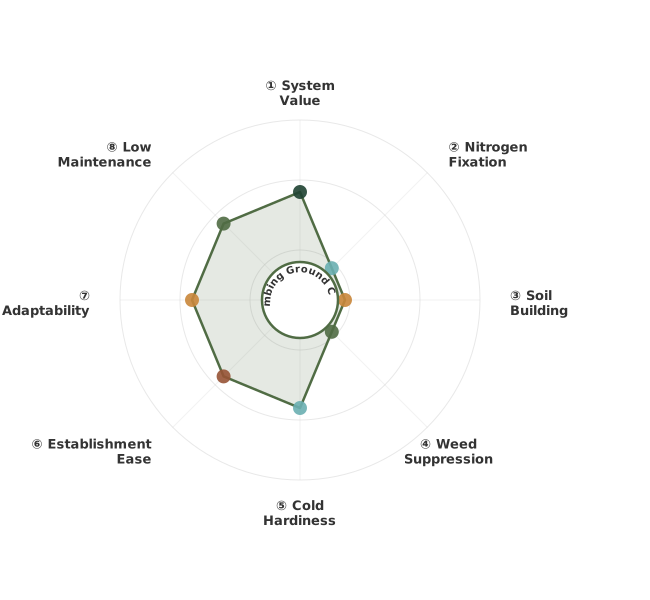
Comparative ratings for this plant across key regenerative agriculture traits.

Trait Suitability Explanation
Cold Hardiness Adequate Clammy groundcherry thrives in cool seasons, utilizing its rhizomatous spread to actively build soil structure and provide ground cover.
Weed Suppression Not Recommended While spreading, Clammy groundcherry forms an open canopy that allows for companion planting and integration with other ground cover strategies, rather than direct weed suppression.
Nitrogen Fixation Not Recommended As a non-legume perennial, Clammy groundcherry does not contribute to atmospheric nitrogen fixation but can be integrated into diverse cropping systems.
Root System Depth Adequate Its spreading rhizomatous root system, reaching 2-4 feet, actively works to stabilize soil aggregates and enhance subterranean biological activity.
Biomass Production Not Recommended This perennial forb contributes moderate biomass, offering a complementary layer to enhance soil organic matter when managed within a diverse planting.
Establishment Ease Adequate Clammy groundcherry readily establishes through its rhizomatous network, contributing to soil cover with minimal intervention.
Multi Benefit Value Adequate Offers edible fruit and supports beneficial insects, while its spreading habit provides ground cover and contributes to biodiversity within the agroecosystem.
Climate Adaptability Adequate Hardy to zone 3, Clammy groundcherry demonstrates resilience across varied temperate conditions, contributing to soil health and moisture retention.
Maintenance Intensity Adequate As a self-establishing perennial, Clammy groundcherry requires minimal intervention, with its spread contributing to ground cover and soil health management.

Comparative System: Ratings compare plants within their economic category (e.g., cover crop nitrogen fixation compared to other cover crops, not to all plants). Individual farm conditions and management practices significantly influence actual performance.

8

Know the Debate

Physalis heterophylla, or Ground Cherry, holds promise for regenerative systems, particularly for its deep root penetration that enhances soil stru...

Physalis heterophylla, or Ground Cherry, holds promise for regenerative systems, particularly for its deep root penetration that enhances soil structure and its dense foliage for weed suppression. However, its vigorous, rhizomatous spread is a double-edged sword. While beneficial for soil building and nutrient scavenging in rotations or no-till systems, this same trait can make it challenging to manage in intensively cropped areas or gardens, leading to a debate about its suitability and control. Regional success stories highlight its adaptability across diverse climates, from the humid Midwest and temperate UK to dryland Australia and subtropical South America. Its establishment and management require careful consideration of local conditions, including climate, soil type, and desired outcomes, with seeding rates around 1-3 lbs/acre and deep roots aiding drought tolerance once established. Termination methods, including winterkill, grazing, or mechanical approaches, are key to its integration.

Is ground cherry a regenerative asset or a problematic weed?

Beneficial Soil Builder

Academic sources and literature highlight Physalis heterophylla's extensive root system (12-24 inches) for nutrient scavenging and soil structure improvement. Its biomass contributes significantly to soil organic matter, and its dense foliage offers excellent weed suppression.

Sources behind this view

Sources behind this view

Research
  • Assessing temperature-based adaptation limits to climate change of temperate perennial fruit crops. (opens in new window)

    This study found: A global study looked at how changing temperatures due to climate change will affect where five key fruit crops – apples, cherries, almonds, olives, and grapes – can be grown. These perennial trees need specific winter cold periods to produce fruit. The research used climate models to predict future growing areas. By the end of the century, under a high-emission scenario, growing areas in the Southern Hemisphere could shrink by over 40%, while areas in the Northern Hemisphere might expand significantly. A lower-emission scenario shows smaller but still notable shifts. Essentially, suitable growing regions are moving towards the poles. For the Southern Hemisphere, there's less room to move to higher latitudes. Farmers and breeders can adapt by selecting or developing varieties that need less winter chill, choosing appropriate cultivars, and using techniques like shade netting, sprinklers for cooling, and precise irrigation to manage heat stress.

  • Evaluating Cover Crops for Benefits, Costs and Performance within Cropping System Niches (opens in new window)

    This study found: This review looks at the pros and cons of using cover crops in farming systems, drawing on literature and Michigan farmer experiences. Cover crops can help control pests, improve soil and water, make nutrients cycle better, and boost the yield of your main crops. However, they also come with costs like extra expenses, potentially lower income if they interfere with other crops, slower soil warming, and uncertainty about when nitrogen will become available. The benefits tend to be greater in irrigated fields. The review highlights the best cover crops for different seasons and regions in the US (USDA Zones 5-8). For warm summer growing periods, C4 grasses are top performers, producing a lot of biomass. For winter cover, cereal rye is a strong choice across all zones. Mixtures of legumes (like clover or vetch) with cereal grains (like wheat or rye) can create large amounts of diverse organic matter. Legumes are good at fixing nitrogen from the air and can also support beneficial insects. Plants from the Brassica family (like radishes) can help suppress soil pests and diseases. Legume cover crops are the most dependable way to increase the yield of your main crops compared to leaving fields bare. If soil pests are a big problem, brassicas are a good option. If building soil organic matter quickly is the goal, cereal cover crops are best. Combining different types of cover crops, like legumes with cereals or brassicas with cereals, shows promise for various situations.

Aggressive Spreader/Weed Concern

Field reports and practical integration notes express concern over its aggressive rhizomatous spread, which can encroach on desired crops. Management in vegetable gardens or intercropping systems requires careful containment due to its potential to act as an invasive weed.

Sources behind this view

Sources behind this view

Videos & Podcasts
Context-Dependent Management

Integration success depends on context: beneficial in no-till rotations or as groundcover due to soil building and weed suppression. In less desired areas, timely termination before seed set or specific containment strategies are crucial for managing its spread.

Sources behind this view

Sources behind this view

Videos & Podcasts
Making Sense of the Differences

The suitability of Physalis heterophylla hinges on management context. In rotations or no-till systems prioritizing soil health and weed suppression, its spread is often a benefit. However, in gardens or intercropping, its vigorous rhizomatous nature demands proactive containment or termination strategies to prevent it from becoming a problematic weed. Considering regional climate and desired outcomes is vital for successful integration.

9

Learn More

Why farmers use this plant and additional resources

Why Regenerative Farmers Use This Plant

Physalis heterophylla, commonly known as Ground Cherry, Wild Cape Gooseberry, or rough/clammy groundcherry, offers significant regenerative benefits when integrated into agricultural systems, primarily through its contribution to soil health, biodiversity, and nutrient cycling. While not a nitrogen-fixing legume, its extensive root system, which can reach depths of 12-24 inches (30-60 cm), excels at scavenging nutrients from deeper soil profiles, particularly phosphorus, and improving soil structure. This deep root penetration helps to break up compaction, enhance water infiltration, and reduce erosion, especially on sloping land.

The biomass produced by Physalis heterophylla, typically ranging from 2-5 tons per acre (4.5-11.2 metric tons/ha) of dry matter under optimal conditions, contributes significantly to soil organic matter when allowed to decompose. Over a 3-5 year rotation, consistent incorporation of this biomass can boost soil organic matter levels, improving soil's water-holding capacity and nutrient cycling. The decomposition of its residue typically releases scavenged nutrients over a 4-8 week period, enhancing soil fertility and reducing the need for synthetic inputs. Studies on similar herbaceous perennial cover crops show increases in soil microbial biomass and activity, fostering a healthier soil food web.

This versatile plant integrates well into diverse farming systems, acting as an effective cover crop or a component in polyculture systems. Its dense foliage provides excellent weed suppression, outcompeting many common annual weeds by shading the soil surface, thereby reducing the need for costly and ecologically disruptive weed control measures. In rotations, it can precede or follow a variety of cash crops, offering a beneficial break crop. For instance, in corn-soybean rotations in the Midwestern United States, planting Physalis heterophylla after soybean harvest can build soil health before the following corn crop. Its fibrous root system also plays a crucial role in erosion control, binding soil particles together and preventing loss from wind and water.

The ecological services provided by Physalis heterophylla extend to enhancing overall farm biodiversity. Its flowers attract a diverse array of beneficial insects and pollinators, including native bees, butterflies, and predatory wasps, which are crucial for the pollination of many agricultural crops and contribute to natural pest control services. Diverse plant communities incorporating Physalis heterophylla can support more beneficial insect populations compared to monocultures. The improved soil structure and increased organic matter also lead to enhanced water infiltration rates, reducing runoff and the potential for soil loss.

Integrating Physalis heterophylla into crop rotations can lead to substantial cost savings and improved system resilience. Its ability to scavenge residual nutrients, particularly nitrogen and phosphorus, from deeper soil profiles prevents leaching and makes these nutrients available to subsequent cash crops. This nutrient cycling can reduce the reliance on synthetic fertilizers, potentially saving farmers $40-70 per acre annually, depending on existing soil fertility and crop nutrient demands. Its contribution to soil organic matter can be significant, adding to the topsoil over a rotation, leading to improved water-holding capacity and nutrient cycling. While specific pollinator visit data for Physalis heterophylla is limited, its flowering period and nectar production are known to support a variety of beneficial insect populations.

*Regional success stories highlight the adaptability of Physalis heterophylla.*

  • In the Midwestern United States, it is used in no-till systems following corn or soybeans to build soil organic matter, reduce erosion, and scavenge nutrients. It can be interseeded into standing corn at the V4-V6 stage, providing weed suppression and soil cover after corn harvest.
  • In the United Kingdom's temperate oceanic climate, it can be established in early autumn as an overwintering cover, terminated by roller-crimping in late spring to provide weed suppression and soil conditioning for winter wheat. It has also been trialed as a component in herbal leys and as a ground cover in fruit orchards.
  • In Australian dryland farming systems and the wheat-belt, its use as a cover crop in fallow periods helps to protect soil from wind and water erosion, improve soil structure, and enhance water retention between cereal crops. It can be sown with the autumn rains to provide ground cover and nutrient scavenging benefits.
  • In South America, particularly in regions with humid subtropical climates like Brazil, it has been explored as an understory plant in agroforestry systems (e.g., coffee and fruit plantations), contributing to soil fertility, providing ground cover, suppressing weeds, and supporting biodiversity.
  • In temperate regions of Europe, farmers have utilized it in hedgerows and field margins to support biodiversity and provide habitat for beneficial insects.
  • In Japan, it has been noted for its adaptability to temperate climates.
10

How to Integrate This Plant

Practical guidance for regenerative systems

Establishing Physalis heterophylla is straightforward, with seeding rates typically ranging from 0.5-2 ounces per acre (14-56 grams/acre), or approximately 1-3 lbs/acre (1.1-3.4 kg/ha) when mixed with other cover crops for broader coverage. For broadcast seeding, rates can range from 5-10 lbs/acre (5.6-11.2 kg/ha), and slightly lower, around 3-7 lbs/acre (3.4-7.8 kg/ha), when drilled. The optimal planting depth is shallow, around 0.25-0.5 inches (0.6-1.3 cm), to ensure good seed-to-soil contact and rapid germination.

For best results, sow in the spring after the last frost, typically March-May in the Northern Hemisphere and September-November in the Southern Hemisphere. In the Northern Hemisphere, planting can occur from late spring to early summer, after the last frost, from April to June. In the Southern Hemisphere, this translates to October to December. Germination usually takes 10-20 days under optimal conditions, with establishment occurring within 30-45 days.

Row spacing can vary depending on the desired outcome. For a dense cover crop or broadcast seeding, spacing is not critical. If drilled in rows for a specific purpose, a spacing of 6-12 inches (15-30 cm) can be effective. For fruit production or intercropping, rows can be spaced 18-36 inches (45-90 cm) apart.

Management practices should prioritize biological fertility and minimal soil disturbance. Physalis heterophylla is relatively drought-tolerant once established but benefits from approximately 1 inch (2.5 cm) of water per week during its initial growth phase. Fertility needs are best met through biological sources like compost tea, incorporating previous cover crop residue, or applying aged manure, aligning with the biological fertilization hierarchy. While it can scavenge nutrients effectively, synthetic inputs should only be considered as a transitional tool while building soil biology.

At maturity, plants typically reach a height of 2-4 feet (0.6-1.2 meters). Pest and disease management should focus on biological controls, such as encouraging beneficial insect populations, and maintaining diverse crop rotations to prevent the build-up of specific issues.

*As a cover crop, Physalis heterophylla's termination and residue management are crucial for its integration into regenerative systems.* The preferred termination hierarchy begins with natural winterkill in colder climates (USDA Zones 3-5), where temperatures consistently drop below 0°F (-18°C) or 14°F (-10°C). In milder regions, grazing with livestock like sheep or cattle can effectively reduce biomass and incorporate residue. Mowing or roller-crimping are also effective mechanical termination methods, ideally performed at the flowering stage (typically 2-3 weeks before cash crop planting) or seed set to maximize biomass and nutrient content and mulching benefits. Crimping is most effective when the plant is at full bloom or seed set. If these methods are insufficient or during a transitional phase, a targeted herbicide application can be used as a last resort, ideally 2-3 weeks before planting the subsequent cash crop to allow for decomposition. The residue typically decomposes within 4-8 weeks, releasing scavenged nutrients and contributing to soil organic matter.

Seed management is important; if fruit production is not desired, allowing plants to go to seed can lead to volunteer plants in subsequent seasons, which may be beneficial or detrimental depending on the cropping system and weed management goals. Care must be taken to manage its spread if it is not desired as a volunteer crop in subsequent years, often through timely termination before seed set.

View Full Document (Printable single-page version)