
Pea
Field pea (Pisum sativum) is a valuable component in regenerative agriculture, primarily utilized as a cover crop and a nitrogen-fixing component in diverse cropping systems. Its inclusion in cover crop mixes, often with oats or vetch, significantly reduces weed biomass and can be terminated using roller-crimpers in no-till systems, creating a beneficial mulch layer that suppresses weeds and conserves moisture. Farmers have successfully integrated field peas into grazing rotations, noting significant weight gains in cattle when grazed from September to November as part of a diverse cover crop mix. In intercropping systems, pea/oat mixtures have been seeded into corn without negatively impacting grain yield. The regenerative benefits include nitrogen fixation, which enhances soil fertility, and increased soil organic carbon (SOC) stocks, particularly in reduced tillage systems. In South Dakota, expanding crop diversity to include dry pea contributed to substantial corn yield increases in a no-till system. While not extensively detailed in these excerpts, peas also feature in insectary strips designed to support beneficial insects in organic production. Farmer experience highlights its effectiveness in grazing mixes and its compatibility with no-till practices.
For a full botanical description see: Wikipedia(opens in new window) (external link)
Regenerative Quick Profile
All recommendations assume integrated, regenerative practices—not conventional inputs.
Climate & Soil Fit
Climate: Tropical Rainforest, Tropical Monsoon, Tropical Savanna, Hot Semi-Arid (Steppe), Cold Semi-Arid (Steppe), Hot Desert, Cold Desert, Humid Subtropical, Oceanic (Maritime Temperate), Hot-Summer Mediterranean, Warm-Summer Mediterranean, Monsoon-Influenced Humid Subtropical, Subtropical Highland, Hot-Summer Continental, Warm-Summer Continental, Subarctic, Monsoon-Influenced Hot-Summer Continental, Tundra
Zones: USDA 4-8, Australian Zones 3-5
Optimal Soil: Loam Soil
System Role & Functions
Primary: Cover Crop System
Secondary: Nitrogen Fixer, Forage Integration
Key Benefits: Multi-benefit value, Easy establishment, Nitrogen Fixation
Management Level
Experience: Beginner-Friendly
Maintenance: Moderate maintenance - Peas integrate seamlessly into regenerative systems, benefiting from healthy soil biology and moisture retention, with their primary 'maintenance' being the ongoing improvement of soil fertility and structure.
Value Streams
- Cover crop (soil investment)
- Soil building and erosion control
- Livestock forage value
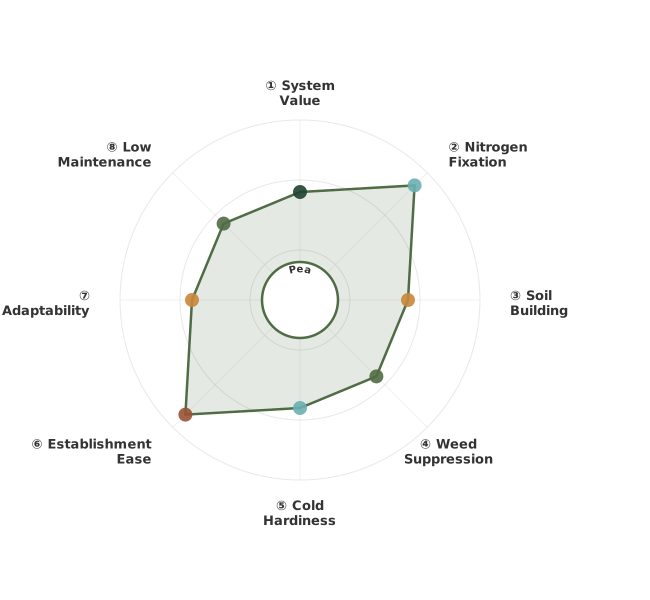
How These Traits Are Calculated
Trait dimensions are ordered clockwise starting from the top of the chart (12 o'clock position):
1. System Value
Ecosystem service stacking across nitrogen, carbon, water, biodiversity
WHAT: Synthesizes the compounding value of multiple ecosystem services delivered simultaneously—nitrogen fixation, soil organic matter building, pollinator support, erosion control, and water infiltration improvement. This is the total regenerative impact beyond single-function metrics.
WHY: The highest-value cover crops deliver 3-5 significant ecosystem services at once. A legume that fixes nitrogen, builds biomass, supports pollinators, and improves water infiltration provides $150-300/acre in combined benefits versus $30-60 for single-function covers. This service stacking is the core principle of regenerative agriculture.
HOW: Scored via LLM synthesis of economics data, timeline benefits, and trait combinations. Exceptional (3.0): 4-5 major services stacked with strong economic value ratios. Typical (2.0): 2-3 moderate services. Limited (1.0): Single-function covers with minimal service stacking. Considers seed cost relative to benefit value.
2. Nitrogen Fixation
Biological nitrogen production via legume root nodule bacteria
WHAT: Measures the ability to convert atmospheric nitrogen (N₂) into plant-available ammonia through symbiotic bacteria in root nodules. Legumes form partnerships with rhizobium bacteria that fix 60-150 lbs N/acre/year, reducing or eliminating synthetic fertilizer needs for following crops.
WHY: Nitrogen is the most expensive fertilizer input in crop production ($0.50-1.00/lb). Cover crops with exceptional nitrogen fixation can provide $60-150/acre worth of fertility while building soil organic matter. This biological process also reduces groundwater contamination from nitrogen runoff and lowers farm carbon footprint.
HOW: Ratings based on annual nitrogen fixation capacity and reliability across soil conditions. Exceptional (3.0): Legumes like hairy vetch, crimson clover, and field peas fixing >100 lbs N/acre/year. Typical (2.0): Moderate fixers like red clover at 60-100 lbs N/acre/year. Limited (1.0): Non-legumes (grasses, brassicas) with zero fixation capacity.
3. Soil Building
Weighted: biomass production (60%) + root system depth (40%)
WHAT: Combines above-ground biomass production with root depth to measure total soil organic matter contribution. Biomass provides surface organic matter, while deep roots deposit carbon at depth and break up compaction layers.
WHY: Soil organic matter is the foundation of regenerative agriculture, improving water retention, nutrient cycling, and biological activity. Each 1% increase in soil organic matter holds an additional 20,000 gallons of water per acre and represents $500-1,000 in fertility value. Deep roots access subsoil nutrients and create channels for water infiltration.
HOW: Weighted formula prioritizes biomass production (60% weight) for immediate organic matter contribution, with root depth (40% weight) for long-term soil structure. Exceptional (3.0): High-biomass crops with deep roots like cereal rye (8+ tons biomass, 5+ ft roots). Typical (2.0): Moderate on both factors. Limited (1.0): Low biomass or shallow roots.
4. Weed Suppression
Physical competition through rapid establishment and dense growth
WHAT: Measures the ability to outcompete weeds through rapid germination, aggressive early growth, and dense canopy formation. Physical smothering and light competition reduce weed pressure without herbicides.
WHY: Weed management is a major labor and cost burden for farmers. Cover crops that effectively suppress weeds reduce herbicide costs ($20-60/acre), decrease cultivation passes (fuel + labor), and provide clean seedbeds for cash crops. This is especially valuable in organic systems where herbicide options are limited.
HOW: Ratings based on germination speed, tillering density, and canopy closure timing. Exceptional (3.0): Fast-establishing, dense-tillering crops like cereal rye, oilseed radish that close canopy within 3-4 weeks. Typical (2.0): Moderate establishment and coverage. Limited (1.0): Slow-establishing or sparse crops that allow weed competition.
5. Cold Hardiness
Winter survival for fall planting and spring green manure value
WHAT: Measures tolerance to freezing temperatures and ability to survive winter conditions. Winter-hardy cover crops can be fall-planted, overwinter as living mulch, and provide early spring growth before cash crop planting.
WHY: Fall-planted winter-hardy covers extend the growing season into unused months, capturing solar energy and preventing erosion during wet periods. Spring green manure from overwintered covers provides early nitrogen and biomass. This timing flexibility is critical in cold climates with short growing seasons.
HOW: Ratings based on minimum survival temperature and winter active growth. Exceptional (3.0): Winter-hardy crops like cereal rye, hairy vetch, crimson clover surviving to -20°F with active growth in spring. Typical (2.0): Moderate cold tolerance. Limited (1.0): Warm-season crops like buckwheat, cowpea killed by first frost.
6. Establishment Ease
Germination speed, soil requirement flexibility, planting window breadth
WHAT: Measures how easily the cover crop establishes from seed, including germination speed, tolerance for variable soil conditions, and flexibility in planting timing. Easy establishment means reliable stands without intensive management.
WHY: Difficult-to-establish covers increase risk of stand failure, wasted seed costs, and reduced benefits. Easy establishment crops tolerate late planting, poor seedbed preparation, and variable moisture—critical when cover cropping windows are narrow between cash crops. Reliable establishment ensures consistent soil building and weed suppression benefits.
HOW: Ratings based on days to emergence, soil condition sensitivity, and planting window breadth. Exceptional (3.0): Fast germinators like buckwheat (3-5 days) and cereal rye (5-7 days) with wide planting windows. Typical (2.0): Moderate establishment requirements. Limited (1.0): Slow or finicky establishers requiring precise conditions.
7. Adaptability
Weighted: climate tolerance (60%) + multi-benefit versatility (40%)
WHAT: Combines climate adaptability (temperature and rainfall range) with multi-benefit versatility (diverse ecosystem services) to measure overall system flexibility. High adaptability means the cover works across farm regions and provides multiple functions.
WHY: Farmers need cover crops that work reliably across diverse fields and provide stacked benefits. Climate-adaptable covers reduce risk in variable weather, while multi-benefit crops deliver nitrogen fixation + pollinator support + forage value simultaneously. This versatility maximizes return on cover crop investment.
HOW: Weighted formula prioritizes climate tolerance (60% weight) for geographic reliability, with multi-benefit value (40% weight) for functional stacking. Exceptional (3.0): Wide climate range + multiple significant benefits. Typical (2.0): Moderate on both factors. Limited (1.0): Narrow climate range or single-function crops.
8. Low Maintenance
Inverted from maintenance intensity—low inputs mean high scores
WHAT: Measures minimal input requirements for successful cover cropping. Low-maintenance covers require no irrigation, minimal fertility, easy termination, and tolerate variable management timing.
WHY: Cover crops compete for resources with cash crops in tight rotations. Low-maintenance covers fit easily into existing systems without adding labor, equipment, or input costs. Easy termination is especially critical—covers that are difficult to kill can become weeds and delay cash crop planting.
HOW: Inverted score from maintenance intensity trait (4.0 minus raw score). Exceptional (3.0): Self-sufficient crops like cereal rye, field peas requiring no irrigation or fertility, easily terminated by mowing or winter-kill. Typical (2.0): Moderate input needs. Limited (1.0): High-maintenance crops needing irrigation, heavy fertility, or difficult termination (herbicides, multiple tillage passes).
Ratings are based on documented performance in regenerative systems, not conventional high-input scenarios. All traits assume integrated management practices focused on soil health and ecosystem services.
4
System Role & Multi-Benefit Value
Functional roles, integration strategies, and stacked benefits
System Role & Multi-Benefit Value
Functional roles, integration strategies, and stacked benefits
Functional Role
Total System Value
Pea contributes significant whole-farm resilience by stacking multiple benefits. Its primary value as a cover crop lies in nitrogen fixation, reducing the need for synthetic inputs and enhancing soil fertility, which directly supports crop yields. This nitrogen contribution also enhances soil organic matter over time, sequestering carbon and improving soil structure and water infiltration. As a fast-maturing crop, it offers rapid ground cover to prevent erosion and suppress weeds, particularly in no-till systems (Excerpts 6, 8, 9). When used for grazing, field peas provide valuable protein and energy for livestock, supporting animal health and weight gain (Excerpts 2, 9), while also incorporating manure into the system. Inclusion in insectary strips can support beneficial insects, contributing to pest management and pollination services (Excerpt 5). The diversity of uses, from direct harvest (shoots, peas for food products) to forage and soil building, diversifies farm income streams and mitigates risks associated with monoculture or market volatility.
Integration Characteristics
Multi-Benefit Value: Ideally Suited - Peas are a multi-functional crop, building soil fertility through nitrogen fixation, providing edible pods, attracting beneficial insects, and contributing biomass for soil improvement.
Sources behind this view
 Videos & Podcasts
-
Discusses peas as nitrogen fixers improving soil fertility via Rhizobium bacteria. Recommends crop rotation (3-year minimum), soil testing, companion planting, mulching, organic pest control, and prop

5
Management & Care Requirements
Integration guidance, maintenance needs, and care practices
Management & Care Requirements
Integration guidance, maintenance needs, and care practices
How to Integrate This Plant
Pea (Pisum sativum) can be integrated into regenerative systems primarily as a cover crop, offering nitrogen fixation and rapid biomass production. Its roles include improving soil health, providing forage for livestock, and serving as a component in insectary plantings. Compatible practices include interseeding into existing crops like corn (Excerpts 3, 5), using in no-till systems for weed suppression and soil improvement (Excerpts 6, 8, 9), and as a grazed forage crop (Excerpts 2, 9). Pea shoots can also be a direct harvest product (Excerpts 1, 4). Timeline to contribution is rapid, with significant biomass and soil benefits within the first year. Early contributions (Year 1-2) include nitrogen fixation, weed suppression, and initial soil organic matter addition. Medium-term (Year 3-5) benefits include enhanced soil structure and continued nutrient cycling. Long-term (Year 10+) benefits compound soil health and resilience. Multi-benefit stacking comes from its nitrogen-fixing ability, erosion control, potential for livestock forage, and contribution to biodiversity through insectary plantings.
Integration Practices & Management
Regenerative farmers integrate peas (Pisum sativum) through various establishment and management strategies, often as a cover crop or in crop rotations. Establishment can occur through direct seeding, as seen with fast-maturing pea shoots for market, or interseeded into cash crops like corn. Pea is frequently included in diverse cover crop mixes, such as with barley, radishes, and oats, for grazing systems or for biomass production preceding cash crops like pumpkins. No-till and minimal tillage practices are common, with peas sown using modified drills or as part of roller-crimper terminated mixes. Integration with livestock is a key aspect, with cover crop mixes containing peas utilized for grazing cattle, promoting significant weight gains in calves and maintaining cow weight. Termination strategies vary; peas can be naturally winterkilled, grazed down by livestock, terminated with a roller-crimper, or potentially mowed. Management involves understanding competition dynamics, as fast-maturing pea varieties can be a core business, and considering fertility needs within the broader cropping system. Peas contribute to crop diversity, which has been directly linked to yield increases in no-till systems. They can be part of intercropping or relay cropping strategies, enhancing system resilience and soil health.
Management Profile
Maintenance Intensity: Adequate - Peas integrate seamlessly into regenerative systems, benefiting from healthy soil biology and moisture retention, with their primary 'maintenance' being the ongoing improvement of soil fertility and structure.
Sources behind this view
Videos & Podcasts
-
Discusses peas as nitrogen fixers improving soil fertility via Rhizobium bacteria. Recommends crop rotation (3-year minimum), soil testing, companion planting, mulching, organic pest control, and prop
 Community
-
Highlights Austrian winter peas and cowpeas as effective cover crops and food sources, emphasizing direct sowing, seed saving for adaptation, and succession planting with other crops like gourds for s
Read more (opens in new window) permies.com -
Discusses successful use of Austrian winter peas, cowpeas, and 'Coat and Jacket' peas as cover crops, noting their nitrogen-fixing benefits in poor soils. Highlights seed saving for heat/disease resis
Read more (opens in new window) permies.com
 Research
-
Effects of Catch Crops Cultivated for Green Manure on Soil C and N Content and Associated Enzyme Activities (opens in new window)
Using field peas as green manure significantly increased soil nitrogen and microbial activity. Both spring and fall incorporation are recommended for improving soil health.
-
Effect of field pea (Pisum sativum subsp. arvense (L.) Asch.) and pea-oat (Avena sativa L.) biculture cover crops on high tunnel vegetable under organic production system (opens in new window)
In an organic high tunnel, pea-oat cover crops boosted biomass and soil health (carbon, structure, nutrients) in Poland. Early cover cropping reduced tomato yield but increased green bean yield.
-
Intensification of Field Pea Production: Impact on Soil Microbiology (opens in new window)
Growing field peas too often in a rotation reduced soil microbial carbon and bacterial diversity, negatively impacting nutrient cycling. Longer rotations with wheat improved soil microbial activity.
6
Economics & Value Streams
Direct harvest, system benefits, ecosystem services, and risk diversification
Economics & Value Streams
Direct harvest, system benefits, ecosystem services, and risk diversification
Comprehensive economic analysis including direct harvest value, system enhancement contributions, ecosystem services, value timeline, and risk diversification strategies.
Cover Crop Investment
| Metric | Value |
|---|---|
| Seed Cost | $25-50/acre $62-124/ha |
| Termination Cost | 15-40 37-99 |
| Biomass Production | 1.5-3.0 3-7 |
| N Fixation Value | 60-120 67-135 |
| Weed Control Savings | 20-50 49-124 |
Cover crops are soil investments, not cash crops. Economics measured in soil health gains, input reduction, and subsequent crop performance. Values show direct costs and estimated benefits.
System Enhancement Value
Beyond cost recovery: soil building, nitrogen, biomass, and weed suppression
Nitrogen Fixation & Cycling
40-80 lbs N/acre/year = $24-96/acre fertilizer replacement (based on ~$0.60/lb N fertilizer cost)
As a legume, field pea (Pisum sativum) possesses the inherent ability to fix atmospheric nitrogen through a symbiotic relationship with rhizobia bacteria in its root nodules. This biological process significantly reduces the farm's reliance on synthetic nitrogen fertilizers, leading to substantial cost savings and a reduced environmental footprint. The quantitative reference data indicates that cool-season annual legumes like peas can contribute between 40-80 lbs of nitrogen per acre per year. This nitrogen becomes available to subsequent crops in the rotation as the pea biomass decomposes. This not only enhances soil fertility but also improves soil structure and microbial activity, creating a more robust and resilient cropping system. For instance, research has explored nitrogen credits from legumes like red clover interseeded into corn, suggesting a tangible economic benefit from reduced fertilizer inputs.
Soil Building & Weed Suppression
Field peas, when integrated into a cover cropping system, offer several valuable secondary benefits beyond nitrogen fixation. As highlighted by farmer Justin (transcript), field peas can be part of a diverse cover crop mix utilized for grazing livestock. This forage integration provides a nutritious feed source, contributing to animal weight gain and overall herd health, thereby generating direct economic returns through improved livestock productivity. Furthermore, the presence of peas in a cover crop mix, particularly when interseeded (transcript), can help suppress weeds by outcompeting them for light, water, and nutrients. This reduces the need for costly and potentially harmful herbicides. The rapid growth of pea shoots, as noted by speaker for other fast-maturing crops, suggests potential for quick biomass accumulation, which aids in soil organic matter enhancement and erosion control when incorporated or grazed.
Ecosystem Service Contributions
Environmental contributions: carbon, pollinators, wildlife, and water
- Carbon Sequestration: Field peas, as a cool-season annual legume, contribute to carbon sequestration through biomass production and subsequent incorporation into the soil organic matter. Their relatively fast growth cycle allows for significant carbon capture during their vegetative phase.
- Pollinator Support: Medium. While not a primary pollinator attractant like some flowering species, peas do produce flowers that can attract a variety of beneficial insects, including some pollinators.
- Wildlife Habitat: Low to Medium. Provides some browse for small wildlife and potentially nesting habitat for certain ground-nesting birds if allowed to mature. Its primary value is as a forage for livestock.
- Water Quality: Not applicable
Value Timeline: Soil Building Process
When you'll see results: immediate soil benefits, compounding over seasons
Years 1-2
Nitrogen fixation begins immediately, contributing to soil fertility for subsequent crops. Forage integration for grazing livestock can commence within the first growing season, providing immediate feed value. Weed suppression benefits also start to accrue.
Years 3-5
Established nitrogen contributions become more predictable, potentially allowing for reduced synthetic fertilizer applications. The soil health improvements from repeated cover cropping with peas will begin to manifest more notably in improved soil structure and water infiltration.
Years 10-20
Long-term soil health benefits, including enhanced microbial activity and organic matter accumulation, become significant. The consistent nitrogen contribution from a legume rotation can lead to substantial savings on fertilizer inputs. The resilience of the farm system to drought and other stresses may increase.
20+ Years
Sustained high soil fertility and a robust soil ecosystem, characterized by excellent water retention and nutrient cycling, will likely be a hallmark. The farm's overall productivity and economic stability are enhanced by the deep-seated improvements in soil health and reduced reliance on external inputs.
Farm Risk Reduction
How this reduces farm risk: lower input costs and better soil resilience
- Multiple Revenue Streams: Forage for livestock grazing (direct economic value), reduced fertilizer costs (cost savings), improved soil health (long-term productivity and resilience), potential for earlier crop establishment due to improved soil conditions.
- Temporal Income Spread: Provides value throughout the growing season as a cover crop and forage. Nitrogen contribution is released over time as the plant residues decompose, benefiting subsequent crops. Risk reduction is an ongoing service.
- Market Risk Hedge: Reduces reliance on volatile synthetic fertilizer markets. Provides a domestic, on-farm feed source, mitigating risks associated with feed procurement and price fluctuations. Improved soil health enhances the farm's resilience to adverse weather events, reducing crop loss risk.
Sources behind this view
Videos & Podcasts
-
Full-season cover cropping and grazing are presented as key strategies for soil health, significantly reducing fertilizer and feed costs. Practices like using hairy vetch for nitrogen fixation and imp
![Thumbnail for [S2E2] Farmer Panel: Fertilizer Reduction Strategies](/static/thumbnails/B1Q32-kEq_c.jpg)
-
Discusses peas as nitrogen fixers improving soil fertility via Rhizobium bacteria. Recommends crop rotation (3-year minimum), soil testing, companion planting, mulching, organic pest control, and prop
Research
-
Effect of field pea (Pisum sativum subsp. arvense (L.) Asch.) and pea-oat (Avena sativa L.) biculture cover crops on high tunnel vegetable under organic production system (opens in new window)
In an organic high tunnel, pea-oat cover crops boosted biomass and soil health (carbon, structure, nutrients) in Poland. Early cover cropping reduced tomato yield but increased green bean yield.
-
Enhancing Sustainable Farming and Climate Resilience: The Role of Cover Crops (opens in new window)
Cover crops boost soil health, fix nitrogen, suppress weeds, and sequester carbon, enhancing farm profitability and climate resilience. Addressing adoption challenges is key.
-
Evaluating Cover Crops for Benefits, Costs and Performance within Cropping System Niches (opens in new window)
Review of cover crops highlights benefits (pest control, soil health, yield) and costs. Best species identified for different seasons/regions. Rye excels in winter, C4 grasses in summer. Legumes fix N
-
Cover crop and soil quality interactions in agroecosystems (opens in new window)
Cover crops protect soil from erosion and build soil organic matter, improving soil health and nutrient cycling. Legumes fix nitrogen, and some offer natural weed control, contributing to environmenta
8
Learn More
Why farmers use this plant and additional resources
Learn More
Why farmers use this plant and additional resources
Why Regenerative Farmers Use This Plant
Peas (Pisum sativum), particularly field peas, are a cornerstone cover crop in regenerative agriculture, primarily valued for their exceptional nitrogen-fixing capabilities. As legumes, they form a symbiotic relationship with Rhizobium bacteria in the soil, converting atmospheric nitrogen into a plant-available form. This process can contribute significantly to soil fertility, with peas typically fixing between 60-120 lbs of nitrogen per acre (67-134 kg/ha) over their growing season. A well-established pea cover crop can contribute 60-100 lbs of nitrogen per acre (67-112 kg/ha) to the soil, significantly reducing the need for synthetic nitrogen fertilizers in subsequent cash crops. This biological nitrogen input directly reduces the reliance on synthetic nitrogen fertilizers, potentially saving farmers $30-$90 per acre annually, depending on current fertilizer prices. This nitrogen credit can translate to direct cost savings for farmers, potentially reducing fertilizer expenses by $30-$60 per acre annually, depending on current market prices.
Beyond nitrogen fixation, peas produce substantial above-ground biomass, typically ranging from 2,000-5,000 lbs per acre (2,240-5,600 kg/ha) when grown as a cover crop. This biomass, when incorporated into the soil, adds valuable organic matter, improving soil structure, water holding capacity, and nutrient cycling over time. Their extensive and fibrous root systems, reaching depths of 2-4 feet (0.6-1.2 meters), help to break up soil compaction, improve water infiltration, and scavenge nutrients from deeper soil profiles, making them available to subsequent cash crops. These root systems also help to improve soil structure and aeration, making nutrients more accessible to subsequent crops and increasing water infiltration.
Integrating peas into farming systems offers a multitude of benefits beyond nitrogen fixation. They are highly effective at suppressing weeds by outcompeting them for light, water, and nutrients during their growth cycle, providing a natural alternative to costly and environmentally impactful herbicides, particularly when compared to bare fallow periods. The dense residue left after termination further smothers emerging weeds, reducing the need for costly herbicide applications. Their ability to scavenge residual nutrients from the soil profile also helps prevent nutrient leaching. Peas play a vital role in erosion control; their fibrous root systems anchor the soil, while their above-ground growth shields the soil surface from wind and rain impact, preventing topsoil loss, especially on sloped fields.
Peas are often intercropped or used in cover crop mixes with other species, such as cereal rye or oats, to create a more diverse and resilient system. For instance, a pea and cereal rye mix planted in the fall provides excellent winter ground cover, preventing erosion and building soil organic matter, while the pea contributes nitrogen and the rye adds carbon and biomass. In crop rotations, peas can be strategically placed to break disease cycles and improve soil health, preparing the ground for more demanding cash crops. Their value as a forage crop for livestock is also notable, providing high-quality protein and energy when grazed or harvested.
The quantitative ecosystem benefits of growing peas are significant. The decomposition of pea residue releases nutrients gradually over a period of 30-60 days, providing a sustained nutrient supply for the following crop and minimizing nutrient loss. This slow-release mechanism is a key aspect of building long-term soil health and fertility. Approximately 50-70% of the fixed nitrogen becomes available to the following crop. This synchronized nutrient release minimizes the risk of nitrogen leaching into waterways. The addition of organic matter from pea biomass contributes to long-term soil health improvements, with studies showing that consistent cover cropping can increase soil organic matter by 0.1-0.5% annually. The increased soil organic matter resulting from pea biomass incorporation enhances soil's water-holding capacity, reducing irrigation needs and improving drought resilience. Studies have shown that cover crops like peas can increase soil infiltration rates by up to 50%, leading to less surface runoff and erosion. The improved soil structure also supports a more robust soil microbial community, which is essential for nutrient cycling and overall soil health. Improved soil structure leads to enhanced water infiltration rates, often by 10-25%, reducing runoff and erosion.
The ecosystem services provided by peas extend to supporting beneficial insect populations and enhancing overall biodiversity. Their flowers attract a variety of pollinators, including bees and hoverflies, which are essential for both crop production and broader ecosystem health. These pollinators, in turn, help to control pest populations by preying on aphids and other harmful insects. The decomposition of pea residue enriches the soil microbial community, fostering a more robust and resilient soil food web. While direct pollinator visit data varies, flowering peas attract a range of beneficial insects, contributing to a healthier agroecosystem.
Peas have demonstrated success across diverse agricultural landscapes. In the Midwestern United States, farmers commonly plant field peas in the spring before corn or soybeans, allowing them to fix nitrogen and build soil health before the main cash crop is established. In the United Kingdom, peas are often incorporated into winter cereal rotations, planted in the autumn to provide a green manure crop that is terminated in the spring. Australian farmers in dryland cropping systems utilize peas as a winter-season cover crop, benefiting from their drought tolerance and nitrogen-fixing ability to improve soil fertility between summer crops. In regions like Brazil, peas can be used as an understory cover crop in coffee or fruit plantations, contributing to soil cover and nitrogen availability while not competing significantly with the perennial trees. In the Canadian Prairies, farmers utilize field peas in rotations with wheat and canola, benefiting from nitrogen credits and improved soil structure in dryland conditions. Australian growers in Mediterranean climates often incorporate peas into wheat-legume rotations, leveraging their drought tolerance and nitrogen-fixing abilities to enhance soil fertility in semi-arid regions. In the UK's temperate climate, winter peas are often sown in September or October to provide overwintering cover and nitrogen fixation, being terminated in late spring before planting into a cereal rotation. Brazilian coffee plantations utilize peas as a shade-tolerant understory cover crop, fixing nitrogen and improving soil health between coffee rows. In Australian dryland farming systems, peas are sown with autumn rains as part of a crop rotation to build soil fertility and improve water use efficiency in wheat and barley systems, often tolerating temperatures down to 14°F (-10°C) during their growth cycle.
Sources behind this view
Videos & Podcasts
-
Discusses peas as nitrogen fixers improving soil fertility via Rhizobium bacteria. Recommends crop rotation (3-year minimum), soil testing, companion planting, mulching, organic pest control, and prop
-
Pigeon pea thrives in various soils and partial shade, improving soil fertility (0.3% SOC increase in trials) and fixing significant nitrogen (100-200 lb/acre). It requires frost-free conditions and m
Research
-
A Comprehensive Review of Pea (Pisum sativum L.): Chemical Composition, Processing, Health Benefits, and Food Applications (opens in new window)
Peas (Pisum sativum L.) are rich in protein, fiber, and beneficial polyphenols, offering antioxidant and anti-inflammatory health benefits. Processing improves their usability, making them a versatile
-
Intensifying a crop–fallow system: impacts on soil properties, crop yields, and economics (opens in new window)
Adding field peas to a winter wheat-corn-fallow rotation in the Great Plains improved soil microbes and water availability, and potentially increased net farm income by $144-303/acre over five years,
-
Pulse-based cropping systems for soil health restoration, resources conservation, and nutritional and environmental security in rainfed agroecosystems (opens in new window)
Pulse crops (beans, peas, lentils) enhance rainfed farming by improving soil health, reducing fertilizer needs through natural nitrogen fixation, and boosting nutrition. They offer ecological and econ
-
INCREASING SOIL FERTILITY AS A RESULT OF THE
ACCUMULATION OF NITROGEN BY LEGUMINOUS CROPS (opens in new window)
Legumes naturally fix 40-300 kg N/ha, improving soil fertility and microbes. A study showed seed treatment with Bioinoculant and Mars EL increased pea root nodules by up to 38.8%, enhancing natural so