Available data suggests its potential in regenerative agriculture, particularly concerning soil health. Trials indicate significant variation among genotypes in their ability to sequester soil organic carbon (SOC), influencing both mineral-associated organic matter (MAOM) and particulate organic matter (POM) stocks. This highlights the importance of selecting appropriate genotypes for maximizing soil building benefits. The tree's rapid growth and large size could contribute to biomass for soil organic matter. However, practical challenges exist; some farmers perceive cottonwoods as messy due to falling debris like seed fluff or brittle branches, which can require significant cleanup and pose safety concerns, limiting their integration in certain farm settings. Further research is needed to fully understand *P. trichocarpa*'s role as a cover crop, forage, or nitrogen fixer within regenerative systems, but its capacity for carbon sequestration is a promising avenue for exploration. While coverage in our knowledge base is limited, the above represents documented uses in regenerative systems.

Regenerative Quick Profile

All recommendations assume integrated, regenerative practices—not conventional inputs.

Climate & Soil Fit

Climate: Tropical Rainforest, Tropical Monsoon, Tropical Savanna, Hot Semi-Arid (Steppe), Cold Semi-Arid (Steppe), Hot Desert, Cold Desert, Humid Subtropical, Oceanic (Maritime Temperate), Hot-Summer Mediterranean, Warm-Summer Mediterranean, Monsoon-Influenced Humid Subtropical, Subtropical Highland, Hot-Summer Continental, Warm-Summer Continental, Subarctic, Monsoon-Influenced Hot-Summer Continental, Tundra

Zones: USDA 4-9, Australian Zones 3-7

Optimal Soil: Loam Soil

System Role & Functions

Primary: Silvopasture

Secondary: Windbreak, Specialty

Key Benefits: Climate adaptable, Cold Hardiness, Root System Depth

Management Level

Experience: Beginner-Friendly

Maintenance: Moderate maintenance - While fast-growing, it requires integration into the farm system for structural pruning to manage wind resistance and occasional attention to moisture retention and disease prevention.

Value Streams
1

Climate Suitability Assessment

Will this plant thrive in your climate?

IDEALLY SUITED

Köppen Zone: Cfa (Humid Subtropical), Dfa (Hot-Summer Continental), Dfb (Warm-Summer Continental)
USDA Zone: 5a, 5b, 6a, 7a
Australian Zone: temperate
EU Climate Region: atlantic

Black Cottonwood performs optimally in climates with mild winters and warm, but not excessively hot, summers, characterized by consistent rainfall. These conditions are met in Köppen zones Cfb, and regional zones like USDA 7a-8b, Australian temperate, and EU Atlantic. These regions offer growing seasons of 180-240+ frost-free days with average temperatures conducive to rapid growth (60-75°F/15-24°C). Establishment is highly successful, with minimal need for supplemental irrigation beyond initial establishment or during rare prolonged droughts. The species readily fulfills its silvopasture functions by providing fast-growing biomass and shade, and its windbreak capabilities are maximized due to its vigorous growth habit. Stand persistence is excellent, with minimal risk of winter kill or heat stress. The species is well-adapted to the consistent moisture and moderate temperature fluctuations, allowing for reliable multi-year productivity and minimal management inputs, making it an economically sound choice for regenerative agriculture practices in these zones.

ADEQUATE

Köppen Zone: BSk (Cold Semi-Arid (Steppe)), Cfb (Oceanic (Maritime Temperate)), Cwa (Monsoon-Influenced Humid Subtropical), Cwb (Subtropical Highland), Dfc (Subarctic), Dwa (Monsoon-Influenced Hot-Summer Continental)
USDA Zone: 4a, 8a
Australian Zone: subtropical

Black Cottonwood can perform adequately in climates with moderate temperature extremes and variable rainfall, including Köppen zones Cfa, Cfb, Dfb, and regional zones like USDA 5a-6b, Australian subtropical, and EU Atlantic. These zones typically offer growing seasons of 120-180 frost-free days, but may experience periods of summer heat or drier spells that require attention. While establishment is generally good, supplemental irrigation may be necessary during dry periods to ensure optimal growth and prevent stress, particularly in subtropical or humid continental areas. Winter survival is usually reliable, but growth rates might be slower than in ideal zones due to less favorable temperature ranges or shorter growing seasons. For silvopasture and windbreak functions, careful site selection and potentially some irrigation management are key to maximizing productivity and ensuring long-term success. The species can still provide significant benefits, but requires more proactive management compared to ideal conditions.

NOT RECOMMENDED

Köppen Zone: Af (Tropical Rainforest), Am (Tropical Monsoon), Aw (Tropical Savanna), ET (Tundra), BSh (Hot Semi-Arid (Steppe)), BWh (Hot Desert), BWk (Cold Desert), Csa (Hot-Summer Mediterranean), Csb (Warm-Summer Mediterranean)
USDA Zone: 2a, 3a, 3b, 9a, 10a, 11a, 12a

Black Cottonwood is not recommended for cultivation in climates characterized by extreme cold, very short growing seasons, or prolonged, intense summer heat coupled with aridity. This includes Köppen zones Dfc, Dsc, Dsd, and regional zones like USDA 1a-4b, 9a-10b, and potentially parts of the Australian subtropical zone if heat/drought is severe. In cold regions, extreme winter temperatures (-40°F/-40°C and below) and short growing seasons (under 100 days) lead to high mortality rates, slow growth, and unreliable establishment, making its use for silvopasture or windbreaks impractical and uneconomical. In hot, dry regions, prolonged summer heat (consistently above 90°F/32°C) and low rainfall (under 30 inches/75 cm) cause severe stress, stunting growth, increasing susceptibility to pests and diseases, and requiring intensive, often unfeasible, irrigation. Establishment success is low (<60%), and stand persistence is poor, often limited to a single season or requiring significant intervention. Alternative species better adapted to these specific harsh conditions are essential for successful regenerative agriculture.

Better alternatives for these "not recommended" zones: Quaking Aspen (Populus tremuloides) (native to cold regions, highly cold-hardy and fast-growing), Balsam Poplar (Populus balsamifera) (another cold-hardy poplar species well-adapted to boreal conditions), Willow (Salix spp.) (various species are adapted to cold, wet environments and can provide biomass and shelter), Live Oak (Quercus virginiana) (drought-tolerant, long-lived, provides excellent shade and windbreak in hot, dry areas)

Note: Zones listed above represent climates where this plant can produce reliably with reasonable management. Climate zones not mentioned would require intensive climate modification (greenhouses, extensive infrastructure) and are not economically viable for regenerative agriculture purposes.

2

Soil Suitability Assessment

Which soil types work best for this plant?

IDEALLY SUITED

Loam Soil

This plant thrives in these soil types without requiring amendments or remediation. Natural soil conditions support optimal growth and productivity.

ADEQUATE

Clay Soil, Rich Soil, Rocky Soil, Sandy Soil

This plant performs acceptably in these soil types with moderate, manageable remediation such as pH adjustment, compost addition, or drainage improvement. The required amendments are practical and cost-effective for regenerative agriculture.

NOT RECOMMENDED

Acidic Soil, Alkaline Soil, Desert Soil, Saline Soil, Wet Soil

Growing this plant in these soil types would require impractical remediation such as complete soil replacement, extensive amendments, or cost-prohibitive infrastructure. These conditions are not economically viable for regenerative agriculture.

Note: Soil suitability assessments focus on remediation requirements. "Ideally Suited" means the plant generally thrives without the need for substantial amendments, "Adequate" means manageable remediation (lime, compost, mulch), and "Not Recommended" means impractical soil changes would be required. Climate factors like rainfall and temperature also influence success.

3

Seasonal Considerations

Planting timing, growth duration, and harvest windows

Establishing black cottonwood requires careful timing to capitalize on its vigorous growth. For bare-root nursery stock, planting is best undertaken in early spring, as soon as the soil can be worked, well before active growth begins. Container-grown trees offer more flexibility, allowing planting from early spring through early summer, after the risk of hard frost has passed.

Expect your young trees to reach a state of good establishment within two to three years. While you might see a very small yield in years three to five, true first harvest for significant biomass or timber will likely occur around year five to seven. Full production, where the trees are reaching their mature potential, typically unfolds by year ten and continues for many decades, potentially 50 years or more.

Throughout the year, manage your poplars with seasonal awareness. Pruning is most effectively done during the dormant season, in late fall or winter, to minimize stress and disease risk. Harvest timing will depend on your specific goals, but generally occurs during the dormant period as well. While black cottonwood doesn't produce a significant harvestable bloom in the agricultural sense, its natural flowering occurs in early spring, marking the transition out of winter dormancy and the start of another season of rapid growth. The tree naturally enters winter dormancy in late fall, shedding its leaves.

4

System Role & Multi-Benefit Value

Functional roles, integration strategies, and stacked benefits

Functional Role

Total System Value

Black cottonwood offers significant multi-benefit stacking potential in regenerative agriculture. Its rapid growth and large size contribute directly to system enhancement by providing crucial shade for livestock and reducing wind velocity across the farm, thereby protecting crops and soil. Studies indicate significant variation in its capacity for soil organic carbon sequestration, with genotypes explaining substantial portions of mineral-associated and particulate organic matter stocks. This contributes directly to ecosystem services by improving soil health and sequestering atmospheric carbon. While direct harvest value isn't emphasized in the provided excerpts, its potential as a biomass producer for bioenergy or fiber exists. Its presence in riparian zones also supports local hydrology and wildlife habitat. Risk diversification is achieved through its resilience and long-term productivity, offering a stable component within the agroecosystem that is less susceptible to short-term market fluctuations.

Integration Characteristics

Multi-Benefit Value: Adequate - This species offers rapid biomass generation and excels at erosion control, while also providing habitat and potential for wood products, showcasing its role in a diverse farm ecosystem.

5

Management & Care Requirements

Integration guidance, maintenance needs, and care practices

How to Integrate This Plant

Black cottonwood (*Populus trichocarpa*) can be integrated into regenerative systems primarily through silvopasture and potentially alley cropping or food forests due to its rapid growth and large stature. Its primary function in these systems is providing shade and a windbreak. While not directly mentioned for nitrogen fixation or pollinator support, its extensive root system offers significant erosion control, particularly in riparian areas where it naturally thrives. Genotypic variation, as noted in research, suggests potential for selecting individuals optimized for specific environmental conditions and carbon sequestration goals. Early contributions in Year 1-2 will focus on establishing shade and minor windbreak effects. By Year 5, it will offer substantial shade and windbreak benefits, with significant contributions to soil organic carbon sequestration through its biomass production and litterfall. Long-term, its mature size will provide consistent shade and habitat, alongside substantial carbon storage.

Integration Practices & Management

The provided knowledge base offers limited insight into the specific regenerative agriculture integration methods for *Populus trichocarpa* (black cottonwood). While sources highlight its potential for soil organic carbon sequestration, evidenced by genotype-specific variations in mineral-associated and particulate organic matter stocks in a 13-year trial, they do not detail establishment practices like seeding rates, timing, or tillage methods. Similarly, information on integrating black cottonwood with grazing systems, including mob grazing or rotational timing, is absent. Termination strategies and specific management considerations such as fertility needs or competition management are also not discussed within these sources. The knowledge base focuses more on the tree's biological characteristics, genetic variation in growth and disease resistance, and its native habitat, rather than practical farmer-level integration into regenerative cropping or livestock systems. Therefore, specific details on how regenerative farmers currently establish, manage, or terminate *Populus trichocarpa* within their operations cannot be extracted from this information.

Management Profile

Maintenance Intensity: Adequate - While fast-growing, it requires integration into the farm system for structural pruning to manage wind resistance and occasional attention to moisture retention and disease prevention.

6

Economics & Value Streams

Direct harvest, system benefits, ecosystem services, and risk diversification

Comprehensive economic analysis including direct harvest value, system enhancement contributions, ecosystem services, value timeline, and risk diversification strategies.

Cover Crop Investment

Metric Value
Seed Cost N/A N/A
Termination Cost N/A N/A
Biomass Production N/A N/A
N Fixation Value N/A N/A
Weed Control Savings N/A N/A

Cover crops are soil investments, not cash crops. Economics measured in soil health gains, input reduction, and subsequent crop performance. Values show direct costs and estimated benefits.

System Enhancement Value

Beyond harvest: shade for livestock, soil building, and system benefits

Shade Value for Livestock

Cattle $50-150/head/year, Pigs $30-80/head/year (variable by climate, density, and canopy characteristics).

Black cottonwood, as a large, broadleaf tree native to Western North America and thriving in riparian areas, offers significant shade potential in silvopasture systems. Its rapid growth and ability to reach heights of 100-150 feet (as noted in excerpt) mean that established trees can provide substantial canopy cover. This shade is crucial for livestock, particularly in warmer climates, reducing heat stress, improving animal well-being, and potentially increasing productivity. The value of shade is highly dependent on factors such as climate, livestock density, and the density and structure of the cottonwood canopy. While specific quantitative data for black cottonwood shade value is not provided, the general range for cattle in silvopasture systems can be applied as a baseline, indicating economic benefits derived from improved animal health and reduced heat-related losses.

Nitrogen Fixation (if legume)

Windbreak & Erosion Control

Protects 200-600 ft downwind (2-14 acres per 100ft row). Value varies by wind exposure, crop types, and windbreak design.

Black cottonwood's substantial height and rapid growth make it an excellent candidate for windbreak establishment. As a large tree, it can effectively reduce wind speed over considerable distances downwind, offering protection to crops, livestock, and farm infrastructure. The effectiveness of a windbreak is directly related to its height and density. A mature black cottonwood stand, potentially reaching 100-150 feet as per excerpt, could create a significant buffer zone. This protection can lead to increased crop yields by reducing wind damage and soil erosion, as well as improve the comfort and reduce stress on livestock. The quantitative value of windbreak protection varies significantly based on the intensity of wind exposure, the types of crops or livestock being protected, and the specific design and density of the windbreak row.

Other System Contributions

Beyond direct shade and windbreak functions, black cottonwood contributes significantly to ecosystem services within an integrated farm system. Its preference for riparian areas (excerpt) suggests a role in water filtration and bank stabilization, mitigating erosion and improving water quality. The large size and rapid growth, while sometimes perceived as a nuisance (excerpt), indicate a substantial capacity for biomass production, contributing to soil organic carbon sequestration (excerpt). Genotypic variation in root elemental content, such as aluminum, positively influences soil organic matter accumulation, with estimated SOC stock divergence rates up to 1.2-4.3 t C/ha/year. Furthermore, cottonwoods provide valuable habitat for wildlife, offering nesting sites and food sources, and their presence can indicate water availability in arid or semi-arid regions. Their rapid growth also makes them useful for early succession planting, providing biomass for bioenergy or other wood products, albeit with noted fragility and decay issues (excerpt).

Ecosystem Service Contributions

Environmental contributions: carbon, pollinators, wildlife, and water

  • Carbon Sequestration: Black cottonwood exhibits significant potential for carbon sequestration due to its large size and rapid growth rate. Studies indicate substantial variation in soil organic carbon (SOC) sequestration among different genotypes, with estimated SOC stock divergence rates ranging from 1.2-4.3 t C/ha/year, influenced by root elemental content and biomass recalcitrance.
  • Pollinator Support: Low. While some poplar species can produce pollen and nectar, black cottonwood is not primarily known for its significant pollinator support compared to dedicated pollinator plants.
  • Wildlife Habitat: Significant. Black cottonwood provides habitat, nesting sites, and potential food sources for various wildlife due to its large stature and riparian habitat preference.
  • Water Quality: Applicable. Thriving in riparian areas, black cottonwood can contribute to water filtration by stabilizing stream banks, reducing sediment runoff, and potentially absorbing excess nutrients.

Value Timeline: When Benefits Begin

When you'll see results: shade in years 1-5, fruit/nut harvest 3-10, timber 20+

Years 1-2

Initial erosion control and soil stabilization, especially in riparian zones. Early stages of windbreak establishment, providing minor wind reduction. Some early biomass production.

Years 3-5

Established windbreak providing measurable wind reduction. Developing shade canopy for livestock. Continued significant biomass accumulation for carbon sequestration and potential early harvest for biomass. Habitat value increases.

Years 10-20

Mature canopy providing substantial shade and microclimate regulation. Significant windbreak effectiveness protecting larger areas. High rates of carbon sequestration. Potential for initial timber harvest if managed for that purpose, though wood quality and durability are noted concerns (excerpt).

20+ Years

Long-term, mature tree ecosystem services including significant carbon storage, advanced habitat provision, and continued water filtration benefits. Potential for high-value timber if managed for specific traits, but also risk of decay and disease (excerpt).

Farm Risk Reduction

How this reduces farm risk: backup income, weather protection, market hedges

  • Multiple Revenue Streams: Silvopasture shade benefits (improved livestock health/productivity), windbreak protection (crop yield enhancement, erosion control), biomass production (potential for bioenergy or pulp), timber (long-term potential, with caveats), ecosystem services (carbon credits, water quality improvement).
  • Temporal Income Spread: Value is spread across multiple timeframes: immediate benefits from erosion control and early windbreak effects, intermediate benefits from shade and biomass, and long-term benefits from mature timber and sustained ecosystem services.
  • Market Risk Hedge: Diversifies farm revenue beyond traditional crops or livestock by adding value from ecosystem services and biomass. Its tolerance for riparian areas can provide resilience in water-scarce or flood-prone regions. Genotypic selection can also hedge against disease (excerpt) and climate change (excerpt).
7

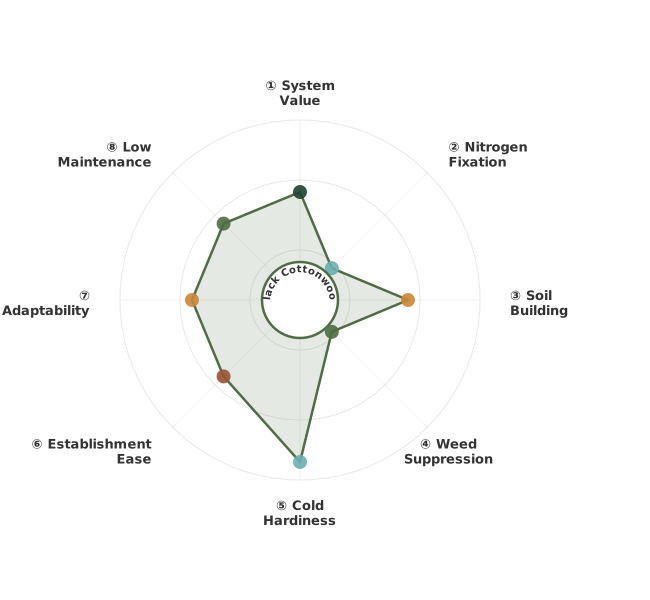
Regenerative Suitability Details

Comprehensive trait ratings for system integration assessment

Comparative ratings for this plant across key regenerative agriculture traits.

Trait Suitability Explanation
Cold Hardiness Ideally Suited Highly cold tolerant (Zone 3-7), this poplar species offers excellent winter survival and vigorous growth that actively builds soil organic matter through its biomass.
Weed Suppression Not Recommended While fast-growing, its mature canopy is not ideal for the dense, low-lying ground cover typically employed for effective weed suppression in regenerative systems.
Nitrogen Fixation Not Recommended As a non-legume, this poplar species does not contribute to atmospheric nitrogen fixation through symbiotic root associations.
Root System Depth Ideally Suited Its deep and widespread root system effectively alleviates soil compaction, accesses deeper soil moisture and nutrients, and significantly enhances soil structure and health.
Biomass Production Adequate This fast-growing poplar species generates substantial biomass, and its abundant leaf litter contributes significantly to building soil organic matter over time.
Establishment Ease Adequate Establishes readily from cuttings or seed in moist environments, and its rapid growth aids in outcompeting early weeds after initial site preparation.
Multi Benefit Value Adequate This species offers rapid biomass generation and excels at erosion control, while also providing habitat and potential for wood products, showcasing its role in a diverse farm ecosystem.
Climate Adaptability Ideally Suited Native to the Pacific Northwest (zones 4-9), it thrives in varied temperatures and moisture levels, demonstrating remarkable resilience and suitability across a broad climatic range.
Maintenance Intensity Adequate While fast-growing, it requires integration into the farm system for structural pruning to manage wind resistance and occasional attention to moisture retention and disease prevention.

Comparative System: Ratings compare plants within their economic category (e.g., cover crop nitrogen fixation compared to other cover crops, not to all plants). Individual farm conditions and management practices significantly influence actual performance.

8

Learn More

Why farmers use this plant and additional resources

Why Regenerative Farmers Use This Plant

Populus trichocarpa, commonly known as Black Cottonwood or Western Balsam Poplar, is a valuable component in regenerative agriculture, particularly for its rapid growth, substantial biomass production, and deep root system that significantly enhances soil health and structure. As a deciduous tree, it contributes substantial organic matter to the soil profile upon senescence, improving soil aggregation and water-holding capacity. Its extensive root network, capable of reaching depths of 15-30+ feet (4.5-9+ meters), effectively breaks up compacted layers, improves aeration, and enhances water infiltration, thereby reducing erosion and runoff. While not a nitrogen-fixer, its prolific growth and large leaf surface area allow it to scavenge nutrients from deeper soil horizons, making them available to shallower-rooted cash crops through decomposition. This nutrient cycling capability can reduce reliance on external fertilizer inputs, potentially saving farmers $50-$150 per acre annually, depending on existing soil fertility and crop requirements.

Integrating Populus trichocarpa into agroforestry systems, such as silvopasture or alley cropping, offers multiple benefits beyond soil improvement. Its rapid growth provides valuable biomass for bioenergy, animal bedding, or mulch. In silvopasture systems, the trees offer shade and shelter for livestock, improving animal welfare and potentially increasing weight gain by 5-10%. The understory can be managed for forage production, creating a diversified and resilient farming landscape. Furthermore, Populus trichocarpa can act as a windbreak, protecting crops and livestock from harsh winds, reducing wind erosion by up to 80%, and potentially increasing yields of adjacent crops by up to 15% in exposed areas. Its presence also supports biodiversity by providing habitat and food sources for various wildlife and beneficial insects.

The ecosystem services provided by Populus trichocarpa are significant for long-term soil health and farm resilience. Its substantial annual leaf and branch fall contributes to a rapid increase in soil organic matter, with established stands potentially adding 1-3 tons of organic matter per acre (2.5-7.5 metric tons/ha) annually. This increased organic matter enhances soil microbial activity, leading to improved nutrient availability and disease suppression. The deep root system also plays a crucial role in carbon sequestration, storing significant amounts of carbon below ground, with mature trees capable of accumulating significant biomass in as little as 5-10 years. A well-established stand can sequester 1-3 tons of CO2e per acre annually. Water infiltration rates can increase by 20-50% in areas with established poplar stands due to improved soil structure and reduced surface compaction. The decomposition of its leaf litter, which can exceed 5-10 tons per acre (11-22 metric tons/ha) annually in mature stands, releases essential nutrients back into the topsoil, acting as a slow-release fertilizer equivalent that can reduce the need for synthetic inputs.

Across different agricultural landscapes, Populus trichocarpa has demonstrated its utility. In the Pacific Northwest of North America, it is often used in riparian buffer zones to stabilize stream banks and filter agricultural runoff, protecting water quality. In parts of Europe, particularly the UK and Scandinavia, it is integrated into short-rotation coppice systems for biomass production and soil improvement, with rotations as short as 5-10 years, and harvested every 5-7 years for biomass. Farmers in Australia have explored its use in windbreaks and for biomass production in drier regions, highlighting its adaptability to various conditions, particularly in cooler, higher rainfall regions. In New Zealand, it is increasingly being planted in hill country farming systems to combat erosion and provide shelter for livestock. In Brazil, similar poplar species are used in agroforestry systems to provide shade for coffee and cocoa, improving microclimates and soil fertility, particularly in southern regions.

9

How to Integrate This Plant

Practical guidance for regenerative systems

Establishing Populus trichocarpa is typically achieved through vegetative propagation, most commonly using dormant cuttings or whips. Cuttings, typically 1-2 feet (0.3-0.6 meters) long, are planted directly into the soil in late winter or early spring before bud break. Optimal planting depth is 6-10 inches (15-25 cm), ensuring good soil contact for root development. Alternatively, cuttings can be 6-12 inches (15-30 cm) in length and planted at a depth of 4-6 inches (10-15 cm), ensuring at least two buds are below the soil surface. Rooted whips, which are young trees with established root systems, can be planted similarly to bare-root trees, at a depth that places the root flare at or slightly above soil level.

Spacing can vary significantly depending on the intended use, ranging from 6-10 feet (1.8-3 meters) for individual trees or windbreaks to 10-20 feet (3-6 meters) in alley cropping or silvopasture systems. For dense biomass plantations, spacing might be as close as 4x4 feet (1.2x1.2 meters) to 6x6 feet (1.8x1.8 meters). For dense windbreaks, spacing can be closer. Seeding rates are not applicable for vegetative propagation; instead, the number of cuttings or whips per acre is determined by the desired density. For example, planting at 10x10 feet (3x3 meters) spacing would require approximately 435 trees per acre.

Optimal planting times are typically early spring in the Northern Hemisphere (March to May) and autumn or early spring in the Southern Hemisphere (September to November), coinciding with periods of active root growth and sufficient soil moisture. Establishment success is highly dependent on adequate moisture, with 1-2 inches (2.5-5 cm) of rainfall or irrigation per week during the first growing season being crucial, especially in drier climates.

Management practices for Populus trichocarpa focus on encouraging rapid growth and ensuring stand establishment. Initial weed control is important to reduce competition for young trees, especially in the first 1-3 years. This can be achieved through mulching, cover cropping in the inter-rows, or targeted mechanical cultivation. As the trees mature, their canopy can provide significant shade, naturally suppressing understory weeds. While poplars are relatively drought-tolerant once established, supplemental irrigation can significantly boost growth rates, particularly in arid or semi-arid regions.

Fertility management should prioritize building soil health; incorporating compost, utilizing manure from livestock in silvopasture, or growing nitrogen-fixing cover crops in the understory are preferred methods. Synthetic fertilizers should only be considered as a transitional input while biological fertility is being built, aiming to reduce reliance by 40-60% over time. While Populus trichocarpa is a vigorous grower and generally requires minimal fertilization, a light application of compost or well-rotted manure in the first year can provide a beneficial nutrient boost.

Trees typically reach heights of 15-30 feet (4.5-9 meters) within 3-5 years, with full maturity and significant biomass production occurring within 10-20 years. Timber rotations can extend to 20-40 years. Pest and disease management should focus on promoting tree vigor through good cultural practices and maintaining biodiversity to encourage natural predators. Avoid chemical interventions where possible, opting for pruning out affected areas or enhancing tree vigor through good cultural practices.

As a woody perennial, Populus trichocarpa is not typically managed as a traditional annual cover crop with specific termination protocols. Its integration involves long-term agroforestry practices. In systems where it is used for biomass production, such as short-rotation coppicing, trees are typically harvested every 5-15 years. The stumps resprout vigorously, eliminating the need for replanting and ensuring continuous biomass production and soil protection. If biomass is harvested for bioenergy or mulch, pruning can occur every 3-5 years, with the woody material chipped and applied to fields to build soil organic matter. This woody residue decomposes slowly, releasing nutrients over an extended period and improving soil structure. If a farmer wishes to remove established trees, mechanical methods such as felling and stump grinding are most effective. The extensive root system means that natural winterkill is not applicable, and termination is a deliberate intervention. Seed management is not a primary concern as propagation is vegetative; however, care should be taken to prevent unwanted spread in sensitive natural areas by managing pruning waste appropriately.