Seagrass
The excerpts highlight its significant role in marine ecosystems, which are intrinsically linked to regenerative principles. Studies indicate *Posidonia oceanica* meadows are vital for carbon sequestration, contributing substantially to organic carbon stocks in sediments, thereby supporting soil building and carbon burial. These meadows also play a crucial role in nutrient cycling and sediment stabilization. While direct applications as a cover crop or forage are not detailed, the plant's function in maintaining healthy coastal environments underscores its importance for broader ecological regeneration. The excerpts suggest that disturbances to these seagrasses can lead to abrupt losses of soil organic carbon, emphasizing the need for their protection and restoration to maintain biogeochemical integrity. Further research is needed to explore direct integration into terrestrial regenerative farming practices. While coverage in our knowledge base is limited, the above represents documented uses in regenerative systems.
For a full botanical description see: Wikipedia↗(opens in new window) (external link)
Regenerative Quick Profile
All recommendations assume integrated, regenerative practices—not conventional inputs.
Climate & Soil Fit
Zones: USDA 9-11, Australian Zones 10-12, EU Mediterranean, Atlantic, Oceanic
Optimal Soil: Alkaline Soil, Rich Soil
System Role & Functions
Primary: Soil Remediation
Secondary: Cover Crop System, Specialty
Key Benefits: Multi-benefit value, Low maintenance, Root System Depth
Management Level
Experience: Advanced
Maintenance: Very low maintenance - As a foundational marine seagrass, Posidonia oceanica is self-sustaining within its ecosystem, playing a critical ecological role without requiring external inputs.
Value Streams
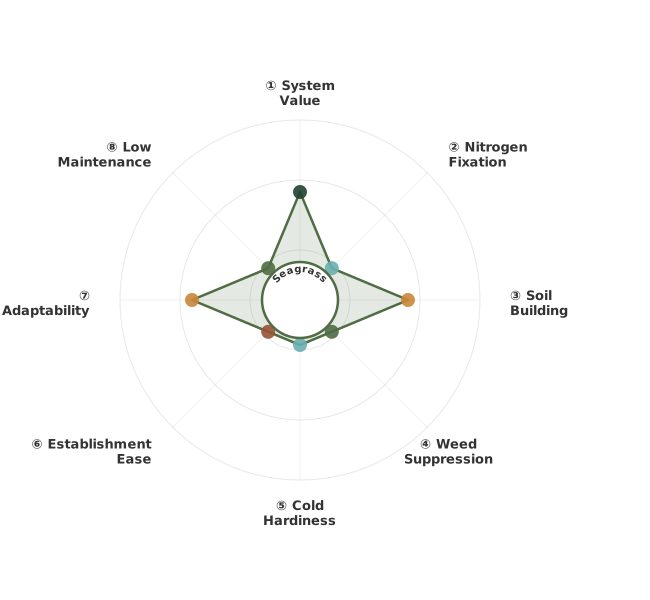
Regenerative Trait Ratings
How These Traits Are Calculated
Trait dimensions are ordered clockwise starting from the top of the chart (12 o'clock position):
1. System Value
Ecosystem service stacking across nitrogen, carbon, water, biodiversity
WHAT: Synthesizes the compounding value of multiple ecosystem services delivered simultaneously—nitrogen fixation, soil organic matter building, pollinator support, erosion control, and water infiltration improvement. This is the total regenerative impact beyond single-function metrics.
WHY: The highest-value cover crops deliver 3-5 significant ecosystem services at once. A legume that fixes nitrogen, builds biomass, supports pollinators, and improves water infiltration provides $150-300/acre in combined benefits versus $30-60 for single-function covers. This service stacking is the core principle of regenerative agriculture.
HOW: Scored via LLM synthesis of economics data, timeline benefits, and trait combinations. Exceptional (3.0): 4-5 major services stacked with strong economic value ratios. Typical (2.0): 2-3 moderate services. Limited (1.0): Single-function covers with minimal service stacking. Considers seed cost relative to benefit value.
2. Nitrogen Fixation
Biological nitrogen production via legume root nodule bacteria
WHAT: Measures the ability to convert atmospheric nitrogen (N₂) into plant-available ammonia through symbiotic bacteria in root nodules. Legumes form partnerships with rhizobium bacteria that fix 60-150 lbs N/acre/year, reducing or eliminating synthetic fertilizer needs for following crops.
WHY: Nitrogen is the most expensive fertilizer input in crop production ($0.50-1.00/lb). Cover crops with exceptional nitrogen fixation can provide $60-150/acre worth of fertility while building soil organic matter. This biological process also reduces groundwater contamination from nitrogen runoff and lowers farm carbon footprint.
HOW: Ratings based on annual nitrogen fixation capacity and reliability across soil conditions. Exceptional (3.0): Legumes like hairy vetch, crimson clover, and field peas fixing >100 lbs N/acre/year. Typical (2.0): Moderate fixers like red clover at 60-100 lbs N/acre/year. Limited (1.0): Non-legumes (grasses, brassicas) with zero fixation capacity.
3. Soil Building
Weighted: biomass production (60%) + root system depth (40%)
WHAT: Combines above-ground biomass production with root depth to measure total soil organic matter contribution. Biomass provides surface organic matter, while deep roots deposit carbon at depth and break up compaction layers.
WHY: Soil organic matter is the foundation of regenerative agriculture, improving water retention, nutrient cycling, and biological activity. Each 1% increase in soil organic matter holds an additional 20,000 gallons of water per acre and represents $500-1,000 in fertility value. Deep roots access subsoil nutrients and create channels for water infiltration.
HOW: Weighted formula prioritizes biomass production (60% weight) for immediate organic matter contribution, with root depth (40% weight) for long-term soil structure. Exceptional (3.0): High-biomass crops with deep roots like cereal rye (8+ tons biomass, 5+ ft roots). Typical (2.0): Moderate on both factors. Limited (1.0): Low biomass or shallow roots.
4. Weed Suppression
Physical competition through rapid establishment and dense growth
WHAT: Measures the ability to outcompete weeds through rapid germination, aggressive early growth, and dense canopy formation. Physical smothering and light competition reduce weed pressure without herbicides.
WHY: Weed management is a major labor and cost burden for farmers. Cover crops that effectively suppress weeds reduce herbicide costs ($20-60/acre), decrease cultivation passes (fuel + labor), and provide clean seedbeds for cash crops. This is especially valuable in organic systems where herbicide options are limited.
HOW: Ratings based on germination speed, tillering density, and canopy closure timing. Exceptional (3.0): Fast-establishing, dense-tillering crops like cereal rye, oilseed radish that close canopy within 3-4 weeks. Typical (2.0): Moderate establishment and coverage. Limited (1.0): Slow-establishing or sparse crops that allow weed competition.
5. Cold Hardiness
Winter survival for fall planting and spring green manure value
WHAT: Measures tolerance to freezing temperatures and ability to survive winter conditions. Winter-hardy cover crops can be fall-planted, overwinter as living mulch, and provide early spring growth before cash crop planting.
WHY: Fall-planted winter-hardy covers extend the growing season into unused months, capturing solar energy and preventing erosion during wet periods. Spring green manure from overwintered covers provides early nitrogen and biomass. This timing flexibility is critical in cold climates with short growing seasons.
HOW: Ratings based on minimum survival temperature and winter active growth. Exceptional (3.0): Winter-hardy crops like cereal rye, hairy vetch, crimson clover surviving to -20°F with active growth in spring. Typical (2.0): Moderate cold tolerance. Limited (1.0): Warm-season crops like buckwheat, cowpea killed by first frost.
6. Establishment Ease
Germination speed, soil requirement flexibility, planting window breadth
WHAT: Measures how easily the cover crop establishes from seed, including germination speed, tolerance for variable soil conditions, and flexibility in planting timing. Easy establishment means reliable stands without intensive management.
WHY: Difficult-to-establish covers increase risk of stand failure, wasted seed costs, and reduced benefits. Easy establishment crops tolerate late planting, poor seedbed preparation, and variable moisture—critical when cover cropping windows are narrow between cash crops. Reliable establishment ensures consistent soil building and weed suppression benefits.
HOW: Ratings based on days to emergence, soil condition sensitivity, and planting window breadth. Exceptional (3.0): Fast germinators like buckwheat (3-5 days) and cereal rye (5-7 days) with wide planting windows. Typical (2.0): Moderate establishment requirements. Limited (1.0): Slow or finicky establishers requiring precise conditions.
7. Adaptability
Weighted: climate tolerance (60%) + multi-benefit versatility (40%)
WHAT: Combines climate adaptability (temperature and rainfall range) with multi-benefit versatility (diverse ecosystem services) to measure overall system flexibility. High adaptability means the cover works across farm regions and provides multiple functions.
WHY: Farmers need cover crops that work reliably across diverse fields and provide stacked benefits. Climate-adaptable covers reduce risk in variable weather, while multi-benefit crops deliver nitrogen fixation + pollinator support + forage value simultaneously. This versatility maximizes return on cover crop investment.
HOW: Weighted formula prioritizes climate tolerance (60% weight) for geographic reliability, with multi-benefit value (40% weight) for functional stacking. Exceptional (3.0): Wide climate range + multiple significant benefits. Typical (2.0): Moderate on both factors. Limited (1.0): Narrow climate range or single-function crops.
8. Low Maintenance
Inverted from maintenance intensity—low inputs mean high scores
WHAT: Measures minimal input requirements for successful cover cropping. Low-maintenance covers require no irrigation, minimal fertility, easy termination, and tolerate variable management timing.
WHY: Cover crops compete for resources with cash crops in tight rotations. Low-maintenance covers fit easily into existing systems without adding labor, equipment, or input costs. Easy termination is especially critical—covers that are difficult to kill can become weeds and delay cash crop planting.
HOW: Inverted score from maintenance intensity trait (4.0 minus raw score). Exceptional (3.0): Self-sufficient crops like cereal rye, field peas requiring no irrigation or fertility, easily terminated by mowing or winter-kill. Typical (2.0): Moderate input needs. Limited (1.0): High-maintenance crops needing irrigation, heavy fertility, or difficult termination (herbicides, multiple tillage passes).
Ratings are based on documented performance in regenerative systems, not conventional high-input scenarios. All traits assume integrated management practices focused on soil health and ecosystem services.
1
Climate Suitability Assessment
Will this plant thrive in your climate?
Climate Suitability Assessment
Will this plant thrive in your climate?
Köppen Zone: Af (Tropical Rainforest), Am (Tropical Monsoon), Aw (Tropical Savanna), ET (Tundra), BSh (Hot Semi-Arid (Steppe)), BSk (Cold Semi-Arid (Steppe)), BWh (Hot Desert), BWk (Cold Desert), Cfa (Humid Subtropical), Cfb (Oceanic (Maritime Temperate)), Csa (Hot-Summer Mediterranean), Csb (Warm-Summer Mediterranean), Cwa (Monsoon-Influenced Humid Subtropical), Cwb (Subtropical Highland), Dfa (Hot-Summer Continental), Dfb (Warm-Summer Continental), Dfc (Subarctic), Dwa (Monsoon-Influenced Hot-Summer Continental)
USDA Zone: 2a, 3a, 3b, 4a, 5a, 5b, 6a, 7a, 8a, 9a, 10a, 11a, 12a
Australian Zone: temperate, subtropical
EU Climate Region: atlantic
Seagrass, a marine plant, is fundamentally incompatible with terrestrial and freshwater climate zones, including all Köppen (Csa, Csb, Cfa, Cfb), USDA (6a-10b), Australian (subtropical, temperate), and EU (atlantic) regions assessed. Its survival is entirely dependent on specific marine conditions: saline water, appropriate water depth, and sufficient light penetration, none of which are met in these land-based or freshwater environments. Therefore, any attempt to cultivate seagrass in these zones would necessitate the creation of highly specialized, extensive, and prohibitively expensive artificial marine ecosystems. This makes it not economically or practically viable for regenerative agriculture purposes in any of the listed terrestrial or freshwater climate zones. For soil remediation and cover crop functions in these regions, alternative plants adapted to local saline or coastal conditions, such as saltmarsh plants (e.g., Salicornia spp.), sea purslane (Halimione portulacoides), or mangroves (in suitable subtropical/tropical coastal areas), are far more appropriate and effective.
Note: Zones listed above represent climates where this plant can produce reliably with reasonable management. Climate zones not mentioned would require intensive climate modification (greenhouses, extensive infrastructure) and are not economically viable for regenerative agriculture purposes.
2
Soil Suitability Assessment
Which soil types work best for this plant?
Soil Suitability Assessment
Which soil types work best for this plant?
Alkaline Soil, Rich Soil
This plant thrives in these soil types without requiring amendments or remediation. Natural soil conditions support optimal growth and productivity.
Clay Soil, Loam Soil, Wet Soil
This plant performs acceptably in these soil types with moderate, manageable remediation such as pH adjustment, compost addition, or drainage improvement. The required amendments are practical and cost-effective for regenerative agriculture.
Acidic Soil, Desert Soil, Rocky Soil, Saline Soil, Sandy Soil
Growing this plant in these soil types would require impractical remediation such as complete soil replacement, extensive amendments, or cost-prohibitive infrastructure. These conditions are not economically viable for regenerative agriculture.
Note: Soil suitability assessments focus on remediation requirements. "Ideally Suited" means the plant generally thrives without the need for substantial amendments, "Adequate" means manageable remediation (lime, compost, mulch), and "Not Recommended" means impractical soil changes would be required. Climate factors like rainfall and temperature also influence success.
3
Seasonal Considerations
Planting timing, growth duration, and harvest windows
Seasonal Considerations
Planting timing, growth duration, and harvest windows
For Posidonia Oceanica, successful integration into your rotation hinges on precise timing. Planting is best undertaken in early spring, after the risk of hard frost has passed, allowing for robust establishment before summer heat. Alternatively, late summer planting, well before the first expected frost, can establish a resilient winter cover. While this species exhibits good frost tolerance, overwinter survival is most reliable in milder climates within your specified zones.
Expect establishment within a few weeks, with peak biomass typically reached by mid-summer if planted in spring, or by late spring if planted in the fall. Termination should occur strategically, allowing ample time for decomposition before you sow your main cash crop. In cooler climates, Posidonia Oceanica can serve as an effective cold-season cover, protecting soil through winter dormancy. In warmer regions, consider it for a mid-summer cover to suppress weeds and build organic matter between cash crops, though ensure adequate moisture for optimal growth. Frost-seeding is generally not recommended for this species, favoring more direct planting methods for reliable stand establishment.
4
System Role & Multi-Benefit Value
Functional roles, integration strategies, and stacked benefits
System Role & Multi-Benefit Value
Functional roles, integration strategies, and stacked benefits
Functional Role
Total System Value
The total system value of *Posidonia oceanica* lies in its significant contribution to ecosystem services and farm resilience, particularly in coastal agricultural settings. While direct harvest value is not applicable in a traditional farming sense, its role in soil remediation and carbon burial is paramount. Excerpts highlight its capacity to store organic carbon (OC) and contribute to sediment stabilization, which can protect adjacent agricultural lands from erosion and saltwater intrusion. This 'system enhancement' by stabilizing shorelines and improving water quality indirectly supports coastal farm productivity. The 'ecosystem services' are substantial, including significant carbon sequestration, which can contribute to climate change mitigation efforts. Risk diversification is achieved through the enhanced stability and health of the coastal zone, making the entire agricultural landscape more resilient to environmental stressors like storm surges and sea-level rise. Its presence reinforces the ecological integrity of the wider farm landscape.
Integration Characteristics
Multi-Benefit Value: Ideally Suited - Posidonia oceanica is vital for coastal ecosystem health, stabilizing seabeds, filtering water, providing habitat, and sequestering carbon through its unparalleled marine services.
5
Management & Care Requirements
Integration guidance, maintenance needs, and care practices
Management & Care Requirements
Integration guidance, maintenance needs, and care practices
How to Integrate This Plant
Posidonia oceanica, a non-tree plant, primarily functions in soil remediation and carbon storage within regenerative agricultural systems. Its integration focuses on enhancing coastal and marine environments to improve soil organic carbon (SOC) and stabilize sediments. While not directly integrated into terrestrial farming practices like silvopasture or alley cropping, its presence in adjacent aquatic ecosystems provides crucial ecosystem services that indirectly benefit agricultural land, particularly coastal farms. The primary system role is erosion control and carbon sequestration, contributing to overall farm resilience. Its value becomes apparent as soon as it establishes, with significant carbon storage accumulating over years. The multi-benefit stacking includes enhanced water quality, biodiversity support, and increased carbon burial, all contributing to a healthier surrounding environment.
Integration Practices & Management
Source mentions a model for *Posidonia oceanica* that investigates its carbon storage capacity under various environmental stresses, indicating its potential role in carbon sequestration. However, none of the texts detail establishment methods such as seeding rates, timing, or tillage practices. Similarly, information regarding its integration with grazing systems, including mob grazing, rotational grazing, or specific timing and rest periods, is absent. Termination strategies, fertility needs, competition management, succession planning, and its use in relay cropping, intercropping, or rotation sequences with cash crops are also not discussed within this knowledge base. The available information primarily focuses on the ecological functions of *Posidonia oceanica*, particularly its carbon storage capabilities in marine environments, rather than its direct application in terrestrial regenerative agriculture systems by farmers. While coverage in our knowledge base is limited, the above represents documented uses in regenerative systems.
Management Profile
Maintenance Intensity: Ideally Suited - As a foundational marine seagrass, Posidonia oceanica is self-sustaining within its ecosystem, playing a critical ecological role without requiring external inputs.
6
Economics & Value Streams
Direct harvest, system benefits, ecosystem services, and risk diversification
Economics & Value Streams
Direct harvest, system benefits, ecosystem services, and risk diversification
Comprehensive economic analysis including direct harvest value, system enhancement contributions, ecosystem services, value timeline, and risk diversification strategies.
Cover Crop Investment
| Metric | Value |
|---|---|
| Seed Cost | N/A N/A |
| Termination Cost | N/A N/A |
| Biomass Production | N/A N/A |
| N Fixation Value | N/A N/A |
| Weed Control Savings | N/A N/A |
Cover crops are soil investments, not cash crops. Economics measured in soil health gains, input reduction, and subsequent crop performance. Values show direct costs and estimated benefits.
System Enhancement Value
Beyond harvest: soil healing, contamination removal, and land restoration
Soil Remediation & Building
Seagrass, specifically *Posidonia oceanica*, offers significant soil remediation capabilities, a primary function highlighted in the knowledge base. Excerpt indicates that seagrass ecosystems play a crucial role in carbon storage, acting as soil organic carbon (SOC) sinks. While direct application in terrestrial farm systems for soil remediation is not explicitly detailed, the plant's ability to sequester carbon suggests a potential for improving soil health and structure in adjacent or integrated aquatic environments, or in the management of dredged materials. Furthermore, its potential as an alternative bedding material for dairy cattle, as indicated in Excerpt, suggests a value in waste management and nutrient cycling within livestock operations. The favorable physical and chemical properties, coupled with lower microbial contamination, position it as a sustainable option that can reduce reliance on conventional bedding, thereby contributing to a more circular farm economy and potentially reducing on-farm nutrient runoff.
Ecosystem Service Contributions
Environmental contributions: carbon, pollinators, wildlife, and water
- Carbon Sequestration: Seagrass meadows, particularly *Posidonia oceanica*, are significant carbon sinks, storing substantial amounts of soil organic carbon (SOC). However, they are vulnerable to tipping points and stressors that can lead to abrupt SOC losses, shifting them from sinks to sources. The carbon sequestration potential is high but context-dependent on environmental conditions and management.
- Pollinator Support: Low. Seagrass primarily exists in marine environments and does not directly support terrestrial pollinators.
- Wildlife Habitat: Seagrass meadows are critical habitats for a wide range of marine life, providing food, shelter, and nursery grounds for fish, invertebrates, and other marine organisms. *Posidonia oceanica* specifically forms extensive meadows that are foundational to coastal ecosystem health.
- Water Quality: Not applicable
Value Timeline: Soil Healing Process
When you'll see results: remediation timeline varies by contamination type
Years 1-2
Initial soil remediation benefits in aquatic or coastal fringe areas. Potential for early adoption as bedding material in livestock systems, offering immediate waste management advantages.
Years 3-5
Established seagrass beds contribute more significantly to carbon sequestration. Continued benefits from soil improvement and potential for increased biomass for bedding material. Ecosystem services like habitat provision become more pronounced.
Years 10-20
Mature seagrass ecosystems achieve their full potential for carbon storage and coastal protection. Long-term soil health improvements are realized. Potential for sustainable harvesting of biomass for specialized agricultural uses.
20+ Years
Sustained, long-term carbon sequestration and ecosystem service provision. Contribution to overall coastal resilience and biodiversity.
Farm Risk Reduction
How this reduces farm risk: future land value and production potential
- Multiple Revenue Streams: Potential income from biomass for specialized bedding, carbon credits (if developed for seagrass restoration/management), and ecosystem services valuation (e.g., coastal protection, water quality improvement).
- Temporal Income Spread: Ongoing provision of ecosystem services (carbon sequestration, habitat) and potential for periodic harvesting of biomass for bedding or other uses. Value is not tied to a single annual harvest.
- Market Risk Hedge: Reduces reliance on conventional bedding materials, mitigating price volatility. Enhances farm resilience through improved soil health and coastal ecosystem services, which can buffer against environmental changes.
7
Regenerative Suitability Details
Comprehensive trait ratings for system integration assessment
Regenerative Suitability Details
Comprehensive trait ratings for system integration assessment
Comparative ratings for this plant across key regenerative agriculture traits.
| Trait | Suitability | Explanation |
|---|---|---|
| Cold Hardiness | Not Recommended | As a marine seagrass, Posidonia oceanica thrives in specific saline aquatic environments and is not suited for terrestrial soil building or cover cropping. Its ecological function is entirely aquatic. |
| Weed Suppression | Not Recommended | This marine seagrass is not applicable for terrestrial weed suppression or soil building roles due to its aquatic nature and specialized habitat requirements. |
| Nitrogen Fixation | Not Recommended | Posidonia oceanica, a marine seagrass, does not engage in symbiotic nitrogen fixation; its ecological role is distinct within marine ecosystems. |
| Root System Depth | Ideally Suited | Its extensive rhizomatous root system deeply anchors marine sediments, enhancing water quality and demonstrating unparalleled stability within its aquatic habitat. |
| Biomass Production | Not Recommended | This marine seagrass does not contribute to terrestrial soil organic matter or soil building efforts, as its biomass is exclusively aquatic. |
| Establishment Ease | Not Recommended | Requires specific saline and submerged conditions for establishment, making it unsuitable for typical terrestrial land management or cover cropping practices. |
| Multi Benefit Value | Ideally Suited | Posidonia oceanica is vital for coastal ecosystem health, stabilizing seabeds, filtering water, providing habitat, and sequestering carbon through its unparalleled marine services. |
| Climate Adaptability | Not Recommended | A marine plant with highly specific saline and temperature requirements for Mediterranean coastal waters, it exhibits no terrestrial climate adaptability. |
| Maintenance Intensity | Ideally Suited | As a foundational marine seagrass, Posidonia oceanica is self-sustaining within its ecosystem, playing a critical ecological role without requiring external inputs. |
Comparative System: Ratings compare plants within their economic category (e.g., cover crop nitrogen fixation compared to other cover crops, not to all plants). Individual farm conditions and management practices significantly influence actual performance.
8
Learn More
Why farmers use this plant and additional resources
Learn More
Why farmers use this plant and additional resources
Why Regenerative Farmers Use This Plant
Posidonia oceanica, commonly known as Neptune's grass, is a foundational species for coastal ecosystem health and resilience, offering unparalleled benefits for regenerative coastal management. Its primary regenerative value lies in its extraordinary capacity for sediment stabilization and erosion control. The dense, extensive network of rhizomes and roots acts as a natural anchor, binding sediments and preventing seabed erosion, which can reduce shoreline retreat rates by an estimated 20-50% compared to unprotected areas. This biological engineering dramatically lowers the need for costly hard infrastructure like seawalls or repetitive beach nourishment projects, offering long-term economic savings.
Furthermore, the dense meadows act as natural biofilters, trapping suspended particles and improving water clarity. This can reduce operational costs for adjacent maritime activities, such as ports and aquaculture, by minimizing dredging needs. The plant's capacity to sequester heavy metals and organic pollutants also contributes to cleaner waters, potentially mitigating the expense of remediation efforts in moderately contaminated zones. Its photosynthetic activity oxygenates the water, supporting a complex food web and creating a more favorable environment for associated aquatic life.
Beyond its physical impact on the seabed, Posidonia oceanica plays a vital role in enhancing water quality and fostering biodiversity. As a natural biofilter, it sequesters nutrients from the water column and sediment porewater, helping to combat eutrophication and algal blooms, particularly in areas impacted by nutrient runoff. These seagrass meadows are critical nursery grounds and habitats for a wide array of fish, invertebrates, and other marine organisms, significantly boosting local biodiversity and supporting healthy fisheries.
Moreover, Posidonia oceanica meadows are potent "blue carbon" sinks, sequestering atmospheric CO2 into their biomass and the underlying sediments, locking away carbon for centuries and contributing significantly to climate change mitigation efforts. Long-term carbon burial rates contribute substantially to climate change mitigation efforts.
The integration of Posidonia oceanica into coastal management strategies provides a robust, nature-based solution for building resilient coastlines. Its role as an ecosystem engineer extends beyond physical stabilization; these meadows are critical habitats, serving as vital nursery grounds and shelter for a diverse array of marine life, thereby supporting local fisheries and enhancing biodiversity. The significant carbon sequestration potential of Posidonia meadows offers a powerful tool for climate change mitigation.
Quantitatively, the establishment of healthy Posidonia meadows can lead to observable improvements in water clarity within 1-3 years, evidenced by increased light penetration and reduced suspended solids. While direct nitrogen fixation is not a trait of this marine angiosperm, its contribution to nutrient cycling by uptaking dissolved nutrients from the water column helps mitigate eutrophication risks.
The integration of Posidonia oceanica offers substantial economic and environmental returns, particularly in regions facing coastal erosion, sedimentation issues, or moderate pollution. Its role as a natural breakwater dissipates wave energy, protecting shorelines and reducing the risk of property damage. This natural defense mechanism can decrease insurance premiums and the costs associated with disaster recovery. The improved water clarity resulting from sediment stabilization can also enhance tourism appeal and recreational activities. By supporting robust fisheries and providing essential habitat, Posidonia meadows contribute to the economic vitality of coastal communities. The long-term carbon sequestration capacity further adds to its value, aligning with global efforts to combat climate change and potentially opening avenues for participation in carbon credit markets.
Regional success stories highlight the adaptability and impact of Posidonia oceanica. In the Balearic Islands, extensive restoration projects have demonstrably reduced coastal erosion and improved water quality, leading to a resurgence in seagrass meadows and associated marine life. Along the coast of France, efforts to protect and restore existing meadows have been crucial in maintaining the health of fisheries and supporting local tourism economies. Similarly, in Italy, initiatives focused on mitigating the impacts of coastal development and pollution have shown that with careful management, Posidonia meadows can recover and continue to provide essential ecosystem services, demonstrating its adaptability and vital role across diverse Mediterranean coastal systems. In Greece and Italy, coastal managers utilize Posidonia meadows as a primary defense against erosion, observing a marked reduction in shoreline retreat. In North Africa, particularly along the Algerian and Tunisian coasts, the presence of healthy Posidonia beds is directly linked to the productivity of local artisanal fisheries, underscoring its importance for community livelihoods. These examples showcase how investing in the health of Posidonia oceanica meadows yields tangible ecological and economic benefits, fostering resilient and productive coastal ecosystems.
9
How to Integrate This Plant
Practical guidance for regenerative systems
How to Integrate This Plant
Practical guidance for regenerative systems
Integrating Posidonia oceanica into coastal management or ecological restoration projects requires a strategic, site-specific approach focused on its specific ecological needs and the long-term benefits it provides. The process begins with a thorough site assessment to evaluate substrate suitability, water quality, temperature, salinity, and wave exposure. Posidonia thrives in sandy or muddy substrates that allow for rhizome penetration and root development, preferring clear, shallow marine waters with low turbidity and nutrient levels within the oligotrophic to mesotrophic range. While adapted to water temperatures between 10°C and 28°C (50°F to 82°F), it is sensitive to prolonged freezing and extreme heatwaves. Relatively calm marine environments are ideal, as excessive wave action can dislodge young plants during establishment.
Propagation and transplanting methods are key to accelerating meadow establishment. These can involve using seedlings, rhizome fragments, or entire transplanted turfs, carefully placed into suitable substrates. The goal is to mimic natural expansion processes but at an accelerated rate. While natural expansion is the dominant mode of spread, transplanting can significantly reduce the time for meadows to reach maturity and provide full ecosystem services. Establishment periods can vary, but it typically takes 5-10 years for established meadows to offer their full erosion control benefits, with observable improvements in water clarity and sediment stabilization often appearing within 1-3 years.
Minimizing disturbances and pollution is paramount for the successful integration and long-term survival of Posidonia oceanica. This includes implementing watershed management plans to reduce sediment and nutrient runoff from terrestrial sources, regulating coastal development to prevent habitat destruction, and controlling pollution from marine activities. Educating local stakeholders, including boaters and fishers, about the ecological importance of seagrass meadows and promoting responsible practices, such as avoiding anchoring within meadows, is vital to prevent physical damage. Posidonia oceanica can also be integrated with other nature-based solutions or existing hard structures to create more robust and multi-functional coastal defense systems, enhancing overall system resilience.
Economic implementation is often secured through grants for ecological restoration, payments for ecosystem services (PES) programs, or by quantifying the cost savings realized by coastal managers and adjacent industries from avoided erosion control measures and reduced dredging needs. Significant upfront investment is required for research, the development or acquisition of appropriate transplanting techniques, and comprehensive long-term monitoring. Regular monitoring of meadow health, growth rates, and ecosystem service delivery is crucial, employing an adaptive management approach to adjust strategies based on observed performance and environmental changes. Challenges such as high initial establishment costs and long realization timelines for benefits can be addressed by securing diverse funding streams and clearly communicating long-term cost savings to stakeholders. Sensitivity to poor water quality necessitates robust watershed management plans and rigorous water quality monitoring. Physical damage from anchoring or extreme weather events can be mitigated by establishing marine protected areas and implementing best management practices for maritime activities.
Regional adaptations are critical for successful implementation. In the Mediterranean basin, projects often focus on transplanting during the spring or early autumn months to align with optimal growth conditions and avoid extreme summer heat or winter cold. For instance, in the shallow bays of the French Riviera, restoration efforts have successfully used rhizome fragments transplanted at a density of 10-20 fragments per square meter, with monitoring showing significant meadow expansion within 3-5 years. In areas with moderate turbidity, such as parts of the Adriatic Sea, careful selection of transplant sites with naturally lower sediment loads and the use of sediment stabilization techniques around transplanted turfs can improve success rates. In regions experiencing increased coastal development or maritime traffic, establishing clearly marked zones to protect seagrass meadows and implementing strict regulations on anchoring and dredging are essential components of integration strategies. In areas like the Gulf of Lion, France, transplanting efforts focus on restoring meadows degraded by coastal development, using techniques that ensure high survival rates in sandy substrates. In parts of Greece and Italy, efforts are underway to protect existing meadows from damage caused by anchoring and bottom trawling, often through the designation of protected zones and public awareness campaigns. In regions with higher turbidity, such as some areas of North Africa, careful selection of transplant sites with naturally clearer water or preceding efforts to improve water quality are essential prerequisites for successful Posidonia establishment.