Honey Mesquite
Available information highlights its potential role in regenerative agriculture, particularly in subtropical savanna landscapes. Excerpts indicate that honey mesquite significantly increases soil total phosphorus by drawing it up from deep soil layers (>120 cm) and returning it to the upper soil through litterfall and root turnover. This natural nutrient cycling makes it a valuable component for soil building, especially in grassland restoration or grazed areas. Its deep root systems contribute to carbon sequestration and soil structure improvement. While not explicitly detailed as a nitrogen fixer in these excerpts, its woody perennial nature suggests potential contributions to agroforestry systems and polyculture layers. The observed accumulation of phosphorus in large and small groves points to its role in enhancing soil fertility over time. Further research within a regenerative context would be beneficial to fully understand its integration with practices like rotational grazing or no-till farming, and to explore its broader applications as a forage or cover crop. While coverage in our knowledge base is limited, the above represents documented uses in regenerative systems.
For a full botanical description see: Wikipedia↗(opens in new window) (external link)
Regenerative Quick Profile
All recommendations assume integrated, regenerative practices—not conventional inputs.
Climate & Soil Fit
Climate: Tropical Savanna, Hot Semi-Arid (Steppe), Cold Semi-Arid (Steppe), Hot Desert, Cold Desert, Humid Subtropical, Oceanic (Maritime Temperate), Hot-Summer Mediterranean, Warm-Summer Mediterranean, Monsoon-Influenced Humid Subtropical, Subtropical Highland, Hot-Summer Continental, Warm-Summer Continental, Monsoon-Influenced Hot-Summer Continental
Zones: USDA 7-11, Australian Zones 4-14, EU Mediterranean, Semi-arid
Optimal Soil: Sandy Soil
System Role & Functions
Primary: Silvopasture
Secondary: Food Forest, Soil Remediation
Key Benefits: Multi-benefit value, Climate adaptable, Low maintenance
Management Level
Experience: Beginner-Friendly
Maintenance: Very low maintenance - Once established, its extreme drought tolerance and adaptation to arid conditions mean it requires virtually no external water management or fertility amendments and is naturally pest-resistant.
Value Streams
Know the Debate
- Mesquite value debated: forage vs. invasive weed.
- Beneficial in arid/degraded lands, problematic elsewhere.
- Improves soil fertility and provides livestock fodder.
- Management determines ecological impact.
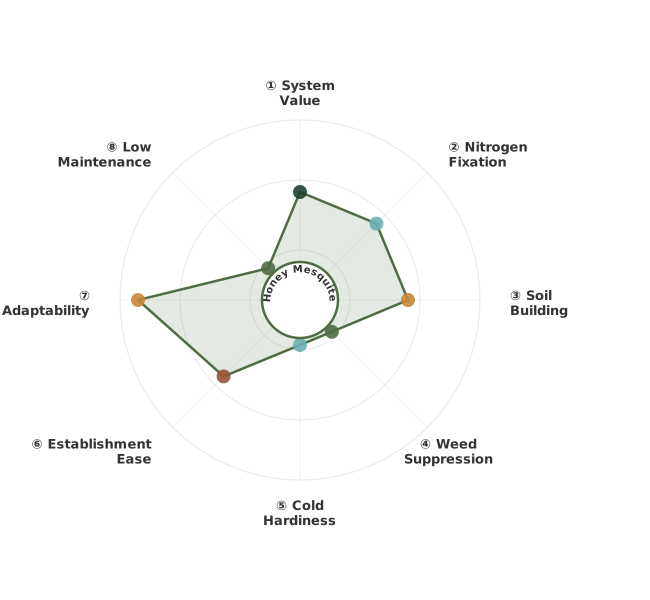
Regenerative Trait Ratings
How These Traits Are Calculated
Trait dimensions are ordered clockwise starting from the top of the chart (12 o'clock position):
1. System Value
Ecosystem service stacking across nitrogen, carbon, water, biodiversity
WHAT: Synthesizes the compounding value of multiple ecosystem services delivered simultaneously—nitrogen fixation, soil organic matter building, pollinator support, erosion control, and water infiltration improvement. This is the total regenerative impact beyond single-function metrics.
WHY: The highest-value cover crops deliver 3-5 significant ecosystem services at once. A legume that fixes nitrogen, builds biomass, supports pollinators, and improves water infiltration provides $150-300/acre in combined benefits versus $30-60 for single-function covers. This service stacking is the core principle of regenerative agriculture.
HOW: Scored via LLM synthesis of economics data, timeline benefits, and trait combinations. Exceptional (3.0): 4-5 major services stacked with strong economic value ratios. Typical (2.0): 2-3 moderate services. Limited (1.0): Single-function covers with minimal service stacking. Considers seed cost relative to benefit value.
2. Nitrogen Fixation
Biological nitrogen production via legume root nodule bacteria
WHAT: Measures the ability to convert atmospheric nitrogen (N₂) into plant-available ammonia through symbiotic bacteria in root nodules. Legumes form partnerships with rhizobium bacteria that fix 60-150 lbs N/acre/year, reducing or eliminating synthetic fertilizer needs for following crops.
WHY: Nitrogen is the most expensive fertilizer input in crop production ($0.50-1.00/lb). Cover crops with exceptional nitrogen fixation can provide $60-150/acre worth of fertility while building soil organic matter. This biological process also reduces groundwater contamination from nitrogen runoff and lowers farm carbon footprint.
HOW: Ratings based on annual nitrogen fixation capacity and reliability across soil conditions. Exceptional (3.0): Legumes like hairy vetch, crimson clover, and field peas fixing >100 lbs N/acre/year. Typical (2.0): Moderate fixers like red clover at 60-100 lbs N/acre/year. Limited (1.0): Non-legumes (grasses, brassicas) with zero fixation capacity.
3. Soil Building
Weighted: biomass production (60%) + root system depth (40%)
WHAT: Combines above-ground biomass production with root depth to measure total soil organic matter contribution. Biomass provides surface organic matter, while deep roots deposit carbon at depth and break up compaction layers.
WHY: Soil organic matter is the foundation of regenerative agriculture, improving water retention, nutrient cycling, and biological activity. Each 1% increase in soil organic matter holds an additional 20,000 gallons of water per acre and represents $500-1,000 in fertility value. Deep roots access subsoil nutrients and create channels for water infiltration.
HOW: Weighted formula prioritizes biomass production (60% weight) for immediate organic matter contribution, with root depth (40% weight) for long-term soil structure. Exceptional (3.0): High-biomass crops with deep roots like cereal rye (8+ tons biomass, 5+ ft roots). Typical (2.0): Moderate on both factors. Limited (1.0): Low biomass or shallow roots.
4. Weed Suppression
Physical competition through rapid establishment and dense growth
WHAT: Measures the ability to outcompete weeds through rapid germination, aggressive early growth, and dense canopy formation. Physical smothering and light competition reduce weed pressure without herbicides.
WHY: Weed management is a major labor and cost burden for farmers. Cover crops that effectively suppress weeds reduce herbicide costs ($20-60/acre), decrease cultivation passes (fuel + labor), and provide clean seedbeds for cash crops. This is especially valuable in organic systems where herbicide options are limited.
HOW: Ratings based on germination speed, tillering density, and canopy closure timing. Exceptional (3.0): Fast-establishing, dense-tillering crops like cereal rye, oilseed radish that close canopy within 3-4 weeks. Typical (2.0): Moderate establishment and coverage. Limited (1.0): Slow-establishing or sparse crops that allow weed competition.
5. Cold Hardiness
Winter survival for fall planting and spring green manure value
WHAT: Measures tolerance to freezing temperatures and ability to survive winter conditions. Winter-hardy cover crops can be fall-planted, overwinter as living mulch, and provide early spring growth before cash crop planting.
WHY: Fall-planted winter-hardy covers extend the growing season into unused months, capturing solar energy and preventing erosion during wet periods. Spring green manure from overwintered covers provides early nitrogen and biomass. This timing flexibility is critical in cold climates with short growing seasons.
HOW: Ratings based on minimum survival temperature and winter active growth. Exceptional (3.0): Winter-hardy crops like cereal rye, hairy vetch, crimson clover surviving to -20°F with active growth in spring. Typical (2.0): Moderate cold tolerance. Limited (1.0): Warm-season crops like buckwheat, cowpea killed by first frost.
6. Establishment Ease
Germination speed, soil requirement flexibility, planting window breadth
WHAT: Measures how easily the cover crop establishes from seed, including germination speed, tolerance for variable soil conditions, and flexibility in planting timing. Easy establishment means reliable stands without intensive management.
WHY: Difficult-to-establish covers increase risk of stand failure, wasted seed costs, and reduced benefits. Easy establishment crops tolerate late planting, poor seedbed preparation, and variable moisture—critical when cover cropping windows are narrow between cash crops. Reliable establishment ensures consistent soil building and weed suppression benefits.
HOW: Ratings based on days to emergence, soil condition sensitivity, and planting window breadth. Exceptional (3.0): Fast germinators like buckwheat (3-5 days) and cereal rye (5-7 days) with wide planting windows. Typical (2.0): Moderate establishment requirements. Limited (1.0): Slow or finicky establishers requiring precise conditions.
7. Adaptability
Weighted: climate tolerance (60%) + multi-benefit versatility (40%)
WHAT: Combines climate adaptability (temperature and rainfall range) with multi-benefit versatility (diverse ecosystem services) to measure overall system flexibility. High adaptability means the cover works across farm regions and provides multiple functions.
WHY: Farmers need cover crops that work reliably across diverse fields and provide stacked benefits. Climate-adaptable covers reduce risk in variable weather, while multi-benefit crops deliver nitrogen fixation + pollinator support + forage value simultaneously. This versatility maximizes return on cover crop investment.
HOW: Weighted formula prioritizes climate tolerance (60% weight) for geographic reliability, with multi-benefit value (40% weight) for functional stacking. Exceptional (3.0): Wide climate range + multiple significant benefits. Typical (2.0): Moderate on both factors. Limited (1.0): Narrow climate range or single-function crops.
8. Low Maintenance
Inverted from maintenance intensity—low inputs mean high scores
WHAT: Measures minimal input requirements for successful cover cropping. Low-maintenance covers require no irrigation, minimal fertility, easy termination, and tolerate variable management timing.
WHY: Cover crops compete for resources with cash crops in tight rotations. Low-maintenance covers fit easily into existing systems without adding labor, equipment, or input costs. Easy termination is especially critical—covers that are difficult to kill can become weeds and delay cash crop planting.
HOW: Inverted score from maintenance intensity trait (4.0 minus raw score). Exceptional (3.0): Self-sufficient crops like cereal rye, field peas requiring no irrigation or fertility, easily terminated by mowing or winter-kill. Typical (2.0): Moderate input needs. Limited (1.0): High-maintenance crops needing irrigation, heavy fertility, or difficult termination (herbicides, multiple tillage passes).
Ratings are based on documented performance in regenerative systems, not conventional high-input scenarios. All traits assume integrated management practices focused on soil health and ecosystem services.
1
Climate Suitability Assessment
Will this plant thrive in your climate?
Climate Suitability Assessment
Will this plant thrive in your climate?
Köppen Zone: Aw (Tropical Savanna), BSh (Hot Semi-Arid (Steppe)), BWh (Hot Desert), Csa (Hot-Summer Mediterranean), Csb (Warm-Summer Mediterranean)
USDA Zone: 6a, 7a, 8a, 9a, 10a, 11a, 12a
Australian Zone: arid, grassland
EU Climate Region: mediterranean
Honey Mesquite demonstrates ideal suitability across a broad spectrum of warm and arid to semi-arid climates, including Köppen BWh, BSh, Csa, and Csb zones, and regional zones like USDA 8b-12, Australian arid and grassland, and EU Mediterranean. These regions typically offer long, hot growing seasons with minimal frost and adequate to low rainfall, which the plant's deep root system and drought tolerance are perfectly adapted to. Its ability to fix nitrogen and improve soil structure makes it a prime candidate for silvopasture and food forest applications, enhancing soil health and providing forage. Establishment is generally successful with minimal intervention, and mature trees are highly resilient, requiring little to no supplemental irrigation. Productivity in terms of biomass, forage, and potential fruit yield is maximized in these conditions, supporting robust regenerative agriculture systems.
Köppen Zone: BSk (Cold Semi-Arid (Steppe)), BWk (Cold Desert), Cfa (Humid Subtropical), Cwa (Monsoon-Influenced Humid Subtropical), Dfa (Hot-Summer Continental), Dfb (Warm-Summer Continental)
USDA Zone: 5a, 5b
Australian Zone: temperate
EU Climate Region: atlantic
Honey Mesquite performs adequately in climates that present some challenges but are still manageable, including Köppen BWk and BSk zones, and regional zones like USDA 6, Australian temperate, and EU Atlantic. These areas may have colder winters, shorter growing seasons, or more consistent rainfall than ideal zones. While Honey Mesquite can survive and provide benefits such as nitrogen fixation and drought tolerance, its growth may be slower, and fruit production less reliable. Establishment requires careful site selection and potentially some protection during the initial years, especially against extreme cold or prolonged wet periods. Supplemental irrigation might be beneficial during establishment or extended dry spells in temperate or Atlantic regions. Despite these considerations, it can still contribute positively to silvopasture and soil remediation efforts with appropriate management.
Köppen Zone: Af (Tropical Rainforest), Am (Tropical Monsoon), ET (Tundra), Cfb (Oceanic (Maritime Temperate)), Cwb (Subtropical Highland), Dfc (Subarctic), Dwa (Monsoon-Influenced Hot-Summer Continental)
USDA Zone: 2a, 3a, 3b, 4a
EU Climate Region: continental
Honey Mesquite is not recommended for climates characterized by extreme cold and/or consistently high humidity, encompassing Köppen zones not explicitly listed as suitable (e.g., D climates), and regional zones such as USDA 3, 4, and 5, and EU continental. These regions experience winter temperatures far below the plant's tolerance, leading to high mortality rates and making perennial establishment for silvopasture or food forest functions practically impossible. The short growing seasons in very cold zones further limit its potential productivity. While its drought tolerance is a key trait, it cannot overcome the lethal effects of prolonged, deep freezes. Alternative nitrogen-fixing plants that are specifically adapted to extreme cold, such as Siberian Peashrub (Caragana arborescens) or Black Locust (Robinia pseudoacacia), are far more suitable and reliable for regenerative agriculture in these challenging environments.
Note: Zones listed above represent climates where this plant can produce reliably with reasonable management. Climate zones not mentioned would require intensive climate modification (greenhouses, extensive infrastructure) and are not economically viable for regenerative agriculture purposes.
2
Soil Suitability Assessment
Which soil types work best for this plant?
Soil Suitability Assessment
Which soil types work best for this plant?
Sandy Soil
This plant thrives in these soil types without requiring amendments or remediation. Natural soil conditions support optimal growth and productivity.
Alkaline Soil, Clay Soil, Desert Soil, Loam Soil, Rich Soil, Rocky Soil
This plant performs acceptably in these soil types with moderate, manageable remediation such as pH adjustment, compost addition, or drainage improvement. The required amendments are practical and cost-effective for regenerative agriculture.
Acidic Soil, Saline Soil, Wet Soil
Growing this plant in these soil types would require impractical remediation such as complete soil replacement, extensive amendments, or cost-prohibitive infrastructure. These conditions are not economically viable for regenerative agriculture.
Note: Soil suitability assessments focus on remediation requirements. "Ideally Suited" means the plant generally thrives without the need for substantial amendments, "Adequate" means manageable remediation (lime, compost, mulch), and "Not Recommended" means impractical soil changes would be required. Climate factors like rainfall and temperature also influence success.
3
Seasonal Considerations
Planting timing, growth duration, and harvest windows
Seasonal Considerations
Planting timing, growth duration, and harvest windows
Establishing honey mesquite requires careful attention to its multi-year journey. For nursery trees, planting is best done during the dormant season, either as bare-root stock or in containers, after the ground has thawed but before active spring growth begins. This allows roots to establish before the stress of leaf development.
Expect several years before your mesquite reaches full establishment, typically 3-5 years, during which its root system will be developing robustly. You may see the first modest harvests of pods within 5-7 years, with full production ramping up over the subsequent few years. Honey mesquite trees are long-lived, capable of productive lifespans spanning decades.
Seasonal management focuses on nurturing this long-term growth. Pruning is best performed during the dormant season, after leaf drop and before new growth emerges in early spring, to shape the tree and remove any dead or crossing branches. The primary harvest for pods occurs in late summer through fall, as they mature and dry on the tree. Bloom typically occurs in late spring or early summer. The tree naturally enters winter dormancy, conserving energy for the following growing season.
4
System Role & Multi-Benefit Value
Functional roles, integration strategies, and stacked benefits
System Role & Multi-Benefit Value
Functional roles, integration strategies, and stacked benefits
Functional Role
Total System Value
Honey mesquite offers substantial whole-farm resilience through a combination of direct and indirect benefits. While direct harvest value (e.g., pods for fodder) might be secondary, its primary contribution lies in system enhancement. The species' deep root system significantly improves soil structure and nutrient availability, as evidenced by increased soil phosphorus in areas of honey mesquite encroachment. This nutrient uplift and transfer via litterfall enriches the topsoil, benefiting understory forage and crops. As a woody perennial, it provides shade, which is critical for livestock comfort and productivity in warmer climates, and can serve as a windbreak, reducing soil erosion and protecting sensitive areas. Its presence supports biodiversity by offering habitat and potential forage for wildlife and pollinators. This multi-faceted contribution to soil health, microclimate regulation, and habitat creation diversifies farm ecosystem services beyond traditional agricultural outputs, enhancing overall farm resilience.
Integration Characteristics
Multi-Benefit Value: Ideally Suited - This plant offers significant ecological services, including nitrogen fixation for soil fertility, deep root penetration for soil health, drought resilience, and valuable wildlife habitat and forage.
5
Management & Care Requirements
Integration guidance, maintenance needs, and care practices
Management & Care Requirements
Integration guidance, maintenance needs, and care practices
How to Integrate This Plant
Honey mesquite (*Prosopis glandulosa*) is a valuable addition to regenerative systems, primarily functioning as a silvopasture component. Its deep root system is crucial for nutrient cycling, particularly phosphorus, as indicated by its ability to accumulate significant amounts in the soil through deep root uptake and litterfall. Integrating honey mesquite into silvopasture or food forest designs can provide shade and forage for livestock, while its woody structure can act as a windbreak and contribute to erosion control. In Year 1-2, it establishes and begins some nutrient cycling. By Year 3-5, it offers noticeable shade and forage potential. By Year 10-20, its full benefits in terms of soil improvement, shade provision, and potential fodder production become substantial, significantly enhancing the resilience and productivity of the integrated farming system. Its contribution to soil health, especially phosphorus enrichment, is a key multi-benefit stacking opportunity.
Integration Practices & Management
The provided knowledge base offers limited direct information on how regenerative farmers integrate *Prosopis glandulosa* (honey mesquite). While the sources highlight its significant impact on soil phosphorus accumulation through deep root uptake and litterfall, they do not detail specific farmer practices for its establishment. Information on seeding rates, timing, companion planting, or tillage methods is absent. Similarly, the knowledge base does not elaborate on integration with grazing systems, such as mob grazing, rotational grazing, or the timing and rest periods involved. Termination strategies like winterkill, grazing down, crimping, mowing, or herbicide use are also not discussed. Management considerations, including fertility needs, competition management, and succession planning, remain undocumented within these sources. Furthermore, the knowledge base provides no insights into its integration with cash crops through relay cropping, intercropping, or rotation sequences, nor does it share practical farmer experiences or specific management insights related to its regenerative use.
Management Profile
Maintenance Intensity: Ideally Suited - Once established, its extreme drought tolerance and adaptation to arid conditions mean it requires virtually no external water management or fertility amendments and is naturally pest-resistant.
6
Economics & Value Streams
Direct harvest, system benefits, ecosystem services, and risk diversification
Economics & Value Streams
Direct harvest, system benefits, ecosystem services, and risk diversification
Comprehensive economic analysis including direct harvest value, system enhancement contributions, ecosystem services, value timeline, and risk diversification strategies.
Cover Crop Investment
| Metric | Value |
|---|---|
| Seed Cost | $20-50/acre $49-124/ha |
| Termination Cost | 25-75 62-185 |
| Biomass Production | 2-8 4-18 |
| N Fixation Value | N/A N/A |
| Weed Control Savings | 15-40 37-99 |
Cover crops are soil investments, not cash crops. Economics measured in soil health gains, input reduction, and subsequent crop performance. Values show direct costs and estimated benefits.
System Enhancement Value
Beyond harvest: shade for livestock, soil building, and system benefits
Shade Value for Livestock
$50-150/head/year for cattle in silvopasture; $30-80/head/year for pigs (variable by climate and density)
Honey mesquite, particularly varieties like 'Maverick' (*Prosopis glandulosa*), offers significant shade value in silvopasture systems, contributing to livestock well-being and productivity. The canopy provides a cooling effect, mitigating heat stress for cattle and pigs, which can lead to improved weight gain, milk production, and reproductive rates. While specific cooling effects can vary (as noted, *Prosopis Glandulosa* provides 5-10°C cooling in some contexts, compared to other species like Boscia Albitrunca's 20°C), the presence of a canopy is crucial in arid and semi-arid environments. This shade reduces the need for energy expenditure by animals to regulate body temperature, allowing more energy to be directed towards growth and production. The economic benefit is realized through increased animal productivity and reduced heat-related losses, making it a valuable component of integrated farm systems designed for resilience in challenging climates.
Nitrogen Fixation (if legume)
50-150 lbs N/acre/year = $48-135/acre fertilizer replacement (variable by stand density and age)
As a member of the legume family, honey mesquite (*Prosopis glandulosa*) is a highly effective nitrogen fixer. Its deep root system can access atmospheric nitrogen and convert it into a usable form in the soil through symbiotic relationships with rhizobia bacteria. This biological nitrogen fixation is a critical ecosystem service that reduces or eliminates the need for synthetic nitrogen fertilizers, which are energy-intensive to produce and can have negative environmental impacts. The fixed nitrogen becomes available to the mesquite itself and can also be transferred to surrounding plants through litterfall and root decomposition. This nutrient cycling is particularly valuable in integrated farming systems, enhancing soil fertility and supporting the growth of companion crops or forage. The continuous input of nitrogen contributes to overall soil health and reduces operational costs for the farmer.
Windbreak & Erosion Control
Variable, but woody species can protect 3-5 acres per tree row, potentially leading to 5-15% crop yield improvement in protected areas.
While not explicitly detailed as a primary function in the provided excerpts for *Prosopis glandulosa*, its woody nature and potential for dense growth suggest a capacity for windbreak and erosion control. In arid and semi-arid regions, such as those where honey mesquite thrives, wind erosion can be a significant issue, degrading soil structure and reducing agricultural productivity. A well-established mesquite planting can act as a natural barrier, reducing wind velocity at ground level. This protection can help retain soil moisture, prevent topsoil loss, and create a more favorable microclimate for adjacent crops or pastures. The reduction in wind can also lead to increased crop yields by minimizing physical damage and improving pollination efficiency. The effectiveness of windbreak protection is influenced by planting density, tree height, and row orientation.
Other System Contributions
Honey mesquite offers a suite of valuable contributions beyond its primary silvopasture role. Its deep root system, as highlighted in, plays a crucial role in soil remediation by uplifting nutrients like phosphorus from deeper soil layers and returning them to the upper soil profile through litterfall and root turnover. This process enhances soil fertility and can improve the availability of essential minerals for other plants. Furthermore, mesquite is noted as a prolific seed producer, with edible pods that attract birds, aiding in seed dispersal and supporting local avian populations. This makes it a valuable component of food forests and a contributor to biodiversity. In arid environments, its drought tolerance and heat adaptation are significant assets, contributing to farm resilience against volatile weather patterns and changing climates. The presence of mesquite supports a more robust and diverse ecosystem within the farm landscape.
Ecosystem Service Contributions
Environmental contributions: carbon, pollinators, wildlife, and water
- Carbon Sequestration: Honey mesquite, as a perennial woody plant with a deep root system, has a significant potential for carbon sequestration, storing carbon in its biomass (trunks, branches, roots) and in the soil. Its ability to thrive in arid conditions suggests long-term persistence and continuous carbon accumulation.
- Pollinator Support: High, as mesquite flowers are a food source for a variety of pollinators, and its role in supporting bird populations through edible pods contributes to a broader ecosystem balance.
- Wildlife Habitat: Provides habitat and food sources (edible pods) for birds and potentially other wildlife. Its woody structure can offer nesting and shelter opportunities.
- Water Quality: Not applicable (unless planted in riparian zones, which is not the primary focus here).
Value Timeline: When Benefits Begin
When you'll see results: shade in years 1-5, fruit/nut harvest 3-10, timber 20+
Years 1-2
Initial erosion control and soil stabilization due to root establishment. Early nitrogen fixation begins to contribute to soil fertility. Some minimal shade may start to develop.
Years 3-5
Established nitrogen fixation providing significant soil enrichment. Developing canopy offers more substantial shade for livestock. Potential for early, limited food forest contributions (e.g., mesquite pods).
Years 10-20
Mature canopy provides optimal shade value for silvopasture. Full nitrogen contribution supports vigorous growth of forage and other plants. Significant contribution to soil health and remediation through nutrient cycling. Established wildlife habitat and pollinator support.
20+ Years
Long-term, stable provision of all ecosystem services. Potential for timber harvest if managed for that purpose. Continual enhancement of soil structure and fertility, contributing to farm resilience and sustainability.
Farm Risk Reduction
How this reduces farm risk: backup income, weather protection, market hedges
- Multiple Revenue Streams: Silvopasture shade value (improved livestock productivity), nitrogen fixation (reduced fertilizer costs, increased forage yield), potential food forest products (mesquite pods), soil remediation (improved long-term land productivity), carbon sequestration credits (potential future income).
- Temporal Income Spread: Ongoing provision of ecosystem services (shade, nitrogen, habitat) from year 1 onwards, with increasing intensity over time. Periodic harvest of pods. Potential for eventual timber harvest. Value is not solely tied to annual crop cycles.
- Market Risk Hedge: Drought and heat tolerance reduce vulnerability to climate-related production losses. Reduced reliance on external inputs (fertilizers) insulates against market price volatility for those inputs. Diversification of on-farm value streams creates a more resilient economic base.
7
Regenerative Suitability Details
Comprehensive trait ratings for system integration assessment
Regenerative Suitability Details
Comprehensive trait ratings for system integration assessment
Comparative ratings for this plant across key regenerative agriculture traits.
| Trait | Suitability | Explanation |
|---|---|---|
| Cold Hardiness | Not Recommended | While drought-tolerant, its sensitivity to frost (Zone 7+) means it primarily contributes to summer biomass and does not reliably provide winter cover in colder regions. |
| Weed Suppression | Not Recommended | This drought-tolerant shrub's deep roots can outcompete some weeds, but its slow canopy closure limits its role as a rapid weed-suppressing cover. |
| Nitrogen Fixation | Adequate | As a legume, mesquite can contribute to soil fertility through moderate nitrogen fixation, enriching the soil, especially under arid conditions. |
| Root System Depth | Ideally Suited | Its exceptionally deep taproot breaks up hardpans and accesses deep soil moisture and nutrients, significantly improving soil structure and water infiltration. |
| Biomass Production | Not Recommended | Mesquite contributes organic matter through slow decomposition, and its woody structure can support beneficial soil organisms, though its thorns and slow breakdown limit rapid soil building. |
| Establishment Ease | Adequate | Once established, it thrives with minimal water management, but initial seedling establishment may require protection from competition to ensure resilient growth. |
| Multi Benefit Value | Ideally Suited | This plant offers significant ecological services, including nitrogen fixation for soil fertility, deep root penetration for soil health, drought resilience, and valuable wildlife habitat and forage. |
| Climate Adaptability | Ideally Suited | Thriving in arid and semi-arid zones (7-10) with extreme heat and drought, its deep roots and broad distribution demonstrate exceptional resilience and adaptability to challenging environments. |
| Maintenance Intensity | Ideally Suited | Once established, its extreme drought tolerance and adaptation to arid conditions mean it requires virtually no external water management or fertility amendments and is naturally pest-resistant. |
Comparative System: Ratings compare plants within their economic category (e.g., cover crop nitrogen fixation compared to other cover crops, not to all plants). Individual farm conditions and management practices significantly influence actual performance.
8
Know the Debate
Prosopis glandulosa (mesquite) offers significant benefits in arid and semi-arid regenerative systems, including nitrogen fixation, soil fertility ...
Know the Debate
Prosopis glandulosa (mesquite) offers significant benefits in arid and semi-arid regenerative systems, including nitrogen fixation, soil fertility ...
Prosopis glandulosa (mesquite) offers significant benefits in arid and semi-arid regenerative systems, including nitrogen fixation, soil fertility improvement, and valuable livestock forage. However, its aggressive growth can lead to invasiveness in certain climates and conditions, potentially displacing native ecosystems. The success and desirability of mesquite depend heavily on regional climate patterns, specific soil types, livestock management intensity, and the presence of native species. Understanding these contextual factors is crucial for leveraging its advantages while mitigating potential risks.
Is Mesquite a valuable forage or an invasive weed?
Beneficial Pioneer Species
In its native arid/semi-arid range and on degraded lands, mesquite acts as a valuable pioneer species. It fixes nitrogen, improves soil fertility through litterfall and deep nutrient cycling, breaks up hardpan, and provides essential shade, browse, and windbreaks for livestock and wildlife. Its extensive root system enhances soil structure and water infiltration.
Sources behind this view
-
Compares key nitrogen-fixing trees (Black Locust, Honeyloust, Alder, Mosquite, Tagasaste) by climate suitability, nitrogen contribution (lbs/acre/yr), forage value (% protein/sugar), and extra benefits like shade and wood, guiding species selection for silvopasture.
-
Prosopis (mesquite) is a vital, hardy pioneer legume tree for desert environments, fixing nitrogen, providing shade, and building organic matter to initiate ecological recovery on damaged land.
-
Recommends Velvet mesquite for nitrogen fixation and drought tolerance in arid areas. Also suggests wolfberry for soil stabilization and saltbush for erosion control and salinity reduction, planted strategically around mesquite.
Detrimental Invasive Species
In certain contexts, especially with increased rainfall or invasive spread, mesquite can be detrimental. It aggressively outcompetes native vegetation, reduces biodiversity, negatively impacts soil carbon, and threatens livelihoods by reducing usable grazing land. Its removal and grassland restoration are suggested as better climate mitigation strategies.
Sources behind this view
-
INVASION OF SAVANNAS BY PROSOPIS TREES IN EASTERN AFRICA: EXPLORING THEIR IMPACTS ON LULC DYNAMICS, LIVELIHOODS AND IMPLICATIONS ON SOIL ORGANIC CARBON STOCKS (opens in new window)
This study found: In Baringo, Kenya, an invasive tree called Prosopis (similar to mesquite) has spread rapidly through grasslands and croplands since the 1970s, significantly changing the landscape. A study using satellite images from 1988 to 2016 showed that these invasive trees took over nearly 19,000 hectares, while other land uses decreased. Researchers found that removing Prosopis and restoring the land to grassland was better for storing soil carbon (helping fight climate change) and for people's livelihoods than trying to 'farm' the invasive trees. This suggests that a coordinated effort to remove and manage these invasive trees is crucial for the region.
-
Characterizing and modeling spatiotemporal trends in rangelands: Prosopis juliflora impact in middle Awash Basin, Ethiopia. (opens in new window)
This study found: In Ethiopia's Middle Awash Basin, an invasive shrub called Prosopis juliflora (similar to mesquite) is rapidly spreading and threatening native grazing lands. Researchers used satellite images from 2003, 2013, and 2023, along with advanced computer modeling (including machine learning and cellular automata), to track and predict its spread. They found that Prosopis coverage quadrupled between 2003 and 2023, while the area of rangelands decreased by over 25%. If current trends continue, models predict Prosopis could cover 22% of the land by 2060, expanding much faster than other land changes and heavily impacting rangelands. This widespread invasion could drastically alter the ecosystem, harming livestock livelihoods and biodiversity. The study emphasizes the urgent need for management strategies like prevention, eradication, and restoration.
-
Prosopis Species—An Invasive Species and a Potential Source of Browse for Livestock in Semi-Arid Areas of South Africa (opens in new window)
This study found: Globally, there have been differing views on whether the proliferation of invasive species will be of benefit as a livestock feed source or it will have detrimental effects on the ecosystem. The infestation of invasive plants such as Prosopis species does not only affect the groundwater levels but also threatens the grazing capacity and species richness of most of the semi-arid areas around South Africa. Though Prosopis is invasive, it is however of good nutritive value and can serve as an alternative source of protein and minerals for livestock during the dry season. Bush encroachment by browsable invasive species can be controlled through biological methods by using organisms such as livestock. The utilisation of Prosopis through browse benefits livestock production and at the same time reduces its spread, thereby preventing possible environmental harm that may arise. Although several studies have been carried out globally on the assessment of the Prosopis species’ nutritive value and also on the threat of this invasive species to the environment, there is a need to update the state of knowledge on this species, particularly in the context of the semi-arid areas of South Africa where the dry season is characterised by less herbage of poor quality. It is therefore critical to understand whether Prosopis is a beneficial invader, or a detriment that needs to be eradicated. This review will contribute knowledge towards finding practical solutions to controlling Prosopis species and whether utilising Prosopis as a feed source will limit its spread and result in a vegetation structure where Prosopis becomes part of the ecosystem with limited detrimental impact. This means that the several components of the species such as nutritive value and the negative impact associated with this plant species along with the means to control its spreading must be well understood to recognise the plant species’ vital contribution to the ecosystem.
Context-Dependent Tool
The value of mesquite is highly context-dependent, influenced by climate, soil type, and management. It thrives and benefits systems in arid/semi-arid conditions but can become invasive elsewhere. Adaptation to local conditions and careful management are key to harnessing its benefits without negative consequences.
Sources behind this view
-
The impact of rainfall variability on selected soil properties and ecophysiological traits in Prosopis juliflora invaded plots. (opens in new window)
This study found: This study used rainout shelters to simulate different rainfall amounts (low, normal, and high) over a year to see how the invasive tree Prosopis juliflora (mesquite) responded. The results showed that when there was more rain, the mesquite grew better, produced more plant material, and had higher rates of photosynthesis. Less rain caused drought stress, which slowed down growth and plant functions. Soil moisture and nutrient availability were also highest with more rain. The study found that mesquite is well-adapted to changing rainfall patterns. While it thrives in wet conditions, it can also tolerate dry spells, suggesting it could spread into drier areas. Changes in monsoon patterns, like less overall rain but more intense downpours, could make this invasive tree even more successful.
-
Trait responses of a grassland shrub invader to altered moisture regimes (opens in new window)
This study found: Researchers studied how mesquite seedlings (<jats:italic>Prosopis velutina</jats:italic>) establish under different watering conditions. They tested seedlings with normal, reduced (65% less), and increased (65% more) water. Even with significantly less water, the mesquite seeds germinated well (72%) and the young plants survived. The study found that the physical characteristics of the plant, like root size, root volume, and leaf length, were most important for the seedlings to get established, rather than their physiological functions. While drier conditions slowed down the mesquite's growth, it didn't stop them from establishing early. This suggests that some invasive shrubs can start growing even when rainfall is below average, which is important for understanding invasion patterns.
-
Ability of seedlings to survive heat and drought portends future demographic challenges for five southwestern US conifers (opens in new window)
This study found: This study looked at how well young trees of five conifer species in the southwestern US can survive extreme heat and drought. Researchers tested seedlings of pinyon pine, ponderosa pine, Douglas fir, white fir, and Engelmann spruce under hot, dry conditions. They found that the species that normally grow in cooler, wetter areas (Douglas fir, white fir, Engelmann spruce) were more easily harmed by heat and dryness. However, the species that prefer warmer, drier spots (pinyon pine, ponderosa pine) are predicted to face the most severe seedling-killing conditions sooner. By the end of this century, large parts of the ranges for all these species could become too harsh for young trees to survive, suggesting significant changes in forest composition are likely.
Making Sense of the Differences
Mesquite's role as beneficial or invasive hinges on local conditions. In its native arid range and on degraded soils, it enhances fertility, provides forage, and improves soil health. However, in different climates, especially with increased moisture availability, it can aggressively displace native plants and reduce biodiversity. Farmers should consider their regional climate, soil type, and grazing management strategies. If managing in its native arid niche, it can be a valuable regenerative tool. If it's spreading aggressively in an unsuitable region, active management or removal may be necessary.
9
Learn More
Why farmers use this plant and additional resources
Learn More
Why farmers use this plant and additional resources
Why Regenerative Farmers Use This Plant
Prosopis glandulosa offers significant regenerative benefits, particularly in arid and semi-arid agricultural systems. As a nitrogen-fixing legume, it actively contributes to soil fertility by converting atmospheric nitrogen into a plant-available form, thereby reducing the reliance on synthetic nitrogen fertilizers. Established stands can contribute upwards of 50-100 lbs of nitrogen per acre (56-112 kg/ha) annually through leaf litter and root decomposition, significantly reducing the need for synthetic nitrogen fertilizers in subsequent crop rotations. This nitrogen contribution can translate to direct savings for farmers, potentially reducing fertilizer costs by $25-$75 per acre ($60-$180/ha), depending on current market prices and the crop's nitrogen demand.
Mesquite is a prolific biomass producer, with its extensive root system and above-ground growth contributing organic matter to the soil. Over a 3-5 year rotation, this consistent input of organic matter can significantly enhance soil structure, water-holding capacity, and overall soil health, creating a more resilient agricultural ecosystem. The decomposition of its leaf litter and woody debris enriches the soil with organic matter, fostering a more robust soil microbial community that drives nutrient cycling and disease suppression. Over a 3-5 year rotation cycle, the consistent addition of organic matter and nitrogen from mesquite can lead to a measurable increase in soil organic carbon, estimated at 0.1-0.3% per year in well-managed systems, improving long-term soil fertility and carbon sequestration potential.
Integrating Prosopis glandulosa into regenerative farming systems provides a multitude of advantages beyond nitrogen fixation. Its deep taproot system, capable of reaching depths of 15-50 feet (4.5-15+ meters), effectively breaks up hardpan layers, improves water infiltration, and scavenges nutrients from lower soil profiles. This makes it an excellent choice for erosion control on sloped land and in areas prone to desertification. Furthermore, Mesquite can serve as a valuable component of silvopasture systems, providing shade and browse for livestock, while its pods offer a nutritious food source. Its thorny nature also provides a deterrent to grazing animals, protecting other plants or crops when managed appropriately. Its hardy nature and ability to thrive in marginal lands make it an ideal candidate for windbreaks, erosion control barriers, and integrated pest management strategies.
The ecosystem services provided by Prosopis glandulosa are extensive. Its flowers are a vital nectar and pollen source for a wide array of native pollinators, including bees, butterflies, and other beneficial insects, supporting biodiversity within and around agricultural landscapes. The plant's ability to thrive in challenging conditions also makes it a key species for habitat restoration and for supporting wildlife. By improving soil structure and increasing organic matter, Mesquite enhances the soil's capacity to absorb and retain water, reducing runoff and improving water quality downstream. This contributes to a more stable and productive landscape, especially in water-scarce regions. Its deep root system acts as a powerful bio-drill, improving soil aeration and water percolation, which is crucial for mitigating drought impacts and preventing soil erosion, especially on sloping terrain.
Regional success stories highlight the adaptability of Prosopis glandulosa. In the southwestern United States, it has been traditionally used in arid rangelands to improve forage quality and soil health. Australian farmers in semi-arid wheat-sheep systems are exploring its use in agroforestry to provide shade, fodder, and nitrogen for pasture improvement. In parts of South America, it is integrated into dryland farming systems to enhance soil fertility and provide a sustainable source of biomass for animal feed. In the arid rangelands of Texas (USA), it is managed for livestock browse and soil stabilization. Australian land managers employ it in arid zone restoration projects and for livestock fodder. In parts of Mexico, it is integrated into traditional agroforestry systems for fuelwood, fodder, and soil improvement. In the Mediterranean climate of southern Spain, its drought tolerance makes it suitable for integration into olive or almond groves as a nitrogen-fixing understory component. In the dryland farming regions of the Australian Outback, it can be incorporated into grazing systems to provide shade and drought-resistant forage. In the arid zones of the Southwestern USA, it is a key component of regenerative rangeland management, improving soil structure and providing essential browse for cattle and wildlife. In parts of Mexico and Central America, it is used in agroforestry systems to stabilize soils on hillsides and provide pods for human and animal consumption.
10
How to Integrate This Plant
Practical guidance for regenerative systems
How to Integrate This Plant
Practical guidance for regenerative systems
Establishing Prosopis glandulosa can be achieved through various methods, depending on the desired outcome and system. Seed can be direct-sown, typically at rates of 5-15 lbs/acre (5.6-16.8 kg/ha), with planting depth ranging from 0.25 to 0.75 inches (0.6-1.9 cm). Scarification or stratification of seeds is often recommended to improve germination rates due to their hard seed coat. For faster establishment or in specific silvopasture or agroforestry designs, seedlings or cuttings can be planted. Spacing will vary greatly based on its intended use, from dense plantings for biomass or erosion control (e.g., 6-10 feet / 1.8-3 meters apart) to more widely spaced trees in silvopasture systems (e.g., 20-40 feet / 6-12 meters apart). For windbreaks or erosion control, rows can be planted 10-20 feet (3-6 m) apart with plants spaced 5-10 feet (1.5-3 m) within the row. Planting typically occurs at the beginning of the rainy season, usually in spring (March-May in the Northern Hemisphere) or autumn (September-November in the Southern Hemisphere), to maximize establishment success.
Management of Prosopis glandulosa centers on its role within the agricultural system. While drought-tolerant, supplemental irrigation can accelerate establishment and early growth, especially during the first 1-2 years. Its water needs are minimal once established, typically requiring around 10-20 inches (25-50 cm) of annual rainfall or equivalent irrigation. Fertility management should prioritize biological inputs; its nitrogen-fixing capability means it requires little to no supplemental nitrogen. Compost, manure integration, and mulching with its own prunings will enhance soil health and support its growth. Mesquite typically reaches a shrubby or small tree form within 3-5 years, with mature heights ranging from 10-30 feet (3-9 meters), depending on variety and management. Pest and disease management is generally minimal, with its thorny nature and resilience offering natural protection.
For cover cropping or soil-building purposes, termination and residue management are key. Natural winterkill is the most regenerative option where climates experience sufficiently cold winters (below 0°F / -18°C), eliminating the need for intervention and leaving valuable organic matter. Where winterkill is not reliable, grazing with livestock can effectively reduce biomass and incorporate residue into the soil through hoof action, ideally timed 2-3 weeks before cash crop planting. Mowing can also be employed, with the resulting mulch providing weed suppression and soil moisture retention. Roller-crimping at the onset of flowering is another effective mechanical method to terminate the stand and create a dense mulch mat. Herbicide termination is a last resort, to be used only during a transitional phase if biological methods are not yet feasible, and should be applied when the plant is actively growing but before seed set to maximize effectiveness. The biomass decomposition timeline varies, but typically residue breaks down within 60-90 days, releasing a portion of its fixed nitrogen. Expect a nitrogen credit of 40-60 lbs N/acre (45-67 kg/ha) for the following crop, depending on biomass and decomposition rates. Seed management is crucial; if volunteer plants are undesirable, ensure termination occurs before seed set or utilize methods that prevent seed maturation.
As a cover crop and soil-building component, Prosopis glandulosa is best integrated in systems where its perennial nature is an asset. Termination is rarely necessary or desirable for its primary regenerative roles, as its long-term benefits are maximized through continued growth. If management requires reducing its density or size, methods like strategic grazing by livestock or mechanical pruning can be employed. For instance, in silvopasture systems, controlled grazing can help manage mesquite's growth while providing forage. If planting mesquite in proximity to annual crops, careful consideration of its potential competition for water and nutrients is needed, though its deep root system often means it occupies a different niche. In some arid regions, it can be used as a nurse crop or a long-term component in hedgerows or windbreaks, providing habitat and soil improvement benefits without requiring annual termination.