
Brake Fern
Existing research highlights its potential in regenerative agriculture, primarily for phytoremediation. Field studies investigated its use in multi-metal soil remediation and reclaiming degraded soils from rare earth element mining sites. *P. vittata* demonstrates significant uptake of toxic elements like arsenic, cadmium, and lead, with soil concentrations decreasing by up to 44% in some trials. Its potential as a polyculture layer is also explored, showing increased heavy metal absorption when interplanted with crops like garlic. Inoculation with mycorrhizal fungi, such as *Funneliformis mosseae*, has been shown to boost *P. vittata*'s aboveground biomass, potentially enhancing its phytoremediation efficiency. These applications suggest a role in soil health improvement and detoxification within regenerative systems, though its specific functions as a cover crop, forage, or nitrogen fixer are not detailed in these excerpts. While coverage in our knowledge base is limited, the above represents documented uses in regenerative systems.
For a full botanical description see: Wikipedia(opens in new window) (external link)
Regenerative Quick Profile
All recommendations assume integrated, regenerative practices—not conventional inputs.
Climate & Soil Fit
Climate: Tropical Rainforest, Tropical Monsoon, Tropical Savanna, Hot Semi-Arid (Steppe), Cold Semi-Arid (Steppe), Humid Subtropical, Oceanic (Maritime Temperate), Hot-Summer Mediterranean, Warm-Summer Mediterranean, Monsoon-Influenced Humid Subtropical, Subtropical Highland, Hot-Summer Continental, Warm-Summer Continental, Subarctic, Monsoon-Influenced Hot-Summer Continental
Zones: USDA 9-11, Australian Zones 12-14, EU Mediterranean, Subtropical
Optimal Soil: Loam Soil
System Role & Functions
Primary: Soil Remediation
Secondary: Cover Crop System
Management Level
Experience: Advanced
Maintenance: Moderate maintenance - While generally low-maintenance, this fern's preference for consistent moisture and shade means its integration requires careful microclimate management and occasional compost or mulch to support its growth.
Value Streams
Know the Debate
- Arsenic removal rates vary significantly by soil type and plant factors.
- Root microbes enhance metal uptake, but leaching can limit overall removal.
- Phytoremediation offers green cleanup alternative to chemical methods.
- Fern adds organic matter for soil structure over 3-5 years.
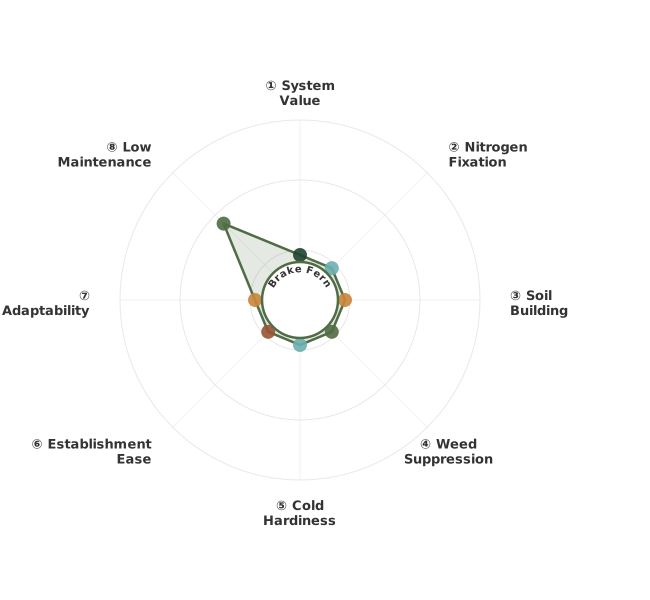
How These Traits Are Calculated
Trait dimensions are ordered clockwise starting from the top of the chart (12 o'clock position):
1. System Value
Ecosystem service stacking across nitrogen, carbon, water, biodiversity
WHAT: Synthesizes the compounding value of multiple ecosystem services delivered simultaneously—nitrogen fixation, soil organic matter building, pollinator support, erosion control, and water infiltration improvement. This is the total regenerative impact beyond single-function metrics.
WHY: The highest-value cover crops deliver 3-5 significant ecosystem services at once. A legume that fixes nitrogen, builds biomass, supports pollinators, and improves water infiltration provides $150-300/acre in combined benefits versus $30-60 for single-function covers. This service stacking is the core principle of regenerative agriculture.
HOW: Scored via LLM synthesis of economics data, timeline benefits, and trait combinations. Exceptional (3.0): 4-5 major services stacked with strong economic value ratios. Typical (2.0): 2-3 moderate services. Limited (1.0): Single-function covers with minimal service stacking. Considers seed cost relative to benefit value.
2. Nitrogen Fixation
Biological nitrogen production via legume root nodule bacteria
WHAT: Measures the ability to convert atmospheric nitrogen (N₂) into plant-available ammonia through symbiotic bacteria in root nodules. Legumes form partnerships with rhizobium bacteria that fix 60-150 lbs N/acre/year, reducing or eliminating synthetic fertilizer needs for following crops.
WHY: Nitrogen is the most expensive fertilizer input in crop production ($0.50-1.00/lb). Cover crops with exceptional nitrogen fixation can provide $60-150/acre worth of fertility while building soil organic matter. This biological process also reduces groundwater contamination from nitrogen runoff and lowers farm carbon footprint.
HOW: Ratings based on annual nitrogen fixation capacity and reliability across soil conditions. Exceptional (3.0): Legumes like hairy vetch, crimson clover, and field peas fixing >100 lbs N/acre/year. Typical (2.0): Moderate fixers like red clover at 60-100 lbs N/acre/year. Limited (1.0): Non-legumes (grasses, brassicas) with zero fixation capacity.
3. Soil Building
Weighted: biomass production (60%) + root system depth (40%)
WHAT: Combines above-ground biomass production with root depth to measure total soil organic matter contribution. Biomass provides surface organic matter, while deep roots deposit carbon at depth and break up compaction layers.
WHY: Soil organic matter is the foundation of regenerative agriculture, improving water retention, nutrient cycling, and biological activity. Each 1% increase in soil organic matter holds an additional 20,000 gallons of water per acre and represents $500-1,000 in fertility value. Deep roots access subsoil nutrients and create channels for water infiltration.
HOW: Weighted formula prioritizes biomass production (60% weight) for immediate organic matter contribution, with root depth (40% weight) for long-term soil structure. Exceptional (3.0): High-biomass crops with deep roots like cereal rye (8+ tons biomass, 5+ ft roots). Typical (2.0): Moderate on both factors. Limited (1.0): Low biomass or shallow roots.
4. Weed Suppression
Physical competition through rapid establishment and dense growth
WHAT: Measures the ability to outcompete weeds through rapid germination, aggressive early growth, and dense canopy formation. Physical smothering and light competition reduce weed pressure without herbicides.
WHY: Weed management is a major labor and cost burden for farmers. Cover crops that effectively suppress weeds reduce herbicide costs ($20-60/acre), decrease cultivation passes (fuel + labor), and provide clean seedbeds for cash crops. This is especially valuable in organic systems where herbicide options are limited.
HOW: Ratings based on germination speed, tillering density, and canopy closure timing. Exceptional (3.0): Fast-establishing, dense-tillering crops like cereal rye, oilseed radish that close canopy within 3-4 weeks. Typical (2.0): Moderate establishment and coverage. Limited (1.0): Slow-establishing or sparse crops that allow weed competition.
5. Cold Hardiness
Winter survival for fall planting and spring green manure value
WHAT: Measures tolerance to freezing temperatures and ability to survive winter conditions. Winter-hardy cover crops can be fall-planted, overwinter as living mulch, and provide early spring growth before cash crop planting.
WHY: Fall-planted winter-hardy covers extend the growing season into unused months, capturing solar energy and preventing erosion during wet periods. Spring green manure from overwintered covers provides early nitrogen and biomass. This timing flexibility is critical in cold climates with short growing seasons.
HOW: Ratings based on minimum survival temperature and winter active growth. Exceptional (3.0): Winter-hardy crops like cereal rye, hairy vetch, crimson clover surviving to -20°F with active growth in spring. Typical (2.0): Moderate cold tolerance. Limited (1.0): Warm-season crops like buckwheat, cowpea killed by first frost.
6. Establishment Ease
Germination speed, soil requirement flexibility, planting window breadth
WHAT: Measures how easily the cover crop establishes from seed, including germination speed, tolerance for variable soil conditions, and flexibility in planting timing. Easy establishment means reliable stands without intensive management.
WHY: Difficult-to-establish covers increase risk of stand failure, wasted seed costs, and reduced benefits. Easy establishment crops tolerate late planting, poor seedbed preparation, and variable moisture—critical when cover cropping windows are narrow between cash crops. Reliable establishment ensures consistent soil building and weed suppression benefits.
HOW: Ratings based on days to emergence, soil condition sensitivity, and planting window breadth. Exceptional (3.0): Fast germinators like buckwheat (3-5 days) and cereal rye (5-7 days) with wide planting windows. Typical (2.0): Moderate establishment requirements. Limited (1.0): Slow or finicky establishers requiring precise conditions.
7. Adaptability
Weighted: climate tolerance (60%) + multi-benefit versatility (40%)
WHAT: Combines climate adaptability (temperature and rainfall range) with multi-benefit versatility (diverse ecosystem services) to measure overall system flexibility. High adaptability means the cover works across farm regions and provides multiple functions.
WHY: Farmers need cover crops that work reliably across diverse fields and provide stacked benefits. Climate-adaptable covers reduce risk in variable weather, while multi-benefit crops deliver nitrogen fixation + pollinator support + forage value simultaneously. This versatility maximizes return on cover crop investment.
HOW: Weighted formula prioritizes climate tolerance (60% weight) for geographic reliability, with multi-benefit value (40% weight) for functional stacking. Exceptional (3.0): Wide climate range + multiple significant benefits. Typical (2.0): Moderate on both factors. Limited (1.0): Narrow climate range or single-function crops.
8. Low Maintenance
Inverted from maintenance intensity—low inputs mean high scores
WHAT: Measures minimal input requirements for successful cover cropping. Low-maintenance covers require no irrigation, minimal fertility, easy termination, and tolerate variable management timing.
WHY: Cover crops compete for resources with cash crops in tight rotations. Low-maintenance covers fit easily into existing systems without adding labor, equipment, or input costs. Easy termination is especially critical—covers that are difficult to kill can become weeds and delay cash crop planting.
HOW: Inverted score from maintenance intensity trait (4.0 minus raw score). Exceptional (3.0): Self-sufficient crops like cereal rye, field peas requiring no irrigation or fertility, easily terminated by mowing or winter-kill. Typical (2.0): Moderate input needs. Limited (1.0): High-maintenance crops needing irrigation, heavy fertility, or difficult termination (herbicides, multiple tillage passes).
Ratings are based on documented performance in regenerative systems, not conventional high-input scenarios. All traits assume integrated management practices focused on soil health and ecosystem services.
5
Management & Care Requirements
Integration guidance, maintenance needs, and care practices
Management & Care Requirements
Integration guidance, maintenance needs, and care practices
How to Integrate This Plant
Brake fern (Pteris vittata) can be integrated into regenerative systems primarily for its soil remediation capabilities. Its role as a phytoremediator, particularly for arsenic and heavy metals like cadmium and lead, makes it valuable in degraded or contaminated areas. It can be used in polycultures or intercropped with other plants, as suggested by its use with garlic, alfalfa, and other accumulator plants. While not providing shade, nitrogen fixation, or windbreaks, its primary function is ecological restoration. Its value emerges as it establishes and begins to absorb contaminants. Interplanting with crops like garlic can enhance its uptake efficiency. The total system value lies in its ability to detoxify and improve soil health, making land usable for other agricultural purposes, thus contributing to risk diversification by restoring potentially lost land resources. It is best suited for areas requiring specific soil cleanup rather than general farm system enhancement.
Integration Practices & Management
The provided knowledge base offers limited insight into the practical integration of *Pteris vittata* by regenerative farmers. While sources highlight its potential for phytoremediation, particularly in metal-contaminated soils, they do not detail establishment methods such as seeding rates, timing, or tillage practices. Similarly, the sources are silent on how *Pteris vittata* might be integrated with grazing systems, including mob grazing, rotational grazing, or the timing and duration of rest periods. Termination strategies, such as natural winterkill, grazing, crimping, mowing, or herbicide use, are also not discussed. Management considerations like fertility needs, competition control, and succession planning are absent from the knowledge base. Furthermore, the integration of *Pteris vittata* with cash crops through relay cropping, intercropping, or specific rotation sequences is not mentioned. The existing literature focuses on the plant's hyperaccumulating capabilities for soil remediation, rather than its role within broader regenerative agricultural management systems or specific farmer experiences.
Management Profile
Maintenance Intensity: Adequate - While generally low-maintenance, this fern's preference for consistent moisture and shade means its integration requires careful microclimate management and occasional compost or mulch to support its growth.
Sources behind this view
 Research
-
Community-based phytoremediation of multi-metal soils: Overyielding effects and microbial mediation. (opens in new window)
This study found: Planting diverse mixtures of metal-absorbing plants, like ferns and alfalfa, significantly boosted soil cleanup of heavy metals by over 3 times, driven by enhanced plant growth and beneficial soil mic
8
Know the Debate
The use of Pteris vittata in regenerative agriculture holds promise for managing contaminated soils, particularly those with arsenic. Its effective...
Know the Debate
The use of Pteris vittata in regenerative agriculture holds promise for managing contaminated soils, particularly those with arsenic. Its effective...
The use of Pteris vittata in regenerative agriculture holds promise for managing contaminated soils, particularly those with arsenic. Its effectiveness, however, is a subject of discussion, with research highlighting its natural uptake abilities, potential synergistic effects with soil microbes, and cautionary notes on factors like leaching and varietal differences. While it can reduce soil metal concentrations and contribute to soil organic matter over several years, its role as a sole remediation agent versus a component of a broader strategy is debated, especially considering varying regional conditions and the need for specific microbial support.
How effectively does Pteris vittata remediate soil arsenic?
Significant reduction with microbial support
Academic studies indicate Pteris vittata can significantly reduce soil arsenic concentrations, with some trials showing absorption of up to 44%. Intercropping and beneficial root microbes can further enhance uptake and overall soil health.
Sources behind this view
Sources behind this view
Research
-
Influence of Pteris vittata-maize intercropping on plant agronomic parameters and soil arsenic remediation. (opens in new window)
This study found: In farmlands contaminated with arsenic, a study tested growing brake fern (Pteris vittata), known for absorbing arsenic, alongside corn (Zea mays). This 'intercropping' method significantly increased the amount of arsenic collected by the fern and reduced arsenic in the corn plants by up to 37%. Overall, the combined plants removed substantial amounts of arsenic from the soil. Importantly, intercropping also boosted the nitrogen and phosphorus content in corn kernels, leading to heavier kernels and a yield increase of up to 24% compared to growing corn alone. The fern and corn together also changed the soil's arsenic forms, making it less available, and improved the balance of beneficial soil microbes. A specific planting arrangement (4 rows of corn to 4 rows of fern) was found to be most effective for both arsenic removal and practical farming.
-
Phytoextraction potential of arsenic and cadmium and response of rhizosphere microbial community by intercropping with two types of hyperaccumulators. (opens in new window)
This study found: This study explored how planting specific metal-absorbing plants together (intercropping) could help clean up soils contaminated with arsenic and cadmium. Researchers found that growing a fern that absorbs arsenic (Pteris vittata) alongside a plant that absorbs cadmium (Sedum alfredii) significantly boosted the growth of all plants involved. This combination also led to the highest uptake of both arsenic and cadmium by the fern, collecting 2032 micrograms of arsenic and 397 micrograms of cadmium per pot. The mixed planting also improved the diversity of beneficial bacteria in the soil around the plant roots. Certain bacteria, like Lysobacter, Massilia, and Arthrobacter, were more abundant and showed positive links to the plants' ability to absorb these metals. The findings suggest that intercropping these specific plants is a promising way to use plants to remove arsenic and cadmium from contaminated soils.
-
The rhizosphere microbiome reduces the uptake of arsenic and tungsten by Blechnum orientale by increasing nutrient cycling in historical tungsten mining area soils. (opens in new window)
This study found: In areas with historical mining of tungsten (a toxic metal), a type of fern called Blechnum orientale was found to absorb less arsenic and tungsten, even though these metals were present in high amounts in the soil. The study discovered that higher levels of essential soil nutrients like sulfur, phosphorus, and molybdenum in the soil helped reduce the plant's uptake of these toxic metals. Crucially, the tiny microbes living around the fern's roots (the rhizosphere microbiome) were responsible for making these beneficial nutrients more available. These root microbes, particularly certain types and their functions, were key to increasing nutrient uptake by the fern. This means that the plant's root microbes can help it grow better in contaminated mine soils by boosting nutrient availability and reducing the absorption of toxic metals.
Variable results due to soil and plant factors
Field observations suggest that Pteris vittata's arsenic removal is influenced by soil leaching, pH, moisture, and the fern's specific genotype, meaning its effectiveness can vary considerably and it may not be a complete solution alone.
Sources behind this view
Sources behind this view
Research
-
Pteris vittata Arsenic Accumulation Only Partially Explains Soil Arsenic Depletion during Field-Scale Phytoextraction (opens in new window)
This study found: A nearly year-long field study in California explored how well the brake fern, Pteris vittata, can remove arsenic from contaminated soil. Researchers found that higher initial arsenic levels in the soil led to more arsenic being taken up by the ferns. Adding a beneficial root fungus (Funneliformis mosseae) significantly boosted fern growth. While the ferns did accumulate arsenic and reduce overall soil arsenic levels by up to 44%, the amount of arsenic found in the ferns couldn't fully explain the decrease in the soil. This suggests that a significant portion of the arsenic might have been lost through leaching (washing away with water). The study also noted that the soil environment right around the plant roots (the rhizosphere) had different chemical properties that could make arsenic more soluble. This research is the first to track arsenic movement in this way under field conditions.
-
Phytoremediation- A Green Approach for Soil Decontamination: Concept, Types, Mechanism and Advantages (opens in new window)
This study found: Plants can be a 'green' and cost-effective way to clean up contaminated agricultural soils. This process, called phytoremediation, uses special plants called hyperaccumulators that can absorb and safely store or break down pollutants from sources like industrial runoff or natural rock weathering. There are several ways plants do this: they can pull pollutants into their tissues (phytoextraction), lock them in place in the soil (phytostabilization), release them into the air (phytovolatalization), filter them from water near the roots (rhizofitration), or break them down (phytodegradation). Plants use natural compounds like phytochelatins and metallothioneins to bind to these harmful metals, protecting themselves and the environment. While effective, researchers are looking into ways to make plants even better at cleaning up soil through genetic engineering.
Making Sense of the Differences
The effectiveness of Pteris vittata for arsenic remediation varies based on soil conditions, the presence of beneficial microbes, and the chosen management strategy. While it demonstrates a capacity for uptake, factors like soil leaching and the intensity of contamination mean it's often part of a broader remediation plan rather than a sole solution. Intercropping and microbial inoculation can enhance its performance, but environmental variables will always influence the degree of success.
What drives Pteris vittata's heavy metal uptake?
Microbial symbiosis is critical
Academic research highlights the crucial role of root bacteria with adaptable metabolism in driving Pteris vittata's arsenic and heavy metal accumulation. These microbes enhance nutrient availability and potentially reduce plant toxicity.
Sources behind this view
Sources behind this view
Research
-
Metabolic flexibility of rhizobacteria drives soil nutrient cycling and enhances rare earth elements hyperaccumulation in ferns colonizing degraded mine ecosystems. (opens in new window)
This study found: In degraded mine sites, certain ferns can accumulate high levels of rare earth elements (REEs), which are important for green technologies. This research found that the bacteria living around the roots of these ferns play a key role in this process. Even in soils with lower overall nutrients, ferns from the core mining areas accumulated more REEs. The study identified specific groups of root bacteria that are adaptable and can efficiently cycle carbon and nitrogen, helping the plants thrive and take up REEs. These adaptable bacteria, particularly those in the Alphaproteobacteria and Actinomycetota groups, are important for nutrient cycling and could be used as indicators for soil recovery. The findings suggest that understanding and potentially managing these plant-microbe partnerships, especially considering seasonal changes, could improve how we restore damaged mine soils and use plants to clean up REEs.
-
Recruitment of copiotrophic and autotrophic bacteria by hyperaccumulators enhances nutrient cycling to reclaim degraded soils at abandoned rare earth elements mining sites. (opens in new window)
This study found: Researchers studied three types of ferns growing on abandoned mine sites contaminated with rare earth elements (REEs) in China. Two of the ferns were 'hyperaccumulators,' meaning they can absorb and store high levels of these metals. The study found that the soil where these metal-absorbing ferns grew was more acidic and had much lower levels of carbon, nitrogen, and phosphorus compared to the soil where a non-metal-absorbing fern grew. The hyperaccumulating ferns effectively pulled REEs from the soil into their leaves. Importantly, the soil around the roots of these ferns had more types of bacteria that are good at cycling nutrients, even in low-nutrient conditions. These bacteria likely help the ferns grow by making nutrients available. This research suggests that using these metal-absorbing plants along with their associated beneficial bacteria could be a strategy to help restore or clean up degraded mine soils.
Multiple factors influence uptake
While microbes are important, field observations and broader scientific understanding suggest that plant genotype, soil pH, moisture, and leaching rates are also significant influencers of heavy metal uptake and retention by Pteris vittata.
Sources behind this view
Sources behind this view
Research
-
Pteris vittata Arsenic Accumulation Only Partially Explains Soil Arsenic Depletion during Field-Scale Phytoextraction (opens in new window)
This study found: A nearly year-long field study in California explored how well the brake fern, Pteris vittata, can remove arsenic from contaminated soil. Researchers found that higher initial arsenic levels in the soil led to more arsenic being taken up by the ferns. Adding a beneficial root fungus (Funneliformis mosseae) significantly boosted fern growth. While the ferns did accumulate arsenic and reduce overall soil arsenic levels by up to 44%, the amount of arsenic found in the ferns couldn't fully explain the decrease in the soil. This suggests that a significant portion of the arsenic might have been lost through leaching (washing away with water). The study also noted that the soil environment right around the plant roots (the rhizosphere) had different chemical properties that could make arsenic more soluble. This research is the first to track arsenic movement in this way under field conditions.
-
Phytoremediation- A Green Approach for Soil Decontamination: Concept, Types, Mechanism and Advantages (opens in new window)
This study found: Plants can be a 'green' and cost-effective way to clean up contaminated agricultural soils. This process, called phytoremediation, uses special plants called hyperaccumulators that can absorb and safely store or break down pollutants from sources like industrial runoff or natural rock weathering. There are several ways plants do this: they can pull pollutants into their tissues (phytoextraction), lock them in place in the soil (phytostabilization), release them into the air (phytovolatalization), filter them from water near the roots (rhizofitration), or break them down (phytodegradation). Plants use natural compounds like phytochelatins and metallothioneins to bind to these harmful metals, protecting themselves and the environment. While effective, researchers are looking into ways to make plants even better at cleaning up soil through genetic engineering.
Making Sense of the Differences
The mechanism behind Pteris vittata's metal uptake is likely a multifaceted interaction. While root-associated microbes play a vital role in facilitating uptake and nutrient availability, the plant's own genetic traits for hyperaccumulation and fundamental environmental conditions like soil pH, moisture, and the potential for leaching are also critical determinants. A synergistic approach, supporting both the plant and its microbial partners, is probably most effective.
9
Learn More
Why farmers use this plant and additional resources
Learn More
Why farmers use this plant and additional resources
Why Regenerative Farmers Use This Plant
Pteris vittata, commonly known as the Chinese brake fern, offers unique regenerative benefits, particularly for its remarkable phytoremediation capabilities and its contribution to soil health. While not a nitrogen-fixing legume or a high-biomass producer in the traditional cover crop sense, its dense, fibrous root system is exceptionally effective at absorbing and accumulating heavy metals, especially arsenic, from contaminated soils. Studies have shown Pteris vittata can accumulate arsenic at rates of several hundred milligrams per kilogram of dry weight, making it an invaluable tool for soil detoxification and land reclamation, allowing previously unusable land to be brought back into production. This capability can significantly reduce reliance on purchasing or leasing less contaminated land and can save farmers an estimated $50-$150 per acre annually in weed management costs by suppressing weed germination and establishment.
Integrating Pteris vittata into regenerative systems can significantly enhance soil resilience and reduce reliance on costly remediation efforts. Its dense foliage and extensive root network help to stabilize soil, preventing wind and water erosion, which is particularly crucial in regions prone to heavy rainfall or in areas where conventional farming practices have led to soil degradation. The root system can extend 1-3 feet (0.3-1 meter) deep, significantly improving soil structure and water-holding capacity. By outcompeting invasive weeds and establishing ground cover quickly, it reduces the need for mechanical tillage or herbicide applications, further preserving soil structure and microbial life. This fern can act as a living mulch, suppressing weed growth beneath its canopy and contributing organic matter to the soil surface as fronds decompose.
The ecological services provided by Pteris vittata extend to supporting biodiversity and soil biology. As the fronds decompose, they add organic matter to the soil, albeit slowly, which can improve soil structure and water-holding capacity over time, contributing to a more resilient and fertile soil profile over a 3-5 year rotation. This gradual addition of organic matter is a cornerstone of building long-term soil health. While direct pollinator support is minimal, its dense growth can offer habitat and shelter for beneficial insects and small soil organisms, contributing to a more robust farm ecosystem and creating microhabitats for beneficial insects that prey on common agricultural pests. The physical barrier it provides also reduces surface runoff, thereby decreasing the transport of sediment and nutrients off-site, indirectly supporting water quality.
Regional success with Pteris vittata is emerging in areas facing soil contamination challenges. In parts of Southeast Asia, where arsenic contamination is a concern in rice paddies, its use as a phytoremediator is being explored to render land arable again. In Australia, on former mining sites or industrial lands, it is being trialed for its ability to stabilize soils and reduce the spread of contaminants. In the southern United States, its application on agricultural lands with historical pesticide or heavy metal residues is gaining traction as a biological cleanup strategy. In China, it has been extensively studied and deployed for remediation in areas with historical arsenic contamination from mining. In Europe, particularly where soil contamination is a concern, it is being explored as a component of ecological restoration projects.
Sources behind this view
Research
-
Pteris vittata Arsenic Accumulation Only Partially Explains Soil Arsenic Depletion during Field-Scale Phytoextraction (opens in new window)
This study found: A field study showed brake ferns removed arsenic from soil, boosted by root fungi. However, fern uptake didn't account for all soil arsenic loss, suggesting leaching may be significant. Rhizosphere ch
-
Influence of Pteris vittata-maize intercropping on plant agronomic parameters and soil arsenic remediation. (opens in new window)
This study found: Intercropping brake fern with corn in arsenic-contaminated soil reduced arsenic in corn by up to 37% and increased corn yield by up to 24%, while improving soil health and microbial balance.