Available information points to its potential value in regenerative agriculture, primarily as a support species. One study highlights its use as a pollen source for crucial pollinators like bumble bees and leafcutter bees, contributing directly to biodiversity and ecosystem health within agricultural landscapes. This pollinator support is a key regenerative benefit, enhancing natural pest control and fruit/seed set for other crops. Although not explicitly detailed as a nitrogen fixer in these excerpts, its presence in polyculture systems is implied, suggesting a role in diverse planting strategies that build soil health and resilience. Further research is needed to fully understand its integration with practices such as agroforestry or cover cropping. Farmer experiences are not detailed in this limited knowledge base, but its role in supporting beneficial insects suggests it can be a valuable component in diversified farming systems focused on ecological enhancement. While coverage in our knowledge base is limited, the above represents documented uses in regenerative systems.

Regenerative Quick Profile

All recommendations assume integrated, regenerative practices—not conventional inputs.

Climate & Soil Fit

Climate: Tropical Rainforest, Tropical Monsoon, Tropical Savanna, Hot Semi-Arid (Steppe), Cold Semi-Arid (Steppe), Hot Desert, Cold Desert, Humid Subtropical, Oceanic (Maritime Temperate), Hot-Summer Mediterranean, Warm-Summer Mediterranean, Monsoon-Influenced Humid Subtropical, Subtropical Highland, Hot-Summer Continental, Warm-Summer Continental, Subarctic, Monsoon-Influenced Hot-Summer Continental, Tundra

Zones: USDA 3-8, Australian Zones 1-14

Optimal Soil: Loam Soil

System Role & Functions

Primary: Pollinator Support

Secondary: Cover Crop System

Key Benefits: Climate adaptable, Low maintenance, Cold Hardiness

Management Level

Experience: Beginner-Friendly

Maintenance: Very low maintenance - Staghorn Sumac is exceptionally hardy and drought-tolerant, thriving in low-fertility soils. Its natural spread and resilience minimize the need for external interventions, integrating seamlessly into a low-input system.

Value Streams
1

Climate Suitability Assessment

Will this plant thrive in your climate?

IDEALLY SUITED

Köppen Zone: Cfa (Humid Subtropical), Cfb (Oceanic (Maritime Temperate)), Dfa (Hot-Summer Continental), Dfb (Warm-Summer Continental)
USDA Zone: 4a, 4b, 5a, 5b, 6a, 6b, 7a, 7b
Australian Zone: temperate, subtropical
EU Climate Region: atlantic

Staghorn Sumac flourishes in climates with a minimum of 180 frost-free days and moderate temperatures, typically ranging from 60-80°F (15-27°C) during its active growth period. These conditions are met in Köppen Cfa and Cfb zones, USDA zones 5b through 10b, Australian subtropical and temperate regions, and the EU Atlantic climate. It establishes readily in well-drained soils with adequate moisture, tolerating a range of conditions once established. Its primary function of pollinator support is maximized in these zones due to its extended flowering period and abundant nectar/pollen production. As a cover crop system component, its vigorous growth and ability to colonize disturbed areas provide excellent soil stabilization and weed suppression. Minimal management is required, with its resilience to drought and varied soil types contributing to its high suitability score. The plant's adaptability ensures reliable performance and consistent benefits for regenerative agriculture practices across these diverse, favorable climates.

ADEQUATE

Köppen Zone: BSk (Cold Semi-Arid (Steppe)), Csa (Hot-Summer Mediterranean), Csb (Warm-Summer Mediterranean), Cwa (Monsoon-Influenced Humid Subtropical), Cwb (Subtropical Highland), Dfc (Subarctic), Dwa (Monsoon-Influenced Hot-Summer Continental)
USDA Zone: 3a, 3b, 8a, 8b
EU Climate Region: continental

Staghorn Sumac performs adequately in climates with a growing season of at least 120-150 frost-free days and moderate summer temperatures, though it may experience some limitations. This includes Köppen Dfa, Dfb, and Dfc zones, USDA zones 4a, 4b, and 5a, and the EU continental climate. In these regions, summers are generally warm enough for growth and pollinator support, but winters can be cold enough to cause occasional dieback or slower establishment. While it can still fulfill its functions as a pollinator support species and for cover cropping, its vigor and reliability may be slightly reduced compared to ideal climates. Supplemental watering might be beneficial during dry spells, and its spread might be less aggressive. Despite these considerations, it remains a viable option for regenerative agriculture, offering ecological benefits with moderate management inputs. Its ability to survive and provide some ecological services makes it a useful, albeit not optimal, choice in these transitional climate zones.

NOT RECOMMENDED

Köppen Zone: Af (Tropical Rainforest), Am (Tropical Monsoon), Aw (Tropical Savanna), ET (Tundra), BSh (Hot Semi-Arid (Steppe)), BWh (Hot Desert), BWk (Cold Desert)
USDA Zone: 2a, 9a, 9b, 10a, 10b, 11a, 11b, 12a, 12b, 13a, 13b

Staghorn Sumac is not recommended in climates characterized by extreme cold, very short growing seasons, or severe drought, making its survival and effectiveness highly improbable. This includes Köppen Dwc and Dwd zones, USDA zones 1a through 4a, and the EU Boreal climate. In these regions, winter temperatures frequently drop well below its tolerance limits (-20°F/-29°C), leading to consistent winter kill and preventing perennial establishment. The short frost-free periods are insufficient for adequate growth and flowering, severely limiting its capacity to support pollinators or establish as a cover crop. Furthermore, its moderate water needs are not met by the arid conditions found in some of these zones. Attempting to cultivate Staghorn Sumac in these environments would require intensive, economically unfeasible interventions such as greenhouses or extensive irrigation, negating its utility in regenerative agriculture. Alternative, more cold-hardy and drought-tolerant species are far better suited to these challenging environments.

Better alternatives for these "not recommended" zones: Siberian Peashrub (Caragana arborescens) (Extremely cold-hardy, drought-tolerant shrub that provides some pollinator support and nitrogen fixation.), Willow (Salix spp.) (Many species are adapted to cold, moist conditions and provide early spring pollen for pollinators.), Serviceberry (Amelanchier spp.) (Native shrub with edible berries and flowers that attract pollinators, more cold-hardy.)

Note: Zones listed above represent climates where this plant can produce reliably with reasonable management. Climate zones not mentioned would require intensive climate modification (greenhouses, extensive infrastructure) and are not economically viable for regenerative agriculture purposes.

2

Soil Suitability Assessment

Which soil types work best for this plant?

IDEALLY SUITED

Loam Soil

This plant thrives in these soil types without requiring amendments or remediation. Natural soil conditions support optimal growth and productivity.

ADEQUATE

Acidic Soil, Alkaline Soil, Clay Soil, Rich Soil, Rocky Soil, Sandy Soil

This plant performs acceptably in these soil types with moderate, manageable remediation such as pH adjustment, compost addition, or drainage improvement. The required amendments are practical and cost-effective for regenerative agriculture.

NOT RECOMMENDED

Desert Soil, Saline Soil, Wet Soil

Growing this plant in these soil types would require impractical remediation such as complete soil replacement, extensive amendments, or cost-prohibitive infrastructure. These conditions are not economically viable for regenerative agriculture.

Note: Soil suitability assessments focus on remediation requirements. "Ideally Suited" means the plant generally thrives without the need for substantial amendments, "Adequate" means manageable remediation (lime, compost, mulch), and "Not Recommended" means impractical soil changes would be required. Climate factors like rainfall and temperature also influence success.

3

Seasonal Considerations

Planting timing, growth duration, and harvest windows

Staghorn Sumac offers robust cover cropping potential across a range of temperate climates. For spring planting, aim for early spring, after the risk of hard frost has passed, to capitalize on its excellent frost tolerance and rapid initial establishment. It typically takes just a few weeks to show good growth. When considering fall planting, seed late in the season, well before the first expected hard frost, allowing it enough time to establish a strong root system before winter dormancy. In your climate zones, staghorn sumac demonstrates excellent overwinter survival, functioning effectively as a winter cover. Its peak biomass is usually achieved in its second growing season, making it ideal for a multi-year rotation where you can terminate it in late spring, a few weeks before planting your primary cash crop. While not typically grown as a summer cover, its resilience means it can be overseeded into standing cash crops in mid-summer if managed carefully. Frost-seeding in early spring is also a viable option for initiating stands.

4

System Role & Multi-Benefit Value

Functional roles, integration strategies, and stacked benefits

Functional Role

Total System Value

Staghorn sumac offers significant system value beyond direct harvest, primarily through its robust pollinator support. As indicated, its pollen is a source for bees like Bombus impatiens and Megachile rotundata, contributing to healthy insect populations essential for crop pollination and ecosystem stability. While direct harvest value is not detailed here, sumac fruits are edible and have traditional uses, offering a potential secondary product. Its primary system enhancement lies in its role as a pioneer species and its potential nitrogen-fixing capacity, which can improve soil fertility in adjacent areas. Ecosystem services are strongly represented through its support of pollinators, contributing to biodiversity and the functional health of the farm's ecological community. Its dense growth also provides habitat for beneficial wildlife. Risk diversification is achieved through its resilience and ability to thrive in marginal conditions, making it a dependable component of a diversified farming system that is less vulnerable to the failure of a single crop or input.

Integration Characteristics

Multi-Benefit Value: Adequate - Offers excellent erosion control and vital wildlife habitat and food sources. Its ability to thrive in challenging sites contributes significantly to ecological resilience and soil improvement.

5

Management & Care Requirements

Integration guidance, maintenance needs, and care practices

How to Integrate This Plant

Staghorn sumac (Rhus typhina) is a valuable non-tree species for regenerative agriculture, primarily serving as a vital resource for pollinator support. Its inclusion in farm systems can enhance biodiversity and ecosystem services. It is particularly well-suited for integration into food forests and hedgerows, where its sprawling growth habit can help fill understory niches and provide habitat. While not explicitly mentioned in the provided excerpt, its nitrogen-fixing capabilities (common in the Rhus genus) could also contribute to soil health in alley cropping systems or silvopasture edges. The timeline to contribution is relatively quick: by Year 1-2, its dense foliage offers habitat and early nectar/pollen resources for beneficial insects. By Year 3-5, its fruit production begins, providing additional food for wildlife and continuing pollinator support. The multi-benefit stacking comes from its role in supporting crucial insect populations, its potential soil improvement contributions, and its hardy, low-maintenance nature, contributing to overall farm resilience and reduced reliance on external inputs.

Integration Practices & Management

The provided knowledge base offers limited insight into the specific methods regenerative farmers use to integrate Rhus typhina. The six mentions primarily focus on its role as a pollen source for pollinators, specifically in studies involving Bombus impatiens and Megachile rotundata, alongside other plants like Taraxacum officinale and Crataegus sp. These studies do not detail establishment techniques such as seeding rates, timing, or companion planting strategies. Furthermore, there is no information within the knowledge base regarding integration with grazing systems, including mob grazing, rotational grazing, or the timing and duration of rest periods. Termination strategies like natural winterkill, grazing, crimping, mowing, or herbicide use are also not discussed. Similarly, management considerations like fertility needs, competition control, or succession planning are absent. The knowledge base does not offer details on how Rhus typhina is integrated with cash crops through relay cropping, intercropping, or rotation sequences. Consequently, practical farmer experiences and specific integration insights from regenerative agriculture practitioners are not available in this limited selection of sources.

Management Profile

Maintenance Intensity: Ideally Suited - Staghorn Sumac is exceptionally hardy and drought-tolerant, thriving in low-fertility soils. Its natural spread and resilience minimize the need for external interventions, integrating seamlessly into a low-input system.

6

Economics & Value Streams

Direct harvest, system benefits, ecosystem services, and risk diversification

Comprehensive economic analysis including direct harvest value, system enhancement contributions, ecosystem services, value timeline, and risk diversification strategies.

Cover Crop Investment

Metric Value
Seed Cost $15-30/acre $37-74/ha
Termination Cost 20-50 49-124
Biomass Production 2-5 4-11
N Fixation Value N/A N/A
Weed Control Savings 10-30 25-74

Cover crops are soil investments, not cash crops. Economics measured in soil health gains, input reduction, and subsequent crop performance. Values show direct costs and estimated benefits.

System Enhancement Value

Beyond harvest: pollination services for your crops and ecosystem

Pollination Service Provision

Staghorn sumac (Rhus typhina) is a significant contributor to pollinator support, as evidenced by its inclusion in a study investigating pollen diet diversity for bumble bees and leafcutter bees. Its early flowering provides crucial resources for pollinators when other nectar and pollen sources may be scarce. Beyond direct pollinator benefits, the plant offers a unique edible product, 'Sumac-aide,' made from its seed clusters, which is a good source of Vitamin C. Historically, Native Americans utilized the pithy center for sacred pipes and incorporated the inner bark into smoking mixtures, representing potential for niche artisanal or cultural product development. Furthermore, its ability to naturalize bare ground and its distinctive appearance can enhance landscape aesthetics. The potential for vegetable tallow production from its seeds, similar to other Rhus species, offers another avenue for value creation, though this is less explicitly detailed for R. typhina in the provided excerpts.

Erosion Control (if applicable)

Variable, dependent on density and establishment. Estimated indirect benefits through erosion control and soil stabilization.

Staghorn sumac (Rhus typhina) is described as an 'early colonizer, ideal for naturalizing bare ground and providing erosion control on disturbed soils due to its ability to grow well in such conditions'. Its aggressive spreading via runners contributes to its effectiveness in stabilizing soil and preventing wind and water erosion. While not a traditional windbreak species like conifers, dense thickets of sumac can offer some protection to adjacent areas, particularly on open, disturbed land. This naturalizing capability is crucial for reclaiming degraded areas, reducing runoff, and improving soil structure over time, thereby indirectly contributing to the long-term stability of the farm landscape. The plant's resilience in challenging environments means it can establish and provide protective cover where other vegetation might struggle, making it a valuable component in integrated land management strategies aimed at soil health and landscape restoration.

Ecosystem Service Contributions

Environmental contributions: carbon, pollinators, wildlife, and water

  • Carbon Sequestration: Staghorn sumac is a woody shrub with a rhizomatous root system, indicating moderate potential for carbon sequestration in both aboveground biomass and soil organic matter, particularly as it establishes and forms dense thickets.
  • Pollinator Support: High. Its inclusion in bee diet studies and its known flowering period as an early colonizer suggest it provides significant nectar and pollen resources for a variety of pollinators.
  • Wildlife Habitat: Provides habitat and food sources, particularly for pollinators. Its dense growth can offer nesting sites. The seed clusters may also be utilized by some wildlife.
  • Water Quality: Not applicable

Value Timeline: Bloom & Establishment

When you'll see results: annuals bloom year 1, perennials mature 2-3 years

Years 1-2

Initial erosion control and soil stabilization on disturbed ground. Beginning of pollinator support as the plant establishes and flowers. Potential for early aesthetic contributions to the landscape.

Years 3-5

Established erosion control and increasing density of cover. Significant pollinator support. First potential for 'Sumac-aide' or other beverage production from seed clusters. Development of its characteristic landscape appearance.

Years 10-20

Mature dense thickets providing substantial erosion control and landscape stabilization. Reliable and abundant pollinator support. Consistent production of seed clusters for beverage and potential tallow extraction. Established wildlife habitat benefits.

20+ Years

Long-term landscape stabilization and ecosystem services. Continued pollinator support. Potential for management of dense stands for resource extraction or aesthetic purposes. Sustained contribution to biodiversity.

Farm Risk Reduction

How pollinator support reduces crop failure risk

  • Multiple Revenue Streams: Edible products (Sumac-aide), potential for vegetable tallow extraction, niche artisanal products (historical uses), ecosystem services (pollinator support, erosion control).
  • Temporal Income Spread: Ongoing ecosystem services (pollinator support, erosion control) are continuous. Harvestable products (seed clusters) are periodic. Potential tallow extraction would likely be a periodic process.
  • Market Risk Hedge: Reduces reliance on single crops by offering alternative revenue streams from value-added products and ecosystem services. Its resilience in disturbed or marginal land diversifies land use options. Provides critical pollinator support, which benefits other crops on the farm.
7

Regenerative Suitability Details

Comprehensive trait ratings for system integration assessment

Comparative ratings for this plant across key regenerative agriculture traits.

Trait Suitability Explanation
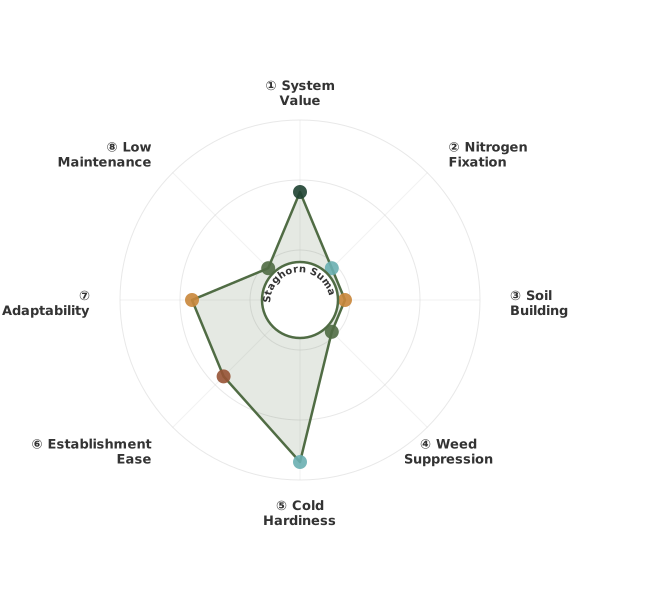
Cold Hardiness Ideally Suited Extremely cold hardy (Zone 3-8), reliably surviving harsh winters. Its vigorous suckering and biomass production contribute to soil stabilization and fertility enhancement.
Weed Suppression Not Recommended This shrub forms dense thickets through its suckering habit, contributing to ground cover and competition with undesirable vegetation. Its slow establishment of a competitive canopy can be managed through integrated planting strategies.
Nitrogen Fixation Not Recommended Staghorn sumac does not fix atmospheric nitrogen. It efficiently utilizes available soil nutrients, contributing to overall soil health with its growth.
Root System Depth Adequate Staghorn sumac possesses a moderately deep, spreading root system that enhances soil structure, prevents erosion, and scavenges nutrients for improved soil fertility.
Biomass Production Not Recommended As a woody shrub, Staghorn Sumac contributes significant organic matter to the soil upon decomposition. This process, while slower for woody material, enriches soil structure and fertility over time.
Establishment Ease Adequate Establishes readily from suckers or seed with minimal soil disturbance. Its vigorous growth once established, tolerating a range of conditions, integrates well into diverse planting designs.
Multi Benefit Value Adequate Offers excellent erosion control and vital wildlife habitat and food sources. Its ability to thrive in challenging sites contributes significantly to ecological resilience and soil improvement.
Climate Adaptability Ideally Suited Hardy across zones 3-8, it thrives in diverse conditions including cold, heat, and varied moisture. Its capacity to colonize various sites, including nutrient-poor soils, demonstrates exceptional climate resilience.
Maintenance Intensity Ideally Suited Staghorn Sumac is exceptionally hardy and drought-tolerant, thriving in low-fertility soils. Its natural spread and resilience minimize the need for external interventions, integrating seamlessly into a low-input system.

Comparative System: Ratings compare plants within their economic category (e.g., cover crop nitrogen fixation compared to other cover crops, not to all plants). Individual farm conditions and management practices significantly influence actual performance.

8

Learn More

Why farmers use this plant and additional resources

Why Regenerative Farmers Use This Plant

Rhus typhina, commonly known as Staghorn Sumac, is a valuable deciduous shrub for regenerative agriculture systems, primarily for its soil-building and ecological support functions. While not a nitrogen fixer, it excels at improving soil structure and preventing erosion with its extensive root system, which can reach depths of 6-12 feet (1.8-3.6 meters). This deep rooting helps to break up compacted soils, enhance water infiltration, and scavenge nutrients from lower soil profiles, making them available to subsequent cash crops. Its vigorous growth habit and ability to spread via root suckers create dense ground cover, effectively suppressing weeds and reducing the need for mechanical cultivation. Over a 3-5 year rotation, its contribution to soil organic matter through root decomposition and leaf litter can be significant, enhancing soil health and resilience.

Integrating Staghorn Sumac into farming systems offers multiple benefits beyond soil improvement. As a pioneer species, it colonizes disturbed areas and can be used in buffer strips, windbreaks, or hedgerows to protect fields from wind and water erosion. Its dense foliage provides habitat and food for beneficial insects and birds, contributing to on-farm biodiversity. The berries produced by female plants are a vital winter food source for wildlife, including game birds and songbirds, enhancing the ecological value of the landscape. In silvopasture systems, it can act as an understory plant, providing forage and habitat without significantly competing with trees.

The ecological contributions of Staghorn Sumac extend to its role in supporting a healthy farm ecosystem. While not a primary pollinator plant, its flowers do attract various insects, and its berries are crucial for avian populations during winter months. The extensive root system significantly improves soil aggregation and water-holding capacity, leading to better drought resilience and reduced runoff. By stabilizing soil and reducing erosion, it prevents the loss of valuable topsoil and nutrients, directly contributing to long-term farm productivity and environmental health. Its ability to thrive in marginal soils also makes it an excellent choice for reclaiming degraded land.

Staghorn Sumac has found utility in diverse agricultural landscapes globally. In the northeastern United States, it is often planted on degraded hillsides and in buffer zones along waterways to prevent erosion and improve soil structure. Farmers in the UK have incorporated it into hedgerows and field margins for its ecological benefits and to create habitat corridors. In Australia, its drought tolerance makes it suitable for arid and semi-arid regions, where it can be used for revegetation projects and to stabilize soil on marginal lands. Its adaptability allows it to be integrated into various farm types, from mixed cropping systems to livestock operations. In the United States Midwest, it can be planted in windbreaks or along field edges to reduce wind erosion and provide habitat, often interseeded with native grasses. In Australian dryland farming systems, its drought tolerance makes it suitable for establishing buffer zones and erosion control structures on marginal lands. In Brazilian coffee plantations, it can be used in intercropping systems or as part of a diverse understory planting to improve soil structure and provide habitat for beneficial insects.

Sources behind this view

Community
  • Staghorn sumac (Rhus typhina) can be used to make a Vitamin C-rich 'Sumac-aide' and is valuable for erosion control on disturbed soils. Distinguish from poisonous relatives by white berries and smooth

  • Staghorn sumac (Rhus typhina) can be used to make a Vitamin C-rich 'Sumac-aide' beverage and is valuable for environmental restoration and erosion control on disturbed soils.

9

How to Integrate This Plant

Practical guidance for regenerative systems

Establishing Staghorn Sumac is typically done through seed or vegetative propagation. For seeding, rates can range from 1-2 lbs/acre (1.1-2.2 kg/ha) for broadcast seeding, though germination can be slow and erratic due to hard seed coats. Scarification or stratification of seeds is often recommended to improve germination rates. Planting depth should be shallow, around 0.25-0.5 inches (0.6-1.3 cm). For seeding, rates of approximately 1-2 ounces per 1000 square feet (28-56 grams per 93 square meters) are also common. Vegetative propagation, either through root cuttings or suckers, is often more reliable and faster for establishing dense stands. When planting from cuttings or root suckers, spacing of 4-8 feet (1.2-2.4 meters) is recommended to allow for its mature spread, though for creating a barrier or ground cover, planting at 3-6 feet (0.9-1.8 meters) intervals is common.

In the Northern Hemisphere, spring planting (March-May) is ideal, while in the Southern Hemisphere, autumn planting (March-May) or early spring (September-October) is recommended. This timing ensures adequate moisture for establishment. Once established, Staghorn Sumac requires minimal management. Its primary needs are adequate moisture during establishment and good sunlight. While it can tolerate poor soils, amending with compost can accelerate growth. Established plants are drought-tolerant but benefit from supplemental watering during prolonged dry spells, especially in the first year, typically around 1 inch (2.5 cm) per week during dry periods. Fertility needs are generally met through its own decomposition and nutrient cycling; compost or well-rotted manure can be beneficial during establishment if soil fertility is extremely low, but synthetic inputs are rarely necessary and should be avoided to preserve soil biology.

The growth timeline is rapid, with significant biomass accumulation within 2-3 years. Significant growth occurs within the first 1-2 years, reaching its mature height of 8-15 feet (2.4-4.5 meters) with a similar spread within 3-5 years. Pest and disease issues are generally rare, with biological control and habitat management being the preferred approaches. Pest and disease management is largely unnecessary due to its natural resilience and the promotion of beneficial insect populations within its habitat.

As a shrub for soil health and ecological support, Staghorn Sumac's integration focuses on its perennial nature and soil-stabilizing properties. Termination is generally not a concern as it is not typically grown as an annual cover crop. Instead, its management involves pruning to shape, control spread, or encourage berry production. If its spread needs to be limited, repeated mowing or grazing can be employed, though it is highly resilient. For significant biomass, allowing 60-90 days for decomposition before planting a subsequent crop is advisable, ensuring nutrient release. Seed management is usually not a concern as it rarely becomes overly aggressive or invasive in managed systems. If volunteer establishment is undesirable, fruit heads should be removed before seed set.

Regional adaptations for Staghorn Sumac integration are varied. In the colder regions of USDA Zones 3-5, it may experience dieback in harsh winters but will resprout vigorously from the roots in spring. In the drier climates of Australia, it is valued for its drought tolerance and ability to stabilize sandy soils, often used in revegetation projects. In the humid subtropical regions of the southeastern US (Cfa zones), it establishes readily and can form dense thickets, making it excellent for erosion control on slopes. In the temperate oceanic climates of the UK (Cfb zones), it thrives in hedgerows and field margins, contributing to biodiversity and soil health. In the United States Midwest, it can be planted in windbreaks or along field edges to reduce wind erosion and provide habitat, often interseeded with native grasses. In the UK, it can be incorporated into agroforestry systems or used in hedgerow restoration projects to enhance biodiversity and soil health, with planting occurring in the autumn to take advantage of winter rains. In Australian dryland farming systems, its drought tolerance makes it suitable for establishing buffer zones and erosion control structures on marginal lands, with establishment timed to coincide with the onset of the rainy season. In Brazilian coffee plantations, it can be used in intercropping systems or as part of a diverse understory planting to improve soil structure and provide habitat for beneficial insects.