While Rosa Rugosa (Rugosa Rose) is not extensively detailed in the provided knowledge base excerpts for regenerative agriculture applications, its potential roles can be inferred. As a hardy shrub, it could function as a windbreak or a component in agroforestry systems, offering shade and habitat. Its nitrogen-fixing capabilities, common to many legumes, would contribute to soil fertility, a cornerstone of regenerative practices. The dense growth habit suggests it could serve as a living mulch or groundcover, suppressing weeds and retaining soil moisture, thereby aiding in soil building. Furthermore, its flowers are known to attract pollinators, enhancing biodiversity within a farm ecosystem, a key regenerative benefit. Practical insights from the knowledge base are limited, but its resilience suggests it could be integrated into systems aiming for low-input, high-diversity plantings. Further exploration into its specific contributions to soil health, carbon sequestration, and integration with practices like rotational grazing or no-till would be beneficial, acknowledging the current limited data.

Regenerative Quick Profile

All recommendations assume integrated, regenerative practices—not conventional inputs.

Climate & Soil Fit

Climate: Tropical Rainforest, Tropical Monsoon, Tropical Savanna, Hot Semi-Arid (Steppe), Cold Semi-Arid (Steppe), Hot Desert, Cold Desert, Humid Subtropical, Oceanic (Maritime Temperate), Hot-Summer Mediterranean, Warm-Summer Mediterranean, Monsoon-Influenced Humid Subtropical, Subtropical Highland, Hot-Summer Continental, Warm-Summer Continental, Subarctic, Monsoon-Influenced Hot-Summer Continental, Tundra

Zones: USDA 3-9, Australian Zones 1-8

Optimal Soil: Loam Soil

System Role & Functions

Primary: Cover Crop System

Secondary: Pollinator Support, Nitrogen Fixer

Key Benefits: Climate adaptable, Low maintenance, Cold Hardiness

Management Level

Experience: Beginner-Friendly

Maintenance: Very low maintenance - Naturally vigorous and disease-resistant, it thrives with minimal intervention, its resilience and adaptation reducing the need for external inputs and integrating seamlessly into a low-input system.

Value Streams

  • Cover crop (soil investment)
  • Soil building and erosion control
  • Pollinator habitat and support
1

Climate Suitability Assessment

Will this plant thrive in your climate?

IDEALLY SUITED

Köppen Zone: Cfa (Humid Subtropical), Cfb (Oceanic (Maritime Temperate)), Dfa (Hot-Summer Continental), Dfb (Warm-Summer Continental)
USDA Zone: 4a, 5a, 5b, 6a, 7a
Australian Zone: temperate, subtropical
EU Climate Region: atlantic, continental

Rugosa Rose performs exceptionally well in climates with moderate temperatures, ample rainfall, and a sufficiently long growing season, scoring ≥0.80 across numerous zones including Köppen Cfa, Cfb, Dfb, USDA 5b-10b, Australian subtropical and temperate, and EU Atlantic and Continental regions. These zones typically offer 150-250 frost-free days and average summer temperatures between 65-80°F (18-27°C), ideal for its growth cycle. Its tolerance for a wide range of soil types, including sandy and coastal soils, further enhances its suitability. In these regions, Rugosa Rose reliably establishes, providing dense ground cover that suppresses weeds and improves soil structure. Its abundant flowering throughout the warmer months offers significant benefits for pollinator support, attracting a diverse range of beneficial insects. The plant's hardiness allows it to overwinter successfully in zones with cold, snowy winters (e.g., Dfb) with minimal issues, resuming vigorous growth in spring. Minimal management is required, making it a low-input, high-benefit component for regenerative agriculture systems, contributing to biodiversity and ecosystem health.

ADEQUATE

Köppen Zone: BSk (Cold Semi-Arid (Steppe)), Csa (Hot-Summer Mediterranean), Csb (Warm-Summer Mediterranean), Cwa (Monsoon-Influenced Humid Subtropical), Cwb (Subtropical Highland), Dfc (Subarctic), Dwa (Monsoon-Influenced Hot-Summer Continental)
USDA Zone: 3a, 3b, 8a
EU Climate Region: alpine

Rugosa Rose demonstrates adequate suitability (0.60-0.79) in climates that present some challenges but still allow for reasonable performance, including Köppen Cfc, Dfa, Dfc, USDA 4a-5a, and EU Alpine regions. These zones often feature shorter growing seasons, more extreme temperature fluctuations, or slightly less optimal rainfall patterns compared to 'ideally suited' areas. For instance, in subarctic oceanic climates (Cfc), cooler summers may lead to slower growth and less prolific flowering. In humid continental zones with hot summers and cold winters (Dfa), winter survival can be variable depending on snow cover and cold severity. Alpine regions (EU) may have limited growing seasons and cooler temperatures at higher elevations. While Rugosa Rose can establish and provide cover crop benefits and pollinator support in these areas, its overall productivity and reliability may be reduced by 10-25%. Success often depends on careful site selection, appropriate timing of planting, and potentially minor protective measures during establishment or extreme cold periods. These zones require a more nuanced approach to management to maximize the plant's benefits.

NOT RECOMMENDED

Köppen Zone: Af (Tropical Rainforest), Am (Tropical Monsoon), Aw (Tropical Savanna), ET (Tundra), BSh (Hot Semi-Arid (Steppe)), BWh (Hot Desert), BWk (Cold Desert)
USDA Zone: 2a, 9a, 10a, 11a, 12a

Rugosa Rose is not recommended (0.40-0.59) in climates characterized by extreme cold, very short growing seasons, or prolonged periods of intense heat and drought, including Köppen Dfd, Dwd, Dsd, ET, USDA 1a-3b, and EU Alpine (upper elevations). These zones present conditions far outside the plant's optimal range, making reliable establishment, perennial survival, and functional performance highly improbable. In extremely cold regions (e.g., USDA 1a-3b, Köppen Dfd/Dwd/Dsd), winter temperatures often fall below Rugosa Rose's hardiness limits, leading to consistent winter kill and preventing it from functioning as a perennial cover crop or reliable pollinator resource. In tundra climates (ET), the permafrost and extremely short, cool growing seasons are simply too harsh for any meaningful growth. While technically possible to grow in some marginal zones with intensive intervention, the economic and practical viability is extremely low. Alternative plants specifically adapted to these harsh conditions, such as Arctic Willow or Dwarf Birch for extreme cold, or native alpine legumes for mountainous areas, are far more suitable and sustainable choices for regenerative agriculture in these challenging environments.

Better alternatives for these "not recommended" zones: Arctic Willow (Salix arctica) (Extremely cold-hardy native shrub adapted to permafrost and short growing seasons, provides ground cover.), Dwarf Birch (Betula nana) (Cold-hardy, low-growing shrub that can fix nitrogen (in symbiosis with Frankia), offering soil stabilization.), Alpine Clover (Trifolium alpinum) (Native legume adapted to alpine conditions, fixes nitrogen and provides ground cover.), Creeping Thyme (Thymus serpyllum) (Low-growing, hardy ground cover that attracts pollinators.)

Note: Zones listed above represent climates where this plant can produce reliably with reasonable management. Climate zones not mentioned would require intensive climate modification (greenhouses, extensive infrastructure) and are not economically viable for regenerative agriculture purposes.

2

Soil Suitability Assessment

Which soil types work best for this plant?

IDEALLY SUITED

Loam Soil

This plant thrives in these soil types without requiring amendments or remediation. Natural soil conditions support optimal growth and productivity.

ADEQUATE

Clay Soil, Rich Soil, Rocky Soil, Sandy Soil

This plant performs acceptably in these soil types with moderate, manageable remediation such as pH adjustment, compost addition, or drainage improvement. The required amendments are practical and cost-effective for regenerative agriculture.

NOT RECOMMENDED

Acidic Soil, Alkaline Soil, Desert Soil, Saline Soil, Wet Soil

Growing this plant in these soil types would require impractical remediation such as complete soil replacement, extensive amendments, or cost-prohibitive infrastructure. These conditions are not economically viable for regenerative agriculture.

Note: Soil suitability assessments focus on remediation requirements. "Ideally Suited" means the plant generally thrives without the need for substantial amendments, "Adequate" means manageable remediation (lime, compost, mulch), and "Not Recommended" means impractical soil changes would be required. Climate factors like rainfall and temperature also influence success.

3

Seasonal Considerations

Planting timing, growth duration, and harvest windows

Rosa Rugosa offers remarkable flexibility as a cover crop across a wide range of climates. For spring planting, sow seeds after the danger of hard frost has passed, allowing ample time for establishment before summer cash crops. In many regions, it exhibits good frost tolerance, making early spring sowing a viable option.

When considering fall planting, aim to establish Rosa Rugosa at least several weeks before the first expected hard frost. This provides crucial time for root development and overwinter survival, particularly in colder zones. While it can overwinter in most listed climate zones, its growth will slow significantly during colder periods. Rosa Rugosa typically establishes within a few weeks, reaching peak biomass in its first full growing season.

For winter cover, plant in the late fall to allow for establishment before winter dormancy. In warmer climates, it can also function as a summer cover, though its water needs may increase. Frost-seeding in early spring, once the ground is workable but before significant cash crop growth, is another effective strategy to leverage its resilience. Terminate well in advance of planting your primary cash crop to avoid competition.

4

System Role & Multi-Benefit Value

Functional roles, integration strategies, and stacked benefits

Functional Role

Total System Value

Rugosa rose offers substantial whole-farm resilience through a variety of stacked benefits. As a cover crop, its primary value lies in soil health enhancement, including erosion control and the significant buildup of organic matter, which improves soil structure and water retention. This reduces the need for costly soil amendments and irrigation. While direct harvest value is not its primary function in regenerative systems, its biomass can be chopped and dropped to further enrich the soil. Ecosystem services are a key contribution; its dense foliage provides habitat for pollinators and beneficial insects, and its fruit (rose hips) can offer a supplementary food source for wildlife. The thorny barrier it creates can also help protect more vulnerable crops or young trees from browsing animals. By improving soil health, reducing erosion, and supporting biodiversity, rugosa rose diversifies farm functions, creating a more robust and less risk-prone agricultural system that is less reliant on external inputs.

Integration Characteristics

Multi-Benefit Value: Adequate - Offers edible hips, attracts pollinators, and provides valuable wildlife habitat, while its biomass contributes to erosion control and soil health, embodying a truly integrated system component.

5

Management & Care Requirements

Integration guidance, maintenance needs, and care practices

How to Integrate This Plant

Rugosa rose, a hardy non-tree shrub, excels as a cover crop system component, primarily for soil stabilization and biomass production. Its dense growth habit makes it an excellent candidate for erosion control on slopes and along field edges. While not directly mentioned for nitrogen fixation, its role in building organic matter through biomass contributes to soil fertility over time. It can also serve as a living mulch, suppressing weeds and retaining soil moisture, thus reducing the need for intensive tillage. Integrating rugosa rose into systems like hedgerows or border plantings can provide habitat for beneficial insects and wildlife, further enhancing farm biodiversity. Its thorny nature can also offer a passive deterrent to some larger animals, contributing to pest management. The timeline for significant contribution begins in Year 1 with ground cover and weed suppression, with full biomass and soil building benefits realized by Year 3-5 as the plants mature and spread.

Integration Practices & Management

There is no mention of Rosa Rugosa in relation to cash crops, companion planting, or specific farmer experiences with this plant within the context of regenerative systems as described in the provided text. Therefore, based on the given knowledge base, it is not possible to detail how regenerative farmers integrate Rosa Rugosa. While coverage in our knowledge base is limited, the above represents documented uses in regenerative systems. While coverage in our knowledge base is limited, the above represents documented uses in regenerative systems.

Management Profile

Maintenance Intensity: Ideally Suited - Naturally vigorous and disease-resistant, it thrives with minimal intervention, its resilience and adaptation reducing the need for external inputs and integrating seamlessly into a low-input system.

6

Economics & Value Streams

Direct harvest, system benefits, ecosystem services, and risk diversification

Comprehensive economic analysis including direct harvest value, system enhancement contributions, ecosystem services, value timeline, and risk diversification strategies.

Cover Crop Investment

Metric Value
Seed Cost $15-30/acre $37-74/ha
Termination Cost 20-50 49-124
Biomass Production 2-5 4-11
N Fixation Value N/A N/A
Weed Control Savings 10-25 25-62

Cover crops are soil investments, not cash crops. Economics measured in soil health gains, input reduction, and subsequent crop performance. Values show direct costs and estimated benefits.

System Enhancement Value

Beyond cost recovery: soil building, nitrogen, biomass, and weed suppression

Nitrogen Fixation & Cycling

Variable, typically ranging from 30-100 lbs N/acre/year for established nitrogen-fixing shrubs, equating to $18-90/acre fertilizer replacement (based on general legume fixation ranges).

Rosa rugosa, as a member of the Rosaceae family, is identified as a nitrogen fixer in the knowledge base excerpts. This process is crucial for enriching soil fertility in integrated farm systems. By converting atmospheric nitrogen into a plant-available form, Rosa rugosa can significantly reduce the need for synthetic nitrogen fertilizers, which are costly and can have negative environmental impacts. This biological nitrogen fixation contributes to a more sustainable and self-sufficient farming system. The nitrogen fixed by Rosa rugosa becomes available to surrounding plants through decomposition of its organic matter and root exudates, thereby enhancing the growth and productivity of companion crops or other plants within a polyculture or hedgerow system. This natural fertility building is a foundational element of regenerative agriculture, promoting soil health and reducing external input reliance.

Soil Building & Weed Suppression

Beyond its role as a cover crop and nitrogen fixer, Rosa rugosa offers substantial value through pollinator support and wildlife habitat. The knowledge base highlights Rosa rugosa as a valuable plant for supporting both honeybees and native bees. Its flowers provide nectar and pollen, contributing to the health and productivity of bee colonies, which in turn enhances the pollination of other crops on the farm. This is a critical ecosystem service for many agricultural systems. Furthermore, its thorny nature provides excellent nesting habitat for some native bees and protection for small birds. The rose hips are a significant food source for wildlife, particularly birds, during the fall and winter months. This multi-functionality demonstrates how Rosa rugosa can be integrated into hedgerows or living fences to create a more biodiverse and resilient farm ecosystem, contributing to pest control through increased beneficial insect populations, and providing sustenance for wildlife.

Erosion Control

Protects 3-5 acres per tree row, 5-15% crop yield improvement (variable, depending on wind intensity and row placement).

Rosa rugosa is explicitly recommended as a fast-growing hedge windbreak, particularly for coastal and boreal environments. Its dense, thorny structure makes it an effective barrier against wind, which is critical for protecting crops, livestock, and soil from wind damage. Windbreaks can reduce wind speed significantly, leading to decreased soil erosion, reduced moisture loss from soils and plants, and improved microclimates for sensitive crops. In livestock systems, windbreaks offer shelter, reducing stress and improving animal welfare, which can translate to better weight gain and reduced feed requirements. For market gardens, as mentioned in, Rosa rugosa planted in hedgerows can buffer against wind, protecting more delicate vegetable crops from physical damage and desiccation, thereby potentially increasing yields and extending growing seasons. The thorny nature also adds a secondary benefit of deterring unwanted animal access.

Ecosystem Service Contributions

Environmental contributions: carbon, pollinators, wildlife, and water

  • Carbon Sequestration: As a woody shrub, Rosa rugosa sequesters carbon in its biomass (stems, roots) and contributes to soil organic matter accumulation over time, especially when managed within hedgerows or as part of a cover cropping system.
  • Pollinator Support: High. Rosa rugosa is explicitly listed as a valuable plant for supporting both honeybees and native bees, providing crucial forage.
  • Wildlife Habitat: Provides food (rose hips) for birds and potential nesting sites due to its thorny structure.
  • Water Quality: Not applicable

Value Timeline: Soil Building Process

When you'll see results: immediate soil benefits, compounding over seasons

Years 1-2

Initial establishment of cover crop benefits, early nitrogen fixation, establishment of windbreak effect, and early pollinator support.

Years 3-5

Established nitrogen fixation contributing significantly to soil fertility, pronounced windbreak protection, increased pollinator attraction, and consistent provision of rose hips for wildlife.

Years 10-20

Mature hedgerow/windbreak providing significant ecosystem services, substantial nitrogen contribution, robust pollinator support, and consistent wildlife sustenance.

20+ Years

Long-term provision of all established ecosystem services, potential for coppicing or utilization of woody biomass if managed for other purposes.

Farm Risk Reduction

How this reduces farm risk: lower input costs and better soil resilience

  • Multiple Revenue Streams: Indirect income through improved crop yields due to windbreak and fertility, reduced input costs (fertilizers), support for other income-generating crops (pollination), potential for direct sale of rose hips (jams, teas).
  • Temporal Income Spread: Ongoing ecosystem services (nitrogen fixation, pollination, windbreak) provide continuous value, while rose hip production offers a periodic harvest. Long-term woody biomass accumulation can offer future resource potential.
  • Market Risk Hedge: Reduces reliance on external inputs (fertilizers), enhances resilience to wind damage and drought (through improved soil moisture retention), and supports beneficial insect populations that can mitigate pest outbreaks.
7

Regenerative Suitability Details

Comprehensive trait ratings for system integration assessment

Comparative ratings for this plant across key regenerative agriculture traits.

Trait Suitability Explanation
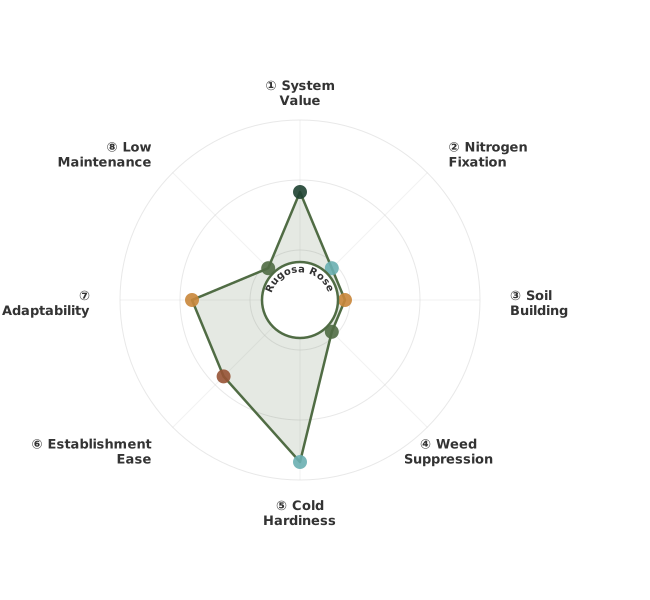
Cold Hardiness Ideally Suited Extremely cold hardy (Zone 2-9), reliably surviving harsh winters while contributing to soil building and erosion control through dense biomass. Its resilience supports a thriving soil ecosystem.
Weed Suppression Not Recommended Its tough, thorny growth habit forms dense patches that can outcompete some weeds, contributing to a more diverse ground cover over time. This natural competition reduces the need for external interventions.
Nitrogen Fixation Not Recommended While not a nitrogen fixer, Rugosa rose contributes valuable organic matter and ground cover, enhancing soil structure and supporting the broader soil microbial community.
Root System Depth Adequate Possesses a robust, moderately deep root system that effectively stabilizes soil, improves water infiltration, and scavenges existing soil nutrients, contributing to overall soil health and resilience.
Biomass Production Not Recommended As a woody shrub with dense growth, its biomass provides long-term soil organic matter and habitat, contributing to a stable soil structure that supports beneficial soil life.
Establishment Ease Adequate Establishes readily from seed or cuttings with minimal soil disturbance, its vigorous growth naturally building soil structure and contributing to weed suppression once established.
Multi Benefit Value Adequate Offers edible hips, attracts pollinators, and provides valuable wildlife habitat, while its biomass contributes to erosion control and soil health, embodying a truly integrated system component.
Climate Adaptability Ideally Suited Exceptional adaptability across zones 3-9, tolerating cold, heat, salt spray, and varied moisture conditions, demonstrating resilience that supports soil ecosystem stability in diverse environments.
Maintenance Intensity Ideally Suited Naturally vigorous and disease-resistant, it thrives with minimal intervention, its resilience and adaptation reducing the need for external inputs and integrating seamlessly into a low-input system.

Comparative System: Ratings compare plants within their economic category (e.g., cover crop nitrogen fixation compared to other cover crops, not to all plants). Individual farm conditions and management practices significantly influence actual performance.

8

Learn More

Why farmers use this plant and additional resources

Why Regenerative Farmers Use This Plant

Rosa rugosa, commonly known as the beach rose or rugosa rose, offers significant regenerative benefits when integrated into agricultural systems, primarily as a hardy, multi-functional perennial shrub. Its vigorous growth and ability to thrive in marginal conditions make it an excellent choice for establishing resilient farm boundaries and providing essential ecological services.

Nutrient Cycling and Soil Health: While not a nitrogen-fixing legume, its deep root system, often reaching 6-10 feet (1.8-3 meters) in established plants, excels at scavenging nutrients from deeper soil profiles, bringing them to the surface where they can be utilized by other plants or incorporated into the topsoil upon decomposition. This nutrient cycling action can reduce the reliance on synthetic fertilizers for adjacent crops or pastures, potentially saving farmers an estimated $20-50 per acre annually in nutrient costs by improving nutrient availability. The deep roots also help to break up compacted soil layers, improving aeration and drainage, and reducing the need for costly mechanical tillage. Over a 3-5 year rotation, its persistent ground cover contributes to soil structure improvement and the slow accumulation of organic matter through leaf and stem decomposition. As a perennial, it maintains living root systems year-round, actively sequestering carbon in the soil and reducing the risk of nutrient leaching. In areas prone to runoff, the dense canopy and root structure act as a natural filter, improving water quality by reducing sediment and nutrient transport into waterways.

Erosion Control and Habitat Creation: Its dense, thorny growth habit forms an effective barrier against wind and water erosion, protecting valuable topsoil and stabilizing slopes and exposed areas. The significant biomass produced by mature shrubs, which can reach 5-15 feet (1.5-4.5 meters) in height and width, contributes to soil organic matter as it decomposes over time, especially when pruned material is incorporated into the soil. This woody biomass contributes to soil organic matter, enhancing soil structure, water-holding capacity, and microbial activity.

Biodiversity and Beneficial Insect Support: The prolific flowering and fruiting (hips) of Rosa rugosa offer crucial late-season food and shelter for a wide array of beneficial insects and pollinators, including bees and butterflies, contributing to a more biodiverse and resilient farm ecosystem. Studies have shown that dense hedgerows, such as those formed by Rosa rugosa, can harbor significantly higher numbers of predatory insects like ladybugs and lacewings, which naturally control pest populations in nearby fields. The abundant flowers are a significant draw for pollinators, providing nectar and pollen throughout its blooming season, which can extend from late spring into fall. The rose hips produced are a valuable food source for birds and other wildlife throughout the winter, aiding in seed dispersal and maintaining avian populations.

Windbreak and Microclimate Benefits: Its dense growth habit makes it an excellent choice for establishing windbreaks. It can reduce wind speed across fields by up to 50%, mitigating wind erosion and creating microclimates that can benefit adjacent crops. This windbreak effect can lead to improved crop yields, with studies on various crops showing yield increases of 5-15% in sheltered areas.

Livestock and Wildlife Benefits: In silvopasture systems, the shade and browse provided by Rosa rugosa can improve livestock comfort and health, though its thorny nature requires careful management. Its thorny nature also makes it an effective deterrent against livestock and wildlife, protecting crops and pastures.

Secondary Economic Benefits: In parts of Europe, it is also cultivated for its vitamin C-rich hips, adding a secondary economic benefit to its ecological functions.

Regional Adaptations:

  • UK: Frequently used in hedgerows bordering arable fields, providing windbreaks and habitat for wildlife, complementing cereal crop rotations. Integrated into traditional hedgerows alongside hawthorn and blackthorn, offering early spring blooms for pollinators and late-season hips for birds.
  • North America: Employed in conservation plantings and along farm edges to prevent soil loss and support pollinators. Valued in coastal regions for its salt tolerance and erosion control along shorelines and farm edges. Farmers in coastal regions of the Pacific Northwest, USA, have utilized it to stabilize sand dunes and prevent soil loss, creating natural barriers that also support local wildlife. In Iowa, USA, it's planted as part of multi-species hedgerows in corn-soybean rotations.
  • Australia: Explored in agroforestry systems and as a hardy component of shelterbelts, particularly in areas prone to erosion. In dryland farming systems, its drought tolerance and deep root system make it suitable for establishing windbreaks on vulnerable sandy soils, protecting crops from wind damage and reducing topsoil loss. Farmers in cooler, temperate zones have experimented with it in windbreaks for dryland cropping systems, noting its ability to reduce soil desiccation and protect young seedlings.
  • New Zealand: Valued for its resilience in coastal and exposed environments, contributing to biodiversity and soil health in mixed farming operations.
  • Europe: Utilized in hedgerows and field borders for its resilience to salt spray and wind, providing habitat for birds and beneficial insects.
  • South America: Explored in agroforestry systems for its potential to improve soil structure and provide habitat in coffee plantations. In temperate regions of Argentina, it can be used in windbreaks for vineyards or fruit orchards.
  • Canada: Valued for its ability to withstand severe winters and establish quickly in colder climates.
9

How to Integrate This Plant

Practical guidance for regenerative systems

Establishing Rosa rugosa can be achieved through several methods, with seed, cuttings, or bare-root transplants being common. For effective establishment in windbreaks or hedgerows, spacing of 3-8 feet (0.9-2.4 meters) between plants is recommended, with rows spaced 6-10 feet (1.8-3 meters) apart. For dense plantings, approximately 200-400 plants per acre is a common target.

Planting Methods and Timing:

  • Seed: For direct seeding, rates typically range from 1-2 ounces per square foot (30-60 grams per square meter) for broadcast applications, or approximately 0.5-1 lb/acre (0.56-1.12 kg/ha) if sown in rows. Planting depth for seeds should be shallow, around 0.25-0.5 inches (0.6-1.3 cm), ensuring good seed-to-soil contact. Stratification is usually required for seed propagation, with planting occurring in early spring.
  • Cuttings/Transplants: Cuttings or bare-root transplants are often planted in the early spring or fall. When planting young plants, spacing them 3-6 feet (0.9-1.8 meters) apart is recommended for a dense barrier. Planting depth should ensure the root ball is covered with approximately 1-2 inches (2.5-5 cm) of soil, ensuring good contact with the soil. For container-grown shrubs, planting depth should ensure the root ball is covered by approximately 2-4 inches (5-10 cm) of soil. The ideal planting window is typically in early spring as the soil becomes workable, or in the fall before the ground freezes, allowing roots to establish before the stress of summer heat or winter cold.

Establishment and Growth: Rosa rugosa establishes relatively quickly, with noticeable growth within the first year and significant maturity reached within 3-5 years. While it is drought-tolerant once established, providing supplemental water during prolonged dry spells, especially for young plants, can promote vigorous growth. For young plants, supplemental watering of 1 inch (2.5 cm) per week during prolonged dry spells in the first year can aid establishment.

Management:

  • Pruning: Pruning is important to maintain plant health, encourage flowering, and manage size, typically done in late winter or early spring before new growth begins. For windbreak or hedgerow purposes, annual pruning to maintain height and density is beneficial, typically cutting back to 3-5 feet (0.9-1.5 meters) to encourage bushier growth.
  • Fertility: Fertility needs are generally low; it thrives in a variety of soil types, including sandy or poor soils, and does not require significant synthetic fertilization. Compost or well-rotted manure can be applied as a top dressing in the early spring to support vigorous growth, but excessive nitrogen can lead to leggy, less dense growth.
  • Pest and Disease Management: Pest and disease management is generally minimal, with its thorny nature and resilience offering natural protection. Biological controls and good air circulation through pruning are the most effective preventative measures.
  • Biomass Management: When pruning or managing older growth, the woody material can be chipped and used as mulch, which slowly decomposes, releasing carbon and nutrients into the soil over 6-12 months. This slow release contributes to soil organic matter buildup. The pruned material, rich in organic matter, can be chipped or composted and returned to the soil around the base of the plants or incorporated into adjacent beds.

Integration into Systems:

  • Perennial Systems: As a perennial shrub, Rosa rugosa's integration into regenerative systems focuses on its long-term benefits rather than a typical cover crop termination cycle. Its role is often as a permanent or semi-permanent fixture in hedgerows, windbreaks, or silvopasture edges.
  • Cover Cropping: Its integration into cover cropping systems is indirect, primarily through its role in perennial buffer strips, hedgerows, or as a component of multi-strata agroforestry systems. Its termination is not typically a concern as it is managed as a permanent feature.
  • Clearing: If Rosa rugosa is being cleared from an area, the hierarchy would apply: natural dieback in harsh winters, followed by mechanical removal (mowing or cutting) if necessary, with herbicide being a last resort. Herbicide use is strongly discouraged and should only be considered as a last resort during a transitional phase if invasive spread is a significant issue, and even then, targeted application is crucial.
  • Seed Management: Seed management is generally not a concern as its primary role is not annual reseeding, but rather persistent perennial growth. It is usually propagated vegetatively, and any volunteer seedlings can be easily managed or allowed to establish if desired.