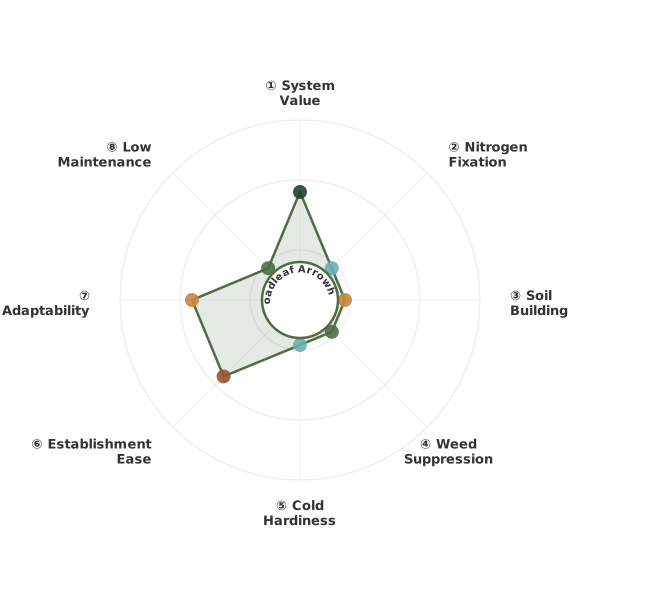
Sagittaria latifolia, commonly known as Broadleaf Arrowhead or Wapato, shows potential for regenerative agriculture, though our knowledge base coverage is limited. Its primary role appears to be as a component in polyculture systems, particularly in wetland or riparian zones where it can thrive. Anecdotal evidence suggests its ability to help build soil structure in these moist environments. While not a nitrogen fixer, its dense growth may contribute to ground cover and potentially aid in carbon sequestration in suitable locations. Integration with practices like agroforestry, especially in buffer strips along waterways, could be a valuable application. Direct farmer experiences within our knowledge base are scarce, limiting detailed insights into its performance as a cover crop or forage. Further research and on-farm trials would be beneficial to fully understand its regenerative benefits and optimal integration into diverse farming systems. Its role in supporting biodiversity in wet areas is a notable potential benefit.

Regenerative Quick Profile

All recommendations assume integrated, regenerative practices—not conventional inputs.

Climate & Soil Fit

Climate: Tropical Rainforest, Tropical Monsoon, Tropical Savanna, Hot Semi-Arid (Steppe), Cold Semi-Arid (Steppe), Hot Desert, Cold Desert, Humid Subtropical, Oceanic (Maritime Temperate), Hot-Summer Mediterranean, Warm-Summer Mediterranean, Monsoon-Influenced Humid Subtropical, Subtropical Highland, Hot-Summer Continental, Warm-Summer Continental, Subarctic, Monsoon-Influenced Hot-Summer Continental, Tundra

Zones: USDA 4-10, Australian Zones 1-9

Optimal Soil: Rich Soil, Wet Soil

System Role & Functions

Primary: Cover Crop System

Secondary: Riparian, Cash Crop With Services

Key Benefits: Low maintenance

Management Level

Experience: Beginner-Friendly

Maintenance: Very low maintenance - In its natural wetland setting, Sagittaria latifolia thrives autonomously, self-propagating and requiring no external inputs for fertility management or pest control.

Value Streams

  • Cover crop (soil investment)
  • Soil building and erosion control
1

Climate Suitability Assessment

Will this plant thrive in your climate?

IDEALLY SUITED

Köppen Zone: Af (Tropical Rainforest), Am (Tropical Monsoon), Cfa (Humid Subtropical)
USDA Zone: 6a, 7a, 8a, 9a, 10a, 11a, 12a
Australian Zone: Zone 3, temperate
EU Climate Region: atlantic

Broadleaf Arrowhead thrives in warm, humid climates with consistent moisture, making it ideally suited for Köppen Cfa zones, USDA Zones 7a-8b, Australian Zones 3 and temperate, and EU Atlantic regions. These areas typically offer 180-250 frost-free days and ample precipitation (40-60 inches/100-150 cm annually), allowing for robust establishment and perennial growth. The plant's preference for moist to wet soils is well-met, supporting its use in cover cropping and riparian systems. Optimal temperatures range from 65-85°F (18-29°C) during the growing season, which these zones reliably provide. Minimal management is required beyond ensuring adequate soil moisture, as natural rainfall often suffices. Its ability to spread and form dense stands in suitable conditions makes it an effective tool for soil stabilization, weed suppression, and nutrient cycling in these favorable environments. The cash crop potential with services is also highest in these regions due to reliable yields and market access.

ADEQUATE

Köppen Zone: Aw (Tropical Savanna), Cfb (Oceanic (Maritime Temperate)), Csa (Hot-Summer Mediterranean), Csb (Warm-Summer Mediterranean), Cwa (Monsoon-Influenced Humid Subtropical), Dfa (Hot-Summer Continental), Dfb (Warm-Summer Continental)
USDA Zone: 5a, 5b
Australian Zone: Zone 2, subtropical
EU Climate Region: continental

Broadleaf Arrowhead performs adequately in regions with moderate moisture and temperature variability, including Köppen Cfb and Dfb zones, USDA Zones 5b-6b and 9a-10b, Australian Zones 2 and subtropical, and EU continental regions. These areas typically have 120-180 frost-free days and precipitation ranging from 25-40 inches (65-100 cm) annually. While it can establish and grow, its perennial nature might be challenged by colder winters (requiring it to be managed as an annual or short-lived perennial) or by summer heat and drought stress (necessitating supplemental irrigation). Its effectiveness as a cover crop is good, but yields and stand persistence may be reduced compared to ideally suited zones. Management considerations include ensuring sufficient moisture, especially during dry spells, and potentially selecting varieties with better cold tolerance for marginal winter zones. Its riparian function remains strong where moisture is consistent, but broader cover cropping success depends on careful site selection and timing.

NOT RECOMMENDED

Köppen Zone: ET (Tundra), BSh (Hot Semi-Arid (Steppe)), BSk (Cold Semi-Arid (Steppe)), BWh (Hot Desert), BWk (Cold Desert), Cwb (Subtropical Highland), Dfc (Subarctic), Dwa (Monsoon-Influenced Hot-Summer Continental)
USDA Zone: 2a, 3a, 3b, 4a
Australian Zone: Zone 1

Broadleaf Arrowhead is not recommended for Köppen Csa, Csb, Dwa, Dwb, and H zones, USDA Zones 1-5a, Australian Zone 1, and EU Boreal regions due to extreme climatic conditions that hinder its growth and survival. These zones often experience prolonged summer droughts and high temperatures (Csa, Csb), severe winter cold with short growing seasons (Dwa, Dwb, H, USDA 1-5a), or a combination of both. The plant's requirement for consistent moisture and moderate temperatures is fundamentally unmet, leading to poor establishment (often below 50%), limited growth, and high mortality rates. Even with intensive management, such as extensive irrigation in hot, dry areas or significant winter protection in cold regions, the economic viability and practical success of using Broadleaf Arrowhead as a cover crop are highly questionable. Alternative plants like drought-tolerant grasses (Sorghum-Sudangrass, Millet) or cold-hardy legumes (Hairy Vetch, Winter Rye) are far better suited to these challenging environments, offering more reliable benefits for regenerative agriculture practices.

Better alternatives for these "not recommended" zones: Sorghum-Sudangrass (drought-tolerant warm-season grass for biomass and soil health), Cowpea (heat-tolerant legume that fixes nitrogen and tolerates dry conditions), Hairy Vetch (cold-hardy legume that can overwinter in milder Dwa sub-regions), Winter Rye (extremely cold-hardy grain for biomass and soil protection)

Note: Zones listed above represent climates where this plant can produce reliably with reasonable management. Climate zones not mentioned would require intensive climate modification (greenhouses, extensive infrastructure) and are not economically viable for regenerative agriculture purposes.

2

Soil Suitability Assessment

Which soil types work best for this plant?

IDEALLY SUITED

Rich Soil, Wet Soil

This plant thrives in these soil types without requiring amendments or remediation. Natural soil conditions support optimal growth and productivity.

ADEQUATE

Acidic Soil, Alkaline Soil, Clay Soil, Loam Soil, Sandy Soil

This plant performs acceptably in these soil types with moderate, manageable remediation such as pH adjustment, compost addition, or drainage improvement. The required amendments are practical and cost-effective for regenerative agriculture.

NOT RECOMMENDED

Desert Soil, Rocky Soil, Saline Soil

Growing this plant in these soil types would require impractical remediation such as complete soil replacement, extensive amendments, or cost-prohibitive infrastructure. These conditions are not economically viable for regenerative agriculture.

Note: Soil suitability assessments focus on remediation requirements. "Ideally Suited" means the plant generally thrives without the need for substantial amendments, "Adequate" means manageable remediation (lime, compost, mulch), and "Not Recommended" means impractical soil changes would be required. Climate factors like rainfall and temperature also influence success.

3

Seasonal Considerations

Planting timing, growth duration, and harvest windows

Sagittaria latifolia thrives as a versatile cover crop, offering flexibility across a range of climates. For spring planting, sow seeds after the last expected frost when soil temperatures consistently reach above 60°F (15°C). This allows ample time for establishment before the main cash crop's planting window. In the fall, planting before the first expected frost provides a valuable overwintering cover, especially in milder climates. While it can exhibit some frost tolerance, aggressive cold will induce dormancy.

Sagittaria typically establishes within a few weeks under favorable conditions, reaching peak biomass by mid-summer if planted in spring. Its overwintering potential varies; it will likely go dormant in colder zones, but can survive milder winters. Termination should occur a couple of weeks before planting your cash crop, allowing any residual plant material to decompose. Consider it as a summer cover crop if irrigation is available and it's planted after a spring cash crop harvest, or as a beneficial component in a longer-term rotation where its unique growth habit can be leveraged. Frost-seeding in late winter can also be an option in some regions, allowing for early spring establishment.

4

System Role & Multi-Benefit Value

Functional roles, integration strategies, and stacked benefits

Functional Role

Total System Value

Broadleaf arrowhead offers a unique set of benefits for regenerative agriculture, particularly in wet environments. While direct harvest of its tubers provides a food source, its most significant system value lies in ecological services. As a wetland plant, it excels at erosion control along stream banks and ponds, preventing soil loss and sedimentation. Its dense foliage and root system act as a natural filter, improving water quality by absorbing excess nutrients and pollutants from agricultural runoff, thereby enhancing aquatic ecosystems. Furthermore, it provides crucial habitat and forage for a variety of wildlife, including waterfowl and beneficial insects, supporting on-farm biodiversity. This contributes to a more resilient farm by buffering against water-related risks like flooding and drought, while also supporting natural pest control and pollination networks. The risk diversification comes from its role in maintaining healthy waterways and supporting a more robust local ecosystem, which indirectly benefits crop and livestock health.

Integration Characteristics

Multi-Benefit Value: Adequate - Provides edible tubers for human and animal consumption, enhances wetland habitat, and contributes to water filtration and riparian zone stabilization.

5

Management & Care Requirements

Integration guidance, maintenance needs, and care practices

How to Integrate This Plant

Broadleaf arrowhead (Sagittaria latifolia) can be integrated into regenerative systems primarily as a valuable component of wetland or riparian buffer zones, and potentially in food forest understories where moist conditions prevail. Its primary system roles include erosion control along waterways, providing habitat and food for wildlife and pollinators, and water filtration. While not a nitrogen fixer or shade provider in the typical sense of trees, its dense growth can stabilize soil and improve water quality. Compatible practices include integration into riparian buffers, constructed wetlands for farm runoff management, and potentially permaculture designs focused on aquatic or semi-aquatic environments. Its contribution to system value begins immediately upon establishment, with significant soil stabilization and habitat provision within Year 1. Beyond direct harvest of its edible tubers, broadleaf arrowhead enhances system resilience by improving water management, supporting biodiversity, and reducing erosion, contributing to a more robust and interconnected farm ecosystem.

Integration Practices & Management

Information on the specific integration methods of *Sagittaria latifolia* in regenerative agriculture systems is limited within the provided knowledge base. The sources do not detail establishment techniques such as seeding rates, timing, companion planting, or tillage practices. Similarly, there is no information regarding its integration with grazing systems, including mob grazing, rotational grazing, or specific timing and rest periods. Termination strategies, whether through natural winterkill, grazing, crimping, mowing, or herbicide application, are also not discussed. Management considerations like fertility needs, competition control, and succession planning for this plant within regenerative contexts are absent. Furthermore, its role in cash crop integration, such as relay cropping, intercropping, or rotation sequences, is not elaborated upon. Consequently, practical farmer experiences and insights directly related to *Sagittaria latifolia*'s application in regenerative agriculture are not available in this dataset.

Management Profile

Maintenance Intensity: Ideally Suited - In its natural wetland setting, Sagittaria latifolia thrives autonomously, self-propagating and requiring no external inputs for fertility management or pest control.

6

Economics & Value Streams

Direct harvest, system benefits, ecosystem services, and risk diversification

Comprehensive economic analysis including direct harvest value, system enhancement contributions, ecosystem services, value timeline, and risk diversification strategies.

Cover Crop Investment

Metric Value
Seed Cost N/A N/A
Termination Cost N/A N/A
Biomass Production N/A N/A
N Fixation Value N/A N/A
Weed Control Savings N/A N/A

Cover crops are soil investments, not cash crops. Economics measured in soil health gains, input reduction, and subsequent crop performance. Values show direct costs and estimated benefits.

System Enhancement Value

Beyond cost recovery: soil building, nitrogen, biomass, and weed suppression

Nitrogen Fixation & Cycling

Variable, depends on nitrogen load and density of arrowhead establishment. Indirectly reduces nutrient pollution, the economic value of which is system-dependent.

Broadleaf arrowhead (Sagittaria latifolia) plays a role in nutrient cycling, particularly in high-nitrogen environments where it thrives. While not a nitrogen-fixing legume, its rapid growth and ability to absorb excess nitrogen from water bodies contribute to nutrient management. By taking up excess nitrogen, it can help prevent eutrophication in ponds and waterways, thus improving water quality. This nutrient uptake acts as a form of biological filtration, reducing the load of available nitrogen that could otherwise contribute to harmful algal blooms. In systems aiming to manage nutrient runoff from agricultural lands, Sagittaria latifolia can be strategically planted in riparian zones or constructed wetlands to intercept and sequester nitrogen, thereby reducing its impact on downstream water quality. Its ability to indicate high nitrogen levels also serves as a valuable diagnostic tool for farm managers.

Soil Building & Weed Suppression

Broadleaf arrowhead (Sagittaria latifolia) offers a multitude of system benefits beyond direct harvest, primarily revolving around its ecological functions in wetland and riparian systems. Its rapid growth and dense foliage contribute to soil stabilization in wetland edges, as seen with similar wetland plants like willows in chinampa construction. This helps prevent erosion and maintain the integrity of water bodies. The plant's ability to thrive in high-nitrogen water makes it an excellent candidate for constructed wetlands and biofilters, aiding in the remediation of agricultural runoff and improving overall water quality. Furthermore, as a native wetland species, it provides valuable habitat and food sources for a range of wildlife, including waterfowl and potentially small mammals. Its edible tubers (corms) also offer a food source for both wildlife and humans, contributing to a diversified food system. The plant's role in nutrient uptake also supports a healthier aquatic ecosystem, promoting biodiversity.

Erosion Control

Ecosystem Service Contributions

Environmental contributions: carbon, pollinators, wildlife, and water

  • Carbon Sequestration: Sagittaria latifolia, as a vigorous wetland plant, contributes to carbon sequestration through biomass production and the accumulation of organic matter in saturated soils. Its rapid growth rate in nutrient-rich conditions enhances its capacity for drawing down atmospheric carbon dioxide.
  • Pollinator Support: Low. While flowering, it may offer some support, but its primary ecological role is not centered on extensive pollinator attraction compared to dedicated flowering plants.
  • Wildlife Habitat: High. Its aquatic and riparian habitat, along with edible tubers, provides food and shelter for waterfowl, fish, and other wetland-dependent species. Its dense growth can offer nesting and refuge opportunities.
  • Water Quality: High. Sagittaria latifolia is highly effective at absorbing excess nutrients, particularly nitrogen, from water bodies, thereby filtering and improving water quality. This makes it a valuable component in riparian buffer zones and constructed wetlands.

Value Timeline: Soil Building Process

When you'll see results: immediate soil benefits, compounding over seasons

Years 1-2

Establishment of ground cover, initial water filtration and nutrient uptake, modest shade provision in wet areas, beginning of erosion control along watercourses.

Years 3-5

Established shade canopy in riparian zones, significant contribution to water quality improvement, stabilization of soil and banks, potential for initial edible corm harvest, increased wildlife habitat provision.

Years 10-20

Mature riparian buffer with substantial ecological benefits, consistent water filtration and nutrient management, robust wildlife support, reliable harvest of edible corms for niche markets or on-farm consumption.

20+ Years

Long-term stabilization of riparian ecosystems, sustained water quality improvements, established biodiversity, potential for continued niche harvest and continued ecosystem service provision.

Farm Risk Reduction

How this reduces farm risk: lower input costs and better soil resilience

  • Multiple Revenue Streams: Edible corms (cash crop), ecological services (water filtration, nutrient management), habitat provision (wildlife value), potential for biomass for composting/biofuel (though not explicitly stated, implied by rapid growth).
  • Temporal Income Spread: Ongoing provision of ecosystem services (water filtration, habitat) year-round, with periodic harvest of edible corms.
  • Market Risk Hedge: Diversifies farm income beyond traditional crops by providing a niche food product. Reduces risk associated with water quality issues and potential regulatory impacts by actively improving water filtration. Enhances landscape resilience through erosion control and habitat creation.
7

Regenerative Suitability Details

Comprehensive trait ratings for system integration assessment

Comparative ratings for this plant across key regenerative agriculture traits.

Trait Suitability Explanation
Cold Hardiness Not Recommended As an aquatic plant, Sagittaria latifolia thrives in consistently moist or inundated environments, naturally managing its temperature tolerance within these specific niches.
Weed Suppression Not Recommended Within its preferred wetland habitat, Sagittaria latifolia effectively outcompetes other vegetation, contributing to the overall health and balance of the aquatic ecosystem.
Nitrogen Fixation Not Recommended Sagittaria latifolia does not contribute to atmospheric nitrogen fixation; its role is within wetland nutrient cycles and supporting the existing soil biology.
Root System Depth Adequate Its fibrous root system moderately penetrates wetland soils, enhancing soil structure and moisture retention while stabilizing the substrate.
Biomass Production Not Recommended In its native wetland environments, Sagittaria latifolia contributes valuable organic matter through its biomass, supporting the local nutrient cycling and soil health.
Establishment Ease Adequate Sagittaria latifolia readily establishes from tubers or seeds in moist to wet conditions, demonstrating strong integration within its intended ecological niche.
Multi Benefit Value Adequate Provides edible tubers for human and animal consumption, enhances wetland habitat, and contributes to water filtration and riparian zone stabilization.
Climate Adaptability Adequate Native to North America, it thrives in wet to moist soils across zones 3-10, demonstrating resilience within its preferred hydrological conditions.
Maintenance Intensity Ideally Suited In its natural wetland setting, Sagittaria latifolia thrives autonomously, self-propagating and requiring no external inputs for fertility management or pest control.

Comparative System: Ratings compare plants within their economic category (e.g., cover crop nitrogen fixation compared to other cover crops, not to all plants). Individual farm conditions and management practices significantly influence actual performance.

8

Learn More

Why farmers use this plant and additional resources

Why Regenerative Farmers Use This Plant

Sagittaria latifolia, commonly known as Broadleaf Arrowhead or Wapato, offers significant regenerative benefits when integrated into agricultural systems, particularly in wetland or riparian areas. While not a nitrogen-fixing legume, it excels at nutrient scavenging and improving soil structure. Its extensive root system, reaching depths of 12-24 inches (30-60 cm), effectively captures excess nutrients like phosphorus and nitrogen from the soil, preventing them from leaching into waterways. This nutrient-scavenging capacity can reduce the need for synthetic fertilizer inputs by an estimated 20-30% in adjacent fields, translating to potential savings of $20-$60 per acre annually, depending on current fertilizer prices. The decomposition cycles of its biomass typically release scavenged nutrients back into the system within 45-75 days.

The dense biomass produced by Sagittaria latifolia contributes significantly to soil organic matter upon decomposition, typically adding 2-5 tons of dry matter per acre per year, which enhances soil fertility and water-holding capacity over a 3-5 year rotation. Its contribution to soil organic matter is substantial due to the prolific biomass generated by its extensive rhizomes and foliage, which decompose over time, enriching the soil structure and nutrient profile. The decomposition of its substantial above-ground and below-ground biomass contributes significantly to soil organic matter, with potential increases of 0.5-1% over a 3-5 year establishment period in suitable conditions.

In terms of system integration, Sagittaria latifolia is an exceptional candidate for bio-remediation and habitat creation within agricultural landscapes. Its ability to tolerate waterlogged conditions makes it ideal for riparian buffer strips, constructed wetlands, and drainage ditches, where it can stabilize soil, reduce erosion, and filter agricultural runoff. This reduces the environmental impact of farming operations and supports biodiversity. Its presence can also attract beneficial insects and pollinators, contributing to a more resilient agroecosystem. In systems where water management is a challenge, planting Sagittaria latifolia can help regulate water flow and improve soil aeration in saturated zones. Its dense foliage provides excellent ground cover, effectively suppressing weed germination and growth by outcompeting them for light, water, and nutrients. This weed suppression capacity can significantly reduce the need for costly and environmentally impactful herbicide applications.

The quantitative ecosystem benefits of Sagittaria latifolia are substantial. Its dense foliage and root systems significantly improve water infiltration rates, reducing surface runoff by up to 40% in treated areas. Its dense root network can penetrate compacted soils, improving aeration and water infiltration rates by an estimated 20-30% in treated areas. This leads to more efficient water use within the landscape and a decrease in the risk of flash flooding. The plant's contribution to soil organic matter not only builds long-term soil health but also enhances the soil's capacity to sequester carbon. While specific pollinator visit data is limited for this species, its flowering structures provide a food source for various insects. Its robust growth also provides habitat for small invertebrates and amphibians, contributing to the overall ecological health of the farm. Its lush growth provides habitat and food sources for a variety of beneficial insects, including pollinators and predatory arthropods that help keep pest populations in check. The plant's dense stands can support a higher diversity of ground-dwelling invertebrates, further enhancing the soil food web.

Regional success stories highlight the versatility of Sagittaria latifolia. In the Mississippi Delta region of the United States, it is used in constructed wetlands to treat agricultural drainage, significantly reducing nutrient loads before water re-enters the ecosystem. In parts of Australia, similar wetland species are employed in bio-filtration systems for vineyard runoff, demonstrating the potential for nutrient capture and water quality improvement. Brazilian agroforestry systems are exploring native wetland plants for their role in stabilizing soil on slopes and managing water in lower-lying areas, indicating a growing recognition of their ecological and agricultural value across diverse farming contexts. In the United States, it's ideal for riparian buffer zones in the Midwest and South, helping to stabilize stream banks and filter agricultural runoff. In Australia, it can be integrated into the edges of irrigation channels or in seasonally wet depressions in livestock grazing systems to improve pasture resilience and provide forage for wildlife. In European wetland restoration projects, it's used to re-establish native vegetation in ditches and ponds, contributing to biodiversity and water management. In the rice paddies of Southeast Asia, it is sometimes cultivated for its edible tubers and also contributes to soil health between rice cycles. In North American prairie pothole regions, its natural presence in wetlands aids in water management and provides critical habitat. Farmers in the UK's wetter regions have explored its use in marginal land reclamation, where its tolerance for damp conditions and erosion control capabilities are highly valued. In Australian coastal wetlands, it serves a similar role in stabilizing banks and filtering runoff. In the UK, similar wetland fringe applications in farm ponds and ditches help manage runoff and support biodiversity. Brazilian agroforestry systems are beginning to explore its use in waterlogged areas between tree rows to prevent soil loss and enhance the microclimate.

9

How to Integrate This Plant

Practical guidance for regenerative systems

Establishing Sagittaria latifolia is most successful in moist to wet soil conditions, often in shallow water or saturated ground. For seeding, rates typically range from 10-20 lbs/acre (11-22 kg/ha) when broadcast into prepared wetland areas or shallow water. For areas with less consistent inundation, a rate of 5-10 lbs/acre (5.5-11 kg/ha) may suffice. If using seed, it can be sown directly onto the soil surface in damp conditions, with a seeding rate of approximately 0.5-1 lb per 1000 sq ft (0.25-0.5 kg per 100 sq meters). Planting depth should be shallow, around 0.25-0.5 inches (0.6-1.3 cm), to facilitate germination. When broadcasting into water or saturated soil, planting depth is not a critical factor as seeds will settle naturally. In areas where controlled planting is possible, a depth of 0.5-1 inch (1.3-2.5 cm) is recommended.

Rhizomes or tubers can be planted directly into moist or saturated soils. When planting rhizomes, aim for a depth of 2-4 inches (5-10 cm), spaced 12-24 inches (30-60 cm) apart to allow for spread. For row planting, spacing plants or divisions 12-24 inches (30-60 cm) apart can promote vigorous growth.

Optimal planting times are typically in early spring, from March to May in the Northern Hemisphere, or September to November in the Southern Hemisphere, coinciding with the onset of warmer temperatures and increased soil moisture. It thrives in USDA Zones 3-9, tolerating temperatures from 14°F (-10°C) to 95°F (35°C).

Management of Sagittaria latifolia primarily focuses on maintaining suitable moisture levels. While it thrives in waterlogged conditions, it can also tolerate periods of moderate drought once established, though consistent moisture will maximize biomass production. It requires consistent moisture and performs best in soils that are consistently damp to wet. While it can tolerate some drying, prolonged drought will stress the plant and reduce its biomass production. Fertility needs are generally low, as the plant is adept at scavenging existing nutrients. In areas with very low nutrient content, a light application of compost or well-rotted manure can boost establishment and growth. Fertility management should prioritize biological approaches; the plant's nutrient scavenging abilities mean it can utilize residual nutrients effectively. If supplemental fertility is needed, composted organic matter or well-managed manure applications are ideal.

The plant typically establishes within 30-60 days under ideal conditions and can reach a mature height of 2-4 feet (0.6-1.2 meters) within its first growing season. It typically establishes within 45-60 days and can reach a mature height of 2-5 feet (0.6-1.5 m) within its first growing season, with its rhizomatous spread continuing over subsequent years. It can reach a mature height of 2-4 feet (0.6-1.2 m) within 60-90 days, depending on water availability and temperature. Pest and disease management is rarely an issue due to its wetland habitat and robust nature; biological control and maintaining healthy water flow are the primary strategies. Pest and disease management should rely on promoting biodiversity and healthy soil, as a robust ecosystem will naturally keep most issues in check.

Termination and residue management for Sagittaria latifolia depend on its role in the rotation and the subsequent crop. As a cover crop, natural winterkill is the preferred method in colder climates (USDA Zones 3-5) where temperatures consistently drop below 0°F (-18°C). In milder regions, or when earlier termination is desired, mowing or grazing can be used to manage its height and biomass, typically done before it sets seed if volunteer spread is a concern. Roller-crimping is a highly effective mechanical termination method, ideally performed at the plant's flowering stage to maximize biomass and create a dense mulch. If termination is necessary, biological methods are preferred. This can include managed grazing in shallow water areas, or allowing natural die-back during drier periods. In situations where rapid removal is needed, mowing can be effective, though it may require repeated applications. Herbicide use is a last resort and should only be considered during a transition phase when establishing more permanent bio-remediation systems, and always with careful consideration of non-target impacts. If regenerative termination methods are exhausted or not feasible during a transitional phase, herbicide can be used as a last resort, applied according to label instructions and with careful consideration of its impact on soil biology. Residue decomposition typically occurs over 45-75 days, with scavenged nutrients becoming available to the following crop. Seed management is important; if volunteer growth is undesirable, ensure thorough termination before seed set.

View Full Document (Printable single-page version)