
Rye
Cereal rye (Secale cereale) is a cornerstone cover crop in regenerative agriculture, primarily valued for its ability to build soil health and prevent erosion. Farmers like Steve Buerger utilize it extensively in no-till systems to halt erosion on rolling hills and in soybean fields, observing a consistent increase in soil organic matter. Its dense biomass production is critical, serving as a "permanent cover" as seen in Steve Groff's system, where it's planted into with specialized no-till equipment. Cereal rye is also integrated into diverse cropping systems; it can be planted into corn with hairy vetch for biomass and weed control, or interceded into soybeans to boost soil carbon and diversity. Bob Muth incorporates cover crops, generally, into a strict rotation for soil building. Justin uses cover crops, which can include grasses like rye, for grazing livestock, reporting significant weight gains. The roller-crimper is a key tool for terminating rye in no-till systems, allowing for simultaneous cash crop planting, a practice that requires precise timing for optimal results. While not a nitrogen fixer itself, it complements nitrogen-fixing cover crops like vetch in a polyculture approach.
For a full botanical description see: Plants For A Future(opens in new window) (external link)
Regenerative Quick Profile
All recommendations assume integrated, regenerative practices—not conventional inputs.
Climate & Soil Fit
Climate: Tropical Rainforest, Tropical Monsoon, Tropical Savanna, Hot Semi-Arid (Steppe), Cold Semi-Arid (Steppe), Hot Desert, Cold Desert, Humid Subtropical, Oceanic (Maritime Temperate), Hot-Summer Mediterranean, Warm-Summer Mediterranean, Monsoon-Influenced Humid Subtropical, Subtropical Highland, Hot-Summer Continental, Warm-Summer Continental, Subarctic, Monsoon-Influenced Hot-Summer Continental, Tundra
Zones: USDA 2-11, Australian Zones 1-14
Optimal Soil: Loam Soil
System Role & Functions
Primary: Cover Crop System
Secondary: Forage Integration, Cash Crop With Services
Key Benefits: Climate adaptable, Easy establishment, Cold Hardiness
Management Level
Experience: Beginner-Friendly
Maintenance: Moderate maintenance - A resilient cover crop requiring minimal inputs for establishment and growth, rye actively contributes to soil health and fertility management.
Value Streams
- Cover crop (soil investment)
- Soil building and erosion control
- Livestock forage value
Know the Debate
- Rye termination timing varies by climate, crop, and moisture.
- Waiting period needed after tilled rye for decomposition.
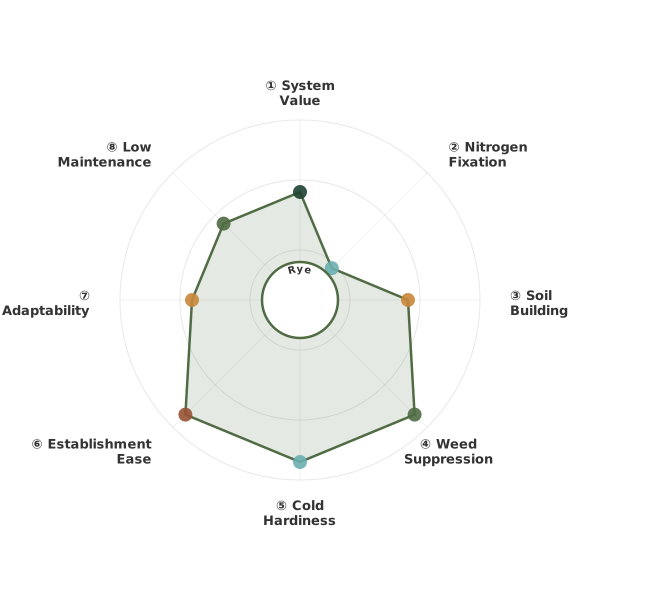
How These Traits Are Calculated
Trait dimensions are ordered clockwise starting from the top of the chart (12 o'clock position):
1. System Value
Ecosystem service stacking across nitrogen, carbon, water, biodiversity
WHAT: Synthesizes the compounding value of multiple ecosystem services delivered simultaneously—nitrogen fixation, soil organic matter building, pollinator support, erosion control, and water infiltration improvement. This is the total regenerative impact beyond single-function metrics.
WHY: The highest-value cover crops deliver 3-5 significant ecosystem services at once. A legume that fixes nitrogen, builds biomass, supports pollinators, and improves water infiltration provides $150-300/acre in combined benefits versus $30-60 for single-function covers. This service stacking is the core principle of regenerative agriculture.
HOW: Scored via LLM synthesis of economics data, timeline benefits, and trait combinations. Exceptional (3.0): 4-5 major services stacked with strong economic value ratios. Typical (2.0): 2-3 moderate services. Limited (1.0): Single-function covers with minimal service stacking. Considers seed cost relative to benefit value.
2. Nitrogen Fixation
Biological nitrogen production via legume root nodule bacteria
WHAT: Measures the ability to convert atmospheric nitrogen (N₂) into plant-available ammonia through symbiotic bacteria in root nodules. Legumes form partnerships with rhizobium bacteria that fix 60-150 lbs N/acre/year, reducing or eliminating synthetic fertilizer needs for following crops.
WHY: Nitrogen is the most expensive fertilizer input in crop production ($0.50-1.00/lb). Cover crops with exceptional nitrogen fixation can provide $60-150/acre worth of fertility while building soil organic matter. This biological process also reduces groundwater contamination from nitrogen runoff and lowers farm carbon footprint.
HOW: Ratings based on annual nitrogen fixation capacity and reliability across soil conditions. Exceptional (3.0): Legumes like hairy vetch, crimson clover, and field peas fixing >100 lbs N/acre/year. Typical (2.0): Moderate fixers like red clover at 60-100 lbs N/acre/year. Limited (1.0): Non-legumes (grasses, brassicas) with zero fixation capacity.
3. Soil Building
Weighted: biomass production (60%) + root system depth (40%)
WHAT: Combines above-ground biomass production with root depth to measure total soil organic matter contribution. Biomass provides surface organic matter, while deep roots deposit carbon at depth and break up compaction layers.
WHY: Soil organic matter is the foundation of regenerative agriculture, improving water retention, nutrient cycling, and biological activity. Each 1% increase in soil organic matter holds an additional 20,000 gallons of water per acre and represents $500-1,000 in fertility value. Deep roots access subsoil nutrients and create channels for water infiltration.
HOW: Weighted formula prioritizes biomass production (60% weight) for immediate organic matter contribution, with root depth (40% weight) for long-term soil structure. Exceptional (3.0): High-biomass crops with deep roots like cereal rye (8+ tons biomass, 5+ ft roots). Typical (2.0): Moderate on both factors. Limited (1.0): Low biomass or shallow roots.
4. Weed Suppression
Physical competition through rapid establishment and dense growth
WHAT: Measures the ability to outcompete weeds through rapid germination, aggressive early growth, and dense canopy formation. Physical smothering and light competition reduce weed pressure without herbicides.
WHY: Weed management is a major labor and cost burden for farmers. Cover crops that effectively suppress weeds reduce herbicide costs ($20-60/acre), decrease cultivation passes (fuel + labor), and provide clean seedbeds for cash crops. This is especially valuable in organic systems where herbicide options are limited.
HOW: Ratings based on germination speed, tillering density, and canopy closure timing. Exceptional (3.0): Fast-establishing, dense-tillering crops like cereal rye, oilseed radish that close canopy within 3-4 weeks. Typical (2.0): Moderate establishment and coverage. Limited (1.0): Slow-establishing or sparse crops that allow weed competition.
5. Cold Hardiness
Winter survival for fall planting and spring green manure value
WHAT: Measures tolerance to freezing temperatures and ability to survive winter conditions. Winter-hardy cover crops can be fall-planted, overwinter as living mulch, and provide early spring growth before cash crop planting.
WHY: Fall-planted winter-hardy covers extend the growing season into unused months, capturing solar energy and preventing erosion during wet periods. Spring green manure from overwintered covers provides early nitrogen and biomass. This timing flexibility is critical in cold climates with short growing seasons.
HOW: Ratings based on minimum survival temperature and winter active growth. Exceptional (3.0): Winter-hardy crops like cereal rye, hairy vetch, crimson clover surviving to -20°F with active growth in spring. Typical (2.0): Moderate cold tolerance. Limited (1.0): Warm-season crops like buckwheat, cowpea killed by first frost.
6. Establishment Ease
Germination speed, soil requirement flexibility, planting window breadth
WHAT: Measures how easily the cover crop establishes from seed, including germination speed, tolerance for variable soil conditions, and flexibility in planting timing. Easy establishment means reliable stands without intensive management.
WHY: Difficult-to-establish covers increase risk of stand failure, wasted seed costs, and reduced benefits. Easy establishment crops tolerate late planting, poor seedbed preparation, and variable moisture—critical when cover cropping windows are narrow between cash crops. Reliable establishment ensures consistent soil building and weed suppression benefits.
HOW: Ratings based on days to emergence, soil condition sensitivity, and planting window breadth. Exceptional (3.0): Fast germinators like buckwheat (3-5 days) and cereal rye (5-7 days) with wide planting windows. Typical (2.0): Moderate establishment requirements. Limited (1.0): Slow or finicky establishers requiring precise conditions.
7. Adaptability
Weighted: climate tolerance (60%) + multi-benefit versatility (40%)
WHAT: Combines climate adaptability (temperature and rainfall range) with multi-benefit versatility (diverse ecosystem services) to measure overall system flexibility. High adaptability means the cover works across farm regions and provides multiple functions.
WHY: Farmers need cover crops that work reliably across diverse fields and provide stacked benefits. Climate-adaptable covers reduce risk in variable weather, while multi-benefit crops deliver nitrogen fixation + pollinator support + forage value simultaneously. This versatility maximizes return on cover crop investment.
HOW: Weighted formula prioritizes climate tolerance (60% weight) for geographic reliability, with multi-benefit value (40% weight) for functional stacking. Exceptional (3.0): Wide climate range + multiple significant benefits. Typical (2.0): Moderate on both factors. Limited (1.0): Narrow climate range or single-function crops.
8. Low Maintenance
Inverted from maintenance intensity—low inputs mean high scores
WHAT: Measures minimal input requirements for successful cover cropping. Low-maintenance covers require no irrigation, minimal fertility, easy termination, and tolerate variable management timing.
WHY: Cover crops compete for resources with cash crops in tight rotations. Low-maintenance covers fit easily into existing systems without adding labor, equipment, or input costs. Easy termination is especially critical—covers that are difficult to kill can become weeds and delay cash crop planting.
HOW: Inverted score from maintenance intensity trait (4.0 minus raw score). Exceptional (3.0): Self-sufficient crops like cereal rye, field peas requiring no irrigation or fertility, easily terminated by mowing or winter-kill. Typical (2.0): Moderate input needs. Limited (1.0): High-maintenance crops needing irrigation, heavy fertility, or difficult termination (herbicides, multiple tillage passes).
Ratings are based on documented performance in regenerative systems, not conventional high-input scenarios. All traits assume integrated management practices focused on soil health and ecosystem services.
4
System Role & Multi-Benefit Value
Functional roles, integration strategies, and stacked benefits
System Role & Multi-Benefit Value
Functional roles, integration strategies, and stacked benefits
Functional Role
Total System Value
Cereal rye offers substantial whole-farm resilience by enhancing soil health and reducing input needs. Its dense root system and biomass production are critical for preventing erosion, a direct benefit that preserves topsoil and reduces off-farm water pollution (Excerpt 5). As a cover crop, it scavenges residual nutrients, mitigating nutrient loss and reducing the need for synthetic fertilizers in subsequent cash crops. The biomass it adds contributes to soil organic matter, improving soil structure, water-holding capacity, and microbial activity over time. While not typically a direct harvest crop for grain in regenerative systems, its role as a cover crop provides significant ecosystem services, including carbon sequestration in the soil and supporting beneficial soil organisms. This contributes to a more resilient farming system by lowering production costs, improving soil's ability to withstand environmental stresses like drought, and diversifying farm functions beyond cash crop production.
Integration Characteristics
Multi-Benefit Value: Adequate - Delivers exceptional biomass for soil health and effective weed management, while also providing valuable erosion control and forage resources.
Sources behind this view
 Videos & Podcasts
-
Cereal rye is an economical cover crop with flexible planting windows (fall through spring) and strong weed control benefits against resistant species. It offers multiple modes of action for weed supp

-
Cereal rye is a versatile cover crop in North Mississippi, excelling at nitrogen scavenging, weed suppression, and providing grazing. It tolerates low pH and has a wide planting window, offering signi
-
Rye cover crops provide substantial economic benefits ($50-$75/acre) through weed control, nutrient conservation, erosion prevention, and improved soil tilth, especially on sandy soils.

-
Cereal rye outperforms wheat in arid, low-rainfall environments due to faster emergence, aggressive spring growth, and superior residue production, which is vital for soil moisture conservation and we

 Community
-
Cover crops, especially winter cereal rye, reduce soil erosion by ~60% and nitrate leaching by ~30%, saving $25-$40/acre in nutrients and acting as a dividend-paying investment for soil health and res
Read more (opens in new window) understandingag.com -
Cereal rye is confirmed as a reliable and cost-effective cover crop. Delayed termination before soybeans can increase biomass for weed control and reduce herbicide costs without yield loss. Late termi
Read more (opens in new window) practicalfarmers.org -
Cover crops like cereal rye protect soil from erosion and enrich it by feeding beneficial organisms and earthworms, which build soil structure and loosen compaction more effectively than tillage.
Read more (opens in new window) ucanr.edu -
Guidance for Iowa farmers on growing cereal rye for cover crop seed, covering seed selection (named varieties preferred), optimal seeding dates (Sept 20-Oct 10) and rates (1-1.3 million seeds/acre), n
Read more (opens in new window) practicalfarmers.org
 Research
-
Responses of leached nitrogen concentrations and soil health to winter rye cover crop under no‐till corn–soybean rotation in the northern Great Plains (opens in new window)
This study found: Winter rye cover crops in no-till corn-soybean rotations in the Northern Great Plains can significantly reduce nitrogen loss to water when they grow well, and improve soil carbon and nitrogen availabi
-
Decade‐long cereal rye cover cropping improved soil carbon and physical properties of a poorly structured silt loam (opens in new window)
This study found: Ten years of cereal rye cover cropping in Indiana boosted soil organic matter by 7.5%, improved soil structure by 33-35%, and reduced compaction in a no-till corn-soybean system.
-
Rye as an Energy Cover Crop: Management, Forage Quality, and Revenue Opportunities for Feed and Bioenergy (opens in new window)
This study found: Winter rye harvested for biogas and feed improved nutritional quality and offered significant revenue potential. The system was carbon-negative, enhancing sustainable land use in the Midwest.
-
Rye cover crop improves vegetable crop nitrogen use efficiency and yield in a short season growing region (opens in new window)
This study found: A 3-year study found cereal rye cover crops improved vegetable yields and nitrogen use efficiency in short-season regions. Rye helped crops utilize nitrogen better and manage soil nitrogen levels, eve
5
Management & Care Requirements
Integration guidance, maintenance needs, and care practices
Management & Care Requirements
Integration guidance, maintenance needs, and care practices
How to Integrate This Plant
Cereal rye (Secale cereale) is a highly versatile cover crop that can be integrated into regenerative systems primarily for soil health and erosion control. Its primary roles include preventing soil erosion, especially on sloped fields (Excerpt 5), scavenging excess nutrients, suppressing weeds, and adding significant biomass to the soil when terminated (Excerpt 7). It is compatible with no-till systems, often used in conjunction with roller crimpers for simultaneous termination and cash crop planting (Excerpt 7, 10). Rye can also be interseeded into existing cash crops to increase diversity and soil carbon (Excerpt 6). Rye begins providing value immediately upon establishment as a cover crop, offering erosion control and weed suppression within its first growing season. By year 3-5, it contributes significantly to soil organic matter accumulation and improved soil structure. Its value is stacked through multiple benefits, including reduced need for synthetic inputs, improved water infiltration, and providing a living mulch that protects the soil surface.
Integration Practices & Management
Regenerative farmers integrate rye (Secale cereale) primarily as a cover crop, valued for its biomass production, erosion control, and weed suppression. Establishment often involves broadcasting or drilling rye, with some farmers planting it in late August through November to maximize its growth before winter. Rye's integration into cash crop systems is diverse. It can be planted into soybean fields to prevent erosion and build soil carbon. In organic systems, rye is often paired with legumes like hairy vetch, with rye providing biomass and vetch offering nitrogen fixation for subsequent crops like corn. Rye can also be interceded into existing crops like soybeans alongside oats and flax to enhance soil carbon and diversity. Termination strategies are critical for no-till or minimal tillage systems. While natural winterkill can occur, farmers often terminate rye before planting cash crops. Common methods include roller crimping, which crushes the rye stalks to create a mulch layer perfect for no-till planting. Grazing is another effective termination and management tool. Mob grazing or rotational grazing can reduce rye biomass and incorporate nutrients, with adequate rest periods allowing for subsequent growth or decomposition [mention not present in knowledge base]. Mowing is also used. While not explicitly mentioned in these sources, herbicide termination is generally avoided in regenerative systems. Farmers report significant benefits, such as stopping erosion on rolling hills and improving soil organic matter over time with continuous use. Successful integration requires careful timing for both planting and termination to align with cash crop needs and prevent unwanted competition.
Management Profile
Maintenance Intensity: Adequate - A resilient cover crop requiring minimal inputs for establishment and growth, rye actively contributes to soil health and fertility management.
Sources behind this view
Videos & Podcasts
-
Cereal rye is an effective cover crop before soybeans, acting as a herbicide and weed suppressor. Roller crimping after glyphosate application creates a mulch that aids soybean establishment, conserve
-
Provides detailed guidance on planting winter rye cover crops (mid-Sept, 150-175 lbs/acre), terminating with a roller crimper (wait 3+ days), and necessary planter modifications for no-till systems to
-
Cereal rye can be used in no-till rotations with winter wheat if managed properly, avoiding letting it go to seed. Domesticated rye differs from persistent feral rye, with proper termination being key

-
Manage non-winter-killing cover crops like rye by terminating them at the milk stage using methods like roller crimping to enable no-tillage planting of summer crops into the residue.

Community
-
Cereal rye is confirmed as a reliable and cost-effective cover crop. Delayed termination before soybeans can increase biomass for weed control and reduce herbicide costs without yield loss. Late termi
Read more (opens in new window) practicalfarmers.org -
Research in Iowa investigates maximizing cereal rye cover crop benefits before corn, exploring seeding rates (28-55 lb/ac) and dates (early/late) to balance cost, biomass, and subsequent corn yield. P
Read more (opens in new window) practicalfarmers.org -
Winter rye is a highly effective cover crop for improving soil health, creating dark, crumbly soil and attracting worms, but it can be difficult to manage and control regrowth.
Read more (opens in new window) permies.com -
Feral rye is a problematic weed in winter wheat, reducing yield and quality due to its seed dormancy and early shattering. Effective control involves planting clean seed, crop rotations with late spri
Read more (pp. 1-3) (opens PDF, pp. 1-3) extensionpubs.unl.edu
Research
-
Overcoming Weed Management Challenges in Cover Crop–Based Organic Rotational No-Till Soybean Production in the Eastern United States (opens in new window)
This study found: Organic no-till soybeans in the Eastern US rely on cereal rye cover crops terminated by roller-crimpers for weed suppression. Maximizing rye biomass is key, with challenges from specific weeds and the
-
Rye Cover Crop Management for Corn Production in the Northern Mid‐Atlantic Region (opens in new window)
This study found: Cereal rye cover crops in the Northern Mid-Atlantic did not reduce corn yields when terminated 7-10 days before planting, and helped reduce soil compaction. Proper management is key.
-
Weed suppression and soybean yield in a no-till cover-crop mulched system as influenced by six rye cultivars (opens in new window)
This study found: Six rye cover crop types were tested in North Carolina for organic soybeans. Early-flowering rye produced more biomass, offered better weed control, and provided more flexible termination timing for n
-
Cereal rye cover crop terminated at crop planting reduces early‐season weed density and biomass in Wisconsin corn–soybean production (opens in new window)
This study found: Wisconsin study: Cereal rye cover crop terminated at planting reduced early-season weed density by 31% and biomass by 61% in no-till corn/soybean systems, though spring biomass limitations may affect
6
Economics & Value Streams
Direct harvest, system benefits, ecosystem services, and risk diversification
Economics & Value Streams
Direct harvest, system benefits, ecosystem services, and risk diversification
Comprehensive economic analysis including direct harvest value, system enhancement contributions, ecosystem services, value timeline, and risk diversification strategies.
Cover Crop Investment
| Metric | Value |
|---|---|
| Seed Cost | $20-50/acre $49-124/ha |
| Termination Cost | 15-40 37-99 |
| Biomass Production | 1-4 2-9 |
| N Fixation Value | — |
| Weed Control Savings | 10-30 25-74 |
Cover crops are soil investments, not cash crops. Economics measured in soil health gains, input reduction, and subsequent crop performance. Values show direct costs and estimated benefits.
System Enhancement Value
Beyond cost recovery: soil building, nitrogen, biomass, and weed suppression
Nitrogen Fixation & Cycling
Variable, but contributes to reduced synthetic N fertilizer replacement by scavenging residual N. Estimated 10-30 lbs N/acre retained and cycled, leading to potential savings of $6-27/acre.
While rye (Secale cereale) is not a legume and does not fix atmospheric nitrogen, it plays a crucial role in nutrient cycling and reducing nitrogen loss within integrated systems. As a cover crop, rye scavenges residual nitrogen from the soil after cash crops, preventing it from leaching away during the off-season, especially in systems with limited organic matter. This captured nitrogen becomes available for subsequent crops as the rye residue decomposes. Furthermore, in rotations with legumes like hairy vetch, as mentioned in and, rye can enhance the overall nitrogen availability by providing biomass for decomposition and creating a favorable environment for microbial activity. The decomposition of rye residue also releases other nutrients, contributing to overall soil fertility and reducing the reliance on synthetic nitrogen fertilizers. By improving soil structure and organic matter through its extensive root system and biomass production, rye indirectly supports more efficient nutrient uptake by cash crops.
Soil Building & Weed Suppression
Rye serves multiple functions beyond direct harvest. As a cover crop, it effectively suppresses weeds by outcompeting them for resources and creating a dense mulch layer upon termination. Its role in building soil health is paramount, increasing soil organic matter and improving soil structure with increased pore spaces and microbial life. This enhanced soil health leads to better water infiltration and retention, reducing runoff and drought stress. Rye also contributes to pest management by disrupting pest cycles and providing habitat for beneficial insects when integrated with flowering species. In forage integration, as noted in, winter rye can provide year-round fodder for livestock. The biomass produced can be incorporated into manure management systems, further enhancing nutrient cycling. Furthermore, its dense growth can act as a trap crop for certain pests or diseases, diverting pressure from cash crops.
Erosion Control
Protects soil surface across entire planted area. Yield improvement of 5-15% in vulnerable areas due to reduced erosion and improved soil moisture retention is plausible.
Rye, when grown as a cover crop, significantly contributes to erosion control, acting as a living mulch that protects the soil surface from wind and water erosion. Its dense root system binds soil particles, preventing them from being displaced. As described in and, planting rye, often drilled immediately after harvest, establishes a protective cover that shields the soil from the impact of rain and wind. This 'permanent cover' cropping system, as practiced by Steve Groff, drastically reduces erosion, particularly on rolling hills. By maintaining soil structure and preventing topsoil loss, rye safeguards the productivity of the land. This protection is crucial for maintaining soil organic matter, water infiltration, and overall soil health, which are foundational for sustained crop yields and farm resilience. The reduction in erosion also minimizes sediment runoff into waterways, contributing to improved water quality.
Ecosystem Service Contributions
Environmental contributions: carbon, pollinators, wildlife, and water
- Carbon Sequestration: Rye, with its vigorous growth and extensive root system, contributes to carbon sequestration by increasing soil organic matter through the decomposition of its biomass. Continuous cover cropping with rye, as practiced over many years, leads to a gradual increase in soil organic carbon. The rate is variable but significant over the long term.
- Pollinator Support: Low to Medium. While rye itself is wind-pollinated and not a primary nectar/pollen source, its role as a cover crop can indirectly support pollinators by improving overall farm biodiversity and providing habitat when interseeded or planted in rotation with flowering cover crops or wildflowers as mentioned in.
- Wildlife Habitat: Medium. Rye provides ground cover and potential forage for various wildlife, especially during winter months. Its dense growth can offer nesting and shelter opportunities. In forage integration, it serves as a food source for livestock.
- Water Quality: Not applicable
Value Timeline: Soil Building Process
When you'll see results: immediate soil benefits, compounding over seasons
Years 1-2
Erosion control begins immediately with plant establishment. Weed suppression and initial improvements in soil structure and water infiltration become noticeable. Nutrient scavenging of residual fertilizers prevents leaching.
Years 3-5
Established soil health benefits, including increased organic matter and improved water holding capacity, become more pronounced. Nitrogen cycling becomes more efficient, potentially reducing fertilizer needs. Forage integration becomes more viable for livestock. Weed suppression becomes more consistent.
Years 10-20
Significant improvements in soil organic matter and soil structure are evident, leading to enhanced resilience to extreme weather events. Long-term benefits in nutrient availability and reduced pest/disease pressure become more substantial. Potential for more diverse cash crop rotations due to improved soil conditions.
20+ Years
Mature soil health ecosystem, characterized by high organic matter, robust microbial activity, and excellent water management. The farm system is highly resilient, with minimized reliance on external inputs and a stable, productive environment. Potential for integration into more complex agroforestry or silvopasture systems if applicable.
Farm Risk Reduction
How this reduces farm risk: lower input costs and better soil resilience
- Multiple Revenue Streams: Forage for livestock, potential cash crop (though often grown for services), biomass for soil amendment, reduced input costs (fertilizer, pesticides).
- Temporal Income Spread: Ongoing ecosystem services (erosion control, soil health, weed suppression) are provided year-round. Forage can be harvested during specific periods. Reduced input costs represent a continuous financial benefit.
- Market Risk Hedge: Reduces reliance on synthetic inputs, hedging against price volatility and supply chain disruptions. Improves soil resilience, mitigating risks associated with drought, heavy rainfall, and pest outbreaks. Diversifies farm functions beyond single cash crop revenue.
Sources behind this view
Videos & Podcasts
-
Rye cover crops provide substantial economic benefits ($50-$75/acre) through weed control, nutrient conservation, erosion prevention, and improved soil tilth, especially on sandy soils.
-
Explains how cereal rye cover crops sequester significant nutrients (N, P, K) and provides a method for analysis via Regen a Lab. Details planting soybeans into standing rye and economic benefits, est
-
Ohio no-till farmer details using cereal rye cover crops on heavy clay, recommending reduced seeding rates (30-50 lbs/acre) and planting green to improve soil drying, prevent disease, and increase soy
-
Cereal rye is an economical cover crop with flexible planting windows (fall through spring) and strong weed control benefits against resistant species. It offers multiple modes of action for weed supp
Community
-
Cover crops, especially winter cereal rye, reduce soil erosion by ~60% and nitrate leaching by ~30%, saving $25-$40/acre in nutrients and acting as a dividend-paying investment for soil health and res
Read more (opens in new window) understandingag.com -
Incorporating small grains like cereal rye, oats, and wheat allows for diverse cover crop mixes post-harvest, enhancing biodiversity, soil health, and forage. Farmers are using these mixes to build so
Read more (opens in new window) practicalfarmers.org -
Cover crops strategically address issues like weeds (rye), nitrogen (legumes), and compaction (radishes, turnips). Scouting is vital for prevention. The Kinsey-Albrecht approach holistically builds so
Read more (opens in new window) practicalfarmers.org -
Cover crops like cereal rye protect soil from erosion and enrich it by feeding beneficial organisms and earthworms, which build soil structure and loosen compaction more effectively than tillage.
Read more (opens in new window) ucanr.edu
Research
-
Rye as an Energy Cover Crop: Management, Forage Quality, and Revenue Opportunities for Feed and Bioenergy (opens in new window)
This study found: Winter rye harvested for biogas and feed improved nutritional quality and offered significant revenue potential. The system was carbon-negative, enhancing sustainable land use in the Midwest.
-
Decade‐long cereal rye cover cropping improved soil carbon and physical properties of a poorly structured silt loam (opens in new window)
This study found: Ten years of cereal rye cover cropping in Indiana boosted soil organic matter by 7.5%, improved soil structure by 33-35%, and reduced compaction in a no-till corn-soybean system.
-
Evaluating Cover Crops for Benefits, Costs and Performance within Cropping System Niches (opens in new window)
This study found: Review of cover crops highlights benefits (pest control, soil health, yield) and costs. Best species identified for different seasons/regions. Rye excels in winter, C4 grasses in summer. Legumes fix N
-
Cover crops and living mulches (opens in new window)
This study found: Cover crops and living mulches offer numerous benefits, including soil erosion control, weed suppression, increased soil organic matter, and nitrogen provision for crops like corn. Hairy vetch and win
7
Regenerative Suitability Details
Comprehensive trait ratings for system integration assessment
Regenerative Suitability Details
Comprehensive trait ratings for system integration assessment
Comparative ratings for this plant across key regenerative agriculture traits.
| Trait | Suitability | Explanation |
|---|---|---|
| Cold Hardiness | Ideally Suited | Excels in cold climates (Zone 3-8), reliably overwintering to provide consistent soil cover and support ecosystem function throughout the dormant season. |
| Weed Suppression | Ideally Suited | Rapid germination and dense tillering quickly establish a protective canopy, effectively outcompeting weeds and contributing to a beneficial mulch layer. |
| Nitrogen Fixation | Not Recommended | As a grass, rye does not fix atmospheric nitrogen but excels at scavenging available nutrients and improving soil structure through its root activity. |
| Root System Depth | Adequate | Its extensive fibrous root system, reaching 2-4 feet, significantly enhances topsoil structure and efficiently captures nutrients, a cornerstone of soil building. |
| Biomass Production | Ideally Suited | A premier cover crop, rye consistently generates abundant organic matter (over 4 tons/acre), effectively building soil organic matter through rapid growth and a robust root system. |
| Establishment Ease | Ideally Suited | Establishes readily even in cool, less fertile soils, offering superior weed suppression and soil stabilization with minimal reliance on external inputs. |
| Multi Benefit Value | Adequate | Delivers exceptional biomass for soil health and effective weed management, while also providing valuable erosion control and forage resources. |
| Climate Adaptability | Ideally Suited | Thrives across a wide climate range (zones 2-11), demonstrating remarkable tolerance to cold, drought, and degraded soils, outperforming other grains in challenging environments. |
| Maintenance Intensity | Adequate | A resilient cover crop requiring minimal inputs for establishment and growth, rye actively contributes to soil health and fertility management. |
Comparative System: Ratings compare plants within their economic category (e.g., cover crop nitrogen fixation compared to other cover crops, not to all plants). Individual farm conditions and management practices significantly influence actual performance.
Sources behind this view
Videos & Podcasts
-
Cereal rye outperforms wheat in arid, low-rainfall environments due to faster emergence, aggressive spring growth, and superior residue production, which is vital for soil moisture conservation and we
-
Cereal rye is a valuable cover crop for biomass, weed suppression, and nitrogen scavenging, but should be rotated every other year. Tilled rye requires a 2-4 week waiting period before planting the ne

-
Cereal rye is an economical cover crop with flexible planting windows (fall through spring) and strong weed control benefits against resistant species. It offers multiple modes of action for weed supp
-
Cereal rye is a versatile cover crop in North Mississippi, excelling at nitrogen scavenging, weed suppression, and providing grazing. It tolerates low pH and has a wide planting window, offering signi
Community
-
Cereal rye is highly winter-hardy and can recover from minimal fall growth. Evaluate stands in spring: 5-6 live plants/sq ft is a keeper. Check for white, active roots. Late planting reduces yield to
Read more (opens in new window) practicalfarmers.org
Research
-
Responses of leached nitrogen concentrations and soil health to winter rye cover crop under no‐till corn–soybean rotation in the northern Great Plains (opens in new window)
This study found: Winter rye cover crops in no-till corn-soybean rotations in the Northern Great Plains can significantly reduce nitrogen loss to water when they grow well, and improve soil carbon and nitrogen availabi
-
Rye as an Energy Cover Crop: Management, Forage Quality, and Revenue Opportunities for Feed and Bioenergy (opens in new window)
This study found: Winter rye harvested for biogas and feed improved nutritional quality and offered significant revenue potential. The system was carbon-negative, enhancing sustainable land use in the Midwest.
-
EPIC model prediction of winter rye cover crop effects on crop yield and nitrate‐N leaching in Minnesota (opens in new window)
This study found: Winter rye cover crops in Minnesota simulations reduced soil nitrogen loss by up to 7.3% in corn-soybean rotations without harming subsequent crop yields, especially after soybeans.
-
U.S. cereal rye winter cover crop growth database (opens in new window)
This study found: A new database compiles over 5,000 cereal rye cover crop biomass measurements from across the eastern U.S. (2001-2022), linked to farming methods, soil, and climate data, to improve understanding and
8
Know the Debate
Cereal rye is a versatile cover crop, but its optimal management, particularly termination timing and post-tillage waiting periods, is debated base...
Know the Debate
Cereal rye is a versatile cover crop, but its optimal management, particularly termination timing and post-tillage waiting periods, is debated base...
Cereal rye is a versatile cover crop, but its optimal management, particularly termination timing and post-tillage waiting periods, is debated based on diverse farming contexts. Outcomes are heavily influenced by climate, soil moisture, the subsequent crop, and the management intensity. Each approach presents trade-offs between biological benefits, weed suppression, nutrient availability, potential yield impacts, and labor requirements, requiring careful consideration for successful integration.
What is the optimal timing for terminating rye cover crops?
Early termination (2-3 weeks before planting)
Research and some farmer experience suggest terminating rye 2-3 weeks before planting cash crops. This allows for partial residue decomposition and nutrient release, conserves soil moisture, and simplifies planting, particularly for sensitive crops like corn.
Sources behind this view
Sources behind this view
Videos & Podcasts
-
Cereal rye is a valuable cover crop for biomass, weed suppression, and nitrogen scavenging, but should be rotated every other year. Tilled rye requires a 2-4 week waiting period before planting the next crop.
Research
-
Rye Cover Crop Management for Corn Production in the Northern Mid‐Atlantic Region (opens in new window)
This study found: A study in the Northern Mid-Atlantic region looked at how managing cereal rye cover crops affects the following corn crop. Planting corn 7 to 10 days after killing the rye, especially when the rye was at the late-boot stage, helped reduce soil compaction. Importantly, the rye cover crop did not reduce corn yields in no-till systems, and there was no evidence of harmful chemical interactions from the rye. While zone-tillage didn't boost yields, all herbicide programs effectively controlled weeds. The findings suggest that cereal rye can be a beneficial cover crop for corn if managed properly, with adequate nitrogen fertilizer and timely termination before planting.
 From the Web
-
Annual ryegrass management involves specific seeding rates (20-30 lb/A broadcast, 10-20 lb/A drilled), establishment timing (fall in Zone 6+, 40 days before frost in Zone 5-), and killing methods (plowing, herbicides). It requires fertile soil, adequate moisture, and can become a weed if not managed.
Planting green (at or after cash crop planting)
Some farmers successfully plant into living rye cover crops, terminating at or shortly after cash crop planting. This maximizes biological activity and weed suppression, being more effective in humid conditions or with moisture-tolerant crops, though it risks moisture competition.
Sources behind this view
Sources behind this view
Videos & Podcasts
-
Manage non-winter-killing cover crops like rye by terminating them at the milk stage using methods like roller crimping to enable no-tillage planting of summer crops into the residue.
-
Discusses cool-season grasses: Oats (quick germination, forage, nurse crop), Cereal Rye (late planting, biomass, spring growth), Triticale (TR) (forage, ahead of corn), Barley (high pH, lower biomass), Wheat (later maturity), and Annual Ryegrass (shade tolerant, corn interseeding).

-
Cereal rye is an economical cover crop with flexible planting windows (fall through spring) and strong weed control benefits against resistant species. It offers multiple modes of action for weed suppression and soil health improvement, focusing on root growth over just top growth.
Context-dependent timing (season, crop, moisture)
Optimal timing is highly variable, depending on climate, soil moisture, cover crop species maturity, and subsequent crop sensitivity. Late termination may be successful in humid areas, while dry conditions or sensitive crops often warrant earlier termination.
Sources behind this view
Sources behind this view
Videos & Podcasts
-
In Kentucky Zone 6B, late winter cover crop planting (rye, vetch, clover, wheat) is possible but requires timely termination. Avoid planting hardy cover crops in early-season beds to prevent weed issues and termination challenges.
Research
-
Interseeding Camelina and Rye in Soybean with Varying Maturity Provides Soil Cover without Affecting Soybean Yield (opens in new window)
This study found: In the northern Plains, USA, a three-year study explored planting cover crops like winter rye and camelina between soybean rows. They found that using earlier-maturing soybean varieties allowed for better ground cover from the cover crops in the fall, but the amount of cover crop growth in the spring was similar across soybean types. While later-maturing soybeans yielded more, planting cover crops did not negatively impact soybean harvest. Winter rye was more effective than camelina at covering the ground in both fall and spring and produced more biomass. However, planting spring wheat after winter rye reduced wheat yields, suggesting caution. Winter camelina, on the other hand, did not harm the following wheat crop. The research indicates interseeding cover crops is feasible but needs further refinement for this region.
From the Web
-
Annual ryegrass is a versatile cover crop for erosion control, soil structure, weed suppression, and nutrient scavenging. Recommended seeding rates are 20-30 lb/A broadcast or 10-20 lb/A drilled. Optimal seeding times vary by hardiness zone, with fall seeding in Zone 6+ and midsummer-to-early fall in Zone 5 and colder. It can be mixed with legumes and small grains.
Making Sense of the Differences
The optimal timing for terminating cereal rye cover crops is highly context-dependent, influenced by local climate, soil moisture availability, the specific cash crop being planted, and the desired outcomes. Early termination (2-3 weeks before planting) is often preferred in drier regions or with sensitive crops to ensure sufficient soil moisture and nutrient availability. Conversely, planting into living rye ('planting green') can maximize biological benefits and weed suppression in more humid environments, provided moisture competition and potential allelopathy are managed. Late fall planting, as seen in colder climates like USDA Zone 8a or Kentucky Zone 6B, requires careful spring management, with termination ideally occurring at the boot to early-seed stage, and a waiting period of 2-4 weeks after tilling mature rye is generally advised.
Making Sense of the Differences
A waiting period of 2-4 weeks is commonly recommended after tilling rye cover crops, particularly when planting into mature residue or sensitive subsequent crops like corn. This allows for initial decomposition of the rye biomass and the reduction of any allelopathic compounds that could suppress cash crop germination and early growth. The exact duration can be influenced by soil moisture, temperature, and the specific cash crop, emphasizing the need for careful observation and adaptation at the farm level.
9
Learn More
Why farmers use this plant and additional resources
Learn More
Why farmers use this plant and additional resources
Why Regenerative Farmers Use This Plant
Rye, particularly cereal rye (Secale cereale), is a cornerstone cover crop in regenerative agriculture due to its exceptional biomass production and soil-building capabilities. It excels at scavenging residual nutrients from the soil, preventing their leaching and making them available for the subsequent cash crop. In a typical rotation, rye can produce between 3,000-10,000 lbs/acre (3,360-11,200 kg/ha) of dry matter, significantly contributing to soil organic matter over 3-5 year rotations. Consistent use of rye as a cover crop can increase soil organic matter by 0.1-0.5% annually, leading to long-term improvements in soil fertility and structure.
While not a nitrogen fixer, its ability to capture and hold nitrogen, along with other mobile nutrients like phosphorus and potassium, reduces the need for synthetic fertilizer inputs. It can effectively absorb residual nitrogen, often reducing the need for synthetic nitrogen fertilizer by 40-60%, potentially saving farmers $40-100/acre on nitrogen costs alone, depending on market prices and the amount of residual nutrients present. Upon decomposition, rye residue releases nutrients slowly, feeding soil microbes and contributing to the long-term accumulation of soil organic matter, a key indicator of soil health and resilience. Expect a nitrogen credit of 40-80 lbs N/acre (45-90 kg/ha) for the following crop, depending on biomass and soil conditions.
Its extensive root system, reaching depths of 2-5 feet (0.6-1.5 meters), improves soil structure, enhances water infiltration, and breaks up compaction. This deep rooting also allows rye to scavenge nutrients from lower soil profiles. The improved soil structure and water retention enhance the resilience of the farming system to climatic variability, such as drought or heavy rainfall events, leading to more stable yields. Its rapid establishment and dense growth habit provide immediate ground cover, reducing soil erosion by up to 90% in some systems.
As a cover crop, rye provides excellent weed suppression, outcompeting many common weeds by forming a dense canopy and releasing allelopathic compounds that inhibit weed seed germination. This dramatically reduces the need for costly and environmentally impactful herbicides. Its robust growth habit also makes it an effective tool for erosion control, protecting valuable topsoil from wind and water erosion, especially during vulnerable fallow periods. The dense mulch created after termination acts as a habitat for beneficial insects, including predatory beetles and spiders that help manage pest populations naturally.
Farmers across diverse agricultural landscapes have successfully integrated rye. In the UK's wheat systems, cereal rye is often sown in early autumn to provide overwinter protection and suppress black-grass. In Australian dryland farming, its drought tolerance and ability to scavenge moisture make it an ideal winter cover crop, established with autumn rains to build soil resilience. Brazilian coffee plantations utilize rye as a cover crop between rows to prevent erosion on slopes and improve soil fertility. In the northern United States, its cold hardiness allows for late-season planting, ensuring soil protection and biomass accumulation even in challenging climates. In Iowa's corn-soy rotations, planting rye after soybean harvest provides a protective cover and builds soil health for the following corn crop. Its forage quality is moderate, making it suitable for grazing livestock during cooler months, providing nutrition while also helping to manage biomass.
Sources behind this view
Videos & Podcasts
-
Cereal rye is a valuable cover crop for biomass, weed suppression, and nitrogen scavenging, but should be rotated every other year. Tilled rye requires a 2-4 week waiting period before planting the ne
-
Ohio no-till farmer details using cereal rye cover crops on heavy clay, recommending reduced seeding rates (30-50 lbs/acre) and planting green to improve soil drying, prevent disease, and increase soy
-
Cereal rye is a versatile cover crop in North Mississippi, excelling at nitrogen scavenging, weed suppression, and providing grazing. It tolerates low pH and has a wide planting window, offering signi
-
Cereal rye outperforms wheat in arid, low-rainfall environments due to faster emergence, aggressive spring growth, and superior residue production, which is vital for soil moisture conservation and we
Community
-
Cereal rye is confirmed as a reliable and cost-effective cover crop. Delayed termination before soybeans can increase biomass for weed control and reduce herbicide costs without yield loss. Late termi
Read more (opens in new window) practicalfarmers.org -
Guidance for Iowa farmers on growing cereal rye for cover crop seed, covering seed selection (named varieties preferred), optimal seeding dates (Sept 20-Oct 10) and rates (1-1.3 million seeds/acre), n
Read more (opens in new window) practicalfarmers.org -
Recommends sowing winter rye in fall and tilling in spring 3-4 weeks before planting, or using two successive buckwheat crops for soil improvement and weed suppression, followed by winter rye or leave
Read more (opens in new window) permies.com -
Winter rye is a highly effective cover crop for improving soil health, creating dark, crumbly soil and attracting worms, but it can be difficult to manage and control regrowth.
Read more (opens in new window) permies.com
Research
-
Responses of leached nitrogen concentrations and soil health to winter rye cover crop under no‐till corn–soybean rotation in the northern Great Plains (opens in new window)
This study found: Winter rye cover crops in no-till corn-soybean rotations in the Northern Great Plains can significantly reduce nitrogen loss to water when they grow well, and improve soil carbon and nitrogen availabi
-
Cereal rye cover crop terminated at crop planting reduces early‐season weed density and biomass in Wisconsin corn–soybean production (opens in new window)
This study found: Wisconsin study: Cereal rye cover crop terminated at planting reduced early-season weed density by 31% and biomass by 61% in no-till corn/soybean systems, though spring biomass limitations may affect
-
Decade‐long cereal rye cover cropping improved soil carbon and physical properties of a poorly structured silt loam (opens in new window)
This study found: Ten years of cereal rye cover cropping in Indiana boosted soil organic matter by 7.5%, improved soil structure by 33-35%, and reduced compaction in a no-till corn-soybean system.
-
Overcoming Weed Management Challenges in Cover Crop–Based Organic Rotational No-Till Soybean Production in the Eastern United States (opens in new window)
This study found: Organic no-till soybeans in the Eastern US rely on cereal rye cover crops terminated by roller-crimpers for weed suppression. Maximizing rye biomass is key, with challenges from specific weeds and the
From the Web
-
Rich Bennett of Napoleon, Ohio, uses cereal rye as a no-till cover crop for soybeans, planting into standing rye and using reduced herbicide rates for weed control and residue mulch, saving $15/acre.
-
Cover crops provide economic benefits through weed suppression (saving ~$40/ac in herbicides) and serve as valuable livestock forage, with Iowa farmers finding it can meet nearly half of cattle feed r
-
Fall cover crops, like cereal rye, maintain soil activity and feed microbes through root exudates, improving soil aggregation and water infiltration, even in cold temperatures and under snow.
-
To avoid yield drag when planting corn into cereal rye, create physical separation: use wide-row cover crop seeding or strip-tillage. Planting early (before 750 heat units) or terminating and waiting