While knowledge base coverage for *Styphnolobium japonicum* (formerly *Sophora japonica*) in regenerative agriculture is limited, available insights highlight its potential. As a member of the pea family, it is recognized as a nitrogen fixer, a crucial role in regenerative systems for enriching soil fertility. The tree's contribution to soil health is further suggested by studies examining its effect on soil respiration under drying and rewetting cycles, indicating a potential role in soil carbon dynamics and microbial activity. Although specific applications like cover cropping or forage are not detailed in these excerpts, its inclusion in undisturbed soil column studies implies its integration into established woodland or forest garden ecosystems. The tree's aesthetic qualities are noted, suggesting it could function as an attractive ornamental or shade-providing element within a polyculture or agroforestry design. Further research would be beneficial to fully understand its multifaceted contributions to regenerative farming practices.

Regenerative Quick Profile

All recommendations assume integrated, regenerative practices—not conventional inputs.

Climate & Soil Fit

Climate: Tropical Rainforest, Tropical Monsoon, Tropical Savanna, Hot Semi-Arid (Steppe), Cold Semi-Arid (Steppe), Hot Desert, Cold Desert, Humid Subtropical, Oceanic (Maritime Temperate), Hot-Summer Mediterranean, Warm-Summer Mediterranean, Monsoon-Influenced Humid Subtropical, Subtropical Highland, Hot-Summer Continental, Warm-Summer Continental, Subarctic, Monsoon-Influenced Hot-Summer Continental, Tundra

Zones: USDA 4-9, Australian Zones 3-8

Optimal Soil: Loam Soil

System Role & Functions

Primary: Nitrogen Fixer

Secondary: Food Forest, Specialty

Key Benefits: Multi-benefit value, Climate adaptable, Low maintenance

Management Level

Experience: Advanced

Maintenance: Very low maintenance - A durable, nitrogen-fixing tree that requires minimal care after establishment, thriving in varied conditions and contributing to a low-input, resilient landscape.

Value Streams

  • Nitrogen fixation
1

Climate Suitability Assessment

Will this plant thrive in your climate?

IDEALLY SUITED

Köppen Zone: Cfa (Humid Subtropical), Cfb (Oceanic (Maritime Temperate)), Cwa (Monsoon-Influenced Humid Subtropical), Cwb (Subtropical Highland)
USDA Zone: 5b, 6a, 7a, 8a, 9a
Australian Zone: temperate
EU Climate Region: atlantic

The Japanese Pagoda Tree thrives in climates with mild winters and moderate summers, characterized by a long growing season and consistent, adequate rainfall. These conditions are met in Köppen zones Cfb, USDA zones 7a-8b, Australian temperate zones, and EU Atlantic regions. In these areas, the tree establishes readily, exhibits vigorous growth, and demonstrates optimal nitrogen fixation, contributing significantly to soil fertility. The absence of extreme temperature fluctuations, particularly prolonged heat or severe cold, minimizes stress and supports reliable flowering and seed production. This allows for high productivity and excellent long-term survival, making it a highly valuable component in regenerative agriculture systems. Minimal management is required beyond standard planting practices, and the tree reliably fulfills its nitrogen-fixing role with minimal intervention, ensuring consistent benefits to the ecosystem.

ADEQUATE

Köppen Zone: Af (Tropical Rainforest), Am (Tropical Monsoon), Aw (Tropical Savanna), Csa (Hot-Summer Mediterranean), Csb (Warm-Summer Mediterranean), Dfa (Hot-Summer Continental), Dfb (Warm-Summer Continental)
USDA Zone: 5a, 10a, 11a, 12a
Australian Zone: subtropical
EU Climate Region: continental

The Japanese Pagoda Tree can perform adequately in climates with a good growing season but may experience some limitations due to temperature extremes or water availability. This includes Köppen zones Cfa, Csb, Dfa, Dfb, USDA zones 5b-6b and 9a-10b, Australian subtropical zones, and EU continental regions. In these areas, the tree can establish and fix nitrogen, but may experience reduced productivity or slightly shorter lifespan compared to ideal zones. Summer heat in warmer regions can cause stress, impacting nitrogen fixation efficiency, while colder winters in some continental zones may lead to occasional winter damage. Supplemental irrigation during dry periods and careful site selection to mitigate extreme temperatures are often beneficial. Despite these challenges, the tree still provides valuable nitrogen-fixing services and contributes to biodiversity, making it a viable, though not optimal, choice for regenerative agriculture.

NOT RECOMMENDED

Köppen Zone: ET (Tundra), BSh (Hot Semi-Arid (Steppe)), BSk (Cold Semi-Arid (Steppe)), BWh (Hot Desert), BWk (Cold Desert), Dfc (Subarctic), Dwa (Monsoon-Influenced Hot-Summer Continental)
USDA Zone: 2a, 3a, 3b, 4a

The Japanese Pagoda Tree is not recommended for climates with extreme temperature fluctuations, either prolonged severe cold or intense, dry heat, making cultivation economically and practically questionable. This applies to Köppen zones Csa, Dwa, Dwb, USDA zones 3a-5a, Australian zones not covered by temperate or subtropical, and EU regions not covered by Atlantic or continental. In hot, dry climates (e.g., Csa, Dwa), summer heat and drought stress the tree severely, reducing nitrogen fixation by 50-70%, hindering establishment (success rates below 60%), and potentially leading to premature death. In extremely cold climates (e.g., Dwb, USDA 3a-4b), winter kill is almost certain due to temperatures far below its tolerance (-20°F/-29°C), making perennial survival impossible and requiring annual replanting. The short growing seasons in these zones further limit productivity. Intensive irrigation or extreme winter protection would be necessary, significantly increasing costs and management demands, rendering it impractical for regenerative agriculture.

Better alternatives for these "not recommended" zones: Caragana arborescens (Siberian Peashrub) (highly cold-hardy and drought-tolerant nitrogen fixer for extreme continental and cold zones), Amorpha fruticosa (False Indigo-bush) (cold-hardy nitrogen fixer adaptable to various conditions, including some dryness), Elaeagnus angustifolia (Russian Olive) (drought and cold tolerant nitrogen fixer, adaptable to poor soils), Carob Tree (Ceratonia siliqua) (highly drought-tolerant nitrogen-fixing legume adapted to Mediterranean climates)

Note: Zones listed above represent climates where this plant can produce reliably with reasonable management. Climate zones not mentioned would require intensive climate modification (greenhouses, extensive infrastructure) and are not economically viable for regenerative agriculture purposes.

2

Soil Suitability Assessment

Which soil types work best for this plant?

IDEALLY SUITED

Loam Soil

This plant thrives in these soil types without requiring amendments or remediation. Natural soil conditions support optimal growth and productivity.

ADEQUATE

Clay Soil, Rich Soil, Rocky Soil, Sandy Soil

This plant performs acceptably in these soil types with moderate, manageable remediation such as pH adjustment, compost addition, or drainage improvement. The required amendments are practical and cost-effective for regenerative agriculture.

NOT RECOMMENDED

Acidic Soil, Alkaline Soil, Desert Soil, Saline Soil, Wet Soil

Growing this plant in these soil types would require impractical remediation such as complete soil replacement, extensive amendments, or cost-prohibitive infrastructure. These conditions are not economically viable for regenerative agriculture.

Note: Soil suitability assessments focus on remediation requirements. "Ideally Suited" means the plant generally thrives without the need for substantial amendments, "Adequate" means manageable remediation (lime, compost, mulch), and "Not Recommended" means impractical soil changes would be required. Climate factors like rainfall and temperature also influence success.

3

Seasonal Considerations

Planting timing, growth duration, and harvest windows

Establishing Sophora japonica is a multi-year commitment, beginning with planting. For bare-root nursery stock, the ideal time is during the dormant season, typically in early spring before bud break, or in late fall after leaf drop. Container-grown trees offer more flexibility, allowing planting throughout the active growing season, provided adequate watering is maintained, from early spring after the last expected frost through mid-summer.

Expect your Sophora japonica to take several years to reach full establishment, usually around 3 to 5 years. Initial flowering and very light harvests may begin by year 5-7, with full production typically achieved by year 10-15. These trees are long-lived, capable of productive lifespans spanning decades. Seasonal management focuses on reinforcing this long-term vision. Pruning is best performed during the dormant season, from late fall through early spring, to shape the tree and remove any dead or crossing branches. Harvest of its medicinal flowers typically occurs in mid-summer as they begin to open. The tree enters winter dormancy after leaf drop, signaling a period of rest before the active growth of spring.

4

System Role & Multi-Benefit Value

Functional roles, integration strategies, and stacked benefits

Functional Role

Total System Value

The Japanese pagoda tree offers significant multi-benefit stacking for regenerative farms. Its direct harvest value is not detailed in the excerpts, but its primary system enhancement is nitrogen fixation, improving soil fertility and reducing the need for synthetic fertilizers. This also contributes to ecosystem services by supporting soil microbial communities and potentially sequestering carbon, as indicated by studies on its soil interactions under drying and rewetting cycles. The flowers can attract pollinators, further enhancing farm biodiversity. While not explicitly mentioned as a windbreak or for erosion control, its mature form could provide these benefits. Integrating *Sophora japonica* diversifies the farm's ecological functions, enhancing overall resilience by improving soil health, supporting beneficial insects, and contributing to a more stable agroecosystem.

Integration Characteristics

Multi-Benefit Value: Ideally Suited - This long-lived tree offers diverse ecosystem services including shade, timber, medicinal compounds, and abundant nectar for pollinators, while its deep roots enhance soil structure.

5

Management & Care Requirements

Integration guidance, maintenance needs, and care practices

How to Integrate This Plant

The Japanese pagoda tree (*Sophora japonica*) is a valuable addition to regenerative systems, primarily functioning as a nitrogen fixer, enhancing soil fertility. Its aesthetic appeal and shade provision also contribute to the farm landscape. It is well-suited for integration into silvopasture systems, alley cropping, and food forests, where its nitrogen-fixing capabilities can benefit companion crops and livestock. While not explicitly mentioned in the provided excerpts, its woody structure suggests potential for windbreak and erosion control functions over time. The tree's contribution begins early with nitrogen fixation, with aesthetic and shade benefits becoming more pronounced by year 5. Its primary system value lies in soil health improvement through nitrogen fixation and potential carbon sequestration, alongside pollinator support from its flowers, contributing to a more resilient and biodiverse farm ecosystem.

Integration Practices & Management

While the plant is described as a beautiful and potentially beneficial understory tree, details regarding its establishment, such as seeding rates, timing, or specific tillage practices, are not present. Similarly, information on its integration with grazing systems, including mob grazing, rotational plans, or the timing and duration of rest periods, is absent from the knowledge base. Termination strategies, fertility requirements, competition management, succession planning, and its role in cash crop rotations like relay cropping, intercropping, or rotation sequences are also not discussed. The sources primarily focus on the tree's aesthetic qualities and its scientific classification, with one study examining soil CO2 emissions from *Sophora japonica* woodlands under drying and rewetting cycles. Consequently, practical farmer experiences and detailed management insights for regenerative agriculture are not covered in this limited dataset. While coverage in our knowledge base is limited, the above represents documented uses in regenerative systems.

Management Profile

Maintenance Intensity: Ideally Suited - A durable, nitrogen-fixing tree that requires minimal care after establishment, thriving in varied conditions and contributing to a low-input, resilient landscape.

6

Economics & Value Streams

Direct harvest, system benefits, ecosystem services, and risk diversification

Comprehensive economic analysis including direct harvest value, system enhancement contributions, ecosystem services, value timeline, and risk diversification strategies.

Cover Crop Investment

Metric Value
Seed Cost $5-15/acre $12-37/ha
Termination Cost 20-50 49-124
Biomass Production 2-5 4-11
N Fixation Value N/A N/A
Weed Control Savings 10-30 25-74

Cover crops are soil investments, not cash crops. Economics measured in soil health gains, input reduction, and subsequent crop performance. Values show direct costs and estimated benefits.

System Enhancement Value

Beyond harvest: nitrogen fixation replacing fertilizer costs

Nitrogen Fixation Value

80-150 lbs N/acre/year = $48-135/acre fertilizer replacement (variable based on tree density and maturity)

The Japanese pagoda tree (*Sophora japonica* / *Styphnolobium japonicum*) is explicitly identified as a nitrogen-fixing tree, listed alongside other legumes like *Robinia pseudoacacia* and *Caragana arborescens*. As a member of the pea family, it possesses root nodules that host symbiotic bacteria capable of converting atmospheric nitrogen into a usable form for plant uptake. This biological process significantly enhances soil fertility, reducing the need for synthetic nitrogen fertilizers, which are energy-intensive to produce and can have negative environmental impacts. In an integrated farm system, particularly in pioneer plantings as suggested in excerpts and, this nitrogen fixation contributes to building soil organic matter and supporting the growth of other plants in the ecosystem. The nitrogen enrichment benefits the entire system by cycling nutrients, improving soil structure, and promoting overall plant health and biomass generation.

Additional Soil Building Benefits

The Japanese pagoda tree offers multiple ancillary benefits within an integrated farm system. Its inclusion in diverse plantings suggests it can support pollinator activity, especially given its 'subtle white and pink flowers' which bloom in late summer, potentially filling a gap in the floral resource calendar. The pea-like flowers are characteristic of many pollinator-attractive species. Furthermore, its 'delightful and adorable' fruit can serve as a food source for wildlife, contributing to biodiversity. The tree's inclusion as a pioneer species in food forest designs indicates its role in soil building through nitrogen fixation and biomass generation, enhancing soil health and structure over time. Its resilience and non-invasive tendencies make it a stable, long-term component of the agricultural landscape, contributing to ecological stability.

Erosion Control

Protects 3-5 acres per tree row, 5-15% crop yield improvement (variable based on density, row configuration, and prevailing winds)

While not directly detailed as a windbreak in the provided excerpts, the Japanese pagoda tree's growth habit and inclusion in diverse pioneer plantings suggest a potential role in windbreak establishment. Excerpts and describe its use in high-density, multi-layered food forest systems intended for biomass generation and nutrient cycling. The mature tree, with its 'rounded, puffy canopy', can contribute to reducing wind speed. When planted in rows or as part of a mixed-species buffer, it can offer protection to adjacent crops, livestock, or soil from harsh winds. This protection can mitigate soil erosion, prevent wind damage to crops, reduce desiccation, and create a more favorable microclimate for agricultural activities. The dense planting strategy in pioneer phases implies that these trees, once established, would form effective barriers, contributing to the overall resilience of the farm system.

Ecosystem Service Contributions

Environmental contributions: carbon, pollinators, wildlife, and water

  • Carbon Sequestration: As a deciduous tree with a substantial canopy, the Japanese pagoda tree has moderate to high carbon sequestration potential. Its mature size (40-50 ft tall) and inclusion in dense plantings suggest significant biomass accumulation over time, storing carbon in its wood, branches, and roots. The nitrogen fixation capability also supports the accumulation of soil organic carbon.
  • Pollinator Support: High. The tree produces abundant flowers in late summer, a period when other floral resources might be scarce, providing a valuable nectar and pollen source for bees and other pollinators.
  • Wildlife Habitat: Moderate. The tree's flowers can attract pollinators, and its pods, described as 'luscious and semi-translucent', may provide a food source for some wildlife. Its dense canopy offers shelter and nesting opportunities.
  • Water Quality: Not applicable

Value Timeline: N Fixation & Production

When you'll see results: nitrogen fixation begins immediately, harvest at maturity

Years 1-2

Initial nitrogen fixation begins, contributing to soil fertility. Early erosion control from dense planting. Some shade development.

Years 3-5

Established nitrogen fixation significantly boosts soil fertility. Noticeable shade provision. Potential for early fruit development. Continued soil building and biomass generation.

Years 10-20

Full canopy development providing substantial shade. Significant contribution to nutrient cycling and soil health. Potential for early timber harvest or specialty wood products. Mature ecosystem services like pollinator support and wildlife habitat.

20+ Years

Mature tree providing optimal shade, nitrogen fixation, and carbon sequestration. Long-term structural benefits to the farm ecosystem. Potential for valuable timber or specialty wood products. Sustained ecosystem services.

Farm Risk Reduction

How this reduces farm risk: fertilizer cost hedge and rotation benefits

  • Multiple Revenue Streams: Nitrogen fixation (fertilizer replacement), Biomass generation (mulch, soil amendment), Specialty wood products (potential), Pollinator support (indirect agricultural benefits), Wildlife habitat (biodiversity enhancement), Shade provision (livestock welfare, microclimate regulation).
  • Temporal Income Spread: Provides ongoing, continuous ecosystem services (nitrogen fixation, soil building, shade) from early establishment, with potential for periodic harvest of specialty products or biomass, and eventual timber value.
  • Market Risk Hedge: Reduces reliance on external inputs (synthetic fertilizers), enhances resilience against drought through improved soil health and microclimate, provides alternative revenue streams beyond traditional crops, and contributes to overall farm biodiversity which can buffer against pest outbreaks or market volatility.
7

Regenerative Suitability Details

Comprehensive trait ratings for system integration assessment

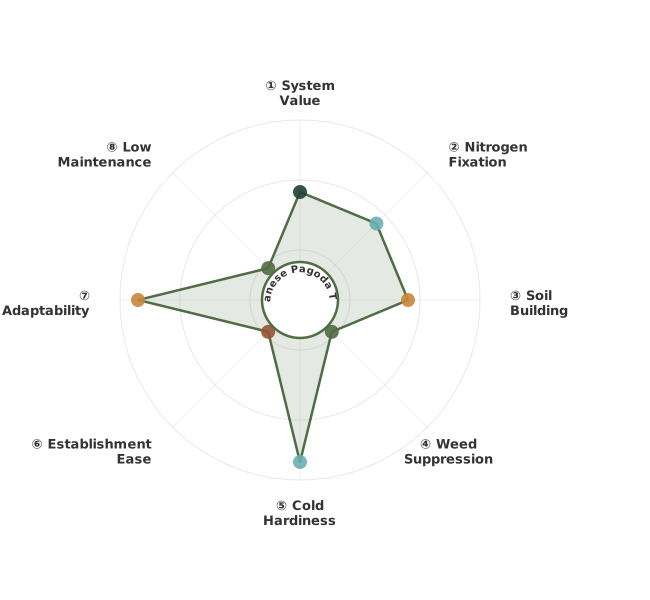
Comparative ratings for this plant across key regenerative agriculture traits.

Trait Suitability Explanation
Cold Hardiness Ideally Suited This hardy tree (Zone 4-5) contributes to year-round soil stability with its established root system, enhancing the perennial structure of the agroecosystem.
Weed Suppression Not Recommended Its slow initial growth and sparse canopy are not conducive to meaningful weed suppression, so it's not considered for this role within a cover cropping strategy.
Nitrogen Fixation Adequate As a legume, it offers a consistent contribution to soil fertility by fixing moderate amounts of nitrogen, supporting the nutrient cycling within the system.
Root System Depth Ideally Suited Its deep taproot system effectively alleviates deep soil compaction and mines essential nutrients from lower soil horizons, building long-term soil health and structure.
Biomass Production Not Recommended This tree species is not intended for typical cover cropping biomass production due to its slow growth and low residue contribution, but its woody biomass can be a valuable resource.
Establishment Ease Not Recommended Requires patient cultivation and careful site selection with minimal disturbance, as its slow germination and early vigor make it susceptible to competition.
Multi Benefit Value Ideally Suited This long-lived tree offers diverse ecosystem services including shade, timber, medicinal compounds, and abundant nectar for pollinators, while its deep roots enhance soil structure.
Climate Adaptability Ideally Suited Highly adaptable across diverse climates (zones 4-9), it tolerates a range of conditions and contributes to ecological resilience with its nitrogen-fixing ability and ornamental value.
Maintenance Intensity Ideally Suited A durable, nitrogen-fixing tree that requires minimal care after establishment, thriving in varied conditions and contributing to a low-input, resilient landscape.

Comparative System: Ratings compare plants within their economic category (e.g., cover crop nitrogen fixation compared to other cover crops, not to all plants). Individual farm conditions and management practices significantly influence actual performance.

8

Learn More

Why farmers use this plant and additional resources

Why Regenerative Farmers Use This Plant

Sophora japonica, commonly known as the Japanese Pagoda Tree or Scholar Tree, offers significant regenerative benefits when integrated into agricultural systems, primarily as a long-lived perennial for agroforestry, hedgerows, and as a long-term soil improver. While not a nitrogen-fixing legume, its deep taproot system, which can extend over 15 feet (4.5 meters) into the soil, excels at scavenging nutrients from lower soil profiles, bringing them to the surface where they become available to shallower-rooted cash crops or forage species. This nutrient cycling capacity can significantly reduce the reliance on synthetic fertilizers, potentially lowering input costs for micronutrients and potassium over its lifespan.

Its substantial biomass production, with mature trees yielding hundreds of pounds of organic matter annually from leaf and twig fall, contributes directly to building soil organic matter. Over a 3-10 year period, consistent litter fall can increase soil organic carbon by 0.5-1.5%, enhancing soil structure, water infiltration, and microbial activity. The decomposition of its woody and leafy debris improves soil structure and water-holding capacity, reducing erosion and conserving moisture.

Beyond nutrient cycling and soil building, Sophora japonica provides valuable ecosystem services that support a resilient farm. Its abundant floral displays, typically appearing in mid-summer to early autumn, are a crucial late-season nectar and pollen source for a wide array of pollinators, including bees, butterflies, and other beneficial insects. Studies have shown that trees in agroforestry systems can increase beneficial insect populations by up to 40% compared to monocultures, aiding in natural pest control and potentially leading to increased populations of natural predators that help manage pest outbreaks in adjacent cash crops.

The tree's dense canopy also offers excellent shade and windbreak protection, creating microclimates that can benefit sensitive crops and livestock. In silvopasture systems, its shade can offer respite for livestock during hot periods, and its fallen foliage can provide a supplementary forage source, though its palatability and nutritional value for grazing animals should be carefully assessed. Its robust root structure is highly effective at preventing soil erosion on slopes and in vulnerable areas, stabilizing fields and preventing soil loss, especially in areas prone to heavy rainfall or wind. As a long-lived perennial, it offers a stable, low-maintenance ground cover that suppresses weed growth beneath its canopy, reducing the need for mechanical or chemical weed management.

The integration of Sophora japonica into farming systems can foster a more resilient and diversified agricultural landscape, yielding tangible economic and ecological returns. In systems where it is planted as a windbreak or boundary tree, it can protect adjacent crops from wind damage, leading to yield increases of 5-15% in susceptible crops like corn or soybeans. The wood itself, once mature, can be a valuable timber resource, providing an additional income stream while the tree continues to perform its ecological functions. Its resilience to pests and diseases, coupled with its adaptability to various soil types, makes it a low-risk, high-reward investment for long-term farm sustainability.

Regional adaptations:

  • Mediterranean climate (Southern Spain, Southern France): Incorporated into olive groves and vineyards to improve soil structure, provide shade, and enhance soil fertility, with farmers noting a reduction in irrigation needs due to improved soil water retention.
  • Humid subtropical regions (Southeastern United States, Argentina, South Africa): Valued for its drought tolerance once established and its contribution to late-season pollinator support in orchards. Incorporated into silvopasture systems, providing shade and forage for livestock while its fallen leaves enrich the pasture. Its ability to provide shade and withstand heat is a significant advantage for livestock or sensitive crops.
  • Temperate oceanic climate (UK, Western Europe): Well-suited for hedgerows, parkland, and specimen trees in pastures, benefiting from consistent rainfall and its pollinator attraction and soil improvement qualities.
  • Temperate regions (Australia, Germany, China): Utilized in windbreaks, shelterbelts for livestock and crops, and as part of diversified farming systems to enhance soil fertility and provide shade in grazing paddocks, observing enhanced soil moisture conservation and reduced wind erosion in adjacent fields.
  • Corn and soybean rotations (American Midwest): Planted on field edges or as part of a windbreak system, with establishment occurring in early spring, benefiting from its resilience to cold winters and hot summers.
  • Brazilian coffee plantations: Integrated as a shade tree and nutrient scavenger, improving the microclimate for coffee plants and enriching the soil with its decomposing organic matter.
9

How to Integrate This Plant

Practical guidance for regenerative systems

Establishment methods

Sophora japonica is typically propagated by seed or through grafting for faster flowering and fruiting. For direct seeding, start with scarified seeds sown in well-draining soil. The optimal planting depth for seeds is 0.5 to 1 inch (1.3 to 2.5 cm), and they can be sown in early spring after the last frost. A seeding rate of approximately 1-2 lbs/acre (1.1-2.2 kg/ha) is generally recommended for direct sowing.

Spacing will vary greatly depending on the intended use:

  • Windbreaks or hedgerows: Trees can be spaced 10-20 feet (3-6 meters) apart.
  • Individual specimen trees or integration into agroforestry systems: Wider spacing of 20-40 feet (6-12 meters) is recommended to allow for full canopy development.

Seedlings or saplings are often transplanted in early spring or fall.

Management practices

Young Sophora japonica trees require regular watering, approximately 1 inch (2.5 cm) of water per week, especially during their first two years to establish a robust root system. Once established, they are highly drought-tolerant. Minimal fertilization is typically required. While they are not legumes and do not fix atmospheric nitrogen, their deep roots effectively scavenge nutrients like phosphorus and potassium from lower soil layers. When fertilization is necessary, a light application of compost or well-rotted manure in the spring is sufficient.

The tree generally reaches a height of 10-15 feet (3-4.5 meters) within 3-5 years and matures to its full stature of 50-70 feet (15-21 meters) with a similar spread over 15-25 years. Pruning is usually limited to removing dead or crossing branches to maintain tree health and structure. Pest and disease issues are rare, with biological controls and good cultural practices being the primary management strategies.

Category-specific integration

As a perennial tree, Sophora japonica is best integrated as a long-term component of the farm ecosystem rather than a typical annual cover crop. Its role is primarily that of a soil builder, nutrient cycler, and agroforestry element.

  • Termination and residue management: These are not applicable in the traditional sense for this woody perennial. Instead, focus is on managing its growth and ensuring its contribution to soil health through its natural life cycle. The fallen leaves and small branches decompose over time, releasing nutrients and contributing to soil organic matter. This decomposition process is gradual, typically taking 6-12 months for leaf litter to fully integrate into the soil, providing a slow and steady release of nutrients. The nitrogen credit from its leaf litter is modest, estimated at 5-10 lbs N/acre (6-11 kg/ha) annually, but its contribution to overall soil organic matter and nutrient availability is significant over the long term.
  • Silvopasture: Grazing animals can help manage understory growth and trample residue, aiding decomposition.
  • Alley cropping/Hedgerows: Interplanted with annual crops, offering wind protection and habitat for beneficials without significantly competing for resources due to its deep root profile.
  • Windbreak applications: The tree's resilience to wind and its ability to create a dense barrier are paramount.
  • Seed management: If volunteer seedlings are undesirable, fallen seed pods should be removed or managed before seed dispersal, though natural regeneration is generally not aggressive. Its deep root system means it is not easily controlled by shallow cultivation.
View Full Document (Printable single-page version)