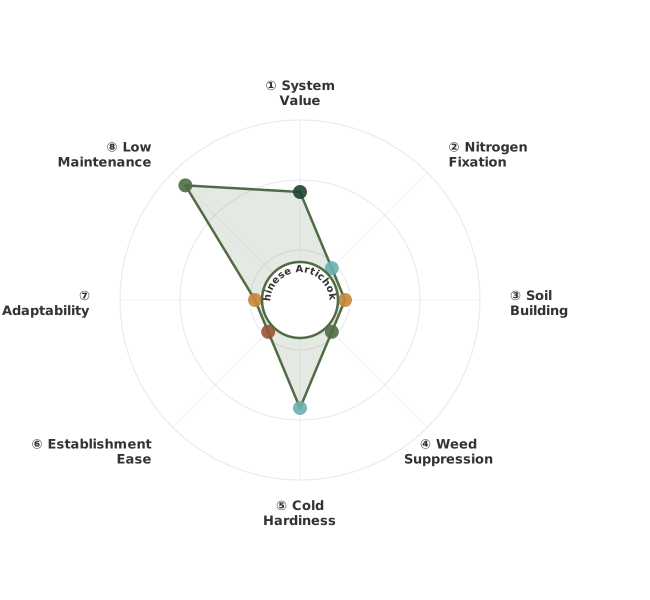
Its potential roles are worth noting. Primarily, it functions as a valuable component in polyculture systems, potentially serving as a groundcover or companion plant. Its fibrous root system suggests benefits for soil structure and aggregation, contributing to soil building. Although not explicitly identified as a nitrogen fixer in our texts, many herbaceous perennials contribute to soil health and can support pollinator populations, a key aspect of biodiversity in regenerative systems. Integration into practices like agroforestry or multi-strata cropping could leverage its growth habits. Direct farmer experiences within the knowledge base are not detailed, highlighting a need for further observation on its performance in specific regenerative contexts such as rotational grazing or no-till systems. Future research and farmer-led trials would be beneficial to fully understand its contributions to carbon sequestration and overall farm ecosystem resilience. While coverage in our knowledge base is limited, the above represents documented uses in regenerative systems.

Regenerative Quick Profile

All recommendations assume integrated, regenerative practices—not conventional inputs.

Climate & Soil Fit

Climate: Tropical Rainforest, Tropical Monsoon, Tropical Savanna, Hot Semi-Arid (Steppe), Cold Semi-Arid (Steppe), Hot Desert, Cold Desert, Humid Subtropical, Oceanic (Maritime Temperate), Hot-Summer Mediterranean, Warm-Summer Mediterranean, Monsoon-Influenced Humid Subtropical, Subtropical Highland, Hot-Summer Continental, Warm-Summer Continental, Subarctic, Monsoon-Influenced Hot-Summer Continental, Tundra

Zones: USDA 6-9, Australian Zones 3-5

Optimal Soil: Loam Soil

System Role & Functions

Primary: Cover Crop System

Secondary: Pollinator Support, Cash Crop With Services

Management Level

Experience: Advanced

Maintenance: High maintenance - Harvesting edible tubers requires consistent moisture management and vigilant observation for beneficial insect activity, integrated into overall soil fertility management.

Value Streams

  • Cover crop (soil investment)
  • Soil building and erosion control
  • Pollinator habitat and support
1

Climate Suitability Assessment

Will this plant thrive in your climate?

IDEALLY SUITED

Köppen Zone: Cfa (Humid Subtropical), Dfa (Hot-Summer Continental), Dfb (Warm-Summer Continental)
USDA Zone: 5b, 6a, 7a, 8a
Australian Zone: temperate
EU Climate Region: atlantic

Chinese Artichoke performs exceptionally well in regions with long, frost-free growing seasons and moderate temperatures, typically ranging from 60-75°F (15-24°C) during active growth. These conditions are met in Köppen Cfb zones, USDA zones 7a-8b, Australian temperate zones, and the EU Atlantic climate region. The plant thrives with consistent moisture, benefiting from annual rainfall of 30-50 inches (75-125 cm) or reliable irrigation. Mild winters allow for reliable overwintering, ensuring early spring growth and continuous ground cover. Establishment is straightforward when soil temperatures reach 50°F (10°C). The plant's ability to spread and form dense ground cover makes it an excellent choice for suppressing weeds and improving soil structure. Yields of tubers are typically high, supporting its use as a cash crop alongside its cover cropping benefits. Minimal management is required beyond initial planting and occasional harvesting, making it a low-input, high-reward option in these climates.

ADEQUATE

Köppen Zone: Aw (Tropical Savanna), Cfb (Oceanic (Maritime Temperate)), Csa (Hot-Summer Mediterranean), Csb (Warm-Summer Mediterranean), Cwa (Monsoon-Influenced Humid Subtropical), Cwb (Subtropical Highland)
USDA Zone: 5a, 9a, 10a
Australian Zone: subtropical

Chinese Artichoke can perform adequately in climates with moderate temperature fluctuations and slightly less consistent moisture, such as Köppen Cfa and Csb zones, USDA zones 6a-6b and 9a-9b, and Australian subtropical regions. These zones typically offer growing seasons of 120-180 frost-free days, but may experience periods of heat stress or drier spells. While the plant can establish and produce tubers, yields may be reduced by 10-20% compared to ideal conditions. Summer heat above 85°F (29°C) can stress the plant, and consistent moisture, potentially requiring supplemental irrigation of 10-20 inches (25-50 cm) during dry periods, is crucial for optimal tuber bulking. Overwintering is possible but may be less reliable in the cooler end of these zones, potentially requiring some winter protection or resulting in a shorter perennial lifespan. Management may involve more attention to watering and potentially selecting more heat-tolerant varieties.

NOT RECOMMENDED

Köppen Zone: Af (Tropical Rainforest), Am (Tropical Monsoon), ET (Tundra), BSh (Hot Semi-Arid (Steppe)), BSk (Cold Semi-Arid (Steppe)), BWh (Hot Desert), BWk (Cold Desert), Dfc (Subarctic), Dwa (Monsoon-Influenced Hot-Summer Continental)
USDA Zone: 2a, 3a, 3b, 4a, 11a, 12a

Chinese Artichoke is not recommended for climates with extreme heat and prolonged dry periods, or very short growing seasons with extreme cold. This includes Köppen Csa zones, USDA zones 10a-10b, and potentially some drier subtropical areas. In hot, dry Mediterranean climates (Csa), the intense summer heat and lack of consistent moisture during tuber bulking severely limit yield and plant vigor, making it economically unviable as a cover crop without extensive, costly irrigation. In very hot USDA zones (10a-10b), prolonged high temperatures (consistently above 90°F/32°C) cause significant plant stress, reducing tuber quality and overall performance. Establishment success can be as low as 50-70% in these challenging conditions. Alternative plants better suited to these specific harsh conditions, such as drought-tolerant legumes or heat-loving annuals, are recommended to achieve the desired regenerative agriculture outcomes.

Better alternatives for these "not recommended" zones: Sweet Potato (Tolerates heat and drought better, can be grown as an annual cover crop.), Cowpea (Heat-tolerant legume that fixes nitrogen and provides biomass.), Sunn Hemp (Tropical legume that thrives in hot climates and improves soil.)

Note: Zones listed above represent climates where this plant can produce reliably with reasonable management. Climate zones not mentioned would require intensive climate modification (greenhouses, extensive infrastructure) and are not economically viable for regenerative agriculture purposes.

2

Soil Suitability Assessment

Which soil types work best for this plant?

IDEALLY SUITED

Loam Soil

This plant thrives in these soil types without requiring amendments or remediation. Natural soil conditions support optimal growth and productivity.

ADEQUATE

Clay Soil, Rich Soil, Rocky Soil, Sandy Soil

This plant performs acceptably in these soil types with moderate, manageable remediation such as pH adjustment, compost addition, or drainage improvement. The required amendments are practical and cost-effective for regenerative agriculture.

NOT RECOMMENDED

Acidic Soil, Alkaline Soil, Desert Soil, Saline Soil, Wet Soil

Growing this plant in these soil types would require impractical remediation such as complete soil replacement, extensive amendments, or cost-prohibitive infrastructure. These conditions are not economically viable for regenerative agriculture.

Note: Soil suitability assessments focus on remediation requirements. "Ideally Suited" means the plant generally thrives without the need for substantial amendments, "Adequate" means manageable remediation (lime, compost, mulch), and "Not Recommended" means impractical soil changes would be required. Climate factors like rainfall and temperature also influence success.

3

Seasonal Considerations

Planting timing, growth duration, and harvest windows

Stachys Affinis offers versatile cover cropping options across Cfa, Cfb, Csa, and Csb climates. For a spring planting, aim for after the last expected frost when soil temperatures consistently reach around 50°F (10°C). Early establishment is crucial, typically occurring within 2-3 weeks. This spring-planted crop can reach impressive biomass by mid-summer, providing excellent weed suppression and soil building before a late-season cash crop.

Alternatively, consider a fall planting. Sow Stachys Affinis 4-6 weeks before the first expected frost, allowing for adequate establishment before winter dormancy. In milder zones (Cfa, Cfb), it will likely overwinter well, resuming growth vigorously in early spring. Termination should occur at least 2-3 weeks before planting your next cash crop to ensure optimal soil conditions and prevent competition. While not ideal for a true winter cover in colder regions, its ability to establish quickly and contribute biomass makes it a valuable tool for summer cover cropping or as a short-season break crop. Frost-seeding in early spring is also a possibility where winterkill is desired, though establishment may be slower.

4

System Role & Multi-Benefit Value

Functional roles, integration strategies, and stacked benefits

Functional Role

Total System Value

Chinese artichoke offers significant system value beyond its direct harvest. As a vigorous groundcover, it excels at preventing soil erosion, particularly on slopes or disturbed areas. Its spreading rhizomes contribute to soil aggregation and organic matter accumulation, enhancing soil structure and fertility over time. While not providing nitrogen fixation or significant shade, its presence supports a healthier soil microbiome. In terms of ecosystem services, it can offer some habitat for beneficial insects, though it's not a primary pollinator attractant. Its primary contribution to risk diversification lies in providing an alternative food source that is perennial and relatively low-maintenance once established, reducing reliance on annual crops. By improving soil health and reducing erosion, it indirectly contributes to water infiltration and retention.

Integration Characteristics

Multi-Benefit Value: Not Recommended - Beyond its edible tubers, this plant contributes to soil health by supporting microbial communities and offering a unique food source within integrated systems.

5

Management & Care Requirements

Integration guidance, maintenance needs, and care practices

How to Integrate This Plant

Chinese artichoke (Stachys affinis) is a valuable perennial tuber for regenerative systems, primarily functioning as a groundcover and for direct harvest. Its primary system role is erosion control due to its dense growth habit, and it can contribute to soil health by adding organic matter. While not a nitrogen fixer, its vigorous root system helps break up soil compaction. It can be integrated into food forests or perennial polycultures as an understory crop, providing a unique harvest alongside other perennial fruits and vegetables. It can also be used in alley cropping systems, planted in the alleys between trees or rows of crops. The timeline to contribution is immediate for groundcover and soil health benefits, with harvest typically available in the first year of planting. Its multi-benefit stacking comes from its dual role as a food source and a soil-building component, enhancing overall farm biodiversity and ecological function.

Integration Practices & Management

Information regarding the specific integration of *Stachys affinis* by regenerative farmers within the provided knowledge base is limited. Consequently, a detailed explanation of establishment methods, such as seeding rates, optimal timing, companion planting strategies, or its use in no-till versus minimal tillage systems, cannot be fully elaborated upon from the available sources. Similarly, the knowledge base does not extensively detail its integration with grazing practices like mob grazing or rotational systems, including specific timing of grazing or required rest periods. Termination strategies, including natural winterkill, grazing down, crimping, mowing, or herbicide application, are also not a prominent feature of the available information. Likewise, management considerations like fertility needs, competition management, and succession planning, as well as its integration with cash crops through relay cropping, intercropping, or specific rotation sequences, are not sufficiently covered. Due to this limited knowledge base coverage, practical farmer experiences and insights directly related to the 'how' of integrating *Stachys affinis* into regenerative systems are not available for reporting.

Management Profile

Maintenance Intensity: Not Recommended - Harvesting edible tubers requires consistent moisture management and vigilant observation for beneficial insect activity, integrated into overall soil fertility management.

6

Economics & Value Streams

Direct harvest, system benefits, ecosystem services, and risk diversification

Comprehensive economic analysis including direct harvest value, system enhancement contributions, ecosystem services, value timeline, and risk diversification strategies.

Cover Crop Investment

Metric Value
Seed Cost $25-50/acre $62-124/ha
Termination Cost 20-40 49-99
Biomass Production 2-5 4-11
N Fixation Value N/A N/A
Weed Control Savings 15-30 37-74

Cover crops are soil investments, not cash crops. Economics measured in soil health gains, input reduction, and subsequent crop performance. Values show direct costs and estimated benefits.

System Enhancement Value

Beyond cost recovery: soil building, nitrogen, biomass, and weed suppression

Soil Building & Weed Suppression

Chinese artichoke (Stachys affinis), also known as crosnes, offers significant value in integrated farm systems beyond its primary function as a cover crop. Its secondary role in pollinator support is crucial for enhancing biodiversity and the reproductive success of other crops. While not explicitly detailed in the provided excerpts, the flowering of many Stachys species attracts a variety of beneficial insects, contributing to a more robust agroecosystem. Furthermore, its establishment as a cash crop with services highlights its potential for multi-functional land use. The tubers, as noted in reference, can be stored for several weeks, providing a potential for extended market access or on-farm utilization. Its perennial nature, as suggested by its inclusion with other perennial root vegetables in reference, implies a long-term soil improvement capacity and reduced need for annual replanting, thereby minimizing soil disturbance and enhancing soil health over time. This resilience in cultivation, even in challenging climates like Alaska (Zone 3a) as mentioned in reference, underscores its utility in diverse farming environments.

Ecosystem Service Contributions

Environmental contributions: carbon, pollinators, wildlife, and water

  • Carbon Sequestration: As a perennial herbaceous plant with a substantial root system, Chinese artichoke contributes to soil organic matter accumulation, thereby sequestering carbon. Its role as a cover crop further enhances this by protecting soil from erosion and promoting microbial activity, both of which are vital for long-term carbon storage.
  • Pollinator Support: Medium. While specific pollinator attraction data for Stachys affinis is not detailed in the excerpts, its inclusion in discussions alongside other perennial plants suggests potential for flowering that could support local pollinator populations, contributing to farm-level biodiversity.
  • Wildlife Habitat: Chinese artichoke tubers can be a food source for wildlife, including rodents like mice, as noted in reference. The foliage may also provide browse or nesting material for certain species, though this is not explicitly detailed.
  • Water Quality: Not applicable

Value Timeline: Soil Building Process

When you'll see results: immediate soil benefits, compounding over seasons

Years 1-2

Establishment as a cover crop, improving soil structure and reducing erosion. Potential for early establishment of pollinator support functions. Initial tuber formation for potential limited harvest or propagation.

Years 3-5

Established cover crop benefits with enhanced soil health. Increased pollinator support. First significant harvests of tubers as a cash crop, providing a new income stream. Continued soil improvement.

Years 10-20

Mature perennial system with robust soil carbon sequestration. Consistent tuber production for cash crop revenue. Well-established pollinator habitat and potential wider ecosystem benefits. Reduced need for annual cultivation inputs.

20+ Years

Long-term soil health and resilience. Ongoing cash crop revenue. Sustained ecosystem services, including carbon sequestration and pollinator support, contributing to overall farm sustainability.

Farm Risk Reduction

How this reduces farm risk: lower input costs and better soil resilience

  • Multiple Revenue Streams: Direct cash crop revenue from tuber sales. Potential for value-added products from tubers. Reduced input costs due to cover cropping and soil improvement benefits. Enhanced yields of other crops due to improved soil and pollinator activity.
  • Temporal Income Spread: Value is spread across multiple dimensions: ongoing soil improvement and ecosystem services (cover crop, carbon sequestration, pollinator support) from year 1, with periodic harvests of tubers as a cash crop starting in years 3-5 and continuing for the life of the stand.
  • Market Risk Hedge: Provides an alternative income stream less susceptible to fluctuations in commodity crop markets. Its resilience in challenging climates (reference) offers a hedge against weather-related crop failures. Reduced reliance on synthetic inputs due to its cover cropping and soil-building properties.
7

Regenerative Suitability Details

Comprehensive trait ratings for system integration assessment

Comparative ratings for this plant across key regenerative agriculture traits.

Trait Suitability Explanation
Cold Hardiness Adequate As a perennial, it offers moderate ground cover through winter, contributing to soil health. Its overwintering success is enhanced by mulching and a well-integrated soil ecosystem.
Weed Suppression Not Recommended This plant's growth habit is not dense enough for significant weed suppression, allowing space for diverse beneficial ground cover and companion plants to thrive.
Nitrogen Fixation Not Recommended Stachys affinis does not fix atmospheric nitrogen; its value lies in its contribution to soil structure and food production within a diverse cropping system.
Root System Depth Not Recommended Its shallow root system, primarily focused on tuber development, works in conjunction with other plants to improve topsoil structure and nutrient cycling.
Biomass Production Not Recommended While not a primary biomass producer, its tuber harvest offers a valuable food source, and its plant residue contributes to soil organic matter when managed in place.
Establishment Ease Not Recommended Requires patient establishment from tubers or seed, benefiting from well-prepared soil rich in organic matter and consistent moisture retention.
Multi Benefit Value Not Recommended Beyond its edible tubers, this plant contributes to soil health by supporting microbial communities and offering a unique food source within integrated systems.
Climate Adaptability Not Recommended Thrives in temperate climates with mild winters and moderate summers, benefiting from mulching for moisture management and temperature regulation.
Maintenance Intensity Not Recommended Harvesting edible tubers requires consistent moisture management and vigilant observation for beneficial insect activity, integrated into overall soil fertility management.

Comparative System: Ratings compare plants within their economic category (e.g., cover crop nitrogen fixation compared to other cover crops, not to all plants). Individual farm conditions and management practices significantly influence actual performance.

8

Learn More

Why farmers use this plant and additional resources

Why Regenerative Farmers Use This Plant

Stachys affinis, commonly known as Chinese artichoke or crosne, offers significant regenerative benefits and unique crop diversification opportunities when integrated into agricultural systems. Primarily utilized as a niche cover crop and a source of nutritious tubers, its vigorous growth habit and extensive rhizomatous root system make it an excellent candidate for improving soil health and controlling erosion.

Soil Health and Structure: The deep root system, which can penetrate to depths of 12-24 inches (30-60 cm) and potentially reach 2-3 feet (60-90 cm), excels at breaking up soil compaction. This improves soil aeration and water infiltration, leading to enhanced soil aggregation and porosity, thereby reducing runoff and erosion, particularly on sloped land. While not a nitrogen fixer, its vigorous growth can scavenge residual nutrients from deeper soil profiles, bringing them to the surface for subsequent cash crops as the plant matter decomposes. Over a 3-5 year rotation, the incorporation of its substantial biomass contributes to building soil organic matter, enhancing water-holding capacity and microbial activity. In a 3-5 year rotation, consistent use as a cover crop can increase soil organic matter by 0.1-0.3% annually.

Weed Suppression and Nutrient Scavenging: The dense foliage canopy developed by Stachys affinis effectively suppresses weeds by outcompeting them for light, water, and nutrients. This can reduce the need for costly and environmentally impactful herbicides, typically suppressing weeds by 70-85% compared to bare fallow within its growing season. Its ability to scavenge nutrients also prevents their leaching into waterways.

Biodiversity and Ecosystem Services: While specific data on pollinator visits or beneficial insect populations is limited for this species, its flowering period can attract beneficial insects and pollinators, providing habitat and food sources. The dense vegetative cover it provides can offer refuge for beneficial arthropods within the agroecosystem, supporting natural pest control mechanisms.

Economic Diversification: The unique tuber production offers an alternative income stream or a nutritious food source for farm-to-table markets, diversifying farm enterprises.

Biomass and Nutrient Cycling: The biomass produced by Stachys affinis, typically ranging from 2-4 tons per acre (4.5-9 metric tons per hectare) of dry matter, decomposes relatively quickly, releasing scavenged nutrients back into the soil within 30-75 days, depending on environmental conditions. This decomposition timeline makes it ideal for planting between cash crops, ensuring that nutrients are available for the subsequent planting.

9

How to Integrate This Plant

Practical guidance for regenerative systems

Establishing Stachys affinis is typically done through planting its tubers or rhizomes. For optimal establishment and growth, tubers should be planted in well-drained soil.

Planting:

  • Depth: 2-4 inches (5-10 cm) for good soil contact and moisture for germination.
  • Spacing: 6-12 inches (15-30 cm) between tubers within rows.
  • Row Spacing: 12-24 inches (30-60 cm) apart for ease of management and harvesting.
  • Seeding Rate: Approximately 100-200 lbs per acre (112-224 kg/ha) is recommended, depending on tuber size and desired stand density. Seeding rates are not applicable as it is propagated vegetatively.
  • Timing:
  • Northern Hemisphere: Early spring, from March to May, once the risk of hard frost has passed and the soil can be worked.
  • Southern Hemisphere: September to November.

Establishment and Growth:

  • Establishment Time: Typically within 30-60 days under favorable conditions.
  • Water Requirements: Prefers consistent moisture, especially during establishment and active growth/tuber development phases, requiring approximately 1 inch (2.5 cm) of water per week, either from rainfall or irrigation.
  • Fertility: While it can scavenge nutrients effectively, incorporating compost or well-rotted manure at planting can boost its biomass production, tuber yield, and subsequent soil-building benefits.
  • Maturity:
  • Time to Maturity: 120-180 days from planting, with tubers often ready for harvest in late summer or autumn.
  • Plant Height: Mature plants typically reach 1-3 feet (0.3-0.9 m).

Pest and Disease Management:

  • Primarily relies on cultural practices and maintaining healthy soil biology.
  • Ensuring good air circulation and avoiding waterlogged conditions can help prevent common fungal issues.
  • Maintaining soil health through organic matter addition is the best defense against most soil-borne problems.

Cover Crop Integration and Termination:

  • Termination Methods:
  • Natural Winterkill: Preferred in regions with sufficiently cold winters (below -5°C/23°F), eliminating the need for mechanical or chemical intervention.
  • Mechanical Termination: Grazing by livestock, mowing, or roller-crimping at the appropriate growth stage (typically when flowering begins) can be employed to reduce biomass and initiate decomposition. Roller-crimping leaves a beneficial mulch layer.
  • Herbicide Termination: Considered a last resort, only used during a transitional phase when building soil health to a point where biological termination is feasible. Application should occur at least 2-3 weeks before planting the subsequent cash crop to allow for residue breakdown and minimize potential allelopathic effects.
  • Residue Management: The residue typically breaks down in 4-8 weeks (45-75 days), releasing scavenged nutrients back into the soil. This allows for timely planting of the subsequent cash crop.

Regional Adaptations:

  • United Kingdom: Planted in early spring between rows of brassicas or root vegetables; tubers harvested in autumn, residue incorporated to build soil for the following season. Used in market gardens to improve soil structure between vegetable crops.
  • Australia: Established with autumn rains in temperate zones (e.g., Victoria, Tasmania) for spring harvest or managed as ground cover to prevent wind erosion in the wheat-sheep belt. Tubers harvested opportunistically or the plant allowed to decompose in situ. Benefits systems requiring robust erosion control.
  • North America: Utilized in market gardens and for nutrient scavenging in rotations following heavily fertilized crops, reducing nutrient runoff. Used as a fall cover crop in market gardens, planted after early spring crops are harvested, and terminated by winterkill or mowing before spring planting.
  • Brazil: Integrated as a living mulch in the inter-row spaces of coffee plantations, helping to suppress weeds and improve soil structure.
  • Europe (General): Grown as a summer crop in rotation with cereals or vegetables, with residue left to decompose over winter.
  • Pacific Northwest, USA: Established in spring for summer harvest, with remaining biomass contributing to overwinter soil protection.
  • Midwestern USA: Planted after early spring vegetable harvests, with residue providing overwinter soil cover.
  • South America (General): Integrated into suitable subtropical climates, providing ground cover and soil improvement between crop rows.
  • Perennial Systems: Suitable for intercropping in young orchards or vineyards, occupying inter-row space and contributing to soil health.