
Stinging Nettle
Stinging nettle (Urtica dioica) offers multiple applications within regenerative agriculture, primarily as a potent compost activator and a source for beneficial plant extracts. Its inclusion in biodynamic compost preparations, alongside other plant materials, accelerates decomposition, enhances nutrient retention, and boosts beneficial microbial populations in the compost pile. Nettle extract has also demonstrated significant benefits when applied to crops, notably increasing plant height, leaf area, and dry weight in green beans. Furthermore, stinging nettle is recognized for its potential in pest management, with its essential oils showing efficacy against spider mites, offering a natural alternative to synthetic pesticides. Studies have also explored its use in conjunction with biochar to improve soil health in contaminated sites. Field trials have indicated that nettle-based preparations, particularly when combined with manure, can enhance root growth, microbial biomass, and soil organic matter in crops like winter wheat and maize, supporting soil building and potentially carbon sequestration. While its role as a cover crop or direct forage is not explicitly detailed in these excerpts, its documented benefits in composting, nutrient cycling, and natural pest control highlight its value in integrated regenerative systems.
For a full botanical description see: Plants For A Future(opens in new window) (external link)
Regenerative Quick Profile
All recommendations assume integrated, regenerative practices—not conventional inputs.
Climate & Soil Fit
Climate: Tropical Rainforest, Tropical Monsoon, Tropical Savanna, Hot Semi-Arid (Steppe), Cold Semi-Arid (Steppe), Hot Desert, Cold Desert, Humid Subtropical, Oceanic (Maritime Temperate), Hot-Summer Mediterranean, Warm-Summer Mediterranean, Monsoon-Influenced Humid Subtropical, Subtropical Highland, Hot-Summer Continental, Warm-Summer Continental, Subarctic, Monsoon-Influenced Hot-Summer Continental, Tundra
Zones: USDA 3-11, Australian Zones 1-14
Optimal Soil: Rich Soil
System Role & Functions
Primary: Cash Crop With Services
Secondary: Soil Remediation, Specialty
Key Benefits: Multi-benefit value, Climate adaptable, Cold Hardiness
Management Level
Experience: Beginner-Friendly
Maintenance: Moderate maintenance - This nutritious perennial spreads readily and benefits from consistent moisture management and mulching; periodic harvesting integrates into the system's care, providing valuable resources.
Value Streams
- Cash crop production
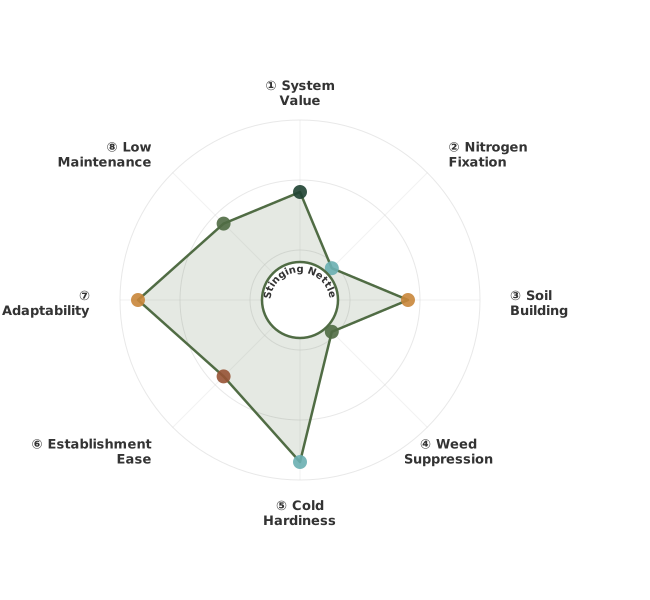
How These Traits Are Calculated
Trait dimensions are ordered clockwise starting from the top of the chart (12 o'clock position):
1. System Value
Ecosystem service stacking across nitrogen, carbon, water, biodiversity
WHAT: Synthesizes the compounding value of multiple ecosystem services delivered simultaneously—nitrogen fixation, soil organic matter building, pollinator support, erosion control, and water infiltration improvement. This is the total regenerative impact beyond single-function metrics.
WHY: The highest-value cover crops deliver 3-5 significant ecosystem services at once. A legume that fixes nitrogen, builds biomass, supports pollinators, and improves water infiltration provides $150-300/acre in combined benefits versus $30-60 for single-function covers. This service stacking is the core principle of regenerative agriculture.
HOW: Scored via LLM synthesis of economics data, timeline benefits, and trait combinations. Exceptional (3.0): 4-5 major services stacked with strong economic value ratios. Typical (2.0): 2-3 moderate services. Limited (1.0): Single-function covers with minimal service stacking. Considers seed cost relative to benefit value.
2. Nitrogen Fixation
Biological nitrogen production via legume root nodule bacteria
WHAT: Measures the ability to convert atmospheric nitrogen (N₂) into plant-available ammonia through symbiotic bacteria in root nodules. Legumes form partnerships with rhizobium bacteria that fix 60-150 lbs N/acre/year, reducing or eliminating synthetic fertilizer needs for following crops.
WHY: Nitrogen is the most expensive fertilizer input in crop production ($0.50-1.00/lb). Cover crops with exceptional nitrogen fixation can provide $60-150/acre worth of fertility while building soil organic matter. This biological process also reduces groundwater contamination from nitrogen runoff and lowers farm carbon footprint.
HOW: Ratings based on annual nitrogen fixation capacity and reliability across soil conditions. Exceptional (3.0): Legumes like hairy vetch, crimson clover, and field peas fixing >100 lbs N/acre/year. Typical (2.0): Moderate fixers like red clover at 60-100 lbs N/acre/year. Limited (1.0): Non-legumes (grasses, brassicas) with zero fixation capacity.
3. Soil Building
Weighted: biomass production (60%) + root system depth (40%)
WHAT: Combines above-ground biomass production with root depth to measure total soil organic matter contribution. Biomass provides surface organic matter, while deep roots deposit carbon at depth and break up compaction layers.
WHY: Soil organic matter is the foundation of regenerative agriculture, improving water retention, nutrient cycling, and biological activity. Each 1% increase in soil organic matter holds an additional 20,000 gallons of water per acre and represents $500-1,000 in fertility value. Deep roots access subsoil nutrients and create channels for water infiltration.
HOW: Weighted formula prioritizes biomass production (60% weight) for immediate organic matter contribution, with root depth (40% weight) for long-term soil structure. Exceptional (3.0): High-biomass crops with deep roots like cereal rye (8+ tons biomass, 5+ ft roots). Typical (2.0): Moderate on both factors. Limited (1.0): Low biomass or shallow roots.
4. Weed Suppression
Physical competition through rapid establishment and dense growth
WHAT: Measures the ability to outcompete weeds through rapid germination, aggressive early growth, and dense canopy formation. Physical smothering and light competition reduce weed pressure without herbicides.
WHY: Weed management is a major labor and cost burden for farmers. Cover crops that effectively suppress weeds reduce herbicide costs ($20-60/acre), decrease cultivation passes (fuel + labor), and provide clean seedbeds for cash crops. This is especially valuable in organic systems where herbicide options are limited.
HOW: Ratings based on germination speed, tillering density, and canopy closure timing. Exceptional (3.0): Fast-establishing, dense-tillering crops like cereal rye, oilseed radish that close canopy within 3-4 weeks. Typical (2.0): Moderate establishment and coverage. Limited (1.0): Slow-establishing or sparse crops that allow weed competition.
5. Cold Hardiness
Winter survival for fall planting and spring green manure value
WHAT: Measures tolerance to freezing temperatures and ability to survive winter conditions. Winter-hardy cover crops can be fall-planted, overwinter as living mulch, and provide early spring growth before cash crop planting.
WHY: Fall-planted winter-hardy covers extend the growing season into unused months, capturing solar energy and preventing erosion during wet periods. Spring green manure from overwintered covers provides early nitrogen and biomass. This timing flexibility is critical in cold climates with short growing seasons.
HOW: Ratings based on minimum survival temperature and winter active growth. Exceptional (3.0): Winter-hardy crops like cereal rye, hairy vetch, crimson clover surviving to -20°F with active growth in spring. Typical (2.0): Moderate cold tolerance. Limited (1.0): Warm-season crops like buckwheat, cowpea killed by first frost.
6. Establishment Ease
Germination speed, soil requirement flexibility, planting window breadth
WHAT: Measures how easily the cover crop establishes from seed, including germination speed, tolerance for variable soil conditions, and flexibility in planting timing. Easy establishment means reliable stands without intensive management.
WHY: Difficult-to-establish covers increase risk of stand failure, wasted seed costs, and reduced benefits. Easy establishment crops tolerate late planting, poor seedbed preparation, and variable moisture—critical when cover cropping windows are narrow between cash crops. Reliable establishment ensures consistent soil building and weed suppression benefits.
HOW: Ratings based on days to emergence, soil condition sensitivity, and planting window breadth. Exceptional (3.0): Fast germinators like buckwheat (3-5 days) and cereal rye (5-7 days) with wide planting windows. Typical (2.0): Moderate establishment requirements. Limited (1.0): Slow or finicky establishers requiring precise conditions.
7. Adaptability
Weighted: climate tolerance (60%) + multi-benefit versatility (40%)
WHAT: Combines climate adaptability (temperature and rainfall range) with multi-benefit versatility (diverse ecosystem services) to measure overall system flexibility. High adaptability means the cover works across farm regions and provides multiple functions.
WHY: Farmers need cover crops that work reliably across diverse fields and provide stacked benefits. Climate-adaptable covers reduce risk in variable weather, while multi-benefit crops deliver nitrogen fixation + pollinator support + forage value simultaneously. This versatility maximizes return on cover crop investment.
HOW: Weighted formula prioritizes climate tolerance (60% weight) for geographic reliability, with multi-benefit value (40% weight) for functional stacking. Exceptional (3.0): Wide climate range + multiple significant benefits. Typical (2.0): Moderate on both factors. Limited (1.0): Narrow climate range or single-function crops.
8. Low Maintenance
Inverted from maintenance intensity—low inputs mean high scores
WHAT: Measures minimal input requirements for successful cover cropping. Low-maintenance covers require no irrigation, minimal fertility, easy termination, and tolerate variable management timing.
WHY: Cover crops compete for resources with cash crops in tight rotations. Low-maintenance covers fit easily into existing systems without adding labor, equipment, or input costs. Easy termination is especially critical—covers that are difficult to kill can become weeds and delay cash crop planting.
HOW: Inverted score from maintenance intensity trait (4.0 minus raw score). Exceptional (3.0): Self-sufficient crops like cereal rye, field peas requiring no irrigation or fertility, easily terminated by mowing or winter-kill. Typical (2.0): Moderate input needs. Limited (1.0): High-maintenance crops needing irrigation, heavy fertility, or difficult termination (herbicides, multiple tillage passes).
Ratings are based on documented performance in regenerative systems, not conventional high-input scenarios. All traits assume integrated management practices focused on soil health and ecosystem services.
4
System Role & Multi-Benefit Value
Functional roles, integration strategies, and stacked benefits
System Role & Multi-Benefit Value
Functional roles, integration strategies, and stacked benefits
Functional Role
Total System Value
Stinging nettle offers substantial whole-farm resilience through a diverse array of benefits. Directly, it serves as a valuable cash crop for medicinal and culinary uses, as indicated by its inclusion in herb cultivation discussions. Systemically, it enhances farm infrastructure by contributing to soil health through its root system and by acting as a key ingredient in biodynamic compost preparations, which boost microbial activity and nutrient cycling. Its extracts show promise as natural pesticides, reducing reliance on synthetic inputs and supporting beneficial insect populations. Furthermore, nettle's role in compost formulation aids in nutrient retention, potentially reducing fertilizer needs and improving water holding capacity. This multifaceted utility, from direct harvest to ecological services like soil improvement and pest management, diversifies farm income streams and reduces input costs, thereby strengthening overall farm resilience against market fluctuations and environmental challenges.
Integration Characteristics
Multi-Benefit Value: Ideally Suited - Highly nutritious for food and beneficial insects, medicinally valuable, excellent pollinator support, and contributes to soil fertility through its nutrient cycling and biomass.
Sources behind this view
 Community
-
Stinging nettle offers significant medicinal benefits (energy, arthritis relief) and indicates soil fertility, but its invasiveness varies by location; containment through strategic planting, harvesti
Read more (opens in new window) permies.com
5
Management & Care Requirements
Integration guidance, maintenance needs, and care practices
Management & Care Requirements
Integration guidance, maintenance needs, and care practices
How to Integrate This Plant
Stinging nettle (Urtica dioica) can be integrated into regenerative systems as a multi-functional component, serving as a cash crop with services, a medicinal herb, and a soil enhancer. Its fibrous root system can contribute to soil structure and health over time, while its biomass can be utilized in compost preparations to accelerate decomposition and improve nutrient retention, particularly nitrogen. Nettle extracts have shown potential as a biopesticide, offering a natural solution for pest control, and its leaves can be used in biodynamic preparations to boost compost fertility. As a plant with a vigorous growth habit, it can also act as a dynamic accumulator, drawing nutrients from deeper soil layers. It can be incorporated into alley cropping systems or managed as a dedicated perennial patch, providing harvestable material for compost, extracts, or direct use. Its contribution to soil health and pest management begins in its first year, with more significant soil structure benefits developing over 3-5 years as its root system matures.
Integration Practices & Management
Stinging nettle (Urtica dioica) is integrated into regenerative agriculture primarily through its use in compost preparations and as a potent extract. Source highlights its inclusion in biodynamic compost preparations, applied at a rate of one teaspoon per 15 tons of compost to accelerate decomposition and enhance nutrient retention, particularly nitrogen, while increasing beneficial microbial activity. Additionally, nettle extract has been investigated for its positive impacts on crop growth. A study demonstrated that non-aerated nettle extract significantly increased above-ground traits in green beans, including plant height, leaf area, and shoot dry weight. Another trial incorporated a nettle-and-manure-based spray (NCP) in field trials, observing increased maize root growth and health. While direct seeding, establishment methods, grazing integration, termination strategies, and specific cash crop integration are not detailed in the provided sources, the existing information points to stinging nettle's value as a soil amendment and a biostimulant, contributing to fertility and plant health within regenerative systems.
Management Profile
Maintenance Intensity: Adequate - This nutritious perennial spreads readily and benefits from consistent moisture management and mulching; periodic harvesting integrates into the system's care, providing valuable resources.
Sources behind this view
Community
-
Stinging nettle offers significant medicinal benefits (energy, arthritis relief) and indicates soil fertility, but its invasiveness varies by location; containment through strategic planting, harvesti
Read more (opens in new window) permies.com -
Stinging nettles (Urtica dioica) are easy-to-grow, nutrient-rich plants valuable as fertilizer, soil amendment, mulch, and in compost teas. They thrive in various conditions and can be harvested conti
Read more (opens in new window) permies.com
8
Learn More
Why farmers use this plant and additional resources
Learn More
Why farmers use this plant and additional resources
Why Regenerative Farmers Use This Plant
Stinging nettle (Urtica dioica) offers significant regenerative benefits as a dynamic cover crop and beneficial plant within agricultural systems. Its vigorous growth habit and deep root system contribute substantial biomass, which, upon decomposition, enriches soil organic matter and provides nutrients for subsequent cash crops. While not a legume, stinging nettle is an exceptional nutrient scavenger, drawing down excess nitrogen, phosphorus, and other minerals from deeper soil profiles, thereby preventing leaching and making them available in the topsoil as the plant residue breaks down. This nutrient cycling capacity can contribute to reducing the need for synthetic fertilizer inputs, potentially saving farmers $40-70 per acre annually depending on the residual nutrient levels and the following crop's requirements.
Its dense foliage offers excellent weed suppression, outcompeting many common weeds through dense canopy formation and allelopathic properties, reducing the need for costly and ecologically disruptive weed management practices. Over a 3-5 year rotation, consistent use of stinging nettle as a cover crop can measurably increase soil organic matter by 0.2-0.5%, enhancing soil structure, water holding capacity, and overall ecosystem health. The extensive root system, reaching depths of 2-6 feet (0.6-1.8 meters), also plays a crucial role in breaking up soil compaction and improving water infiltration, thereby reducing erosion.
Integrating stinging nettle into regenerative farming systems provides multifaceted advantages beyond direct soil amendment. Its prolific growth makes it an excellent candidate for erosion control, particularly on slopes or during periods of bare soil. The dense root system helps to stabilize soil, preventing wind and water erosion. Furthermore, stinging nettle is a powerful attractant for a wide array of beneficial insects, including ladybugs, lacewings, and parasitic wasps, which are crucial for natural pest control in cash crops. It also serves as a vital early-season nectar and pollen source for pollinators, supporting biodiversity within and around the farm. Stinging nettle stands can host a significantly higher population of beneficial arthropods compared to bare ground or monoculture plantings, potentially increasing predator populations by 20-30%.
The decomposition of its substantial biomass, which can reach 5,000-10,000 lbs/acre (5,600-11,200 kg/ha) of dry matter annually under optimal conditions, releases nutrients gradually over 30-60 days, feeding soil microbes and improving soil structure. This slow-release nutrient profile is ideal for building long-term soil fertility, reducing the risk of nutrient runoff and contributing to cleaner waterways. Its deep root system also improves soil aeration and water infiltration, mitigating the impacts of heavy rainfall and drought. In silvopasture or hedgerow systems, it can provide forage for certain livestock (e.g., sheep, cattle), though careful management is required due to its stinging hairs. Its high protein content (around 20-30% dry matter) can supplement livestock diets.
Stinging nettle has a long history of use in various agricultural contexts globally. In the UK and parts of Europe, farmers have historically integrated it into hedgerows and field margins to support biodiversity and provide a source of medicinal and culinary herbs. In North America, regenerative farmers in regions like the Pacific Northwest and the Northeast utilize it as a vigorous cover crop, often interseeded with grains or legumes to maximize biomass production and nutrient cycling. In Australia, while less common, its potential as a hardy cover crop in cooler, wetter regions is being explored for its soil-building and weed-suppressing qualities. In Brazilian coffee plantations, it can be managed as a dense groundcover in the understory, contributing to soil health and attracting beneficial insects.
Sources behind this view
 Videos & Podcasts
-
Stinging nettle offers cattle medicinal benefits like parasite control and immune support, and improves soil health through erosion control and nutrient cycling. It's rich in iron, calcium, and vitami
-
Stinging nettle is a highly nutritious weed (22% protein, vitamins, minerals) that, once dried, can be cut like alfalfa and fed to livestock, growing readily across the US.
Community
-
Stinging nettles (Urtica dioica) are easy-to-grow, nutrient-rich plants valuable as fertilizer, soil amendment, mulch, and in compost teas. They thrive in various conditions and can be harvested conti
Read more (opens in new window) permies.com -
Stinging nettle (Urtica dioica) is a highly valuable plant for agriculture, providing rich nutrients for fertilizers, soil amendments, and compost teas. It enhances pest control and improves neighbori
Read more (opens in new window) permies.com
 Research
-
Non-Aerated Common Nettle (Urtica dioica L.) Extract Enhances Green Beans (Phaseolus vulgaris L.) Growth and Soil Enzyme Activity (opens in new window)
Nettle extract fertilizer significantly increased green bean yield by 48% and boosted soil respiration and enzyme activity across two soil types, showing promise for organic farming.