Garlic
While not a primary cover crop or nitrogen fixer, garlic (*Allium sativum*) demonstrates utility within regenerative agriculture systems, particularly in enhancing soil health and pest management. Field experiments indicate that incorporating organic matter alongside garlic cultivation, or using garlic in crop rotations, can significantly increase soil organic carbon (TOC) and soil organic matter content. The use of organic fertilizers in conjunction with garlic has shown positive impacts on soil nutrient levels. Furthermore, garlic has a role in integrated pest management; a garlic spray can deter stink bugs from crops, reducing the need for synthetic pesticides. Studies also suggest that conservation agriculture practices, which often align with regenerative principles, can reduce water use for crops like garlic. While the knowledge base doesn't detail its integration into polycultures or agroforestry, its contribution to soil building and natural pest deterrence are valuable aspects for regenerative farmers.
For a full botanical description see: Plants For A Future↗(opens in new window) (external link)
Regenerative Quick Profile
All recommendations assume integrated, regenerative practices—not conventional inputs.
Climate & Soil Fit
Climate: Tropical Rainforest, Tropical Monsoon, Tropical Savanna, Hot Semi-Arid (Steppe), Cold Semi-Arid (Steppe), Hot Desert, Cold Desert, Humid Subtropical, Oceanic (Maritime Temperate), Hot-Summer Mediterranean, Warm-Summer Mediterranean, Monsoon-Influenced Humid Subtropical, Subtropical Highland, Hot-Summer Continental, Warm-Summer Continental, Subarctic, Monsoon-Influenced Hot-Summer Continental, Tundra
Zones: USDA 5-9, Australian Zones 3-7
Optimal Soil: Loam Soil
System Role & Functions
Primary: Cash Crop With Services
Secondary: Cover Crop System, Specialty
Key Benefits: Season Extension, Storage Longevity, Yield Reliability
Management Level
Experience: Advanced
Maintenance: Moderate maintenance - Maintaining garlic health involves integrating robust soil fertility through compost and mulch, and managing water through mulching to support vigorous growth and minimize stress.
Value Streams
- Vegetable/specialty crop harvest
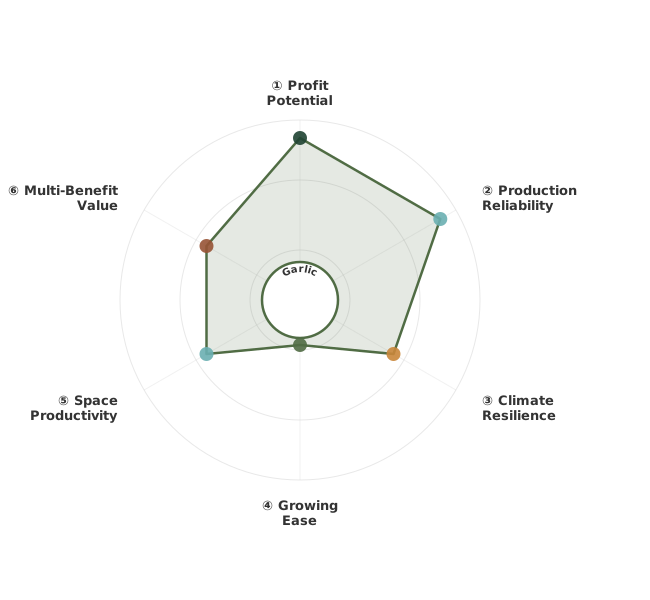
Regenerative Trait Ratings
How These Traits Are Calculated
Trait dimensions are ordered clockwise starting from the top of the chart (12 o'clock position):
1. Profit Potential
Net returns per acre from yield, pricing, input costs, and labor efficiency
WHAT: Synthesizes gross revenue potential, input costs, labor requirements, and storage/marketing advantages into net profitability per acre. Captures the complete economic picture from planting to sale.
WHY: Not all vegetables are equally profitable. High-value crops with efficient production can return $10,000-30,000/acre versus $2,000-5,000/acre for lower-value options. Profit potential guides crop selection for maximum return on limited land and determines viable scale for farm businesses.
HOW: Scored via LLM synthesis of economics data (yields, prices, costs), storage advantages (season extension, value-added potential), and labor intensity. Exceptional (3.0): High yields × premium prices with moderate inputs and good storage (garlic, high-value salad greens). Typical (2.0): Moderate returns (tomatoes, squash). Limited (1.0): Low yields, commodity pricing, or intensive labor requirements (low-value greens).
2. Production Reliability
Weighted: yield consistency (60%) + disease/pest resistance (40%)
WHAT: Combines yield reliability (harvest consistency year-to-year) with disease and pest resistance to measure predictable production. Reliable vegetables deliver consistent harvests without catastrophic failures from pests or weather.
WHY: Market commitments and CSA subscriptions require dependable production. Unreliable crops that fail in bad years or require intensive pest management create cash flow gaps and customer dissatisfaction. Reliable producers allow confident planning and reduce input costs from emergency pest interventions.
HOW: Weighted formula prioritizes yield reliability (60% weight) for overall consistency, with disease/pest resistance (40% weight) to prevent total failures. Exceptional (3.0): Consistent yields across variable seasons with strong natural pest resistance. Typical (2.0): Generally reliable with some pest/weather sensitivity. Limited (1.0): Highly variable yields or severe pest vulnerability requiring intensive management.
3. Climate Resilience
Temperature and rainfall tolerance across diverse growing conditions
WHAT: Measures the breadth of climatic conditions where the vegetable produces successfully—temperature extremes, humidity ranges, and rainfall variability. Climate-resilient crops work across diverse regions and weather patterns.
WHY: Climate variability is increasing—unexpected heat waves, cold snaps, or drought periods can wipe out entire vegetable harvests. Resilient crops provide insurance against weather uncertainty and allow geographic expansion for market growth. This is especially critical for direct-market farmers who can't easily substitute crops mid-season.
HOW: Ratings based on the climate_adaptability trait documenting temperature tolerance and geographic range. Exceptional (3.0): Grows successfully in diverse climates (cold to hot, humid to dry) with wide hardiness zone range. Typical (2.0): Moderate climate flexibility. Limited (1.0): Narrow climate requirements (tropical-only, cool-season-only, humidity-sensitive).
4. Growing Ease
Weighted: establishment ease (50%) + low maintenance requirements (50%)
WHAT: Combines establishment difficulty (germination, transplanting) with ongoing maintenance needs (watering, fertilizing, pest management) to measure total labor requirements. Easy crops grow reliably with minimal intervention.
WHY: Labor is the primary cost for small-scale vegetable production. Easy-care crops allow farmers to manage more production area with the same labor, improving profitability. Difficult crops requiring constant attention, precise timing, or specialized skills reduce overall farm productivity and increase risk.
HOW: Weighted formula balances establishment ease (50% weight) for reliable startup and inverted maintenance intensity (50% weight) for ongoing care. Exceptional (3.0): Direct-seeded or easy transplants with minimal water/fertility/pest needs. Typical (2.0): Moderate care requirements. Limited (1.0): Difficult establishment or intensive ongoing management (daily watering, heavy feeding, constant pest monitoring).
5. Space Productivity
Weighted: yield per square foot (60%) + season extension potential (40%)
WHAT: Combines spatial productivity (yield per square foot) with temporal productivity (extended harvest windows from succession planting or season extension). Maximizes production from limited growing area.
WHY: Land is the primary constraint for vegetable farmers—especially those near urban markets. Space-efficient crops delivering high yields in small areas improve per-acre profitability dramatically. Season extension (spring tunnels, fall protection) adds bonus production windows when competing supply is limited and prices are higher.
HOW: Weighted formula prioritizes space efficiency (60% weight) for core yield per area, with season extension potential (40% weight) for bonus production opportunities. Exceptional (3.0): High yields per square foot (10,000+ lbs/acre equivalents) with season extension options. Typical (2.0): Moderate yields and extension potential. Limited (1.0): Low yields or crops unsuitable for season extension.
6. Multi-Benefit Value
Ecosystem services beyond harvest—pollinator support, nitrogen fixing, pest habitat
WHAT: Measures ecosystem services provided beyond harvestable yield. Multi-benefit vegetables contribute to farm ecology through nitrogen fixation (legumes), pollinator support (flowering crops), beneficial insect habitat, soil building, or erosion control.
WHY: Cash crops can either extract from farm ecosystems or contribute to them. Vegetables with strong multi-benefit value build soil fertility, support pollinators needed for fruit/vine crops, and create habitat for pest predators—reducing external input needs. Nitrogen-fixing vegetables (beans, peas) provide $40-80/acre worth of fertility for following crops.
HOW: Ratings based on the multi_benefit_value trait documenting service contributions. Exceptional (3.0): Significant ecosystem services (nitrogen fixation, heavy pollinator support, soil building, pest habitat). Typical (2.0): Some ecosystem contributions. Limited (1.0): Single-purpose cash crops with minimal farm ecology benefits.
Ratings are based on documented performance in regenerative systems, not conventional high-input scenarios. All traits assume integrated management practices focused on soil health and ecosystem services.
1
Climate Suitability Assessment
Will this plant thrive in your climate?
Climate Suitability Assessment
Will this plant thrive in your climate?
Köppen Zone: Cfa (Humid Subtropical), Csa (Hot-Summer Mediterranean), Csb (Warm-Summer Mediterranean), Dfa (Hot-Summer Continental), Dfb (Warm-Summer Continental)
USDA Zone: 5a, 5b, 6a, 7a, 8a
Australian Zone: temperate
EU Climate Region: atlantic
Garlic thrives in climates with distinct cool periods for vernalization and a substantial growing season with moderate temperatures for bulb development. These conditions are met in Köppen Cfa, Cfb, Dfa, Dwa zones and regional zones like USDA 6a-8b, Australian temperate, and EU Atlantic/Continental. Optimal temperatures for growth range from 50-75°F (10-24°C), with a need for 120-180 frost-free days. Fall planting is highly successful in milder regions (USDA 6b-8b, EU Atlantic) due to reliable overwintering, while spring planting is robust in cooler continental zones (USDA 6a, EU Continental). Adequate rainfall (20-30 inches/50-75 cm) is crucial, with supplemental irrigation beneficial during dry spells, especially in summer. Soil drainage is paramount to prevent rot. Yields are consistently high, with bulb quality excellent, making it a highly reliable cash crop.
Köppen Zone: BSk (Cold Semi-Arid (Steppe)), Cfb (Oceanic (Maritime Temperate)), Cwa (Monsoon-Influenced Humid Subtropical), Cwb (Subtropical Highland)
USDA Zone: 4a, 9a
Australian Zone: subtropical
EU Climate Region: continental
Garlic can be grown successfully in regions with adequate, but not always optimal, conditions, including Köppen Cfb, Dfb, Dwa zones and regional zones such as USDA 5b-6a, 9a-9b, Australian subtropical, and EU Continental. These areas typically have 100-150 frost-free days and temperatures that can fluctuate outside the ideal range. Challenges include winter survival in colder continental zones (USDA 5b-6a) where fall-planted garlic may experience some winter kill, requiring hardy varieties. In warmer subtropical zones (USDA 9a-9b, Australian subtropical), insufficient winter chilling can reduce bulb size and quality, necessitating variety selection or artificial cooling. Summer heat in some of these zones can also increase disease pressure and water demand, requiring careful management and irrigation. Yields may be reduced by 10-25% compared to ideal zones, but economic viability is still achievable with appropriate practices.
Köppen Zone: Af (Tropical Rainforest), Am (Tropical Monsoon), Aw (Tropical Savanna), ET (Tundra), BSh (Hot Semi-Arid (Steppe)), BWh (Hot Desert), BWk (Cold Desert), Dfc (Subarctic), Dwa (Monsoon-Influenced Hot-Summer Continental)
USDA Zone: 2a, 3a, 3b, 10a, 11a, 12a
Garlic is not recommended for cultivation in zones with extreme temperature fluctuations, very short growing seasons, or insufficient winter chilling, including Köppen Dwb and regional zones like USDA 3a-5a, 10a-10b, and Australian subtropical (in specific hot inland areas not covered by the general subtropical assessment). In very cold zones (USDA 3a-5a), extreme winter lows (-40 to -15°F) make overwintering of fall-planted garlic highly improbable, and short growing seasons prevent adequate bulb development for spring-planted crops, leading to establishment failure or very low yields. Conversely, in very warm zones (USDA 10a-10b, some subtropical inland areas), the lack of sufficient winter cold (vernalization) severely hinders bulb formation, resulting in poor quality and yield. While technically possible with intensive management (e.g., artificial cooling, extensive irrigation, specialized varieties), the economic viability is questionable, with establishment success rates often below 70% and high input costs. Alternative crops better suited to these specific extreme conditions are recommended.
Note: Zones listed above represent climates where this plant can produce reliably with reasonable management. Climate zones not mentioned would require intensive climate modification (greenhouses, extensive infrastructure) and are not economically viable for regenerative agriculture purposes.
2
Soil Suitability Assessment
Which soil types work best for this plant?
Soil Suitability Assessment
Which soil types work best for this plant?
Loam Soil
This plant thrives in these soil types without requiring amendments or remediation. Natural soil conditions support optimal growth and productivity.
Clay Soil, Rich Soil, Sandy Soil
This plant performs acceptably in these soil types with moderate, manageable remediation such as pH adjustment, compost addition, or drainage improvement. The required amendments are practical and cost-effective for regenerative agriculture.
Acidic Soil, Alkaline Soil, Desert Soil, Rocky Soil, Saline Soil, Wet Soil
Growing this plant in these soil types would require impractical remediation such as complete soil replacement, extensive amendments, or cost-prohibitive infrastructure. These conditions are not economically viable for regenerative agriculture.
Note: Soil suitability assessments focus on remediation requirements. "Ideally Suited" means the plant generally thrives without the need for substantial amendments, "Adequate" means manageable remediation (lime, compost, mulch), and "Not Recommended" means impractical soil changes would be required. Climate factors like rainfall and temperature also influence success.
3
Seasonal Considerations
Planting timing, growth duration, and harvest windows
Seasonal Considerations
Planting timing, growth duration, and harvest windows
For garlic, timing is crucial for bulb development. Planting occurs in the fall, several weeks before the ground freezes, allowing for establishment and root growth before winter dormancy. This fall planting is key for most of these climate zones, setting the stage for spring and summer growth. If fall planting isn't feasible, a very early spring planting is the next best option, as soon as the soil can be worked and is above 50°F (10°C). Direct seeding is the standard practice, as garlic is typically grown from cloves.
Garlic requires a long growing season, with maturity typically taking 8 to 9 months from planting. Harvest usually occurs in mid-summer, once the lower leaves begin to yellow and dry. There is no practical succession planting for a single harvest of bulbs. Garlic exhibits good cold tolerance once established but can suffer if planted too late in spring, as it needs a cold period to initiate bulb formation. Protecting young plants from harsh winter winds with mulch is beneficial in colder zones. Heat tolerance is moderate; prolonged high temperatures during bulb development can negatively impact size.
4
System Role & Multi-Benefit Value
Functional roles, integration strategies, and stacked benefits
System Role & Multi-Benefit Value
Functional roles, integration strategies, and stacked benefits
Functional Role
Total System Value
Garlic offers multi-faceted value in regenerative agriculture beyond its direct harvest income. Its potent compounds can act as a natural pesticide, deterring pests like stink bugs and aphids when intercropped, thereby reducing the need for chemical interventions and promoting beneficial insect populations. Studies show garlic can enhance soil organic carbon and microbial activity, especially when organic fertilizers are used or when it's part of a crop rotation, contributing to soil health and carbon sequestration. Its inclusion in crop rotations or as a companion plant diversifies farm output and resilience. By reducing pest pressure and potentially improving soil structure and water retention (as seen with conservation agriculture practices), garlic supports a more robust and self-sustaining farm ecosystem. The ability to improve soil properties and provide pest control demonstrates significant ecosystem service contributions.
Integration Characteristics
Multi-Benefit Value: Adequate - Beyond its culinary value, garlic's natural compounds deter pests, contributing to a healthier ecosystem and reducing the need for external interventions.
5
Management & Care Requirements
Integration guidance, maintenance needs, and care practices
Management & Care Requirements
Integration guidance, maintenance needs, and care practices
How to Integrate This Plant
Garlic (Allium sativum) can be integrated into regenerative systems primarily as a cash crop with significant ecological co-benefits. Its strong scent and allicin compound offer natural pest deterrence, making it valuable in integrated pest management (IPM) strategies within alley cropping or food forest systems. As a fast-growing annual, it can occupy inter-rows or understory niches, contributing to soil health through organic matter addition when residues are incorporated. Intercropping garlic with crops like chili peppers has demonstrated aphid population reduction, highlighting its role in enhancing biodiversity and reducing reliance on synthetic inputs. Its primary contribution to system enhancement is through pest management and soil health improvement, with potential for carbon sequestration via increased soil organic matter. It can be sown or transplanted early in the season, providing benefits from Year 1.
Integration Practices & Management
While the provided sources offer limited detail on the specific integration of *Allium sativum* (garlic) within comprehensive regenerative agriculture systems, they suggest several potential applications. One study indicates that incorporating organic matter, such as through the use of organic fertilizers or crop rotation with garlic, can enhance soil organic carbon and microbial activity. Garlic has been explored as a component in crop rotations, where its incorporation into the soil may influence soil properties like pH and electrical conductivity. Furthermore, a practical application for pest management is the use of garlic spray to deter insects like stink bugs, potentially reducing reliance on synthetic pesticides. Another source highlights garlic's role in water conservation when integrated into conservation agriculture practices, showing reduced crop coefficient values and significant irrigation water savings compared to conventional tillage. While direct information on establishment, grazing integration, or termination strategies for garlic within regenerative systems is not present, these findings suggest garlic can contribute to soil health improvement, pest deterrence, and water efficiency when thoughtfully managed.
Management Profile
Maintenance Intensity: Adequate - Maintaining garlic health involves integrating robust soil fertility through compost and mulch, and managing water through mulching to support vigorous growth and minimize stress.
Sources behind this view
-
Fall‐planted cover crops improve nitrogen use efficiency but reduce garlic yield in a relay intercropping system amended with arbuscular mycorrhizal fungi (opens in new window)
Northeast USA study: Fall cover crops improved garlic nitrogen use efficiency but reduced yield by up to 31% in the first year due to competition. Oat cover crops showed promise in year two. Beneficia
6
Economics & Value Streams
Direct harvest, system benefits, ecosystem services, and risk diversification
Economics & Value Streams
Direct harvest, system benefits, ecosystem services, and risk diversification
Comprehensive economic analysis including direct harvest value, system enhancement contributions, ecosystem services, value timeline, and risk diversification strategies.
Vegetable & Specialty Economics
| Metric | Value |
|---|---|
| Seed/Transplant Cost | 500-1000 $/acre 1235-2471 $/ha |
| Expected Yield | 4000-8000 lbs/acre 4483-8966 kg/ha |
| Market Price | 1.50-3.00 $/lb 3-6 $/kg |
| Harvest/Handling Cost | 1000-2000 $/acre 2471-4942 $/ha |
| Marketing/Distribution Cost | 500-1000 $/acre 1235-2471 $/ha |
| Net Annual Return* | $2000-$22000/acre/year |
Economics highly variable by market channel (direct vs wholesale), scale, and management. Direct marketing commands premiums but requires labor. Values shown for mid-scale market garden operations.
* Net Annual Return = (Yield × Market Price) − (Amortized Establishment Cost + Annual Maintenance). This return is realized only at/after first harvest; early years have costs but no revenue. Range shows worst case to best case scenarios.
System Enhancement Value
Beyond harvest: ecosystem services from regenerative cash crop practices
Ecological Service Contributions
Garlic demonstrates significant potential for enhancing soil health and contributing to a more robust farm ecosystem. Research indicates that substituting chemical nitrogen fertilizers with organic alternatives, such as those used in conjunction with garlic cultivation, can substantially increase soil organic carbon (TOC) and labile fractions like microbial biomass carbon (MBC) and dissolved organic carbon (DOC). This suggests garlic systems, especially when integrated with organic inputs, can improve soil structure and fertility over time. Furthermore, garlic has been noted for its potential anti-parasitic properties for livestock. While not a direct part of the plant's cultivation, its inclusion in a farm system could lead to reduced reliance on chemical dewormers, thereby improving animal health and potentially reducing the need for extensive land management solely for parasite control. The use of garlic in crop rotation, as seen in a study with cucumber, also showed enhanced soil catalase and invertase activities and increased fungal species richness, indicating a positive impact on soil microbial communities. This suggests garlic can act as a beneficial component in diverse cropping systems, promoting soil biological activity and potentially improving disease suppression.
Ecosystem Service Contributions
Environmental contributions: carbon, pollinators, wildlife, and water
- Carbon Sequestration: Garlic, as an annual crop with moderate biomass production, contributes to soil carbon sequestration primarily through the incorporation of organic matter from crop residues and root systems. Its contribution is enhanced when integrated into systems utilizing organic fertilizers and cover cropping, which increase soil organic carbon fractions.
- Pollinator Support: Low. While garlic flowers can attract some pollinators, it is not a primary pollinator-attracting crop. Its main value lies in other ecosystem services.
- Wildlife Habitat: Limited. Garlic does not offer significant mast, nesting, or browse value for most wildlife. Its primary contribution to wildlife is indirect, through improved soil health which can support a broader range of soil fauna.
- Water Quality: Not applicable
Value Timeline: Production & Services
When you'll see results: varies by crop (annual harvest vs. perennial establishment)
Years 1-2
Initial soil health improvements through organic matter incorporation and potential reduction in parasite pressure in livestock systems. Basic cash crop revenue begins with the first harvest.
Years 3-5
More significant improvements in soil organic matter, microbial activity, and aggregate stability are observed with continued integration. Established cash crop revenue, with potential for yield increases due to improved soil conditions. Reduced reliance on external inputs for soil fertility and potentially animal health.
Years 10-20
Mature soil benefits leading to enhanced resilience against drought and disease. Consistent and potentially higher yields from improved soil structure and fertility. Garlic can be a stable component of diversified income streams.
20+ Years
Long-term, sustained soil health benefits contributing to a resilient farm ecosystem. Continued reliable cash crop production and ongoing ecosystem service provision.
Farm Risk Reduction
How this reduces farm risk: backup income, weather protection, market hedges
- Multiple Revenue Streams: Direct cash crop sales of garlic. Potential for reduced input costs (fertilizers, dewormers) through integration. Enhanced crop yields in subsequent rotations due to improved soil health.
- Temporal Income Spread: Annual harvest provides consistent income. Ecosystem services like soil health improvement are ongoing and cumulative, providing long-term stability and resilience.
- Market Risk Hedge: Diversifies farm revenue beyond monoculture crops. The potential anti-parasitic properties offer a hedge against reliance on external veterinary inputs. Improved soil health under garlic cultivation can lead to greater crop resilience against environmental stresses like drought.
7
Regenerative Suitability Details
Comprehensive trait ratings for system integration assessment
Regenerative Suitability Details
Comprehensive trait ratings for system integration assessment
Comparative ratings for this plant across key regenerative agriculture traits.
| Trait | Suitability | Explanation |
|---|---|---|
| Season Extension | Ideally Suited | Garlic, planted in fall, leverages its cool-season hardiness to overwinter, offering an early summer harvest and extending the productive season. |
| Space Efficiency | Adequate | Garlic offers good yield per bulb and can be integrated into diverse planting schemes, maximizing the productivity of available growing space. |
| Storage Longevity | Ideally Suited | When harvested and cured properly, garlic stores exceptionally well for 6-12 months, preserving its value and providing a food source through the winter months. |
| Yield Reliability | Ideally Suited | Garlic demonstrates consistent performance across varying soil conditions, contributing to predictable harvests and reliable food production within the system. |
| Establishment Ease | Not Recommended | Garlic is typically established from cloves, a rapid method that ensures robust plant development and integrates seamlessly into the growing cycle. |
| Multi Benefit Value | Adequate | Beyond its culinary value, garlic's natural compounds deter pests, contributing to a healthier ecosystem and reducing the need for external interventions. |
| Climate Adaptability | Adequate | Garlic thrives in temperate climates (zones 3-9), requiring a chilling period for bulb formation and adapting well to well-drained soils and mindful water management. |
| Maintenance Intensity | Adequate | Maintaining garlic health involves integrating robust soil fertility through compost and mulch, and managing water through mulching to support vigorous growth and minimize stress. |
| Disease Pest Resistance | Ideally Suited | Garlic's inherent properties provide strong natural defense against many pests and diseases, minimizing the need for reactive interventions and supporting a balanced agroecosystem. |
Comparative System: Ratings compare plants within their economic category (e.g., cover crop nitrogen fixation compared to other cover crops, not to all plants). Individual farm conditions and management practices significantly influence actual performance.
8
Learn More
Why farmers use this plant and additional resources
Learn More
Why farmers use this plant and additional resources
Why Regenerative Farmers Use This Plant
Garlic (Allium sativum) offers significant economic potential as a high-value specialty cash crop within regenerative farming systems, capable of generating substantial revenue per acre. Its intensive cultivation and relatively short growing season, typically 6-9 months from planting to harvest, allow for efficient land use and a rapid return on investment. This makes it an attractive option for direct-to-consumer sales, farmers' markets, CSA shares, and specialty wholesale markets seeking premium quality produce. Integrating garlic into a diversified farm income stream can enhance overall farm resilience and profitability, providing a consistent cash flow alongside other crops and livestock. A well-managed acre of garlic can yield 5,000-10,000 lbs (2,268-4,536 kg) of marketable bulbs for hardneck varieties, and up to 15,000 lbs/acre (16,800 kg/ha) for softneck varieties. Prices vary significantly based on variety, quality, and market demand, often ranging from $3-$8+ per pound ($6.60-$17.60+ per kg).
Beyond its direct market value, garlic plays a beneficial role in system integration. While not a nitrogen fixer, its deep fibrous root system, typically reaching 18-24 inches (45-60 cm), can help break up soil compaction and scavenge nutrients from deeper soil profiles, making them available to subsequent crops. Its strong aromatic compounds and sulfur content are known to deter certain pests and fungal diseases, offering a degree of natural pest and disease management when intercropped or rotated strategically. Garlic can be a valuable component in crop rotations, particularly following crops that leave significant residue, as its intensive cultivation can help manage weed pressure. Its inclusion can contribute to a more robust and biodiverse farm ecosystem, supporting beneficial insects and soil microbial activity. While not a primary pollinator attractant, its flowering stalks (scapes) can provide a minor nectar source for bees and other beneficial insects.
Quantitatively, the ecosystem benefits of garlic are primarily linked to its contribution to soil health through careful management and its role in diversified cropping systems. By reducing the reliance on synthetic inputs through its role in integrated pest management and nutrient cycling, garlic cultivation can lead to improved water infiltration and reduced soil erosion over time. The organic matter generated from garlic harvest residues, when properly managed and composted or incorporated, contributes to building soil organic carbon. Healthy garlic stands, supported by biologically active soils rich in organic matter, contribute to improved water infiltration.
Regional success examples highlight garlic's adaptability. In the fertile valleys of California, USA, large-scale commercial growers achieve high yields through optimized irrigation and soil management, supplying national markets. In parts of Europe, such as the Drome region of France, garlic is a traditional crop grown in smaller, diversified farms, often sold through local markets and restaurants. In Australia, growers in regions like South Australia and Tasmania are increasingly focusing on specialty garlic varieties, capitalizing on growing domestic and export demand for unique flavors and high quality, often integrating it into mixed farming operations. In the United States, farms in regions like California, Idaho, and New Mexico have established robust organic garlic production. European farmers, particularly in Spain, France, and Italy, have a long tradition of cultivating garlic, integrating it into Mediterranean cropping systems. In Brazil, while not a primary crop, garlic can be grown in smaller plots within diversified fruit or vegetable operations.
9
How to Integrate This Plant
Practical guidance for regenerative systems
How to Integrate This Plant
Practical guidance for regenerative systems
Garlic is typically established from cloves planted directly into the soil. For commercial production, planting is usually done in the fall in temperate climates to allow for root development before winter dormancy, or in early spring in colder regions. Seeding rates are determined by the size and density of cloves desired, with recommendations ranging from 800-1,200 lbs of seed cloves per acre (900-1,340 kg/ha) for smaller cloves, up to 1,000-2,000 lbs/acre (1,120-2,240 kg/ha) for larger cloves, depending on clove size and desired plant spacing. Planting depth is crucial for proper bulb development and frost protection, with cloves typically set 2-4 inches (5-10 cm) deep, ensuring the pointed end faces upwards. Spacing between cloves within a row generally ranges from 4-8 inches (10-20 cm), with row spacing of 12-24 inches (30-60 cm) to allow for cultivation and airflow. This can result in approximately 30,000 to 60,000 plants per acre.
In the Northern Hemisphere, planting often occurs in the fall (September to November) to allow for root development before winter and a head start in spring, while in the Southern Hemisphere, planting typically takes place from March to May. For example, farmers in Oregon, USA, often plant in October, while growers in Victoria, Australia, aim for May planting. In USDA Zones 4-6, fall planting typically occurs from September to November, while spring planting in Zones 3 and colder occurs as soon as the soil can be worked, around March to April.
Management practices for garlic focus on providing consistent moisture and fertility while minimizing pest and disease pressure. Garlic requires approximately 1-1.5 inches (2.5-3.8 cm) of water per week, particularly during bulb formation, which can be supplied through irrigation. Fertility is best built through biological sources, such as incorporating well-composted manure or cover crop residue from previous crops. Garlic is a moderate to heavy feeder and can draw significant nutrients from the soil; therefore, a robust cover cropping strategy before planting is essential. Supplemental feeding with compost tea or balanced organic fertilizers may be beneficial. Growth timelines vary by variety and climate, with fall-planted garlic typically establishing roots in 3-6 weeks and reaching maturity in 6-9 months. Plant height at maturity can range from 1.5-3 feet (0.45-0.9 m).
Pest and disease management prioritizes preventative measures and biological controls. Ensuring good air circulation through proper spacing, selecting disease-resistant varieties, maintaining soil health to promote vigorous plant growth, and implementing crop rotation intervals of at least 3-4 years to break pest and disease cycles are key. Encouraging beneficial insects like ladybugs and lacewings through habitat creation, using row covers to deter early-season pests, and practicing strict sanitation to remove infected plant debris are also important integrated pest management strategies.
The production cycle of garlic within a regenerative framework emphasizes soil stewardship and continuous improvement. From planting a clove in the fall or early spring, the plant establishes roots and then begins vegetative growth. Bulb formation occurs in late spring and early summer, with harvest typically taking place in mid-summer (July-August in the Northern Hemisphere, January-February in the Southern Hemisphere) when the lower leaves begin to yellow and the stalk starts to dry. Succession planting is not typically practiced for garlic due to its long single-season growth cycle; however, planting different varieties with staggered maturity dates can extend the harvest window.
Following garlic harvest, it is crucial to implement soil-building practices. A common regenerative approach is to follow garlic with a cover crop mix, such as a blend of cereal rye and hairy vetch, planted within 2-3 weeks of final harvest to protect the soil, scavenge any remaining nutrients, and add organic matter. Alternatively, a quick-growing cover crop like buckwheat or a mix of annual ryegrass and crimson clover can be planted to scavenge residual nutrients, prevent erosion, and add organic matter before the next garlic planting or a more substantial winter cover crop. Garlic is often preceded by nitrogen-fixing cover crops like vetch or clover, or by crops that leave significant residue, such as corn or small grains, to build soil fertility. It is generally followed by less demanding crops or other cover crops to allow soil recovery. A minimum 3-year rotation interval with non-related crops, such as grains or legumes, is recommended to break potential disease cycles and prevent nutrient depletion.
Regional adaptations for garlic cultivation are diverse. In the arid regions of the southwestern USA, growers utilize efficient irrigation systems and select heat-tolerant varieties. In the cooler climates of the UK, fall planting is standard, with varieties chosen for their winter hardiness. In New Zealand, the fertile soils and temperate climate allow for successful growth of various garlic types, often integrated into mixed horticultural operations. In Brazil, while garlic is grown, it is often in regions with more temperate microclimates or with specific irrigation and management to cope with higher humidity and temperatures, sometimes intercropped with other vegetables. In the corn-belt regions of the United States, farmers often follow a corn or soybean harvest with the planting of garlic in the fall, benefiting from the residual fertility and improved soil structure. In Australia, growers in cooler southern regions might integrate garlic into their rotations with cereals or legumes, utilizing autumn rains for establishment. In regions with hot summers, selecting hardneck varieties that require a longer, cooler vernalization period is crucial, or softneck varieties may be preferred for their adaptability to warmer climates and longer storage potential.