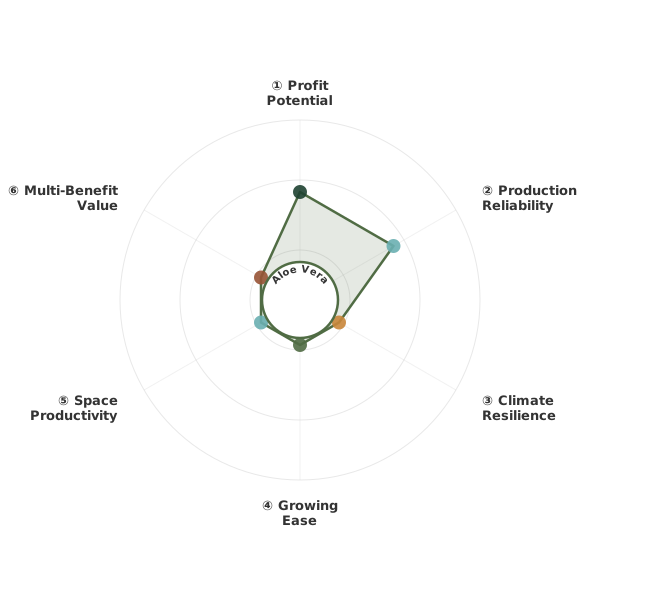
While Aloe vera is not explicitly described as a primary cover crop, forage, or nitrogen fixer in these excerpts, its utility in regenerative systems is emerging. Its surfactant qualities are noted for pest control, particularly against spider mites, where aloe juice can be mixed with agents like neem oil to create effective, natural sprays that disrupt pest life cycles. This contributes to reduced reliance on synthetic pesticides. Aloe vera gel also functions as a natural moisturizer and is beneficial for soothing burns, wounds, and skin irritations, reducing the need for manufactured topical treatments. Furthermore, used aloe vera leaves can be composted, contributing to nutrient cycling and soil building. Organic aloe vera farming has been identified as a viable alternative for small and average-sized farms, especially on marginal lands, suggesting its potential role in diversifying agricultural landscapes and improving land utilization. Its cultivation can be enhanced with organic amendments like cow dung and chicken droppings, demonstrating integration with livestock systems and nutrient management. The plant's resilience, as shown in trials evaluating salinity tolerance, indicates potential for use in diverse environments within regenerative farming systems.

Regenerative Quick Profile

All recommendations assume integrated, regenerative practices—not conventional inputs.

Climate & Soil Fit

Climate: Tropical Rainforest, Tropical Monsoon, Tropical Savanna, Hot Semi-Arid (Steppe), Cold Semi-Arid (Steppe), Hot Desert, Cold Desert, Humid Subtropical, Oceanic (Maritime Temperate), Hot-Summer Mediterranean, Warm-Summer Mediterranean, Monsoon-Influenced Humid Subtropical, Subtropical Highland, Hot-Summer Continental, Warm-Summer Continental, Subarctic, Monsoon-Influenced Hot-Summer Continental, Tundra

Zones: USDA 9-11, Australian Zones 11-13, EU Mediterranean, Subtropical

Optimal Soil: Sandy Soil

System Role & Functions

Primary: Cash Crop With Services

Secondary: Specialty, Cover Crop System

Key Benefits: Low maintenance, Disease Pest Resistance

Management Level

Experience: Advanced

Maintenance: Very low maintenance - Once established, Aloe vera demonstrates exceptional drought tolerance and minimal needs, flourishing with natural fertility and robust soil structure.

Value Streams

  • Vegetable/specialty crop harvest
1

Climate Suitability Assessment

Will this plant thrive in your climate?

IDEALLY SUITED

Köppen Zone: Af (Tropical Rainforest), Am (Tropical Monsoon), Aw (Tropical Savanna), Cfa (Humid Subtropical), Cwa (Monsoon-Influenced Humid Subtropical)
USDA Zone: 8a, 9a, 10a, 11a, 12a
Australian Zone: tropical, subtropical

Aloe Vera performs exceptionally well in climates characterized by consistently warm temperatures, typically with average annual temperatures above 60°F (15°C) and minimal to no frost. These conditions are met in Köppen zones like Cfa (with good drainage), Aw, Am, and in regional zones such as USDA 8b through 13a, Australian subtropical and tropical regions, and parts of the EU Mediterranean and Atlantic (with good drainage). These zones offer long growing seasons, often year-round, allowing for continuous growth and high yields. Rainfall patterns are generally favorable, though excellent drainage is always crucial to prevent root rot, especially in high-rainfall tropical areas. Minimal management is required beyond ensuring well-drained soil and occasional supplemental watering during extended dry spells in otherwise suitable regions. Establishment is highly successful, and the plant is reliably productive for cash cropping and other functions.

ADEQUATE

Köppen Zone: BSh (Hot Semi-Arid (Steppe)), BWh (Hot Desert), Cfb (Oceanic (Maritime Temperate)), Csa (Hot-Summer Mediterranean), Csb (Warm-Summer Mediterranean), Cwb (Subtropical Highland)
USDA Zone: 7a
Australian Zone: grassland, temperate
EU Climate Region: atlantic, mediterranean

Aloe Vera can be adequately cultivated in regions with moderate temperatures and distinct seasons, provided some management considerations are in place. This includes Köppen zones like Cfa, Cwa, and Aw, as well as USDA zones 7a and 7b, Australian grassland and temperate zones, and EU Mediterranean and Atlantic regions. These areas typically have sufficient growing days but may experience occasional frost, lower average temperatures, or periods of drought or excessive moisture. Supplemental irrigation is often necessary during dry spells, and careful attention to soil drainage is paramount to prevent root rot, particularly in cooler, wetter climates or during wet seasons. While yields may not reach the peak potential of 'ideally suited' zones, economic viability is achievable with appropriate cultivation practices and site selection.

NOT RECOMMENDED

Köppen Zone: ET (Tundra), BSk (Cold Semi-Arid (Steppe)), BWk (Cold Desert), Dfa (Hot-Summer Continental), Dfb (Warm-Summer Continental), Dfc (Subarctic), Dwa (Monsoon-Influenced Hot-Summer Continental)
USDA Zone: 2a, 3a, 3b, 4a, 5a, 5b, 6a
Australian Zone: arid

Aloe Vera is not recommended for cultivation as a cash crop in arid and hot desert climates (Köppen BSh, BWh; Australian arid; USDA zones below 7a with extreme cold or very limited growing seasons). These zones present significant challenges due to extreme heat, severe water scarcity, and/or extreme cold. In hot arid and desert regions, the lack of consistent rainfall and high evaporation rates necessitate extensive and costly irrigation infrastructure, while intense heat can cause severe stress and damage. In cold zones, winter temperatures are too low for perennial survival, requiring annual replanting. Establishment success is low, and the plant's productivity is severely limited, making it economically unviable. Alternative plants like Prickly Pear Cactus, Agave, or Jojoba are better suited to these harsh conditions, offering more reliable yields with less intensive management and resource input.

Better alternatives for these "not recommended" zones: Prickly Pear Cactus (Opuntia spp.) (highly drought-tolerant, adapted to arid conditions, and can be cultivated for fruit and pads), Agave (Agave spp.) (succulent native to arid regions, grown for fiber, sweetener, and ornamental value), Saltbush (Atriplex spp.) (very drought and salt tolerant native shrub, can be used for fodder or biomass)

Note: Zones listed above represent climates where this plant can produce reliably with reasonable management. Climate zones not mentioned would require intensive climate modification (greenhouses, extensive infrastructure) and are not economically viable for regenerative agriculture purposes.

2

Soil Suitability Assessment

Which soil types work best for this plant?

IDEALLY SUITED

Sandy Soil

This plant thrives in these soil types without requiring amendments or remediation. Natural soil conditions support optimal growth and productivity.

ADEQUATE

Clay Soil, Desert Soil, Loam Soil, Rich Soil, Rocky Soil

This plant performs acceptably in these soil types with moderate, manageable remediation such as pH adjustment, compost addition, or drainage improvement. The required amendments are practical and cost-effective for regenerative agriculture.

NOT RECOMMENDED

Acidic Soil, Alkaline Soil, Saline Soil, Wet Soil

Growing this plant in these soil types would require impractical remediation such as complete soil replacement, extensive amendments, or cost-prohibitive infrastructure. These conditions are not economically viable for regenerative agriculture.

Note: Soil suitability assessments focus on remediation requirements. "Ideally Suited" means the plant generally thrives without the need for substantial amendments, "Adequate" means manageable remediation (lime, compost, mulch), and "Not Recommended" means impractical soil changes would be required. Climate factors like rainfall and temperature also influence success.

3

Seasonal Considerations

Planting timing, growth duration, and harvest windows

For Aloe Vera, a plant thriving in warm climates, timing is key to successful cultivation. Begin by starting seeds indoors several weeks before your last expected frost. Transplant seedlings into the garden only after all danger of frost has passed and soil temperatures consistently reach at least 60°F (15°C). Direct seeding is generally not recommended for this crop.

Aloe Vera is relatively slow to mature, often requiring a full growing season, or even up to two years for significant leaf development and harvest. The primary harvest window extends through the warmer months, from late spring into fall. While not typically a crop for succession planting in the traditional sense, you can plan for successive harvests of mature leaves as they become available throughout the summer and early autumn.

This succulent enjoys heat but can be damaged by prolonged freezing temperatures. While it tolerates some mild frost, significant cold will induce dormancy or cause damage. In cooler regions within its climate zones, consider season extension techniques like row covers or moving potted plants indoors before the first expected frost to protect them and potentially extend the harvest slightly into the late fall. In truly cold winters, these plants will likely not survive outdoors and are best treated as annuals or overwintered in protected environments.

4

System Role & Multi-Benefit Value

Functional roles, integration strategies, and stacked benefits

Functional Role

Total System Value

Aloe vera offers a multi-faceted contribution to farm system resilience. Its direct harvest value as a medicinal, cosmetic, and culinary product provides a consistent income stream, diversifying farm revenue. Beyond harvest, aloe vera enhances the system by offering natural pest control solutions, reducing reliance on external chemical inputs, as demonstrated by its efficacy against spider mites and in potato blight management trials. Its gel can be used in homemade farm remedies or composted, contributing to nutrient cycling. While not a primary ecosystem service provider like nitrogen-fixing legumes or large trees, its cultivation can support a healthier soil biome and potentially attract beneficial insects. Its inclusion in a diverse cropping system diversifies risk, ensuring that even if other crops fail, income from aloe vera can be maintained. This plant's ability to grow in less-than-ideal conditions (marginal soils) further enhances its value in creating a more robust and resilient agricultural landscape.

Integration Characteristics

Multi-Benefit Value: Not Recommended - Primarily valued for medicinal and ornamental qualities, Aloe vera offers limited direct ecosystem services but contributes to soil building when integrated into diverse systems.

5

Management & Care Requirements

Integration guidance, maintenance needs, and care practices

How to Integrate This Plant

Aloe vera can be integrated into regenerative systems primarily as a cash crop with potential for multiple services. Its primary function is as a cash crop, yielding valuable gel for medicinal and cosmetic uses, as well as culinary applications. It can also offer pest control benefits, as evidenced by its use against spider mites. While not a nitrogen fixer or a primary erosion control plant, its dense growth can help stabilize soil in certain contexts. It is not typically used as a shade provider, windbreak, or direct pollinator attractant in the way trees or flowering shrubs are, but its cultivation can support beneficial insects indirectly. Compatible practices include alley cropping, where it might be grown between rows of other crops, or as part of a food forest system, particularly in its early stages or in specific zones. It can also be incorporated into polyculture systems. Its contribution timeline is relatively quick; it begins providing harvestable gel within its first year, with plants becoming more robust and productive in years 3-5. Beyond direct harvest, its value lies in its potential to replace synthetic pesticides (like in spider mite control), its use in compost, and its contribution to a diversified farm economy.

Integration Practices & Management

While specific details on establishment methods like seeding rates, no-till practices, or integration with grazing are not present, the knowledge base highlights Aloe vera's potential for soil improvement and pest control. Source details its use as a natural pesticide, where aloe vera juice's surfactant qualities can smother spider mites, and it can be mixed with agents like neem oil. This suggests a role in biological pest management within a regenerative system. Source advises on optimal growing conditions, recommending partial shade and rich, moist soil for robust plant development, which is crucial for maximizing its benefits. Source broadly covers the cultivation, utilization, and quality control of medicinal herbs including aloe vera, indicating its inclusion in diverse herb production systems. Source presents a study on the economic sustainability of organic Aloe vera farming in Greece, suggesting it can be a viable option for small farms, particularly on marginal lands, aligning with regenerative principles of land stewardship. The knowledge base does not detail termination strategies or specific integration with cash crops beyond its general mention in herb cultivation. While coverage in our knowledge base is limited, the above represents documented uses in regenerative systems.

Management Profile

Maintenance Intensity: Ideally Suited - Once established, Aloe vera demonstrates exceptional drought tolerance and minimal needs, flourishing with natural fertility and robust soil structure.

6

Economics & Value Streams

Direct harvest, system benefits, ecosystem services, and risk diversification

Comprehensive economic analysis including direct harvest value, system enhancement contributions, ecosystem services, value timeline, and risk diversification strategies.

Vegetable & Specialty Economics

Metric Value
Seed/Transplant Cost 200-400 $/acre 494-988 $/ha
Expected Yield 1000-3000 lbs/acre 1120-3362 kg/ha
Market Price 2.00-5.00 $/lb 4-11 $/kg
Harvest/Handling Cost 300-600 $/acre 741-1482 $/ha
Marketing/Distribution Cost 150-300 $/acre 370-741 $/ha
Net Annual Return* $700-$14350/acre/year

Economics highly variable by market channel (direct vs wholesale), scale, and management. Direct marketing commands premiums but requires labor. Values shown for mid-scale market garden operations.

* Net Annual Return = (Yield × Market Price) − (Amortized Establishment Cost + Annual Maintenance). This return is realized only at/after first harvest; early years have costs but no revenue. Range shows worst case to best case scenarios.

System Enhancement Value

Beyond harvest: ecosystem services from regenerative cash crop practices

Ecological Service Contributions

Aloe vera offers significant 'other system benefits' within an integrated farm. It can function as a 'cover crop system', contributing to soil health and erosion control, particularly in arid or semi-arid regions where its drought tolerance is advantageous. Its medicinal and cosmetic properties allow for on-farm processing and value-added product creation, such as biostimulants, reducing reliance on external inputs. Furthermore, aloe vera can be propagated easily from 'pups' or baby plants, providing a low-cost internal source for new plants or for sale as young plants at farmers' markets, creating an 'agile work' income stream. Its inclusion in food forests or permaculture systems, as suggested by its presence alongside other resilient plants, indicates its role in creating a diverse and robust agricultural landscape. The plant's adaptability to pots and indoor overwintering in colder climates further enhances its utility in diverse farming setups, allowing for its integration across different microclimates.

Ecosystem Service Contributions

Environmental contributions: carbon, pollinators, wildlife, and water

  • Carbon Sequestration: As a succulent, aloe vera stores carbon in its tissues. While not a fast-growing tree, its perennial nature and ability to thrive in various conditions contribute to consistent, albeit moderate, carbon sequestration over its lifespan.
  • Pollinator Support: Low. While aloe vera does flower, its primary value in integrated systems is not typically as a major pollinator attractant compared to dedicated bee-foraging plants.
  • Wildlife Habitat: Minimal to low. Aloe vera's succulent leaves and gel are not a primary food source for most wildlife. Its dense growth may offer some minor shelter for small ground-dwelling insects or reptiles in specific contexts.
  • Water Quality: Not applicable

Value Timeline: Production & Services

When you'll see results: varies by crop (annual harvest vs. perennial establishment)

Years 1-2

Establishment of the plant, initial erosion control from ground cover, potential for early propagation and small-scale sales of 'pups' or divisions. Its use as a component in a 'cover crop system' begins.

Years 3-5

Mature plant growth allows for consistent harvesting of gel for on-farm use (medicinal, cosmetic, biostimulants), and increased volume for direct sales or value-added products. Its resilience contributes to system stability in challenging conditions.

Years 10-20

Established, mature clumps provide a reliable and abundant source of gel. Potential for significant income generation through direct sales, processed products, and as a component in diversified farm offerings. Its role in soil health and resilience becomes more pronounced.

20+ Years

Long-term, stable source of valuable plant material. Continued contribution to farm resilience and potential for continued propagation and sales. Its deep root system (in established clumps) enhances soil structure.

Farm Risk Reduction

How this reduces farm risk: backup income, weather protection, market hedges

  • Multiple Revenue Streams: Sale of fresh aloe vera gel, sale of processed aloe vera products (e.g., lotions, salves), sale of young plants/pups, use in on-farm biostimulants, potential use in medicinal/cosmetic preparations for direct sale or personal use, its role as a component in a 'cover crop system' contributing to soil health and reduced erosion.
  • Temporal Income Spread: Ongoing harvest of gel throughout the growing season, with peak production from mature plants. Propagation provides a continuous source of new plants. Its value is not tied to a single annual harvest but to its perennial service and product provision.
  • Market Risk Hedge: Aloe vera's drought tolerance makes it resilient in arid regions, reducing risk from water scarcity. Its multiple uses (medicinal, cosmetic, agricultural) create diverse revenue streams, hedging against market fluctuations for any single product. Its ease of propagation reduces reliance on external nursery stock.
7

Regenerative Suitability Details

Comprehensive trait ratings for system integration assessment

Comparative ratings for this plant across key regenerative agriculture traits.

Trait Suitability Explanation
Season Extension Not Recommended As a tropical succulent, Aloe vera thrives in warm microclimates but does not extend the growing season in cooler regions, relying on its inherent resilience.
Space Efficiency Not Recommended Aloe vera's slow growth and spreading habit necessitate dedicated space for significant harvests, favoring a less intensive planting design that supports soil health.
Storage Longevity Adequate Aloe vera leaves maintain quality for several weeks when kept cool, but are best utilized fresh or processed promptly to capture their full benefits.
Yield Reliability Adequate Aloe vera offers moderate yield reliability in suitable arid or semi-arid environments, emphasizing careful water management to prevent issues from over-moisture.
Establishment Ease Not Recommended Establishing Aloe vera from seed is slow and specialized; propagation via offsets is preferred for rapid and efficient integration into the living system.
Multi Benefit Value Not Recommended Primarily valued for medicinal and ornamental qualities, Aloe vera offers limited direct ecosystem services but contributes to soil building when integrated into diverse systems.
Climate Adaptability Not Recommended Aloe vera thrives in warm, well-drained conditions and is highly sensitive to frost, requiring careful site selection to maximize moisture retention without waterlogging.
Maintenance Intensity Ideally Suited Once established, Aloe vera demonstrates exceptional drought tolerance and minimal needs, flourishing with natural fertility and robust soil structure.
Disease Pest Resistance Ideally Suited Aloe vera exhibits remarkable resilience to drought and pests, thriving in arid conditions with minimal intervention, supported by a healthy, balanced ecosystem.

Comparative System: Ratings compare plants within their economic category (e.g., cover crop nitrogen fixation compared to other cover crops, not to all plants). Individual farm conditions and management practices significantly influence actual performance.

8

Learn More

Why farmers use this plant and additional resources

Why Regenerative Farmers Use This Plant

Aloe vera is a highly valuable specialty cash crop within regenerative agriculture systems, offering significant revenue potential per acre due to its medicinal and cosmetic applications. Its drought tolerance and adaptability to marginal lands make it an excellent candidate for diversified farming operations, particularly in regions with limited water resources. With a relatively short days-to-harvest window, typically 18-24 months from planting to first significant harvest of mature leaves, it allows for strategic market entry and consistent supply. This rapid turnaround, combined with high market demand, positions aloe vera as a key component in building robust, multi-stream farm income. Its cultivation can be integrated into direct-to-consumer models, farmers' markets, CSA shares, and specialty wholesale channels, capturing premium prices for organically grown produce.

Beyond its direct economic benefits, aloe vera contributes significantly to soil health and ecosystem resilience. As a succulent, it has a shallow but dense root system that helps to bind soil, reducing erosion on slopes and in arid environments. Its low water requirements mean it can be grown in areas where other crops struggle, minimizing the need for irrigation and associated energy inputs. Furthermore, aloe vera can act as a natural weed suppressor once established, reducing the need for mechanical or chemical weed control. Its presence in a diversified farm plan can also attract beneficial insects, contributing to a more balanced agroecosystem.

The integration of aloe vera into cropping systems can lead to quantifiable improvements in soil organic matter over time, especially when managed with a focus on residue recycling. While not a nitrogen fixer, its robust growth and leaf production contribute significant biomass that can be composted or incorporated back into the soil, feeding the soil food web. Its ability to thrive in less fertile soils also means it can be used to reclaim or improve degraded land, acting as a pioneer crop that builds soil structure and fertility for subsequent, more demanding crops. Its deep root system, typically reaching 1-2 feet (30-60 cm) or more in mature plants, helps to break up soil compaction and improve water infiltration, contributing to overall soil health and carbon sequestration over time. The dense foliage can act as a living mulch, suppressing weeds and conserving soil moisture.

Regional success stories highlight aloe vera's versatility. In the Mediterranean basin, particularly in Spain and Greece, it is cultivated for its high-value gel and juice, often on small to medium-sized farms that supply local and international cosmetic companies. In parts of India, it is grown traditionally for medicinal purposes and increasingly for commercial markets, where farmers benefit from its low input requirements and steady demand. In arid regions of the American Southwest, it is being explored as a drought-tolerant crop that can provide economic returns on land unsuitable for conventional agriculture, often integrated into permaculture designs and holistic farm plans. In Southern Spain, farmers are integrating it into olive groves as a drought-tolerant understory crop, providing an additional income source while improving soil cover. Australian producers in Western Australia and South Australia are exploring its cultivation in dryland farming systems, using it as a hardy, low-water alternative cash crop that can tolerate challenging conditions and contribute to soil stabilization. In South Africa, aloe vera farms contribute to local economies, often utilizing land with lower agricultural potential. In tropical and subtropical regions of Brazil, it can be grown year-round, but careful attention to drainage is paramount to prevent waterlogging.

9

How to Integrate This Plant

Practical guidance for regenerative systems

Establishing aloe vera typically involves planting rooted offsets, divisions, or slips, as seed propagation is less common for commercial production due to variability and longer maturation times. Offsets are planted at a depth of 2-4 inches (5-10 cm), ensuring the base of the plant is covered while the top of the rosette remains exposed. For slips, the base of the leaves should be at soil level, with the roots buried. Spacing between plants is crucial for optimal growth and ease of harvest, with recommendations ranging from 18-24 inches (45-60 cm) to 2-3 feet (60-90 cm) in all directions, allowing plants to spread and mature. In intensive production, this can equate to a density of approximately 3,000-5,000 plants per acre (7,400-12,350 plants per hectare) with rows spaced 3-4 feet (90-120 cm) apart. Planting is best undertaken at the start of the rainy season or when irrigation is readily available, typically in spring (March-May) in the Northern Hemisphere and autumn (September-November) in the Southern Hemisphere, to allow for establishment before extreme temperatures.

Management practices for aloe vera focus on maximizing leaf quality and yield while minimizing inputs. While drought-tolerant, consistent moisture during establishment and periods of active growth (approximately 1 inch or 2.5 cm of water per week) will promote more vigorous growth and larger leaf production. This can be reduced to 1 inch (2.5 cm) every 2-4 weeks once plants are established, ensuring the soil dries out between waterings to prevent root rot. Fertility is best managed through biological means; incorporating well-rotted compost or aged manure into the planting beds prior to establishment is highly beneficial. Top-dressing with compost annually can provide slow-release nutrients. As aloe vera is not a legume, it does not fix nitrogen but can scavenge nutrients effectively. Avoid synthetic fertilizers, which can lead to rapid, weak growth and increase susceptibility to disease. Healthy plants grown in biologically active soil are naturally more resistant to pests and diseases.

For specialty cash crop production, the production cycle and soil stewardship are paramount. From planting rooted suckers or divisions, aloe vera typically reaches a harvestable size in 18-24 months, with mature outer leaves being the primary target. Harvests can be staggered, with mature outer leaves being removed periodically when they are plump, usually 12-18 inches (30-45 cm) long. A succession planting strategy isn't applicable in the same way as annual vegetables, but maintaining a healthy, productive stand through good management ensures continuous harvest potential. After the productive life of a planting (typically 5-7 years), the field should be followed by a cover crop mix that builds soil organic matter and breaks disease cycles, such as a combination of sorghum-sudangrass followed by a winter legume like vetch. A minimum 3-year rotation interval with non-related crops is recommended to prevent the buildup of soil-borne diseases and pests specific to aloe vera. Integrated pest management (IPM) focuses on creating a healthy ecosystem where beneficial insects are encouraged, and proper cultural practices like ensuring excellent drainage, proper spacing for air circulation, and avoiding overwatering are key to preventing common issues like root rot. Post-harvest residue management involves leaving leaf trimmings to decompose naturally around the plant base, contributing to soil organic matter, or composting larger removed plant parts if disease is present.