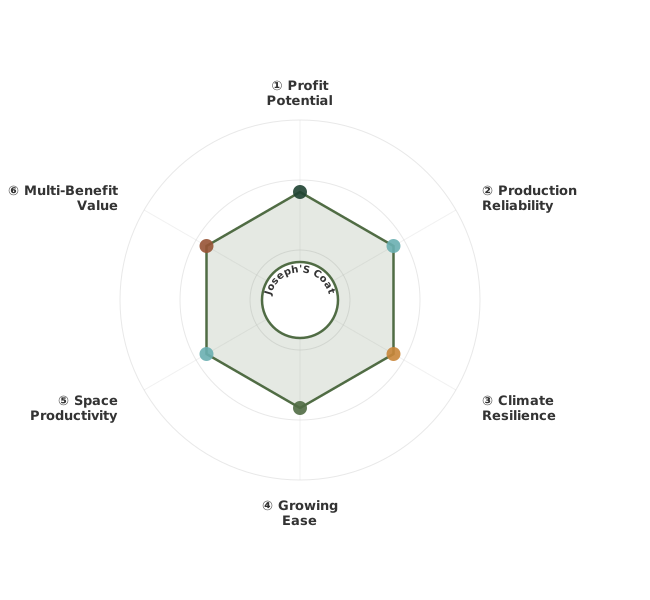
Available excerpts highlight its potential within regenerative agriculture systems. It appears to function effectively as a polyculture layer, notably integrated into multistoried agroforestry systems alongside fruit trees like aonla, carambola, and lemon. This suggests a role in maximizing land use and potentially diversifying farm ecosystems. Experiments also indicate its responsiveness to organic amendments, with cow dung, poultry manure, and mustard oil cake significantly enhancing growth and yield, outperforming synthetic NPK fertilizer in some trials. This points to its utility in nutrient cycling and building soil fertility when managed with organic inputs. Furthermore, research touches upon its interaction with soil health, including studies on its rhizosphere and its capacity to accumulate heavy metals like cadmium, with soil amendments showing potential for passivation. While not explicitly stated as a cover crop or nitrogen fixer in these excerpts, its integration into diverse cropping systems and responsiveness to organic matter suggest it can contribute to soil building and broader ecosystem health. While coverage in our knowledge base is limited, the above represents documented uses in regenerative systems.

Regenerative Quick Profile

All recommendations assume integrated, regenerative practices—not conventional inputs.

Climate & Soil Fit

Climate: Tropical Rainforest, Tropical Monsoon, Tropical Savanna, Hot Semi-Arid (Steppe), Cold Semi-Arid (Steppe), Hot Desert, Cold Desert, Humid Subtropical, Oceanic (Maritime Temperate), Hot-Summer Mediterranean, Warm-Summer Mediterranean, Monsoon-Influenced Humid Subtropical, Subtropical Highland, Hot-Summer Continental, Warm-Summer Continental, Subarctic, Monsoon-Influenced Hot-Summer Continental, Tundra

Zones: USDA 7-11, Australian Zones 10-14, EU Mediterranean, Subtropical, Tropical

Optimal Soil: Loam Soil

System Role & Functions

Primary: Cash Crop With Services

Secondary: Soil Remediation, Cover Crop System

Key Benefits: Easy establishment, Space Efficiency

Management Level

Experience: Beginner-Friendly

Maintenance: Moderate maintenance - As a fast-growing annual, this amaranth benefits from integrated fertility management and diligent moisture retention practices within the broader farm system.

Value Streams

  • Vegetable/specialty crop harvest
1

Climate Suitability Assessment

Will this plant thrive in your climate?

IDEALLY SUITED

Köppen Zone: Af (Tropical Rainforest), Am (Tropical Monsoon), Aw (Tropical Savanna), Cfa (Humid Subtropical), Cwa (Monsoon-Influenced Humid Subtropical)
USDA Zone: 7a, 8a, 9a, 10a, 11a, 12a

This plant thrives in warm, humid conditions with consistent moisture and a long growing season, typically found in Köppen Cfa and Cwa zones, and Australian subtropical and tropical regions, along with USDA zones 7a-9b. Optimal temperatures range from 70-85°F (21-29°C), supporting vigorous vegetative growth and fulfilling its cash crop and service functions effectively. Adequate rainfall (30-50 inches/75-125 cm annually) is crucial, with supplemental irrigation needed during dry spells to maintain productivity and ensure successful establishment. Its primary functions as a cash crop with services, soil remediation, and cover cropping are well-supported, yielding good biomass and nutrient cycling. Minimal management is required beyond ensuring adequate water and managing potential pest or disease outbreaks common in humid environments. The plant's life cycle aligns well with the extended warm periods, allowing for multiple harvests or a full season of cover cropping.

ADEQUATE

Köppen Zone: BSh (Hot Semi-Arid (Steppe)), Cfb (Oceanic (Maritime Temperate)), Csa (Hot-Summer Mediterranean), Csb (Warm-Summer Mediterranean), Cwb (Subtropical Highland), Dfa (Hot-Summer Continental), Dfb (Warm-Summer Continental)
USDA Zone: 6a
Australian Zone: tropical, grassland, temperate, subtropical
EU Climate Region: atlantic

Joseph's Coat performs adequately in climates with warm growing seasons but may face limitations from extreme heat or inconsistent moisture, as seen in Köppen Cwa and Aw zones, Australian grassland, temperate, and tropical regions, and USDA zones 7a-9b. While it can establish and grow, prolonged periods above 85°F (29°C) or significant dry spells can reduce its yield and effectiveness for its intended functions. Supplemental irrigation is often necessary during warmer, drier months to maintain productivity and ensure successful establishment. Its role as a cash crop, cover crop, or for soil remediation is still viable, but yields may be 10-20% lower than in ideal conditions. Management might involve careful timing of planting and harvesting, as well as increased attention to watering to mitigate heat stress and water scarcity. The plant can still provide significant benefits, but its full potential is not consistently realized without some adaptive strategies.

NOT RECOMMENDED

Köppen Zone: ET (Tundra), BSk (Cold Semi-Arid (Steppe)), BWh (Hot Desert), BWk (Cold Desert), Dfc (Subarctic), Dwa (Monsoon-Influenced Hot-Summer Continental)
USDA Zone: 2a, 3a, 3b, 4a, 5a, 5b
Australian Zone: arid
EU Climate Region: mediterranean

This plant is not recommended for climates with extreme heat and low rainfall, such as Köppen BSh, BWh, and Csa zones, Australian arid regions, EU Mediterranean climate, and USDA zones 10a-13a. These zones present significant challenges due to prolonged periods exceeding 90°F (32°C) and insufficient natural precipitation, severely limiting growth and survival. For its functions as a cash crop, soil remediation, or cover crop, it would require extensive and often uneconomical irrigation infrastructure and intensive management to even achieve minimal yields. Establishment success is low (<50%), and the plant is prone to heat stress and wilting. The economic viability is severely compromised, making alternative, more resilient species a far better choice for regenerative agriculture in these challenging environments. Its primary functions cannot be reliably fulfilled.

Better alternatives for these "not recommended" zones: Amaranth (grain varieties) (More heat and drought tolerant than ornamental amaranths.), Cowpea (Heat-tolerant legume that fixes nitrogen and can withstand dry spells.), Sorghum (forage/grain) (Highly drought and heat tolerant, can be used for biomass and soil improvement.), Purslane (Edible succulent that thrives in hot, dry conditions and can serve as a ground cover.)

Note: Zones listed above represent climates where this plant can produce reliably with reasonable management. Climate zones not mentioned would require intensive climate modification (greenhouses, extensive infrastructure) and are not economically viable for regenerative agriculture purposes.

2

Soil Suitability Assessment

Which soil types work best for this plant?

IDEALLY SUITED

Loam Soil

This plant thrives in these soil types without requiring amendments or remediation. Natural soil conditions support optimal growth and productivity.

ADEQUATE

Clay Soil, Rich Soil, Rocky Soil, Sandy Soil

This plant performs acceptably in these soil types with moderate, manageable remediation such as pH adjustment, compost addition, or drainage improvement. The required amendments are practical and cost-effective for regenerative agriculture.

NOT RECOMMENDED

Acidic Soil, Alkaline Soil, Desert Soil, Saline Soil, Wet Soil

Growing this plant in these soil types would require impractical remediation such as complete soil replacement, extensive amendments, or cost-prohibitive infrastructure. These conditions are not economically viable for regenerative agriculture.

Note: Soil suitability assessments focus on remediation requirements. "Ideally Suited" means the plant generally thrives without the need for substantial amendments, "Adequate" means manageable remediation (lime, compost, mulch), and "Not Recommended" means impractical soil changes would be required. Climate factors like rainfall and temperature also influence success.

3

Seasonal Considerations

Planting timing, growth duration, and harvest windows

Amaranthus tricolor thrives in warmth, making its planting window best aligned with the post-frost period. For an early start, begin seeds indoors about 3-4 weeks before your area's last expected frost. Transplant seedlings or direct sow once soil temperatures consistently reach at least 60°F (15°C), typically a couple of weeks after the last frost. Direct seeding can continue throughout the spring and into early summer, as this plant loves the heat.

Expect Amaranthus tricolor to reach maturity in approximately 45-60 days. Its harvest window extends through the entire summer and into early fall. To ensure a continuous supply of fresh leaves, implement succession planting every 2-3 weeks during the prime growing season. This vibrant annual is quite heat tolerant, flourishing even in the peak of summer. While it doesn't tolerate frost, you can extend the harvest slightly into late fall by using row covers or other season-extension techniques before the first expected frost. In warmer climates, it may even overwinter if protected from significant cold.

4

System Role & Multi-Benefit Value

Functional roles, integration strategies, and stacked benefits

Functional Role

Total System Value

Joseph's Coat (Amaranthus tricolor) offers multifaceted benefits within a regenerative farm system, primarily as a high-value cash crop with additional ecological services. Its direct harvest value provides immediate economic return. Beyond this, it functions as an effective cover crop, rapidly establishing ground cover to suppress weeds, reduce soil erosion, and scavenge excess nutrients from the soil, thereby preventing leaching and improving soil fertility. Studies indicate its use in multistoried agroforestry systems, suggesting its compatibility with perennial crops. While not a nitrogen fixer, its nutrient scavenging and biomass production contribute to soil organic matter. Its rapid growth cycle allows for multiple harvests within a year, enhancing farm productivity and income. This quick turnaround also contributes to risk diversification by providing a consistent harvestable product even as longer-term perennial systems develop, ensuring financial stability throughout the farm's transition.

Integration Characteristics

Multi-Benefit Value: Adequate - This plant provides edible leaves and seeds, attracts beneficial insects, and contributes to soil improvement through its abundant biomass, enriching the living soil.

5

Management & Care Requirements

Integration guidance, maintenance needs, and care practices

How to Integrate This Plant

Amaranthus tricolor, or Joseph's Coat, can be integrated as a fast-growing understory or intercropping component in regenerative systems. Its primary function is as a cash crop with services, offering a quick harvest while potentially enhancing soil health and nutrient cycling. It can be used in alley cropping systems between tree rows or as a lower-story crop in multistoried agroforestry systems, as demonstrated with aonla (Phyllanthus emblica). While not a nitrogen fixer or a major windbreak, its rapid growth can suppress weeds and scavenge excess nutrients, contributing to soil cover. Its value begins in Year 1 with harvest and continues as it can be re-sown or allowed to self-seed, providing continuous ground cover. The total system value comes from its direct harvest, potential for nutrient scavenging, and use as a cover crop to improve soil structure and reduce erosion, especially in the short term before larger perennial systems mature.

Integration Practices & Management

The provided knowledge base offers limited insight into the specific regenerative agriculture integration methods for Amaranthus tricolor. The sources predominantly focus on its use as a crop in agroforestry systems, its role in studies of allelopathic effects, and its management for heavy metal remediation. Source indicates Amaranthus tricolor can be grown as a lower-story crop in a multistoried agroforestry system alongside fruit trees like aonla, carambola, and lemon, suggesting potential for intercropping or companion planting within established perennial systems. It also mentions a "sole stem amaranth" treatment, implying its viability as a monoculture cash crop. However, details regarding establishment methods (seeding rates, timing, tillage practices), grazing integration, termination strategies, or specific fertility and competition management are not present. Similarly, sources and do not elaborate on practical farming techniques for regenerative integration. Therefore, while Amaranthus tricolor shows potential for integration as a component in diverse farming systems, the knowledge base does not provide details on its practical implementation through common regenerative techniques like no-till seeding, mob grazing, or crimping for termination.

Management Profile

Maintenance Intensity: Adequate - As a fast-growing annual, this amaranth benefits from integrated fertility management and diligent moisture retention practices within the broader farm system.

6

Economics & Value Streams

Direct harvest, system benefits, ecosystem services, and risk diversification

Comprehensive economic analysis including direct harvest value, system enhancement contributions, ecosystem services, value timeline, and risk diversification strategies.

Vegetable & Specialty Economics

Metric Value
Seed/Transplant Cost 75-150 $/acre 185-370 $/ha
Expected Yield 3000-6000 lbs/acre 3362-6725 kg/ha
Market Price 1.00-2.00 $/lb 2-4 $/kg
Harvest/Handling Cost 300-600 $/acre 741-1482 $/ha
Marketing/Distribution Cost 150-300 $/acre 370-741 $/ha
Net Annual Return* $1950-$11475/acre/year

Economics highly variable by market channel (direct vs wholesale), scale, and management. Direct marketing commands premiums but requires labor. Values shown for mid-scale market garden operations.

* Net Annual Return = (Yield × Market Price) − (Amortized Establishment Cost + Annual Maintenance). This return is realized only at/after first harvest; early years have costs but no revenue. Range shows worst case to best case scenarios.

System Enhancement Value

Beyond harvest: ecosystem services from regenerative cash crop practices

Ecological Service Contributions

Joseph's coat (Amaranthus tricolor) demonstrates significant potential for soil remediation, particularly concerning heavy metal contamination. Knowledge base excerpt highlights its ability to inhibit cadmium (Cd) accumulation in shoots when treated with soil amendments like wollastonite (WS) and 4A molecular sieve (MS). These amendments, applied at 660 mg·kg−1 Si, optimally reduced Cd uptake by 36% and 34%, respectively, without negatively impacting crop yield. This effect is attributed to increased soil pH and the presence of exogenous Ca or Na, which facilitate Cd adsorption, precipitation, and complexation. The efficacy of these amendments is influenced by soil properties, notably soil organic matter. Therefore, Amaranthus tricolor can be integrated into systems designed for the remediation of Cd-contaminated acidic soils, contributing to improved soil health and reduced phytotoxicity. Furthermore, excerpt indicates that cultivation within agroforestry systems positively impacts soil fertility parameters such as organic carbon, total nitrogen, available phosphorus, and exchangeable potassium, suggesting a broader role in nutrient cycling and soil enrichment when part of a diverse farming landscape.

Ecosystem Service Contributions

Environmental contributions: carbon, pollinators, wildlife, and water

  • Carbon Sequestration: Amaranthus tricolor is a fast-growing annual. While it contributes to biomass and thus carbon sequestration during its growth cycle, its primary role is not long-term carbon storage compared to perennial crops or trees. Its contribution is more immediate and tied to its incorporation into the soil as organic matter.
  • Pollinator Support: Low. Amaranthus species generally do not produce abundant nectar or pollen, and their floral structures are not typically adapted for attracting a wide range of pollinators. They are primarily wind-pollinated.
  • Wildlife Habitat: Limited direct habitat value. As an annual crop, it provides temporary ground cover but lacks the structural complexity or persistent food sources (like mast or persistent berries) to be a significant habitat provider for most wildlife. Its seeds may offer a minor food source for some granivorous birds.
  • Water Quality: Not applicable

Value Timeline: Production & Services

When you'll see results: varies by crop (annual harvest vs. perennial establishment)

Years 1-2

Immediate soil remediation benefits begin if integrated with appropriate amendments (as per excerpt). Cover crop functions, such as weed suppression and initial organic matter contribution, are realized within the first growing season. Contribution to soil fertility parameters can start to show in the first year if part of an agroforestry system (excerpt).

Years 3-5

Continued soil remediation and fertility improvement. If integrated into perennial systems like agroforestry, the benefits of increased organic matter and nutrient cycling become more pronounced. Potential for initial cash crop harvest revenue.

Years 10-20

Established soil health improvements. If part of a mature agroforestry system, Amaranthus tricolor's role in nutrient cycling and organic matter contribution becomes a stable, ongoing benefit. Its value as a cash crop can be sustained through crop rotation.

20+ Years

Long-term soil health and resilience are maintained through continued integration. The plant's contribution to a robust soil microbiome and nutrient cycling becomes a foundational element of the farm system.

Farm Risk Reduction

How this reduces farm risk: backup income, weather protection, market hedges

  • Multiple Revenue Streams: Direct cash crop revenue (Amaranthus tricolor harvest). Potential for income from improved yields in associated crops due to enhanced soil fertility and remediation. Reduced input costs associated with soil health improvement (fertilizers, pesticides).
  • Temporal Income Spread: Value is realized annually through its role as a cash crop and cover crop. Its integration into perennial systems spreads benefits over multiple years, contributing to long-term farm resilience. Soil remediation benefits are ongoing as long as the plant is managed within the system.
  • Market Risk Hedge: Diversifies income by adding a cash crop. Its soil remediation capabilities reduce reliance on external inputs for soil health, mitigating risks associated with input price volatility. Its potential effectiveness in agroforestry systems (excerpt) suggests it can enhance overall farm profitability and resilience even with reduced individual crop yields.
7

Regenerative Suitability Details

Comprehensive trait ratings for system integration assessment

Comparative ratings for this plant across key regenerative agriculture traits.

Trait Suitability Explanation
Season Extension Not Recommended Amaranthus tricolor thrives in warm periods, making it ideal for maximizing production during the peak growing season within a regenerative system.
Space Efficiency Ideally Suited This fast-growing, leafy amaranth excels in high-density plantings, contributing to significant biomass and nutrient cycling within a small footprint, supporting rapid succession planting.
Storage Longevity Not Recommended Tender amaranth leaves are best utilized fresh, encouraging immediate consumption or preservation techniques to capture its nutritional value and minimize waste.
Yield Reliability Adequate Tricolor amaranth offers dependable harvests in warm, stable conditions, with its resilience enhanced by consistent moisture management and robust soil fertility.
Establishment Ease Ideally Suited Joseph's Coat Amaranth germinates readily in warm soils, quickly establishing a vigorous canopy that suppresses weeds and builds soil health, ensuring strong stand establishment.
Multi Benefit Value Adequate This plant provides edible leaves and seeds, attracts beneficial insects, and contributes to soil improvement through its abundant biomass, enriching the living soil.
Climate Adaptability Adequate Thriving in heat (zones 7-11), Amaranthus tricolor flourishes in warmer periods and benefits from consistent moisture management, demonstrating good resilience to dry spells.
Maintenance Intensity Adequate As a fast-growing annual, this amaranth benefits from integrated fertility management and diligent moisture retention practices within the broader farm system.
Disease Pest Resistance Adequate While generally robust, Amaranthus tricolor can be prone to specific challenges, necessitating a focus on building plant resilience through soil health and ecological balance.

Comparative System: Ratings compare plants within their economic category (e.g., cover crop nitrogen fixation compared to other cover crops, not to all plants). Individual farm conditions and management practices significantly influence actual performance.

8

Learn More

Why farmers use this plant and additional resources

Why Regenerative Farmers Use This Plant

Amaranthus tricolor, commonly known as Chinese amaranth, Joseph's coat, or Chinese spinach, presents a compelling opportunity for regenerative farmers seeking high-value specialty cash crops. Its rapid growth cycle and vibrant foliage make it attractive for direct-to-consumer markets, farmers' markets, CSAs, and specialty wholesale channels, often commanding premium prices. With a typical harvest window of 45-60 days from transplant, it allows for intensive succession planting, enabling multiple harvests within a single growing season. For instance, in USDA Zones 7-9, a farmer could plant successive crops from early spring through late summer, potentially achieving 3-4 harvests. This rapid turnaround maximizes revenue per acre, contributing significantly to diversified farm income streams and improving overall farm profitability. Its ornamental appeal also opens doors for niche markets in landscaping and cut foliage.

Beyond its direct economic potential, Amaranthus tricolor integrates well into diverse regenerative systems by contributing to soil health and biodiversity. While not a nitrogen fixer, its relatively shallow but dense root system can help scavenge nutrients from the upper soil profile, making them available to subsequent crops and reducing the need for external fertility inputs. Its dense foliage can also provide a temporary living mulch effect, suppressing weeds and conserving soil moisture during its growth period. In systems where it's grown as a short-term cash crop, it can be strategically placed to follow or precede crops that build soil organic matter, such as legumes or deep-rooted cover crops, creating a synergistic rotation that enhances soil structure and biological activity.

The ecosystem services provided by Amaranthus tricolor, particularly when managed regeneratively, are noteworthy. While not a primary pollinator attractant, its flowering stalks can offer a late-season nectar source for various beneficial insects, including small native bees and hoverflies, which contribute to pest control in surrounding crops. Its rapid biomass production, though not as substantial as dedicated cover crops, can contribute to the soil organic matter pool upon termination, especially if residues are incorporated or left to decompose. Furthermore, by occupying the soil surface during its growth phase, it helps reduce soil erosion from wind and rain, particularly in warmer months. Its efficient water use in warmer months can also be valuable, provided irrigation is available during dry spells.

Regional success for Amaranthus tricolor is evident across various climates. In the humid subtropical regions of the southeastern United States (USDA Zones 7-9), it is a popular summer crop for both culinary and ornamental purposes, often grown in intensive market garden settings. In Mediterranean climates like parts of Italy and Spain (Köppen Csa/Csb), its heat tolerance and relatively low water requirement once established make it a viable option for summer production. Australian farmers in temperate to subtropical zones (Australian Zones 2-4) have found success growing it for specialty ethnic markets, appreciating its quick growth between main season crops. In tropical and subtropical Asia (Köppen Cfa, BSh), it is a staple vegetable, demonstrating its broad adaptability and established role in diverse agricultural landscapes. In the corn and soybean belt of the Midwestern United States (USDA Zones 4-6), it can be successfully grown as a summer cash crop in rotation, planted after early spring peas or following the termination of a winter cover crop. In Brazil, young plants can be grown as a temporary understory crop in coffee agroforestry systems, providing quick biomass and potential nutrient scavenging.

9

How to Integrate This Plant

Practical guidance for regenerative systems

Establishing Amaranthus tricolor can be achieved through direct seeding or transplanting, offering flexibility in planting schedules. For direct seeding, rates typically range from 0.5 to 1 lb/acre (0.56 to 1.12 kg/ha) for drilled rows, or 1-2 lbs/acre (1.12 to 2.24 kg/ha) for broadcast applications, depending on desired plant density and weed pressure. When drilled, seeding rates can be as low as 0.25-0.5 lb/acre (0.28-0.56 kg/ha). Planting depth is critical, with seeds needing to be placed at 0.25-0.5 inches (0.6-1.3 cm) to ensure good soil contact and moisture availability, as amaranth seeds require light to germinate. For faster and more uniform stands, especially in cooler early-season conditions, starting seeds indoors 3-4 weeks prior to transplanting is recommended. Transplants are typically spaced 6-12 inches (15-30 cm) apart in rows, or in dense beds for cut-and-come-again harvesting. Spacing for mature plants can range from 6-12 inches (15-30 cm) apart in rows, with plants thinned to 4 to 6 inches (10 to 15 cm) within the row for optimal growth and leaf production. In the Northern Hemisphere, planting can begin in early spring (April-May) once the danger of frost has passed and soil temperatures consistently reach 60°F (15.5°C), continuing with successional plantings every 2-3 weeks through mid-summer. In the Southern Hemisphere, this translates to planting from September through February.

Management practices for Amaranthus tricolor focus on providing consistent conditions for its rapid growth. It requires approximately 1 to 1.5 inches (2.5 to 3.8 cm) of water per week, especially during establishment and periods of rapid vegetative growth, though mature plants exhibit some drought tolerance. Fertility is best managed through biological approaches; incorporating well-composted organic matter or aged manure prior to planting provides essential nutrients. As a heavy feeder, it benefits from nutrient-rich soil, and responds well to residual fertility from previous legume cover crops or compost applications, often reducing the need for supplemental fertilization. If supplemental feeding is deemed necessary during its rapid growth phase, organic liquid feeds or side-dressing with compost can be applied. Growth from seed to harvest typically takes 45-60 days, with plants reaching a height of 1-3 feet (0.3-0.9 m) depending on variety and growing conditions. In the UK's temperate climate (RHS H5-H6), it is primarily grown as a summer annual, often transplanted after the risk of frost has passed, and harvested before autumn rains. Pest and disease management should prioritize biological controls and cultural practices, such as ensuring good air circulation, proper spacing, and crop rotation to break disease cycles.

Within a regenerative production cycle, Amaranthus tricolor excels as a short-season cash crop. Its typical growth cycle from transplant to harvest is 30-45 days for young leaves and 45-60 days for mature leaves, allowing for multiple successions throughout the warm season. A robust succession planting schedule, starting in early spring and continuing every 2-3 weeks until mid-summer (e.g., April through July in USDA Zones 5-7), can provide a continuous harvest window of 10-14 weeks. In USDA Zones 6-8, a continuous harvest window of 12-16 weeks can be achieved with succession planting every 2-3 weeks from late spring through early autumn (e.g., May through September). Direct seeding is often preferred for its speed and lower cost, but starting seeds indoors 3-4 weeks prior to the last frost can provide a head start. To maintain soil health, it should ideally follow a winter cover crop that has been terminated by crimping or natural winterkill, such as a mix of cereal rye and hairy vetch. After the final harvest of Amaranthus tricolor, the field should be quickly prepared for a fast-growing summer cover crop like buckwheat or a mix of sorghum-sudangrass to continue building soil organic matter and suppress weeds before planting a fall crop or a winter cover. Promptly following the final harvest with a winter cover crop mix, such as a blend of cereal rye and hairy vetch, within 2-3 weeks can protect soil structure, prevent erosion, and begin nutrient replenishment. A minimum 3-year rotation interval with non-related crops, such as root vegetables or legumes, is recommended to break potential pest and disease cycles and maintain soil vitality. In Australian temperate and subtropical zones, it can be grown as a fast-growing summer vegetable, often planted in rotation with more traditional field crops.