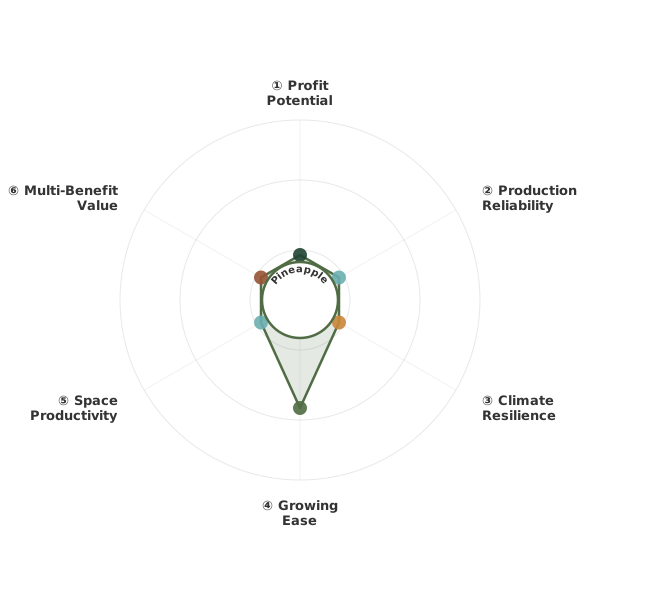
While knowledge base coverage for *Ananas comosus* (pineapple) in regenerative agriculture is limited, existing excerpts highlight its potential as an intercrop within agroforestry systems. In one instance, pineapple contributed to supplementary income for tribal farmers, diversifying livelihood streams alongside agarwood and arecanut. Studies also explore its integration into syntropic systems, though specific roles like cover cropping or nitrogen fixation are not detailed in these excerpts. Regenerative benefits observed in pineapple cultivation include improvements to soil health through the use of organic mulch materials like oil palm bunch waste and wood shavings, which enhanced soil physical and chemical properties and increased soil pH. The application of sugar mill filter cake and paper mill sludge also led to significant increases in soil organic matter and a beneficial shift in soil pH. Furthermore, research is investigating waste valorization of pineapple byproducts, such as peel and eye residues, into rare sugars and functional food products, aligning with zero-waste principles. Continued research is needed to fully understand pineapple's broader applications and benefits within diverse regenerative farming models.

Regenerative Quick Profile

All recommendations assume integrated, regenerative practices—not conventional inputs.

Climate & Soil Fit

Climate: Tropical Rainforest, Tropical Monsoon, Tropical Savanna, Hot Semi-Arid (Steppe), Hot Desert, Humid Subtropical, Oceanic (Maritime Temperate), Hot-Summer Mediterranean, Warm-Summer Mediterranean, Monsoon-Influenced Humid Subtropical, Subtropical Highland

Zones: USDA 10-13, Australian Zones 12-14, EU Mediterranean, Subtropical

Optimal Soil: Rich Soil

System Role & Functions

Primary: Cash Crop With Services

Secondary: Cover Crop System, Specialty

Management Level

Experience: Advanced

Maintenance: High maintenance - Maintaining healthy pineapple growth involves providing consistent moisture through effective water management and ensuring good soil aeration to prevent root issues.

Value Streams

  • Vegetable/specialty crop harvest
1

Climate Suitability Assessment

Will this plant thrive in your climate?

IDEALLY SUITED

Köppen Zone: Af (Tropical Rainforest), Am (Tropical Monsoon), Aw (Tropical Savanna), Cfa (Humid Subtropical)
USDA Zone: 10a, 11a, 12a
Australian Zone: tropical, subtropical

Pineapple thrives in tropical and subtropical climates characterized by consistently warm temperatures (20-30°C) and ample rainfall (1000-2000 mm annually), with minimal to no frost risk. These conditions are met in Köppen zones Aw, As, Am, and Af, and Australian subtropical and tropical zones. In USDA zones, this includes 9a through 13a, and all of USDA zones 10, 11, 12, and 13. These environments provide the long, warm growing seasons and high humidity necessary for optimal vegetative growth and fruit development, allowing for reliable perennial cultivation and high yields. Minimal management is required beyond standard agricultural practices, as the climate naturally supports the plant's lifecycle. The consistent warmth and moisture ensure continuous production, making these regions highly productive for cash cropping and specialty uses. Establishment is highly successful, and the plant is resilient to typical environmental challenges within these zones.

ADEQUATE

Köppen Zone: BSh (Hot Semi-Arid (Steppe)), Cfb (Oceanic (Maritime Temperate)), Cwa (Monsoon-Influenced Humid Subtropical)
USDA Zone: 9a
Australian Zone: temperate
EU Climate Region: mediterranean

Pineapple can be grown in climates with adequate suitability, though it requires more careful management and may experience reduced productivity compared to ideal tropical conditions. These zones include Köppen Cfa and Cwa, USDA zones 8a and 8b, Australian temperate zones, and EU Mediterranean regions. The primary challenges are the presence of frost during winter months and potentially drier summer periods. In USDA zones 8a and 8b, and Australian temperate zones, frost can damage or kill plants, necessitating winter protection such as mulching or row covers, or treating them as annuals. Mediterranean climates require supplemental irrigation during dry summers to maintain plant health and fruit development. While economically viable with these adaptations, yields may be lower, and stand persistence shorter than in ideal tropical settings. Establishment success is good but requires attention to timing and protection.

NOT RECOMMENDED

Köppen Zone: ET (Tundra), BSk (Cold Semi-Arid (Steppe)), BWh (Hot Desert), BWk (Cold Desert), Csa (Hot-Summer Mediterranean), Csb (Warm-Summer Mediterranean), Cwb (Subtropical Highland), Dfa (Hot-Summer Continental), Dfb (Warm-Summer Continental), Dfc (Subarctic), Dwa (Monsoon-Influenced Hot-Summer Continental)
USDA Zone: 2a, 3a, 3b, 4a, 5a, 5b, 6a, 7a, 8a
EU Climate Region: atlantic

Pineapple cultivation is not recommended in climates that experience significant frost or consistently low temperatures, and in regions with extreme temperature fluctuations or insufficient sunshine. This includes Köppen zones that are too cold or have short growing seasons, USDA zones 7a and 7b, and the EU Atlantic climate region. In USDA zones 7a and 7b, winter lows of 0-10°F (-18 to -12°C) are lethal to pineapple plants, making perennial cultivation impossible without extensive, economically unfeasible protection. The EU Atlantic climate, with its cool summers, frequent cloud cover, and frost risk, also fails to provide the necessary warmth and sunshine for pineapple development. While technically possible to grow as a short-lived annual with extreme protection in some marginal zones, the high risk of crop failure, low yields, and prohibitive management costs make it an impractical choice. Alternative fruit crops better suited to these cooler, frost-prone regions are recommended.

Better alternatives for these "not recommended" zones: Strawberry (produces fruit in cooler climates and can be managed with row covers), Raspberry (hardy cane fruit that can tolerate colder winters with proper pruning), Blueberry (acid-loving shrub that thrives in many temperate zones and can tolerate some frost)

Note: Zones listed above represent climates where this plant can produce reliably with reasonable management. Climate zones not mentioned would require intensive climate modification (greenhouses, extensive infrastructure) and are not economically viable for regenerative agriculture purposes.

2

Soil Suitability Assessment

Which soil types work best for this plant?

IDEALLY SUITED

Rich Soil

This plant thrives in these soil types without requiring amendments or remediation. Natural soil conditions support optimal growth and productivity.

ADEQUATE

Acidic Soil, Alkaline Soil, Clay Soil, Loam Soil, Rocky Soil, Sandy Soil

This plant performs acceptably in these soil types with moderate, manageable remediation such as pH adjustment, compost addition, or drainage improvement. The required amendments are practical and cost-effective for regenerative agriculture.

NOT RECOMMENDED

Desert Soil, Saline Soil, Wet Soil

Growing this plant in these soil types would require impractical remediation such as complete soil replacement, extensive amendments, or cost-prohibitive infrastructure. These conditions are not economically viable for regenerative agriculture.

Note: Soil suitability assessments focus on remediation requirements. "Ideally Suited" means the plant generally thrives without the need for substantial amendments, "Adequate" means manageable remediation (lime, compost, mulch), and "Not Recommended" means impractical soil changes would be required. Climate factors like rainfall and temperature also influence success.

3

Seasonal Considerations

Planting timing, growth duration, and harvest windows

For Ananas Comosus, successful cultivation hinges on warmth. Begin seed starting indoors several weeks before your last expected frost, aiming to transplant seedlings once all danger of frost has passed and soil temperatures consistently reach at least 60°F (15°C). Direct seeding is generally not recommended for this tropical perennial, but if attempted in the warmest zones, wait until soil temperatures are reliably warm.

Ananas Comosus is a long-season crop, typically taking 2 to 3 years from planting to reach maturity and produce fruit. Once established, you can expect a harvest window that spans through the warmer months, often extending into early fall. Due to its long development time, succession planting is not applicable.

This plant thrives in heat and is sensitive to cold. Protect young plants from any late spring chills. While it prefers consistent warmth, established plants can tolerate some milder autumn conditions before the first expected frost. In cooler climates within its range, consider season extension techniques like high tunnels to maximize its growth period and improve fruit development before winter dormancy sets in.

4

System Role & Multi-Benefit Value

Functional roles, integration strategies, and stacked benefits

Functional Role

Total System Value

Pineapple offers significant system value as a cash crop with rapid returns, contributing to diversified farm income. Its cultivation can enhance system resilience by being integrated into agroforestry models, such as intercropping with timber or perennial fruit crops, as demonstrated with agarwood and arecanut. While not a primary provider of nitrogen, shade, or windbreaks, it serves as effective ground cover, aiding in erosion control and moisture retention, especially on sloping lands. Studies show pineapple cultivation can improve soil organic matter and shift pH levels when amended with organic materials like filter cake and paper mill sludge. Its value extends to waste valorization, turning peel and eye residues into rare sugars or functional food products, further enhancing the circular economy aspect of the farm. This multi-faceted contribution, from direct harvest to potential waste stream utilization and soil improvement, diversifies on-farm revenue and ecological services, contributing to overall farm resilience.

Integration Characteristics

Multi-Benefit Value: Not Recommended - Primarily a food crop, pineapple can contribute to biodiversity by attracting beneficial insects and can be integrated into polycultures for soil health.

5

Management & Care Requirements

Integration guidance, maintenance needs, and care practices

How to Integrate This Plant

Pineapple (Ananas comosus) can be integrated into regenerative systems primarily as a cash crop offering rapid returns and contributing to soil health. Its role as a groundcover can help suppress weeds and reduce erosion. While not providing nitrogen fixation, shade, or windbreak services directly, it can be intercropped with nitrogen-fixing plants or larger trees in an alley cropping or food forest system. Pineapple's relatively short growth cycle means it starts providing value quickly. Early contributions (Year 1-2) are primarily direct harvest income and ground cover. By Year 3-5, it can be a significant income generator, potentially improving soil structure through its root system and organic matter addition upon senescence. The multi-benefit stacking comes from its role in diversified income streams, its potential to be grown alongside other crops (as seen in agroforestry systems with agarwood and arecanut), and its contribution to ground cover which aids in moisture retention and erosion control.

Integration Practices & Management

The provided knowledge base offers limited insight into the specific regenerative agriculture practices for integrating Ananas comosus. While sources,, and mention pineapple cultivation, they primarily focus on its role within broader agroforestry systems or as a cash crop. Source highlights pineapple intercropping as a significant income generator for tribal agroforestry farmers, suggesting its integration with cash crops like agarwood and arecanut. Source details an experiment evaluating various mulch materials for pineapple cultivation, indicating a focus on soil health improvement and fertility management through organic matter. Source explores waste valorization from pineapple processing, pointing towards circular economy principles in its utilization. However, the knowledge base does not provide details on establishment methods such as seeding rates, timing, or companion planting strategies. Similarly, information regarding integration with grazing, termination strategies, or specific fertility needs and competition management within a regenerative framework is absent. The available information primarily positions Ananas comosus as an intercropped species or a focus of waste utilization studies, rather than detailing its management within specific regenerative farming techniques like mob grazing or complex crop rotations.

Management Profile

Maintenance Intensity: Not Recommended - Maintaining healthy pineapple growth involves providing consistent moisture through effective water management and ensuring good soil aeration to prevent root issues.

6

Economics & Value Streams

Direct harvest, system benefits, ecosystem services, and risk diversification

Comprehensive economic analysis including direct harvest value, system enhancement contributions, ecosystem services, value timeline, and risk diversification strategies.

Vegetable & Specialty Economics

Metric Value
Seed/Transplant Cost 500-1000 $/acre 1235-2471 $/ha
Expected Yield 5000-10000 lbs/acre 5604-11208 kg/ha
Market Price 0.50-1.00 $/lb 1-2 $/kg
Harvest/Handling Cost 800-1600 $/acre 1976-3953 $/ha
Marketing/Distribution Cost 400-800 $/acre 988-1976 $/ha
Net Annual Return* $-900 to $8300/acre/year

Economics highly variable by market channel (direct vs wholesale), scale, and management. Direct marketing commands premiums but requires labor. Values shown for mid-scale market garden operations.

* Net Annual Return = (Yield × Market Price) − (Amortized Establishment Cost + Annual Maintenance). This return is realized only at/after first harvest; early years have costs but no revenue. Range shows worst case to best case scenarios.

System Enhancement Value

Beyond harvest: ecosystem services from regenerative cash crop practices

Ecological Service Contributions

Pineapple, as a secondary function, contributes significantly to integrated farm systems by acting as a cover crop and a specialty crop. Excerpt highlights its inclusion in 'C rows' of a syntropic agroforestry system, indicating its role in a multi-strata planting design. This suggests pineapple can help suppress weeds, retain soil moisture, and prevent erosion, especially in its early growth stages before canopy closure of taller species. Its presence in intercropping scenarios, as noted in excerpt where it supplements income for agroforestry farmers, demonstrates its ability to utilize space and resources efficiently alongside other crops like agarwood and arecanut. Furthermore, excerpt points to the valorization of pineapple waste (peel and eye residues) into valuable products like rare sugars and functional gummy products. This represents a significant 'waste-to-value' system contribution, reducing disposal issues and creating new revenue streams, thereby enhancing the overall economic and ecological efficiency of the farm system by closing nutrient loops and generating alternative income.

Ecosystem Service Contributions

Environmental contributions: carbon, pollinators, wildlife, and water

  • Carbon Sequestration: Pineapple plants, with their leafy biomass and root systems, contribute to soil organic matter accumulation, thereby sequestering carbon. The extent of sequestration is dependent on growing conditions, plant density, and management practices, particularly in integrated systems where organic matter is actively managed.
  • Pollinator Support: Medium. Pineapple flowers can attract pollinators, although they are not a primary nectar source for many common pollinators. In diverse agroforestry systems, as mentioned in excerpt, pineapple is often interplanted with other flowering species that provide broader pollinator support.
  • Wildlife Habitat: Low. Pineapple plants themselves offer limited direct habitat for wildlife, primarily providing ground cover. Their value increases in integrated systems where they contribute to overall habitat complexity and food availability for insects and small ground-dwelling animals.
  • Water Quality: Not applicable

Value Timeline: Production & Services

When you'll see results: varies by crop (annual harvest vs. perennial establishment)

Years 1-2

Initial ground cover, weed suppression, and soil moisture retention as a cover crop. Potential for early establishment of waste valorization streams if residues are managed from the outset.

Years 3-5

First harvest revenue from cash crop function. Continued soil health benefits and potential for increased income through intercropping as noted in excerpt. Development of waste valorization products becomes more established.

Years 10-20

Sustained cash crop income. Significant contribution to soil organic matter and overall farm system resilience. Mature integration within multi-species systems, contributing to a stable ecological environment and diversified income streams.

20+ Years

Long-term soil improvement and continued contribution to farm biodiversity. Potential for the plant's genetic material or associated beneficial organisms to persist and contribute to system stability.

Farm Risk Reduction

How this reduces farm risk: backup income, weather protection, market hedges

  • Multiple Revenue Streams: ['Direct cash crop revenue from pineapple sales.', 'Supplementary income from intercropping (excerpt).', 'Revenue from valorized waste products (rare sugars, gummy products) (excerpt).', 'Potential for reduced input costs due to cover cropping benefits (weed suppression, moisture retention).']
  • Temporal Income Spread: Pineapple provides an annual harvest cycle for direct income, while the development of waste valorization offers a continuous stream of value from byproducts. Integration into agroforestry systems (excerpt,) diversifies income over longer time horizons with other crops, creating a more stable overall farm economy.
  • Market Risk Hedge: Pineapple's inclusion as a specialty crop and its potential for waste valorization diversifies revenue sources, reducing reliance on any single market. Its role as a cover crop can improve soil health and resilience, mitigating risks associated with climate variability and soil degradation. The ability to generate value from waste also creates a buffer against fluctuating primary product prices.

Sources behind this view

Research
7

Regenerative Suitability Details

Comprehensive trait ratings for system integration assessment

Comparative ratings for this plant across key regenerative agriculture traits.

Trait Suitability Explanation
Season Extension Not Recommended Pineapple thrives in consistent warmth, and its frost sensitivity limits its cultivation window in cooler climates without protective measures.
Space Efficiency Not Recommended As a long-maturing perennial, pineapple's spatial needs and moderate harvest per square foot are best suited for integrated systems that accommodate its growth cycle.
Storage Longevity Not Recommended Fresh pineapple's short post-harvest life is best managed through prompt consumption or preserving methods, as quality degrades rapidly.
Yield Reliability Not Recommended Optimal pineapple yields are achieved in stable, warm climates, and success in variable conditions relies on careful site selection and supportive system management.
Establishment Ease Not Recommended Pineapple propagation is typically doneVegetatively, with vegetative starts providing a more reliable and faster pathway to establishing plants compared to seed.
Multi Benefit Value Not Recommended Primarily a food crop, pineapple can contribute to biodiversity by attracting beneficial insects and can be integrated into polycultures for soil health.
Climate Adaptability Not Recommended Pineapple is a tropical species (zones 10-11) that requires consistent warmth and humidity, necessitating careful water management and protection from cold.
Maintenance Intensity Not Recommended Maintaining healthy pineapple growth involves providing consistent moisture through effective water management and ensuring good soil aeration to prevent root issues.
Disease Pest Resistance Adequate While moderately resistant, pineapple can be susceptible to root rot and mealybugs, which are managed through good soil health and appropriate moisture management.

Comparative System: Ratings compare plants within their economic category (e.g., cover crop nitrogen fixation compared to other cover crops, not to all plants). Individual farm conditions and management practices significantly influence actual performance.

8

Learn More

Why farmers use this plant and additional resources

Why Regenerative Farmers Use This Plant

Ananas comosus, commonly known as pineapple, represents a high-value specialty cash crop with significant potential for regenerative farm income diversification. Its tropical origins and specific growing requirements mean it excels in regions often overlooked by staple commodity crops, opening unique market niches. With a typical production cycle ranging from 18 to 30 months from planting to first harvest, and subsequent ratoons (offshoots) providing further harvests for several years (typically 2-4 years for ratoons, with fields potentially productive for up to 5-7 years), pineapple offers a sustained revenue stream. This extended production window allows for careful planning within diversified farm systems, contributing to financial stability.

The market channels for pineapples are diverse, ranging from direct-to-consumer sales at farm stands and farmers' markets, where premium pricing is achievable for fresh, locally grown fruit, to supplying specialty wholesale distributors and restaurants seeking unique or organic produce. Its ability to generate substantial revenue per acre, often exceeding that of many conventional crops in suitable climates, makes it an attractive component of a regenerative income strategy.

Integrating pineapples into a regenerative system offers several ecological benefits. While not a nitrogen fixer, its deep root system (typically 1.5-3 feet or 0.5-1 meter) can help break up compacted soils, improve water infiltration, and scavenge nutrients from deeper soil profiles, making them available to subsequent or intercropped plants. The dense foliage canopy provides excellent ground cover, suppressing weeds and reducing soil erosion, especially on sloping land common in tropical agriculture. Furthermore, pineapple plants can serve as a living mulch in certain agroforestry systems, such as intercropping with shade-tolerant fruit trees or in silvopasture settings where they can be integrated around livestock areas, providing a food source and habitat for beneficial insects. Their presence can also contribute to biodiversity by creating a more complex farm ecosystem.

Quantitatively, well-managed pineapple fields can contribute to soil organic matter accumulation through the decomposition of leaf litter and plant residues post-harvest. While specific carbon sequestration rates are highly variable and depend on management practices and climate, the perennial nature of pineapple cultivation and its dense biomass can support soil carbon building over time. The flowers, though not a primary target for pollinators, can attract a variety of beneficial insects, contributing to the overall health of the farm's ecosystem. Improved soil structure due to pineapple's root activity can lead to enhanced water infiltration, reducing runoff and improving water use efficiency on the farm.

Pineapple cultivation has a long history of success in various regional farm systems. In the Philippines, smallholder farmers integrate pineapples into mixed cropping systems alongside coconuts and bananas, providing a consistent cash flow. In Costa Rica, large-scale regenerative pineapple operations focus on organic certification and direct export, emphasizing soil health and water management. Australian farmers in Queensland's tropical belt have successfully grown pineapples for decades, often incorporating them into crop rotations to manage soil-borne diseases and improve soil structure. In parts of India, pineapples are a key component of horticultural landscapes, contributing significantly to rural economies and providing a resilient food source. In the humid tropics of Southeast Asia, pineapple is often intercropped with coconuts or bananas, creating a multi-story agroforestry system that maximizes land use and biodiversity. In the subtropical regions of Florida, USA, pineapple is grown in well-drained sandy soils, often utilizing organic mulches to conserve moisture and suppress weeds. In Brazil, pineapple cultivation is integrated into diversified farming systems, sometimes following pasture or soybean rotations, with an emphasis on building soil fertility through organic amendments and cover cropping. In Central America, large-scale producers are increasingly exploring agroforestry systems, integrating pineapple with shade trees to enhance biodiversity and soil fertility, reducing reliance on synthetic inputs.

9

How to Integrate This Plant

Practical guidance for regenerative systems

Establishing Ananas comosus requires careful attention to planting material and timing. While pineapples can be grown from seed, this is uncommon in commercial production due to the long time to fruiting and variability. The most common propagation methods are suckers (basal shoots), slips (shoots from the fruit stalk), or crowns (the leafy top of the fruit). These planting materials are typically sourced from healthy, mature plants or nurseries.

Planting Density and Spacing:

  • Density: Ranges from 5,000 to 30,000 plants per acre (12,355 to 74,000 plants per hectare).
  • Within Rows: Spacing typically ranges from 12 to 24 inches (30-60 cm) between plants.
  • Row Spacing: Ranges from 2 to 5 feet (0.6-1.5 meters), depending on the variety and desired cultivation method.

Planting Depth and Timing:

  • Depth: The base of the plant (suckers, slips, or crowns) should be buried just deep enough to ensure stability, approximately 1-4 inches (2.5-10 cm) deep, ensuring the growing point remains exposed.
  • Timing: Planting is best done at the beginning of the rainy season or when consistent warmth is assured. In tropical regions, this might be year-round. In subtropical areas, planting is often done in spring or early summer, typically March-May in the Northern Hemisphere and September-November in the Southern Hemisphere.

Ongoing Management:

  • Watering: Pineapple plants are relatively drought-tolerant once established but perform best with consistent moisture, requiring around 1-2 inches (2.5-5 cm) of water per week during active growth, especially during flowering and fruit development.
  • Fertility Management: In regenerative systems, fertility management prioritizes building healthy soil biology. This includes incorporating well-composted organic matter, utilizing cover crop residues (such as legumes or grasses planted between rows or in rotation), and applying animal manures judiciously. Nitrogen-fixing companion plants or intercropping can supplement nitrogen needs. While pineapples can scavenge nutrients, they are moderate feeders, and their nutrient needs can be met through these biological sources, reducing reliance on synthetic fertilizers.
  • Growth Timeline: The growth timeline from planting to first harvest is typically 18-30 months, with subsequent ratoon crops producing fruit in 12-18 months. Ratoon crops can provide subsequent harvests for 2-4 years, with each ratoon crop generally maturing faster than the initial plant.
  • Mature Plant Size: Mature plants can reach a height of 2-5 feet (0.6-1.5 meters) with a similar spread.

Pest and Disease Management:

  • Focuses on cultural practices like selecting healthy planting material, proper spacing for air circulation, maintaining soil health, and encouraging beneficial insect populations.
  • Preventative measures include selecting disease-resistant varieties, maintaining good air circulation, and promoting beneficial insect populations.
  • Integrated Pest Management (IPM) for pineapples focuses on monitoring for pests like mealybugs and mites, encouraging natural predators, and using biological controls such as beneficial nematodes or entomopathogenic fungi when necessary, always as a last resort during transition phases. Biological sprays are preferred over synthetic pesticides.

Production Cycle and Soil Stewardship:

  • From transplanting slips or crowns, plants typically take 18-24 months to reach harvestable fruit size. Ratoon crops can provide subsequent harvests for 2-4 years.
  • Succession planting is less about continuous harvest of the same plant and more about establishing new fields sequentially to ensure a continuous supply of planting material and staggered harvest windows over multiple years.
  • Before Planting: A well-managed cover crop, such as a mix of cowpea and sorghum, can be grown to improve soil structure and fertility. A fallow period or the use of a deep-rooted cover crop like sunn hemp or daikon radish can help break pest cycles and improve soil structure.
  • Between Crops/Ratoons: Following the final harvest and removal of old plants, or between ratoon crops, planting a diverse cover crop mix including legumes (like pigeon pea or velvet bean for nitrogen fixation) and grasses (like sorghum-sudangrass for biomass and weed suppression) can be planted for 6-12 months. This mix should be terminated using regenerative methods such as roller-crimping or mowing before planting the next pineapple crop. Planting a quick-growing cover crop such as cowpeas or buckwheat can help maintain ground cover, scavenge residual nutrients, and add organic matter before the next pineapple planting.
  • Crop Rotation: Crop rotation intervals with non-pineapple crops are vital for breaking pest and disease cycles, with a minimum of 3-5 years recommended to prevent the buildup of soil-borne diseases specific to bromeliads.
  • Post-Harvest Residue Management: Involves chopping and incorporating plant material back into the soil to enhance organic matter and contribute to soil organic matter.

Regional Adaptations:

  • Florida (USA, USDA Zone 10-11): Grown in raised beds to ensure good drainage, often intercropped with other tropical fruits or as part of a diversified homestead system.
  • Queensland (Australia, Zones 21-23): A significant commercial crop, often grown in rotation with other tropical fruits or vegetables, with careful attention paid to water management during dry periods. Growers in subtropical coastal areas utilize pineapple as part of mixed horticultural operations, often interplanting with other tropical fruits or utilizing cover crops between rows.
  • Caribbean: Smallholder farmers integrate pineapples into mixed agroforestry systems, planting them alongside fruit trees and root crops, benefiting from the diverse ecosystem services.
  • Southeast Asia (e.g., Malaysia): A staple crop, often grown on undulating terrain where their erosion-controlling canopy is particularly valuable, and integrated into traditional farming practices alongside rice and other fruit crops.
  • Costa Rica: Large-scale operations focus on organic certification and direct export, emphasizing soil health and water management. Farms are increasingly adopting regenerative practices, focusing on soil health and biodiversity conservation alongside production.
  • Philippines: Smallholder farmers integrate pineapples into mixed cropping systems alongside coconuts and bananas, providing a consistent cash flow. Large-scale plantations employ integrated pest management and organic fertilization strategies to enhance sustainability.
  • Hawaii (USA): A staple, with farmers focusing on soil health through cover cropping and reduced tillage between planting cycles.
  • Brazil: Integrated into diversified farming systems, sometimes following pasture or soybean rotations, with an emphasis on building soil fertility through organic amendments and cover cropping.
  • Subtropical Regions of Florida (USDA Zone 10b): Farmers often plant pineapple in raised beds to improve drainage, intercropping with shorter-season vegetables or herbs in the early stages.