
Saffron Crocus
Existing research suggests its potential role in regenerative systems. Notably, a study in an olive grove demonstrated that intercropping with saffron significantly increased soil total organic carbon (TOC) and total nitrogen (TN), correlating with beneficial shifts in soil bacterial communities. This indicates a potential for soil building and carbon sequestration when integrated into polyculture systems. Another study highlighted effective nitrogen input strategies that also restricted soil organic carbon depletion, maintaining SOC above a critical threshold. Furthermore, research into saffron's rhizosphere identified bacterial strains with plant growth-promoting characteristics, including phosphate solubilization and IAA production, suggesting a positive interaction with soil biology. While not explicitly a nitrogen fixer or primary forage, its integration into agroforestry systems, like olive groves, shows promise for enhancing soil health and potentially supporting beneficial microbial populations. Further research is needed to fully understand its broader applications in regenerative agriculture. While coverage in our knowledge base is limited, the above represents documented uses in regenerative systems.
For a full botanical description see: Plants For A Future(opens in new window) (external link)
Regenerative Quick Profile
All recommendations assume integrated, regenerative practices—not conventional inputs.
Climate & Soil Fit
Climate: Tropical Rainforest, Tropical Monsoon, Tropical Savanna, Hot Semi-Arid (Steppe), Cold Semi-Arid (Steppe), Hot Desert, Cold Desert, Humid Subtropical, Oceanic (Maritime Temperate), Hot-Summer Mediterranean, Warm-Summer Mediterranean, Monsoon-Influenced Humid Subtropical, Subtropical Highland, Hot-Summer Continental, Warm-Summer Continental, Subarctic, Monsoon-Influenced Hot-Summer Continental, Tundra
Zones: USDA 5-8, Australian Zones 2-4
Optimal Soil: Loam Soil
System Role & Functions
Primary: Cash Crop With Services
Secondary: Cover Crop System, Specialty
Key Benefits: Season Extension, Storage Longevity, Disease Pest Resistance
Management Level
Experience: Advanced
Maintenance: Moderate maintenance - Saffron crocuses are perennial and integrate well with practices that ensure well-drained soil and support natural summer dormancy. Healthy soil biology and habitat for predators can mitigate rodent pressure.
Value Streams
- Vegetable/specialty crop harvest
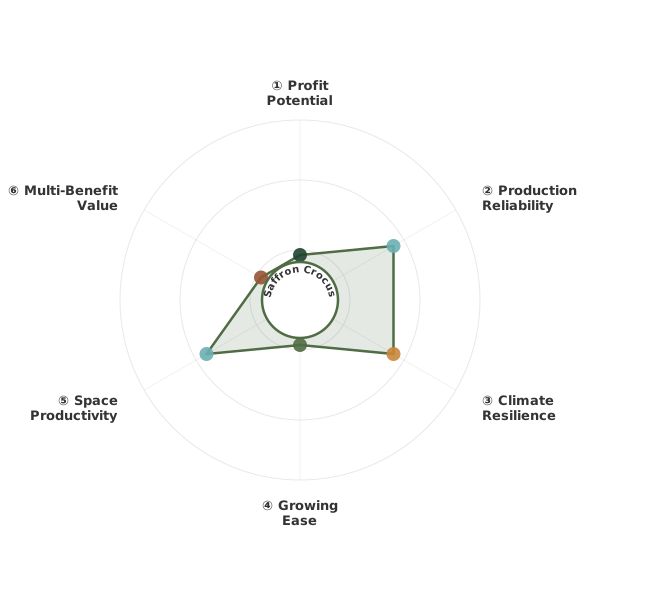
How These Traits Are Calculated
Trait dimensions are ordered clockwise starting from the top of the chart (12 o'clock position):
1. Profit Potential
Net returns per acre from yield, pricing, input costs, and labor efficiency
WHAT: Synthesizes gross revenue potential, input costs, labor requirements, and storage/marketing advantages into net profitability per acre. Captures the complete economic picture from planting to sale.
WHY: Not all vegetables are equally profitable. High-value crops with efficient production can return $10,000-30,000/acre versus $2,000-5,000/acre for lower-value options. Profit potential guides crop selection for maximum return on limited land and determines viable scale for farm businesses.
HOW: Scored via LLM synthesis of economics data (yields, prices, costs), storage advantages (season extension, value-added potential), and labor intensity. Exceptional (3.0): High yields × premium prices with moderate inputs and good storage (garlic, high-value salad greens). Typical (2.0): Moderate returns (tomatoes, squash). Limited (1.0): Low yields, commodity pricing, or intensive labor requirements (low-value greens).
2. Production Reliability
Weighted: yield consistency (60%) + disease/pest resistance (40%)
WHAT: Combines yield reliability (harvest consistency year-to-year) with disease and pest resistance to measure predictable production. Reliable vegetables deliver consistent harvests without catastrophic failures from pests or weather.
WHY: Market commitments and CSA subscriptions require dependable production. Unreliable crops that fail in bad years or require intensive pest management create cash flow gaps and customer dissatisfaction. Reliable producers allow confident planning and reduce input costs from emergency pest interventions.
HOW: Weighted formula prioritizes yield reliability (60% weight) for overall consistency, with disease/pest resistance (40% weight) to prevent total failures. Exceptional (3.0): Consistent yields across variable seasons with strong natural pest resistance. Typical (2.0): Generally reliable with some pest/weather sensitivity. Limited (1.0): Highly variable yields or severe pest vulnerability requiring intensive management.
3. Climate Resilience
Temperature and rainfall tolerance across diverse growing conditions
WHAT: Measures the breadth of climatic conditions where the vegetable produces successfully—temperature extremes, humidity ranges, and rainfall variability. Climate-resilient crops work across diverse regions and weather patterns.
WHY: Climate variability is increasing—unexpected heat waves, cold snaps, or drought periods can wipe out entire vegetable harvests. Resilient crops provide insurance against weather uncertainty and allow geographic expansion for market growth. This is especially critical for direct-market farmers who can't easily substitute crops mid-season.
HOW: Ratings based on the climate_adaptability trait documenting temperature tolerance and geographic range. Exceptional (3.0): Grows successfully in diverse climates (cold to hot, humid to dry) with wide hardiness zone range. Typical (2.0): Moderate climate flexibility. Limited (1.0): Narrow climate requirements (tropical-only, cool-season-only, humidity-sensitive).
4. Growing Ease
Weighted: establishment ease (50%) + low maintenance requirements (50%)
WHAT: Combines establishment difficulty (germination, transplanting) with ongoing maintenance needs (watering, fertilizing, pest management) to measure total labor requirements. Easy crops grow reliably with minimal intervention.
WHY: Labor is the primary cost for small-scale vegetable production. Easy-care crops allow farmers to manage more production area with the same labor, improving profitability. Difficult crops requiring constant attention, precise timing, or specialized skills reduce overall farm productivity and increase risk.
HOW: Weighted formula balances establishment ease (50% weight) for reliable startup and inverted maintenance intensity (50% weight) for ongoing care. Exceptional (3.0): Direct-seeded or easy transplants with minimal water/fertility/pest needs. Typical (2.0): Moderate care requirements. Limited (1.0): Difficult establishment or intensive ongoing management (daily watering, heavy feeding, constant pest monitoring).
5. Space Productivity
Weighted: yield per square foot (60%) + season extension potential (40%)
WHAT: Combines spatial productivity (yield per square foot) with temporal productivity (extended harvest windows from succession planting or season extension). Maximizes production from limited growing area.
WHY: Land is the primary constraint for vegetable farmers—especially those near urban markets. Space-efficient crops delivering high yields in small areas improve per-acre profitability dramatically. Season extension (spring tunnels, fall protection) adds bonus production windows when competing supply is limited and prices are higher.
HOW: Weighted formula prioritizes space efficiency (60% weight) for core yield per area, with season extension potential (40% weight) for bonus production opportunities. Exceptional (3.0): High yields per square foot (10,000+ lbs/acre equivalents) with season extension options. Typical (2.0): Moderate yields and extension potential. Limited (1.0): Low yields or crops unsuitable for season extension.
6. Multi-Benefit Value
Ecosystem services beyond harvest—pollinator support, nitrogen fixing, pest habitat
WHAT: Measures ecosystem services provided beyond harvestable yield. Multi-benefit vegetables contribute to farm ecology through nitrogen fixation (legumes), pollinator support (flowering crops), beneficial insect habitat, soil building, or erosion control.
WHY: Cash crops can either extract from farm ecosystems or contribute to them. Vegetables with strong multi-benefit value build soil fertility, support pollinators needed for fruit/vine crops, and create habitat for pest predators—reducing external input needs. Nitrogen-fixing vegetables (beans, peas) provide $40-80/acre worth of fertility for following crops.
HOW: Ratings based on the multi_benefit_value trait documenting service contributions. Exceptional (3.0): Significant ecosystem services (nitrogen fixation, heavy pollinator support, soil building, pest habitat). Typical (2.0): Some ecosystem contributions. Limited (1.0): Single-purpose cash crops with minimal farm ecology benefits.
Ratings are based on documented performance in regenerative systems, not conventional high-input scenarios. All traits assume integrated management practices focused on soil health and ecosystem services.
6
Economics & Value Streams
Direct harvest, system benefits, ecosystem services, and risk diversification
Economics & Value Streams
Direct harvest, system benefits, ecosystem services, and risk diversification
Comprehensive economic analysis including direct harvest value, system enhancement contributions, ecosystem services, value timeline, and risk diversification strategies.
Vegetable & Specialty Economics
| Metric | Value |
|---|---|
| Seed/Transplant Cost | 1000-3000 $/acre 2471-7413 $/ha |
| Expected Yield | 2-5 lbs/acre |
| Market Price | 10.00-20.00 $/lb 22-44 $/kg |
| Harvest/Handling Cost | 1500-3000 $/acre 3706-7413 $/ha |
| Marketing/Distribution Cost | 750-1500 $/acre 1853-3706 $/ha |
| Net Annual Return* | $-7480 to $-3150/acre/year (negative) |
Economics highly variable by market channel (direct vs wholesale), scale, and management. Direct marketing commands premiums but requires labor. Values shown for mid-scale market garden operations.
* Net Annual Return = (Yield × Market Price) − (Amortized Establishment Cost + Annual Maintenance). This return is realized only at/after first harvest; early years have costs but no revenue. Range shows worst case to best case scenarios.
System Enhancement Value
Beyond harvest: ecosystem services from regenerative cash crop practices
Ecological Service Contributions
Saffron crocus, as a cover crop system, offers significant soil health benefits beyond its primary cash crop function. Research indicates that intercropping with saffron crocus can substantially increase soil total organic carbon (TOC) and total nitrogen (TN). This improvement is linked to shifts in the soil's bacterial community structure, favoring beneficial genera associated with plant growth promotion and antifungal activity, such as Pseudoarthrobacter and Haliangium. Furthermore, the cessation of tillage often associated with saffron cultivation, coupled with spontaneous cover crop development, enhances soil protection and functionality, potentially increasing carbon and nitrogen fixation. The plant's growth cycle, with leaves developing through winter and early spring to feed the corm, contributes to ground cover during periods when other crops might be dormant, thus reducing erosion risk and improving soil structure. The specialized nitrogen input mode (MRPU‐2S) has also demonstrated potential in restricting soil organic carbon depletion and maintaining SOC above a critical threshold, indicating a role in soil carbon sequestration and restoration.
Ecosystem Service Contributions
Environmental contributions: carbon, pollinators, wildlife, and water
- Carbon Sequestration: Saffron crocus contributes to carbon sequestration through the maintenance and potential increase of soil organic carbon (SOC) and total organic carbon (TOC). Studies suggest specific management practices and its role as a cover crop can lead to SOC levels above critical thresholds (e.g., 1% threshold, 26.64 Mg ha-1 surface SOC stock for positive sequestration).
- Pollinator Support: Low. While saffron crocus flowers, its primary function and reproductive strategy (sterile flowers, asexual reproduction via corms) suggest it is not a significant primary nectar or pollen source for generalist pollinators. Its main value lies in soil health and its cash crop function.
- Wildlife Habitat: Limited. Saffron crocus is primarily cultivated for its stigmas. Its low-growing habit and typical cultivation methods do not offer substantial habitat, nesting sites, or significant food sources (mast, browse) for most wildlife. Rodents are noted as pests that may need deterring.
- Water Quality: Not applicable
Value Timeline: Production & Services
When you'll see results: varies by crop (annual harvest vs. perennial establishment)
Years 1-2
Initial soil health improvements begin, including potential increases in soil organic carbon and nitrogen, and development of beneficial microbial communities. Erosion control benefits from ground cover during winter/spring. First harvest of saffron stigmas occurs in the fall of year 1.
Years 3-5
Established soil health benefits continue and may become more pronounced. Corms multiply, allowing for potential replanting or division, and subsequent harvests of saffron increase in yield potential. Continued soil protection and organic matter accumulation.
Years 10-20
Mature saffron beds can provide consistent and potentially higher yields of saffron. The cumulative impact on soil organic carbon and nitrogen becomes more significant, contributing to long-term soil fertility and resilience. Corms can be periodically harvested and replanted to maintain optimal production.
20+ Years
Sustained soil health benefits, including improved water holding capacity and nutrient cycling. The long-term presence of saffron can contribute to a more robust and resilient agroecosystem. Potential for continued saffron production with proper management.
Farm Risk Reduction
How this reduces farm risk: backup income, weather protection, market hedges
- Multiple Revenue Streams: Primary income stream from saffron stigma harvest. Secondary value from soil health improvement (reduced fertilizer needs, improved soil structure), potential for corm sales, and as a cover crop reducing erosion and improving soil fertility.
- Temporal Income Spread: Annual harvest of saffron stigmas in the fall. Ongoing soil health benefits are realized throughout the year and cumulatively over time. Corm multiplication and potential replanting provides a temporal spread for maintaining production.
- Market Risk Hedge: Saffron is a high-value niche crop, offering a distinct revenue stream less correlated with commodity markets. Its role as a cover crop improves soil resilience, making the farm less susceptible to yield losses from poor soil conditions or drought. The potential for corm sales adds another minor income avenue.
Sources behind this view
 Videos & Podcasts
-
Saffron production (open vs. tunnel, early vs. late planting) shows year-to-year variability in yield and flower count. Economic analysis suggests profitability ($5k/0.25 acre over 2 years), but long-

-
Saffron is a high-value crop for US small-scale farmers, with global prices of $20-$100/gram and potential annual revenue of $53,000/acre. Significant global demand and therapeutic applications make i

8
Learn More
Why farmers use this plant and additional resources
Learn More
Why farmers use this plant and additional resources
Why Regenerative Farmers Use This Plant
Integrating Crocus sativus into regenerative agricultural systems offers a compelling pathway to diversify farm income with a high-value specialty crop that aligns with ecological stewardship. The primary economic driver is the production of saffron, the world's most expensive spice by weight, derived from the plant's crimson stigmas. While the potential revenue per acre is substantial, typically ranging from $5,000 to $15,000 or more once established, this is contingent on meticulous management and direct market access. A single acre, once mature, can yield 10-20 lbs (4.5-9 kg) of dried saffron annually, demanding significant upfront investment in corms, estimated at $0.25-$1.00 per corm with 150,000-200,000 corms needed per acre, and a patient, multi-year establishment period before optimal yields are realized. Wholesale prices can range from $2,000-$5,000 per lb ($4,400-$11,000 per kg), with significantly higher returns through direct-to-consumer channels. This makes it a strategic choice for farmers seeking to enhance profitability on marginal lands or within diversified farm enterprises, provided they can navigate the labor-intensive harvest and secure premium markets.
Beyond its economic allure, saffron crocus contributes significantly to farm system resilience and soil health. Its adaptation to arid to semi-arid conditions and well-drained soils makes it an ideal candidate for marginal lands unsuitable for many conventional crops, reducing pressure on prime agricultural areas. The dense foliage and shallow root system effectively stabilize soil, mitigating wind and water erosion, particularly on slopes. As a geophyte with a summer dormancy, it can be strategically intercropped in established perennial systems like vineyards or orchards, occupying inter-row spaces without significant competition, or used as a late-season cover crop after summer crop termination, utilizing residual moisture and nutrients. This integration enhances landscape biodiversity and provides a consistent, low-impact ground cover, contributing to a more robust and resilient farming ecosystem.
The ecological benefits extend to improved soil organic matter and nutrient cycling. While not a nitrogen fixer, the plant's decomposition during its dormant phase and the eventual breakdown of its foliage contribute to soil humus. Its ability to thrive on modest rainfall (15-30 inches or 380-760 mm annually) reduces reliance on irrigation, a critical factor in water-scarce regions and a key regenerative practice. Furthermore, by occupying land that might otherwise lie fallow or be prone to degradation, saffron crocus enhances overall landscape biodiversity. Its presence provides a consistent, low-impact ground cover that supports beneficial insect populations and contributes to a more complex and stable agroecosystem, demonstrating how high-value crops can also be ecological assets.
Regional successes highlight the adaptability of Crocus sativus across diverse farming systems. In the Mediterranean basin, it has been cultivated for centuries, fitting seamlessly into rotations with cereals and olives, or intercropped in vineyards and olive groves. In parts of Central Asia and Iran, it is grown on semi-arid steppes and plains, demonstrating its resilience in challenging climates and often forming a cornerstone of rural economies. Australian growers are exploring its potential in dryland farming systems, integrating it into rotations with wheat and sheep, to diversify income and improve soil cover. In the United States, farmers in regions like Colorado, New Mexico, and even the Midwest are experimenting with its cultivation on irrigated but arid lands or well-drained marginal land, showcasing its versatility and potential to break pest cycles in corn and soybean rotations. Its cultivation is also being explored in parts of India, demonstrating its broad applicability across various dryland and Mediterranean-like climates.
Sources behind this view
 Research
-
Restricting depletion of soil organic carbon by amending <scp>nutrient‐N</scp> input to soils (opens in new window)
A specific nitrogen application method (MRPU-2S) prevented soil carbon loss and increased saffron yield in temperate soils, showing potential for building soil carbon in various crops and climates.