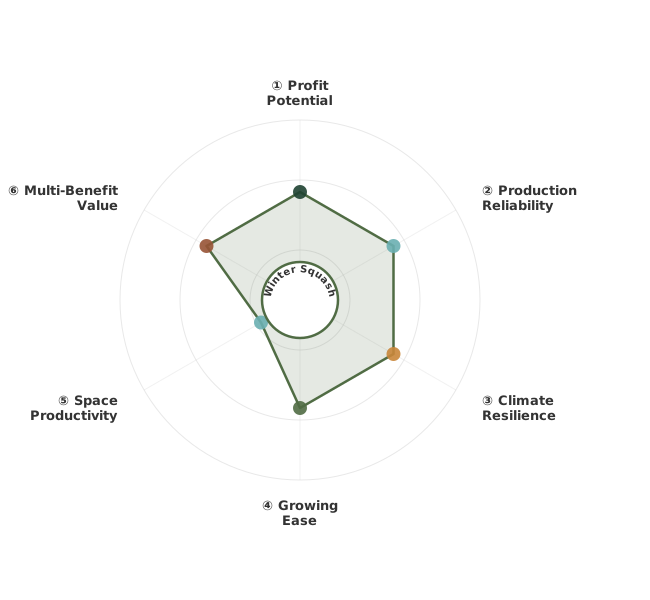
Cucurbita maxima, commonly known as winter squash or pumpkin, demonstrates potential within regenerative agriculture systems primarily through its role in soil health improvement and pollinator support. Studies indicate that incorporating organic amendments like horn-manure and pig manure biochar significantly enhances soil quality by increasing levels of essential nutrients such as phosphorus, potassium, and nitrogen, as well as boosting soil organic carbon and soil aggregation. This plant is not a nitrogen fixer but contributes to soil building. While not explicitly mentioned as a cover crop or forage, its substantial biomass and the improvements it brings to soil structure suggest a role in building soil organic matter. Furthermore, Cucurbita maxima cultivation can support diverse pollinator populations, particularly native bees, when managed under agroecological systems, contrasting with conventional methods that favor introduced species. However, a key farmer experience highlights that some Cucurbita maxima varieties, like Hubbard types, may exhibit lower resistance to diseases such as Phytophthora crown rot compared to other species like Cucurbita moschata. The large space requirements and potential pest susceptibility are noted challenges for farmers.

Regenerative Quick Profile

All recommendations assume integrated, regenerative practices—not conventional inputs.

Climate & Soil Fit

Climate: Tropical Rainforest, Tropical Monsoon, Tropical Savanna, Hot Semi-Arid (Steppe), Cold Semi-Arid (Steppe), Hot Desert, Cold Desert, Humid Subtropical, Oceanic (Maritime Temperate), Hot-Summer Mediterranean, Warm-Summer Mediterranean, Monsoon-Influenced Humid Subtropical, Subtropical Highland, Hot-Summer Continental, Warm-Summer Continental, Subarctic, Monsoon-Influenced Hot-Summer Continental, Tundra

Zones: USDA 5-10, Australian Zones 3-12

Optimal Soil: Rich Soil

System Role & Functions

Primary: Cash Crop With Services

Secondary: Pollinator Support, Cover Crop System

Key Benefits: Storage Longevity

Management Level

Experience: Beginner-Friendly

Maintenance: Moderate maintenance - Integrating these squash into a system involves providing ample space, sunlight, and supporting soil fertility through compost and mulch, while monitoring for natural pest and disease indicators.

Value Streams

  • Vegetable/specialty crop harvest
  • Pollinator habitat and support
1

Climate Suitability Assessment

Will this plant thrive in your climate?

IDEALLY SUITED

Köppen Zone: Aw (Tropical Savanna), Cfa (Humid Subtropical), Csa (Hot-Summer Mediterranean), Cwa (Monsoon-Influenced Humid Subtropical), Dfa (Hot-Summer Continental)
USDA Zone: 6a, 7a, 8a, 9a
Australian Zone: subtropical

Winter squash thrives in climates offering long, warm to hot growing seasons with ample sunlight and consistent moisture. These conditions are met in Köppen zones Cfa, and regional zones like USDA 6b through 10b, Australian subtropical, and parts of the EU's southern continental regions. Optimal temperatures range from 70-85°F (21-29°C) for growth and fruit development, with a minimum of 120-150 frost-free days required for most varieties to mature. Adequate rainfall (30-50 inches/75-125 cm annually) is beneficial, but supplemental irrigation is easily managed in these regions to ensure consistent soil moisture, preventing stress that can hinder fruit set and growth. These zones typically have low disease pressure during the critical ripening phase, and minimal need for season extension techniques, leading to high yields and reliable harvests. The cash crop function is strongly supported, with pollinator support also benefiting from the extended flowering period. Cover cropping systems can be integrated effectively due to the long growing season, allowing for multiple crop cycles or cover crop establishment after harvest.

ADEQUATE

Köppen Zone: Af (Tropical Rainforest), Am (Tropical Monsoon), BSh (Hot Semi-Arid (Steppe)), Cfb (Oceanic (Maritime Temperate)), Csb (Warm-Summer Mediterranean), Cwb (Subtropical Highland), Dfb (Warm-Summer Continental)
USDA Zone: 5a, 5b, 10a, 11a, 12a
Australian Zone: temperate
EU Climate Region: atlantic, continental

Winter squash can be grown adequately in climates with moderate temperatures and sufficient growing season length, provided careful management and variety selection are employed. This includes Köppen zones Cfb, Csa, Csb, Dfa, Dfb, Dwa, and regional zones like USDA 5b, Australian temperate, and EU Atlantic and continental regions. These areas often have growing seasons of 90-120 frost-free days, requiring the use of early to mid-season maturing varieties. Summer temperatures may fluctuate, and irrigation is often necessary to supplement rainfall, especially in Csa and Csb zones during dry summers. Cooler summers in Cfb, Dfb, and Dwa zones can slow development and increase disease risk, necessitating good air circulation and disease monitoring. While yields may be slightly lower or more variable than in ideal zones, the cash crop function remains viable, and the plant still offers benefits for pollinator support and can be integrated into cover cropping systems with appropriate planning for shorter seasons.

NOT RECOMMENDED

Köppen Zone: ET (Tundra), BSk (Cold Semi-Arid (Steppe)), BWh (Hot Desert), BWk (Cold Desert), Dfc (Subarctic), Dwa (Monsoon-Influenced Hot-Summer Continental)
USDA Zone: 2a, 3a, 3b, 4a

Winter squash is not recommended in climates with very short growing seasons, extreme cold winters, or consistently insufficient summer heat for fruit development. This includes Köppen zone Dwb, and regional zones USDA 3a through 5a, and Australian arid/semi-arid zones (though not explicitly listed, they fall into this category due to heat stress and water scarcity). These zones typically have fewer than 90 frost-free days, and even early-maturing varieties struggle to ripen before the first fall frost. Summer temperatures may not consistently reach the optimal 70-85°F (21-29°C) range, leading to poor fruit set, delayed ripening, and increased susceptibility to diseases. The economic viability of growing winter squash is severely compromised due to high risks of crop failure, the need for intensive season extension techniques (like greenhouses or extensive row covers), and the potential for low yields. Alternative, faster-maturing, or more cold-tolerant crops are significantly better suited for these challenging environments, ensuring a more reliable return for regenerative agriculture practices.

Better alternatives for these "not recommended" zones: Radish (very fast-maturing root crop tolerant of cooler conditions), Spinach (cool-season leafy green with short maturity), Kale (cold-hardy leafy green that can tolerate light frosts), Bush Bean (shorter maturity, tolerates cooler soil)

Note: Zones listed above represent climates where this plant can produce reliably with reasonable management. Climate zones not mentioned would require intensive climate modification (greenhouses, extensive infrastructure) and are not economically viable for regenerative agriculture purposes.

2

Soil Suitability Assessment

Which soil types work best for this plant?

IDEALLY SUITED

Rich Soil

This plant thrives in these soil types without requiring amendments or remediation. Natural soil conditions support optimal growth and productivity.

ADEQUATE

Clay Soil, Loam Soil, Sandy Soil

This plant performs acceptably in these soil types with moderate, manageable remediation such as pH adjustment, compost addition, or drainage improvement. The required amendments are practical and cost-effective for regenerative agriculture.

NOT RECOMMENDED

Acidic Soil, Alkaline Soil, Desert Soil, Rocky Soil, Saline Soil, Wet Soil

Growing this plant in these soil types would require impractical remediation such as complete soil replacement, extensive amendments, or cost-prohibitive infrastructure. These conditions are not economically viable for regenerative agriculture.

Note: Soil suitability assessments focus on remediation requirements. "Ideally Suited" means the plant generally thrives without the need for substantial amendments, "Adequate" means manageable remediation (lime, compost, mulch), and "Not Recommended" means impractical soil changes would be required. Climate factors like rainfall and temperature also influence success.

3

Seasonal Considerations

Planting timing, growth duration, and harvest windows

Begin by starting seeds indoors about three to four weeks before your last expected frost. This allows for robust seedlings ready for transplanting once the danger of frost has passed and soil temperatures consistently reach at least 60°F (15°C). Alternatively, direct seeding is highly successful once all spring frost risk is gone and the soil has warmed sufficiently. Winter squash thrives in the warmth of summer, needing ample time to reach maturity, typically between 90 to 120 days from transplanting or direct seeding.

Harvesting generally occurs in the late summer and throughout the fall, before the first hard frost. For those seeking a continuous harvest, consider successive plantings, though their long maturity makes this less common for winter varieties. These crops tolerate moderate heat but can struggle in extreme, prolonged heatwaves. While not typically fall-planted for a harvest that same season, their robust nature allows them to withstand cooler autumn temperatures, making them ideal for a long, slow ripening period leading up to their main harvest window. Season extension techniques are generally not required for this crop, as its growth cycle aligns well with the warm and mild fall periods.

4

System Role & Multi-Benefit Value

Functional roles, integration strategies, and stacked benefits

Functional Role

Total System Value

Winter squash (Cucurbita maxima) offers a multi-faceted value proposition in regenerative agriculture. The direct harvest provides a valuable food product with good storage potential, contributing to farm income and food security. System enhancement is seen in its ability to suppress weeds and provide temporary ground cover, aiding in erosion control and soil moisture retention, especially in its first year. Studies highlight its responsiveness to organic amendments like biochar and horn manure, which can significantly improve soil organic carbon and nutrient availability (e.g., phosphorus, potassium, nitrogen), thereby enhancing soil health and fertility over time. Ecosystem services include pollinator support; squash flowers are attractive to a diverse range of bees, including native species, particularly under agroecological management. While not a primary carbon sequestration crop, improved soil health contributes to this service. Risk diversification is achieved through its inclusion as a diverse crop in the farming system, providing an alternative income stream and contributing to overall farm biodiversity and resilience.

Integration Characteristics

Multi-Benefit Value: Adequate - These plants provide food and support pollinators, while their extensive ground cover offers substantial erosion control and soil health benefits.

5

Management & Care Requirements

Integration guidance, maintenance needs, and care practices

How to Integrate This Plant

Winter squash (Cucurbita maxima) can be integrated into regenerative systems primarily as a cash crop that also offers ecosystem services. Its large, vining growth habit can provide ground cover, suppressing weeds and reducing erosion in the short term. While not a nitrogen fixer or significant windbreak, its dense foliage can offer temporary shade, benefiting soil moisture retention and potentially cooling the microclimate. Practices like alley cropping or intercropping could utilize squash between rows of trees or taller crops, maximizing land use. Its primary contribution to regenerative systems is through soil improvement when managed with organic inputs. Studies show benefits from biochar and horn manure in enhancing soil structure and nutrient content. The timeline to contribution is immediate for ground cover and weed suppression (Year 1), with soil health benefits developing over 3-5 years as organic matter accumulates. Additional system value comes from pollinator support, as squash flowers attract bees, including native species when managed agroecologically. This stacking of benefits enhances farm resilience beyond direct harvest.

Integration Practices & Management

Regenerative farmers integrate *Cucurbita maxima* primarily through crop rotation and soil health enhancement. While direct mentions of specific regenerative practices like mob grazing or no-till establishment for *Cucurbita maxima* are limited in the provided sources, the literature points to its role in improving soil conditions. For instance, biochar amendments under *Cucurbita maxima* significantly increased soil aggregation and organic carbon, indicating its potential to benefit soil structure when incorporated into regenerative systems. Furthermore, horn-manure preparation, a traditional organic amendment, boosted soil phosphorus, potassium, and nitrogen levels in *Cucurbita maxima* plots, suggesting the plant can thrive with, and potentially contribute to, fertility-building practices. The species is recognized for its diverse varieties, including kabocha and some pumpkins, and its importance in seed saving highlights its value within agricultural systems. While specific termination strategies and integration with grazing are not detailed, its inclusion in rotations, particularly in agroecological systems that support native bee diversity, suggests a role in diversified farming approaches. Farmers may consider its fertility needs and competition management within these rotations.

Management Profile

Maintenance Intensity: Adequate - Integrating these squash into a system involves providing ample space, sunlight, and supporting soil fertility through compost and mulch, while monitoring for natural pest and disease indicators.

6

Economics & Value Streams

Direct harvest, system benefits, ecosystem services, and risk diversification

Comprehensive economic analysis including direct harvest value, system enhancement contributions, ecosystem services, value timeline, and risk diversification strategies.

Vegetable & Specialty Economics

Metric Value
Seed/Transplant Cost 75-150 $/acre 185-370 $/ha
Expected Yield 8000-15000 lbs/acre 8966-16812 kg/ha
Market Price 0.40-0.80 $/lb 0-1 $/kg
Harvest/Handling Cost 600-1200 $/acre 1482-2965 $/ha
Marketing/Distribution Cost 300-600 $/acre 741-1482 $/ha
Net Annual Return* $1250-$11025/acre/year

Economics highly variable by market channel (direct vs wholesale), scale, and management. Direct marketing commands premiums but requires labor. Values shown for mid-scale market garden operations.

* Net Annual Return = (Yield × Market Price) − (Amortized Establishment Cost + Annual Maintenance). This return is realized only at/after first harvest; early years have costs but no revenue. Range shows worst case to best case scenarios.

System Enhancement Value

Beyond harvest: ecosystem services from regenerative cash crop practices

Ecological Service Contributions

Winter squash, particularly *Cucurbita maxima*, plays a crucial role in supporting pollinator populations, which is vital for integrated farm systems. As noted in, these plants are not self-pollinating and rely on pollinators like honeybees. Encouraging pollinators through squash cultivation provides a direct benefit to other crops in the system that also depend on insect pollination. Furthermore, the root systems of winter squash can contribute to soil health. Research on related *Cucurbita* species indicates that amendments like biochar can significantly improve soil structure, increase macroaggregates, and enhance soil organic carbon. While not a legume, the plant's biomass contributes to organic matter when residues are returned to the soil, supporting microbial activity such as urease and saccharase. The potential for hybrid development, as seen with 'Maximoss Squash', suggests future opportunities for combining desirable traits like pest resistance with enhanced soil-conditioning abilities, further increasing its system value beyond direct harvest. The vining nature of many winter squash varieties can also help suppress weeds and retain soil moisture.

Ecosystem Service Contributions

Environmental contributions: carbon, pollinators, wildlife, and water

  • Carbon Sequestration: Winter squash plants, with their substantial vegetative growth, contribute to carbon sequestration through biomass production and root development. When plant residues are incorporated into the soil, they add organic matter, which is a significant carbon sink. Biochar amendment under *Cucurbita maxima* has shown increased soil organic carbon.
  • Pollinator Support: High. Winter squash flowers are a valuable nectar and pollen source for bees and other pollinators, which are essential for the reproduction of many crops in an integrated system. Their reliance on pollinators makes them a keystone crop for supporting these crucial ecosystem actors.
  • Wildlife Habitat: While not a primary habitat provider in the same way as trees or perennial shrubs, winter squash can offer temporary foraging opportunities for certain wildlife species and insects. The dense foliage can provide some cover for ground-dwelling insects and small creatures.
  • Water Quality: Not applicable

Value Timeline: Production & Services

When you'll see results: varies by crop (annual harvest vs. perennial establishment)

Years 1-2

Immediate support for pollinator populations through flowering. Contribution to soil organic matter through plant residues. Potential for early-season weed suppression and moisture retention by established plants.

Years 3-5

First harvest of cash crop, generating direct revenue. Established plant growth contributes more significantly to soil organic matter. Continued pollination support enhances productivity of other crops in the system. Potential for early-stage soil structure improvement from root activity.

Years 10-20

Mature system integration where the squash's contribution to pollinator health is well-established. Significant soil organic matter build-up from consistent crop rotation. Potential for seed saving and selection of locally adapted varieties if 'Maximoss Squash'-like breeding is pursued.

20+ Years

Long-term enhancement of soil health and biodiversity due to sustained organic matter input and pollinator support. Potential for the development of highly resilient and productive cropping systems integrated with winter squash.

Farm Risk Reduction

How this reduces farm risk: backup income, weather protection, market hedges

  • Multiple Revenue Streams: Direct cash crop revenue from winter squash sales. Enhanced yields of other pollinator-dependent crops due to improved pollination services. Potential for value-added products (e.g., roasted squash, pies if used as a pumpkin substitute).
  • Temporal Income Spread: Annual harvest of the cash crop. Ongoing, continuous provision of pollinator support throughout the flowering period. Gradual build-up of soil health and organic matter over multiple growing seasons.
  • Market Risk Hedge: Diversifies farm income beyond a single commodity. Provides a food source that stores well, extending marketability and reducing reliance on immediate post-harvest sales. Enhances resilience by supporting a robust pollinator community, which benefits other crops and reduces vulnerability to pollination failure.
7

Regenerative Suitability Details

Comprehensive trait ratings for system integration assessment

Comparative ratings for this plant across key regenerative agriculture traits.

Trait Suitability Explanation
Season Extension Adequate Hubbard and other large winter squash are excellent for storage, naturally extending food availability through the cooler months by maintaining quality after harvest.
Space Efficiency Not Recommended These large winter squash varieties are vigorous growers with extensive vining habits, requiring significant landscape integration to accommodate their growth and optimize harvest value.
Storage Longevity Ideally Suited Hubbard and other large winter squash varieties exhibit exceptional natural keeping qualities, extending their harvest value for 4-12+ months under optimal cool, dry conditions.
Yield Reliability Adequate Winter squash, like Hubbard, offers dependable yields in warm seasons, with their inherent storage capabilities contributing to consistent food availability throughout the year.
Establishment Ease Adequate Winter squash germinates reliably in warm soils, and their rapid vine establishment helps them outcompete weeds, contributing to natural system resilience when provided with adequate space.
Multi Benefit Value Adequate These plants provide food and support pollinators, while their extensive ground cover offers substantial erosion control and soil health benefits.
Climate Adaptability Adequate Thriving in zones 3-10, these squash varieties are adaptable to moderate heat and some cool temperatures, benefiting from thoughtful water management and good air circulation to mitigate disease pressure.
Maintenance Intensity Adequate Integrating these squash into a system involves providing ample space, sunlight, and supporting soil fertility through compost and mulch, while monitoring for natural pest and disease indicators.
Disease Pest Resistance Adequate While possessing moderate natural resilience, these winter squash varieties may benefit from integrated pest management strategies that promote beneficial insect populations and soil health to deter common issues.

Comparative System: Ratings compare plants within their economic category (e.g., cover crop nitrogen fixation compared to other cover crops, not to all plants). Individual farm conditions and management practices significantly influence actual performance.

8

Learn More

Why farmers use this plant and additional resources

Why Regenerative Farmers Use This Plant

Cucurbita maxima, commonly known as winter squash or pumpkin, offers significant regenerative value and economic potential for diversified farms. Its dense foliage and sprawling growth habit provide excellent ground cover, suppressing weeds and reducing the need for herbicides, thereby protecting soil structure and beneficial soil organisms. The plant's extensive root system, typically reaching depths of 18-36 inches (45-90 cm) and sometimes up to 2-4 feet (0.6-1.2 m), effectively scavenges nutrients from lower soil profiles, making them available for subsequent crops and improving overall nutrient cycling. High-yielding varieties can produce between 10,000-30,000 lbs/acre (11,200-33,600 kg/ha) of marketable fruit, offering a strong revenue stream. The long shelf life of many Cucurbita maxima varieties, often extending for several months when properly cured, allows for flexible market access through direct-to-consumer sales, farmers' markets, CSAs, and specialty wholesale channels, contributing significantly to farm income diversification.

Integrating Cucurbita maxima into regenerative systems offers multiple ecological benefits beyond direct cash crop production. As a member of the Cucurbitaceae family, it can be a valuable component in crop rotations, helping to break pest and disease cycles. Its role as a heavy feeder can be strategically utilized to draw down excess nutrients from the soil after a legume cover crop or to prepare a fertility bed for subsequent crops. Furthermore, its large flowers are attractive to a wide array of pollinators, including bees and other beneficial insects, enhancing biodiversity on the farm. Companion planting with crops like corn, beans, and herbs, or with herbs like basil or marigolds, can further enhance growth and deter pests, creating synergistic relationships that bolster the farm ecosystem.

The quantitative ecosystem benefits of Cucurbita maxima are notable. Its substantial biomass production, with leaves and vines contributing significantly to organic matter when residues are managed appropriately, aids in building soil organic matter over time. This increased organic matter improves soil structure, water infiltration, and water-holding capacity, reducing runoff and erosion. While not a nitrogen fixer, its nutrient scavenging capabilities mean it effectively utilizes available soil nutrients, preventing leaching. Studies on similar cucurbit crops indicate that their extensive root systems can improve water infiltration rates by up to 30%, reducing runoff and enhancing drought resilience. The presence of large flowers throughout the growing season provides a consistent nectar and pollen source for pollinators, supporting their populations and contributing to broader ecosystem health, with an estimated 15-25 visits per flower per day during peak bloom. Post-harvest, the remaining plant residues, when incorporated or left to decompose, add valuable organic matter and nutrients back into the soil.

Regional success with Cucurbita maxima is widespread. In the Midwestern United States, farmers incorporate it into diverse crop rotations following small grains or as a standalone cash crop, often achieving yields of 15-25 tons/acre (33,600-56,000 kg/ha). In Australia's temperate agricultural regions, it is grown in rotation with cereals, benefiting from autumn rains and producing high-quality fruit for domestic and export markets. European farmers, particularly in regions with longer growing seasons like France and Italy, value its marketability and suitability for organic production systems. In South America, it is increasingly integrated into diversified farming systems, including intercropping with perennial crops like coffee and citrus to provide ground cover and supplementary income. In the dryland farming regions of the Australian wheat belt, it is often grown in rotation with cereals, benefiting from residual moisture and producing valuable crops with minimal irrigation. In the humid subtropical climates of the southeastern United States, careful attention to disease management and air circulation is key, with farmers often planting on raised beds. In the temperate oceanic climate of the UK, varieties with shorter maturation periods are selected, and planting is timed to maximize the warmer summer months. In Brazilian coffee plantations, Cucurbita maxima can be intercropped with young trees, providing ground cover, weed suppression, and an additional income stream while the coffee matures. In the Pacific Northwest of the USA, it is often grown in rotation with berries or grains, benefiting from the region's mild climate and ample rainfall. In the UK, farmers might intercrop it with corn or plant it in hedgerows, leveraging its vining habit for space efficiency and ecological benefit. Australian growers in the Adelaide Hills might plant it after a winter cereal crop, utilizing autumn rains for establishment and harvesting in the dry summer months. In Brazil, it can be integrated into coffee or sugarcane plantations as an understory crop, providing ground cover and contributing to the farm's income diversity. In the corn-soybean belt of the United States (USDA Zones 4-6), it is often planted in late May or early June after early spring cash crops or cover crops are terminated, benefiting from residual fertility. In the UK's cooler maritime climate, farmers often start seeds indoors and transplant them in early June to ensure adequate time for maturity before autumn frosts, typically following spring greens or brassicas. Australian dryland farmers (Zones 2-3) may establish Cucurbita maxima with autumn rains in March-April, allowing it to grow through the cooler, moister months, often in rotation with cereals. In Brazilian coffee plantations, it can be intercropped between coffee rows, utilizing the understory space and contributing to ground cover and soil moisture retention.

9

How to Integrate This Plant

Practical guidance for regenerative systems

Establishment of Cucurbita maxima can be achieved through direct seeding or transplanting, depending on the climate and desired planting window. Direct seeding is common. For direct seeding, sow seeds at a depth of 0.5-1.5 inches (1.3-4 cm) in well-drained soil. A rate of 1-3 seeds per hill is common, with hills spaced 3-6 feet (0.9-1.8 m) apart, depending on the variety's vigor. In the Northern Hemisphere, direct sowing typically occurs from late April to early June, after the last frost, when soil temperatures consistently reach 60-70°F (15-21°C). In the Southern Hemisphere, this translates to October to December. For earlier harvests or in cooler climates, starting seeds indoors 2-4 weeks before the last frost is recommended, transplanting seedlings with 2-3 true leaves when soil temperatures consistently reach 60-70°F (15-21°C). Spacing varies significantly by variety, with bush types requiring 3-5 feet (0.9-1.5 m) between plants and vining types needing 6-10 feet (1.8-3 m) or more, often planted in hills spaced 5-8 feet (1.5-2.4 m) apart. For broadcast sowing, aim for 1-2 lbs/acre (1.1-2.2 kg/ha), while for row planting, use 0.5-1 lb/acre (0.56-1.1 kg/ha).

Management practices for Cucurbita maxima focus on fostering healthy soil biology and ensuring adequate resources for vigorous growth. While moderately drought-tolerant once established, consistent moisture, particularly during fruit development, is crucial, with approximately 1-2 inches (2.5-5 cm) of water per week being ideal, ideally delivered through drip irrigation to maintain soil health and reduce foliar disease. Fertility should be built through biological means, such as incorporating well-composted manure or cover crop residue prior to planting, and utilizing nutrient-releasing cover crops in the preceding rotation. Cucurbita maxima are heavy feeders and benefit from nutrient-rich soil, particularly phosphorus and potassium, but synthetic fertilizers should only be considered as a transitional input while biological fertility is being established, as they can disrupt soil microbial communities. Plants typically reach maturity in 80-120 days from seeding, depending on the variety, with mature plants reaching heights of 1-3 feet (0.3-0.9 m) but sprawling vines can cover 6-20 feet (1.8-6 m) or more. Pest and disease management should prioritize biological controls, such as encouraging beneficial insects and using disease-resistant varieties, alongside cultural practices like crop rotation (a 3-4 year interval is recommended) and proper spacing to ensure good air circulation. Integrated Pest Management (IPM) strategies should focus on scouting for squash vine borers and squash bugs, encouraging predatory insects like ladybugs and lacewings, and using row covers on young plants if necessary.

For category-specific integration as a vegetable or specialty cash crop, Cucurbita maxima requires intensive management for optimal yield and quality. Days from seed to harvest typically range from 80 to 120 days, with specific varieties like 'Acorn' maturing faster than larger 'Hubbard' types. Days from transplant to harvest for many common varieties are 70-90 days, with some bush types maturing faster. Succession planting is less common for winter squash due to its long maturation period and storage qualities, but for earlier maturing summer squash varieties, planting every 2-3 weeks from early May through July (Northern Hemisphere) can provide a continuous harvest. In longer growing seasons, planting every 2-3 weeks from late April through early July (Northern Hemisphere) can provide a continuous harvest window from late summer through autumn. Before planting Cucurbita maxima, a legume cover crop like vetch or clover can be terminated in spring to provide nitrogen, or a cereal grain can be grown and incorporated to build soil organic matter. After harvest, following with a winter cover crop mix of rye and vetch within 2-3 weeks of final harvest will protect the soil and begin the nutrient cycling for the next season. To maintain soil health, Cucurbita maxima is often planted after a legume cover crop like vetch or clover, which provides nitrogen. Following the final harvest in late fall, a winter cover crop mix of cereal rye and hairy vetch should be sown within two weeks to protect soil structure, prevent erosion, and begin the nutrient cycling for the next season. Integrated Pest Management (IPM) for cucurbits emphasizes preventative measures: crop rotation intervals of 3-4 years, selecting disease-resistant varieties, and maintaining plant vigor through healthy soil. Post-harvest residue management involves tilling vines and plant material into the soil to decompose, or leaving them on the surface in no-till systems to contribute to organic matter. Post-harvest residue management involves allowing vines to dry on the surface or lightly incorporating them into the soil if disease-free, followed by the establishment of a winter cover crop.

View Full Document (Printable single-page version)