While the provided excerpts do not directly detail *Eruca vesicaria*'s primary uses as a cover crop, forage, or nitrogen fixer in regenerative agriculture, its cultivation is mentioned within broader ecological farming contexts. Excerpt includes arugula (*Eruca sativa*) in a trial evaluating the construction of fertile soils using mineral wastes and green waste compost, alongside earthworms, for growing lettuce and arugula. Similarly, excerpt investigates vermicomposted cow manure as a soil amendment for organic vegetable production, specifically mentioning *Eruca vesicaria* alongside other crops. These studies suggest a role for arugula in soil building and organic amendment trials, contributing to a circular economy framework. The integration of arugula into salad mixes for winter cropping in unheated polytunnels and its inclusion in harvested salad selections highlight its utility in diversified cropping systems, offering fresh produce during cooler periods. The focus on soil improvement and amendment in these contexts aligns with regenerative principles of enhancing soil health and nutrient cycling.

Regenerative Quick Profile

All recommendations assume integrated, regenerative practices—not conventional inputs.

Climate & Soil Fit

Climate: Tropical Rainforest, Tropical Monsoon, Tropical Savanna, Hot Semi-Arid (Steppe), Cold Semi-Arid (Steppe), Hot Desert, Cold Desert, Humid Subtropical, Oceanic (Maritime Temperate), Hot-Summer Mediterranean, Warm-Summer Mediterranean, Monsoon-Influenced Humid Subtropical, Subtropical Highland, Hot-Summer Continental, Warm-Summer Continental, Subarctic, Monsoon-Influenced Hot-Summer Continental, Tundra

Zones: USDA 5-9, Australian Zones 3-7

Optimal Soil: Loam Soil

System Role & Functions

Primary: Cash Crop With Services

Secondary: Cover Crop System, Soil Remediation

Key Benefits: Easy establishment, Space Efficiency

Management Level

Experience: Beginner-Friendly

Maintenance: Moderate maintenance - Maintaining rocket's tender quality involves ensuring consistent soil moisture through mulch and timely harvests, integrating its rapid growth cycle into the overall farm plan.

Value Streams

  • Vegetable/specialty crop harvest
1

Climate Suitability Assessment

Will this plant thrive in your climate?

IDEALLY SUITED

Köppen Zone: Cfa (Humid Subtropical), Cfb (Oceanic (Maritime Temperate)), Csb (Warm-Summer Mediterranean), Dfb (Warm-Summer Continental)
USDA Zone: 6a, 7a, 8a
Australian Zone: temperate
EU Climate Region: atlantic

Rocket thrives in climates with mild temperatures, consistent moisture, and a growing season of at least 120-180 frost-free days, conditions met in Köppen Cfb, Dfb, USDA 7a-8b, Australian temperate, and EU Atlantic regions. These zones offer optimal temperatures (60-75°F/15-24°C) that promote vigorous leaf growth without rapid bolting. Consistent rainfall or readily available irrigation supports continuous production, yielding high-quality, succulent leaves with minimal bitterness. The extended growing season allows for multiple harvests, maximizing the cash crop potential. Minimal management is required beyond standard cultivation practices, making it highly economically viable. Establishment success is very high (>85%) due to favorable soil temperatures and moisture availability. These regions are ideal for both cash cropping and integrating rocket into cover crop systems for its rapid growth and biomass contribution.

ADEQUATE

Köppen Zone: BSk (Cold Semi-Arid (Steppe)), Csa (Hot-Summer Mediterranean), Cwa (Monsoon-Influenced Humid Subtropical), Cwb (Subtropical Highland), Dfa (Hot-Summer Continental)
USDA Zone: 5a, 5b, 9a, 10a
Australian Zone: subtropical
EU Climate Region: continental

Rocket can be grown successfully in climates with adequate growing seasons (90-140 frost-free days) and manageable temperature fluctuations, as seen in Köppen Cfa, Csb, Dfa, USDA 5b-6b, 9a-9b, Australian subtropical, and EU continental regions. These zones may experience periods of heat that can induce bolting, requiring careful planting times (spring/fall) and potentially supplemental irrigation or shade during warmer months. Yields and leaf quality are generally good but may be slightly reduced compared to ideal zones due to temperature stress. Establishment success is good (70-85%) with proper timing. While not as consistently productive year-round as in ideal zones, rocket remains a viable cash crop and cover crop option, offering good returns with standard management practices. Economic viability is maintained, though slightly higher inputs for irrigation or shade might be necessary in warmer periods.

NOT RECOMMENDED

Köppen Zone: Af (Tropical Rainforest), Am (Tropical Monsoon), Aw (Tropical Savanna), ET (Tundra), BSh (Hot Semi-Arid (Steppe)), BWh (Hot Desert), BWk (Cold Desert), Dfc (Subarctic), Dwa (Monsoon-Influenced Hot-Summer Continental)
USDA Zone: 2a, 3a, 3b, 4a, 11a, 12a

Rocket is not recommended for cultivation in climates with extreme temperature fluctuations, very short growing seasons, or prolonged periods of intense heat, as observed in Köppen Csa, USDA 3a-5a, 10a-10b, and EU Boreal regions. These zones present significant challenges to rocket's lifecycle. In very cold zones (USDA 3a-5a), short growing seasons and frost risk lead to poor establishment and yield, making it technically possible only as a very risky annual. In hot, dry zones (Köppen Csa, USDA 10a-10b), summer heat above 80°F (27°C) causes rapid bolting, poor leaf quality, and significantly reduces yield and harvest window. Establishment success can drop below 70%. Intensive management, such as extensive irrigation, shade structures, and precise timing, would be required to achieve even marginal success, making it economically unviable. Alternative, more heat-tolerant or cold-hardy leafy greens are better suited for these challenging environments.

Better alternatives for these "not recommended" zones: Arugula (Eruca sativa) (closely related, often more heat-tolerant and faster-maturing), Spinach (Spinacia oleracea) (cool-season leafy green that can be grown in spring/fall, tolerates some heat), Kale (Brassica oleracea var. acephala) (more cold-hardy, can tolerate light frosts), Malabar Spinach (Basella alba) (heat-loving vine that thrives in summer)

Note: Zones listed above represent climates where this plant can produce reliably with reasonable management. Climate zones not mentioned would require intensive climate modification (greenhouses, extensive infrastructure) and are not economically viable for regenerative agriculture purposes.

2

Soil Suitability Assessment

Which soil types work best for this plant?

IDEALLY SUITED

Loam Soil

This plant thrives in these soil types without requiring amendments or remediation. Natural soil conditions support optimal growth and productivity.

ADEQUATE

Clay Soil, Rich Soil, Rocky Soil, Sandy Soil

This plant performs acceptably in these soil types with moderate, manageable remediation such as pH adjustment, compost addition, or drainage improvement. The required amendments are practical and cost-effective for regenerative agriculture.

NOT RECOMMENDED

Acidic Soil, Alkaline Soil, Desert Soil, Saline Soil, Wet Soil

Growing this plant in these soil types would require impractical remediation such as complete soil replacement, extensive amendments, or cost-prohibitive infrastructure. These conditions are not economically viable for regenerative agriculture.

Note: Soil suitability assessments focus on remediation requirements. "Ideally Suited" means the plant generally thrives without the need for substantial amendments, "Adequate" means manageable remediation (lime, compost, mulch), and "Not Recommended" means impractical soil changes would be required. Climate factors like rainfall and temperature also influence success.

3

Seasonal Considerations

Planting timing, growth duration, and harvest windows

Rocket thrives in cooler weather, making it an excellent candidate for early spring and fall production. For a spring crop, begin direct seeding as soon as the soil is workable, ideally when soil temperatures reach at least 40°F (4°C). You can also start seeds indoors 2-3 weeks before the last expected frost for transplanting out shortly after. Rocket is quick to mature, with many varieties ready for harvest in as little as 3-4 weeks. This rapid growth allows for successive plantings every 2-3 weeks throughout the cooler parts of the growing season for a continuous supply.

As temperatures rise into summer, rocket can quickly bolt, becoming bitter. However, in milder Cfb and Csb climates, you might extend the spring harvest further. Focus on fall planting opportunities by direct seeding again in late summer or early fall, once heat begins to subside. Rocket exhibits good cold tolerance and can often be harvested well into late fall, especially with season extension techniques like row covers or cold frames. In warmer Cfa and Csa zones, fall planting is crucial for enjoying this peppery green without the stress of summer heat.

4

System Role & Multi-Benefit Value

Functional roles, integration strategies, and stacked benefits

Functional Role

Total System Value

Rocket offers significant whole-farm resilience through direct harvest value as a popular salad green. Beyond its yield, it contributes to system enhancement by rapidly covering soil, thus preventing erosion and suppressing early-season weeds. Its role in agroecological systems is further supported by its potential to attract beneficial insects and pollinators, especially if allowed to bolt, contributing to ecosystem services like biological pest control and pollination support. While not a nitrogen-fixer, its fast growth cycle can contribute to soil organic matter when incorporated. Risk diversification is achieved through its inclusion in diverse crop rotations and its potential for quick turnaround harvests, providing consistent marketability and income streams.

Integration Characteristics

Multi-Benefit Value: Adequate - Rocket offers edible leaves and attracts beneficial insects, while its rapid biomass contributes to soil health and nutrient cycling within the farm ecosystem.

5

Management & Care Requirements

Integration guidance, maintenance needs, and care practices

How to Integrate This Plant

Rocket (Eruca vesicaria) functions primarily as a fast-growing leafy green cash crop with potential for multiple ecosystem services. It can be integrated into systems as a component of salad mixes, intercropped with slower-growing vegetables, or used as a cover crop. Its rapid growth cycle allows for quick harvests and benefits from practices that enhance soil health and biological pest control. Compatible regenerative practices include intercropping within food forests or market gardens, and as a component in cover crop mixes for soil building. Timeline to contribution is immediate, providing harvestable leaves within weeks of sowing. Its multi-benefit stacking comes from its fast growth, potential to attract beneficial insects when allowed to flower, and its role in soil cover, preventing erosion and suppressing weeds in the short term.

Integration Practices & Management

While the provided sources do not extensively detail the integration of rocket (Eruca vesicaria) in regenerative agriculture systems, they offer glimpses into its cultivation and potential uses. Source directly mentions arugula (<jats:italic>Eruca sativa</jats:italic>) in the context of an urban soil fertility trial, evaluating its growth alongside lettuce and the impact of compost and earthworms. This suggests rocket can be a component of diverse cropping systems, potentially benefiting from improved soil health. Source lists wild rocket as a component of a winter salad mix, indicating its suitability for cool-season cultivation and direct harvesting. Source highlights brassicas suitable for winter cropping in unheated polytunnels, implying rocket, as a brassica, could also be managed for overwintering, though specific termination strategies like grazing down, mowing, or natural winterkill are not detailed. The sources do not provide information on specific seeding rates, companion planting, mob grazing, or detailed succession planning for rocket. However, its inclusion in salad mixes and potential for overwintering suggests it can be managed within diverse, multi-species cropping rotations, possibly following early lettuce as indicated for fennel in Source, and benefiting from practices that enhance soil fertility and biological control as seen with grass and flower strips in Source.

Management Profile

Maintenance Intensity: Adequate - Maintaining rocket's tender quality involves ensuring consistent soil moisture through mulch and timely harvests, integrating its rapid growth cycle into the overall farm plan.

6

Economics & Value Streams

Direct harvest, system benefits, ecosystem services, and risk diversification

Comprehensive economic analysis including direct harvest value, system enhancement contributions, ecosystem services, value timeline, and risk diversification strategies.

Vegetable & Specialty Economics

Metric Value
Seed/Transplant Cost 50-100 $/acre 123-247 $/ha
Expected Yield 4000-8000 lbs/acre 4483-8966 kg/ha
Market Price 1.00-2.00 $/lb 2-4 $/kg
Harvest/Handling Cost 400-800 $/acre 988-1976 $/ha
Marketing/Distribution Cost 200-400 $/acre 494-988 $/ha
Net Annual Return* $2700-$15350/acre/year

Economics highly variable by market channel (direct vs wholesale), scale, and management. Direct marketing commands premiums but requires labor. Values shown for mid-scale market garden operations.

* Net Annual Return = (Yield × Market Price) − (Amortized Establishment Cost + Annual Maintenance). This return is realized only at/after first harvest; early years have costs but no revenue. Range shows worst case to best case scenarios.

System Enhancement Value

Beyond harvest: ecosystem services from regenerative cash crop practices

Ecological Service Contributions

Rocket (Eruca vesicaria) plays a significant role in integrated farm systems beyond its primary function as a cash crop. When utilized as a cover crop, it contributes to soil health by adding organic matter upon termination and suppressing weeds. Its secondary function as a soil remediation agent is particularly noteworthy. While the knowledge base doesn't specify the exact contaminants rocket can remediate, plants in this category are often employed to extract heavy metals or break down certain organic pollutants. This process improves soil structure and fertility, reducing the need for costly amendments and enhancing the long-term productivity of the land. Furthermore, as a fast-growing annual, it can be incorporated into sequences that improve soil tilth and water infiltration between cash crops, preventing erosion and nutrient leaching. Its inclusion in a market garden, as suggested in, can also contribute to biodiversity by providing a food source for beneficial insects, although this is not explicitly detailed in the provided excerpts.

Ecosystem Service Contributions

Environmental contributions: carbon, pollinators, wildlife, and water

  • Carbon Sequestration: As a fast-growing annual, rocket contributes to carbon sequestration during its growth cycle by incorporating atmospheric carbon into its biomass. Upon termination and decomposition, a portion of this carbon is returned to the soil organic matter, enhancing soil carbon stocks. The extent of sequestration is dependent on growth rates and management practices.
  • Pollinator Support: Low. While rocket does flower, and can attract some pollinators, it is not typically considered a primary pollinator attractant crop in the same way as dedicated flowering plants or legumes. Its primary value lies in its rapid growth and harvest as a leafy green.
  • Wildlife Habitat: Limited. As a short-lived annual crop, rocket offers minimal long-term habitat for wildlife. However, in its vegetative stage, it can provide temporary cover for small insects and invertebrates. Its use as a cover crop can indirectly benefit soil fauna.
  • Water Quality: Not applicable

Value Timeline: Production & Services

When you'll see results: varies by crop (annual harvest vs. perennial establishment)

Years 1-2

Immediate benefit as a cash crop with rapid harvest cycles. As a cover crop, it provides quick ground cover, weed suppression, and initial organic matter addition. Soil remediation effects may begin in this timeframe depending on the specific contaminants and plant health.

Years 3-5

Established benefits from improved soil structure and fertility due to repeated cover cropping and remediation cycles. Increased resilience of the soil ecosystem. Continued cash crop revenue and potential for reduced input costs.

Years 10-20

Long-term soil health improvements become more pronounced, leading to enhanced water retention and nutrient cycling. Reduced reliance on external inputs. The plant's contribution to a more robust and resilient farming system is solidified.

20+ Years

Sustained high soil organic matter levels and improved soil biological activity. The farm system is characterized by greater self-sufficiency and reduced vulnerability to environmental and market fluctuations, directly attributable to the foundational benefits of integrating plants like rocket into a regenerative system.

Farm Risk Reduction

How this reduces farm risk: backup income, weather protection, market hedges

  • Multiple Revenue Streams: Direct cash crop sales (market garden), soil health improvement (reduced input costs, increased future yields), potential for land remediation, and contribution to overall farm resilience.
  • Temporal Income Spread: Annual harvest cycles for fresh market sales, combined with ongoing, cumulative benefits to soil health and land productivity that accrue over multiple years.
  • Market Risk Hedge: Provides a diversified income stream independent of larger commodity markets. Its role in soil remediation and building resilience can buffer against unpredictable weather events and reduce reliance on costly external inputs, thereby mitigating economic risk.
7

Regenerative Suitability Details

Comprehensive trait ratings for system integration assessment

Comparative ratings for this plant across key regenerative agriculture traits.

Trait Suitability Explanation
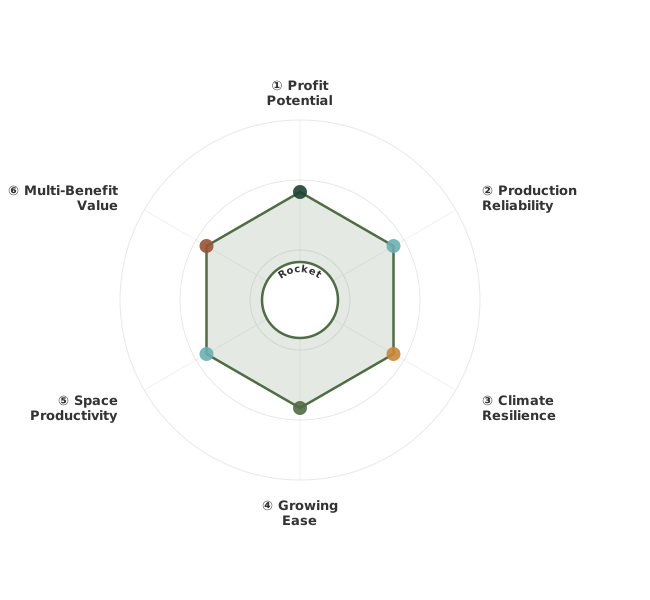
Season Extension Adequate Rocket thrives in cooler seasons and tolerates light frost, allowing for extended harvest periods by utilizing early spring and fall planting within a regenerative system.
Space Efficiency Ideally Suited This quick-growing leafy green is well-suited for dense planting and successive harvesting, maximizing food production and ecological function in compact growing areas.
Storage Longevity Not Recommended As a delicate leafy green, rocket is best enjoyed fresh, highlighting its role as a rapid component within a diverse, continuously harvested food system.
Yield Reliability Adequate Rocket provides dependable, quick harvests in favorable cool conditions, though its tendency to bolt in heat necessitates strategic planting and ecosystem management for consistent returns.
Establishment Ease Ideally Suited Rocket germinates rapidly and outcompetes early weeds with its vigorous growth, establishing effectively with minimal intervention in healthy, living soil.
Multi Benefit Value Adequate Rocket offers edible leaves and attracts beneficial insects, while its rapid biomass contributes to soil health and nutrient cycling within the farm ecosystem.
Climate Adaptability Adequate Thriving in cooler climates, rocket's sensitivity to extreme heat and drought can be mitigated through strategic planting, mulching for moisture retention, and companion planting within diverse agroecosystems.
Maintenance Intensity Adequate Maintaining rocket's tender quality involves ensuring consistent soil moisture through mulch and timely harvests, integrating its rapid growth cycle into the overall farm plan.
Disease Pest Resistance Adequate Rocket benefits from rapid growth facilitated by optimal soil fertility and moisture management, which helps it outpace common pests and resist bolting when grown in cooler conditions.

Comparative System: Ratings compare plants within their economic category (e.g., cover crop nitrogen fixation compared to other cover crops, not to all plants). Individual farm conditions and management practices significantly influence actual performance.

8

Learn More

Why farmers use this plant and additional resources

Why Regenerative Farmers Use This Plant

Rocket, also known as arugula, is a high-value specialty cash crop that can significantly boost farm income through its rapid growth cycle and consistent market demand. It offers a quick turnaround for revenue, with harvests typically occurring 30-50 days from seeding, making it ideal for succession planting strategies. This allows farmers to maximize land utilization and generate income throughout the growing season, from early spring through late autumn in many climates, potentially yielding 8,000-12,000 lbs/acre (9,000-13,500 kg/ha) per season across multiple plantings in optimal conditions. Its peppery flavor is sought after by consumers for fresh salads, gourmet dishes, and specialty markets, including direct-to-consumer sales via farmers' markets, CSAs, and online platforms, as well as supplying restaurants and niche wholesalers. The ability to plant and harvest rocket multiple times per season makes it a cornerstone for diversified farm income streams, providing consistent cash flow and resilience against market fluctuations for other crops.

Integrating rocket into a regenerative system offers substantial ecological benefits beyond its economic potential. As a fast-growing leafy green, it can effectively scavenge excess nutrients from the soil, particularly nitrogen, helping to prevent nutrient leaching and improve soil health. Its shallow but dense root system contributes to soil structure without deep disturbance, binding soil particles and reducing erosion. Rocket can be an excellent companion plant, deterring certain pests with its pungent aroma and attracting beneficial insects when allowed to flower. In crop rotations, it can precede or follow heavier feeders, helping to balance nutrient cycling and break pest and disease cycles. Its inclusion in a diversified planting plan contributes to overall farm biodiversity, supporting a healthier and more resilient agroecosystem.

The quantitative ecosystem benefits of incorporating rocket are notable. While not a nitrogen fixer, its rapid growth and nutrient uptake contribute to soil organic matter accumulation when residues are managed appropriately. Its dense foliage can offer temporary ground cover, suppressing early-season weeds. Its flowering stage, though brief, can provide a valuable nectar and pollen source for a variety of small beneficial insects and pollinators during specific periods, contributing to their support within the agricultural landscape. By reducing the reliance on synthetic inputs through its nutrient scavenging capabilities, rocket indirectly supports water quality by minimizing runoff of excess fertilizers.

Rocket has demonstrated success in various regional farm systems. In the temperate climates of Western Europe, it is a staple in market gardens and organic farms, often grown in succession for continuous supply to local markets. In North America, it is a popular crop for specialty growers in diverse regions, from the milder Pacific Northwest to the more continental climates of the Northeast, where careful timing of plantings maximizes its harvest window. Australian growers in cooler regions also find success with rocket, integrating it into mixed cropping systems and supplying urban centers. In Mediterranean climates of Southern Europe, it is often grown in spring and autumn, capitalizing on milder temperatures. Its adaptability allows it to be a valuable component in both small-scale intensive operations and larger diversified farms seeking high-value, quick-turnaround crops. In Brazilian coffee plantations, rocket could be integrated as a fast-growing understory crop during the rainy season, contributing to ground cover and nutrient cycling before being incorporated back into the soil. Its ability to grow in cooler conditions also makes it suitable for greenhouse production in regions with extreme climates, extending the harvest season.

9

How to Integrate This Plant

Practical guidance for regenerative systems

Establishing rocket regeneratively involves careful attention to seeding rates, depth, and timing to ensure optimal germination and vigorous growth. For direct sowing, seeding rates typically range from 1-2 lbs/acre (1.1-2.2 kg/ha) for broadcast seeding, or 0.75-1.5 lbs/acre (0.8-1.7 kg/ha) when drilled in rows. For optimal germination and growth, seeds should be planted at a shallow depth of 0.25-0.5 inches (0.6-1.3 cm) in well-drained soil, as rocket seeds require light for germination. Spacing for mature plants can vary depending on harvest method; for cut-and-come-again harvesting, plants can be spaced 4-6 inches (10-15 cm) apart, while for full head harvest, 8-12 inches (20-30 cm) is more appropriate. If direct sown in rows, row spacing of 12-18 inches (30-45 cm) allows for adequate airflow and ease of harvest.

In the Northern Hemisphere, sowings can begin as early as March in milder climates and continue through September, with successive sowings every 2-3 weeks to ensure a continuous harvest. In the Southern Hemisphere, planting typically occurs from September to March, with additional planting windows from March-April and August-October. For transplant production, seeds are sown in trays and transplanted into the field.

Management practices for rocket focus on providing consistent moisture and temperature control to prevent bolting and maintain leaf quality. Aim for approximately 1 inch (2.5 cm) of water per week, especially during establishment and warmer periods. Fertility should be prioritized through biological means; incorporating well-composted organic matter prior to planting or utilizing the residue from nitrogen-fixing cover crops like clover or vetch from a previous rotation is highly effective. As rocket is a fast-growing crop with high nutrient demand, it benefits from the residual fertility of cover crops or the application of aged manure. Synthetic inputs should be considered only as a transitional measure while building soil biology. Rocket typically establishes in 10-14 days and reaches harvest maturity in 30-50 days, with plants reaching a height of 6-12 inches (15-30 cm).

Pest and disease management should focus on cultural practices such as crop rotation, maintaining optimal plant spacing to improve air circulation, and encouraging beneficial insects by planting insectary plants nearby. Avoid planting rocket in the same spot more than once every 2-3 years to break disease cycles. For category-specific integration as a vegetable or specialty cash crop, rocket's production cycle is geared towards rapid turn-around and succession planting. To ensure a continuous harvest from spring through fall in temperate climates (USDA Zones 5-7), plant every 2-3 weeks from early April through late August. Following a final harvest in late September or October, it is highly recommended to immediately follow with a fast-establishing cover crop, such as a blend of annual ryegrass and crimson clover, within two weeks to protect soil structure and scavenge any remaining nutrients. This crop fits well into rotations after legumes or grains, and a 2-3 year interval before planting rocket again in the same spot helps break potential pest and disease cycles, such as flea beetles or downy mildew.