
Sweet Fennel
While the provided knowledge base excerpts do not explicitly detail sweet fennel's primary uses as a cover crop, forage, or nitrogen fixer in regenerative systems, they offer insights into its integration and potential benefits. Excerpt suggests fennel can be cultivated using organic sources like castor cake and farmyard manure (FYM), combined with microbial inoculants (Azotobacter and PSB), leading to increased seed yield and improved soil structure and microbial biomass. This points to its role in organic soil building and potentially carbon sequestration. Fennel's cultivation is advised to follow early lettuce or greens and avoid preceding crops like potatoes or cereals due to weed management, highlighting its place within crop rotation strategies. Though not directly mentioned as a pollinator plant in these excerpts, related plants like goldenrod and marigold are noted for attracting beneficial insects, suggesting fennel could potentially contribute to polyculture layers and pest management in similar fashion. Farmer experience from Stoney Ridge Farm indicates mowing practices after grazing can control undesirable plants, though fennel's specific role in such pasture management isn't detailed. Charles Dowding mentions harvesting bulb fennel in a no-dig system, indicating its compatibility with no-till practices.
For a full botanical description see: Plants For A Future(opens in new window) (external link)
Regenerative Quick Profile
All recommendations assume integrated, regenerative practices—not conventional inputs.
Climate & Soil Fit
Climate: Tropical Rainforest, Tropical Monsoon, Tropical Savanna, Hot Semi-Arid (Steppe), Cold Semi-Arid (Steppe), Hot Desert, Cold Desert, Humid Subtropical, Oceanic (Maritime Temperate), Hot-Summer Mediterranean, Warm-Summer Mediterranean, Monsoon-Influenced Humid Subtropical, Subtropical Highland, Hot-Summer Continental, Warm-Summer Continental, Subarctic, Monsoon-Influenced Hot-Summer Continental, Tundra
Zones: USDA 5-9, Australian Zones 3-9
Optimal Soil: Loam Soil
System Role & Functions
Primary: Cash Crop With Services
Secondary: Pollinator Support, Cover Crop System
Key Benefits: Multi-benefit value
Management Level
Experience: Beginner-Friendly
Maintenance: Moderate maintenance - As a perennial, fennel thrives with effective fertility management from compost and mulch, and may require integration into the planting plan to manage its natural tendency to self-seed.
Value Streams
- Vegetable/specialty crop harvest
- Pollinator habitat and support
Know the Debate
- Fennel provides economic value and ecological benefits.
- Agroecological role vs. invasive weed potential.
- Climate and management drive system outcomes.
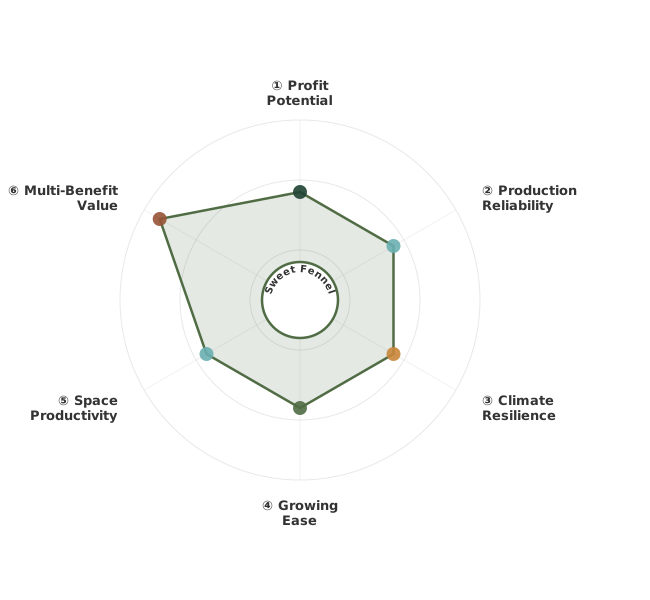
How These Traits Are Calculated
Trait dimensions are ordered clockwise starting from the top of the chart (12 o'clock position):
1. Profit Potential
Net returns per acre from yield, pricing, input costs, and labor efficiency
WHAT: Synthesizes gross revenue potential, input costs, labor requirements, and storage/marketing advantages into net profitability per acre. Captures the complete economic picture from planting to sale.
WHY: Not all vegetables are equally profitable. High-value crops with efficient production can return $10,000-30,000/acre versus $2,000-5,000/acre for lower-value options. Profit potential guides crop selection for maximum return on limited land and determines viable scale for farm businesses.
HOW: Scored via LLM synthesis of economics data (yields, prices, costs), storage advantages (season extension, value-added potential), and labor intensity. Exceptional (3.0): High yields × premium prices with moderate inputs and good storage (garlic, high-value salad greens). Typical (2.0): Moderate returns (tomatoes, squash). Limited (1.0): Low yields, commodity pricing, or intensive labor requirements (low-value greens).
2. Production Reliability
Weighted: yield consistency (60%) + disease/pest resistance (40%)
WHAT: Combines yield reliability (harvest consistency year-to-year) with disease and pest resistance to measure predictable production. Reliable vegetables deliver consistent harvests without catastrophic failures from pests or weather.
WHY: Market commitments and CSA subscriptions require dependable production. Unreliable crops that fail in bad years or require intensive pest management create cash flow gaps and customer dissatisfaction. Reliable producers allow confident planning and reduce input costs from emergency pest interventions.
HOW: Weighted formula prioritizes yield reliability (60% weight) for overall consistency, with disease/pest resistance (40% weight) to prevent total failures. Exceptional (3.0): Consistent yields across variable seasons with strong natural pest resistance. Typical (2.0): Generally reliable with some pest/weather sensitivity. Limited (1.0): Highly variable yields or severe pest vulnerability requiring intensive management.
3. Climate Resilience
Temperature and rainfall tolerance across diverse growing conditions
WHAT: Measures the breadth of climatic conditions where the vegetable produces successfully—temperature extremes, humidity ranges, and rainfall variability. Climate-resilient crops work across diverse regions and weather patterns.
WHY: Climate variability is increasing—unexpected heat waves, cold snaps, or drought periods can wipe out entire vegetable harvests. Resilient crops provide insurance against weather uncertainty and allow geographic expansion for market growth. This is especially critical for direct-market farmers who can't easily substitute crops mid-season.
HOW: Ratings based on the climate_adaptability trait documenting temperature tolerance and geographic range. Exceptional (3.0): Grows successfully in diverse climates (cold to hot, humid to dry) with wide hardiness zone range. Typical (2.0): Moderate climate flexibility. Limited (1.0): Narrow climate requirements (tropical-only, cool-season-only, humidity-sensitive).
4. Growing Ease
Weighted: establishment ease (50%) + low maintenance requirements (50%)
WHAT: Combines establishment difficulty (germination, transplanting) with ongoing maintenance needs (watering, fertilizing, pest management) to measure total labor requirements. Easy crops grow reliably with minimal intervention.
WHY: Labor is the primary cost for small-scale vegetable production. Easy-care crops allow farmers to manage more production area with the same labor, improving profitability. Difficult crops requiring constant attention, precise timing, or specialized skills reduce overall farm productivity and increase risk.
HOW: Weighted formula balances establishment ease (50% weight) for reliable startup and inverted maintenance intensity (50% weight) for ongoing care. Exceptional (3.0): Direct-seeded or easy transplants with minimal water/fertility/pest needs. Typical (2.0): Moderate care requirements. Limited (1.0): Difficult establishment or intensive ongoing management (daily watering, heavy feeding, constant pest monitoring).
5. Space Productivity
Weighted: yield per square foot (60%) + season extension potential (40%)
WHAT: Combines spatial productivity (yield per square foot) with temporal productivity (extended harvest windows from succession planting or season extension). Maximizes production from limited growing area.
WHY: Land is the primary constraint for vegetable farmers—especially those near urban markets. Space-efficient crops delivering high yields in small areas improve per-acre profitability dramatically. Season extension (spring tunnels, fall protection) adds bonus production windows when competing supply is limited and prices are higher.
HOW: Weighted formula prioritizes space efficiency (60% weight) for core yield per area, with season extension potential (40% weight) for bonus production opportunities. Exceptional (3.0): High yields per square foot (10,000+ lbs/acre equivalents) with season extension options. Typical (2.0): Moderate yields and extension potential. Limited (1.0): Low yields or crops unsuitable for season extension.
6. Multi-Benefit Value
Ecosystem services beyond harvest—pollinator support, nitrogen fixing, pest habitat
WHAT: Measures ecosystem services provided beyond harvestable yield. Multi-benefit vegetables contribute to farm ecology through nitrogen fixation (legumes), pollinator support (flowering crops), beneficial insect habitat, soil building, or erosion control.
WHY: Cash crops can either extract from farm ecosystems or contribute to them. Vegetables with strong multi-benefit value build soil fertility, support pollinators needed for fruit/vine crops, and create habitat for pest predators—reducing external input needs. Nitrogen-fixing vegetables (beans, peas) provide $40-80/acre worth of fertility for following crops.
HOW: Ratings based on the multi_benefit_value trait documenting service contributions. Exceptional (3.0): Significant ecosystem services (nitrogen fixation, heavy pollinator support, soil building, pest habitat). Typical (2.0): Some ecosystem contributions. Limited (1.0): Single-purpose cash crops with minimal farm ecology benefits.
Ratings are based on documented performance in regenerative systems, not conventional high-input scenarios. All traits assume integrated management practices focused on soil health and ecosystem services.
8
Know the Debate
Sweet fennel offers dual benefits as a specialty cash crop and an ecological enabler in regenerative systems. Its deep root system can break up com...
Know the Debate
Sweet fennel offers dual benefits as a specialty cash crop and an ecological enabler in regenerative systems. Its deep root system can break up com...
Sweet fennel offers dual benefits as a specialty cash crop and an ecological enabler in regenerative systems. Its deep root system can break up compaction and improve soil structure, while its flowers attract beneficial insects, contributing to natural pest control. However, its aggressive growth and potential for invasive spread, particularly in certain climates or poorly managed systems, necessitate careful consideration. Farmers need to weigh these ecological contributions against its potential as a weed and the specific management required for optimal yield and minimal negative impact.
Is sweet fennel a beneficial plant or an invasive weed?
Valuable Specialty Crop & Ecological Asset
Sweet fennel is a high-value cash crop offering culinary versatility and short days-to-harvest, making it suitable for intensive succession planting. Regeneratively grown fennel, using organic fertilizers and attracting beneficial insects, also contributes to soil health and farm biodiversity.
Sources behind this view
Sources behind this view
 Videos & Podcasts
-
Fennel is a versatile permaculture plant; its seeds offer aniseed flavor and digestive benefits, while fronds are useful in cooking. Seeds can be saved from self-seeding plants or collected from flowers, with 'now' being a good time for planting or collection.

-
Fennel is recommended for farmscaping to attract beneficial insects like parasitic wasps and surfid flies, serving as a food source and pest control agent, while also being edible and marketable.

 Research
-
Leaf mineral element content and soil characteristics on in vitro antioxidant and enzymatic inhibitory activities of aqueous fennel extracts (opens in new window)
This study found: A study looked at how different soil conditions in two climate regions affected fennel plants. They found that the amount of beneficial plant compounds and the plants' ability to fight free radicals and inhibit certain enzymes varied greatly depending on where the fennel was grown. One sample, FvSEN, had the most beneficial compounds and the strongest antioxidant power. The levels of minerals in the plants also changed based on the location. The researchers concluded that the soil conditions significantly impact fennel's potential for use in food and other applications, meaning the growing environment is key to its quality.
-
Research on the Use of Organic Fertilizer Instead of Chemical Fertilizer and Its Effect on the Morphological and Yield in Fennel Plant (opens in new window)
This study found: This research explored using organic fertilizers like sheep manure and vermicompost as alternatives to chemical fertilizers for growing fennel, a medicinal and aromatic plant. The study compared different application rates of sheep manure and vermicompost against ammonium sulfate (a chemical fertilizer) and a no-fertilizer control. Results showed that while plant height and fixed oil yield were significantly affected, the best overall yields for fruit, essential oil, and fixed oil were achieved with a lower application rate of sheep manure (10 t/ha). This suggests that sheep manure can be a viable option for improving fennel production and quality in sustainable agriculture.
Potential Invasive Weed Risk
Sweet fennel is recognized as an aggressive spreader, particularly in Mediterranean-type ecosystems. Its potential to outcompete native vegetation and naturalize in wildlands poses a risk, making its integration into farm systems a concern for ecological balance.
Sources behind this view
Sources behind this view
Research
-
Assessing temperature-based adaptation limits to climate change of temperate perennial fruit crops. (opens in new window)
This study found: A global study looked at how changing temperatures due to climate change will affect where five key fruit crops – apples, cherries, almonds, olives, and grapes – can be grown. These perennial trees need specific winter cold periods to produce fruit. The research used climate models to predict future growing areas. By the end of the century, under a high-emission scenario, growing areas in the Southern Hemisphere could shrink by over 40%, while areas in the Northern Hemisphere might expand significantly. A lower-emission scenario shows smaller but still notable shifts. Essentially, suitable growing regions are moving towards the poles. For the Southern Hemisphere, there's less room to move to higher latitudes. Farmers and breeders can adapt by selecting or developing varieties that need less winter chill, choosing appropriate cultivars, and using techniques like shade netting, sprinklers for cooling, and precise irrigation to manage heat stress.
Context-Dependent Management Strategy
Success depends on local climate and specific management. In diverse systems with careful monitoring, benefits can be realized, but in regions prone to invasive spread or monoculture systems, it requires cautious implementation and management to mitigate risks.
Sources behind this view
Sources behind this view
Videos & Podcasts
-
Market gardening guide for fennel: marketing strategies, variety selection (Preludio, Feno), seed starting (late Feb/early Mar, 75-80°F), transplanting with frost protection, pest management (swallowtails, deer, rabbits), soil prep (compost, feather meal), interplanting with lettuce, spacing (8" grid), watering, harvesting, storage (fronds on vs. off), and profitability ($3-4/lb potential).

-
For autumn harvest in mild climates, sow Coriander (last week July), Bulb Fennel (last week July), and Chinese Cabbage (last week July). Chinese Cabbage is pest-prone; use mesh. Growing out-of-season risks blight and low yields.
Research
-
Leaf mineral element content and soil characteristics on in vitro antioxidant and enzymatic inhibitory activities of aqueous fennel extracts (opens in new window)
This study found: A study looked at how different soil conditions in two climate regions affected fennel plants. They found that the amount of beneficial plant compounds and the plants' ability to fight free radicals and inhibit certain enzymes varied greatly depending on where the fennel was grown. One sample, FvSEN, had the most beneficial compounds and the strongest antioxidant power. The levels of minerals in the plants also changed based on the location. The researchers concluded that the soil conditions significantly impact fennel's potential for use in food and other applications, meaning the growing environment is key to its quality.
Making Sense of the Differences
Fennel's dual nature as a beneficial crop and potential weed is driven by climate and management. In humid, temperate regions with diverse planting schemes and watchful cultivation, its benefits for soil and biodiversity can be realized. However, in drier or Mediterranean-like climates, or within simplified agricultural landscapes, its aggressive self-seeding can lead to invasive spread. Farmers should assess local ecological conditions and their farm's management style before integrating fennel, opting for methods that maximize its agronomic benefits while actively preventing its escape into surrounding natural habitats.
9
Learn More
Why farmers use this plant and additional resources
Learn More
Why farmers use this plant and additional resources
Why Regenerative Farmers Use This Plant
Sweet fennel (Foeniculum vulgare) offers significant economic and ecological advantages within regenerative agricultural systems, positioning it as a high-value specialty cash crop. Its unique anise flavor and versatile culinary uses, including the bulbous base (Florence fennel) and feathery fronds, make it sought after by direct-to-consumer markets, CSAs, specialty wholesale distributors, farmers' markets, and local restaurants. This versatility allows for multiple revenue streams per harvest.
With a relatively short days-to-harvest window, typically 60-90 days from transplant or direct seeding, fennel lends itself exceptionally well to intensive succession planting. This practice maximizes land use and allows farmers to generate continuous revenue streams from late spring through fall in many regions. A well-managed crop can yield between 10,000-20,000 lbs/acre (11,200-22,400 kg/ha), with premium prices often commanded for fresh, high-quality bulbs and fronds. Integrating sweet fennel diversifies farm income, providing a resilient component to overall farm profitability and potentially extending harvest periods for 16-20 weeks in regions with extended growing seasons.
Beyond its direct market value, sweet fennel contributes positively to soil health and farm ecosystem services. Its deep taproot system, reaching up to 2-3 feet (60-90 cm), helps to break up soil compaction, improve water infiltration, and scavenge nutrients from deeper soil profiles, making them available to subsequent crops. While not a nitrogen fixer, its presence can enhance soil microbial activity and nutrient cycling through root exudates. The feathery foliage, when left as residue or incorporated, adds valuable organic matter to the soil, enhancing microbial activity and long-term soil structure.
The ecological benefits of sweet fennel extend to its role in supporting biodiversity and natural pest control. Its aromatic qualities can deter certain pests, and its flowers are a valuable nectar and pollen source for a wide array of beneficial insects, including bees, butterflies, hoverflies, predatory wasps, and lacewings. These beneficial insects play a crucial role in natural pest control for other crops on the farm, reducing reliance on external inputs. By incorporating fennel into crop rotations, farmers can foster a more resilient agroecosystem, disrupt pest and disease cycles that target other vegetable families, and enhance the natural biological controls present on the farm.
Sweet fennel has demonstrated success in various regional farm systems. In the Mediterranean regions of Europe, it is a staple crop grown in diverse rotations, often following legumes. In the United States, specialty growers in California and the Pacific Northwest have found success in intensive market garden systems, benefiting from mild coastal climates. Australian farmers in cooler, temperate zones have integrated fennel into diversified vegetable enterprises, leveraging its demand in urban farmers' markets. In the UK, it's commonly grown as an annual. In Brazil's subtropical regions, it can be used as a companion plant in coffee or citrus orchards. Its adaptability allows it to be a valuable component in a range of regenerative farming enterprises globally, from small-scale organic farms to larger diversified operations.
Sources behind this view
Videos & Podcasts
-
Fennel provides cattle with antimicrobial and antiparasitic benefits via essential oils, stimulates appetite, and aids digestion. Its deep roots improve soil structure and suppress pathogens, while at
-
Fennel is recommended for farmscaping to attract beneficial insects like parasitic wasps and surfid flies, serving as a food source and pest control agent, while also being edible and marketable.