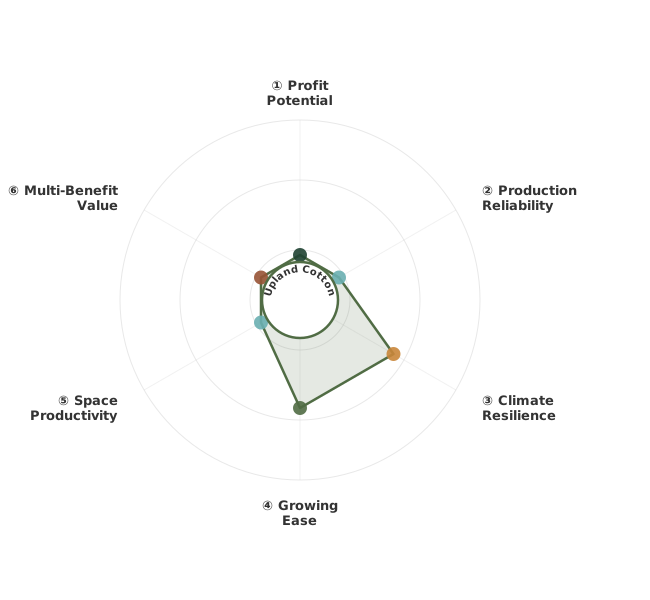
Gossypium hirsutum, commonly known as upland cotton, finds diverse applications within regenerative agriculture systems. While not a nitrogen fixer, it plays a role as a polyculture layer, notably in relay intercropping systems with wheat, enhancing lint yield and earliness by increasing boll density. Its cultivation can also contribute to soil building; studies in saline areas show that high-efficient water-saving irrigation (HEI) significantly increases soil bacterial community diversity and enhances cotton survival rates, suggesting a positive impact on soil health over time. Furthermore, physical soil management techniques like plastic film mulching and ridge-furrow planting are employed to manage water and salt dynamics, reducing salt accumulation and minimizing water loss, which are crucial for soil health and sustainability. Farmer experiences highlight the economic benefits of organic cotton cultivation, with higher income contributions compared to conventional methods in Tanzania. Initiatives like the Native Colored Cotton Rescue Project in Mexico emphasize conserving native, non-GMO varieties for sustainable farming and artisan use, demonstrating a commitment to preserving genetic diversity and traditional practices.

Regenerative Quick Profile

All recommendations assume integrated, regenerative practices—not conventional inputs.

Climate & Soil Fit

Climate: Tropical Rainforest, Tropical Monsoon, Tropical Savanna, Hot Semi-Arid (Steppe), Cold Semi-Arid (Steppe), Hot Desert, Cold Desert, Humid Subtropical, Oceanic (Maritime Temperate), Hot-Summer Mediterranean, Warm-Summer Mediterranean, Monsoon-Influenced Humid Subtropical, Subtropical Highland, Hot-Summer Continental, Warm-Summer Continental, Subarctic, Monsoon-Influenced Hot-Summer Continental, Tundra

Zones: USDA 8-11, Australian Zones 3-14, EU Mediterranean, Subtropical

Optimal Soil: Loam Soil

System Role & Functions

Primary: Cash Crop With Services

Secondary: Cover Crop System, Specialty

Key Benefits: Storage Longevity

Management Level

Experience: Intermediate

Maintenance: High maintenance - Maintaining healthy Gossypium Hirsutum within a regenerative system involves fostering soil fertility through compost and cover cropping, and promoting natural pest deterrence.

Value Streams

  • Vegetable/specialty crop harvest
1

Climate Suitability Assessment

Will this plant thrive in your climate?

IDEALLY SUITED

Köppen Zone: Aw (Tropical Savanna), Cfa (Humid Subtropical), Cwa (Monsoon-Influenced Humid Subtropical)
USDA Zone: 7a, 8a, 9a, 10a
Australian Zone: subtropical

Upland cotton performs exceptionally well in warm to hot climates with long growing seasons, typically requiring 150-200 frost-free days and average summer temperatures between 75-85°F (24-29°C). These conditions are met in Köppen Cfa and Cwa zones, and USDA zones 8a, 8b, 9a, 9b, 10a, 10b. Australian subtropical and parts of its temperate and grassland zones also align. Adequate rainfall (25-40 inches/63-100 cm) is beneficial, but these zones often have reliable irrigation infrastructure to supplement if needed, ensuring optimal boll development and fiber quality. High yields are consistently achievable with minimal risk of frost or extreme heat stress during critical growth phases. These regions typically support robust vegetative growth and efficient boll maturation, leading to high-quality fiber production and economic viability for cash crop systems. The extended warm periods allow for maximum plant development and harvest efficiency.

ADEQUATE

Köppen Zone: Af (Tropical Rainforest), Am (Tropical Monsoon), BSh (Hot Semi-Arid (Steppe)), BWh (Hot Desert), Csa (Hot-Summer Mediterranean), Dfa (Hot-Summer Continental)
USDA Zone: 6a, 11a, 12a
Australian Zone: grassland, temperate

Upland cotton can be grown successfully in regions with adequate growing seasons and temperatures, though with some management considerations. This includes Köppen Csb (with careful variety selection), USDA zones 7a, 7b, 11a, 11b, and Australian temperate and grassland zones. These areas typically offer 180-220 frost-free days, but summer temperatures may not consistently reach optimal levels, or rainfall can be erratic. Supplemental irrigation is often necessary to bridge dry spells and ensure sufficient water for boll development, increasing production costs. High humidity and potential for increased disease and pest pressure in USDA 11a/11b require vigilant management and potentially specific variety choices. While yields may be slightly lower or more variable than in 'ideally suited' zones, cotton remains a viable cash crop with appropriate planning and resource management.

NOT RECOMMENDED

Köppen Zone: ET (Tundra), BSk (Cold Semi-Arid (Steppe)), BWk (Cold Desert), Cfb (Oceanic (Maritime Temperate)), Csb (Warm-Summer Mediterranean), Cwb (Subtropical Highland), Dfb (Warm-Summer Continental), Dfc (Subarctic), Dwa (Monsoon-Influenced Hot-Summer Continental)
USDA Zone: 2a, 3a, 3b, 4a, 5a, 5b
Australian Zone: arid
EU Climate Region: atlantic, mediterranean

Upland cotton is not recommended in Köppen BSh, BWh, Csa, Csb, and EU Atlantic and Mediterranean regions, as well as USDA Zone 12 and Australian arid zones. These zones present significant challenges due to extreme heat, severe water scarcity, or insufficient growing season length/temperature. In hot, arid to semi-arid regions (BSh, BWh, Australian arid, USDA 12), low and erratic rainfall (often <20 inches/50 cm) and extreme heat (consistently >95°F/35°C) severely limit growth, reduce boll set, and compromise fiber quality, necessitating extensive and often uneconomical irrigation. Mediterranean climates (Csa, Csb, EU Mediterranean) have dry summers requiring substantial irrigation, while Atlantic climates (EU Atlantic) often lack sufficient summer heat and have high humidity, increasing disease risk. USDA Zone 12's extreme tropical heat and humidity also pose significant challenges. These conditions make cotton cultivation economically questionable, with high input costs and uncertain returns.

Better alternatives for these "not recommended" zones: Sorghum (highly drought-tolerant grain crop adapted to hot, dry conditions), Cowpea (drought-tolerant legume with nitrogen-fixing capabilities), Millet (short-season grain crop with excellent heat and drought tolerance), Olive (highly drought-tolerant tree adapted to Mediterranean conditions), Date Palm (highly drought-tolerant fruit tree adapted to desert conditions)

Note: Zones listed above represent climates where this plant can produce reliably with reasonable management. Climate zones not mentioned would require intensive climate modification (greenhouses, extensive infrastructure) and are not economically viable for regenerative agriculture purposes.

2

Soil Suitability Assessment

Which soil types work best for this plant?

IDEALLY SUITED

Loam Soil

This plant thrives in these soil types without requiring amendments or remediation. Natural soil conditions support optimal growth and productivity.

ADEQUATE

Clay Soil, Rich Soil, Sandy Soil

This plant performs acceptably in these soil types with moderate, manageable remediation such as pH adjustment, compost addition, or drainage improvement. The required amendments are practical and cost-effective for regenerative agriculture.

NOT RECOMMENDED

Acidic Soil, Alkaline Soil, Desert Soil, Rocky Soil, Saline Soil, Wet Soil

Growing this plant in these soil types would require impractical remediation such as complete soil replacement, extensive amendments, or cost-prohibitive infrastructure. These conditions are not economically viable for regenerative agriculture.

Note: Soil suitability assessments focus on remediation requirements. "Ideally Suited" means the plant generally thrives without the need for substantial amendments, "Adequate" means manageable remediation (lime, compost, mulch), and "Not Recommended" means impractical soil changes would be required. Climate factors like rainfall and temperature also influence success.

3

Seasonal Considerations

Planting timing, growth duration, and harvest windows

Upland cotton thrives in warmth, making for a generous growing season in your climate zones. Begin thinking about planting once the danger of frost has entirely passed and soil temperatures consistently reach at least 60°F (15°C). Direct seeding is the most common method, with a window opening in early spring and extending through late spring. While not typically started indoors as transplants, ensure seeds are sown after the soil has warmed sufficiently for germination.

Cotton requires a long, hot growing period to reach maturity, typically around 140 to 180 days from seeding. This means a summer-long commitment, with the harvest window opening in late summer and continuing through mid-fall, before any significant chill sets in. Succession planting is not practical for cotton due to its long maturity. This crop has very little cold tolerance once established and will be damaged by frost. While it loves heat, extreme, prolonged heat waves without adequate moisture can stress the plants. Focus on maximizing the warm season for fruit development; there are no viable fall planting opportunities for a harvest in the same year, as it needs the entire warm period to mature.

4

System Role & Multi-Benefit Value

Functional roles, integration strategies, and stacked benefits

Functional Role

Total System Value

Upland cotton, while primarily a cash crop, offers multiple benefits when integrated into regenerative systems. Its direct harvest value is significant, particularly when focusing on organic production which can yield higher income (excerpt 3). Beyond economic returns, cotton cultivation can enhance system resilience. Practices like water-saving irrigation (excerpt 2) and mulching (excerpt 4) improve water use efficiency and soil salinity management, crucial for arid or semi-arid regions. Relay intercropping with other crops, such as wheat (excerpt 5), demonstrates its potential to increase overall farm productivity and resource utilization. While cotton itself doesn't provide nitrogen or act as a windbreak, its inclusion in a diversified rotation can improve soil structure and reduce erosion, contributing to ecosystem services like soil carbon sequestration and improved water infiltration. By offering a distinct commodity crop, cotton diversifies farm income streams, reducing reliance on single markets and enhancing economic risk management. The conservation of native varieties (excerpt 1) also adds a cultural and biodiversity benefit.

Integration Characteristics

Multi-Benefit Value: Not Recommended - Primarily cultivated for fiber, its integration into diverse cropping systems can enhance soil structure and support beneficial insect populations through careful planning.

5

Management & Care Requirements

Integration guidance, maintenance needs, and care practices

How to Integrate This Plant

Upland cotton (Gossypium hirsutum) integrates into regenerative systems primarily as a cash crop with potential for ecosystem services. Its role as a non-tree plant means it's well-suited for annual cropping rotations, intercropping, or as a component in alley cropping systems where it can provide ground cover and contribute to soil health. Compatible practices include relay intercropping with grains like wheat (as seen in excerpt 5), or potentially in cover cropping mixes if managed for biomass. Cotton can also be part of a diversified farming system, offering a valuable commodity alongside other crops. It does not directly provide nitrogen fixation, shade, or windbreak functions like trees, but its cultivation can be managed to improve soil structure and reduce erosion, especially when combined with practices like mulching (excerpt 4) or water-saving irrigation (excerpt 2). Contribution to soil health and yield begins in Year 1, with observable benefits to soil structure and water management potentially increasing by Year 3-5. Beyond direct harvest, the system value lies in its contribution to crop diversity, economic resilience, and potential for reduced input farming (organic cotton, excerpt 3), enhancing overall farm sustainability.

Integration Practices & Management

Regenerative agriculture integrates *Gossypium hirsutum* (cotton) by focusing on soil health and biodiversity. While specific regenerative establishment methods like seeding rates, timing, companion planting, and tillage practices for cotton are not detailed in the provided sources, the emphasis is on sustainable cultivation. For instance, the Ñu’u Ndito cooperative in Oaxaca revives native *Gossypium hirsutum* with a focus on GMO-free seeds and sustainable farming. Research in China highlights the benefits of high-efficient water-saving irrigation on cotton yield and soil bacterial diversity, suggesting a move towards resource-efficient practices. Studies also compare the economic benefits of organic cotton, indicating a shift towards systems that may reduce synthetic inputs. Management considerations in China involve physical methods like plastic film mulching and ridge-furrow planting to manage soil water and salt dynamics, thereby improving soil conditions for cotton growth. Termination strategies and integration with grazing or cash crops are not explicitly covered in these sources. However, the existing information points to a regenerative approach centered on conserving native varieties, enhancing soil microbial communities, improving water use efficiency, and potentially reducing reliance on conventional inputs.

Management Profile

Maintenance Intensity: Not Recommended - Maintaining healthy Gossypium Hirsutum within a regenerative system involves fostering soil fertility through compost and cover cropping, and promoting natural pest deterrence.

Sources behind this view

Research
6

Economics & Value Streams

Direct harvest, system benefits, ecosystem services, and risk diversification

Comprehensive economic analysis including direct harvest value, system enhancement contributions, ecosystem services, value timeline, and risk diversification strategies.

Vegetable & Specialty Economics

Metric Value
Seed/Transplant Cost 100-200 $/acre 247-494 $/ha
Expected Yield 500-1500 lbs/acre 560-1681 kg/ha
Market Price 0.60-1.20 $/lb 1-2 $/kg
Harvest/Handling Cost 400-800 $/acre 988-1976 $/ha
Marketing/Distribution Cost 200-400 $/acre 494-988 $/ha
Net Annual Return* $-1100 to $1100/acre/year

Economics highly variable by market channel (direct vs wholesale), scale, and management. Direct marketing commands premiums but requires labor. Values shown for mid-scale market garden operations.

* Net Annual Return = (Yield × Market Price) − (Amortized Establishment Cost + Annual Maintenance). This return is realized only at/after first harvest; early years have costs but no revenue. Range shows worst case to best case scenarios.

System Enhancement Value

Beyond harvest: ecosystem services from regenerative cash crop practices

Ecological Service Contributions

Upland cotton offers several crucial system benefits beyond direct fiber and seed yield. As highlighted in the Native Colored Cotton Rescue Project, it plays a vital role in maintaining genetic diversity and preserving cultural heritage by supporting native seed varieties and traditional artisan practices. This focus on GMO-free seeds also contributes to reduced insect mortality rates, benefiting local ecosystems. Furthermore, research in saline environments indicates that cotton cultivation, when managed with water-saving irrigation techniques, can significantly improve soil health by enhancing bacterial community diversity and reducing salinity and sodium absorption. This suggests a potential for cotton systems to contribute to soil remediation in degraded lands. The crop's role as a cover crop system, as mentioned in its secondary function, implies its ability to protect soil from erosion, improve soil structure, and potentially suppress weeds when managed effectively within a rotation. The demand for organic cotton, as noted in Tanzania, demonstrates a premium market opportunity driven by sustainable practices that promote soil health and resilience.

Erosion Control (if applicable)

Variable; depends on planting density and system design. Potential for localized soil stabilization and reduced wind erosion.

While upland cotton (Gossypium hirsutum) is not typically considered a primary windbreak species due to its relatively low stature and annual growth habit, its integration into farming systems can offer localized erosion control and dust suppression. When planted in hedgerows or as a border crop, the dense canopy and fibrous root system can help stabilize soil, particularly in areas prone to wind erosion. This effect is amplified when cotton is part of a mixed-species planting or integrated into a broader cover cropping strategy. The physical barrier created by cotton plants can reduce wind speed at ground level, thereby decreasing soil particle detachment and transport. This is especially relevant in arid and semi-arid regions where cotton is often cultivated and where wind erosion can be a significant challenge. The reduction in soil loss not only preserves topsoil fertility but also minimizes air pollution from dust, benefiting both the immediate agricultural landscape and surrounding environments. While not a substitute for dedicated windbreak trees, cotton's role in soil surface protection within a system is a valuable, albeit secondary, contribution.

Ecosystem Service Contributions

Environmental contributions: carbon, pollinators, wildlife, and water

  • Carbon Sequestration: Upland cotton, as an annual crop, sequesters carbon during its growth phase primarily in above-ground biomass and root systems. The extent of sequestration is moderate and temporary, with carbon returning to the atmosphere upon decomposition or harvest. However, when integrated into regenerative systems with cover cropping and reduced tillage, it can contribute to soil organic matter accumulation, leading to more stable carbon storage over time.
  • Pollinator Support: Low to Medium. Cotton flowers produce nectar and pollen, attracting a variety of pollinators including bees and other insects. However, it is not a primary or highly preferred pollen/nectar source compared to dedicated pollinator-attracting plants. Its contribution is more significant when planted in proximity to other flowering species or within diverse agroecosystems.
  • Wildlife Habitat: Low. While cotton fields can provide some limited cover and potential foraging opportunities for certain small birds and insects, they generally offer less diverse habitat compared to perennial crops or natural ecosystems. The crop's annual nature and often monocultural planting reduce its value as a consistent wildlife habitat.
  • Water Quality: Not applicable

Value Timeline: Production & Services

When you'll see results: varies by crop (annual harvest vs. perennial establishment)

Years 1-2

Initial soil stabilization and erosion control benefits from root development and ground cover. Potential for minor dust suppression. Establishment of cover crop function if planted in rotation.

Years 3-5

First harvest revenue from cotton fiber and seed. Continued soil health improvements if integrated into a multi-year regenerative system. Potential for increased soil microbial diversity and reduced salinity in specific management contexts (e.g., HEI).

Years 10-20

Established system benefits including enhanced soil structure and water retention. Significant yield increases in saline environments due to long-term HEI. Stronger contributions to soil remediation and resilience. Development of premium markets for organic or native varieties.

20+ Years

Long-term soil health and fertility maintenance. Continued resilience against soil salinity and drought stress. Preservation of genetic resources and cultural traditions associated with native cotton varieties.

Farm Risk Reduction

How this reduces farm risk: backup income, weather protection, market hedges

  • Multiple Revenue Streams: Direct revenue from cotton fiber and seed sales. Potential for premium pricing for organic or specialty colored cotton. Byproducts like cottonseed oil and meal. Income from associated artisan crafts (e.g., textiles) in integrated projects.
  • Temporal Income Spread: Annual harvest revenue provides a consistent, albeit seasonal, income stream. Long-term system health improvements (soil, water) contribute to future yield stability and reduced input costs, spreading economic benefits over time. Preservation of genetic resources and cultural traditions offers a long-term, non-monetary value.
  • Market Risk Hedge: Diversifies farm revenue beyond single commodity crops. Organic cotton offers a hedge against volatile conventional commodity markets and provides access to premium markets with potentially more stable pricing. Reduced input costs in organic systems hedge against rising fertilizer and pesticide prices. Improved soil health and water management enhance resilience to climate variability (drought, salinity), reducing yield risk.
7

Regenerative Suitability Details

Comprehensive trait ratings for system integration assessment

Comparative ratings for this plant across key regenerative agriculture traits.

Trait Suitability Explanation
Season Extension Not Recommended As a warm-season plant, Gossypium Hirsutum thrives in extended warmth; its integration into cooler climates would rely on advanced soil warming and moisture management techniques.
Space Efficiency Not Recommended This plant is best suited for open field systems where its growth habit can be supported by robust soil health and a long, uninterrupted growing period.
Storage Longevity Ideally Suited The harvested cotton fiber demonstrates excellent stability, maintaining its integrity for extended periods when stored in dry conditions, a testament to its inherent material properties.
Yield Reliability Not Recommended Optimal yield for Gossypium Hirsutum is achieved through consistent warmth, ample moisture retention, and thriving soil biology, which collectively support its development.
Establishment Ease Adequate When soil temperatures are adequate and moisture is managed effectively, Gossypium Hirsutum demonstrates good initial vigor, allowing it to establish and compete within a healthy groundcover.
Multi Benefit Value Not Recommended Primarily cultivated for fiber, its integration into diverse cropping systems can enhance soil structure and support beneficial insect populations through careful planning.
Climate Adaptability Adequate Gossypium Hirsutum flourishes in consistently warm environments; its presence in cooler or wetter regions necessitates careful water management and diversified planting strategies.
Maintenance Intensity Not Recommended Maintaining healthy Gossypium Hirsutum within a regenerative system involves fostering soil fertility through compost and cover cropping, and promoting natural pest deterrence.
Disease Pest Resistance Adequate While susceptible to certain biotic pressures, building resilience in Gossypium Hirsutum involves enhancing soil health and promoting biodiversity to naturally suppress pests and diseases.

Comparative System: Ratings compare plants within their economic category (e.g., cover crop nitrogen fixation compared to other cover crops, not to all plants). Individual farm conditions and management practices significantly influence actual performance.

8

Learn More

Why farmers use this plant and additional resources

Why Regenerative Farmers Use This Plant

Gossypium hirsutum, commonly known as Upland Cotton, presents a compelling opportunity for regenerative farmers seeking high-value specialty cash crops. Its cultivation can generate significant revenue per acre, often ranging from $500 to $1500+ depending on market prices and yield, making it a cornerstone for diversified farm income streams. With varieties that can mature in as little as 120-150 days, or up to 150-180 days, cotton offers a relatively quick turnaround for a cash crop, allowing for strategic placement within crop rotations. Its market access is robust, catering to direct-to-consumer sales at farm stands or farmers' markets, inclusion in specialty CSA boxes, and wholesale to textile mills or niche fabric producers. The intensive management required for cotton production also drives innovation in soil health practices, as farmers focus on building resilient systems to support this demanding crop.

Beyond its direct economic contributions, Gossypium hirsutum plays a vital role in enhancing farm ecosystem services. While not a nitrogen fixer, its deep taproot system, which can extend 3-6 feet (0.9-1.8 meters) into the soil profile, significantly improves soil structure, aeration, and water infiltration. This deep root penetration helps break up compaction layers, making the soil more amenable to subsequent crops and reducing the need for heavy tillage. Cotton residues, when managed appropriately, contribute valuable organic matter to the soil, feeding microbial communities and improving soil fertility over time. Furthermore, the plant's growth cycle can be strategically timed to provide habitat and foraging opportunities for beneficial insects and pollinators during its flowering period, contributing to broader farm biodiversity. Its extensive root system enhances water holding capacity, potentially reducing irrigation needs by 15-25% in subsequent seasons. The decomposition of cotton stalks and leaves after harvest, especially when followed by a cover crop, contributes to soil organic matter accumulation, with studies showing increases of 0.1-0.3% per year in well-managed systems. The presence of cotton can also support populations of predatory insects, such as ladybugs and lacewings, which help control pest populations in surrounding crops. By optimizing soil health through its deep root structure and residue contribution, cotton farming can lead to improved nutrient cycling and a reduced reliance on external inputs.

Regional success stories highlight the adaptability of Gossypium Hirsutum in diverse regenerative settings. In the Southern United States, it is a staple cash crop in rotation with corn, soybeans, and small grains, often utilizing conservation tillage practices to maintain soil health. Farmers are exploring its integration into crop rotations following winter cover crops, utilizing its heat-loving nature to maximize summer yields. In India, particularly in states like Gujarat and Maharashtra, it is a vital crop for smallholder farmers, often grown with minimal external inputs and integrated into traditional farming practices. A growing movement is embracing organic and regenerative cotton production, emphasizing traditional farming methods and biodiversity enhancement to improve long-term farm sustainability and farmer livelihoods. In Australia, dryland cotton farming in regions like New South Wales and Queensland demonstrates its adaptability to semi-arid conditions, where water-use efficiency and soil moisture conservation are paramount. Innovative farmers are exploring cotton's drought resilience and its potential to fit into diverse cropping systems that include cereals and legumes. In Brazil, cotton is increasingly integrated into no-till systems, often following soybeans or corn, with a strong emphasis on cover cropping and biological fertility to support its growth. Cotton can be a component of mixed farming systems, sometimes grown in rotation with grains or on land previously used for pasture, with an emphasis on building soil organic matter through cover cropping and reduced tillage. In Pakistan, cotton is frequently intercropped with vegetables or legumes in smallholder systems, maximizing land use and diversifying income. In China, it is a significant crop in humid subtropical regions. In Argentina, it is integrated into diversified farming systems. In Kenya, its cultivation is being explored in suitable climates.

9

How to Integrate This Plant

Practical guidance for regenerative systems

Establishing Gossypium hirsutum regeneratively involves careful seed selection and precise planting. For direct seeding, typical rates range from 10-30 lbs/acre (11-34 kg/ha), depending on seed size and germination rate. Planting depth is critical for optimal germination and seedling establishment, usually between 0.5-1.5 inches (1.3-3.8 cm), ensuring the seed is in consistent contact with moist soil. Row spacing commonly varies between 30-40 inches (76-102 cm) to allow for air circulation, weed management, mechanical cultivation if necessary, and airflow. In-row spacing is adjusted to achieve desired plant populations of 30,000-60,000 plants per acre (74,000-148,000 plants/ha). In the Northern Hemisphere, planting typically occurs from late April to mid-May, after the last frost and when soil temperatures consistently reach 15°C (59-60°F). In the Southern Hemisphere, this translates to October to mid-November planting. Transplants can be used in cooler regions or to gain an earlier start, but direct seeding is more common for large-scale production.

Management practices for Gossypium hirsutum focus on building soil health and minimizing external inputs. While cotton can be a thirsty crop, especially during its vegetative and flowering stages, its deep root system enhances drought resilience once established. Initial watering needs might be around 1-2 inches (2.5-5 cm) per week if rainfall is insufficient, but irrigation should be managed to avoid waterlogging. Fertility is best addressed through biological means: incorporating compost, utilizing cover crop residue from preceding crops like clover or vetch, and leveraging manure from integrated livestock systems can provide essential nutrients. For instance, a well-managed cover crop preceding cotton can supply 40-80 lbs N/acre (45-90 kg/ha) through its decomposition. Synthetic fertilizers should only be considered as a transitional input while biological fertility is being built, as cotton can respond well to well-managed soil organic matter. Cotton typically establishes within 2-4 weeks and reaches maturity in 120-180 days, with plants growing to a height of 3-5 feet (0.9-1.5 m) at maturity. Pest and disease management prioritizes biological controls, such as encouraging beneficial insects like ladybugs and lacewings, planting attractant companion crops, and employing crop rotation intervals of at least 3-4 years with non-related crops to break pest cycles. Integrated Pest Management (IPM) for cotton emphasizes biological controls and cultural practices; for instance, releasing predatory mites for spider mite control or using pheromone traps for boll weevil monitoring.

The production cycle and soil stewardship for Upland Cotton are intensive, demanding careful planning. From seed to harvest, the process spans approximately 120-180 days, requiring a long, warm growing season. Succession planting is not generally applicable to cotton due to its specific photoperiod and temperature requirements for flowering and boll development. However, farmers can strategically rotate cotton with other crops to optimize soil health and break pest cycles. For example, planting cotton after a nitrogen-fixing cover crop like vetch or clover can provide a nutrient boost. Following the final harvest of cotton, typically in late autumn or early winter (September-November in the Northern Hemisphere, March-May in the Southern Hemisphere), it is crucial to manage the residue. Incorporating the stalks and leaves into the soil within 2-4 weeks of harvest, or leaving them on the surface for erosion control, followed by a resilient winter cover crop mix (e.g., cereal rye, hairy vetch, or a blend including crimson clover), will protect the soil from erosion, suppress weeds, and continue to build organic matter. This post-harvest management is vital for maintaining the soil health gains made during the cotton growing season and preparing the land for the next crop in the rotation. This cover crop can be terminated using roller-crimping or natural winterkill (if varieties are selected appropriately for the climate), preparing a clean seedbed for the next crop, ideally one that benefits from the nitrogen and improved soil structure. A minimum 3-year rotation interval with non-related crops is recommended to manage soil-borne diseases and pests effectively.