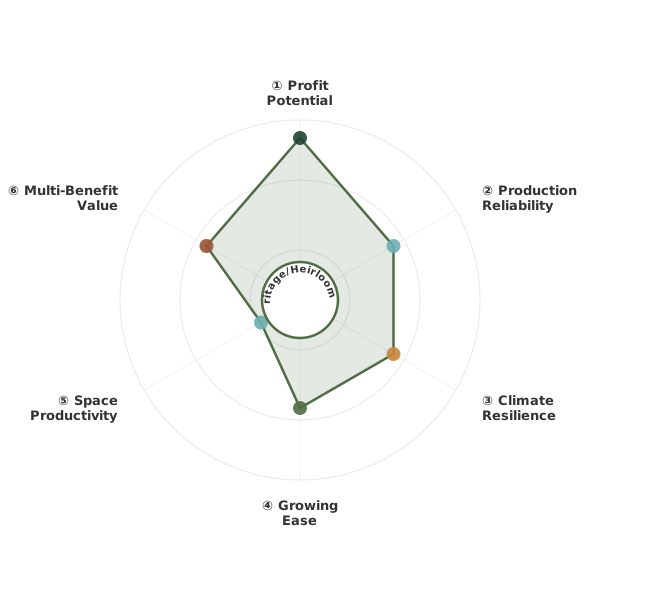
Regenerative Quick Profile

All recommendations assume integrated, regenerative practices—not conventional inputs.

Climate & Soil Fit

Climate: Tropical Rainforest, Tropical Monsoon, Tropical Savanna, Hot Semi-Arid (Steppe), Cold Semi-Arid (Steppe), Hot Desert, Cold Desert, Humid Subtropical, Oceanic (Maritime Temperate), Hot-Summer Mediterranean, Warm-Summer Mediterranean, Monsoon-Influenced Humid Subtropical, Subtropical Highland, Hot-Summer Continental, Warm-Summer Continental, Subarctic, Monsoon-Influenced Hot-Summer Continental, Tundra

Zones: USDA 4-10, Australian Zones 3-12

Optimal Soil: Loam Soil

System Role & Functions

Primary: Cash Crop With Services

Secondary: Cover Crop System, Forage Integration

Key Benefits: Storage Longevity, Yield Reliability

Management Level

Experience: Beginner-Friendly

Maintenance: Moderate maintenance - Potatoes thrive in well-drained soils rich in organic matter, benefiting from consistent moisture retention through mulching and proactive soil fertility management.

Value Streams

  • Vegetable/specialty crop harvest
  • Livestock forage value
1

Climate Suitability Assessment

Will this plant thrive in your climate?

IDEALLY SUITED

Köppen Zone: Cfa (Humid Subtropical), Cfb (Oceanic (Maritime Temperate)), Csb (Warm-Summer Mediterranean), Dfa (Hot-Summer Continental), Dfb (Warm-Summer Continental)
USDA Zone: 5a, 5b, 6a, 7a
Australian Zone: temperate
EU Climate Region: atlantic

Heritage/Heirloom Potatoes perform optimally in climates with 150-200+ frost-free days and moderate summer temperatures (60-80°F/15-27°C), conditions met in Köppen zones Cfb, Dfb, and regional zones like USDA 5b-8b, Australian Temperate, and EU Atlantic. These regions typically receive adequate rainfall (30-50 inches/75-125 cm annually), minimizing the need for extensive irrigation and reducing disease pressure. The consistent temperatures and moisture support robust tuber development and high yields. Spring planting is generally reliable, and mild winters in some of these zones can even allow for overwintering of seed potatoes. Establishment success is very high (>85%), and minimal protection is required beyond standard agricultural practices. These zones offer the most reliable and economically viable environment for cultivating a wide range of heritage potato varieties, ensuring consistent quality and productivity year after year with standard inputs.

ADEQUATE

Köppen Zone: BSk (Cold Semi-Arid (Steppe)), BWk (Cold Desert), Csa (Hot-Summer Mediterranean), Cwa (Monsoon-Influenced Humid Subtropical), Cwb (Subtropical Highland), Dwa (Monsoon-Influenced Hot-Summer Continental)
USDA Zone: 4a, 8a
Australian Zone: subtropical
EU Climate Region: continental

Heritage/Heirloom Potatoes can be grown adequately in zones with 120-150 frost-free days and temperatures that may experience some extremes, including Köppen Cfa, Csa, Csb, Dfa, and regional zones like USDA 4a-5a, 9a-9b, Australian Subtropical, and EU Continental. These areas often have sufficient growing season length but may require careful management due to variable rainfall or temperature fluctuations. For instance, Mediterranean climates (Csa, Csb) and warm continental zones (Dfa) necessitate supplemental irrigation during dry summers and careful timing of planting to avoid peak heat. Subtropical regions may require planting during cooler seasons to mitigate heat stress. While yields might be slightly lower or more variable than in 'ideally suited' zones, and establishment success may be in the 70-85% range, these regions can still support viable potato production with appropriate variety selection and standard management practices, including basic irrigation and pest/disease monitoring.

NOT RECOMMENDED

Köppen Zone: Af (Tropical Rainforest), Am (Tropical Monsoon), Aw (Tropical Savanna), ET (Tundra), BSh (Hot Semi-Arid (Steppe)), BWh (Hot Desert), Dfc (Subarctic)
USDA Zone: 2a, 3a, 3b, 9a, 10a, 11a, 12a

Heritage/Heirloom Potatoes are not recommended in zones with extremely short growing seasons (under 100 frost-free days) or extreme temperature regimes, including Köppen Dfc, Dsd, and regional zones like USDA 1a-3b, 10a-10b, and parts of EU Boreal. These regions present significant challenges that make cultivation economically unviable. In very cold zones (USDA 1a-3b, Köppen Dfc/Dsd), the growing season is too short for reliable maturation, and the risk of frost damage is extremely high, leading to very low and inconsistent yields. In very hot zones (USDA 10a-10b, Köppen BSh), summer temperatures exceed optimal ranges for tuber development, causing heat stress, reduced yields, and increased susceptibility to diseases, often requiring intensive irrigation and specialized off-season planting. Establishment success is often below 70%, and management costs are prohibitively high for standard heirloom potato production, necessitating the exploration of more climate-adapted alternatives.

Note: Zones listed above represent climates where this plant can produce reliably with reasonable management. Climate zones not mentioned would require intensive climate modification (greenhouses, extensive infrastructure) and are not economically viable for regenerative agriculture purposes.

2

Soil Suitability Assessment

Which soil types work best for this plant?

IDEALLY SUITED

Loam Soil

This plant thrives in these soil types without requiring amendments or remediation. Natural soil conditions support optimal growth and productivity.

ADEQUATE

Acidic Soil, Alkaline Soil, Clay Soil, Desert Soil, Rich Soil, Rocky Soil, Sandy Soil

This plant performs acceptably in these soil types with moderate, manageable remediation such as pH adjustment, compost addition, or drainage improvement. The required amendments are practical and cost-effective for regenerative agriculture.

NOT RECOMMENDED

Saline Soil, Wet Soil

Growing this plant in these soil types would require impractical remediation such as complete soil replacement, extensive amendments, or cost-prohibitive infrastructure. These conditions are not economically viable for regenerative agriculture.

Note: Soil suitability assessments focus on remediation requirements. "Ideally Suited" means the plant generally thrives without the need for substantial amendments, "Adequate" means manageable remediation (lime, compost, mulch), and "Not Recommended" means impractical soil changes would be required. Climate factors like rainfall and temperature also influence success.

3

Seasonal Considerations

Planting timing, growth duration, and harvest windows

For potatoes, aim to plant seed pieces once soil temperatures consistently reach at least 45°F (7°C), typically a few weeks before the last expected frost, allowing for early establishment. Direct seeding isn't common; instead, planting pre-sprouted seed potatoes is the standard practice. These plants thrive in the moderate temperatures of spring and early summer, with most varieties reaching maturity in 70 to 120 days. This means harvest generally occurs from mid-summer through early fall, depending on your planting date and variety.

Potatoes are relatively cold-tolerant during their vegetative growth but are susceptible to frost damage, especially young shoots. They prefer cooler weather for tuber development and can suffer from heat stress during prolonged hot spells. This makes them well-suited for a spring planting and summer harvest in many climates. In milder regions, you may have an opportunity for a fall crop, planting in late summer for a late fall or early winter harvest, provided there's enough time before the first expected frost for tubers to mature. Succession planting isn't typical for a single potato crop, as maturity dates are relatively fixed per variety.

4

System Role & Multi-Benefit Value

Functional roles, integration strategies, and stacked benefits

Functional Role

Integration Characteristics

Multi-Benefit Value: Adequate - Potatoes provide nutritious food, attract beneficial insects, and contribute to soil health through their biomass, enhancing the overall farm ecosystem.

5

Economics & Value Streams

Direct harvest, system benefits, ecosystem services, and risk diversification

Comprehensive economic analysis including direct harvest value, system enhancement contributions, ecosystem services, value timeline, and risk diversification strategies.

Vegetable & Specialty Economics

Metric Value
Seed/Transplant Cost 300-600 $/acre 741-1482 $/ha
Expected Yield 15000-30000 lbs/acre 16812-33625 kg/ha
Market Price 0.40-0.80 $/lb 0-1 $/kg
Harvest/Handling Cost 800-1600 $/acre 1976-3953 $/ha
Marketing/Distribution Cost 400-800 $/acre 988-1976 $/ha
Net Annual Return* $3000-$22500/acre/year

Economics highly variable by market channel (direct vs wholesale), scale, and management. Direct marketing commands premiums but requires labor. Values shown for mid-scale market garden operations.

* Net Annual Return = (Yield × Market Price) − (Amortized Establishment Cost + Annual Maintenance). This return is realized only at/after first harvest; early years have costs but no revenue. Range shows worst case to best case scenarios.

System Enhancement Value

Beyond harvest: ecosystem services from regenerative cash crop practices

Ecological Service Contributions

Potatoes, as a cover crop system, contribute significantly to soil health, particularly when managed to minimize disease spread. The knowledge base highlights strategies like using sacrificial raised beds filled with potting mix and mulching heavily. At harvest, sifting the contents ensures no missed tubers, preventing potential disease overwintering and contributing to soil organic matter. While not directly discussed as a nitrogen fixer, the integration into cover crop systems implies a role in improving soil structure and providing organic matter. Furthermore, the knowledge base mentions the potential for unharvested sweet potato tubers (a related species) to decompose in place, creating pockets of decomposed starch and benefiting soil organic matter. This decomposition process, even if partial for white potatoes, adds valuable carbon to the soil. The concept of leaving some tubers unharvested, as explored for sweet potatoes, suggests a pathway towards perennialization and soil improvement, with potential for the decomposition of remaining tubers to enrich the soil.

Ecosystem Service Contributions

Environmental contributions: carbon, pollinators, wildlife, and water

  • Carbon Sequestration: Potatoes contribute to carbon sequestration primarily through the addition of organic matter to the soil. Their biomass, when managed appropriately (e.g., incorporated into the soil after harvest or through decomposition of unharvested tubers), increases soil organic carbon. The rate is variable and dependent on management practices, but cover cropping with potatoes can enhance soil carbon stocks over time.
  • Pollinator Support: Low. While potato plants do flower, they are not typically considered a significant source of nectar or pollen for managed or wild pollinators. Their primary value lies in their root development and biomass contribution to the soil.
  • Wildlife Habitat: Low. The primary value for wildlife would be indirect, through improved soil health and potential food sources if unharvested tubers or plant material are left. However, they do not offer significant nesting or cover opportunities compared to other integrated farm system components.
  • Water Quality: Not applicable

Value Timeline: Production & Services

When you'll see results: varies by crop (annual harvest vs. perennial establishment)

Years 1-2

Initial soil organic matter improvement through crop residue decomposition. Establishment of cover crop benefits, such as weed suppression and soil structure enhancement. Disease management strategies, like sacrificial beds, are implemented.

Years 3-5

Continued soil health improvements. Potential for increased soil organic matter from successive cover cropping cycles. First harvest revenue from the primary cash crop function. The system starts to demonstrate resilience against disease through integrated management.

Years 10-20

Established soil organic matter levels lead to improved water infiltration and retention. Enhanced soil microbial activity. Consistent cash crop production with reduced reliance on external inputs due to improved soil fertility. The potato's role in complex rotations becomes more pronounced.

20+ Years

Long-term soil health benefits, including improved soil structure, nutrient cycling, and resilience to environmental stresses. Sustained economic returns from the cash crop function, supported by a robust and healthy soil ecosystem. The potato's integration into a diverse farm system contributes to overall farm stability.

Farm Risk Reduction

How this reduces farm risk: backup income, weather protection, market hedges

  • Multiple Revenue Streams: ['Direct cash crop revenue from potato sales.', 'Reduced input costs (fertilizer, pesticides) over time due to improved soil health.', 'Potential for sale of cover crop seeds (e.g., if intercropped with a seed-producing species).', 'Enhanced yields of subsequent crops due to improved soil conditions.']
  • Temporal Income Spread: The value of potatoes spreads temporally through its role as an annual cash crop with a distinct harvest period, complemented by its contribution to ongoing soil health improvements as a cover crop. Systemic benefits like improved soil structure and organic matter accumulate over multiple years, providing a foundation for future productivity.
  • Market Risk Hedge: Potatoes, as a staple crop, offer a degree of market stability. Integrating them into a system with cover cropping and other functions diversifies farm operations, reducing reliance on any single commodity. Proactive disease management strategies, as highlighted in the knowledge base, also mitigate risks associated with specific pathogens, contributing to overall farm resilience.
6

Regenerative Suitability Details

Comprehensive trait ratings for system integration assessment

Comparative ratings for this plant across key regenerative agriculture traits.

Trait Suitability Explanation
Season Extension Adequate Potatoes thrive in cooler periods, with early varieties reaching maturity in summer and fall plantings extending harvests into colder weather, supported by soil moisture retention.
Space Efficiency Not Recommended Potatoes require ample space for their above-ground growth and below-ground tuber development, offering moderate yields per area that integrate well into diverse cropping systems.
Storage Longevity Ideally Suited Potatoes store exceptionally well for 4-12+ months in cool, dark, humid conditions, providing a valuable, nutrient-dense food source for year-round resilience.
Yield Reliability Ideally Suited Potatoes offer consistent harvests across a range of environments and soil conditions, contributing to predictable food availability and farm system stability.
Establishment Ease Adequate Potatoes readily establish from seed tubers in healthy soil, with vigorous early growth that naturally suppresses weeds when integrated into a robust soil health program.
Multi Benefit Value Adequate Potatoes provide nutritious food, attract beneficial insects, and contribute to soil health through their biomass, enhancing the overall farm ecosystem.
Climate Adaptability Adequate Potatoes adapt to many zones (3-10), tolerating cooler temperatures but requiring careful water management to avoid stress from extremes, and benefit from healthy soil to mitigate disease pressures.
Maintenance Intensity Adequate Potatoes thrive in well-drained soils rich in organic matter, benefiting from consistent moisture retention through mulching and proactive soil fertility management.
Disease Pest Resistance Adequate This heirloom variety offers better disease tolerance than the typical potato, enhancing its resilience and potentially reducing management needs in diverse growing conditions.

Comparative System: Ratings compare plants within their economic category (e.g., cover crop nitrogen fixation compared to other cover crops, not to all plants). Individual farm conditions and management practices significantly influence actual performance.

7

Learn More

Why farmers use this plant and additional resources

Why Regenerative Farmers Use This Plant

This vegetable, often grown as a specialty cash crop, offers significant regenerative value and economic potential for diversified farms. Its relatively short maturity period, typically 60-90 days from transplant depending on variety, allows for multiple successions within a single growing season, maximizing land use and revenue per acre. For instance, a farmer in USDA Zone 6 could achieve two full harvests from May through September, potentially yielding 15,000-25,000 lbs/acre (16,800-28,000 kg/ha) per crop cycle. For direct-market farmers, its visual appeal and unique flesh colors can command premium prices, with potential revenue per acre reaching $5,000-$15,000 depending on variety, market demand, and management intensity. The ability to plant in quick succession, often every 2-3 weeks, ensures a continuous supply for markets and significantly boosts farm income streams, providing resilience against the volatility of single-crop systems.

Beyond direct revenue, this plant plays a crucial role in system integration and farm resilience. Its vigorous root system, often reaching depths of 6-36 inches (15-90 cm), effectively improves soil structure, increases water infiltration, scavenges nutrients from deeper soil profiles, and reduces the need for external inputs. As an intensive crop, it benefits greatly from preceding cover crops that build soil organic matter and improve soil structure. Following its harvest, planting a winter cover crop mix, such as cereal rye and hairy vetch, within two weeks of the final removal helps to scavenge residual nutrients, prevent erosion, and further enhance soil health for the subsequent season. Its dense foliage can provide habitat and foraging opportunities for beneficial insects and pollinators during its growth cycle, contributing to overall farm biodiversity and natural pest control. When integrated into crop rotations, it can improve soil structure and break pest and disease cycles. For example, planting this crop after a nitrogen-fixing legume cover crop can capitalize on residual nitrogen, further reducing fertility costs.

Quantitatively, the ecosystem benefits are notable. While not a nitrogen fixer, this plant is an efficient nutrient scavenger, particularly from the soil's upper layers, making it an excellent candidate for rotation after legumes or cover crops that have added nitrogen. Its flowers, when allowed to bloom, are highly attractive to a wide array of pollinators, with studies indicating hundreds of visits per square meter per day during peak flowering, supporting local bee populations and other essential insect pollinators. The improved soil structure resulting from its root activity leads to enhanced water infiltration rates, reducing runoff and improving drought resilience. Furthermore, the significant addition of organic matter through crop residue decomposition contributes to a higher soil organic carbon content, playing a vital role in climate change mitigation. The incorporation of its crop residue back into the soil, when managed appropriately (e.g., composted or tilled lightly after a period of decomposition), contributes to soil organic matter accumulation, improving water infiltration and retention. This contributes to a more resilient farming system, less susceptible to drought or heavy rainfall events. For instance, following a harvest with a mix of cereal rye and hairy vetch can add an estimated 2-4 tons of dry matter per acre (4.5-9 metric tons/ha) to the soil, along with significant nitrogen.

Regional success stories highlight its adaptability. In the humid subtropical climates of the southeastern United States (USDA Zones 7-8), it is a staple for summer production, often grown in rotation with cool-season vegetables. European farmers in temperate oceanic regions (RHS H5-H6) utilize it for early to mid-season harvests, benefiting from its moderate temperature requirements. In Australia's temperate zones (Zones 3-5), it can be a valuable part of diversified cropping systems, often following winter cereals. In Brazil's southern regions with humid subtropical climates (Köppen Cfa), it is grown for both domestic consumption and export, demonstrating its broad market appeal and consistent performance across diverse agricultural landscapes. In the fertile river valleys of the Midwestern United States (USDA Zones 4-6), this crop is often grown in raised beds, following a spring cover crop of clover or vetch that is lightly incorporated. In the Mediterranean climate of southern Spain (Köppen Csa), it is frequently planted in early spring, benefiting from mild winters and early warmth, and is often intercropped with herbs that can deter pests. In the Australian wheat-belt (Zones 3-5), it can be a valuable summer crop in rotations, following winter cereals, with irrigation management being key to success. In regions with shorter growing seasons, such as parts of Canada (Zones 3-5b), starting plants indoors and transplanting after the last frost is a common practice to maximize the harvest window. In the United States, farmers in the Pacific Northwest utilize it in rotation with small grains, benefiting from its weed suppression and soil-building properties. In Europe, particularly in France and Italy, it is a staple in market gardens, grown in succession for continuous harvest and direct sales to restaurants and consumers. Australian farmers in cooler, higher rainfall regions have found it to be a valuable addition to their mixed farming systems, often intercropping it with legumes to further enhance soil fertility. In South America, particularly in Brazil, it is being explored for its potential in agroforestry systems, providing ground cover and contributing to soil health under tree canopies. In the fertile valleys of California, USA, growers achieve multiple harvests per season, supplying local markets with high-quality produce. In the UK, it is increasingly being adopted by mixed farms as a profitable break crop in cereal rotations, often grown under polytunnels to extend the season. Australian farmers in temperate regions utilize it in rotation with grains, benefiting from its soil-improving qualities and market premiums. In parts of South America, it is becoming a popular choice for smallholder farmers seeking to diversify income and improve food security, often grown in association with fruit trees in agroforestry systems. In the UK, it is commonly grown in market garden settings, with careful attention to soil moisture and pest monitoring, often following brassicas or legumes in rotation. Australian growers in regions like Tasmania have found success planting it in the cooler autumn months, benefiting from the natural rainfall and using it as a break crop in cereal rotations. In parts of Brazil, it is being trialed as an intercrop in coffee or fruit orchards, contributing to ground cover and soil health while the perennial trees mature. In the Midwestern United States, it is often planted after early-season crops like peas or spinach, with harvest occurring in late summer and autumn, followed by a winter rye cover crop. In the UK, it can be grown as a summer crop in rotation with potatoes or brassicas, with residue incorporated into the soil to feed a subsequent winter cover crop. Australian farmers in regions with Mediterranean climates might sow it in autumn for a spring harvest, following it with a summer cover crop or leaving the land fallow under a protective mulch. In tropical and subtropical regions, careful variety selection and management of water are key, often integrated into polyculture systems or as a component of a market garden supplying local urban centers.

8

How to Integrate This Plant

Practical guidance for regenerative systems

Establishment of this vegetable crop can be achieved through direct seeding or transplanting, with timing varying by region and desired harvest window. For direct seeding, rates typically range from 0.5-3 lbs/acre (0.56-3.4 kg/ha), depending on seed size and desired plant density. For broadcast sowing, rates range from 0.5-1 lb/acre (0.56-1.12 kg/ha), and for drilled rows, 0.25-2 lbs/acre (0.28-2.2 kg/ha). Planting depth should be shallow, around 0.25-1 inch (0.6-2.5 cm), ensuring good seed-to-soil contact. For transplants, spacing can vary from 8-18 inches (20-45 cm) apart, depending on the variety and desired plant size. Spacing between rows commonly falls between 18-36 inches (45-90 cm), with in-row spacing adjusted for variety and harvest method, often 6-12 inches (15-30 cm). In the Northern Hemisphere, direct seeding can commence in early spring (March-April) in warmer regions, or after the last frost in cooler zones. In the Southern Hemisphere, this translates to September-October. Sowing can also occur in late summer (August-September) for a fall harvest in the Northern Hemisphere, and early autumn (March-April) or early spring (September-October) in the Southern Hemisphere. Transplanting offers a head start, with seedlings typically set out 3-4 weeks after sowing, allowing for earlier harvests. Seed starting indoors is often recommended for earlier harvests, with transplants set into the field after the last frost.

Management practices focus on supporting vigorous growth and maximizing yield while building soil health. Consistent moisture is crucial, especially during establishment and peak growth, with approximately 1-1.5 inches (2.5-3.8 cm) of water per week, either from rainfall or irrigation. Fertility is best managed through biological approaches. Incorporating well-composted organic matter or well-rotted manure prior to planting is highly recommended, providing a slow-release source of nutrients and improving soil structure. Following this, a balanced fertility program can be supported by side-dressing with compost tea or other organic amendments as needed, particularly during periods of rapid growth. While this plant is not a legume, it can effectively scavenge nutrients, and its nutrient needs can be met by building soil organic matter and utilizing compost teas or aged manure. If synthetic inputs are used, they should be considered transitional, applied only to supplement biological fertility building, and aim to reduce reliance by 40-60%. Growth from transplant to harvest typically takes 30-90 days, depending on the variety and growing conditions, with mature plants reaching heights of 1-4 feet (0.3-1.2 m). Integrated Pest Management (IPM) strategies are crucial, focusing on crop rotation intervals of at least 3-4 years with non-related crops, encouraging beneficial insects, selecting disease-resistant varieties, and maintaining plant vigor.

For this vegetable or specialty cash crop, production cycles are intensive and demand careful planning for soil stewardship. Succession planting is a cornerstone strategy, with farmers often sowing seeds or setting transplants every 2-3 weeks from early spring through mid-summer (e.g., April through July in USDA Zones 5-7) to ensure a continuous harvest from late spring through early autumn (June through October). This intensive planting schedule necessitates careful planning for soil fertility and pest management. Prior to planting, incorporating compost or well-rotted manure is essential. After harvest, prompt removal of crop residues and immediate sowing of a winter cover crop mix, such as a blend of cereal rye, hairy vetch, and crimson clover, within 10-14 days of the final harvest is critical for soil recovery, nutrient retention, and preventing soil erosion. This ensures the soil is protected and actively improving throughout the fall and winter months. A minimum 3-year crop rotation interval with non-related crops is essential to break pest and disease cycles and maintain soil health without reliance on synthetic inputs.

Regional adaptations allow for diverse integration strategies. In the fertile river valleys of the Midwestern United States (USDA Zones 4-6), this crop is often grown in raised beds, following a spring cover crop of clover or vetch that is lightly incorporated. In the Mediterranean climate of southern Spain (Köppen Csa), it is frequently planted in early spring, benefiting from mild winters and early warmth, and is often intercropped with herbs that can deter pests. In the Australian wheat-belt (Zones 3-5), it can be a valuable summer crop in rotations, following winter cereals, with irrigation management being key to success. In regions with shorter growing seasons, such as parts of Canada (Zones 3-5b), starting plants indoors and transplanting after the last frost is a common practice to maximize the harvest window. In the fertile valleys of California, USA, farmers often grow this crop in multiple successions during the spring and fall, utilizing drip irrigation and compost applications. In the UK, it is commonly grown in market garden settings, with careful attention to soil moisture and pest monitoring, often following brassicas or legumes in rotation. Australian growers in regions like Tasmania have found success planting it in the cooler autumn months, benefiting from the natural rainfall and using it as a break crop in cereal rotations. In parts of Brazil, it is being trialed as an intercrop in coffee or fruit orchards, contributing to ground cover and soil health while the perennial trees mature. In the Midwestern United States, it is often planted after early-season crops like peas or spinach, with harvest occurring in late summer and autumn, followed by a winter rye cover crop. In the UK, it can be grown as a summer crop in rotation with potatoes or brassicas, with residue incorporated into the soil to feed a subsequent winter cover crop. Australian farmers in regions with Mediterranean climates might sow it in autumn for a spring harvest, following it with a summer cover crop or leaving the land fallow under a protective mulch. In tropical and subtropical regions,

View Full Document (Printable single-page version)