Our knowledge base provides limited insights into the regenerative agricultural applications of Humulus lupulus (hops). Available data suggests its integration into sustainable systems, particularly in relation to soil health and disease management. Studies indicate hops influence soil microbial communities, affecting enzyme activities and microbial biomass, which are indicators of soil fertility. Furthermore, research explores the use of Trichoderma isolates from hop fields as biocontrol agents, demonstrating potential for promoting hop growth and suppressing pathogens like Fusarium. In disease management, organic treatments for powdery mildew in hops showed some efficacy in reducing leaf infection, though not cone infection, highlighting ongoing research into integrated and organic strategies. The plant's own defense mechanisms against pathogens, involving jasmonic acid and phenylpropanoid pathways, are also being studied at a genetic level. While specific roles as a primary cover crop, forage, or nitrogen fixer are not detailed in these excerpts, its contribution to soil biological activity and potential role in integrated pest and disease management are evident.

Regenerative Quick Profile

All recommendations assume integrated, regenerative practices—not conventional inputs.

Climate & Soil Fit

Climate: Tropical Rainforest, Tropical Monsoon, Tropical Savanna, Hot Semi-Arid (Steppe), Cold Semi-Arid (Steppe), Hot Desert, Cold Desert, Humid Subtropical, Oceanic (Maritime Temperate), Hot-Summer Mediterranean, Warm-Summer Mediterranean, Monsoon-Influenced Humid Subtropical, Subtropical Highland, Hot-Summer Continental, Warm-Summer Continental, Subarctic, Monsoon-Influenced Hot-Summer Continental, Tundra

Zones: USDA 4-9, Australian Zones 3-7

Optimal Soil: Loam Soil

System Role & Functions

Primary: Cash Crop With Services

Secondary: Pollinator Support, Specialty

Key Benefits: Multi-benefit value, Storage Longevity

Management Level

Experience: Advanced

Maintenance: Moderate maintenance - This vigorous perennial's integration into the system involves providing robust support structures and maintaining consistent soil moisture through thoughtful water management and mulching.

Value Streams

  • Vegetable/specialty crop harvest
  • Pollinator habitat and support

Know the Debate

  • Establishment takes 2-3 years for full production.
  • Significant upfront investment for trellising and irrigation.
  • Potential gross revenues vary widely ($8k-$62k+/acre).
  • Deep roots improve soil structure and prevent erosion.
  • Supports beneficial insects and biodiversity.
1

Climate Suitability Assessment

Will this plant thrive in your climate?

IDEALLY SUITED

Köppen Zone: Cfa (Humid Subtropical), Cfb (Oceanic (Maritime Temperate)), Csb (Warm-Summer Mediterranean), Dfa (Hot-Summer Continental), Dfb (Warm-Summer Continental)
USDA Zone: 6a, 6b, 7a, 7b, 8a
Australian Zone: temperate
EU Climate Region: atlantic

Hops thrive in climates with long growing seasons, moderate temperatures, and consistent moisture, conditions met by these zones (Köppen Cfb, USDA 7a-8b, Australian temperate, EU Atlantic). These regions typically experience 180-240 frost-free days with average summer temperatures between 65-80°F (18-27°C), ideal for vine growth and cone development. Mild winters ensure excellent perennial survival, and adequate rainfall (30-50 inches/75-125 cm annually) minimizes the need for extensive irrigation, though supplemental watering during dry spells can boost yields. Disease pressure is generally manageable with standard agronomic practices. These conditions lead to high yields of quality cones, making cultivation economically viable and reliable with minimal intensive management. Establishment success is very high, and multi-year productivity is consistent, supporting the cash crop function effectively.

ADEQUATE

Köppen Zone: Csa (Hot-Summer Mediterranean), Cwa (Monsoon-Influenced Humid Subtropical), Cwb (Subtropical Highland)
USDA Zone: 5a, 5b, 8b, 9a
Australian Zone: subtropical

Hops can be successfully cultivated in these zones (Köppen Cfa, USDA 5b-6b, 9a-9b, Australian subtropical, EU Atlantic) with careful management, though they are not as ideal as the 'ideally suited' regions. The growing season is generally sufficient (140-200 frost-free days), but summer temperatures can sometimes exceed optimal levels (above 85°F/29°C), increasing water demand and potentially stressing plants. Humidity in subtropical zones can elevate disease pressure, requiring diligent pest and disease control. While yields are generally good, they may be slightly lower or more variable than in ideal climates. Supplemental irrigation is often necessary during dry periods. Establishment is good with proper timing and care. These regions offer a viable option for hops cultivation, but require more attention to water management, disease control, and potentially variety selection for heat tolerance.

NOT RECOMMENDED

Köppen Zone: Af (Tropical Rainforest), Am (Tropical Monsoon), Aw (Tropical Savanna), ET (Tundra), BSh (Hot Semi-Arid (Steppe)), BSk (Cold Semi-Arid (Steppe)), BWh (Hot Desert), BWk (Cold Desert), Dfc (Subarctic), Dwa (Monsoon-Influenced Hot-Summer Continental)
USDA Zone: 2a, 3a, 3b, 4a, 10a, 11a, 12a

Hops are not recommended in these zones (Köppen Dfc, Dwc, USDA 1a-5a, 10a-10b) due to extreme climatic conditions that make cultivation economically unviable and practically challenging. In cold zones (USDA 1a-5a, Köppen Dfc, Dwc), very short growing seasons, extreme winter cold (-50°F/-45°C and below), and high frost risk prevent perennial survival and reliable vine maturation, leading to minimal or no yield. In hot zones (USDA 10a-10b, Köppen BSh), prolonged periods of extreme summer heat (consistently above 90°F/32°C) cause severe plant stress, inhibit cone development, and drastically reduce yields and quality, necessitating extensive and costly irrigation and cooling systems. Establishment success is very low, and management costs would be prohibitively high for any potential return. Alternative plants adapted to these specific harsh conditions are strongly advised.

Better alternatives for these "not recommended" zones: Hairy Vetch (Cold-hardy annual legume for nitrogen fixation in cold zones.), Winter Rye (Extremely cold-hardy cover crop for biomass and soil protection in cold zones.), Cowpea (Heat and drought tolerant legume for hot zones.), Sweet Potato (Tolerates heat and humidity well in hot zones.)

Note: Zones listed above represent climates where this plant can produce reliably with reasonable management. Climate zones not mentioned would require intensive climate modification (greenhouses, extensive infrastructure) and are not economically viable for regenerative agriculture purposes.

2

Soil Suitability Assessment

Which soil types work best for this plant?

IDEALLY SUITED

Loam Soil

This plant thrives in these soil types without requiring amendments or remediation. Natural soil conditions support optimal growth and productivity.

ADEQUATE

Clay Soil, Rich Soil, Rocky Soil, Sandy Soil

This plant performs acceptably in these soil types with moderate, manageable remediation such as pH adjustment, compost addition, or drainage improvement. The required amendments are practical and cost-effective for regenerative agriculture.

NOT RECOMMENDED

Acidic Soil, Alkaline Soil, Desert Soil, Saline Soil, Wet Soil

Growing this plant in these soil types would require impractical remediation such as complete soil replacement, extensive amendments, or cost-prohibitive infrastructure. These conditions are not economically viable for regenerative agriculture.

Note: Soil suitability assessments focus on remediation requirements. "Ideally Suited" means the plant generally thrives without the need for substantial amendments, "Adequate" means manageable remediation (lime, compost, mulch), and "Not Recommended" means impractical soil changes would be required. Climate factors like rainfall and temperature also influence success.

3

Seasonal Considerations

Planting timing, growth duration, and harvest windows

For common hop, aim to start seeds indoors about four to six weeks before your last expected frost date, allowing them to establish a strong root system. Transplant seedlings into the garden only after all danger of frost has passed and soil temperatures consistently reach at least 60°F (15°C). Direct seeding is generally not recommended for hops as it significantly delays establishment and maturity.

Hops are perennial, but for the purpose of annual cultivation in these zones, focus on establishing vigorous growth in the first year. Expect plants to reach maturity and produce a harvestable crop within their first growing season, typically ready for harvest in late summer. The primary harvest window extends through the late summer months. While not ideal for succession planting in the way annual vegetables are, ensuring optimal conditions for the initial growth spurt is key.

These plants tolerate cool spring and fall weather well, but prolonged hard freezes can damage young growth. They thrive in the warmth of summer. While hops are technically perennials that die back in winter and regrow from the root, for annual management, focus on maximizing their growth during the warm season. There are no significant fall planting opportunities for establishing new plants, as they need ample time for root development before winter dormancy. Season extension techniques are generally not necessary or beneficial for this crop when managed annually.

4

System Role & Multi-Benefit Value

Functional roles, integration strategies, and stacked benefits

Functional Role

Total System Value

Hops offer a multi-faceted contribution to whole-farm resilience. The primary value is their direct harvest as a cash crop, particularly for the brewing industry. Beyond this, their vigorous vining habit, when trellised, can create a temporary canopy, contributing to microclimate regulation and potentially shade in intercropping scenarios. Excerpts indicate hops interact with soil microbial communities and beneficial fungi like Trichoderma, suggesting a role in enhancing soil health and nutrient cycling, and potentially suppressing soil-borne diseases. This interaction with the soil microbiome contributes to ecosystem services like improved water infiltration and carbon sequestration. While not a primary windbreak or nitrogen fixer, their perennial nature and extensive root systems can aid in soil stabilization and erosion control. Diversifying farm income with a high-value perennial like hops also spreads economic risk, making the overall farm system more resilient to market fluctuations and environmental challenges.

Integration Characteristics

Multi-Benefit Value: Ideally Suited - Hops contribute to the ecosystem by attracting beneficial insects, acting as a nutrient cycler, and their dense vine growth provides habitat and aids in soil stabilization.

5

Management & Care Requirements

Integration guidance, maintenance needs, and care practices

How to Integrate This Plant

Hops (Humulus lupulus) can be integrated into regenerative systems primarily as a high-value cash crop with associated ecological services. While not explicitly mentioned in the provided excerpts, their vining nature and potential for dense canopy suggest roles in providing shade, especially in alley cropping or food forest systems where they can be trellised. Their extensive root systems may also contribute to erosion control. The excerpts highlight their interaction with soil microbes and potential for biocontrol agents like Trichoderma, indicating a role in soil health improvement and pest management. Compatible practices would include alley cropping, where hops are grown between rows of trees or other crops, or as part of a diversified perennial system. Hops begin providing harvestable yield within 1-3 years, with full potential reached by year 5. Beyond direct harvest, their contribution to soil biology and potential for biocontrol agents represent significant multi-benefit stacking, enhancing overall farm resilience and reducing reliance on external inputs.

Integration Practices & Management

The provided knowledge base offers limited insight into the specific regenerative agricultural integration practices for Humulus lupulus. The sources focus on biological and scientific aspects rather than farmer-led integration strategies. For instance, research details gene expression in hop (Humulus lupulus) related to disease resistance, examines P-acquiring enzyme activities and microbial biomass in hop fields under various land uses, and explores the use of Trichoderma isolates from hop fields as biocontrol agents and growth promoters for hop plantlets. While these studies highlight the plant's biological interactions and potential within agricultural systems, they do not elaborate on establishment methods such as seeding rate, timing, companion planting, or tillage practices. Similarly, information regarding integration with grazing, termination strategies, fertility needs, competition management, succession planning, or intercropping with cash crops is absent. The knowledge base does not contain practical farmer experiences or direct guidance on how regenerative farmers implement Humulus lupulus within their operations.

Management Profile

Maintenance Intensity: Adequate - This vigorous perennial's integration into the system involves providing robust support structures and maintaining consistent soil moisture through thoughtful water management and mulching.

6

Economics & Value Streams

Direct harvest, system benefits, ecosystem services, and risk diversification

Comprehensive economic analysis including direct harvest value, system enhancement contributions, ecosystem services, value timeline, and risk diversification strategies.

Vegetable & Specialty Economics

Metric Value
Seed/Transplant Cost 500-1000 $/acre 1235-2471 $/ha
Expected Yield 500-1500 lbs/acre 560-1681 kg/ha
Market Price 4.00-8.00 $/lb 8-17 $/kg
Harvest/Handling Cost 1000-2000 $/acre 2471-4942 $/ha
Marketing/Distribution Cost 500-1000 $/acre 1235-2471 $/ha
Net Annual Return* $-2000 to $10000/acre/year

Economics highly variable by market channel (direct vs wholesale), scale, and management. Direct marketing commands premiums but requires labor. Values shown for mid-scale market garden operations.

* Net Annual Return = (Yield × Market Price) − (Amortized Establishment Cost + Annual Maintenance). This return is realized only at/after first harvest; early years have costs but no revenue. Range shows worst case to best case scenarios.

System Enhancement Value

Beyond harvest: ecosystem services from regenerative cash crop practices

Ecological Service Contributions

Hops (*Humulus lupulus*) contribute to integrated farm systems through their role in pest management and beneficial insect attraction. As noted in the knowledge base, companion planting with species like chives, coriander, marigolds, anise, and yarrow can deter pests such as aphids and cucumber beetles. Simultaneously, these companions, and potentially the hops themselves through their floral structures, can attract beneficial insects like bees and lady beetles, contributing to natural pest control and pollination services within the farm ecosystem. Furthermore, hops are identified as biomass-producing species, suggesting potential for soil improvement when managed through chop-and-drop or incorporation into hugel mounds. Their extensive root systems, as indicated by their perennial nature and depth-related enzyme activity, can contribute to soil structure, nutrient cycling, and potentially aid in loosening compacted soils, enhancing overall soil health within an integrated system.

Ecosystem Service Contributions

Environmental contributions: carbon, pollinators, wildlife, and water

  • Carbon Sequestration: Hops are perennial plants with significant biomass production potential, especially when managed for vertical growth and biomass accumulation. Their root systems also contribute to soil organic matter, indicating a moderate capacity for carbon sequestration in the soil profile over time.
  • Pollinator Support: Medium. While not primarily grown for nectar or pollen, hop flowers can attract bees and other beneficial insects. Their presence can contribute to the broader pollinator network on the farm, especially when integrated with companion plants that are strong pollinator attractors.
  • Wildlife Habitat: Limited direct habitat provision. Hops are primarily cultivated for human use. While their dense vine growth might offer some minor cover, they are not typically a significant food source or nesting material for wildlife.
  • Water Quality: Not applicable

Value Timeline: Production & Services

When you'll see results: varies by crop (annual harvest vs. perennial establishment)

Years 1-2

Initial establishment of biomass production, potential for companion planting benefits (pest deterrence, beneficial insect attraction), and early contributions to soil structure through root development.

Years 3-5

Maturing biomass production, increased contribution to soil organic matter, and established benefits from companion planting. Potential for early harvests if grown for cash crop purposes, but system service values are developing.

Years 10-20

Full biomass production potential realized, significant contribution to soil health and nutrient cycling. Established perennial system benefits including improved soil structure and organic matter accumulation. Continued support for beneficial insects.

20+ Years

Long-term contribution to soil health, potentially acting as a living mulch or ground cover in certain integrated systems. Sustained beneficial insect support and soil carbon sequestration.

Farm Risk Reduction

How this reduces farm risk: backup income, weather protection, market hedges

  • Multiple Revenue Streams: Direct cash crop revenue from hop cones (primary function), potential for biomass sales or on-farm use for soil amendment, ecosystem services value (pest control, pollinator support).
  • Temporal Income Spread: Annual harvest of cones, with ongoing perennial ecosystem services (soil health, beneficial insect support) provided year after year. Biomass contribution to soil builds over time.
  • Market Risk Hedge: Diversifies farm revenue beyond a single commodity. The pest deterrence and beneficial insect attraction provided by hops can reduce reliance on external pest control inputs, hedging against input price volatility. Their perennial nature provides a stable biomass and soil improvement contribution regardless of annual market fluctuations for the primary crop.
7

Regenerative Suitability Details

Comprehensive trait ratings for system integration assessment

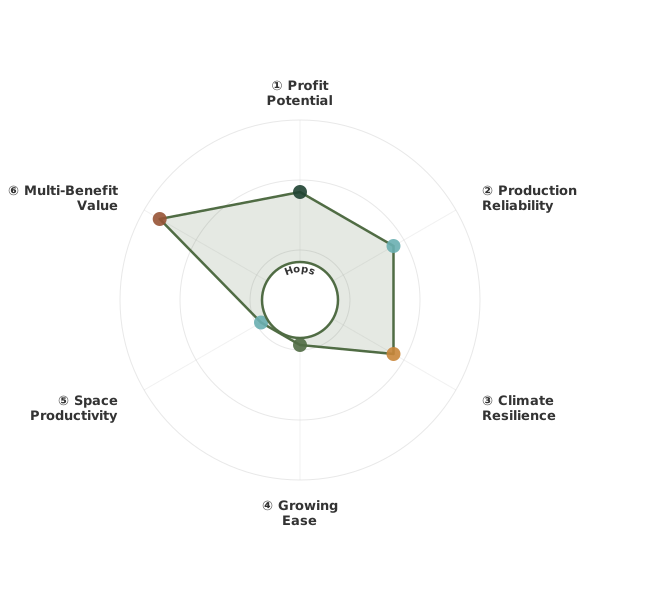
Comparative ratings for this plant across key regenerative agriculture traits.

Trait Suitability Explanation
Season Extension Adequate As hardy perennials, hops naturally enter dormancy, allowing for overwintering and a reliable return of growth for late summer cone harvest.
Space Efficiency Not Recommended Hops' vigorous, vining growth habit necessitates integrated trellising systems, maximizing vertical space for cone production rather than dense ground-level biomass.
Storage Longevity Ideally Suited Properly dried hop cones retain their valuable lupulin content for extended periods, ensuring a stable resource over months to years with mindful post-harvest handling.
Yield Reliability Adequate These moderately reliable perennials thrive in supportive ecosystems, producing consistent yields when integrated with practices that foster soil health and resilience.
Establishment Ease Not Recommended Optimal establishment is achieved through vegetative propagation (cuttings or rhizomes), leveraging the plant's natural vigor for a strong start.
Multi Benefit Value Ideally Suited Hops contribute to the ecosystem by attracting beneficial insects, acting as a nutrient cycler, and their dense vine growth provides habitat and aids in soil stabilization.
Climate Adaptability Adequate Thriving in zones 3-9, hops demonstrate resilience to varied temperatures, benefiting from well-managed soil moisture and air circulation to mitigate fungal susceptibility.
Maintenance Intensity Adequate This vigorous perennial's integration into the system involves providing robust support structures and maintaining consistent soil moisture through thoughtful water management and mulching.
Disease Pest Resistance Adequate Promoting plant vitality through healthy soil and good air flow supports hops' natural resilience, while proactive ecosystem management addresses potential challenges like downy mildew and aphids.

Comparative System: Ratings compare plants within their economic category (e.g., cover crop nitrogen fixation compared to other cover crops, not to all plants). Individual farm conditions and management practices significantly influence actual performance.

8

Know the Debate

Hop production presents a high-potential specialty crop within regenerative systems, but requires significant upfront investment and long-term comm...

Hop production presents a high-potential specialty crop within regenerative systems, but requires significant upfront investment and long-term commitment. Establishments vary by climate, with USDA Zones 7-9 ideal in the Pacific Northwest and adaptations needed for cooler or drier regions. Capital costs for trellising and irrigation can range from $8,000 to over $60,000 per acre, with labor intensive at peak seasons. While reaching maturity can take 2-3 years, their perennial nature offers long-term stability and soil-building benefits.

How long until hops reach full production?

Commercial harvest within 1-2 years

Academic and Institute sources suggest commercial harvests are possible within 1-2 years, with full production typically achieved by year 3.

Sources behind this view

Sources behind this view

Research
  • Insect pest management in vegetable crops through trap cropping: Review (opens in new window)

    This study found: The study was carried out at CCS Haryana Agricultural University, Hisar during 2019 as the widespread use ofinsecticides to control crop pests has created various problems such as residues in the food chain, phytotoxicity,pesticide resistance, pest resurgence, bioaccumulation and secondary pest outbreak, in addition to causing harmfuleffect on the environment and non-targeted beneficial organisms. However, trap cropping is one such type of specialcompanion planting strategy that is traditionally used for insect pest management through vegetative diversificationused to attract insect pests away from the main crops during a critical time period by providing them an optionalpreferred choice. Trap cropping also has a tremendous potential to attract and conserve natural enemies in croppingsystems. The effect of attracting natural enemies may be an advantage compared to the other/conventional meansof pest control. Trap cropping can be integrated with other Integrated Pest Management (IPM) tactics. But trapcropping, like many other cultural tactics, remains under-exploited. Research on trap cropping has been very limited,and deserves more consideration to sustain agro-ecosystems throughout the world. In this review we have providedinformation based on trap cropping modalities and an updated list of trap cropping system in vegetable crops thatshould be proven as helpful in future trap cropping endeavors.

From the Web
  • Diversifying aboveground habitat through polycultures, cover crops (buckwheat, sunflowers), and managing weeds as covers enhances natural enemies for biological pest control, as demonstrated by farmer Dick Thompson in Iowa.

Full production by year 3 or later

Field reports and practical experience indicate it takes 2-3 years to see initial commercial harvests, and full, robust production is often not realized until year 3 or later, with ongoing improvements beyond.

Sources behind this view

Sources behind this view

Videos & Podcasts
Making Sense of the Differences

The timeline to full hop production varies based on variety, establishment method, and regional climate. Plants require 2-3 years to reach significant yields after planting, with optimal production often extending to year 3 and beyond. Factors like soil fertility, irrigation, pest management, and specific cultivar vigor influence this timeline. Farmers should plan for an initial establishment phase and expect gradual yield increases.

What are the infrastructure needs for hop production?

Significant upfront investment for trellising

Academic and Institute sources highlight the necessity of robust trellising systems, such as strings or poles reaching 15-25 feet, requiring significant upfront investment in materials and installation.

Sources behind this view

Sources behind this view

Research
  • Regenerative Agriculture and Sustainable Plant Protection: Enhancing Resilience Through Natural Strategies (opens in new window)

    This study found: This article explains how regenerative agriculture can improve crop protection and make farms stronger and more resilient. It argues that regenerative farming helps heal the land—like soils, forests, and water—while producing food, using fewer artificial inputs, and causing less harm to the environment. The review suggests moving from traditional pest control methods to more natural, ecological approaches that work with nature. It emphasizes using a wide variety of pest control techniques that fit the local culture and environment, ultimately leading to farming that is better for the planet, the economy, and people.

From the Web
  • Diversifying aboveground habitat through polycultures, cover crops (buckwheat, sunflowers), and managing weeds as covers enhances natural enemies for biological pest control, as demonstrated by farmer Dick Thompson in Iowa.

  • Organic insect and pathogen management uses integrated strategies like crop rotation, biodiversity, and natural predators. Prevention is key, with practices like cover cropping and scouting. Soil health, resistant varieties, and approved amendments help control pathogens.

Capital costs range $8k-$62.5k+ per acre

Field reports emphasize the substantial capital outlay for hop yards, including trellises and irrigation, noting that this 'significant upfront investment' can be $8,000-$62,500+ per acre and is a major consideration for adoption.

Sources behind this view

Sources behind this view

Videos & Podcasts
Making Sense of the Differences

Establishing a hop yard demands significant upfront capital for robust trellising systems (15-25 ft high) and in some cases, irrigation infrastructure. The cost varies widely depending on scale, materials used, and whether permanent or temporary structures are chosen. Farmers must budget for this substantial investment before planting, as it is critical for supporting the plants' vigorous growth and ensuring a viable harvest.

How variable are hop revenues and profitability?

Potential gross revenue $8k-$62k+/acre

Academic and Institute sources suggest potential gross revenues of $8,000-$62,500+ per acre annually, depending on variety, yield, and market prices, with mature plants producing for 15-20 years.

Sources behind this view

Sources behind this view

Research
  • Regenerative Agriculture and Sustainable Plant Protection: Enhancing Resilience Through Natural Strategies (opens in new window)

    This study found: This article explains how regenerative agriculture can improve crop protection and make farms stronger and more resilient. It argues that regenerative farming helps heal the land—like soils, forests, and water—while producing food, using fewer artificial inputs, and causing less harm to the environment. The review suggests moving from traditional pest control methods to more natural, ecological approaches that work with nature. It emphasizes using a wide variety of pest control techniques that fit the local culture and environment, ultimately leading to farming that is better for the planet, the economy, and people.

From the Web
  • Regenerative agriculture offers 78% higher average profit despite lower yields, enhances ecosystem services, and creates pest-resilient systems outperforming chemical-treated farms.

  • Develop infrastructure based on holistic land plans, reinvesting profits. Transition from herbicides/fertilizers by using livestock for pest control and improving soil health. Pests/weeds are symptoms of poor ecosystem health; address root causes for lasting positive outcomes.

Profitability impacted by market, labor, and pests

Field reports indicate that while high yields are possible, actual profitability can vary significantly due to fluctuating market prices, disease pressure, and the intense labor required for harvest.

Sources behind this view

Sources behind this view

Videos & Podcasts
Making Sense of the Differences

Hop revenues and profitability show considerable variability driven by market demand for specific varieties, regional yields influenced by climate and management, and the significant labor costs of harvest. While gross revenue potential is high ($8,000-$62,500+ per acre), net profitability is impacted by establishment costs, ongoing management expenses, and fluctuating wholesale prices. Farmers must consider specific market channels, breed selection, and labor availability to gauge realistic economic returns.

9

Learn More

Why farmers use this plant and additional resources

Why Regenerative Farmers Use This Plant

Humulus lupulus, commonly known as the hop plant, is a high-value perennial specialty cash crop that can significantly enhance revenue streams and biodiversity within regenerative agricultural systems. Its vigorous growth and unique market demand make it an attractive option for farmers seeking to diversify income. Mature hop bines, typically reaching 15-25 feet (4.5-7.5 m) in height, can yield between 1,000-2,500 lbs (450-1,130 kg) of dried cones per acre annually, depending on variety, management, and growing conditions. With prices ranging from $8-$25+ per pound, this translates to potential gross revenues of $8,000-$62,500+ per acre. While establishment requires significant upfront investment in trellising and plants, mature plants can produce for 15-20 years or more, offering long-term economic stability and reducing annual establishment costs. The rapid growth of the bines also contributes substantial biomass, which can be managed to improve soil organic matter.

Integrating hops into a diversified farm plan offers numerous system benefits beyond direct revenue. As a deep-rooted perennial vine, hops contribute to soil structure improvement through their extensive root systems, which can reach depths of 6-10 feet (1.8-3 m) over several years, helping to prevent soil erosion and enhance water infiltration. They provide excellent vertical structure for beneficial insects and can act as a natural trellis for certain companion plants. Hops are also known for their ability to scavenge nutrients from deeper soil profiles, making them available to subsequent crops or improving overall soil fertility when residues are managed appropriately, and their dense foliage can offer some weed suppression during the growing season. Their role in a rotation can help break pest and disease cycles of annual crops, contributing to a more resilient farming ecosystem. The dense canopy of the bines provides excellent shade, suppressing weeds and creating a cooler microclimate for beneficial soil organisms.

The ecological contributions of hop production are substantial. The large, leafy bines can sequester significant amounts of carbon throughout their growth cycle, contributing to soil organic matter buildup when residues are managed appropriately. While not a primary pollinator attractant, the flowers can support a variety of beneficial insects, including predatory wasps, hoverflies, ladybugs, and lacewings, which contribute to natural pest control. Their perennial nature means less soil disturbance compared to annual cropping, preserving soil biology and structure. The physical presence of hop bines on trellises can also offer some degree of windbreak and shade, benefiting other crops or livestock in integrated systems. Research is ongoing into the specific carbon sequestration potential of perennial hop systems, but their long-term presence and biomass production suggest a positive contribution.

The integration of hops into a diversified farm plan can create valuable market opportunities, particularly for direct-to-consumer sales and specialty wholesale channels. Craft breweries are a primary market, valuing unique hop varieties and locally sourced ingredients. Farmers can also explore direct sales to homebrewers or participate in regional food hubs. The perennial nature of hops means they can be grown in conjunction with annual crops, or as part of a longer-term land use strategy. For instance, in a silvopasture system, hops can be grown on trellises above grazing areas, providing shade for livestock while producing a valuable crop. This multi-functional use of land maximizes productivity and ecological benefit.

Hops have found success in various regional agricultural systems. In the Pacific Northwest of the USA (USDA Zones 7-9), large-scale hop farms are integral to the craft beer industry, utilizing sophisticated irrigation and trellising systems. In parts of Europe, such as Germany and the Czech Republic, traditional hop growing regions have a long history of integrating hops into mixed farming landscapes, with smaller, diversified farms focusing on specialty varieties. In Tasmania and Victoria, Australia (Australian Zones 3-4), growers leverage cooler climates and specific soil types, adapting practices to manage water scarcity and heat, often using drip irrigation and selecting more heat-tolerant cultivars. In New Zealand, hop production is tailored to specific microclimates, with careful attention to disease management in humid coastal areas. In the UK, growers are experimenting with hops in mixed cropping systems and hedgerows, focusing on varieties suited to cooler, wetter climates and employing biological pest control methods. In regions with more continental climates, such as parts of the US Midwest (USDA Zones 4-6), careful variety selection for cold hardiness and management of potential summer heat stress are important considerations.

10

How to Integrate This Plant

Practical guidance for regenerative systems

Establishing a hop yard requires careful planning and initial investment. Propagation is typically done through root cuttings, rhizomes, or dormant crowns, with planting occurring in early spring as the soil becomes workable (March-April in the Northern Hemisphere, September-October in the Southern Hemisphere), or in the fall in milder climates, after the risk of hard frost has passed. Seeding directly from true seed is rarely done for commercial production due to genetic variability. For crowns or rhizomes, spacing is critical for optimal growth and airflow, with plants typically set 5-8 feet (1.5-2.4 m) apart within rows, and rows spaced 8-12 feet (2.4-3.6 m) apart to accommodate trellising and management equipment. This spacing can yield approximately 600-900 plants per acre (1,480-2,225 plants/ha). A common planting rate is 1,000-1,700 plants per acre. Proper site selection, with well-drained soil and ample sunlight, is crucial for long-term success.

Once established, hops require consistent management to maximize yield and quality. They are heavy feeders and benefit from the incorporation of compost and well-rotted manure in the spring. While they have moderate water needs, requiring approximately 1-2 inches (2.5-5 cm) of water per week during the peak growing season, they are susceptible to root rot in waterlogged conditions, making irrigation crucial in drier regions. Adequate moisture is especially important during the flowering and cone development stages. Hop bines grow rapidly, reaching their mature height of 15-25 feet (4.5-7.6 m) by mid-summer, necessitating robust trellising systems, such as strings or poles, to support their growth.

The production cycle for hops involves significant soil stewardship. From planting rhizomes or crowns, it typically takes 2-3 years for plants to reach full commercial production, with initial harvests possible in the first or second year. The establishment phase for vegetative growth in the first year is approximately 60-90 days. Hops are perennial, so succession planting is not applicable in the same way as annual vegetables. However, managing the soil beneath the hop yard is critical. Before planting hops, a diverse cover crop mix such as cereal rye, hairy vetch, and daikon radish can prepare the soil by improving structure, adding organic matter, and scavenging nutrients. Following the final harvest in late summer or early autumn, and bine removal in late fall, it is beneficial to incorporate cover crops like crimson clover or annual ryegrass into the inter-rows to protect soil structure, scavenge residual nutrients, and add organic matter. These cover crops can be terminated by mowing or roller-crimping before the hop plants begin their rapid spring growth. Within 2-3 weeks of final harvest, sowing a winter cover crop like crimson clover or oats can maximize soil recovery and prepare it for future rotations. Crop rotation intervals for hops are generally not applicable due to their perennial nature, but managing the soil health within the hop yard through organic amendments and cover cropping is paramount to maintaining long-term productivity and soil vitality.

Integrated Pest Management (IPM) for hops focuses on promoting beneficial insects, using resistant varieties, maintaining good airflow through proper pruning, and employing cultural practices. Monitoring for common pests like aphids and spider mites is important, encouraging natural predators like ladybugs and lacewings, and using targeted biological sprays if necessary. Post-harvest residue management involves shredding the bines and incorporating them into the soil or using them as mulch.