Available excerpts suggest its potential utility within regenerative agriculture systems. One experiment explored its role in paddies, noting its rapid growth cycle, even at higher latitudes, indicating potential as a fast-growing cover crop or biomass producer. Another study investigated its integration with Nile tilapia, though it yielded less favorable growth outcomes compared to fish-only systems in that specific context, offering a practical insight for farmers. Furthermore, research into water spinach's interaction with soil health revealed that organic fertilizer application, as a regenerative practice, can influence its heavy metal accumulation. Specifically, organic amendments improved soil pH, CEC, and OM, and reduced certain heavy metal concentrations in both soil and plant tissues, highlighting its role in phytoremediation alongside organic soil building. Its ability to absorb heavy metals from wastewater-irrigated soil, while remaining within safety limits, also points to a potential role in nutrient cycling and wastewater treatment in agricultural settings. While coverage in our knowledge base is limited, the above represents documented uses in regenerative systems.

Regenerative Quick Profile

All recommendations assume integrated, regenerative practices—not conventional inputs.

Climate & Soil Fit

Climate: Tropical Rainforest, Tropical Monsoon, Tropical Savanna, Hot Semi-Arid (Steppe), Cold Semi-Arid (Steppe), Hot Desert, Cold Desert, Humid Subtropical, Oceanic (Maritime Temperate), Hot-Summer Mediterranean, Warm-Summer Mediterranean, Monsoon-Influenced Humid Subtropical, Subtropical Highland, Hot-Summer Continental, Warm-Summer Continental, Subarctic, Monsoon-Influenced Hot-Summer Continental

Zones: USDA 9-11, Australian Zones 11-14, EU Mediterranean, Subtropical

Optimal Soil: Rich Soil

System Role & Functions

Primary: Soil Remediation

Secondary: Cover Crop System, Cash Crop With Services

Key Benefits: Easy establishment, Space Efficiency

Management Level

Experience: Beginner-Friendly

Maintenance: Moderate maintenance - Thriving in warm, wet conditions, maintaining optimal growth involves ensuring consistent moisture through effective water management and monitoring for any ecological imbalances.

Value Streams

  • Vegetable/specialty crop harvest
  • Diversifies farm income
  • Enhances biodiversity

Know the Debate

  • High income potential from rapid growth in warm, wet climates.
  • Potential to improve soil health and manage wastewater.
  • Significant invasive weed risk if not managed.
  • Adaptable crop spanning various farming systems.
1

Climate Suitability Assessment

Will this plant thrive in your climate?

IDEALLY SUITED

Köppen Zone: Af (Tropical Rainforest), Am (Tropical Monsoon), Aw (Tropical Savanna), Cfa (Humid Subtropical), Cwa (Monsoon-Influenced Humid Subtropical)
USDA Zone: 6a, 7a, 8a, 9a, 10a, 11a, 12a
Australian Zone: tropical, subtropical

Water spinach thrives in consistently warm to hot climates with ample moisture, performing optimally in tropical and subtropical regions. Köppen zones Aw, Am, Af, and Cfa, along with Australian tropical and subtropical zones, and USDA zones 8b through 13a, provide the necessary high temperatures (consistently above 70°F/21°C) and long growing seasons (200+ frost-free days) for vigorous, year-round growth. These conditions, characterized by high humidity and abundant rainfall (often exceeding 60 inches/1500 mm annually), allow water spinach to reach its full potential for soil remediation, cover cropping, and as a cash crop. Its rapid growth rate and high water requirements are fully met, leading to abundant biomass production and efficient nutrient cycling. Minimal management is required beyond ensuring adequate water supply, making it highly productive and economically viable in these zones. The absence of frost ensures continuous cultivation and multiple harvests, maximizing its benefits for regenerative agriculture.

ADEQUATE

Köppen Zone: BSh (Hot Semi-Arid (Steppe)), Cfb (Oceanic (Maritime Temperate)), Csa (Hot-Summer Mediterranean), Csb (Warm-Summer Mediterranean), Cwb (Subtropical Highland), Dfa (Hot-Summer Continental), Dfb (Warm-Summer Continental)
USDA Zone: 5a, 5b
Australian Zone: grassland, temperate
EU Climate Region: atlantic, mediterranean

Water spinach can be successfully cultivated in climates with moderate temperatures and distinct seasons, though it requires more careful management. Köppen zones Cwa, and EU Atlantic and Mediterranean regions, along with Australian grassland and temperate zones, and USDA zones 7a-7b, offer growing seasons of 120-200 frost-free days with temperatures that can support its growth. However, these zones often experience dry periods, particularly during summer in Mediterranean and some grassland/temperate regions, necessitating supplemental irrigation to meet water spinach's high demands. Cooler summer temperatures in Atlantic regions may slightly reduce its growth rate compared to tropical zones. While not as consistently productive as in ideal climates, water spinach can still perform its functions effectively with proper timing of planting and consistent water management, making it a viable, though not optimal, choice.

NOT RECOMMENDED

Köppen Zone: ET (Tundra), BSk (Cold Semi-Arid (Steppe)), BWh (Hot Desert), BWk (Cold Desert), Dfc (Subarctic), Dwa (Monsoon-Influenced Hot-Summer Continental)
USDA Zone: 2a, 3a, 3b, 4a
Australian Zone: arid

Water spinach is not recommended for arid and desert climates due to its extreme water requirements and sensitivity to prolonged drought and heat stress. Köppen zones BSh and BWh, and the Australian arid zone, present conditions with very low rainfall (often less than 20 inches/500 mm annually) and high temperatures that are fundamentally incompatible with the plant's needs. While technically possible to grow with intensive irrigation, the cost of establishing and maintaining the necessary infrastructure in these regions would be economically prohibitive, with a high risk of failure. The plant would likely succumb to heat and water stress, failing to establish or produce sufficient biomass for its intended functions. Alternative drought-tolerant species are far better suited to these challenging environments for regenerative agriculture practices.

Better alternatives for these "not recommended" zones: Cowpea (Drought-tolerant legume that fixes nitrogen and can withstand high temperatures.), Amaranth (Heat-tolerant leafy green that can grow with less water than water spinach.), Purslane (Succulent leafy green that thrives in hot, dry conditions and requires minimal water.), Saltbush (Highly drought-tolerant native shrub that can tolerate saline conditions.)

Note: Zones listed above represent climates where this plant can produce reliably with reasonable management. Climate zones not mentioned would require intensive climate modification (greenhouses, extensive infrastructure) and are not economically viable for regenerative agriculture purposes.

2

Soil Suitability Assessment

Which soil types work best for this plant?

IDEALLY SUITED

Rich Soil

This plant thrives in these soil types without requiring amendments or remediation. Natural soil conditions support optimal growth and productivity.

ADEQUATE

Acidic Soil, Alkaline Soil, Clay Soil, Loam Soil, Sandy Soil, Wet Soil

This plant performs acceptably in these soil types with moderate, manageable remediation such as pH adjustment, compost addition, or drainage improvement. The required amendments are practical and cost-effective for regenerative agriculture.

NOT RECOMMENDED

Desert Soil, Rocky Soil, Saline Soil

Growing this plant in these soil types would require impractical remediation such as complete soil replacement, extensive amendments, or cost-prohibitive infrastructure. These conditions are not economically viable for regenerative agriculture.

Note: Soil suitability assessments focus on remediation requirements. "Ideally Suited" means the plant generally thrives without the need for substantial amendments, "Adequate" means manageable remediation (lime, compost, mulch), and "Not Recommended" means impractical soil changes would be required. Climate factors like rainfall and temperature also influence success.

3

Seasonal Considerations

Planting timing, growth duration, and harvest windows

Water spinach thrives in warmth, making it an ideal summer crop across humid subtropical and tropical climates. For seed starting, begin indoors several weeks before your last expected frost to get a head start. Transplant seedlings outdoors once all danger of frost has passed and soil temperatures consistently reach at least 60°F (15°C). Direct seeding is also highly effective once the soil has warmed sufficiently in late spring or early summer.

This vigorous annual matures quickly, typically ready for its first harvest within 45 to 60 days. The main harvest window extends throughout the heat of summer and into early fall. To ensure a continuous supply, practice succession planting every 3 to 4 weeks during the main growing season. Water spinach is exceptionally heat-tolerant but will slow or cease growth with the onset of cold weather. While it doesn't tolerate frost, you can extend its season in milder climates by protecting plants from early fall frosts with row covers or by harvesting heavily before the first expected frost. In very warm zones, it can be grown almost year-round.

4

System Role & Multi-Benefit Value

Functional roles, integration strategies, and stacked benefits

Functional Role

Total System Value

Water spinach offers several system benefits beyond direct harvest. Its capacity for phytoremediation, as suggested by studies on heavy metal accumulation and tolerance to pollutants, can enhance the ecological health of agricultural landscapes, particularly in areas with contaminated water or soil. This function contributes to ecosystem services by improving water and soil quality. While direct harvest value is typical for leafy greens, its role in soil remediation can reduce the need for costly environmental cleanup or chemical interventions, thereby improving farm resilience. Its rapid growth also means it can quickly provide biomass, potentially for animal feed or compost, adding to system enhancement. Risk diversification is achieved through its ability to grow in challenging conditions, potentially tolerating some level of pollution that other crops might not, and its use in integrated systems can create multiple income streams or resource loops.

Integration Characteristics

Multi-Benefit Value: Adequate - An edible aquatic vegetable that enhances water systems, it contributes to soil stabilization in riparian zones and supports biodiversity by attracting beneficial insects.

5

Management & Care Requirements

Integration guidance, maintenance needs, and care practices

How to Integrate This Plant

Water spinach (Ipomoea aquatica) can be integrated into regenerative systems primarily for its rapid growth and potential for soil remediation and biomass production. Its primary function in a system is soil remediation, with mentions of its use in experiments to assess heavy metal accumulation and phytotoxicity. It can be grown in various waterlogged or moist environments, making it suitable for integration in systems that manage water, such as constructed wetlands or biofiltration areas within farms. While not explicitly mentioned in the provided excerpts, its rapid growth cycle (seed to seed in as little as 21 days) suggests it could be used as a fast-growing cover crop for biomass generation and weed suppression in the short term, particularly in warmer climates. Its contribution to nitrogen fixation or windbreaking is not indicated. It is compatible with practices that involve intensive cultivation in moist areas. Timeline to contribution is immediate for biomass and potential phytoremediation, with ongoing benefits as long as it is cultivated and managed.

Integration Practices & Management

The provided knowledge base offers limited insight into the specific regenerative agriculture practices for integrating Ipomoea aquatica. While sources mention its cultivation, they do not detail establishment methods such as seeding rates, timing, companion planting, or tillage practices. Similarly, integration with grazing systems, including mob grazing, rotational grazing, timing, and rest periods, is not discussed. Termination strategies like natural winterkill, grazing down, crimping, mowing, or herbicide use are also absent from the text. Management considerations such as specific fertility needs, competition management, or succession planning in a regenerative context are not detailed. The knowledge base also does not explain how Ipomoea aquatica is integrated with cash crops through relay cropping, intercropping, or rotation sequences. The primary information available from the knowledge base pertains to experimental contexts: growing it in paddies at high latitudes, testing its phytotoxicity and microbial interactions under controlled soil conditions, its integration in aquaculture for fish growth, and its use in experiments studying the effects of organic fertilizers on heavy metal accumulation in its tissues. These sources focus on the plant's characteristics and responses in specific experimental setups rather than comprehensive regenerative farming integration strategies.

Management Profile

Maintenance Intensity: Adequate - Thriving in warm, wet conditions, maintaining optimal growth involves ensuring consistent moisture through effective water management and monitoring for any ecological imbalances.

6

Economics & Value Streams

Direct harvest, system benefits, ecosystem services, and risk diversification

Comprehensive economic analysis including direct harvest value, system enhancement contributions, ecosystem services, value timeline, and risk diversification strategies.

Vegetable & Specialty Economics

Metric Value
Seed/Transplant Cost 50-100 $/acre 123-247 $/ha
Expected Yield 8000-15000 lbs/acre 8966-16812 kg/ha
Market Price 0.80-1.50 $/lb 1-3 $/kg
Harvest/Handling Cost 500-1000 $/acre 1235-2471 $/ha
Marketing/Distribution Cost 250-500 $/acre 617-1235 $/ha
Net Annual Return* $4800-$21700/acre/year

Economics highly variable by market channel (direct vs wholesale), scale, and management. Direct marketing commands premiums but requires labor. Values shown for mid-scale market garden operations.

* Net Annual Return = (Yield × Market Price) − (Amortized Establishment Cost + Annual Maintenance). This return is realized only at/after first harvest; early years have costs but no revenue. Range shows worst case to best case scenarios.

System Enhancement Value

Beyond harvest: soil healing, contamination removal, and land restoration

Soil Remediation & Building

Water spinach (Ipomoea aquatica) offers significant soil remediation capabilities, particularly in systems dealing with contaminated water or soil. Excerpt details its ability to absorb di-n-butyl phthalate (DBP) and bis(2-ethylhexyl) phthalate (DEHP), with its phytotoxicity influenced by soil pH, organic matter, and moisture. This suggests a role in cleaning polluted agricultural runoff or industrial wastewater. As a fast-growing plant, it can act as a cover crop, suppressing weeds and preventing soil erosion, especially in warm, wet conditions where it thrives. Its rapid growth cycle, as noted in excerpt (seed to seed in 21 days), allows for quick establishment and nutrient cycling. Furthermore, water spinach's ability to thrive in nitrogen-rich environments, as mentioned in excerpt, indicates its potential to absorb excess nutrients, thereby mitigating eutrophication in nearby water bodies. It also has potential as forage for livestock, such as pigs (excerpt), adding another layer to its integrated farm value by contributing to animal feed systems.

Ecosystem Service Contributions

Environmental contributions: carbon, pollinators, wildlife, and water

  • Carbon Sequestration: As a rapidly growing, leafy annual, water spinach has a moderate potential for carbon sequestration during its growth cycle. Its biomass production contributes to soil organic matter. The rate is dependent on cultivation intensity and climate.
  • Pollinator Support: Low. While water spinach does flower, it is not primarily grown for or known for significant pollinator attraction. The focus of its cultivation is typically on its edible leaves and rapid growth.
  • Wildlife Habitat: Limited. Water spinach provides some vegetative cover in aquatic or saturated environments, which could offer minor habitat for small aquatic organisms. Its primary value is not as a habitat provider for larger wildlife.
  • Water Quality: Applicable. Water spinach is well-suited for phytoremediation, absorbing excess nutrients and potentially certain contaminants from water. Its semi-aquatic nature makes it ideal for use in constructed wetlands, ponds, or along riparian edges to improve water quality.

Value Timeline: Soil Healing Process

When you'll see results: remediation timeline varies by contamination type

Years 1-2

Soil remediation begins as the plant establishes and absorbs nutrients/contaminants. Rapid vegetative growth provides initial cover crop benefits, suppressing weeds and preventing erosion. Early edible harvests are possible, contributing to supplemental food or forage. Its ability to re-root easily allows for rapid propagation and expansion of its benefits.

Years 3-5

Established soil remediation functions are in full swing. Continued cover cropping and erosion control. Consistent harvests of water spinach as a cash crop or for livestock feed. Potential for its use in aquaponic systems, contributing to nutrient cycling within that integrated system.

Years 10-20

Long-term soil health improvements from consistent remediation and cover cropping. Water spinach continues to provide ongoing edible harvests and contributes to a more stable, resilient farm ecosystem. If managed as part of a larger aquatic system, it can contribute to sustained water quality improvements.

20+ Years

Sustained ecosystem services from established soil remediation and nutrient cycling. Water spinach's role in a diverse integrated farm system contributes to long-term resilience and potentially reduces the need for external inputs. Its continuous growth cycle ensures ongoing benefits to soil and water.

Farm Risk Reduction

How this reduces farm risk: future land value and production potential

  • Multiple Revenue Streams: Cash crop (edible leaves), livestock forage (pigs), soil remediation services (reduced pollution impact and associated costs), potential for aquaponic system integration.
  • Temporal Income Spread: Annual harvests provide immediate income/value. Ongoing soil and water improvement services are continuous. Its rapid growth cycle allows for multiple harvests within a single growing season, spreading value realization throughout the year.
  • Market Risk Hedge: Reduces reliance on external inputs (fertilizers, pesticides) through its remediation and nutrient-cycling capabilities. Provides a supplementary food/forage source, diversifying farm output and reducing vulnerability to single-crop market fluctuations. Its potential invasiveness in certain regions (excerpt) requires careful management but also highlights its resilience and rapid growth, which can be advantageous in controlled systems.
7

Regenerative Suitability Details

Comprehensive trait ratings for system integration assessment

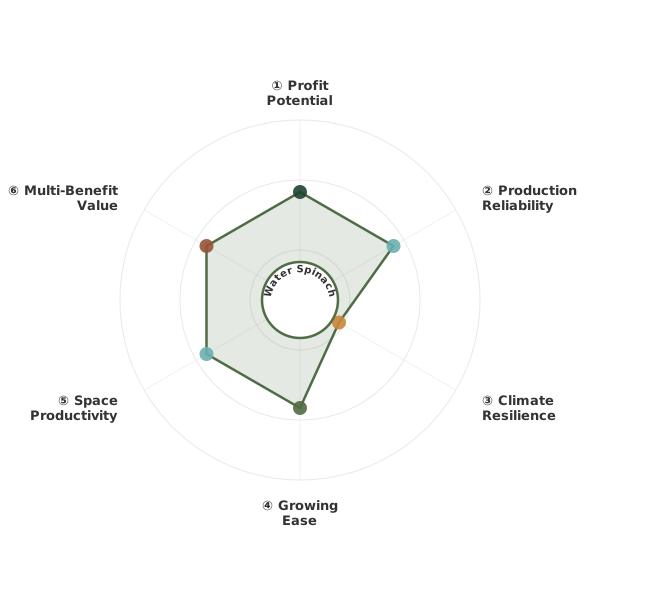
Comparative ratings for this plant across key regenerative agriculture traits.

Trait Suitability Explanation
Season Extension Not Recommended Water spinach, a tropical aquatic, thrives in consistent warmth and moisture, making it best suited for warmer microclimates within a regenerative system.
Space Efficiency Ideally Suited This rapid, sprawling aquatic thrives in dense plantings, offering abundant leafy harvests and effectively suppressing weeds through its vigorous growth habit.
Storage Longevity Not Recommended A tender leafy green, water spinach is best utilized fresh to capture its full nutritional and textural value, highlighting its role as a quick-return crop.
Yield Reliability Adequate Highly productive in consistently warm and moist environments, its yield is optimized through diligent water management and integration into suitable microclimates.
Establishment Ease Ideally Suited Germinating rapidly in warm, moist conditions with minimal disturbance, its vigorous, ground-covering growth naturally suppresses weeds, showcasing effortless establishment.
Multi Benefit Value Adequate An edible aquatic vegetable that enhances water systems, it contributes to soil stabilization in riparian zones and supports biodiversity by attracting beneficial insects.
Climate Adaptability Not Recommended Primarily a tropical/subtropical aquatic, its cultivation range is best optimized by integrating it into systems that provide consistent warmth and ample moisture, such as aquaponics or well-managed floodplains.
Maintenance Intensity Adequate Thriving in warm, wet conditions, maintaining optimal growth involves ensuring consistent moisture through effective water management and monitoring for any ecological imbalances.
Disease Pest Resistance Adequate While moderately resilient, maintaining robust plant health relies on excellent water quality and integrating beneficial insects to naturally manage potential leaf miners and fungal pressures.

Comparative System: Ratings compare plants within their economic category (e.g., cover crop nitrogen fixation compared to other cover crops, not to all plants). Individual farm conditions and management practices significantly influence actual performance.

8

Know the Debate

Ipomoea aquatica (water spinach) offers significant potential as a fast-growing cash crop and soil improver in warm, humid, and subtropical regions...

Ipomoea aquatica (water spinach) offers significant potential as a fast-growing cash crop and soil improver in warm, humid, and subtropical regions with reliable water access. Its ability to provide multiple harvests per season can be highly profitable through direct markets. However, its high productivity and resilience also pose a substantial risk of becoming an invasive aquatic weed if allowed to escape controlled cultivation. Farmers must carefully consider local climate, water management capabilities, and market opportunities versus potential ecological impacts.

Is Water Spinach Best Managed as a Cash Crop or a Cover Crop?

Profitable Cash Crop

Water spinach is a highly productive specialty cash crop, yielding multiple harvests in 45-60 days in warm, wet climates. Farmers leverage its rapid growth for consistent income through direct markets, commanding good prices for its nutrient-rich greens.

Sources behind this view

Sources behind this view

Videos & Podcasts
Soil Health & Phytoremediation Tool

Water spinach's vigorous growth efficiently scavenges excess nutrients and potentially heavy metals from wastewater-irrigated soils and nutrient-rich environments. Its biomass contributes to soil organic matter, improving soil structure and fuel microbial activity when managed as a cover crop.

Sources behind this view

Sources behind this view

Research
  • Treated Wastewater Irrigation Enhances Plant Biomass, Soil Fertility, and Rhizosphere Microbial Activity in C and CAM species Grown on a Degraded Planosol. (opens in new window)

    This study found: In Brazil's dry, degraded farming areas, this four-year study shows that irrigating with treated wastewater significantly boosted plant growth and improved soil health compared to using only clean water. Two types of plants were tested: a C₄ species (like corn) and a CAM species (like cacti). The treated wastewater led to a 12% increase in growth for the C₄ plant and nearly 30% for the CAM plant. Soil quality improved dramatically, with organic matter increasing by almost 88%, nutrient levels rising, and soil acidity decreasing. Microbial activity in the soil around the roots also changed, generally increasing respiration. This research suggests treated wastewater is a valuable, affordable option for irrigating and restoring degraded lands in dry regions, but ongoing checks for salt buildup and potential pathogens are important.

  • Influence of Foliar Nano DAP Application with Moisture Conservation Strategies on Soil Moisture, Temperature, Canopy Temperature, and NDVI in Rabi Maize (Zea mays L.) under Eastern Rainfed Condition (opens in new window)

    This study found: A two-year study in Jorhat, Assam, India, tested how different mulches and fertilizer sprays affect corn (Zea mays L.) growth and soil conditions in rainfed areas. The research found that using water hyacinth or rice straw as mulch significantly improved soil moisture, kept soil warmer, and reduced the temperature of the corn plants' leaves compared to leaving fields bare. Water hyacinth mulch was particularly effective, leading to higher soil moisture, lower leaf temperatures, and better plant health indicators (NDVI and SPAD values). While various liquid fertilizer sprays were tested, they did not significantly impact these soil and plant measurements in this study. The findings suggest that using water hyacinth as mulch is a promising strategy for conserving moisture and improving crop performance in rainfed maize systems.

From the Web
  • Table compares subtropical cover crops (e.g., Sunn Hemp, Lablab, Pigeon Pea) on agronomic traits like nitrogen fixation, dry matter yield, soil pH, seeding rate, and weed suppression for hot, humid areas.

Invasive Weed Risk

In uncontrolled environments, water spinach's aggressive growth and rapid reproduction can lead to it becoming a significant invasive aquatic weed, choking waterways, disrupting ecosystems, and outcompeting native vegetation.

Sources behind this view

Sources behind this view

Videos & Podcasts
Research
  • Treated Wastewater Irrigation Enhances Plant Biomass, Soil Fertility, and Rhizosphere Microbial Activity in C and CAM species Grown on a Degraded Planosol. (opens in new window)

    This study found: In Brazil's dry, degraded farming areas, this four-year study shows that irrigating with treated wastewater significantly boosted plant growth and improved soil health compared to using only clean water. Two types of plants were tested: a C₄ species (like corn) and a CAM species (like cacti). The treated wastewater led to a 12% increase in growth for the C₄ plant and nearly 30% for the CAM plant. Soil quality improved dramatically, with organic matter increasing by almost 88%, nutrient levels rising, and soil acidity decreasing. Microbial activity in the soil around the roots also changed, generally increasing respiration. This research suggests treated wastewater is a valuable, affordable option for irrigating and restoring degraded lands in dry regions, but ongoing checks for salt buildup and potential pathogens are important.

Making Sense of the Differences

The utility of water spinach pivots on careful management and local context. Its value as a cash crop thrives in controlled, warm, and moist environments with access to markets, and as a soil builder where its biomass can be incorporated. However, reliance on consistent moisture and its aggressive growth mean uncontrolled escapes into natural waterways can quickly lead to devastating invasive weed scenarios. Each farmer must weigh its economic potential against its ecological risks in their specific climate and water system.

9

Learn More

Why farmers use this plant and additional resources

Why Regenerative Farmers Use This Plant

Ipomoea aquatica, commonly known as water spinach or kangkong, is a highly productive and versatile vegetable that can significantly enhance income streams in regenerative agriculture systems. Its rapid growth cycle and high yield potential make it an attractive specialty cash crop. Under optimal conditions, such as consistent warmth and ample water, Ipomoea aquatica can be harvested within 30-45 days from transplanting or 45-60 days from direct seeding, allowing for multiple successions throughout a single growing season. This rapid turnover translates to a high revenue per acre, especially when marketed through direct-to-consumer channels like farmers' markets, CSAs, or specialty ethnic grocery stores. The leaves and tender stems are rich in vitamins and minerals, commanding good prices in ethnic markets and among health-conscious consumers. Its value lies in its ability to provide a consistent supply of fresh greens, meeting consistent market demand and diversifying a farm's income beyond staple crops.

Beyond its direct economic benefits, Ipomoea aquatica can be strategically integrated into diversified farm plans to improve soil health and ecosystem services. While not a nitrogen fixer, its vigorous growth can efficiently scavenge nutrients from the soil, reducing the need for external inputs. Its rapid biomass production contributes to soil organic matter when incorporated into the soil after harvest, fueling beneficial microbial activity. Its dense foliage can also provide a degree of weed suppression during its growth cycle, reducing the need for external interventions. When managed in rotation with other crops, it can help break disease cycles and improve soil tilth through its extensive root system. Its ability to thrive in wet conditions also makes it suitable for integration into systems that utilize or manage water, such as bioswales or areas with naturally high water tables, contributing to a more resilient and multi-functional farm landscape.

The ecological contributions of Ipomoea aquatica in a regenerative system are often overlooked. Its dense foliage can provide habitat for beneficial insects and pollinators, particularly if allowed to flower. While not a primary pollinator attractant, its presence can contribute to overall farm biodiversity. Furthermore, its substantial biomass production, when managed appropriately, can contribute to soil organic matter upon decomposition, enhancing soil structure and water-holding capacity. In systems where water management is a focus, its high water uptake can also play a role in managing excess moisture. In regions where it is cultivated in ponds or canals, it can play a role in phytoremediation, absorbing excess nutrients and improving water quality.

Ipomoea aquatica has demonstrated success in various regional farming systems. In the humid subtropical climates of Southeast Asia, it is a staple crop, grown year-round in paddy fields and smallholder plots, providing consistent food security and income. In the warmer regions of the United States, such as Florida and California, it is cultivated by specialty growers catering to diverse ethnic markets. Farmers in parts of Australia with suitable warm, wet conditions also find it a profitable niche crop. In the humid tropics of Southeast Asia, it is often grown in flooded paddies or raised beds with consistent irrigation, providing a staple food source. In the Mediterranean climates of southern Europe, it can be grown in protected environments or during the warmer months in areas with reliable water access, often in raised beds to ensure good drainage. In the warmer regions of Australia, such as Queensland, it thrives in open fields with irrigation, contributing to local food systems. In the United States, farmers in California and the Gulf Coast states cultivate it in fields or greenhouses, catering to diverse culinary markets and often integrating it into intensive market garden systems. In tropical savanna climates like parts of Brazil, it can be cultivated in shallow water channels or flooded fields, leveraging natural water sources and warm temperatures for year-round production. In traditional Southeast Asian rice systems, it is intercropped during the off-season or grown in adjacent flooded fields, demonstrating its compatibility with water-intensive agricultural practices. In parts of India, it is a common vegetable grown in both irrigated fields and water bodies, contributing significantly to rural livelihoods. Its potential is also being recognized in parts of Africa, where it can provide a nutritious and fast-growing food source in tropical and subtropical regions. In the Caribbean and Central America, it is a staple in smallholder farming systems, often grown in raised beds or shallow water channels. Specialty growers in the southern United States have found success in hydroponic and aquaponic systems, as well as in field production in warmer coastal regions.

10

How to Integrate This Plant

Practical guidance for regenerative systems

Establishing Ipomoea aquatica typically involves direct seeding or transplanting, with specific methods depending on the desired harvest speed and available water management. For direct seeding in moist soil or shallow water, rates can range from 10-20 lbs/acre (11-22 kg/ha) when broadcast, or 5-10 lbs/acre (5.6-11.2 kg/ha) if drilled in rows. Planting depth should be shallow, around 0.25-0.5 inches (0.6-1.3 cm), to ensure germination. In temperate regions or for earlier harvests, starting seeds indoors or in a greenhouse 3-4 weeks prior to the last frost is recommended, transplanting seedlings when soil temperatures consistently reach above 60°F (15.5°C). Spacing for transplanted seedlings can vary, but rows spaced 12-18 inches (30-45 cm) apart with plants 6-8 inches (15-20 cm) within the row are common, yielding approximately 40,000-60,000 plants per acre. Alternatively, row spacing of 12-24 inches (30-60 cm) and in-row spacing of 6-12 inches (15-30 cm) are common for field cultivation.

Management practices for Ipomoea aquatica focus on consistent moisture and fertility to maximize its rapid growth. It requires abundant water, ideally grown in flooded fields, moist soil, or hydroponic systems, with approximately 1-2 inches (2.5-5 cm) of water per week during dry periods. Fertility is best supplied through organic amendments such as compost, well-rotted manure, or by incorporating cover crop residue. While it does not fix nitrogen, its high nutrient demand can be met by judicious application of compost tea or by planting after a legume cover crop. Growth from transplant to harvest typically takes 45-60 days, with plants reaching a height of 1-2 feet (0.3-0.6 m) but spreading extensively. Pest and disease management relies heavily on cultural practices; ensuring good air circulation, avoiding over-irrigation that can lead to fungal issues, and promptly removing any affected plants are key. Prompt harvesting of outer leaves also encourages continued production.

For integration into a regenerative production cycle, Ipomoea aquatica is a prime example of an intensive vegetable cash crop. From seed or transplant, it reaches harvest maturity in 45-60 days. Succession planting every 2-3 weeks from late spring through early fall (e.g., April through September in USDA Zones 7-10, or May through August in USDA Zones 7-9) provides a continuous harvest window of 12-20 weeks. This rapid cycle means it can be slotted into rotations efficiently. Before planting Ipomoea aquatica, a nitrogen-fixing cover crop like cowpeas or sunn hemp can be grown and incorporated to provide a nutrient boost. After the final harvest, a fast-growing cover crop such as buckwheat or a short-season millet can be sown to scavenge residual nutrients and build soil organic matter before winter. Crop rotation intervals of at least 2-3 years with non-related crops are recommended to break pest and disease cycles, such as those affecting the Convolvulaceae family.

View Full Document (Printable single-page version)