Insights suggest its potential role in regenerative systems. Excerpts indicate it is a culinary herb, which can be integrated into polyculture systems. Its chemical profile, rich in phenolic compounds like gallic acid and quercetin, suggests potential for soil health benefits, though specific regenerative applications like nitrogen fixation or carbon sequestration are not detailed. One study mentions its use in experiments targeting invasive ambrosia beetles, hinting at potential applications in integrated pest management within agricultural settings. Farmer experiences are not extensively documented in this knowledge base, but its cultivation is noted in regions like Portland. Further research is needed to fully understand its application as a cover crop, forage, or in agroforestry systems. The plant is also mentioned in the context of greenhouse pest management, specifically spider mites, though its direct role in controlling them is not elaborated. While coverage in our knowledge base is limited, the above represents documented uses in regenerative systems.

Regenerative Quick Profile

All recommendations assume integrated, regenerative practices—not conventional inputs.

Climate & Soil Fit

Climate: Tropical Rainforest, Tropical Monsoon, Tropical Savanna, Hot Semi-Arid (Steppe), Cold Semi-Arid (Steppe), Hot Desert, Cold Desert, Humid Subtropical, Oceanic (Maritime Temperate), Hot-Summer Mediterranean, Warm-Summer Mediterranean, Monsoon-Influenced Humid Subtropical, Subtropical Highland, Hot-Summer Continental, Warm-Summer Continental, Subarctic, Monsoon-Influenced Hot-Summer Continental

Zones: USDA 8-10, Australian Zones 3-11, EU Atlantic, Oceanic, Mediterranean

Optimal Soil: Loam Soil

System Role & Functions

Primary: Food Forest

Secondary: Specialty, Cash Crop With Services

Key Benefits: Low maintenance, Storage Longevity, Yield Reliability

Management Level

Experience: Advanced

Maintenance: Very low maintenance - This drought-tolerant and pest-resistant evergreen requires minimal intervention, with pruning integrated into system management and fertility sustained through compost and mulch applications.

Value Streams

  • Vegetable/specialty crop harvest
  • Diversifies farm income
  • Enhances biodiversity
1

Climate Suitability Assessment

Will this plant thrive in your climate?

IDEALLY SUITED

Köppen Zone: Af (Tropical Rainforest), Am (Tropical Monsoon), Cfa (Humid Subtropical)
USDA Zone: 8a, 9a, 10a, 11a, 12a
Australian Zone: temperate, subtropical
EU Climate Region: atlantic

Bay Laurel flourishes in climates that mimic its Mediterranean origins, characterized by mild, wet winters and warm to hot, dry summers. These conditions are met in Köppen zones Cfa, Csa, Csb, and the broader Mediterranean climate type, as well as in USDA zones 7a through 10b, Australian subtropical and temperate zones, and the EU Atlantic climate region. In these areas, Bay Laurel experiences optimal growth with minimal frost risk, allowing for vigorous development and abundant foliage production. The long growing seasons, typically exceeding 180-250 frost-free days, support consistent yields for culinary, medicinal, and ornamental purposes. Establishment is highly successful, and mature plants are resilient, requiring little to no special protection. Rainfall patterns, while variable, are generally sufficient or easily supplemented by irrigation in drier summer periods, ensuring high-quality leaf production with excellent aromatic compound development. This suitability translates to high reliability and economic viability for regenerative agriculture applications.

ADEQUATE

Köppen Zone: Aw (Tropical Savanna), Cfb (Oceanic (Maritime Temperate)), Csa (Hot-Summer Mediterranean), Csb (Warm-Summer Mediterranean), Cwa (Monsoon-Influenced Humid Subtropical), Cwb (Subtropical Highland), Dfa (Hot-Summer Continental), Dfb (Warm-Summer Continental)
USDA Zone: 7a

Bay Laurel can be grown successfully in climates that present some challenges, though requiring more careful management. Köppen zone Cfb and USDA zones 6a and 6b fall into this category. These regions typically have cooler summers and winters that can dip below the plant's preferred temperature range, posing a risk of frost damage, especially to younger plants. While established plants may survive, consistent, high-quality production is not guaranteed without intervention. This might include selecting sheltered microclimates, providing winter protection such as mulching or row covers, or choosing hardier cultivars. The growing season may also be shorter, potentially impacting the plant's overall vigor and yield compared to ideal zones. Water availability might also be a consideration, though generally manageable with standard irrigation practices. Despite these limitations, the plant can still be a viable option for specialty crops or food forests if these management strategies are implemented, offering a moderate level of productivity and resilience.

NOT RECOMMENDED

Köppen Zone: ET (Tundra), BSh (Hot Semi-Arid (Steppe)), BSk (Cold Semi-Arid (Steppe)), BWh (Hot Desert), BWk (Cold Desert), Dfc (Subarctic), Dwa (Monsoon-Influenced Hot-Summer Continental)
USDA Zone: 2a, 3a, 3b, 4a, 5a, 5b, 6a

Bay Laurel is not recommended for climates that experience prolonged periods of extreme cold or very short growing seasons, making cultivation economically and practically unviable. This includes regions with consistent winter temperatures below 0°F (-18°C), such as USDA zones 5a and below, where winter kill is highly probable even for established plants. Such conditions necessitate intensive protection measures, like overwintering indoors or extensive greenhouse cultivation, which are prohibitively expensive for typical agricultural production. Furthermore, very short growing seasons (less than 120 frost-free days) limit the plant's ability to establish robustly and produce a meaningful harvest. While Bay Laurel might technically survive in some of these marginal zones as a short-lived perennial or annual, its performance would be poor, yields minimal, and the risk of failure high. The cost of inputs and management to overcome these climatic limitations far outweighs the potential benefits, making alternative, better-suited species a more sensible choice for regenerative agriculture in these zones.

Better alternatives for these "not recommended" zones: Rosemary (drought-tolerant evergreen herb with similar culinary uses and better cold hardiness), Thyme (low-growing herb that tolerates a range of conditions and is culinary useful), Winter Savory (hardy evergreen herb with a strong flavor profile), Hardy Lavender (aromatic herb with good cold tolerance and similar uses)

Note: Zones listed above represent climates where this plant can produce reliably with reasonable management. Climate zones not mentioned would require intensive climate modification (greenhouses, extensive infrastructure) and are not economically viable for regenerative agriculture purposes.

2

Soil Suitability Assessment

Which soil types work best for this plant?

IDEALLY SUITED

Loam Soil

This plant thrives in these soil types without requiring amendments or remediation. Natural soil conditions support optimal growth and productivity.

ADEQUATE

Clay Soil, Rich Soil, Rocky Soil, Sandy Soil

This plant performs acceptably in these soil types with moderate, manageable remediation such as pH adjustment, compost addition, or drainage improvement. The required amendments are practical and cost-effective for regenerative agriculture.

NOT RECOMMENDED

Acidic Soil, Alkaline Soil, Desert Soil, Saline Soil, Wet Soil

Growing this plant in these soil types would require impractical remediation such as complete soil replacement, extensive amendments, or cost-prohibitive infrastructure. These conditions are not economically viable for regenerative agriculture.

Note: Soil suitability assessments focus on remediation requirements. "Ideally Suited" means the plant generally thrives without the need for substantial amendments, "Adequate" means manageable remediation (lime, compost, mulch), and "Not Recommended" means impractical soil changes would be required. Climate factors like rainfall and temperature also influence success.

3

Seasonal Considerations

Planting timing, growth duration, and harvest windows

Establishing bay laurel requires careful timing to ensure vigorous growth. Nursery trees are best planted during their dormant period, either in late fall before the ground freezes or early spring after the soil has warmed sufficiently and the risk of hard frost has passed. Bare-root stock should always be planted in early spring to allow roots to establish before summer heat. Container-grown trees offer more flexibility and can be planted throughout the growing season, though early spring or early fall planting is ideal to minimize transplant shock.

Expect your bay laurel to take several years for full establishment, typically 2-3 years before showing robust growth. The first meaningful harvest can usually be anticipated around year 3-5, with full production capacity reached within 7-10 years. These trees are long-lived, offering productive yields for decades.

Seasonal management focuses on capitalizing on natural cycles. Pruning is best performed during the dormant season, in late winter or very early spring before new growth begins. Bloom typically occurs in late spring to early summer, followed by fruit development. The plant enters a period of winter dormancy, requiring minimal intervention beyond ensuring adequate moisture in drier climates during extended dry spells. Harvest of leaves can occur throughout the year, but is often concentrated in the fall and winter after the plant has developed its full flavor profile.

4

System Role & Multi-Benefit Value

Functional roles, integration strategies, and stacked benefits

Functional Role

Total System Value

Bay Laurel's total system value lies in its dual role as a culinary herb and an ecological enhancer within regenerative farm systems. Its direct harvest value is significant for those utilizing its aromatic leaves for cooking, providing a valuable, perennial food source. System enhancement comes from its contribution to the structural diversity of food forests, offering shade as it matures and potentially acting as a windbreak. While not explicitly mentioned for nitrogen fixation or erosion control, its perennial nature supports soil health. Ecosystem services include providing habitat for beneficial insects and potentially supporting pollinators, though specific data is limited. Risk diversification is achieved by adding another perennial crop to the farm, reducing reliance on annuals and enhancing overall farm resilience. Its inclusion diversifies the farm's ecological functions and harvest streams.

Integration Characteristics

Multi-Benefit Value: Adequate - Beyond its culinary use, Bay laurel supports beneficial insect populations and contributes to the overall biodiversity and resilience of the integrated farming system.

5

Management & Care Requirements

Integration guidance, maintenance needs, and care practices

How to Integrate This Plant

Bay Laurel (Laurus nobilis) integrates well into regenerative systems primarily as a component of food forests and potentially hedgerows, offering culinary value and ecological benefits. Its primary function is as a food forest element, contributing to a diverse, multi-layered planting. While not a nitrogen fixer, it can contribute to shade structure in later years and potentially act as a windbreak in established systems. It does not readily reseed, requiring intentional planting. Compatible practices include food forests and potentially perennial polycultures. Its direct harvest value comes from its aromatic leaves used in cooking. Beyond harvest, it contributes to biodiversity and provides habitat. The timeline to contribution begins with establishment in Year 1, with leaf harvest possible from Year 2-3. Significant canopy development for shade and windbreak effects will take 10-20 years.

Integration Practices & Management

The provided knowledge base offers limited insight into the specific regenerative agriculture integration practices for Laurus nobilis. While sources identify it as the true Bay Laurel, originating from the Mediterranean and used culinarily, and mention its chemical profile and susceptibility to certain pests, they do not detail establishment methods such as seeding rates, timing, or tillage practices. Similarly, information regarding its integration with grazing systems, including mob grazing, rotational timing, or rest periods, is absent. Termination strategies, fertility needs, competition management, succession planning, and its role in cash crop rotations like relay cropping or intercropping are also not discussed within these texts. The knowledge base primarily focuses on the botanical and chemical characteristics of Laurus nobilis and its interaction with specific pests, rather than practical regenerative farming applications.

Management Profile

Maintenance Intensity: Ideally Suited - This drought-tolerant and pest-resistant evergreen requires minimal intervention, with pruning integrated into system management and fertility sustained through compost and mulch applications.

Sources behind this view

Community
  • Bay Laurel (Laurus nobilis) can be managed with hard pruning for shrub or tree form. Its suckering and dense shade limit understory planting, suggesting containers for companion species like rosemary

6

Economics & Value Streams

Direct harvest, system benefits, ecosystem services, and risk diversification

Comprehensive economic analysis including direct harvest value, system enhancement contributions, ecosystem services, value timeline, and risk diversification strategies.

Vegetable & Specialty Economics

Metric Value
Seed/Transplant Cost 150-300 $/acre 370-741 $/ha
Expected Yield 500-1000 lbs/acre 560-1120 kg/ha
Market Price 3.00-6.00 $/lb 6-13 $/kg
Harvest/Handling Cost 300-600 $/acre 741-1482 $/ha
Marketing/Distribution Cost 150-300 $/acre 370-741 $/ha
Net Annual Return* $300-$5400/acre/year

Economics highly variable by market channel (direct vs wholesale), scale, and management. Direct marketing commands premiums but requires labor. Values shown for mid-scale market garden operations.

* Net Annual Return = (Yield × Market Price) − (Amortized Establishment Cost + Annual Maintenance). This return is realized only at/after first harvest; early years have costs but no revenue. Range shows worst case to best case scenarios.

System Enhancement Value

Beyond harvest: how understory complements overstory in polyculture

Food Forest System Contributions

Beyond direct culinary use, Bay Laurel offers several system benefits. Its evergreen foliage provides habitat and potential nesting sites for birds and other small wildlife throughout the year. While not a primary pollinator attractant, its flowers may offer some nectar and pollen for opportunistic insects. In containerized systems, as discussed for California regions, bay trees can be managed for decades with proper care, contributing to long-term farm infrastructure. Propagation methods like cuttings and layering offer opportunities for on-farm multiplication, reducing reliance on external inputs. Furthermore, its use as a hedge or screen contributes to landscape aesthetics and can help define farm boundaries or create sheltered zones for other crops or animals. Its resilience in well-drained soil also makes it suitable for areas where water management is a consideration.

Nitrogen Fixation (if legume)

Groundcover & Erosion Control

Bay Laurel can function as a component of windbreaks or privacy hedges due to its evergreen nature and potential for dense growth when pruned. As mentioned in the knowledge base, it can be utilized as a 'screen, privacy hedge, or topiary'. While its primary role may not be large-scale wind reduction for broadacre crops, a well-established hedge or row of bay trees can significantly buffer wind in localized areas. This can protect more sensitive understory plants, reduce soil erosion from wind, and create more stable microclimates for other farm components. The effectiveness of bay as a windbreak increases with plant density and maturity, offering a multi-functional benefit by also providing a harvestable product. Its tolerance for various conditions, including partial shade, allows for integration into diverse farm layouts where wind protection is needed.

Ecosystem Service Contributions

Environmental contributions: carbon, pollinators, wildlife, and water

  • Carbon Sequestration: As an evergreen tree, Bay Laurel sequesters carbon through photosynthesis and stores it in its woody biomass and root system. Its growth rate can be moderate to vigorous when conditions are favorable, contributing to ongoing carbon uptake over its lifespan.
  • Pollinator Support: Low to Medium. While not a primary nectar source, its flowers may provide some resources for opportunistic pollinators during its blooming period. Its evergreen foliage offers some year-round habitat.
  • Wildlife Habitat: Provides evergreen cover and potential nesting sites for small birds and beneficial insects, particularly when grown as a dense hedge or small tree. It does not offer significant mast or browse value for larger wildlife.
  • Water Quality: Not applicable

Value Timeline: Understory Development

When you'll see results: groundcover/herbs year 1, shrubs 2-3, full layer integration 5-10

Years 1-2

Establishment of windbreak/hedge structure, initial microclimate modification, potential for early small-scale leaf harvest, and on-farm propagation material.

Years 3-5

Increased windbreak effectiveness, more substantial leaf harvest for culinary use, established privacy screening, and noticeable contribution to landscape structure.

Years 10-20

Mature hedge or tree form providing significant wind buffering, consistent and abundant leaf harvest, aesthetic value, and robust habitat provision.

20+ Years

Long-term stable ecosystem services, continued high-yield harvest potential, and robust contribution to farm landscape resilience and biodiversity.

Farm Risk Reduction

How multi-layer systems diversify production and income

  • Multiple Revenue Streams: Culinary herb sales (fresh and dried leaves), value-added products (e.g., infused oils, soaps), potential for ornamental sales if grown for specific forms (topiary), and ecosystem service provision (windbreak, habitat).
  • Temporal Income Spread: Ongoing harvest of leaves throughout the year, with potential for peak production at certain times. Long-term establishment of ecosystem services that provide continuous benefits.
  • Market Risk Hedge: Diversifies income beyond primary crops. Its perennial nature reduces annual planting risk. Its use as a hedge provides localized environmental benefits that can buffer other crops from adverse conditions. Market for bay leaves is relatively stable.
7

Regenerative Suitability Details

Comprehensive trait ratings for system integration assessment

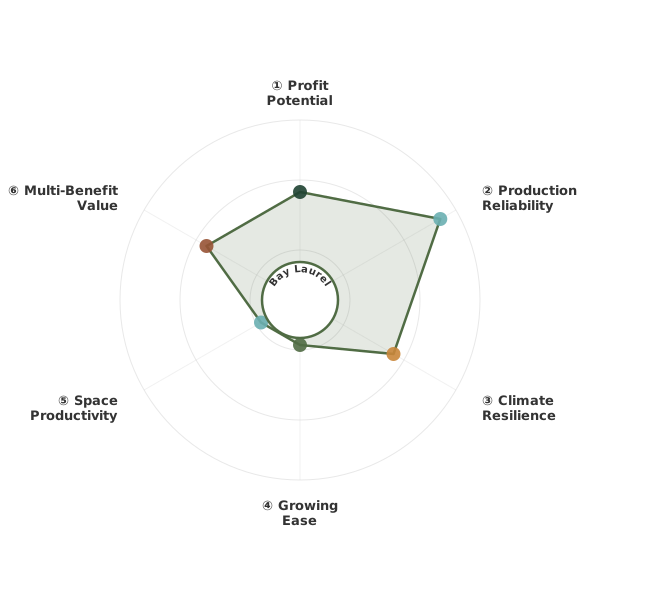
Comparative ratings for this plant across key regenerative agriculture traits.

Trait Suitability Explanation
Season Extension Adequate As a hardy evergreen, Bay laurel offers year-round foliage, contributing to continuous resource availability within the agroecosystem.
Space Efficiency Not Recommended This slow-growing tree or large shrub contributes to long-term soil health and structure, with its mature form providing habitat and windbreak benefits over time.
Storage Longevity Ideally Suited Dried bay leaves possess excellent long-term storage potential, maintaining their aromatic compounds for extended periods, reducing the need for frequent replenishment.
Yield Reliability Ideally Suited Bay laurel consistently provides foliage year after year, demonstrating remarkable resilience to varying moisture levels and soil conditions, thus ensuring dependable resource availability.
Establishment Ease Not Recommended Establishing Bay laurel requires patient nurturing and specific pre-treatment for seeds to promote germination, highlighting the importance of careful propagation for long-term system integration.
Multi Benefit Value Adequate Beyond its culinary use, Bay laurel supports beneficial insect populations and contributes to the overall biodiversity and resilience of the integrated farming system.
Climate Adaptability Adequate Well-suited for zones 8-10, Bay laurel thrives in well-drained soil and demonstrates resilience to moderate temperature fluctuations, contributing to system stability across diverse conditions.
Maintenance Intensity Ideally Suited This drought-tolerant and pest-resistant evergreen requires minimal intervention, with pruning integrated into system management and fertility sustained through compost and mulch applications.
Disease Pest Resistance Ideally Suited Bay laurel's inherent resistance to pests and diseases minimizes the need for external interventions, promoting a balanced and self-regulating ecosystem.

Comparative System: Ratings compare plants within their economic category (e.g., cover crop nitrogen fixation compared to other cover crops, not to all plants). Individual farm conditions and management practices significantly influence actual performance.

8

Learn More

Why farmers use this plant and additional resources

Why Regenerative Farmers Use This Plant

Laurus nobilis, commonly known as Bay Laurel or Sweet Bay, offers significant regenerative value as a perennial cash crop and an integral component of diversified farm income streams. Its evergreen nature provides year-round ground cover and habitat, contributing to soil organic matter accumulation and supporting beneficial insect populations even outside the typical growing season. Mature plants can yield substantial harvests of aromatic leaves, which are highly sought after in culinary, medicinal, and perfumery markets, commanding premium prices for high-quality, sustainably grown produce. This translates to a strong revenue per acre potential, especially when integrated into direct-to-consumer channels like farmers' markets, CSAs, or specialty online stores, where the story of regenerative cultivation adds significant market value.

Beyond its direct economic returns, Bay Laurel plays a crucial role in enhancing farm ecosystem resilience. As a woody perennial, it contributes to long-term soil health by developing a deep root system that improves soil structure, water infiltration, and nutrient cycling, reducing the need for annual tillage and associated soil degradation. Its presence can also deter certain pests and diseases through natural allelopathic properties, reducing reliance on external inputs. Furthermore, Bay Laurel can serve as a living mulch or an intercrop in more established systems, providing shade, suppressing weeds, and creating microclimates that benefit other crops, thereby fostering a more robust and self-sustaining agricultural landscape.

The quantitative ecosystem benefits of incorporating Bay Laurel are significant. Its deep root system, often exceeding 6-15+ feet (1.8-4.5+ meters) over time, helps sequester carbon in the soil profile and biomass, contributing to climate change mitigation. While not a nitrogen fixer, its dense foliage and woody biomass contribute to soil organic matter when pruned or at the end of its productive life, enhancing soil water-holding capacity and nutrient availability for surrounding plants. The plant also provides habitat and nectar sources for pollinators and beneficial insects, supporting broader biodiversity on the farm. Its flowers offer a valuable early-season food source for native bees and other beneficial insects. By supporting a diverse community of beneficial organisms and improving soil structure, Bay Laurel contributes to enhanced water retention and reduced runoff, leading to more resilient agricultural landscapes.

Bay Laurel has demonstrated success in various regional farm systems. In the Mediterranean basin, it has been cultivated for centuries, forming the backbone of traditional herb gardens and smallholdings, often integrated with olive groves and vineyards. In California's Central Valley and coastal regions (USDA Zones 9-10), it is grown in specialty crop rotations and drought-tolerant landscaping, benefiting from the warm, dry climate. Farmers in parts of Australia's temperate and warmer regions (Australian Zones 2-5) are exploring its potential, integrating it into mixed farming and agroforestry systems for its culinary value and drought tolerance. In the southeastern United States (USDA Zones 7-8), it benefits from slightly more moisture and can be incorporated into silvopasture systems, providing shade and a valuable forage component for livestock during winter months. In Europe, particularly France and Italy (Köppen Csa, Cfb), it is often grown in hedgerows bordering vineyards or olive groves, acting as a windbreak and contributing to biodiversity. Brazilian coffee plantations have also experimented with intercropping Bay Laurel to enhance biodiversity and provide supplementary income. In cooler temperate zones (USDA Zones 7, RHS H5-H7), selecting hardier varieties or providing winter protection may be necessary.

9

How to Integrate This Plant

Practical guidance for regenerative systems

Establishing Bay Laurel can be achieved through seeds, cuttings, or young plants. Direct seeding is less common due to slow germination rates (4-12 weeks). Propagation from cuttings is more reliable, yielding plants ready for transplanting in 1-2 years. For faster establishment and quicker returns, purchasing 1-3 year old transplants or grafted trees is recommended to ensure desirable traits.

Planting:

  • Timing: Early spring or fall, avoiding extreme heat or frost.
  • Spacing: For commercial leaf production, spacing typically ranges from 5-15 feet (1.5-4.5 meters) apart, depending on desired density and management goals. Intensive culinary leaf production in hedgerow systems may use closer spacing of 5-8 feet (1.5-2.4 meters). For grove establishment, 10-15 feet (3-4.5 meters) is common.
  • Depth: Plant transplants at a depth that matches their nursery container, ensuring the root ball is fully covered and the crown is at soil level.

Management Practices:

  • Watering: While established plants are drought-tolerant, consistent watering is crucial, especially during the initial years and dry periods. Aim for approximately 1 inch (2.5 cm) of water per week, either from rainfall or irrigation, particularly during the establishment phase and active growth periods.
  • Fertility: Prioritize biological approaches. Incorporate compost annually around the base of the plants and utilize cover crops in inter-row spaces to build soil organic matter. A light application of balanced organic fertilizer in spring can support vigorous growth.
  • Pruning: Essential for shaping the plant, encouraging bushiness, maximizing leaf production, and facilitating harvest. Harvested leaves can be used fresh or dried. Drying typically occurs in a cool, well-ventilated area to preserve aromatic compounds.
  • Pest and Disease Management: Focus on cultural practices. Ensure good air circulation through pruning, maintain soil health, and encourage beneficial insect populations to minimize issues. Monitor for scale insects or fungal leaf spots and address them with biological controls if necessary.

Production Cycle and Soil Stewardship:

  • Time to Production: From transplanting a young tree, it typically takes 2-4 years to reach significant harvestable production, with full maturity and maximum yield achieved in 5-7 years.
  • Harvesting: Harvests can commence as early as late spring and continue through fall, with careful pruning encouraging new growth. For continuous harvest and market supply, establish new plantings at staggered intervals or manage existing trees for successive pruning of different sections.
  • Soil Health Integration: Integrate Bay Laurel into crop rotations by planting in permanent beds or hedgerows that are not tilled annually. Following harvests or pruning, manage surrounding areas with cover crops like crimson clover, vetch, buckwheat, or a mix of legumes and grasses (e.g., hairy vetch and annual ryegrass). These cover crops protect the soil, scavenge nutrients, suppress weeds, and provide organic matter. A minimum 3-year rotation interval with non-related crops in adjacent areas is advisable to break potential pest or disease cycles. Post-harvest residue from pruning can be chipped and used as mulch around the base of the plants, further enriching the soil and conserving moisture.