Its integration into AMU.bio, a certified biological nursery specializing in aromatic and medicinal plants in Portugal, highlights its potential. Though not explicitly detailed as a cover crop or nitrogen fixer, its cultivation within a system focused on sustainability and environmental preservation suggests a role in enriching biodiversity. Such nurseries often support polyculture systems and can contribute to soil health through diverse plant life. The project's emphasis on organic farming and unique Portuguese varieties implies a focus on resilient, locally adapted plants. Further research would be needed to fully understand its direct contributions to soil building, carbon sequestration, or pollinator support in specific regenerative contexts like rotational grazing or no-till systems. Farmer experiences detailed in the knowledge base are currently insufficient to provide practical insights into its cultivation or performance within regenerative practices. While coverage in our knowledge base is limited, the above represents documented uses in regenerative systems.

Regenerative Quick Profile

All recommendations assume integrated, regenerative practices—not conventional inputs.

Climate & Soil Fit

Climate: Tropical Rainforest, Tropical Monsoon, Tropical Savanna, Hot Semi-Arid (Steppe), Cold Semi-Arid (Steppe), Hot Desert, Cold Desert, Humid Subtropical, Oceanic (Maritime Temperate), Hot-Summer Mediterranean, Warm-Summer Mediterranean, Monsoon-Influenced Humid Subtropical, Subtropical Highland, Hot-Summer Continental, Warm-Summer Continental, Subarctic, Monsoon-Influenced Hot-Summer Continental, Tundra

Zones: USDA 8-10, Australian Zones 3-12, EU Mediterranean, Atlantic, Oceanic

Optimal Soil: Sandy Soil

System Role & Functions

Primary: Specialty

Secondary: Pollinator Support, Cash Crop With Services

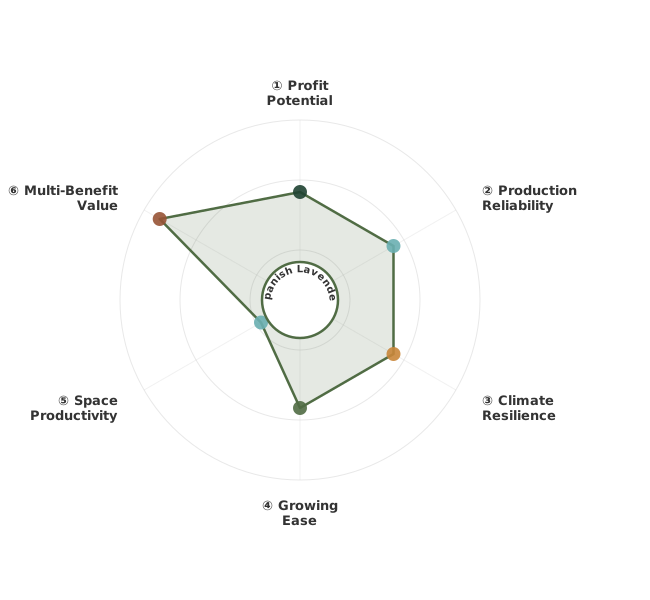
Key Benefits: Multi-benefit value, Storage Longevity, Disease Pest Resistance

Management Level

Experience: Beginner-Friendly

Maintenance: Moderate maintenance - Spanish lavender thrives in well-drained conditions with strategic water management, its low maintenance needs are met by fostering healthy soil biology and avoiding excess moisture.

Value Streams

  • Vegetable/specialty crop harvest
  • Pollinator habitat and support
1

Climate Suitability Assessment

Will this plant thrive in your climate?

IDEALLY SUITED

Köppen Zone: BSh (Hot Semi-Arid (Steppe)), BWh (Hot Desert), Csa (Hot-Summer Mediterranean), Csb (Warm-Summer Mediterranean)
USDA Zone: 6a, 7a, 8a, 9a, 10a, 11a, 12a

Spanish Lavender thrives in climates with mild winters and warm to hot, dry summers, receiving 10-25 inches (25-65 cm) of annual rainfall, with most occurring in cooler months. These conditions are met in Köppen Csa and Csb zones, USDA zones 8a through 10b, and parts of Australian temperate and subtropical regions with dry summer characteristics. The plant benefits from 180-240 frost-free days and optimal temperatures between 70-90°F (21-32°C) during its flowering period. Establishment is highly successful (>85%) in well-drained soils, with minimal need for irrigation during the summer months. Its primary function as a specialty crop is reliably met, producing high-quality aromatic oils. Secondary functions are also well-supported, with abundant flowering attracting pollinators, and its unique appeal making it a valuable cash crop with services. Minimal management is required beyond ensuring excellent drainage, leading to high multi-year productivity for this perennial herb.

ADEQUATE

Köppen Zone: Aw (Tropical Savanna), BSk (Cold Semi-Arid (Steppe)), BWk (Cold Desert), Cfa (Humid Subtropical), Cfb (Oceanic (Maritime Temperate)), Cwa (Monsoon-Influenced Humid Subtropical), Cwb (Subtropical Highland)
USDA Zone: 5b
Australian Zone: temperate, subtropical

Spanish Lavender can perform adequately in climates with mild winters and moderate summers, though it requires careful management to overcome challenges. This includes Köppen Csa and Csb zones with slightly higher rainfall, USDA zones 7a and 7b, and Australian temperate and subtropical zones that may experience more humidity or less distinct dry periods. These regions typically have 150-200 frost-free days and temperatures that can reach 70-85°F (21-29°C) but may also experience occasional frosts or prolonged dampness. Establishment success is good (70-85%) with proper timing and soil preparation. Supplemental irrigation may be needed during dry spells, and vigilance against fungal diseases is crucial, especially in humid conditions. While yields and flowering may be slightly reduced compared to ideal zones, it can still function as a specialty crop, support pollinators, and be a viable cash crop with services, requiring standard management practices.

NOT RECOMMENDED

Köppen Zone: Af (Tropical Rainforest), Am (Tropical Monsoon), ET (Tundra), Dfa (Hot-Summer Continental), Dfb (Warm-Summer Continental), Dfc (Subarctic), Dwa (Monsoon-Influenced Hot-Summer Continental)
USDA Zone: 2a, 3a, 3b, 4a, 5a
EU Climate Region: atlantic

Spanish Lavender is not recommended for climates with cold winters, high humidity, or consistently cool summers, such as Köppen Cfa and Cfb zones, USDA zones 6a through 6b, and the EU Atlantic climate region. These zones present significant challenges for its perennial survival and optimal growth. In cold zones, winter temperatures below 0°F (-18°C) cause high mortality rates, making establishment risky (<70% success). In humid zones (Cfa, EU Atlantic), persistent moisture and lack of a dry summer period lead to increased susceptibility to root rot and fungal diseases, severely impacting growth and flowering. While technically possible to grow as an annual in some of these zones with intensive management (e.g., raised beds, specialized soil mixes, frequent fungicide applications), the economic viability is questionable due to high input costs and unreliable productivity. Alternative plants better suited to these conditions include more cold-hardy lavenders, drought-tolerant herbs like rosemary and thyme, or native salvias that are adapted to local moisture and temperature regimes.

Better alternatives for these "not recommended" zones: Lavender (Lavandula angustifolia) (More cold-hardy and adaptable to cooler, moister conditions), Rosemary (Drought-tolerant herb that thrives in humid conditions with good air circulation), Thyme (Low-growing herb with excellent drought tolerance and disease resistance), Salvia officinalis (Common Sage) (More cold-tolerant sage variety that can withstand moderate moisture)

Note: Zones listed above represent climates where this plant can produce reliably with reasonable management. Climate zones not mentioned would require intensive climate modification (greenhouses, extensive infrastructure) and are not economically viable for regenerative agriculture purposes.

2

Soil Suitability Assessment

Which soil types work best for this plant?

IDEALLY SUITED

Sandy Soil

This plant thrives in these soil types without requiring amendments or remediation. Natural soil conditions support optimal growth and productivity.

ADEQUATE

Clay Soil, Desert Soil, Loam Soil, Rich Soil, Rocky Soil

This plant performs acceptably in these soil types with moderate, manageable remediation such as pH adjustment, compost addition, or drainage improvement. The required amendments are practical and cost-effective for regenerative agriculture.

NOT RECOMMENDED

Acidic Soil, Alkaline Soil, Saline Soil, Wet Soil

Growing this plant in these soil types would require impractical remediation such as complete soil replacement, extensive amendments, or cost-prohibitive infrastructure. These conditions are not economically viable for regenerative agriculture.

Note: Soil suitability assessments focus on remediation requirements. "Ideally Suited" means the plant generally thrives without the need for substantial amendments, "Adequate" means manageable remediation (lime, compost, mulch), and "Not Recommended" means impractical soil changes would be required. Climate factors like rainfall and temperature also influence success.

3

Seasonal Considerations

Planting timing, growth duration, and harvest windows

For Spanish lavender, consider starting seeds indoors approximately six to eight weeks before your last expected frost. This allows for robust seedlings to be transplanted out into the garden after all danger of frost has passed and soil temperatures consistently reach at least 60°F (15°C). Direct seeding is also an option once the soil has warmed sufficiently in spring, though it may result in a slightly later harvest.

Spanish lavender typically reaches maturity in about 12 to 16 weeks from transplanting, with a harvest window extending through the summer and into early fall. While not typically a crop for succession planting in the same way as leafy greens, allowing plants ample time to establish before the heat of summer is key.

This lavender is quite heat tolerant once established, thriving in full sun. It exhibits moderate cold tolerance, often surviving mild winters in Csa, Csb, Cfa, and Cfb zones, potentially offering a longer harvest into late fall. In regions with harsher winters, protecting plants or treating them as an annual will ensure success, with a focus on maximizing growth during the warmer months.

4

System Role & Multi-Benefit Value

Functional roles, integration strategies, and stacked benefits

Functional Role

Total System Value

The total system value of Spanish lavender lies in its dual role as a profitable specialty crop and a significant contributor to farm ecosystem health. Direct harvest value comes from its aromatic flowers, which can be sold fresh, dried, or processed into essential oils and other value-added products. Beyond harvest, it acts as a powerful pollinator attractor, benefiting surrounding crops and enhancing overall farm biodiversity. Its resilience to drought and well-drained soil requirements make it suitable for marginal or sloping land, contributing to erosion control and water management in specific contexts. By integrating Spanish lavender into silvopasture systems or as part of alley cropping, farms can diversify income streams, reducing reliance on a single commodity. This diversification enhances farm resilience against market fluctuations and climate variability. The plant's contribution to ecosystem services, particularly its support for bees and other beneficial insects, bolsters the farm's ecological functions, creating a more robust and self-sustaining agricultural landscape.

Integration Characteristics

Multi-Benefit Value: Ideally Suited - This plant excels in supporting pollinators and beneficial insects, offering aromatic qualities and drought tolerance, enhancing biodiversity and ecological services.

5

Management & Care Requirements

Integration guidance, maintenance needs, and care practices

How to Integrate This Plant

Spanish lavender (Lavandula stoechas) serves primarily as a high-value specialty crop, offering significant potential for pollinator support and direct harvest revenue. Its integration into regenerative systems can be achieved through alley cropping or hedgerows, particularly in mixed farming operations. As a drought-tolerant, aromatic plant, it thrives in well-drained soils and can be interplanted with annual crops or established as a permanent feature in perennial systems. Its primary roles are pollinator attraction and providing a marketable product. Compatible practices include integration into food forests or as part of a diversified perennial planting. The timeline to contribution is relatively quick: Year 1-2 will see establishment and initial flowering, providing early pollinator benefits and a small harvest. By Year 3-5, plants will be mature, yielding substantial harvests and significantly enhancing local pollinator activity. The multi-benefit stacking includes direct income from harvested flowers (essential oils, dried bouquets), enhanced farm biodiversity through pollinator support, and potential soil stabilization in drier, sloping areas.

Integration Practices & Management

The provided knowledge base offers limited insight into the specific methods regenerative farmers use to integrate *Lavandula stoechas*. While the Utopia Space project in Portugal highlights its cultivation within a certified biological nursery specializing in aromatic and medicinal plants, including unique Portuguese varieties like *Lavandula Stoechas subsp. Luisieri*, the text does not detail establishment techniques such as seeding rates, timing, companion planting, or tillage practices. Furthermore, information regarding its integration with grazing systems, including mob or rotational grazing, timing, and rest periods, is absent. Termination strategies, whether through natural winterkill, grazing, crimping, mowing, or herbicide use, are also not discussed. Similarly, management considerations like fertility needs, competition control, or succession planning are not elaborated upon. The knowledge base also does not provide details on how *Lavandula stoechas* might be integrated with cash crops through relay cropping, intercropping, or rotation sequences. Therefore, based on the available mentions, practical farmer experiences and specific integration strategies for *Lavandula stoechas* within a broader regenerative agricultural system cannot be determined.

Management Profile

Maintenance Intensity: Adequate - Spanish lavender thrives in well-drained conditions with strategic water management, its low maintenance needs are met by fostering healthy soil biology and avoiding excess moisture.

6

Economics & Value Streams

Direct harvest, system benefits, ecosystem services, and risk diversification

Comprehensive economic analysis including direct harvest value, system enhancement contributions, ecosystem services, value timeline, and risk diversification strategies.

Vegetable & Specialty Economics

Metric Value
Seed/Transplant Cost 200-400 $/acre 494-988 $/ha
Expected Yield 500-1000 lbs/acre 560-1120 kg/ha
Market Price 3.00-6.00 $/lb 6-13 $/kg
Harvest/Handling Cost 400-800 $/acre 988-1976 $/ha
Marketing/Distribution Cost 200-400 $/acre 494-988 $/ha
Net Annual Return* $-100 to $5200/acre/year

Economics highly variable by market channel (direct vs wholesale), scale, and management. Direct marketing commands premiums but requires labor. Values shown for mid-scale market garden operations.

* Net Annual Return = (Yield × Market Price) − (Amortized Establishment Cost + Annual Maintenance). This return is realized only at/after first harvest; early years have costs but no revenue. Range shows worst case to best case scenarios.

System Enhancement Value

Beyond harvest: limited system integration for niche specialty products

System Contributions

Spanish lavender (Lavandula stoechas) plays a significant role in enhancing farm system value through its robust pollinator support. As noted in the knowledge base, 'leaving some flowers is beneficial for pollinators'. Cultivars like 'Winter Bee' and 'Primavera' are specifically highlighted for their ability to 'attract pollinators like bees and butterflies'. This function is critical for integrated farm systems that rely on insect pollination for fruit and seed production in other crops. By providing a reliable nectar and pollen source, particularly during periods when other flowering plants may be scarce (e.g., 'Winter Bee' blooming during cooler weather), Spanish lavender contributes to the health and productivity of the farm's overall agroecosystem. This support can lead to improved yields and quality in adjacent or intercropped agricultural products, indirectly boosting farm profitability. Furthermore, its drought tolerance means it can provide these services even under water-scarce conditions, adding to its resilience as a system component.

Ecosystem Service Contributions

Environmental contributions: carbon, pollinators, wildlife, and water

  • Carbon Sequestration: Spanish lavender, as a perennial shrub, contributes to carbon sequestration through biomass accumulation in its roots and above-ground growth. While specific sequestration rates are not provided, its perennial nature and potential for long-term cultivation suggest a continuous uptake of atmospheric CO2.
  • Pollinator Support: High - Spanish lavender is explicitly noted for its ability to attract bees and butterflies, with specific cultivars highlighted for this purpose. Its flowering period, especially cultivars like 'Winter Bee,' can extend pollinator support into cooler months.
  • Wildlife Habitat: As a flowering plant, Spanish lavender provides nectar and pollen resources for pollinators, contributing to their food web. It does not offer significant nesting material or browse for larger wildlife.
  • Water Quality: Not applicable

Value Timeline: Specialty Product Development

When you'll see results: varies widely by specialty product type

Years 1-2

Establishment of plants, initial pollinator support as flowering begins, and potential for early-stage cash crop revenue if harvested for cuttings or dried flowers. Drought tolerance begins to manifest.

Years 3-5

Full flowering and established pollinator support, consistent cash crop production (e.g., essential oils, dried flowers), and continued contribution to the farm's aesthetic and sensory appeal. Plants are well-established and drought-tolerant.

Years 10-20

Mature plants offering peak pollinator support and consistent cash crop yields. Potential for increased biomass and thus greater carbon sequestration. The plant's resilience under varied conditions contributes to farm stability.

20+ Years

Long-term, consistent provision of ecosystem services (pollinator support) and potential for sustained cash crop generation. The established perennial nature ensures ongoing benefits with minimal new investment, contributing to long-term farm resilience.

Farm Risk Reduction

How this reduces farm risk: premium pricing but niche market dependency

  • Multiple Revenue Streams: Specialty crop (fresh flowers, dried flowers, essential oil), pollinator support services (indirectly boosting other crop yields), potential for cuttings for propagation.
  • Temporal Income Spread: Value is spread through ongoing ecosystem services (pollinator support) and periodic cash crop harvests. Certain cultivars offer extended bloom periods, further diversifying temporal value.
  • Market Risk Hedge: Drought tolerance provides resilience against water scarcity. As a specialty crop with multiple potential markets (culinary, aromatic, ornamental), it hedges against volatility in single-commodity markets. Its role in supporting other crops hedges against pollination failure.
7

Regenerative Suitability Details

Comprehensive trait ratings for system integration assessment

Comparative ratings for this plant across key regenerative agriculture traits.

Trait Suitability Explanation
Season Extension Not Recommended Spanish lavender's sensitivity to frost limits its season extension benefits; focus on optimizing soil health and moisture retention for resilience in cooler microclimates.
Space Efficiency Adequate As a shrubby perennial, Spanish lavender integrates well into diverse planting designs, benefiting from companion planting and mindful spacing to enhance ecosystem function.
Storage Longevity Ideally Suited Dried Spanish lavender flowers offer excellent long-term storage, preserving their aromatic qualities for use in various beneficial applications within the farm system.
Yield Reliability Adequate Spanish lavender thrives in warmer, drier conditions, contributing reliably to the system where soil moisture is managed and fertility is built through organic matter.
Establishment Ease Adequate Spanish lavender establishes readily with good drainage and stratification, showing moderate early vigor and tolerating dry periods, requiring minimal soil disturbance.
Multi Benefit Value Ideally Suited This plant excels in supporting pollinators and beneficial insects, offering aromatic qualities and drought tolerance, enhancing biodiversity and ecological services.
Climate Adaptability Adequate Adapted to warmer zones (8-9), Spanish lavender thrives in conditions where water management focuses on moisture retention and avoiding waterlogged soils.
Maintenance Intensity Adequate Spanish lavender thrives in well-drained conditions with strategic water management, its low maintenance needs are met by fostering healthy soil biology and avoiding excess moisture.
Disease Pest Resistance Ideally Suited Spanish lavender demonstrates strong resistance to pests and diseases, flourishing in healthy, well-drained soil environments that support robust plant health.

Comparative System: Ratings compare plants within their economic category (e.g., cover crop nitrogen fixation compared to other cover crops, not to all plants). Individual farm conditions and management practices significantly influence actual performance.

8

Learn More

Why farmers use this plant and additional resources

Why Regenerative Farmers Use This Plant

Lavandula stoechas, commonly known as Spanish Lavender, is a high-value specialty cash crop that offers significant regenerative potential and economic returns for diversified farms. Its aromatic foliage and vibrant flowers command premium prices in direct-to-consumer markets, farmers' markets, and specialty wholesale channels, contributing robustly to farm income streams. With a relatively quick establishment period and potential for multiple harvests of flowers and cuttings within a single growing season, it presents an attractive revenue per acre opportunity. For instance, well-managed fields can yield an average of 1,000-3,000 lbs (450-1,360 kg) of dried flower material per acre annually, translating to substantial gross margins, especially when sold as essential oils, dried bouquets, or culinary ingredients. Its resilience and adaptability mean that with proper planning, farmers can achieve continuous harvest windows from late spring through early autumn in suitable climates, maximizing market opportunities.

Integrating Lavandula stoechas into a regenerative farm system offers multifaceted benefits beyond direct revenue. As a drought-tolerant perennial, it requires minimal supplemental irrigation once established, reducing water resource demands. Its deep root system, typically reaching 2-4 feet (0.6-1.2 meters) in mature plants, aids in soil structure improvement, enhances water infiltration, and scavenges nutrients from deeper soil profiles, making it an excellent candidate for erosion control on slopes and for revitalizing depleted soils. Studies indicate that its deep root penetration can increase water infiltration rates by up to 15-20% in heavy soils. Furthermore, its abundant blooms are a significant attractant for a wide array of pollinators, including bees, butterflies, and hoverflies, significantly boosting local biodiversity and supporting pollination services for other farm crops. Studies on similar aromatic herbs indicate that they can support a 20-30% increase in beneficial insect populations within their vicinity, including predatory beetles and parasitic wasps that help manage common agricultural pests. The plant's aromatic compounds also act as a natural deterrent to certain pests, potentially reducing the need for external interventions and contributing to a more balanced farm ecosystem. The biomass produced, even when harvested, contributes to soil organic matter when plant residues are returned to the soil. Its resilience also contributes to soil stabilization, reducing erosion potential, particularly on slopes or in areas prone to wind.

The ecosystem services provided by Lavandula stoechas are substantial. Its flowers are a rich nectar source, attracting a high density of pollinator activity, which is crucial for the health of surrounding agricultural ecosystems and wild habitats. The hardy nature and low nutrient requirements also mean it can contribute to building soil organic matter over time, especially when crop residues are managed appropriately.

Regional success stories highlight the adaptability of Lavandula stoechas. In the Mediterranean regions of Europe, it has long been cultivated for its essential oils and medicinal properties, demonstrating its resilience in warm, dry climates. In Southern France, it is a cornerstone of the essential oil industry, with farms cultivating it on slopes that might otherwise be unsuitable for intensive agriculture. In California, USA, specialty growers are finding success selling fresh and dried lavender to florists and consumers, capitalizing on its aesthetic appeal and fragrance. It is also a popular choice for drought-tolerant landscaping and specialty herb production, often integrated into vineyards and olive groves to enhance biodiversity and attract pollinators. Australian farmers in cooler, well-drained regions are exploring its cultivation for niche markets, benefiting from its low water requirements in drier climates. In regions like Tasmania or Victoria, its drought tolerance is advantageous, particularly when combined with well-drained, sandy soils. In the Pacific Northwest of the USA (USDA Zones 7-9), growers benefit from mild winters and ample summer sunshine, enabling substantial yields for essential oil production. Its tolerance for well-drained soils makes it suitable for areas with higher rainfall, provided drainage is excellent. In the UK, it is often grown in cottage gardens and small-scale farms, benefiting from the temperate oceanic climate, though protection from harsh winter winds may be necessary in more exposed locations. In the cooler temperate zones of Canada or parts of the UK, selecting hardier varieties and providing winter protection in colder microclimates may be necessary for optimal perennialization. Its adaptability allows it to be integrated into a variety of farm systems, from dedicated herb farms to diversified mixed operations. Its ability to thrive in diverse conditions makes it a valuable component of diversified farm income, from the UK's temperate gardens to the semi-arid regions of Spain. Its adaptability also allows for cultivation in parts of South America, such as Chile and Argentina, where its ornamental and aromatic qualities are highly valued in both rural and urban settings.

Sources behind this view

Community
  • Features *Lavandula stoechas* cultivars ‘Winter Bee' and ‘Primavera' for Mediterranean gardens, highlighting their pollinator attraction, drought tolerance, and care needs including pruning. Suitable

9

How to Integrate This Plant

Practical guidance for regenerative systems

Establishing Lavandula stoechas can be achieved through seed, cuttings, or transplants, with each method offering distinct advantages. For direct seeding, rates typically range from 0.5 to 1 lb/acre (0.56 to 1.12 kg/ha), sown at a shallow depth of 0.125 to 0.25 inches (0.3 to 0.6 cm). However, due to slow germination, propagation from cuttings or purchasing transplants is often preferred for faster establishment and more consistent results. When planting transplants, spacing is crucial for optimal growth and air circulation, typically set at 18-24 inches (45-60 cm) apart in rows that are 3-4 feet (0.9-1.2 m) apart. This allows plants to reach their mature height of 2-3 feet (0.6-0.9 m) and spread without overcrowding. In the Northern Hemisphere, the ideal planting time is late spring, from March to June, after the last frost. In the Southern Hemisphere, this translates to September to November.

Once established, Lavandula stoechas is remarkably low-maintenance, particularly concerning fertility and water. It thrives in nutrient-poor soils and excessive fertility can lead to leggy growth and reduced oil production. Biological fertility is best built through compost application at planting and ensuring healthy soil biology. Top-dressing annually with well-rotted compost is recommended. Cover crop residues from preceding crops, such as clover or vetch, can provide a slow-release nutrient source. Avoid excessive nitrogen, which can lead to lush foliage at the expense of flower production and aroma. Water requirements are minimal; approximately 0.5-1 inch (1.3-2.5 cm) of water per week during the first growing season is beneficial for root development, after which it becomes highly drought-tolerant. Mature plants typically reach a height of 2-3 feet (0.6-0.9 m) with a similar spread. Pest and disease management should prioritize cultural practices such as proper spacing for air circulation, avoiding overhead watering, and selecting disease-resistant varieties. Biological controls for common pests like aphids can be encouraged by intercropping with beneficial insect-attracting plants.

Pruning is essential for maintaining plant shape, encouraging bushy growth, and maximizing flower yield; typically, plants are pruned by one-third after the main flowering flush, usually in late summer. This also helps prevent woody, overgrown plants.

For specialty cash crop production, the cycle from transplant to first significant harvest of flowers can range from 60-90 days. For continuous harvest of fresh cut flowers or essential oil production, a succession planting of transplants every 4-6 weeks during the spring planting window can be employed. The potential for multiple flower harvests extends from late spring through early autumn, depending on the climate and pruning regime. Following the final harvest in late autumn, the plant's perennial nature means it overwinters to produce again the following year.

Post-harvest residue management involves leaving pruned material on the soil surface as mulch or incorporating it into the soil if disease is a concern. Following a lavender harvest, a light application of compost can support soil health. To maintain soil health and break pest cycles, it’s beneficial to rotate this crop with annual vegetables or cover crops. Ideal preceding crops include legumes like peas or beans, which leave behind nitrogen, or root vegetables that do not compete for the same nutrients. A rotation interval of 3-4 years is recommended before replanting lavender in the same spot to prevent the build-up of soil-borne diseases specific to lavender and its family. Over wintering in areas with harsh winters may benefit from a light mulch to protect the crowns. A cover crop such as crimson clover or vetch can be planted after harvest to scavenge residual nutrients and add organic matter before being terminated in spring.

View Full Document (Printable single-page version)