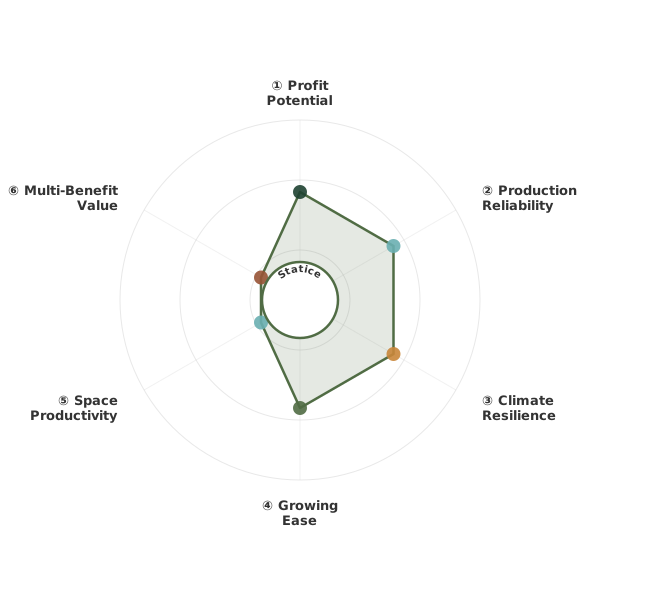
Annual statice (Limonium sinuatum L.) shows potential within regenerative agriculture, though knowledge base coverage is limited. Studies indicate its utility in a ratoon cropping system, where successive harvests are possible, suggesting a role in continuous ground cover and potential for biomass production. While not explicitly categorized as a primary regenerative use like a cover crop or nitrogen fixer in the provided excerpts, its cultivation under varying NPK fertilizer rates implies it can be integrated into systems where nutrient management is a focus. The research highlights the significant impact of fertilization on yield and profitability, offering insights for farmers aiming to optimize resource use. The optimal fertilizer levels identified could inform practices aimed at maximizing economic returns while potentially minimizing excess nutrient application. Further research would be beneficial to explore its broader applications in polycultures, pollinator support, or soil health enhancement within diverse regenerative systems.

Regenerative Quick Profile

All recommendations assume integrated, regenerative practices—not conventional inputs.

Climate & Soil Fit

Climate: Tropical Savanna, Hot Semi-Arid (Steppe), Cold Semi-Arid (Steppe), Cold Desert, Humid Subtropical, Oceanic (Maritime Temperate), Hot-Summer Mediterranean, Warm-Summer Mediterranean, Monsoon-Influenced Humid Subtropical, Subtropical Highland, Hot-Summer Continental, Warm-Summer Continental, Subarctic, Monsoon-Influenced Hot-Summer Continental

Zones: USDA 8-11, Australian Zones 3-13

Optimal Soil: Loam Soil

System Role & Functions

Primary: Cash Crop With Services

Secondary: Pollinator Support, Cover Crop System

Key Benefits: Storage Longevity, Disease Pest Resistance

Management Level

Experience: Beginner-Friendly

Maintenance: Moderate maintenance - This annual plant prefers well-drained soils and mindful water management, thriving in full sun with minimal pest or disease pressure, thus requiring low external intervention.

Value Streams

  • Vegetable/specialty crop harvest
  • Pollinator habitat and support
1

Climate Suitability Assessment

Will this plant thrive in your climate?

IDEALLY SUITED

Köppen Zone: Cfa (Humid Subtropical), Cfb (Oceanic (Maritime Temperate)), Csa (Hot-Summer Mediterranean), Csb (Warm-Summer Mediterranean), Dfa (Hot-Summer Continental), Dfb (Warm-Summer Continental)
USDA Zone: 6a, 7a, 8a, 9a
Australian Zone: temperate
EU Climate Region: atlantic

Statice thrives in regions with mild winters and warm, extended growing seasons, characterized by USDA Zones 8a-13a, Australian Temperate zones, and EU Atlantic climates. These areas provide optimal temperatures (60-85°F/15-29°C) and sufficient rainfall (30-50 inches/75-125 cm annually) for robust perennial growth and high-quality flower production. Overwintering is highly reliable, with minimal risk of frost damage, allowing plants to establish strong root systems and produce abundant blooms with minimal management inputs. The absence of extreme heat or prolonged drought ensures consistent yield and flower quality throughout the growing season. These conditions support Statice's natural lifecycle, maximizing its potential for cash crop production, pollinator support, and integration into cover cropping systems by providing reliable biomass and habitat. Establishment success is very high (>85%), and multi-year productivity is assured, making it an economically viable and low-input option.

ADEQUATE

Köppen Zone: Aw (Tropical Savanna), BSh (Hot Semi-Arid (Steppe)), BSk (Cold Semi-Arid (Steppe)), BWk (Cold Desert), Cwa (Monsoon-Influenced Humid Subtropical), Cwb (Subtropical Highland)
USDA Zone: 5a, 5b, 10a, 11a
Australian Zone: grassland, subtropical
EU Climate Region: mediterranean

Statice can perform adequately in climates with moderate temperature fluctuations and seasonal rainfall, including USDA Zones 7a-7b, Australian Grassland and Subtropical zones, EU Mediterranean climates, and Köppen Cfa, Cfb, Csa, Csb, and Cwa zones. These regions generally offer sufficient growing days and temperatures (50-80°F/10-27°C) but may present challenges like dry summers, high humidity, or occasional temperature extremes. Supplemental irrigation is often required during dry periods, and disease management may be necessary in humid conditions. While establishment is good (70-85%) with proper timing and care, yields and flower quality might be slightly reduced compared to ideal zones. Economic viability is maintained with standard management practices, but inputs for irrigation and disease control may increase costs. These zones offer a balance where Statice can be successfully grown with attention to specific climatic challenges.

NOT RECOMMENDED

Köppen Zone: Af (Tropical Rainforest), Am (Tropical Monsoon), ET (Tundra), BWh (Hot Desert), Dfc (Subarctic), Dwa (Monsoon-Influenced Hot-Summer Continental)
USDA Zone: 2a, 3a, 3b, 4a, 12a
Australian Zone: arid, tropical

Statice is not recommended for climates with extreme heat and aridity (Köppen BWh, BSh; Australian Arid, Tropical) or severe winter cold (USDA Zones 6a-6b; Köppen Aw, As). In hot, dry regions, Statice suffers from heat stress, poor flower quality, and requires unsustainable levels of irrigation, making it economically unfeasible. Establishment success is low (<70%), and yields are minimal. In cold zones, Statice faces significant winter kill, compromising its perennial nature and requiring annual replanting, which is inefficient. Köppen Aw and As zones, with high humidity and distinct wet/dry seasons, also pose disease risks and suboptimal growing conditions. For these zones, alternative plants like Gomphrena, Zinnia, or Heliconia are better suited due to their superior tolerance to heat, drought, or specific tropical conditions, offering more reliable and cost-effective cultivation for cash crop and cover crop purposes.

Better alternatives for these "not recommended" zones: Gomphrena (Globe Amaranth) (Highly heat and drought tolerant, thrives in arid conditions), Zinnia (Tolerates heat well and produces abundant blooms with moderate watering), Heliconia (Thrives in tropical heat and humidity, provides exotic blooms), Hairy Vetch (Cold-hardy annual legume for nitrogen fixation in cold zones)

Note: Zones listed above represent climates where this plant can produce reliably with reasonable management. Climate zones not mentioned would require intensive climate modification (greenhouses, extensive infrastructure) and are not economically viable for regenerative agriculture purposes.

2

Soil Suitability Assessment

Which soil types work best for this plant?

IDEALLY SUITED

Loam Soil

This plant thrives in these soil types without requiring amendments or remediation. Natural soil conditions support optimal growth and productivity.

ADEQUATE

Clay Soil, Rich Soil, Rocky Soil, Sandy Soil

This plant performs acceptably in these soil types with moderate, manageable remediation such as pH adjustment, compost addition, or drainage improvement. The required amendments are practical and cost-effective for regenerative agriculture.

NOT RECOMMENDED

Acidic Soil, Alkaline Soil, Desert Soil, Saline Soil, Wet Soil

Growing this plant in these soil types would require impractical remediation such as complete soil replacement, extensive amendments, or cost-prohibitive infrastructure. These conditions are not economically viable for regenerative agriculture.

Note: Soil suitability assessments focus on remediation requirements. "Ideally Suited" means the plant generally thrives without the need for substantial amendments, "Adequate" means manageable remediation (lime, compost, mulch), and "Not Recommended" means impractical soil changes would be required. Climate factors like rainfall and temperature also influence success.

3

Seasonal Considerations

Planting timing, growth duration, and harvest windows

For Limonium Sinuatum, aim to start seeds indoors about 6-8 weeks before your last expected frost date, as they prefer warmer soil, ideally around 60-70°F (15-21°C), for germination. Transplant seedlings into the garden after all danger of frost has passed and the soil has warmed sufficiently. Direct seeding is also an option once the soil temperature consistently reaches this range, typically a few weeks after the last frost.

This annual vegetable requires approximately 10-12 weeks from transplanting to reach maturity, with harvest generally occurring throughout the summer and into early fall. To ensure a continuous supply, consider succession planting every 3-4 weeks during the main growing season. Limonium Sinuatum demonstrates good tolerance to heat, making it well-suited for warmer climates. It also offers opportunities for late-season harvests; planting in mid-summer can extend your cutting window well into autumn, provided you protect plants from early frosts. With its resilience, it can often continue producing until the first hard freezes of late fall.

4

System Role & Multi-Benefit Value

Functional roles, integration strategies, and stacked benefits

Functional Role

Total System Value

Statice offers significant direct harvest value as a commercially viable cut flower, as indicated by the high net returns and benefit-cost ratios in the provided study. Beyond direct income, its integration into regenerative systems contributes to overall farm resilience. While statice itself does not directly provide shade, nitrogen fixation, or windbreaks, its cultivation can be managed with practices that enhance soil health, sequester carbon, and support local biodiversity. As a flowering plant, it can attract pollinators, contributing to ecosystem services. The economic return from statice, especially when optimized with suitable fertilizer management (as shown in the study), diversifies farm income streams, reducing reliance on single commodities and thus enhancing overall risk management. Its contribution to system value is primarily through direct economic return and potential pollinator support, with secondary benefits derived from associated soil health management practices.

Integration Characteristics

Multi-Benefit Value: Not Recommended - Primarily ornamental, Limonium Sinuatum offers subtle ecosystem services, such as minor insect attraction, and integrates minimally into broader ecological functions.

5

Management & Care Requirements

Integration guidance, maintenance needs, and care practices

How to Integrate This Plant

Statice (Limonium sinuatum) can be integrated as a high-value cash crop within regenerative systems, particularly in areas focusing on floriculture or specialty produce. Its primary role is as a cash crop, but it also offers ecosystem services. It can be incorporated into alley cropping systems, where it is grown between rows of perennial crops or trees, or as a component in diverse field rotations. The plant's value lies in its direct marketability and potential to support beneficial insects. While not providing shade, nitrogen fixation, or windbreaks, its cultivation can be optimized with regenerative practices like reduced tillage and cover cropping in its off-season to enhance soil health. It starts providing value in Year 1 through its harvest, with system enhancements developing over time as soil health improves around its cultivation areas.

Integration Practices & Management

The provided knowledge base offers limited insight into the specific regenerative agriculture integration methods for Limonium sinuatum. The primary information available focuses on its cultivation as an annual cut flower, particularly in a ratoon cropping system, and the impact of NPK fertilizer application rates on yield and profitability. One study highlights optimal fertilizer levels (150:125:75 kg/ha NPK) for maximizing net returns and achieving a favorable benefit-cost ratio. However, the knowledge base does not detail establishment practices such as seeding rates, timing, companion planting, or tillage methods. Similarly, there is no information regarding its integration with grazing systems, including mob grazing, rotational patterns, or the timing and duration of rest periods. Termination strategies and management considerations like fertility needs beyond NPK, competition control, and succession planning are also not addressed. Furthermore, the knowledge base does not provide examples of how Limonium sinuatum might be integrated with cash crops through relay cropping, intercropping, or in rotation sequences, nor does it offer practical farmer experiences on its regenerative use.

Management Profile

Maintenance Intensity: Adequate - This annual plant prefers well-drained soils and mindful water management, thriving in full sun with minimal pest or disease pressure, thus requiring low external intervention.

6

Economics & Value Streams

Direct harvest, system benefits, ecosystem services, and risk diversification

Comprehensive economic analysis including direct harvest value, system enhancement contributions, ecosystem services, value timeline, and risk diversification strategies.

Vegetable & Specialty Economics

Metric Value
Seed/Transplant Cost 150-300 $/acre 370-741 $/ha
Expected Yield 2000-4000 lbs/acre 2241-4483 kg/ha
Market Price 1.00-2.00 $/lb 2-4 $/kg
Harvest/Handling Cost 500-1000 $/acre 1235-2471 $/ha
Marketing/Distribution Cost 250-500 $/acre 617-1235 $/ha
Net Annual Return* $200-$7100/acre/year

Economics highly variable by market channel (direct vs wholesale), scale, and management. Direct marketing commands premiums but requires labor. Values shown for mid-scale market garden operations.

* Net Annual Return = (Yield × Market Price) − (Amortized Establishment Cost + Annual Maintenance). This return is realized only at/after first harvest; early years have costs but no revenue. Range shows worst case to best case scenarios.

System Enhancement Value

Beyond harvest: ecosystem services from regenerative cash crop practices

Ecological Service Contributions

Statice (Limonium sinuatum) offers significant ecosystem services beyond its primary function as a cash crop, particularly in integrated farm systems. As highlighted in the knowledge base, statice is valuable for its aesthetic qualities, especially when dried, extending garden color. This suggests a role in creating visually appealing farm landscapes that can indirectly support agritourism or farmer well-being. More directly, its inclusion as a secondary function supports pollinator populations. While not explicitly detailed as a food source, the presence of flowering plants like statice attracts beneficial insects. Furthermore, its potential use in a cover crop system implies soil health benefits. Cover crops, in general, help prevent erosion, suppress weeds, and improve soil structure and organic matter over time. Although the knowledge base doesn't specify N-fixation for statice, its role in a cover crop mix could contribute to overall soil fertility and reduce the need for external inputs for subsequent cash crops. The ability to grow from older seeds also points to a degree of resilience and potential for low-input cultivation.

Ecosystem Service Contributions

Environmental contributions: carbon, pollinators, wildlife, and water

  • Carbon Sequestration: Statice, being an annual plant with moderate growth, contributes to carbon sequestration primarily through biomass production during its growing season. Its contribution is likely transient, with carbon returning to the atmosphere upon decomposition, but it plays a role in the annual carbon cycle within the soil and plant system.
  • Pollinator Support: High. Statice is explicitly mentioned as providing pollinator support. Its flowers, even those used for drying, offer nectar and pollen resources for a variety of beneficial insects throughout its blooming period, contributing to local biodiversity and the pollination of other crops on the farm.
  • Wildlife Habitat: Limited. While statice provides pollinator support, it is not typically recognized for providing significant food sources (mast, browse) or nesting habitat for larger wildlife. Its primary ecological contribution is to insect populations.
  • Water Quality: Not applicable

Value Timeline: Production & Services

When you'll see results: varies by crop (annual harvest vs. perennial establishment)

Years 1-2

Initial establishment of the cash crop, providing immediate aesthetic value and beginning pollinator support. If incorporated into a cover crop system, early soil health benefits like erosion control and weed suppression would commence.

Years 3-5

Established cash crop production with consistent yields and prolonged pollinator support. The cover crop function would lead to noticeable improvements in soil structure and organic matter, potentially reducing the need for soil amendments for subsequent crops.

Years 10-20

Mature integrated system benefits. Statice continues to provide cash crop revenue and robust pollinator support. Soil health benefits from its cover cropping role would be well-established, contributing to overall farm resilience and reduced input requirements.

20+ Years

Long-term sustained benefits of improved soil health, consistent pollinator support, and ongoing cash crop revenue. The resilience of the plant, as indicated by its ability to grow from older seeds, suggests a capacity for sustained, low-input cultivation.

Farm Risk Reduction

How this reduces farm risk: backup income, weather protection, market hedges

  • Multiple Revenue Streams: Cash crop sales (fresh and dried flowers), ecosystem services (pollinator support, potential soil health improvements).
  • Temporal Income Spread: Annual harvest of fresh and dried flowers provides short-term revenue. Ongoing pollinator support and soil health benefits from cover cropping provide continuous, less direct value throughout the growing season and across years.
  • Market Risk Hedge: Provides a diversified income stream distinct from staple crops. Its drought tolerance (implied by its suitability for difficult environments for related species and general resilience) can offer a more stable revenue source in challenging climatic conditions. Its value in dried arrangements diversifies market opportunities beyond fresh cut flowers.
7

Regenerative Suitability Details

Comprehensive trait ratings for system integration assessment

Comparative ratings for this plant across key regenerative agriculture traits.

Trait Suitability Explanation
Season Extension Not Recommended As a warm-season annual, Limonium Sinuatum thrives during warmer periods and is sensitive to frost, naturally aligning with summer's peak growing conditions.
Space Efficiency Not Recommended Grown for its ornamental dried flowers, Limonium Sinuatum utilizes moderate spacing effectively, contributing to landscape aesthetics rather than bulk edible production.
Storage Longevity Ideally Suited Limonium Sinuatum's blooms are prized for their exceptional longevity when dried, maintaining color and form for extended periods without requiring external inputs.
Yield Reliability Adequate This plant offers moderate yield reliability when integrated into systems with well-drained soils and ample sunlight, and is best managed to avoid excessive moisture.
Establishment Ease Adequate Limonium Sinuatum germinates reliably with consistent moisture and warmth, exhibiting moderate early vigor and establishing well with mindful soil preparation and some moisture retention.
Multi Benefit Value Not Recommended Primarily ornamental, Limonium Sinuatum offers subtle ecosystem services, such as minor insect attraction, and integrates minimally into broader ecological functions.
Climate Adaptability Adequate Adapted to warmer climates and Zones 8-11, Limonium Sinuatum tolerates heat and drought, but benefits from frost protection and well-drained soil conditions.
Maintenance Intensity Adequate This annual plant prefers well-drained soils and mindful water management, thriving in full sun with minimal pest or disease pressure, thus requiring low external intervention.
Disease Pest Resistance Ideally Suited Limonium Sinuatum exhibits strong natural resistance to pests and diseases, flourishing in drier conditions and requiring minimal management for successful growth.

Comparative System: Ratings compare plants within their economic category (e.g., cover crop nitrogen fixation compared to other cover crops, not to all plants). Individual farm conditions and management practices significantly influence actual performance.

8

Learn More

Why farmers use this plant and additional resources

Why Regenerative Farmers Use This Plant

Limonium sinuatum, commonly known as Statice or Sea Lavender, is a high-value specialty cash crop that can significantly enhance revenue streams within regenerative agriculture systems. Its vibrant, long-lasting blooms make it a sought-after cut flower for florists, direct-to-consumer markets, farmers' markets, and specialty wholesale channels, often commanding premium prices.

Economic Benefits: With a relatively short production cycle, typically 70-100 days from transplant to first harvest, Statice offers excellent opportunities for succession planting, ensuring a continuous supply of marketable product from late spring through fall in many regions. Farmers can achieve multiple harvests from a single planting, generating substantial revenue per acre, often ranging from $10,000 to $30,000 or more annually, depending on market access and quality. For instance, in USDA Zones 7-9, farmers can achieve two to three harvests from spring plantings, generating an estimated $0.50-$2.00 per stem. Its ability to be dried for extended marketability further enhances its appeal as a diversified income stream.

System Integration: Statice integrates seamlessly into diversified farm plans. As a non-leguminous plant, it does not fix atmospheric nitrogen but is an excellent scavenger of nutrients from deeper soil profiles, bringing them to the surface with its foliage. Its fibrous root system, typically reaching depths of 12-24 inches (30-60 cm), helps to break up soil compaction, improve soil structure and aggregate stability, reduce erosion, and enhance water infiltration. While not a primary cover crop, it can be integrated into rotations following nitrogen-fixing cover crops like vetch or clover, effectively utilizing residual fertility. Its presence can also attract beneficial insects, contributing to a more balanced farm ecosystem, and its dense foliage can offer some weed suppression during its vegetative growth phase. Its relatively short growth cycle allows for timely planting of subsequent cover crops to further enhance soil biology and structure.

Ecological Contributions: While primarily cultivated for its blooms, Statice offers ecological benefits. Its flowers provide a nectar source for a variety of pollinators, including bees and butterflies, particularly during its extended bloom period from summer into fall. Diverse floral plantings can support higher populations of beneficial insects that prey on common agricultural pests. By improving soil structure and reducing erosion, it indirectly contributes to better water quality downstream. The biomass produced, when managed through appropriate residue management, can add valuable organic matter to the soil, supporting the long-term goal of increasing soil carbon sequestration. Its resilience to dry conditions means it can be a valuable addition to systems aiming to reduce water usage.

Regional Adaptability: Statice has found success in various regional agricultural settings.

  • Mediterranean Climates: In California, USA, and Southern Europe (e.g., Spain, Italy), it is a staple for cut flower farms, benefiting from mild climates, consistent sunshine, and often grown following cool-season vegetables or winter cereal crops. Direct sowing in early spring or fall is common, with careful attention to water management during dry spells.
  • Temperate Oceanic Climates: In the UK (e.g., London) and the Pacific Northwest of the USA, growers often start seeds indoors and utilize hoop houses or tunnels to extend the season and protect plants from excessive rain.
  • Humid Subtropical Climates: In the Southeastern United States (e.g., Atlanta) and Australia (e.g., Victoria, Western Australia), careful management of air circulation and watering is key to preventing fungal issues, but its heat tolerance makes it a viable summer crop.
  • Cold Semi-Arid Climates: In drier regions of the southwestern USA, careful irrigation management is key.
  • Dryland Agriculture: In Australia, it can be established with autumn rains and managed with minimal irrigation, fitting well into mixed farming systems.
  • Other Regions: Growers in the Loire Valley, France, have incorporated it into diversified horticultural operations. In Brazilian coffee plantations, Statice can be integrated as a short-term cash crop in inter-row spaces, provided adequate sunlight penetration. In regions with distinct dry seasons, such as parts of India (e.g., Mumbai) and Brazil (e.g., São Paulo), its drought tolerance can be leveraged for profitable dryland production, provided adequate irrigation is available during establishment.
9

How to Integrate This Plant

Practical guidance for regenerative systems

Establishment: Limonium sinuatum typically begins with starting seeds indoors 6-8 weeks before the last expected frost, or direct sowing in warmer climates after the danger of frost has passed.

  • Indoor Seeding: Sow seeds in a sterile seed-starting mix at a depth of approximately 0.125-0.25 inches (3-6 mm). Once seedlings have developed a few true leaves and the danger of frost has passed, they can be transplanted.
  • Direct Sowing: In regions with long, frost-free growing seasons or mild winters, direct sowing can be successful. Seeds should be sown at a depth of 0.25-0.5 inches (6-13 mm). In regions with mild winters (USDA Zones 8-10), direct sowing can occur in early autumn for overwintering and spring harvest, or in early spring for summer harvest.
  • Seeding Rates: For direct sowing, rates can range from 0.5-1 lb per acre (0.56-1.12 kg/ha) depending on seed viability and desired stand density. For broadcast seeding, approximately 1-2 ounces per 1,000 square feet (30-60 g/100 m²) is recommended, while drilled seeding can be reduced to 0.5-1 ounce per 1,000 square feet (15-30 g/100 m²).

Planting and Spacing:

  • Transplanting: Transplant seedlings into the field at a spacing of 8-12 inches (20-30 cm) apart in rows spaced 12-18 inches (30-45 cm) apart. For intensive production, spacing can be increased to 12-18 inches (30-45 cm) apart in rows spaced 18-24 inches (45-60 cm) apart. Transplant seedlings to the same depth they were in their pots.
  • Thinning: For direct-sown crops, thin seedlings to the desired spacing once established.

Management Practices:

  • Temperature: Optimal growth occurs between 18-24°C (65-75°F). It tolerates cooler temperatures but is sensitive to hard frost, especially as a young plant.
  • Sunlight: Adequate sunlight is crucial for optimal growth and bloom.
  • Soil: Prefers well-drained soil rich in organic matter. Incorporating compost at a rate of 10-20 cubic yards per acre (25-50 cubic meters per hectare) prior to planting is recommended.
  • Watering: Requires consistent moisture, especially during establishment and flowering, with approximately 1 inch (2.5 cm) of water per week. Drip irrigation is ideal to maintain soil moisture without wetting foliage excessively, which can lead to disease. While drought-tolerant once mature, young plants benefit from consistent watering.
  • Fertility: Fertility should be guided by biological principles. Incorporate well-composted organic matter before planting. Statice requires relatively low nitrogen levels; excessive nitrogen can lead to lush foliage at the expense of flower production. Utilize side-dressings of compost tea or balanced organic fertilizers as needed throughout the growing season.
  • Pest and Disease Management: Prioritize preventative measures such as proper spacing for air circulation, crop rotation, and the use of disease-resistant varieties. Biological controls, such as encouraging beneficial insects through habitat planting, are preferred over chemical interventions. Avoid overhead watering and promptly remove any diseased plant material.

Growth Timeline and Harvest:

  • Days to Establishment/Maturity: 70-100 days from transplant to first harvest. Some sources indicate 60-80 days from transplant.
  • Plant Height at Maturity: 18-30 inches (45-75 cm), with flower stems extending higher. Some sources indicate 1-3 feet (0.3-0.9 m).
  • Harvest: Harvest stems when fully colored but before the petals begin to fray. For fresh use, cut stems in the cool of the morning. For drying, harvest when the flowers are fully open.

Succession Planting and Rotation:

  • Succession Planting: For a continuous harvest, stagger plantings every 2-3 weeks from early spring through mid-summer. This can provide blooms from late spring through autumn, typically spanning a 16-20 week window in USDA Zones 5-9.
  • Crop Rotation: A minimum 3-year rotation interval with non-related crops (e.g., grains, legumes, or non-solanaceous crops) is recommended to break potential pest and disease cycles and prevent nutrient depletion. Statice can follow soil-building cover crops like clover or vetch, or precede root vegetables. Avoid planting after other Solanaceae family members if disease pressure is a concern.
  • Residue Management: After the final harvest, it is crucial to manage crop residues to maintain soil health. Removing spent plants and incorporating any remaining organic matter into the soil within 2-3 weeks of the final harvest, followed by planting a quick-establishing cover crop like buckwheat, annual ryegrass, or a winter rye/vetch mix, will protect the soil and prepare it for the next cropping cycle.

Companion Planting: Companion planting with aromatic herbs like rosemary, basil, or lavender can help deter common pests. Avoid planting near plants that require very different soil moisture levels.

Integration Systems: Specialty cash crop in annual rotations, cut flower production blocks, diversified horticultural operations.