Scarlet bee balm (*Monarda didyma*) offers several potential benefits within regenerative agriculture systems, though our current knowledge base coverage is limited. Its primary use appears to be as a valuable **pollinator support** plant, attracting hummingbirds and bumblebees, which is crucial for ecosystem health and crop pollination. Excerpt notes its attractiveness to these beneficial insects and its flowering period. While not explicitly a cover crop or nitrogen fixer in the excerpts, its inclusion in perennial gardens, alongside practices like deadheading to extend bloom, suggests its role in **polyculture layers** that enhance biodiversity. The plant's aromatic properties are mentioned for culinary uses, hinting at potential integration into intercropping or companion planting schemes. Farmer experience highlights its **vigorous spread** once established, indicating its potential for ground cover and soil building over time, though careful management might be needed. Ethical harvesting considerations are also noted, emphasizing sustainable wildcrafting practices.

Regenerative Quick Profile

All recommendations assume integrated, regenerative practices—not conventional inputs.

Climate & Soil Fit

Climate: Tropical Rainforest, Tropical Monsoon, Tropical Savanna, Hot Semi-Arid (Steppe), Cold Semi-Arid (Steppe), Hot Desert, Cold Desert, Humid Subtropical, Oceanic (Maritime Temperate), Hot-Summer Mediterranean, Warm-Summer Mediterranean, Monsoon-Influenced Humid Subtropical, Subtropical Highland, Hot-Summer Continental, Warm-Summer Continental, Subarctic, Monsoon-Influenced Hot-Summer Continental, Tundra

Zones: USDA 4-9, Australian Zones 3-5

Optimal Soil: Loam Soil

System Role & Functions

Primary: Pollinator Support

Secondary: Cash Crop With Services, Cover Crop System

Key Benefits: Multi-benefit value

Management Level

Experience: Beginner-Friendly

Maintenance: Moderate maintenance - Thrives with ongoing soil moisture management and good air circulation to foster healthy plant communities. Division contributes to plant vigor and the overall cycling of organic matter within the system.

Value Streams

  • Diversifies farm income
  • Enhances biodiversity
1

Climate Suitability Assessment

Will this plant thrive in your climate?

IDEALLY SUITED

Köppen Zone: Cfa (Humid Subtropical), Cfb (Oceanic (Maritime Temperate)), Csb (Warm-Summer Mediterranean), Dfa (Hot-Summer Continental), Dfb (Warm-Summer Continental)
USDA Zone: 5a, 5b, 6a, 7a, 8a
Australian Zone: temperate, subtropical
EU Climate Region: atlantic

Bee Balm thrives in climates offering a balance of adequate growing season length and moderate temperature extremes. Zones with humid subtropical (Köppen Cfa), oceanic (Köppen Cfb), and temperate to subtropical Australian conditions, as well as USDA zones 6b through 8b, and EU Atlantic regions, provide optimal environments. These areas typically feature 150-250 frost-free days, with average summer temperatures ranging from 70-85°F (21-29°C) and winter lows that rarely drop below 0°F (-18°C). Consistent rainfall (30-50 inches/75-125 cm annually) supports vigorous growth and prolific flowering, crucial for its primary function of pollinator support. Its perennial nature is well-established, with minimal management required beyond standard care. These conditions also make it an excellent candidate for a cash crop with services and integration into cover crop systems, offering reliable yields and consistent ecological benefits. Establishment success is very high, often exceeding 90%, and multi-year productivity is virtually guaranteed.

ADEQUATE

Köppen Zone: BSh (Hot Semi-Arid (Steppe)), BSk (Cold Semi-Arid (Steppe)), Csa (Hot-Summer Mediterranean), Cwa (Monsoon-Influenced Humid Subtropical), Cwb (Subtropical Highland), Dfc (Subarctic), Dwa (Monsoon-Influenced Hot-Summer Continental)
USDA Zone: 4a, 9a
EU Climate Region: continental

Bee Balm can perform adequately in climates with distinct seasons, including humid continental (Köppen Dfb, Dfa) and continental EU regions, as well as USDA zones 5a-6a and 9a-10b. These zones offer sufficient growing days (120-180) but may experience more temperature variability. While summers are generally warm enough for flowering and pollinator attraction, winters can be cold enough to cause occasional dieback or reduce perennial vigor, particularly in USDA zones 5a and 10b where winter lows can reach -20°F (-29°C) or summer heat can be intense. Consistent moisture is important, and supplemental watering may be needed during dry spells in warmer zones. Establishment success is good (70-85%) with proper timing and site selection. While not as reliably perennial as in 'ideally suited' zones, it can still provide valuable pollinator support and function as a cash crop with services, though yields and stand persistence might be slightly reduced.

NOT RECOMMENDED

Köppen Zone: Af (Tropical Rainforest), Am (Tropical Monsoon), Aw (Tropical Savanna), ET (Tundra), BWh (Hot Desert), BWk (Cold Desert)
USDA Zone: 2a, 3a, 3b, 10a, 11a, 12a

Bee Balm is not recommended for climates with extreme winter cold or prolonged, intense summer heat and drought, specifically USDA zones 3a-4b and Köppen BSh (though not explicitly listed, this represents the extreme heat/dryness). These zones present significant challenges to its perennial survival and optimal performance. In USDA zones 3a-4b, winter temperatures plummet to -40°F (-40°C) or below, leading to near-certain winter kill, making it an unreliable perennial for consistent pollinator support. Establishment success is risky, often below 70%, and it would function as a short-lived perennial or annual at best, requiring annual replanting. While technically possible to grow in some of these marginal zones with intensive management (e.g., heavy mulching, annual replanting), the economic viability and practical success are questionable. Alternative plants like Anise Hyssop (Agastache foeniculum) or Purple Coneflower (Echinacea purpurea) offer better cold hardiness and pollinator support in these challenging environments.

Better alternatives for these "not recommended" zones: Anise Hyssop (Agastache foeniculum) (excellent cold hardiness and pollinator attraction), Purple Coneflower (Echinacea purpurea) (hardy perennial, reliable for pollinator support), Wild Bergamot (Monarda fistulosa) (native to North America, some varieties are more cold-tolerant)

Note: Zones listed above represent climates where this plant can produce reliably with reasonable management. Climate zones not mentioned would require intensive climate modification (greenhouses, extensive infrastructure) and are not economically viable for regenerative agriculture purposes.

2

Soil Suitability Assessment

Which soil types work best for this plant?

IDEALLY SUITED

Loam Soil

This plant thrives in these soil types without requiring amendments or remediation. Natural soil conditions support optimal growth and productivity.

ADEQUATE

Clay Soil, Rich Soil, Rocky Soil, Sandy Soil

This plant performs acceptably in these soil types with moderate, manageable remediation such as pH adjustment, compost addition, or drainage improvement. The required amendments are practical and cost-effective for regenerative agriculture.

NOT RECOMMENDED

Acidic Soil, Alkaline Soil, Desert Soil, Saline Soil, Wet Soil

Growing this plant in these soil types would require impractical remediation such as complete soil replacement, extensive amendments, or cost-prohibitive infrastructure. These conditions are not economically viable for regenerative agriculture.

Note: Soil suitability assessments focus on remediation requirements. "Ideally Suited" means the plant generally thrives without the need for substantial amendments, "Adequate" means manageable remediation (lime, compost, mulch), and "Not Recommended" means impractical soil changes would be required. Climate factors like rainfall and temperature also influence success.

3

Seasonal Considerations

Planting timing, growth duration, and harvest windows

Establishing Monarda didyma, or bee balm, requires careful timing to ensure robust perennial growth. Nursery trees are best planted during the dormant season, either late fall before the ground freezes or very early spring as soon as it thaws. This allows roots to establish before active growth begins. For container-grown plants, planting can extend into early spring, after the last expected frost, but avoid transplanting during the heat of summer.

Expect a few years for your bee balm to fully establish. While you might see some limited flowering in the first year, significant harvests are typically possible by year two or three, with full production reached by year four or five. These plants are long-lived, often providing bountiful harvests for a decade or more.

Seasonal management is key. Pruning is best done in late winter or very early spring, before new growth emerges, to shape the plant and remove any winter damage. The primary harvest season for the aromatic foliage and flowers occurs during the peak bloom period in summer. Bee balm naturally enters winter dormancy, allowing it to rest before the cycle of growth and production begins anew the following spring.

4

System Role & Multi-Benefit Value

Functional roles, integration strategies, and stacked benefits

Functional Role

Total System Value

Bee balm's primary contribution to whole-farm resilience lies in its exceptional pollinator support. By attracting bees and hummingbirds, it directly enhances the reproductive success of many agricultural crops, a crucial ecosystem service. Its aromatic properties and nectar production make it a valuable component of insectary plantings, supporting beneficial insect populations that can aid in pest control. While direct harvest value exists for culinary and medicinal uses (teas, spices), its most significant impact is through ecosystem services. It contributes to biodiversity by providing a food source for pollinators and can indirectly support wildlife. Its dense growth habit offers some potential for erosion control on slopes. Risk diversification is achieved by increasing the farm's ecological stability; a robust pollinator community is less susceptible to fluctuations and supports more consistent crop yields, reducing reliance on external inputs. Its value as a non-tree component diversifies the plant base beyond woody perennials.

Integration Characteristics

Multi-Benefit Value: Ideally Suited - A keystone species for supporting diverse pollinator populations, particularly bees and hummingbirds, while contributing to soil health and offering traditional medicinal uses as a native perennial.

Sources behind this view

Research
5

Management & Care Requirements

Integration guidance, maintenance needs, and care practices

How to Integrate This Plant

Bee balm (Monarda didyma) functions primarily as a vital pollinator support species within regenerative farm systems. Its vibrant flowers attract a wide array of beneficial insects, including bumblebees and hummingbirds, enhancing biodiversity and crop pollination. It can be integrated into food forests, hedgerows, or intercropped with vegetables and grains, particularly in areas needing enhanced insectary habitat. While not a nitrogen fixer, shade provider, or windbreak, its dense growth can offer some erosion control on slopes. It is also noted for its use in teas and as a spice, offering a direct harvest value. Its contribution begins in Year 1 with flowering, providing immediate pollinator support and potential harvest. By Year 3-5, established patches can spread, increasing their impact on the local ecosystem and harvest yields. The total system value extends beyond direct harvest through increased pollination efficiency for nearby crops, support for beneficial insect populations, and potential for wildlife habitat, contributing to a more resilient and biodiverse farm.

Integration Practices & Management

The provided knowledge base offers limited direct insight into the specific integration methods of *Monarda didyma* (Bee Balm) within regenerative agriculture systems, particularly concerning establishment, grazing, termination, and cash crop integration. The sources primarily focus on the plant's characteristics and its role in ecological contexts. For instance, and highlight its aromatic properties, classification within the mint family, and its attractiveness to pollinators like hummingbirds and bumblebees. notes its potential to spread considerably after establishment in good soil, reaching 5-6 feet tall with a flowering period of three to four weeks. mentions *Monarda didyma* as a species that benefits from deadheading to extend its flowering period, a common perennial garden management technique. While the knowledge base establishes *Monarda didyma*'s ecological value and basic cultivation observations, it does not detail specific regenerative farming practices such as seeding rates, tillage methods, integration into grazing systems, termination strategies, or its role in crop rotations. Further research into specific regenerative farming case studies would be necessary to understand its practical application in these contexts.

Management Profile

Maintenance Intensity: Adequate - Thrives with ongoing soil moisture management and good air circulation to foster healthy plant communities. Division contributes to plant vigor and the overall cycling of organic matter within the system.

6

Regenerative Suitability Details

Comprehensive trait ratings for system integration assessment

Comparative ratings for this plant across key regenerative agriculture traits.

Trait Suitability Explanation
Establishment Ease Adequate Establishes readily from seed or division, demonstrating robust growth with healthy soil biology in moist, well-drained conditions. Promotes ecosystem resilience.
Multi Benefit Value Ideally Suited A keystone species for supporting diverse pollinator populations, particularly bees and hummingbirds, while contributing to soil health and offering traditional medicinal uses as a native perennial.
Climate Adaptability Adequate Thrives in a range of conditions from zones 4-9, with a preference for consistent soil moisture. Successfully integrates into eastern US ecosystems and moist meadow environments, showcasing natural resilience.
Maintenance Intensity Adequate Thrives with ongoing soil moisture management and good air circulation to foster healthy plant communities. Division contributes to plant vigor and the overall cycling of organic matter within the system.

Comparative System: Ratings compare plants within their economic category (e.g., cover crop nitrogen fixation compared to other cover crops, not to all plants). Individual farm conditions and management practices significantly influence actual performance.

7

Learn More

Why farmers use this plant and additional resources

Why Regenerative Farmers Use This Plant

Monarda didyma, commonly known as Bee Balm or Scarlet Monarda, is a highly valuable perennial for regenerative agriculture systems, primarily for its exceptional ecological contributions. Its vibrant, nectar-rich flowers are a powerful attractant for a wide array of pollinators, including native bees, bumblebees, butterflies, and hummingbirds, often supporting peak bloom during mid-summer when other floral resources may be scarce. A single plant can attract hundreds of pollinator visits daily, and a well-established patch can support an estimated 50-100 pollinator visits per hour during peak bloom, contributing to the overall health and productivity of surrounding agricultural landscapes by enhancing pollination services for nearby crops. Studies on similar native bee-attracting plants indicate that a well-established patch can support a significant increase in local pollinator populations, with observed increases in bee diversity and abundance by 15-25%.

Beyond its direct pollinator support, Monarda didyma contributes to soil health through its fibrous root system, which helps to bind soil particles, reduce erosion on slopes and in garden beds, and improve soil structure and water infiltration. Its deep fibrous root system can reach 1-2 feet (30-60 cm) in depth. While not a nitrogen fixer, its decomposition contributes organic matter to the soil, enhancing microbial activity and nutrient cycling over time. The dense foliage contributes to soil health by adding organic matter annually, estimated at 1-2 tons per acre (2.2-4.5 metric tons/ha) of above-ground biomass, which decomposes to enrich the soil. Improved soil structure from its root activity can enhance water infiltration rates by 10-15% in its immediate vicinity, making the landscape more resilient to drought. In systems where it is allowed to naturalize, it can form robust ground cover, suppressing weeds and reducing the need for mechanical or chemical weed management.

The aromatic foliage also possesses antimicrobial properties and contains compounds that can deter certain pests and diseases, offering a degree of natural pest resistance to nearby plants and contributing to a more resilient farm ecosystem. Its presence can attract beneficial insects that prey on common agricultural pests, potentially reducing the need for interventions by up to 20-30% in adjacent crops. In some regions, the leaves and flowers have traditional medicinal uses, offering potential for a small-scale specialty market or value-added products.

Monarda didyma has found success in diverse regenerative systems globally. In the United States, it is commonly integrated into pollinator strips and hedgerows on organic farms in the Midwest and Northeast, supporting bee populations in corn and soybean rotations. In the Pacific Northwest, it is often incorporated into pollinator strips alongside organic berry farms, supporting the bees essential for fruit set. In Europe, it is utilized in wildflower meadows and ecological landscaping projects across the UK and Germany, enhancing biodiversity in agricultural margins. European farmers have integrated it into wildflower meadows and hedgerows to bolster populations of wild bees crucial for crop pollination. Australian farmers are increasingly incorporating native and naturalized flowering plants like Monarda into their pasture systems and riparian buffer zones to support native pollinators and improve ecosystem function in dryland farming regions. Australian farmers in temperate regions are exploring its use in native plant gardens and conservation areas to support local insect populations and enhance landscape aesthetics. In Brazilian coffee plantations, it can be used as an understory plant in shaded areas, providing pollinator support and ground cover.

Sources behind this view

Videos & Podcasts
  • Bee balm (Monarda didyma) is an easy-to-propagate plant, spreading via rhizomes. Small root pieces can yield thousands of plants, and it attracts hummingbirds and bumblebees, flowering for 3-4 weeks.
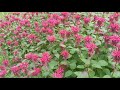
    Thumbnail for Monarda Bee Balm
8

How to Integrate This Plant

Practical guidance for regenerative systems

Establishing Monarda didyma is straightforward, typically achieved through seed or division. For seeding, rates of 20-40 seeds per square foot (215-430 seeds/m²) are recommended, which translates to approximately 0.5-1 lb/acre (0.56-1.12 kg/ha) depending on seed size and germination rate. For direct seeding, rates of approximately 1-2 ounces per 1000 square feet (28-56 grams per 93 square meters) are recommended. Optimal seeding rates for broadcast sowing are around 0.5-1 oz/acre (14-28 g/ha), though this can vary significantly based on seed size and germination rates. The optimal planting depth is shallow, around 0.125-0.25 inches (0.3-0.6 cm), as the seeds require light to germinate. Optimal planting depth is crucial for germination success. Germination can be erratic and may take 14-30 days, often benefiting from a period of cold stratification.

In the Northern Hemisphere, spring sowing typically occurs from March to May, or in early spring (March-April) after the last frost. Fall sowing can occur from September to October for natural stratification and earlier spring germination, or in the fall (September-October) for overwintering. In the Southern Hemisphere, planting times are reversed, with spring sowing in September-October and fall sowing in March-April.

For more controlled plantings, spacing plants or divisions 12-24 inches (30-60 cm) apart is recommended, allowing them to fill in over time. This spacing translates to approximately 2-4 plants per square meter. Spacing between individual plants or in mass plantings can range from 12-18 inches (30-45 cm) to allow for adequate growth and air circulation. Division of established clumps is best done in early spring or fall, providing a faster route to mature plants.

Plants generally establish within 45-60 days and can reach a mature height of 2-4 feet (0.6-1.2 meters) with a spread of 1.5-2 feet (0.45-0.6 meters) per plant. Established plants are quite hardy and can tolerate a wide range of temperatures, from -20°C to 35°C (-4°F to 95°F), with frost hardiness down to -10°C (14°F).

Ongoing management for Monarda didyma is generally low-input, aligning with regenerative principles. While it prefers consistently moist soil, established plants are moderately drought-tolerant. Adequate water is most critical during the initial establishment phase, aiming for approximately 0.5-1 inch (1.3-2.5 cm) of water per week if rainfall is insufficient. For optimal flowering and plant health, especially in drier regions, supplemental watering of 1 inch (2.5 cm) per week during prolonged dry spells is beneficial. Fertility is best managed through biological means; incorporating compost into the soil prior to planting or top-dressing annually provides sufficient nutrients. As a perennial, it does not require annual replanting. Deadheading spent flowers can encourage a second bloom and prevent excessive self-seeding if containment is desired. Pruning back dead foliage in late winter or early spring promotes vigorous new growth. Pest and disease management typically relies on good air circulation, healthy soil, and attracting beneficial insects, with chemical interventions rarely necessary.

Ecologically, Monarda didyma fits seamlessly into various farm landscape designs. It excels in pollinator borders, hedgerows, buffer strips along waterways or field edges, providing continuous floral resources and habitat. In food forests or silvopasture systems, it can be integrated into the understory, contributing to ground cover and supporting insect life without competing significantly with canopy trees. As a perennial, it offers long-term soil stabilization and organic matter contribution, reducing the need for annual soil disturbance. Its potential for spread through rhizomes means that in contained garden settings or specific border plantings, management might involve occasional division to maintain desired density or prevent encroachment into adjacent areas. Harvesting of its aromatic leaves for medicinal or culinary uses should be done sustainably, taking no more than one-third of the plant at a time to ensure continued vigor and ecological function.

Regional adaptations highlight its versatility. In the humid continental climates of the northeastern United States, it thrives in mixed perennial plantings and supports early-season pollinators. In the temperate oceanic climates of the UK, it can be incorporated into wildflower meadows and mixed borders, benefiting from consistent moisture. In the drier, warmer climates of parts of Australia, it may require more careful site selection for adequate moisture or supplemental irrigation, but can still provide valuable nectar for native insects in suitable microclimates. In regions with hot summers, such as parts of the southern USA, it benefits from partial shade and consistent moisture to perform optimally.