Banana
Existing data points to its integration within diverse cropping systems. Excerpt highlights the study of crop diversity and sustainable farming practices, including intercropping and crop rotation, in the Philippines, where *Musa acuminata* is cultivated. Although not explicitly detailed as a primary regenerative component like a cover crop or nitrogen fixer, its presence in such systems suggests potential contributions to polyculture layers and biodiversity. Excerpt demonstrates its cultivation alongside cassava in Laos, where a biofertilizer significantly boosted yields, implying *Musa acuminata*'s capacity to benefit from and contribute to soil health improvements. The study in India focuses on conserving indigenous varieties, underscoring the plant's importance in biodiversity. Overall, the knowledge base suggests *Musa acuminata* is a component of diversified, sustainable farming, potentially enhancing resilience and soil health within integrated agricultural landscapes, though its specific regenerative functions require further investigation within this context. While coverage in our knowledge base is limited, the above represents documented uses in regenerative systems.
For a full botanical description see: Plants For A Future↗(opens in new window) (external link)
Regenerative Quick Profile
All recommendations assume integrated, regenerative practices—not conventional inputs.
Climate & Soil Fit
Climate: Tropical Rainforest, Tropical Monsoon, Tropical Savanna, Hot Semi-Arid (Steppe), Cold Semi-Arid (Steppe), Hot Desert, Cold Desert, Humid Subtropical, Oceanic (Maritime Temperate), Hot-Summer Mediterranean, Warm-Summer Mediterranean, Monsoon-Influenced Humid Subtropical, Subtropical Highland, Hot-Summer Continental, Warm-Summer Continental, Subarctic, Monsoon-Influenced Hot-Summer Continental, Tundra
Zones: USDA 9-13, Australian Zones 10-14, EU Mediterranean, Subtropical
Optimal Soil: Rich Soil
System Role & Functions
Primary: Cash Crop With Services
Secondary: Cover Crop System, Specialty
Management Level
Experience: Advanced
Maintenance: High maintenance - Maintaining healthy Musa acuminata in suitable climates involves ensuring high heat, humidity, and consistent moisture through effective water management and soil building.
Value Streams
- Vegetable/specialty crop harvest
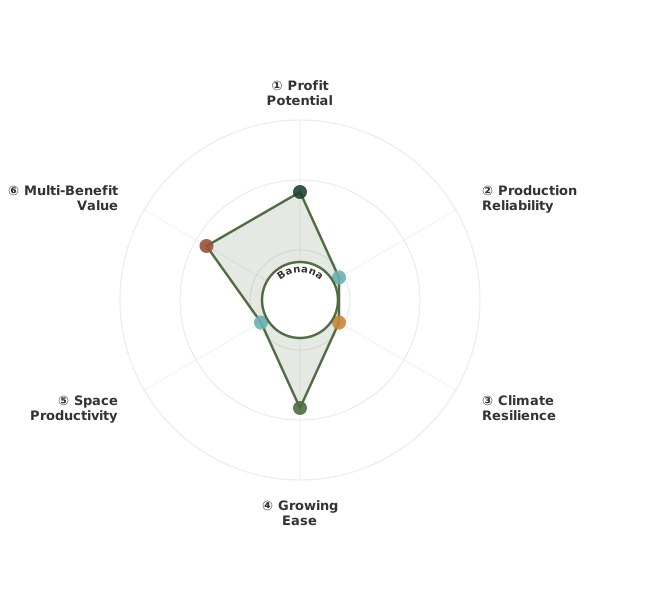
Regenerative Trait Ratings
How These Traits Are Calculated
Trait dimensions are ordered clockwise starting from the top of the chart (12 o'clock position):
1. Profit Potential
Net returns per acre from yield, pricing, input costs, and labor efficiency
WHAT: Synthesizes gross revenue potential, input costs, labor requirements, and storage/marketing advantages into net profitability per acre. Captures the complete economic picture from planting to sale.
WHY: Not all vegetables are equally profitable. High-value crops with efficient production can return $10,000-30,000/acre versus $2,000-5,000/acre for lower-value options. Profit potential guides crop selection for maximum return on limited land and determines viable scale for farm businesses.
HOW: Scored via LLM synthesis of economics data (yields, prices, costs), storage advantages (season extension, value-added potential), and labor intensity. Exceptional (3.0): High yields × premium prices with moderate inputs and good storage (garlic, high-value salad greens). Typical (2.0): Moderate returns (tomatoes, squash). Limited (1.0): Low yields, commodity pricing, or intensive labor requirements (low-value greens).
2. Production Reliability
Weighted: yield consistency (60%) + disease/pest resistance (40%)
WHAT: Combines yield reliability (harvest consistency year-to-year) with disease and pest resistance to measure predictable production. Reliable vegetables deliver consistent harvests without catastrophic failures from pests or weather.
WHY: Market commitments and CSA subscriptions require dependable production. Unreliable crops that fail in bad years or require intensive pest management create cash flow gaps and customer dissatisfaction. Reliable producers allow confident planning and reduce input costs from emergency pest interventions.
HOW: Weighted formula prioritizes yield reliability (60% weight) for overall consistency, with disease/pest resistance (40% weight) to prevent total failures. Exceptional (3.0): Consistent yields across variable seasons with strong natural pest resistance. Typical (2.0): Generally reliable with some pest/weather sensitivity. Limited (1.0): Highly variable yields or severe pest vulnerability requiring intensive management.
3. Climate Resilience
Temperature and rainfall tolerance across diverse growing conditions
WHAT: Measures the breadth of climatic conditions where the vegetable produces successfully—temperature extremes, humidity ranges, and rainfall variability. Climate-resilient crops work across diverse regions and weather patterns.
WHY: Climate variability is increasing—unexpected heat waves, cold snaps, or drought periods can wipe out entire vegetable harvests. Resilient crops provide insurance against weather uncertainty and allow geographic expansion for market growth. This is especially critical for direct-market farmers who can't easily substitute crops mid-season.
HOW: Ratings based on the climate_adaptability trait documenting temperature tolerance and geographic range. Exceptional (3.0): Grows successfully in diverse climates (cold to hot, humid to dry) with wide hardiness zone range. Typical (2.0): Moderate climate flexibility. Limited (1.0): Narrow climate requirements (tropical-only, cool-season-only, humidity-sensitive).
4. Growing Ease
Weighted: establishment ease (50%) + low maintenance requirements (50%)
WHAT: Combines establishment difficulty (germination, transplanting) with ongoing maintenance needs (watering, fertilizing, pest management) to measure total labor requirements. Easy crops grow reliably with minimal intervention.
WHY: Labor is the primary cost for small-scale vegetable production. Easy-care crops allow farmers to manage more production area with the same labor, improving profitability. Difficult crops requiring constant attention, precise timing, or specialized skills reduce overall farm productivity and increase risk.
HOW: Weighted formula balances establishment ease (50% weight) for reliable startup and inverted maintenance intensity (50% weight) for ongoing care. Exceptional (3.0): Direct-seeded or easy transplants with minimal water/fertility/pest needs. Typical (2.0): Moderate care requirements. Limited (1.0): Difficult establishment or intensive ongoing management (daily watering, heavy feeding, constant pest monitoring).
5. Space Productivity
Weighted: yield per square foot (60%) + season extension potential (40%)
WHAT: Combines spatial productivity (yield per square foot) with temporal productivity (extended harvest windows from succession planting or season extension). Maximizes production from limited growing area.
WHY: Land is the primary constraint for vegetable farmers—especially those near urban markets. Space-efficient crops delivering high yields in small areas improve per-acre profitability dramatically. Season extension (spring tunnels, fall protection) adds bonus production windows when competing supply is limited and prices are higher.
HOW: Weighted formula prioritizes space efficiency (60% weight) for core yield per area, with season extension potential (40% weight) for bonus production opportunities. Exceptional (3.0): High yields per square foot (10,000+ lbs/acre equivalents) with season extension options. Typical (2.0): Moderate yields and extension potential. Limited (1.0): Low yields or crops unsuitable for season extension.
6. Multi-Benefit Value
Ecosystem services beyond harvest—pollinator support, nitrogen fixing, pest habitat
WHAT: Measures ecosystem services provided beyond harvestable yield. Multi-benefit vegetables contribute to farm ecology through nitrogen fixation (legumes), pollinator support (flowering crops), beneficial insect habitat, soil building, or erosion control.
WHY: Cash crops can either extract from farm ecosystems or contribute to them. Vegetables with strong multi-benefit value build soil fertility, support pollinators needed for fruit/vine crops, and create habitat for pest predators—reducing external input needs. Nitrogen-fixing vegetables (beans, peas) provide $40-80/acre worth of fertility for following crops.
HOW: Ratings based on the multi_benefit_value trait documenting service contributions. Exceptional (3.0): Significant ecosystem services (nitrogen fixation, heavy pollinator support, soil building, pest habitat). Typical (2.0): Some ecosystem contributions. Limited (1.0): Single-purpose cash crops with minimal farm ecology benefits.
Ratings are based on documented performance in regenerative systems, not conventional high-input scenarios. All traits assume integrated management practices focused on soil health and ecosystem services.
1
Climate Suitability Assessment
Will this plant thrive in your climate?
Climate Suitability Assessment
Will this plant thrive in your climate?
Köppen Zone: Af (Tropical Rainforest), Am (Tropical Monsoon), Cfa (Humid Subtropical)
USDA Zone: 9a, 10a, 11a, 12a
Australian Zone: tropical, subtropical
Bananas thrive in consistently warm to hot climates with high humidity and ample rainfall, conditions met by Köppen Af, Am, Aw, and USDA zones 9a through 13b, as well as Australian tropical and subtropical regions. These environments provide the 25-30°C (77-86°F) average temperatures and over 2000 mm of annual rainfall necessary for continuous pseudostem growth, rapid fruit development, and high yields. The long, frost-free growing seasons (typically 300+ days) ensure that plants can reach maturity and produce fruit reliably year after year. Minimal climate-related management is required, with focus shifting to disease and pest control. Establishment is highly successful, and the perennial nature of the plant is fully supported, leading to economically viable and productive cultivation. These zones represent the optimal range for commercial banana farming, allowing for maximum yield potential and consistent quality.
Köppen Zone: Aw (Tropical Savanna), BSh (Hot Semi-Arid (Steppe)), Cwa (Monsoon-Influenced Humid Subtropical)
USDA Zone: 8a
Australian Zone: temperate
EU Climate Region: atlantic
Bananas can be grown adequately in climates with warm summers and mild winters, such as Köppen Cfa and Cwa, USDA zones 8a-8b, Australian temperate regions, and EU Atlantic climates. These zones offer a sufficiently long growing season (180-270 frost-free days) and temperatures that support growth, typically averaging 20-28°C (68-82°F) during the warmest months. However, winter temperatures can pose a risk, with potential for pseudostem damage or even death in colder parts of these ranges, necessitating careful site selection or occasional winter protection. Rainfall may be adequate but can be supplemented with irrigation during drier periods to ensure optimal fruit development and yield. While not as consistently productive as ideal tropical zones, these regions can support banana cultivation with appropriate management practices, though yields may be reduced by 10-25% and fruiting cycles may be longer.
Köppen Zone: ET (Tundra), BSk (Cold Semi-Arid (Steppe)), BWh (Hot Desert), BWk (Cold Desert), Cfb (Oceanic (Maritime Temperate)), Csa (Hot-Summer Mediterranean), Csb (Warm-Summer Mediterranean), Cwb (Subtropical Highland), Dfa (Hot-Summer Continental), Dfb (Warm-Summer Continental), Dfc (Subarctic), Dwa (Monsoon-Influenced Hot-Summer Continental)
USDA Zone: 2a, 3a, 3b, 4a, 5a, 5b, 6a, 7a
EU Climate Region: mediterranean
Banana cultivation is not recommended in Köppen As, Csa, USDA zones 7a-7b, and EU Mediterranean regions due to significant climate-related challenges that make it economically and practically unviable. Köppen As and Csa zones, along with EU Mediterranean, experience prolonged periods of extreme heat and severe drought during summers (often exceeding 35°C/95°F with minimal rainfall), leading to severe plant stress, poor fruit quality, and drastically reduced yields. USDA zones 7a-7b experience winter temperatures that consistently drop below freezing (0-10°F/-18 to -12°C), killing the pseudostem annually and preventing consistent fruiting, forcing the plant to regrow from the corm each year, which delays maturity and significantly lowers productivity. While technically possible with intensive irrigation and protection, the high input costs and low, unreliable yields make these zones unsuitable for commercial banana production. Alternative, more climate-resilient crops are strongly advised.
Note: Zones listed above represent climates where this plant can produce reliably with reasonable management. Climate zones not mentioned would require intensive climate modification (greenhouses, extensive infrastructure) and are not economically viable for regenerative agriculture purposes.
2
Soil Suitability Assessment
Which soil types work best for this plant?
Soil Suitability Assessment
Which soil types work best for this plant?
Rich Soil
This plant thrives in these soil types without requiring amendments or remediation. Natural soil conditions support optimal growth and productivity.
Clay Soil, Loam Soil, Sandy Soil
This plant performs acceptably in these soil types with moderate, manageable remediation such as pH adjustment, compost addition, or drainage improvement. The required amendments are practical and cost-effective for regenerative agriculture.
Acidic Soil, Alkaline Soil, Desert Soil, Rocky Soil, Saline Soil, Wet Soil
Growing this plant in these soil types would require impractical remediation such as complete soil replacement, extensive amendments, or cost-prohibitive infrastructure. These conditions are not economically viable for regenerative agriculture.
Note: Soil suitability assessments focus on remediation requirements. "Ideally Suited" means the plant generally thrives without the need for substantial amendments, "Adequate" means manageable remediation (lime, compost, mulch), and "Not Recommended" means impractical soil changes would be required. Climate factors like rainfall and temperature also influence success.
3
Seasonal Considerations
Planting timing, growth duration, and harvest windows
Seasonal Considerations
Planting timing, growth duration, and harvest windows
For optimal growth of your banana plants, focus on warm conditions and ample sunshine. While generally a perennial in its native tropical climes, in cooler zones it functions more like an annual for fruit production. Begin by starting seeds indoors several weeks before the last expected frost, or if direct seeding, wait until soil temperatures consistently reach at least 65°F (18°C) after all danger of frost has passed. Transplant seedlings out when nighttime temperatures reliably stay above 55°F (13°C).
Establishment will be most vigorous during the warm, sunny days of summer. Expect a significant growth period of several months, with full maturity and fruit production often taking one to two years from planting, even in warmer climates where they might survive winter. Harvest will occur during the warmer seasons, typically late summer through fall. Succession planting isn't typically relevant for this crop's fruit cycle. Bananas are extremely sensitive to cold; any frost will damage or kill the plant. Protection is paramount as cooler weather approaches in late fall, and significant season extension efforts are usually required to achieve consistent fruit harvest in marginal climates.
4
System Role & Multi-Benefit Value
Functional roles, integration strategies, and stacked benefits
System Role & Multi-Benefit Value
Functional roles, integration strategies, and stacked benefits
Functional Role
Total System Value
Bananas (Musa acuminata) offer significant direct harvest value as a cash crop, providing a key economic driver for farms. Beyond harvest, their integration into regenerative systems can enhance farm resilience. While not a nitrogen fixer or primary windbreak, their dense foliage can offer localized shade and contribute to biomass, supporting soil organic matter. Studies show that sustainable practices, such as the use of beneficial microorganisms and biofertilizers, can significantly improve banana yields and soil health indicators like organic matter and microbial activity. This highlights how bananas, when managed regeneratively, can contribute to ecosystem services by fostering a healthier soil biome. Risk diversification is achieved through the addition of a high-value commodity crop to the farm's portfolio, reducing reliance on monocultures and buffering against market fluctuations.
Integration Characteristics
Multi-Benefit Value: Adequate - Offers nutritious fruit and substantial biomass for valuable compost and mulch, contributing to soil health and providing habitat.
5
Management & Care Requirements
Integration guidance, maintenance needs, and care practices
Management & Care Requirements
Integration guidance, maintenance needs, and care practices
How to Integrate This Plant
Bananas (Musa acuminata) can be integrated into regenerative systems primarily as a cash crop that also provides ecosystem services. Their primary function is as a high-value harvest, but they can also contribute to biodiversity and soil health. While not explicitly mentioned in the excerpts, bananas can be part of food forests or intercropping systems, potentially offering some shade to understory plants in warmer climates. They do not fix nitrogen, act as a windbreak, or directly control erosion, but their cultivation can support beneficial microorganisms when sustainable practices are employed, as seen with biofertilizer use. Bananas start providing value from the first year through harvest, with increasing yield and biomass over time. Their multi-benefit stacking comes from their direct economic return, potential for shade, and the support of soil microbial communities, contributing to overall farm resilience.
Integration Practices & Management
The provided knowledge base offers limited insight into the specific regenerative agriculture practices for integrating Musa acuminata. While sources and highlight the cultivation of banana (Musa acuminata) within diverse cropping systems and the positive impact of biofertilizers on its yield, they do not detail establishment methods such as seeding rates, timing, or tillage practices. Similarly, there is no information regarding Musa acuminata's integration with grazing animals, including mob or rotational grazing, or specific termination strategies like winterkill, crimping, or mowing. Management considerations like fertility needs or competition management are also not elaborated upon. Source does mention intercropping and crop rotation as sustainable techniques, suggesting potential for integration with other crops, but concrete examples involving Musa acuminata within these systems are absent. The focus remains on its cultivation and yield improvement rather than detailed regenerative management strategies.
Management Profile
Maintenance Intensity: Not Recommended - Maintaining healthy Musa acuminata in suitable climates involves ensuring high heat, humidity, and consistent moisture through effective water management and soil building.
6
Economics & Value Streams
Direct harvest, system benefits, ecosystem services, and risk diversification
Economics & Value Streams
Direct harvest, system benefits, ecosystem services, and risk diversification
Comprehensive economic analysis including direct harvest value, system enhancement contributions, ecosystem services, value timeline, and risk diversification strategies.
Vegetable & Specialty Economics
| Metric | Value |
|---|---|
| Seed/Transplant Cost | 500-1000 $/acre 1235-2471 $/ha |
| Expected Yield | 5000-10000 lbs/acre 5604-11208 kg/ha |
| Market Price | 0.50-1.00 $/lb 1-2 $/kg |
| Harvest/Handling Cost | 800-1600 $/acre 1976-3953 $/ha |
| Marketing/Distribution Cost | 400-800 $/acre 988-1976 $/ha |
| Net Annual Return* | $-900 to $8300/acre/year |
Economics highly variable by market channel (direct vs wholesale), scale, and management. Direct marketing commands premiums but requires labor. Values shown for mid-scale market garden operations.
* Net Annual Return = (Yield × Market Price) − (Amortized Establishment Cost + Annual Maintenance). This return is realized only at/after first harvest; early years have costs but no revenue. Range shows worst case to best case scenarios.
System Enhancement Value
Beyond harvest: ecosystem services from regenerative cash crop practices
Ecological Service Contributions
Beyond direct cash crop revenue and physical system benefits like shade and windbreaks, bananas (*Musa* spp.) offer critical contributions to farm system health. Their extensive root systems, as implied by the need for well-draining soil to prevent root rot (Excerpt), help to stabilize soil structure and improve water infiltration. Knowledge Base Excerpt highlights the positive impact of biofertilizers on soil health indicators, including increased organic matter content and beneficial microbial populations, suggesting that bananas themselves can contribute to a more robust soil microbiome when part of a diverse system. Indigenous varieties, such as those mentioned in Excerpt, are noted for their nutritional value and stress resistance, indicating their potential role in enhancing biodiversity and food security within local farming contexts. The rapid growth and prolific sprouting of banana plants (Excerpt) can also contribute to biomass production, which, when managed appropriately, can be incorporated into composting or mulching practices, further enriching soil fertility and sequestering carbon.
Nitrogen Fixation (if legume)
Erosion Control (if applicable)
Variable, depending on row spacing and wind velocity. Potentially protects 3-5 acres per tree row, with crop yield improvements of 5-15% in protected areas.
Banana plants, with their tall stature and dense foliage, can function as effective windbreaks, particularly when planted in rows or hedgerows. As noted in Knowledge Base Excerpt, banana trees can reach heights of 10-15 feet with significant sprouting, creating a substantial barrier against prevailing winds. This windbreak effect is crucial for soil conservation, preventing wind erosion and the loss of valuable topsoil, especially in exposed agricultural landscapes. By reducing wind velocity, bananas can also protect more sensitive crops from physical damage, desiccation, and lodging, leading to improved yields and quality. In regions prone to strong winds or storms, like the Philippines mentioned in Excerpt, established banana windbreaks can enhance the resilience of the entire farming system. The presence of sprouts, turning a single plant into a grove, further solidifies this protective function over time, offering continuous benefits to adjacent fields.
Ecosystem Service Contributions
Environmental contributions: carbon, pollinators, wildlife, and water
- Carbon Sequestration: Bananas are fast-growing plants with large biomass, contributing to carbon sequestration in their vegetative parts and roots. Their ability to form groves and produce significant foliage can lead to moderate to high carbon storage potential, especially in tropical and subtropical climates.
- Pollinator Support: Medium. While not primarily known as a major pollinator attractant, banana flowers can attract and support various insect pollinators and bats, contributing to local biodiversity. Their presence can offer supplementary food sources and habitat.
- Wildlife Habitat: Bananas can provide habitat and browse for certain wildlife, particularly in tropical regions. Their large leaves can offer shelter, and fallen leaves contribute to ground cover and organic matter decomposition. In some systems, they might offer a food source, though this is secondary to their primary agricultural purpose.
- Water Quality: Not applicable
Value Timeline: Production & Services
When you'll see results: varies by crop (annual harvest vs. perennial establishment)
Years 1-2
Initial soil stabilization and erosion control from root systems. Emergence of sprouts can begin to contribute to windbreak buffering. Potential for early shade development depending on variety and planting density. If intercropped, these early benefits support companion crops.
Years 3-5
First harvest of banana bunches, establishing a primary income stream. Established windbreak and shade benefits become more pronounced, directly impacting adjacent crops and livestock. Significant biomass accumulation begins to contribute more substantially to soil organic matter.
Years 10-20
Mature banana plants provide consistent and significant shade and windbreak protection. Full production of cash crop revenue. The system benefits from a well-established soil microbiome, enhanced by the banana's contributions. Potential for increased biodiversity support as the perennial system matures.
20+ Years
Long-term perennial system benefits. Continued significant contribution to soil health, carbon sequestration, and microclimate regulation. The potential for propagation and continued management ensures sustained system value, though specific management for older groves might shift focus towards replanting or integrating with other long-term agroforestry components.
Farm Risk Reduction
How this reduces farm risk: backup income, weather protection, market hedges
- Multiple Revenue Streams: Direct cash crop revenue from banana sales. Potential for value-added products (e.g., dried bananas, flour). Biomass for composting/mulching. Indirect benefits to livestock (reduced heat stress) and other crops (wind protection, improved soil health) lead to diversified farm output and reduced input costs.
- Temporal Income Spread: Annual harvest of banana bunches provides a recurring income stream. The perennial nature of banana plants ensures ongoing ecosystem services (shade, windbreak, soil improvement) year after year, offering a steady, non-harvest-dependent value. Sprouts ensure continuous grove development and productivity.
- Market Risk Hedge: Diversifies farm income beyond single commodity crops. Cold-weather tolerant varieties (Excerpt) expand growing regions and reduce climate-specific market risks. Indigenous varieties (Excerpt) can tap into niche markets and offer greater resilience to local pests and diseases. The contribution to overall farm resilience (e.g., soil health, reduced erosion, climate adaptation - Excerpt) hedges against unpredictable weather events and market fluctuations.
7
Regenerative Suitability Details
Comprehensive trait ratings for system integration assessment
Regenerative Suitability Details
Comprehensive trait ratings for system integration assessment
Comparative ratings for this plant across key regenerative agriculture traits.
| Trait | Suitability | Explanation |
|---|---|---|
| Season Extension | Not Recommended | As tropical plants, Musa acuminata thrive in consistently warm environments and do not extend the growing season in temperate climates. |
| Space Efficiency | Not Recommended | These large plants require ample space and tropical conditions; their spatial yield is moderate compared to other crops, prioritizing biomass production for system integration. |
| Storage Longevity | Not Recommended | Bananas have a short post-harvest life, ripening and degrading within days, necessitating immediate consumption or processing for minimal waste. |
| Yield Reliability | Not Recommended | Optimal yield reliability for Musa acuminata is contingent on tropical climates and stable warmth, limiting consistent production in variable temperate regions. |
| Establishment Ease | Not Recommended | Propagation is typically achieved through suckers or tissue culture, as seed germination is slow and erratic, requiring specific tropical conditions for successful establishment. |
| Multi Benefit Value | Adequate | Offers nutritious fruit and substantial biomass for valuable compost and mulch, contributing to soil health and providing habitat. |
| Climate Adaptability | Not Recommended | Musa acuminata are tropical species (zones 10-12), highly sensitive to cold, frost, and wind, demanding consistently warm, humid conditions for survival. |
| Maintenance Intensity | Not Recommended | Maintaining healthy Musa acuminata in suitable climates involves ensuring high heat, humidity, and consistent moisture through effective water management and soil building. |
| Disease Pest Resistance | Not Recommended | Susceptible to several diseases, Musa acuminata benefit from robust soil health, diverse planting material, and integrated pest management strategies within the agroecosystem. |
Comparative System: Ratings compare plants within their economic category (e.g., cover crop nitrogen fixation compared to other cover crops, not to all plants). Individual farm conditions and management practices significantly influence actual performance.
8
Learn More
Why farmers use this plant and additional resources
Learn More
Why farmers use this plant and additional resources
Why Regenerative Farmers Use This Plant
Musa acuminata, commonly known as the dessert banana, offers significant regenerative potential and economic viability for diversified farms. As a high-value specialty cash crop, it can generate substantial revenue per acre, particularly in niche markets and direct-to-consumer channels like CSAs and farmers' markets. Its rapid growth cycle and potential for continuous harvest through careful management make it an attractive component of diversified farm income streams. In suitable climates, a single plant can produce a significant yield, with commercial varieties often yielding between 10-25 tons per acre (22,400-56,000 kg/ha) annually, depending on variety, management, and environmental conditions. Mature plants can produce bunches weighing 15-50 kg (33-110 lbs) or more.
Beyond direct revenue, Musa acuminata plays a crucial role in enhancing farm ecosystem services. Its large, dense foliage provides excellent ground cover, suppressing weeds and reducing soil erosion, particularly on slopes. The extensive root system, which can reach depths of 0.45-0.9 m (1.5-3 feet) over time, helps to improve soil structure, increase water infiltration, and scavenge nutrients from deeper soil profiles. While not nitrogen fixers, their high biomass production contributes significantly to soil organic matter when residues are managed appropriately. The decomposition of banana pseudostems and leaves post-harvest is a significant source of organic matter, estimated to return 5-10% of the plant's dry weight back to the soil, enhancing soil microbial activity and nutrient cycling. The dense canopy can also reduce water evaporation from the soil surface, conserving moisture. In regions with adequate rainfall, bananas can improve water infiltration rates in soils that might otherwise be prone to runoff, potentially leading to a 20-30% reduction in water needs for subsequent crops once established.
When managed as part of an agroforestry system, bananas can provide shade for other crops or livestock, create microclimates, and contribute to biodiversity by offering habitat and food sources for beneficial insects and birds. Their presence can also improve the aesthetic appeal of a farm, enhancing its marketability and connection with consumers. The plant's flowering structures can attract pollinators, and the lush canopy provides habitat for various beneficial insects and small wildlife, enhancing overall farm biodiversity. In mixed plantings, bananas can act as a nurse crop or provide a protective understory for slower-growing species. Their role in creating a more resilient and biodiverse farm landscape indirectly supports populations of pollinators and beneficial insects by providing consistent habitat and resources throughout the growing season.
Regional success stories highlight the adaptability and economic promise of Musa acuminata. In the Caribbean islands, smallholder farmers have long relied on banana cultivation for both subsistence and income, often integrating them into mixed cropping systems with other fruits and vegetables and root crops like taro or cassava. In parts of Central and South America, large-scale banana plantations, when managed regeneratively, can serve as economic engines while also demonstrating principles of soil health and biodiversity; there is a growing movement towards more sustainable, shade-grown banana production integrated with agroforestry systems, often alongside coffee or cacao. In Southeast Asia, bananas are a staple crop, frequently intercropped with spices, coconuts, and other perennial crops, showcasing their versatility in diverse agroecological landscapes and contributing to food security and rural livelihoods; they are often grown under the canopy of larger trees in agroforestry systems, which provides shade, reduces wind damage, and diversifies income. In India, bananas are cultivated extensively in diverse farming systems, from smallholder plots to larger commercial ventures, often intercropped with vegetables or other fruit trees, demonstrating their adaptability to smallholder and mixed farming approaches and contributing to local food security and income. In parts of Africa, bananas are a staple food crop and a vital food security crop, grown in home gardens and small plots, integrated with other subsistence crops and livestock, with farmers utilizing locally available organic materials for fertility. In Australia, particularly in Queensland, bananas are a significant commercial and horticultural crop, with growers increasingly adopting practices like mulching with crop residues, using beneficial insects for pest control, managing in subtropical climates with windbreaks and carefully timed irrigation, and experimenting with mulching banana residues extensively and using cover crops between rows to improve soil moisture retention and nutrient cycling. In the humid subtropics of Florida, USA, small-scale farms integrate bananas into diversified fruit and vegetable operations, selling directly at farmers' markets.
9
How to Integrate This Plant
Practical guidance for regenerative systems
How to Integrate This Plant
Practical guidance for regenerative systems
Establishing Musa acuminata typically involves planting suckers or corms, rather than direct seeding for dessert varieties, as seeds are often sterile or difficult to germinate. Suckers are young shoots that emerge from the base of the parent plant. They are typically harvested when they are 0.5-1 meter (1.5-3 feet) tall and have developed a good root system.
Planting:
- Spacing: Suckers are typically planted at a spacing of 2.4-3.7 meters (8-12 feet) in rows, resulting in a density of approximately 300-600 plants per acre (740-1480 plants/ha). Some recommendations suggest 3-4 meters (10-13 feet) between plants and rows, allowing ample room for growth and harvesting, with densities ranging from 400-600 plants per acre (990-1480 plants/ha).
- Depth: Planting depth is crucial for stability and root development; the corm or base of the sucker should be planted at a depth of 15-30 cm (6-12 inches) in well-drained soil. For stability and good root contact, the base of the corm and the lower portion of the pseudostem are generally buried 0.3-0.6 meters (1-2 feet) deep.
- Timing: The optimal planting time varies by hemisphere and climate, generally occurring at the beginning of the rainy season or when temperatures are consistently warm. This is typically March-May in the Northern Hemisphere and September-November in the Southern Hemisphere, to ensure adequate moisture for establishment. In cooler subtropical regions, planting may occur later in spring to avoid frost.
Ongoing Management:
- Watering: Bananas are heavy feeders and require consistent moisture, ideally around 2.5-5 cm (1-2 inches) of water per week, either through rainfall or irrigation, especially during establishment and fruiting. During active growth, they ideally require around 100-150 mm (4-6 inches) per month.
- Fertility: Fertility should be prioritized through biological sources. This includes incorporating compost, well-rotted animal manure, and utilizing the abundant pseudostem and leaf residue as mulch. Nitrogen-fixing cover crops like pigeon pea or cowpea can be planted in adjacent areas or around the periphery of banana plantations to improve soil health and nutrient cycling. While bananas are heavy feeders, their nutrient needs can be substantially met through these regenerative inputs, reducing the reliance on synthetic fertilizers.
- Growth and Harvest Cycle: Plants typically establish within 3-6 months and begin producing fruit within 9-18 months. From transplanting a well-developed sucker, Musa acuminata typically reaches harvest maturity in 12-18 months. Mature plants can reach heights of 1.8-7.6 meters (6-25 feet), with some cultivars reaching 4.5-9 meters (15-30 feet).
- Pest and Disease Management: Management relies heavily on cultural practices, including selecting resistant varieties, maintaining plant sanitation by removing diseased leaves and pseudostems promptly, ensuring good air circulation through proper spacing, and promoting beneficial insect populations through habitat creation. A robust Integrated Pest Management (IPM) strategy involves monitoring for common pests like banana weevils and nematodes, and diseases such as Black Sigatoka, employing biological controls like beneficial nematodes or entomopathogenic fungi, and maintaining crop rotation intervals.
Production Cycle and Soil Stewardship:
- Continuous Harvest: From planting a sucker to the first harvest typically takes 9-18 months, with subsequent ratoons (new shoots from the original plant's root system) producing fruit in cycles of 6-12 months. This allows for a relatively continuous harvest window, especially when different varieties or staggered planting dates are employed. Once planted, a banana mat (the clump of shoots) can produce fruit for 15-20 years or more. The primary harvest is from the main pseudostem, which is then removed after fruiting, allowing a designated follower shoot to take its place. This natural succession planting means a continuous harvest is possible from established mats.
- Residue Management: After harvest, the pseudostem and leaves can be chopped and incorporated back into the soil, or used as mulch, to enhance soil organic matter and nutrient cycling. Following the productive life of a mat, or in rotations, planting a cover crop mix of legumes and grasses, such as pigeon pea and sorghum, can help restore soil structure, scavenge nutrients, and suppress nematodes before replanting bananas or introducing another crop. It is recommended to follow pseudostem removal with a fast-growing cover crop like cowpea or sorghum within 2-4 weeks to protect the soil and continue building organic matter.
- Crop Rotation: A crop rotation interval of at least 2-3 years with non-related crops is advisable to break potential pest and disease cycles, such as those affecting the roots or pseudostem. Some recommendations suggest intervals of at least 3-5 years with non-related crops to break pest and disease cycles.