
Basil
While not a primary cover crop or nitrogen fixer, basil (*Ocimum basilicum*) demonstrates potential within regenerative agriculture primarily as a polyculture component. knowledge base excerpts highlight its use in intercropping systems with sweet peppers, where it supported a greater diversity of beneficial Hymenopteran parasitoids compared to monoculture, suggesting a role in enhancing farm biodiversity and natural pest control. Regenerative benefits may include supporting beneficial insect populations and contributing to overall soil health when integrated into diverse cropping systems. Studies also explored augmenting basil's nutritional profile, specifically selenium bio-enrichment, through various application methods in different soil types, indicating potential for nutrient cycling and producing bio-fortified crops within regenerative frameworks. However, regenerative applications appear less established than its culinary use. Farmer experience suggests careful attention to temperature is critical for optimal growth, with cold temperatures causing damage. Soil health is paramount, as poorly prepared soils lead to slow growth and reduced flavor, underscoring the importance of good soil management practices common in regenerative agriculture.
For a full botanical description see: Plants For A Future(opens in new window) (external link)
Regenerative Quick Profile
All recommendations assume integrated, regenerative practices—not conventional inputs.
Climate & Soil Fit
Climate: Tropical Rainforest, Tropical Monsoon, Tropical Savanna, Hot Semi-Arid (Steppe), Cold Semi-Arid (Steppe), Hot Desert, Cold Desert, Humid Subtropical, Oceanic (Maritime Temperate), Hot-Summer Mediterranean, Warm-Summer Mediterranean, Monsoon-Influenced Humid Subtropical, Subtropical Highland, Hot-Summer Continental, Warm-Summer Continental, Subarctic, Monsoon-Influenced Hot-Summer Continental, Tundra
Zones: USDA 7-11, Australian Zones 3-14
Optimal Soil: Loam Soil
System Role & Functions
Primary: Cash Crop With Services
Secondary: Pollinator Support, Cover Crop System
Key Benefits: Space Efficiency
Management Level
Experience: Beginner-Friendly
Maintenance: Moderate maintenance - Maintaining healthy basil involves ensuring adequate warmth and consistent soil moisture through mulching, with regular harvesting promoting continued growth and plant health within the integrated system.
Value Streams
- Vegetable/specialty crop harvest
- Pollinator habitat and support
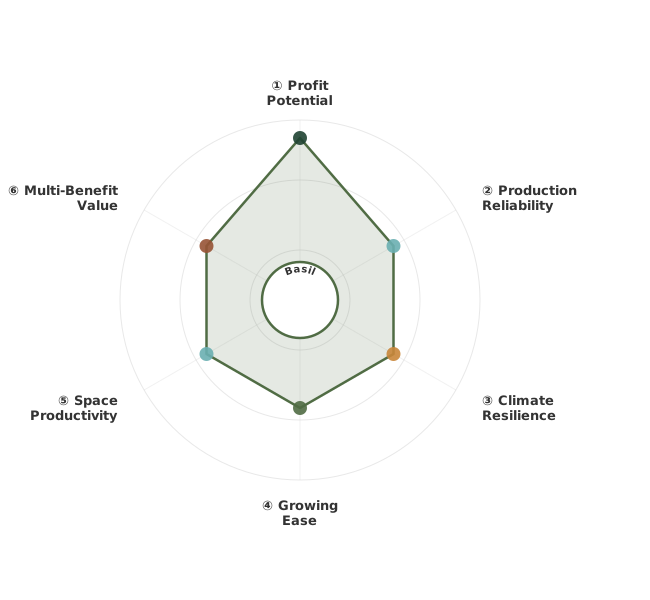
How These Traits Are Calculated
Trait dimensions are ordered clockwise starting from the top of the chart (12 o'clock position):
1. Profit Potential
Net returns per acre from yield, pricing, input costs, and labor efficiency
WHAT: Synthesizes gross revenue potential, input costs, labor requirements, and storage/marketing advantages into net profitability per acre. Captures the complete economic picture from planting to sale.
WHY: Not all vegetables are equally profitable. High-value crops with efficient production can return $10,000-30,000/acre versus $2,000-5,000/acre for lower-value options. Profit potential guides crop selection for maximum return on limited land and determines viable scale for farm businesses.
HOW: Scored via LLM synthesis of economics data (yields, prices, costs), storage advantages (season extension, value-added potential), and labor intensity. Exceptional (3.0): High yields × premium prices with moderate inputs and good storage (garlic, high-value salad greens). Typical (2.0): Moderate returns (tomatoes, squash). Limited (1.0): Low yields, commodity pricing, or intensive labor requirements (low-value greens).
2. Production Reliability
Weighted: yield consistency (60%) + disease/pest resistance (40%)
WHAT: Combines yield reliability (harvest consistency year-to-year) with disease and pest resistance to measure predictable production. Reliable vegetables deliver consistent harvests without catastrophic failures from pests or weather.
WHY: Market commitments and CSA subscriptions require dependable production. Unreliable crops that fail in bad years or require intensive pest management create cash flow gaps and customer dissatisfaction. Reliable producers allow confident planning and reduce input costs from emergency pest interventions.
HOW: Weighted formula prioritizes yield reliability (60% weight) for overall consistency, with disease/pest resistance (40% weight) to prevent total failures. Exceptional (3.0): Consistent yields across variable seasons with strong natural pest resistance. Typical (2.0): Generally reliable with some pest/weather sensitivity. Limited (1.0): Highly variable yields or severe pest vulnerability requiring intensive management.
3. Climate Resilience
Temperature and rainfall tolerance across diverse growing conditions
WHAT: Measures the breadth of climatic conditions where the vegetable produces successfully—temperature extremes, humidity ranges, and rainfall variability. Climate-resilient crops work across diverse regions and weather patterns.
WHY: Climate variability is increasing—unexpected heat waves, cold snaps, or drought periods can wipe out entire vegetable harvests. Resilient crops provide insurance against weather uncertainty and allow geographic expansion for market growth. This is especially critical for direct-market farmers who can't easily substitute crops mid-season.
HOW: Ratings based on the climate_adaptability trait documenting temperature tolerance and geographic range. Exceptional (3.0): Grows successfully in diverse climates (cold to hot, humid to dry) with wide hardiness zone range. Typical (2.0): Moderate climate flexibility. Limited (1.0): Narrow climate requirements (tropical-only, cool-season-only, humidity-sensitive).
4. Growing Ease
Weighted: establishment ease (50%) + low maintenance requirements (50%)
WHAT: Combines establishment difficulty (germination, transplanting) with ongoing maintenance needs (watering, fertilizing, pest management) to measure total labor requirements. Easy crops grow reliably with minimal intervention.
WHY: Labor is the primary cost for small-scale vegetable production. Easy-care crops allow farmers to manage more production area with the same labor, improving profitability. Difficult crops requiring constant attention, precise timing, or specialized skills reduce overall farm productivity and increase risk.
HOW: Weighted formula balances establishment ease (50% weight) for reliable startup and inverted maintenance intensity (50% weight) for ongoing care. Exceptional (3.0): Direct-seeded or easy transplants with minimal water/fertility/pest needs. Typical (2.0): Moderate care requirements. Limited (1.0): Difficult establishment or intensive ongoing management (daily watering, heavy feeding, constant pest monitoring).
5. Space Productivity
Weighted: yield per square foot (60%) + season extension potential (40%)
WHAT: Combines spatial productivity (yield per square foot) with temporal productivity (extended harvest windows from succession planting or season extension). Maximizes production from limited growing area.
WHY: Land is the primary constraint for vegetable farmers—especially those near urban markets. Space-efficient crops delivering high yields in small areas improve per-acre profitability dramatically. Season extension (spring tunnels, fall protection) adds bonus production windows when competing supply is limited and prices are higher.
HOW: Weighted formula prioritizes space efficiency (60% weight) for core yield per area, with season extension potential (40% weight) for bonus production opportunities. Exceptional (3.0): High yields per square foot (10,000+ lbs/acre equivalents) with season extension options. Typical (2.0): Moderate yields and extension potential. Limited (1.0): Low yields or crops unsuitable for season extension.
6. Multi-Benefit Value
Ecosystem services beyond harvest—pollinator support, nitrogen fixing, pest habitat
WHAT: Measures ecosystem services provided beyond harvestable yield. Multi-benefit vegetables contribute to farm ecology through nitrogen fixation (legumes), pollinator support (flowering crops), beneficial insect habitat, soil building, or erosion control.
WHY: Cash crops can either extract from farm ecosystems or contribute to them. Vegetables with strong multi-benefit value build soil fertility, support pollinators needed for fruit/vine crops, and create habitat for pest predators—reducing external input needs. Nitrogen-fixing vegetables (beans, peas) provide $40-80/acre worth of fertility for following crops.
HOW: Ratings based on the multi_benefit_value trait documenting service contributions. Exceptional (3.0): Significant ecosystem services (nitrogen fixation, heavy pollinator support, soil building, pest habitat). Typical (2.0): Some ecosystem contributions. Limited (1.0): Single-purpose cash crops with minimal farm ecology benefits.
Ratings are based on documented performance in regenerative systems, not conventional high-input scenarios. All traits assume integrated management practices focused on soil health and ecosystem services.
6
Economics & Value Streams
Direct harvest, system benefits, ecosystem services, and risk diversification
Economics & Value Streams
Direct harvest, system benefits, ecosystem services, and risk diversification
Comprehensive economic analysis including direct harvest value, system enhancement contributions, ecosystem services, value timeline, and risk diversification strategies.
Vegetable & Specialty Economics
| Metric | Value |
|---|---|
| Seed/Transplant Cost | 75-150 $/acre 185-370 $/ha |
| Expected Yield | 3000-6000 lbs/acre 3362-6725 kg/ha |
| Market Price | 2.00-4.00 $/lb 4-8 $/kg |
| Harvest/Handling Cost | 400-800 $/acre 988-1976 $/ha |
| Marketing/Distribution Cost | 200-400 $/acre 494-988 $/ha |
| Net Annual Return* | $4650-$23325/acre/year |
Economics highly variable by market channel (direct vs wholesale), scale, and management. Direct marketing commands premiums but requires labor. Values shown for mid-scale market garden operations.
* Net Annual Return = (Yield × Market Price) − (Amortized Establishment Cost + Annual Maintenance). This return is realized only at/after first harvest; early years have costs but no revenue. Range shows worst case to best case scenarios.
System Enhancement Value
Beyond harvest: ecosystem services from regenerative cash crop practices
Ecological Service Contributions
Basil (*Ocimum basilicum*) offers significant system benefits primarily through its role in supporting beneficial insects. As highlighted in KB, intercropping basil with sweet peppers significantly enhanced parasitoid abundance and attracted a greater diversity of Hymenopteran parasitoids. This suggests basil can act as a valuable component in integrated pest management (IPM) strategies by providing habitat and resources for natural enemies of common crop pests. Furthermore, KB mentions that allowing basil flowers to develop is specifically for attracting beneficial insects, reinforcing its utility in agroecological systems. Beyond pest control, basil's flowering can also contribute to pollinator support, as noted in its primary function. Its relatively fast growth cycle (KB,) allows for quick establishment, providing these ecological services within a single growing season. While not a nitrogen fixer, its presence enhances the overall ecological balance of the farming system, potentially reducing reliance on external inputs for pest management.
Ecosystem Service Contributions
Environmental contributions: carbon, pollinators, wildlife, and water
- Carbon Sequestration: Basil, as a fast-growing annual herb, has a moderate potential for carbon sequestration during its growth cycle. Its biomass production contributes to soil organic matter over time, especially when plant residues are incorporated back into the soil. The rate of sequestration is dependent on cultivation practices and the duration of its growth.
- Pollinator Support: High - Basil produces flowers that are attractive to a variety of beneficial insects, including pollinators and parasitoids, as indicated by KB and. This directly supports farm biodiversity and natural pest control mechanisms.
- Wildlife Habitat: Low - While basil attracts beneficial insects, its primary value is not as a direct food source or habitat for larger wildlife. Its dense foliage offers minimal shelter, and its seeds are small and not a significant food source for most wildlife.
- Water Quality: Not applicable
Value Timeline: Production & Services
When you'll see results: varies by crop (annual harvest vs. perennial establishment)
Years 1-2
Immediate establishment of pollinator support and beneficial insect attraction through flowering. Potential for early cash crop revenue if planted for market. Contribution to soil health through biomass if residues are managed appropriately.
Years 3-5
Established integration into intercropping systems, providing consistent support for parasitoid populations and potentially reducing pest outbreaks in adjacent crops. Continued cash crop revenue. Enhanced soil structure and organic matter from repeated cultivation.
Years 10-20
Long-term benefits of a more resilient agroecosystem with a stable population of beneficial insects. Reduced reliance on external pest management inputs. Consistent cash crop revenue and potential for seed production if allowed.
20+ Years
Sustained ecosystem services from a mature, integrated farming system. Continued contribution to biodiversity and natural pest control. Potential for land use diversification if basil is part of a broader rotational cropping system.
Farm Risk Reduction
How this reduces farm risk: backup income, weather protection, market hedges
- Multiple Revenue Streams: Direct sale of fresh basil (cash crop), sale of dried basil products, potential sale of basil seeds, and ecological services (pest control assistance).
- Temporal Income Spread: Value is realized through continuous harvest of leaves throughout the growing season, with peak value for flowering and seed production at the end of the season. Its integration into intercropping systems provides ongoing ecological benefits throughout the crop cycle of companion plants.
- Market Risk Hedge: Basil's value as a high-demand culinary herb provides a direct revenue stream that diversifies farm income. Its role in attracting beneficial insects hedges against crop loss due to pest outbreaks, reducing the need for costly and potentially harmful pesticides. Its relatively fast growth cycle allows for quick crop turns and adaptation to market demands.
Sources behind this view
 Community
-
Explores profitability of growing seven basil varieties for pesto using the Kratky hydroponic system. Highlights low-input method, cost estimates ($25/tub initial, $5/cycle ongoing), and projected val
Read more (opens in new window) ucanr.edu
8
Learn More
Why farmers use this plant and additional resources
Learn More
Why farmers use this plant and additional resources
Why Regenerative Farmers Use This Plant
Sweet basil (Ocimum basilicum) offers significant economic potential for regenerative farms, functioning as a high-value specialty cash crop. Its rapid growth cycle, typically maturing within 60-90 days from transplant (and even shorter from direct seeding in optimal conditions), allows for multiple harvests within a single growing season, maximizing revenue per acre. This quick turnaround is ideal for intensive succession planting, ensuring a continuous supply for direct-to-consumer markets, farmers' markets, and Community Supported Agriculture (CSA) programs. Specialty wholesale channels also value its fresh, aromatic leaves. With many varieties reaching harvest maturity in as little as 45-60 days from transplant, basil allows for intensive succession planting, providing a continuous harvest window from late spring through early autumn. High-demand varieties like Genovese or Thai basil can command premium prices, especially when marketed as fresh, locally grown produce. By integrating basil into diversified farm income streams, farmers can enhance their financial resilience and reduce reliance on single commodity crops. Its vibrant market appeal and relatively short production window make it an attractive option for intensive management systems focused on profitability and market responsiveness.
Beyond its direct market value, basil contributes positively to the farm ecosystem. As a member of the Lamiaceae family, it can act as a trap crop for certain pests, drawing them away from more vulnerable crops. Its aromatic foliage can also deter some common garden pests, contributing to an integrated pest management (IPM) strategy that minimizes the need for synthetic interventions. While not a nitrogen fixer, its relatively shallow root system can scavenge nutrients from the upper soil layers, making them available to subsequent crops. Its dense foliage can also contribute to weed suppression when grown as a monoculture or as part of an intercropping system. Furthermore, basil's aromatic properties can deter certain pests, contributing to a more balanced farm ecosystem. When managed appropriately, basil's relatively shallow root system can help to break up soil compaction in the upper layers, improving aeration and water infiltration. Its leaves, when tilled back into the soil post-harvest, contribute organic matter, feeding the soil food web and enhancing soil structure for subsequent crops.
The ecological benefits of cultivating basil extend to supporting beneficial insect populations. Its flowers, though small, can attract a variety of pollinators, including bees and hoverflies, which are crucial for the pollination of other crops on the farm and for controlling aphid populations. The dense canopy of established plants can also provide habitat for beneficial insects. By focusing on soil-building practices around basil production, such as minimal tillage and the use of compost, farmers can improve water infiltration and retention, reducing runoff and enhancing the soil's capacity to support life. While specific carbon sequestration data for basil is limited, its contribution to soil organic matter through residue incorporation, coupled with its role in supporting pollinator populations, enhances the overall health and resilience of the farm ecosystem. The intensive management required for high-quality basil production also encourages practices that build soil health, such as cover cropping and reduced tillage between cash crop cycles.
Farmers in various regions have found success with basil production. In the Mediterranean climates of Southern Europe, it is a staple crop, often grown in rotation with tomatoes and peppers, benefiting from similar growing conditions and market demand. In North America, growers in states like California and Florida, with their extended warm seasons, can achieve multiple harvests annually. Similarly, in Australia, coastal regions with subtropical climates provide ideal conditions for basil cultivation, supplying both domestic and export markets with high-quality produce. In the humid subtropical climates of the Southeastern United States (USDA Zones 7-9), it is often intercropped with tomatoes and peppers, benefiting from shared irrigation and pest management strategies. Farmers in California's Central Valley might grow it in succession with other warm-season crops, utilizing drip irrigation to manage water efficiently. In Australia, growers in Queensland and New South Wales can achieve multiple harvests throughout their long warm seasons, often supplying local markets and restaurants. In Europe, particularly Italy and Spain, basil is a cornerstone of Mediterranean cuisine and is grown extensively in open fields and greenhouses, often following legumes in crop rotations to benefit from residual nitrogen. In the fertile river valleys of Northern Italy, basil is grown in intensive rotations, often following winter cover crops like fava beans, benefiting from the residual nitrogen. In the humid subtropical climate of Florida, USA, growers manage for heat and humidity, often using raised beds and drip irrigation, and planting basil in succession from early spring through late fall. In Australia, in regions like the Lockyer Valley, Queensland, basil is cultivated in summer months, often following a cool-season crop, with careful attention to water management and soil fertility. In Brazilian coffee plantations, basil can be used as an intercrop or understory plant, contributing to ground cover and potentially deterring certain pests in the coffee agroforestry system. Its adaptability to container gardening and raised beds also makes it suitable for urban and peri-urban farming initiatives.
Sources behind this view
 Research
-
Parasitoids diversity in organic Sweet Pepper (Capsicum annuum) associated with Basil (Ocimum basilicum) and Marigold (Tagetes erecta ). (opens in new window)
Intercropping organic bell peppers with basil or marigold in Brazil significantly increased beneficial pest-controlling insects compared to monoculture, enhancing natural pest management.