Tomatillo
Physalis philadelphica, commonly known as Tomatillo, has a developing role in regenerative agriculture systems, though specific mentions in our knowledge base are moderate. Its primary uses appear to stem from its vigorous growth habit, suggesting potential as a groundcover or a component in diverse polyculture systems. While not explicitly identified as a nitrogen fixer, its contribution to soil health through biomass generation and root development is a likely benefit, aiding in soil building and potentially carbon sequestration. The plant's flowers may offer support for pollinators, a key aspect of biodiversity in regenerative landscapes. Integration with practices like agroforestry, where it could serve as an understory crop, is a plausible application. Farmer experiences highlight its resilience and ability to thrive in various conditions, though detailed insights into specific regenerative applications and optimal integration strategies are still emerging from the knowledge base.
For a full botanical description see: Plants For A Future↗(opens in new window) (external link)
Regenerative Quick Profile
All recommendations assume integrated, regenerative practices—not conventional inputs.
Climate & Soil Fit
Climate: Tropical Rainforest, Tropical Monsoon, Tropical Savanna, Hot Semi-Arid (Steppe), Cold Semi-Arid (Steppe), Hot Desert, Cold Desert, Humid Subtropical, Oceanic (Maritime Temperate), Hot-Summer Mediterranean, Warm-Summer Mediterranean, Monsoon-Influenced Humid Subtropical, Subtropical Highland, Hot-Summer Continental, Warm-Summer Continental, Subarctic, Monsoon-Influenced Hot-Summer Continental, Tundra
Zones: USDA 5-11, Australian Zones 3-12
Optimal Soil: Loam Soil
System Role & Functions
Primary: Cash Crop With Services
Secondary: Pollinator Support, Cover Crop System
Management Level
Experience: Beginner-Friendly
Maintenance: Moderate maintenance - This annual thrives with consistent soil moisture and warmth, showing good natural resilience to common challenges, though vigilant observation for aphid populations is beneficial.
Value Streams
- Vegetable/specialty crop harvest
- Pollinator habitat and support
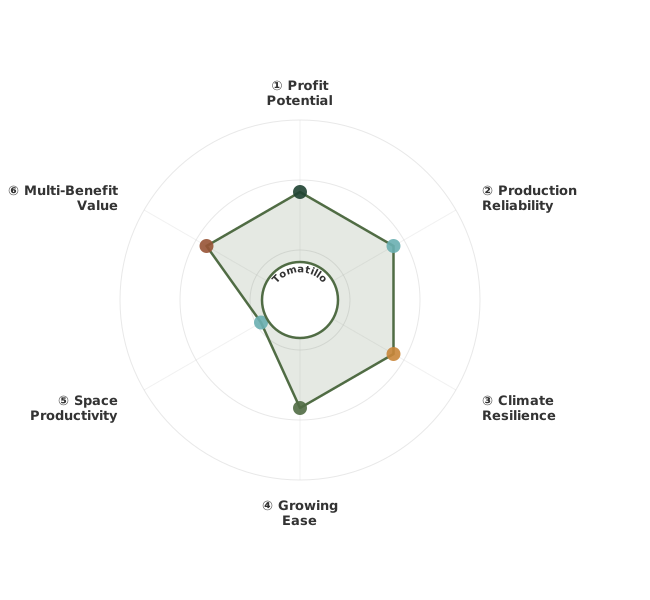
Regenerative Trait Ratings
How These Traits Are Calculated
Trait dimensions are ordered clockwise starting from the top of the chart (12 o'clock position):
1. Profit Potential
Net returns per acre from yield, pricing, input costs, and labor efficiency
WHAT: Synthesizes gross revenue potential, input costs, labor requirements, and storage/marketing advantages into net profitability per acre. Captures the complete economic picture from planting to sale.
WHY: Not all vegetables are equally profitable. High-value crops with efficient production can return $10,000-30,000/acre versus $2,000-5,000/acre for lower-value options. Profit potential guides crop selection for maximum return on limited land and determines viable scale for farm businesses.
HOW: Scored via LLM synthesis of economics data (yields, prices, costs), storage advantages (season extension, value-added potential), and labor intensity. Exceptional (3.0): High yields × premium prices with moderate inputs and good storage (garlic, high-value salad greens). Typical (2.0): Moderate returns (tomatoes, squash). Limited (1.0): Low yields, commodity pricing, or intensive labor requirements (low-value greens).
2. Production Reliability
Weighted: yield consistency (60%) + disease/pest resistance (40%)
WHAT: Combines yield reliability (harvest consistency year-to-year) with disease and pest resistance to measure predictable production. Reliable vegetables deliver consistent harvests without catastrophic failures from pests or weather.
WHY: Market commitments and CSA subscriptions require dependable production. Unreliable crops that fail in bad years or require intensive pest management create cash flow gaps and customer dissatisfaction. Reliable producers allow confident planning and reduce input costs from emergency pest interventions.
HOW: Weighted formula prioritizes yield reliability (60% weight) for overall consistency, with disease/pest resistance (40% weight) to prevent total failures. Exceptional (3.0): Consistent yields across variable seasons with strong natural pest resistance. Typical (2.0): Generally reliable with some pest/weather sensitivity. Limited (1.0): Highly variable yields or severe pest vulnerability requiring intensive management.
3. Climate Resilience
Temperature and rainfall tolerance across diverse growing conditions
WHAT: Measures the breadth of climatic conditions where the vegetable produces successfully—temperature extremes, humidity ranges, and rainfall variability. Climate-resilient crops work across diverse regions and weather patterns.
WHY: Climate variability is increasing—unexpected heat waves, cold snaps, or drought periods can wipe out entire vegetable harvests. Resilient crops provide insurance against weather uncertainty and allow geographic expansion for market growth. This is especially critical for direct-market farmers who can't easily substitute crops mid-season.
HOW: Ratings based on the climate_adaptability trait documenting temperature tolerance and geographic range. Exceptional (3.0): Grows successfully in diverse climates (cold to hot, humid to dry) with wide hardiness zone range. Typical (2.0): Moderate climate flexibility. Limited (1.0): Narrow climate requirements (tropical-only, cool-season-only, humidity-sensitive).
4. Growing Ease
Weighted: establishment ease (50%) + low maintenance requirements (50%)
WHAT: Combines establishment difficulty (germination, transplanting) with ongoing maintenance needs (watering, fertilizing, pest management) to measure total labor requirements. Easy crops grow reliably with minimal intervention.
WHY: Labor is the primary cost for small-scale vegetable production. Easy-care crops allow farmers to manage more production area with the same labor, improving profitability. Difficult crops requiring constant attention, precise timing, or specialized skills reduce overall farm productivity and increase risk.
HOW: Weighted formula balances establishment ease (50% weight) for reliable startup and inverted maintenance intensity (50% weight) for ongoing care. Exceptional (3.0): Direct-seeded or easy transplants with minimal water/fertility/pest needs. Typical (2.0): Moderate care requirements. Limited (1.0): Difficult establishment or intensive ongoing management (daily watering, heavy feeding, constant pest monitoring).
5. Space Productivity
Weighted: yield per square foot (60%) + season extension potential (40%)
WHAT: Combines spatial productivity (yield per square foot) with temporal productivity (extended harvest windows from succession planting or season extension). Maximizes production from limited growing area.
WHY: Land is the primary constraint for vegetable farmers—especially those near urban markets. Space-efficient crops delivering high yields in small areas improve per-acre profitability dramatically. Season extension (spring tunnels, fall protection) adds bonus production windows when competing supply is limited and prices are higher.
HOW: Weighted formula prioritizes space efficiency (60% weight) for core yield per area, with season extension potential (40% weight) for bonus production opportunities. Exceptional (3.0): High yields per square foot (10,000+ lbs/acre equivalents) with season extension options. Typical (2.0): Moderate yields and extension potential. Limited (1.0): Low yields or crops unsuitable for season extension.
6. Multi-Benefit Value
Ecosystem services beyond harvest—pollinator support, nitrogen fixing, pest habitat
WHAT: Measures ecosystem services provided beyond harvestable yield. Multi-benefit vegetables contribute to farm ecology through nitrogen fixation (legumes), pollinator support (flowering crops), beneficial insect habitat, soil building, or erosion control.
WHY: Cash crops can either extract from farm ecosystems or contribute to them. Vegetables with strong multi-benefit value build soil fertility, support pollinators needed for fruit/vine crops, and create habitat for pest predators—reducing external input needs. Nitrogen-fixing vegetables (beans, peas) provide $40-80/acre worth of fertility for following crops.
HOW: Ratings based on the multi_benefit_value trait documenting service contributions. Exceptional (3.0): Significant ecosystem services (nitrogen fixation, heavy pollinator support, soil building, pest habitat). Typical (2.0): Some ecosystem contributions. Limited (1.0): Single-purpose cash crops with minimal farm ecology benefits.
Ratings are based on documented performance in regenerative systems, not conventional high-input scenarios. All traits assume integrated management practices focused on soil health and ecosystem services.
1
Climate Suitability Assessment
Will this plant thrive in your climate?
Climate Suitability Assessment
Will this plant thrive in your climate?
Köppen Zone: Cfa (Humid Subtropical), Cwa (Monsoon-Influenced Humid Subtropical)
USDA Zone: 6a, 7a, 8a, 9a
Australian Zone: subtropical
Tomatillos perform exceptionally well in climates characterized by long, warm to hot growing seasons with ample moisture. These conditions are met in Köppen Cfa zones, USDA zones 7a through 9b, and Australian subtropical regions. These zones typically experience 150-200+ frost-free days with average summer temperatures between 70-85°F (21-29°C), promoting vigorous vegetative growth and abundant fruit set. Rainfall of 30-50 inches (75-125 cm) annually is generally sufficient, though supplemental irrigation may be beneficial during extended dry spells in some areas. Minimal management is required beyond standard horticultural practices, with high yields and excellent fruit quality being the norm. These regions offer the most reliable and economically viable conditions for tomatillo cultivation, supporting its use as a primary cash crop with minimal risk.
Köppen Zone: Af (Tropical Rainforest), Am (Tropical Monsoon), Aw (Tropical Savanna), BSh (Hot Semi-Arid (Steppe)), Cfb (Oceanic (Maritime Temperate)), Csa (Hot-Summer Mediterranean), Csb (Warm-Summer Mediterranean), Cwb (Subtropical Highland), Dfa (Hot-Summer Continental), Dfb (Warm-Summer Continental), Dwa (Monsoon-Influenced Hot-Summer Continental)
USDA Zone: 5b, 10a, 11a, 12a
Australian Zone: temperate
EU Climate Region: atlantic, continental
Tomatillos can be successfully cultivated in regions with adequate growing seasons and manageable temperature ranges, though some limitations may exist. This includes Köppen Cfb, Csa, Csb, Dfa, Dfb, and Dwa zones, USDA zones 5b through 6b, and Australian temperate, EU Atlantic, and EU Continental regions. These areas typically offer 100-150 frost-free days with average summer temperatures that may fluctuate, sometimes requiring season extension techniques or careful variety selection for optimal results. While rainfall is often sufficient, dry periods, especially in Mediterranean or continental climates, may necessitate supplemental irrigation, increasing operational costs. Yields and fruit quality may be slightly reduced compared to ideal zones due to cooler summers, shorter seasons, or occasional heat stress. These zones represent viable options for tomatillo production, but require more attention to timing, water management, and potentially protection from extreme temperatures.
Köppen Zone: ET (Tundra), BSk (Cold Semi-Arid (Steppe)), BWh (Hot Desert), BWk (Cold Desert), Dfc (Subarctic)
USDA Zone: 2a, 3a, 3b, 4a, 5a
Tomatillos are not recommended for cultivation in climates that present significant challenges to their growth and fruiting. This includes Köppen Bsk, Bwh, and Dwb zones, USDA zones 3a through 5a, and Australian arid/semi-arid regions. These zones are characterized by extremely short growing seasons, insufficient warmth, high risk of frost, or extreme heat and drought. In cold regions (USDA 3a-5a, Köppen Dwb), the growing season is too short and frost risk too high for reliable fruiting, making perennial survival impossible and annual success highly uncertain. In hot, arid regions (Köppen Bwh, Bsk), extreme heat, intense solar radiation, and severe water scarcity stress the plants, drastically reducing yields and requiring extensive, costly irrigation and shade infrastructure. Establishment success is low (<70%), and economic viability is questionable due to high inputs and low, unreliable yields. Alternative plants better adapted to these harsh conditions are strongly advised.
Note: Zones listed above represent climates where this plant can produce reliably with reasonable management. Climate zones not mentioned would require intensive climate modification (greenhouses, extensive infrastructure) and are not economically viable for regenerative agriculture purposes.
2
Soil Suitability Assessment
Which soil types work best for this plant?
Soil Suitability Assessment
Which soil types work best for this plant?
Loam Soil
This plant thrives in these soil types without requiring amendments or remediation. Natural soil conditions support optimal growth and productivity.
Clay Soil, Rich Soil, Rocky Soil, Sandy Soil
This plant performs acceptably in these soil types with moderate, manageable remediation such as pH adjustment, compost addition, or drainage improvement. The required amendments are practical and cost-effective for regenerative agriculture.
Acidic Soil, Alkaline Soil, Desert Soil, Saline Soil, Wet Soil
Growing this plant in these soil types would require impractical remediation such as complete soil replacement, extensive amendments, or cost-prohibitive infrastructure. These conditions are not economically viable for regenerative agriculture.
Note: Soil suitability assessments focus on remediation requirements. "Ideally Suited" means the plant generally thrives without the need for substantial amendments, "Adequate" means manageable remediation (lime, compost, mulch), and "Not Recommended" means impractical soil changes would be required. Climate factors like rainfall and temperature also influence success.
3
Seasonal Considerations
Planting timing, growth duration, and harvest windows
Seasonal Considerations
Planting timing, growth duration, and harvest windows
For tomatillos, begin by starting seeds indoors several weeks before your last expected frost, aiming for transplanting into the garden once all danger of frost has passed and soil temperatures have consistently reached at least 60°F (15°C). Direct seeding is possible, but only after these warm soil conditions are reliably established in your region. Tomatillos are heat-loving and will thrive throughout the summer months.
Expect a good 70 to 100 days from transplanting to the first harvest, which typically begins in mid-summer and continues well into the fall. To extend this harvest window, consider a sowing of succession plants a few weeks after your initial planting, provided your growing season is long enough. Tomatillos are remarkably resilient to heat but are sensitive to cold. Protect plants from early fall frosts; a light covering can sometimes extend the harvest for a few more weeks before the first hard freeze signals the end of their productive season.
4
System Role & Multi-Benefit Value
Functional roles, integration strategies, and stacked benefits
System Role & Multi-Benefit Value
Functional roles, integration strategies, and stacked benefits
Functional Role
Total System Value
The total system value of tomatillos lies primarily in their role as a productive cash crop that can be integrated into diverse farming systems. Beyond direct harvest revenue, they contribute to ecosystem services by attracting pollinators, which is crucial for the reproduction of many other crops and wild plants. Their relatively deep root systems can help improve soil structure and water infiltration in the short to medium term, aiding in erosion control within annual rotations. Tomatillos can also be part of a strategy to diversify farm income streams, reducing reliance on a single commodity. While they don't offer the long-term structural benefits of trees like shade or windbreaks, their annual integration into cropping plans enhances the overall biological activity of the farm. This continuous cropping and support for beneficial insects contribute to a more resilient and biodiverse agricultural landscape.
Integration Characteristics
Multi-Benefit Value: Adequate - Tomatillos contribute to the food web and attract beneficial insect populations, while their biomass enriches the soil, enhancing the living system.
5
Management & Care Requirements
Integration guidance, maintenance needs, and care practices
Management & Care Requirements
Integration guidance, maintenance needs, and care practices
How to Integrate This Plant
Tomatillos, as non-tree annuals, are best integrated into regenerative systems as a key component of annual cropping rotations or within more complex perennial designs where they can be replanted seasonally. Their primary function is as a cash crop offering direct harvest value, but they also provide ecosystem services. They can be incorporated into alley cropping systems, providing a productive inter-row crop alongside slower-growing trees or shrubs. In food forests or intensive garden systems, they can fill gaps and contribute to ground cover. While not providing structural benefits like windbreaks or shade, their deep root systems can aid in soil aeration and erosion control in the short term. They are also beneficial for attracting pollinators. Tomatillos start providing value in Year 1 with harvest, and continue to offer pollinator support and soil health benefits annually. Their multi-benefit stacking lies in their ability to generate income while simultaneously enhancing the local micro-ecosystem by supporting beneficial insects.
Integration Practices & Management
While specific details on the integration of Physalis philadelphica within regenerative agriculture practices are not extensively detailed in the provided mentions, general principles can be inferred. Establishment likely involves direct seeding or transplanting, with timing influenced by local climate to avoid frost. Its potential for rapid growth suggests it could be a candidate for cover cropping in no-till or minimal tillage systems to build soil organic matter and suppress weeds. Due to its upright growth habit, intercropping or relay cropping with other cash crops might be feasible, though competition for resources would need careful management. Integration with grazing is less clear from the limited information, but it could potentially be incorporated into multi-species forage mixes, with grazing timing and rest periods adjusted to allow for plant recovery. Termination strategies might include natural winterkill in colder climates, mowing, or crimping. Fertility needs are generally low, as Physalis species are known to thrive in a variety of conditions. The lack of detailed knowledge base examples necessitates a focus on broader regenerative principles applicable to similar herbaceous perennial or annual plants.
Management Profile
Maintenance Intensity: Adequate - This annual thrives with consistent soil moisture and warmth, showing good natural resilience to common challenges, though vigilant observation for aphid populations is beneficial.
6
Economics & Value Streams
Direct harvest, system benefits, ecosystem services, and risk diversification
Economics & Value Streams
Direct harvest, system benefits, ecosystem services, and risk diversification
Comprehensive economic analysis including direct harvest value, system enhancement contributions, ecosystem services, value timeline, and risk diversification strategies.
Vegetable & Specialty Economics
| Metric | Value |
|---|---|
| Seed/Transplant Cost | 100-200 $/acre 247-494 $/ha |
| Expected Yield | 5000-10000 lbs/acre 5604-11208 kg/ha |
| Market Price | 0.70-1.40 $/lb 1-3 $/kg |
| Harvest/Handling Cost | 600-1200 $/acre 1482-2965 $/ha |
| Marketing/Distribution Cost | 300-600 $/acre 741-1482 $/ha |
| Net Annual Return* | $1500-$13000/acre/year |
Economics highly variable by market channel (direct vs wholesale), scale, and management. Direct marketing commands premiums but requires labor. Values shown for mid-scale market garden operations.
* Net Annual Return = (Yield × Market Price) − (Amortized Establishment Cost + Annual Maintenance). This return is realized only at/after first harvest; early years have costs but no revenue. Range shows worst case to best case scenarios.
System Enhancement Value
Beyond harvest: ecosystem services from regenerative cash crop practices
Ecological Service Contributions
Tomatillos (Physalis philadelphica) offer significant system value beyond their primary function as a cash crop, particularly in integrated farm systems. Their role as a cover crop system, as indicated by their inclusion in this category, suggests a contribution to soil health. While not explicitly legumes for nitrogen fixation, their biomass can improve soil structure and organic matter content when incorporated back into the soil. Furthermore, the knowledge base highlights their utility in culinary preparations, indicating a market demand that can support farm income diversity. Their cultivation can also provide habitat and forage for beneficial insects, including pollinators, which is crucial for the success of other crops within the integrated system. The tangy, citrus-like taste and nutritional richness (vitamins, minerals, fiber) contribute to their value as a healthy food source. Their use in marinades further demonstrates versatility, potentially opening niche markets or value-added product opportunities.
Ecosystem Service Contributions
Environmental contributions: carbon, pollinators, wildlife, and water
- Carbon Sequestration: As an annual herbaceous plant, tomatillos contribute to carbon sequestration primarily through biomass production during their growing season. When plant residues are managed effectively (e.g., left on the field or composted), carbon is returned to the soil, enhancing soil organic matter. The extent of sequestration is dependent on cultivation practices and the amount of biomass produced and retained.
- Pollinator Support: High. Tomatillos are known to attract a variety of pollinators, which is essential for the reproductive success of many other crops grown in an integrated farm system. Their flowering period can provide a consistent nectar and pollen source.
- Wildlife Habitat: Tomatillo plants can offer some limited habitat and forage for smaller wildlife, particularly insects. Their foliage can provide cover, and in some regions, the fruits might be consumed by certain opportunistic wildlife species. However, they are not typically considered a primary source of mast or nesting material for larger game or birds.
- Water Quality: Not applicable
Value Timeline: Production & Services
When you'll see results: varies by crop (annual harvest vs. perennial establishment)
Years 1-2
Establishment of the plant as a cash crop, initial soil health improvements from cover cropping practices (e.g., organic matter addition, potential for reduced erosion), and early contributions to pollinator support.
Years 3-5
Maturation of the system, leading to consistent cash crop revenue, enhanced soil fertility and structure from ongoing cover cropping, and more robust pollinator support benefiting surrounding crops. Potential for development of value-added products (e.g., salsa) as described in the knowledge base.
Years 10-20
Long-term benefits of improved soil health, including increased water holding capacity and nutrient cycling. Established role in supporting biodiversity and beneficial insect populations, contributing to overall farm resilience. Consistent, diversified income stream from cash crop and potential value-added products.
20+ Years
Sustained ecosystem services from a well-managed integrated system, including advanced soil health benefits and a mature habitat for beneficial insects. Continued contribution to farm resilience and diversified income.
Farm Risk Reduction
How this reduces farm risk: backup income, weather protection, market hedges
- Multiple Revenue Streams: ['Direct sales of fresh tomatillos', 'Sales of value-added products (e.g., canned salsa)', 'Potential sales of seedlings or propagation material', 'Indirect income through enhanced yields of other crops due to pollinator support']
- Temporal Income Spread: Value is realized annually through harvest of fresh produce and value-added products. Ongoing ecosystem services like pollinator support and soil health improvements provide continuous, less market-volatile benefits over multiple years.
- Market Risk Hedge: Diversifies farm revenue beyond single commodity crops. Provides an alternative market outlet (processed goods) that can be less susceptible to immediate fresh market price fluctuations. Enhanced soil health leads to greater drought tolerance and reduced input needs for other crops, mitigating risks associated with weather and input costs. Strong pollinator support can increase yield security for other pollinator-dependent crops on the farm.
7
Regenerative Suitability Details
Comprehensive trait ratings for system integration assessment
Regenerative Suitability Details
Comprehensive trait ratings for system integration assessment
Comparative ratings for this plant across key regenerative agriculture traits.
| Trait | Suitability | Explanation |
|---|---|---|
| Season Extension | Not Recommended | Tomatillos thrive in warmth for fruit development, naturally aligning with summer's peak growing season and offering a focused harvest period. |
| Space Efficiency | Adequate | These bushy plants integrate well into diverse planting arrangements, yielding abundant fruit relative to their footprint, much like peppers. |
| Storage Longevity | Not Recommended | With a short post-harvest life, tomatillos are best enjoyed fresh or preserved promptly to maintain quality, as their husks can harbor mold and flesh softens. |
| Yield Reliability | Adequate | In suitable warm climates, tomatillos offer dependable yields when supported by consistent soil moisture and warmth, though they are sensitive to frost. |
| Establishment Ease | Adequate | Tomatillos readily germinate with adequate warmth and moisture, showing good early vigor and establishing well with mindful soil preparation and weed management. |
| Multi Benefit Value | Adequate | Tomatillos contribute to the food web and attract beneficial insect populations, while their biomass enriches the soil, enhancing the living system. |
| Climate Adaptability | Adequate | As warm-season annuals (zones 5-11), tomatillos flourish with consistent heat and moisture, demonstrating resilience across a range of conditions within the Solanaceae family. |
| Maintenance Intensity | Adequate | This annual thrives with consistent soil moisture and warmth, showing good natural resilience to common challenges, though vigilant observation for aphid populations is beneficial. |
| Disease Pest Resistance | Adequate | Tomatillos exhibit moderate resilience, though vigilance for common challenges like flea beetles or fungal activity is part of integrated crop stewardship. |
Comparative System: Ratings compare plants within their economic category (e.g., cover crop nitrogen fixation compared to other cover crops, not to all plants). Individual farm conditions and management practices significantly influence actual performance.
8
Learn More
Why farmers use this plant and additional resources
Learn More
Why farmers use this plant and additional resources
Why Regenerative Farmers Use This Plant
Physalis philadelphica, commonly known as the tomatillo, is a valuable specialty cash crop for regenerative farmers seeking to diversify income streams and enhance farm ecosystems. Its unique flavor profile and culinary versatility make it a sought-after item in direct-to-consumer markets, CSA shares, and specialty wholesale channels. With a relatively quick maturity of 70-100 days from transplant, tomatillos offer a good return on investment per acre, especially when managed for continuous harvest through succession planting. This allows for multiple harvests from a single planting, maximizing yield potential within a single growing season. A well-managed tomatillo crop can yield between 10,000-25,000 lbs/acre (11,200-28,000 kg/ha) depending on variety, spacing, and growing conditions, contributing significantly to diversified farm income streams and economic resilience.
Integrating tomatillos into a regenerative system offers several synergistic and ecological benefits. As a member of the nightshade family, they can be strategically rotated with other crop families to break disease cycles and improve soil health. While not legumes, they are efficient scavengers of nutrients from the soil, helping to balance nutrient cycles. Their relatively deep root systems, reaching 18-30 inches (45-75 cm), help to improve soil structure, break up compaction, and scavenge nutrients from deeper soil profiles. Tomatillo plants provide habitat and attract beneficial insects, contributing to a more balanced farm ecosystem. They can be intercropped with other vegetables or herbs, such as basil or marigolds, which are known to deter common pests, further reducing the need for external inputs. Their growth habit can also provide some ground cover, aiding in weed suppression during their active growing season.
The ecosystem services provided by tomatillo cultivation extend to pollinator support and soil organic matter enhancement. The plant produces small, inconspicuous flowers that attract a variety of pollinators, including bees and hoverflies, which are crucial for the health of the broader agricultural landscape and can benefit other crops on the farm. The dense foliage of a well-established tomatillo patch can also contribute to soil organic matter when plant residues are managed appropriately, such as through mulching or incorporation. By fostering a more biodiverse environment, tomatillos can play a role in increasing beneficial insect populations that naturally control pest outbreaks, thereby reducing reliance on synthetic interventions and promoting a resilient farming system. Improved soil structure and increased organic matter contribute to enhanced water infiltration and retention, reducing runoff and erosion.
Tomatillos have demonstrated success in diverse agricultural settings globally. In Mexico, their origin, they are a staple crop grown in diverse agroecological systems. In the United States, farmers in states like California, Arizona, and the Midwest have found success growing them for local markets, often as part of intensive market garden operations. In Europe, growers in warmer regions such as Spain and Italy incorporate them into their specialty crop rotations. Australian farmers in temperate to subtropical zones also find them a reliable producer for farmers' markets and restaurants, showcasing their adaptability across continents.
9
How to Integrate This Plant
Practical guidance for regenerative systems
How to Integrate This Plant
Practical guidance for regenerative systems
Establishing tomatillos regeneratively involves careful planning for optimal growth and minimal soil disturbance. Seedlings are typically started indoors 4-6 weeks before the last expected frost and transplanted out after all danger of frost has passed and soil temperatures consistently reach at least 60°F (15.5°C). Direct sowing is possible in warmer climates with longer growing seasons, planting seeds at a depth of 0.25-0.5 inches (0.6-1.3 cm). For transplants, spacing is crucial, with plants typically set 2-3 feet (60-90 cm) apart in rows that are 3-4 feet (90-120 cm) apart. This spacing allows for good air circulation, reducing disease pressure, and ample room for the plants to reach their mature height of 3-5 feet (0.9-1.5 m). Seeding rates for direct sow are approximately 1-2 ounces per acre (28-56 grams per acre), which translates to about 0.5-1 lb/acre (0.56-1.1 kg/ha) depending on seed size and desired plant density.
Management practices for tomatillos in a regenerative system focus on building soil health and leveraging natural processes. While tomatillos are relatively heavy feeders, their nutritional needs can be met through a robust soil biology program. Incorporating well-composted organic matter into the planting beds prior to transplanting is the primary fertility strategy, providing a slow-release source of nutrients. Side-dressing with compost or aged manure during the growing season can further support vigorous growth. Adequate moisture is essential, with plants requiring approximately 1-1.5 inches (2.5-3.8 cm) of water per week, increasing to 1.5-2 inches (3.8-5 cm) during fruit development, especially during flowering and fruit set. Drip irrigation is ideal for maintaining consistent soil moisture and minimizing foliar disease. Pest and disease management prioritizes biological controls and cultural practices; encouraging beneficial insects through habitat planting and maintaining crop rotation intervals of at least 3 years with non-solanaceous crops helps prevent soil-borne diseases and pest buildup. Plants typically require staking or caging to support their bushy growth and keep fruit off the ground.
The production cycle for tomatillos is well-suited for succession planting to ensure a continuous harvest. In USDA Zones 5-7, transplants can be set out from mid-May through mid-June, with the first harvest typically occurring 70-100 days later, from late July through September. For a continuous harvest from July through October, farmers can implement succession planting by setting out new transplants every 2-3 weeks until mid-July. Following the final harvest in late fall, it is beneficial to follow with a cover crop, such as a mix of cereal rye and hairy vetch, planted within 2 weeks of final harvest to protect soil structure, scavenge residual nutrients, and add organic matter. This cover crop can then be terminated in spring through mowing or roller-crimping before the next cash crop is planted. A minimum 3-year crop rotation interval with non-family crops, such as legumes or brassicas, is recommended to break pest and disease cycles effectively.
Regional adaptations for tomatillo integration highlight their versatility. In the corn and soybean belt of the United States (e.g., Iowa, Illinois, USDA Zones 4-6), tomatillos can be grown in rotation following a spring cover crop that is terminated in late spring. They can be intercropped with taller crops or planted in dedicated market garden beds. In Mediterranean climates like Southern Spain or parts of Australia (Zones 2-3), they can be planted in early spring and benefit from the long, warm growing season, often requiring less supplemental irrigation if established with good soil organic matter. In tropical and subtropical regions of Brazil or Africa, careful variety selection for heat tolerance and disease resistance is key, and they can be integrated into diverse farming systems, potentially as an understory crop in agroforestry systems with appropriate light management. In the humid subtropical climates of the Southeastern United States (USDA Zones 7-9, Köppen Cfa), good air circulation through proper spacing and timely harvest are essential to manage fungal diseases. In the Pacific Northwest of the USA (USDA Zones 7-9, Köppen Cfb), where summers are mild and dry, ample irrigation and consistent warmth are key. In regions with shorter growing seasons, such as parts of Canada (Zones 3-5), starting plants indoors early and selecting faster-maturing varieties is crucial for success.