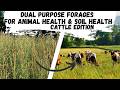
While direct mentions of *Plantago major* in regenerative agriculture practices within our knowledge base are limited, its potential roles can be inferred from related research. In grassland renovation experiments, similar broadleaf plants often feature in diverse swards, suggesting *Plantago major*'s capacity to contribute to biodiversity. Although not explicitly a nitrogen fixer, its presence in mixtures could enhance overall soil health and sward resilience. The provided excerpt focuses on weed suppression and yield increases in renovated pastures, indicating that plants within this genus, when part of a well-managed system, can contribute to productive and less weed-dominated environments. Further research would be needed to fully elucidate its specific benefits in regenerative systems such as no-till farming or agroforestry, particularly regarding soil building or carbon sequestration. Its common occurrence suggests adaptability, a valuable trait for resilient farming landscapes.

Regenerative Quick Profile

All recommendations assume integrated, regenerative practices—not conventional inputs.

Climate & Soil Fit

Climate: Tropical Rainforest, Tropical Monsoon, Tropical Savanna, Hot Semi-Arid (Steppe), Cold Semi-Arid (Steppe), Hot Desert, Cold Desert, Humid Subtropical, Oceanic (Maritime Temperate), Hot-Summer Mediterranean, Warm-Summer Mediterranean, Monsoon-Influenced Humid Subtropical, Subtropical Highland, Hot-Summer Continental, Warm-Summer Continental, Subarctic, Monsoon-Influenced Hot-Summer Continental, Tundra

Zones: USDA 3-13, Australian Zones 1-14

Optimal Soil: Loam Soil

System Role & Functions

Primary: Cover Crop System

Secondary: Forage Integration, Pollinator Support

Key Benefits: Climate adaptable, Easy establishment

Management Level

Experience: Beginner-Friendly

Maintenance: High maintenance - Its vigorous growth and prolific reseeding in disturbed areas can be managed by integrating it into a diverse planting system and utilizing mechanical removal or mulching to redirect its energy.

Value Streams

  • Cover crop (soil investment)
  • Soil building and erosion control
  • Livestock forage value
  • Pollinator habitat and support
1

Climate Suitability Assessment

Will this plant thrive in your climate?

IDEALLY SUITED

Köppen Zone: Cfa (Humid Subtropical), Cfb (Oceanic (Maritime Temperate)), Dfa (Hot-Summer Continental), Dfb (Warm-Summer Continental)
USDA Zone: 5a, 5b, 6a, 7a, 8a, 9a
Australian Zone: temperate
EU Climate Region: atlantic

Broadleaf plantain performs optimally in regions with mild winters and moderate summers, characterized by consistent moisture and a long growing season. These conditions are met in Köppen zones Cfb, Dfb, and Dfc, USDA zones 5b through 8b, Australian temperate zones, and EU Atlantic regions. In these areas, it establishes readily, exhibits excellent perenniality, and provides robust ground cover with minimal management. Temperatures typically range from 50-75°F (10-24°C) during the growing season, allowing for continuous growth and biomass accumulation. Rainfall is generally sufficient (30-50 inches annually), supporting its needs without extensive irrigation. Its resilience to various soil types and its ability to tolerate moderate foot traffic make it a highly effective cover crop for soil health, weed suppression, and pollinator support. Establishment success rates are consistently high, often exceeding 90%, and multi-year productivity is reliable, making it a low-input, high-benefit option for regenerative agriculture.

ADEQUATE

Köppen Zone: Aw (Tropical Savanna), BSh (Hot Semi-Arid (Steppe)), BSk (Cold Semi-Arid (Steppe)), Csa (Hot-Summer Mediterranean), Csb (Warm-Summer Mediterranean), Cwa (Monsoon-Influenced Humid Subtropical), Cwb (Subtropical Highland)
USDA Zone: 4a, 10a, 11a
Australian Zone: subtropical
EU Climate Region: continental

Broadleaf plantain is adequately suited to climates with moderate temperature fluctuations and variable moisture, including Köppen zones Cfa, Cfb, Cfc, Csb, Dfa, and Dfc, USDA zones 5b through 10b, Australian subtropical zones, and EU continental regions. These zones offer a sufficient growing season (140-200+ frost-free days) and temperatures that allow for establishment and persistence, typically within the 50-80°F (10-27°C) range. However, performance may be limited by summer heat stress in warmer zones (above 85°F/29°C) or by shorter growing seasons and colder winters in more northerly or higher-altitude continental areas. Adequate rainfall (25-40 inches annually) is generally sufficient, but supplemental irrigation may be beneficial during dry spells to maintain optimal cover crop function and biomass production. Establishment success is good (70-85%) with proper timing, and while perenniality is generally reliable, winter survival can be reduced in the colder extremes of these zones. Standard management practices, such as ensuring adequate moisture and avoiding extreme heat, are usually sufficient for successful cultivation.

NOT RECOMMENDED

Köppen Zone: Af (Tropical Rainforest), Am (Tropical Monsoon), ET (Tundra), BWh (Hot Desert), BWk (Cold Desert), Dfc (Subarctic), Dwa (Monsoon-Influenced Hot-Summer Continental)
USDA Zone: 2a, 3a, 3b, 12a
EU Climate Region: alpine

Broadleaf plantain is not recommended for cultivation as a cover crop in climates characterized by extreme cold, prolonged drought, or very short growing seasons. This includes Köppen zones Csa, Dfd, Dwd, Dsc, and Dsd, USDA zones 1a through 5a, Australian alpine regions, and EU alpine regions. In hot, dry Mediterranean (Csa) and semi-arid climates, summer heat and aridity severely limit growth and survival, requiring intensive irrigation that is economically unviable. In extremely cold continental (Dfd, Dwd, Dsc, Dsd) and alpine/subarctic USDA zones (1a-5a), the prolonged, severe winters cause widespread winterkill, and the short, cool growing seasons prevent reliable establishment and perennial growth. Establishment success rates are often below 70%, and perennial productivity is questionable or impossible. While it might survive as a short-lived annual in some marginal zones, its effectiveness as a cover crop is significantly compromised, leading to high management costs and unreliable results. Alternative plants better adapted to these specific challenging conditions are strongly advised.

Better alternatives for these "not recommended" zones: Winter Rye (extremely cold-hardy cover crop for biomass and soil protection), Hairy Vetch (cold-hardy annual legume for nitrogen fixation), Crimson Clover (drought-tolerant legume for warmer, drier climates), Sorghum-Sudangrass (heat and drought-tolerant grass for biomass production)

Note: Zones listed above represent climates where this plant can produce reliably with reasonable management. Climate zones not mentioned would require intensive climate modification (greenhouses, extensive infrastructure) and are not economically viable for regenerative agriculture purposes.

2

Soil Suitability Assessment

Which soil types work best for this plant?

IDEALLY SUITED

Loam Soil

This plant thrives in these soil types without requiring amendments or remediation. Natural soil conditions support optimal growth and productivity.

ADEQUATE

Acidic Soil, Alkaline Soil, Clay Soil, Desert Soil, Rich Soil, Rocky Soil, Sandy Soil

This plant performs acceptably in these soil types with moderate, manageable remediation such as pH adjustment, compost addition, or drainage improvement. The required amendments are practical and cost-effective for regenerative agriculture.

NOT RECOMMENDED

Saline Soil, Wet Soil

Growing this plant in these soil types would require impractical remediation such as complete soil replacement, extensive amendments, or cost-prohibitive infrastructure. These conditions are not economically viable for regenerative agriculture.

Note: Soil suitability assessments focus on remediation requirements. "Ideally Suited" means the plant generally thrives without the need for substantial amendments, "Adequate" means manageable remediation (lime, compost, mulch), and "Not Recommended" means impractical soil changes would be required. Climate factors like rainfall and temperature also influence success.

3

Seasonal Considerations

Planting timing, growth duration, and harvest windows

Establishing broadleaf plantain as a perennial tree crop requires a multi-year perspective. For nursery planting, aim for early spring, either as dormant bare-root stock or containerized plants, just as soil temperatures begin to warm above 50°F (10°C) and after the risk of hard frost has passed. Expect 2-3 years for the tree to become well-established, with the first significant harvest possible by year 3-4. Full production, where yields are robust and consistent, will typically be reached by year 5-7, with trees remaining highly productive for several decades. Throughout the year, focus on dormant season pruning, ideally in late fall or winter after leaf drop and before sap begins to rise. The primary harvest season for leaves and seeds occurs during the active growing months of spring and summer. Observe the plant's natural cycle, as it enters a period of winter dormancy, conserving energy for the following year's growth and production.

4

System Role & Multi-Benefit Value

Functional roles, integration strategies, and stacked benefits

Functional Role

Total System Value

Broadleaf plantain offers significant whole-farm resilience through a multi-benefit stacking approach. Its direct harvest value is primarily as a forage for livestock, offering good nutrition. Beyond direct consumption, it excels in system enhancement by providing excellent ground cover, which is crucial for erosion control and moisture retention, especially on slopes or disturbed soils. Its dense growth habit also competes effectively with weeds, reducing the need for herbicides. Ecosystem services include improving soil structure and microbial activity, which can indirectly support carbon sequestration. While not a major pollinator attractor, its presence contributes to overall biodiversity. Risk diversification comes from its hardiness and ability to thrive in a variety of conditions, ensuring a consistent cover crop and forage component even in challenging seasons, thus buffering against crop failure and reducing reliance on monocultures.

Integration Characteristics

Multi-Benefit Value: Adequate - Provides edible foliage and seeds, while also supporting beneficial insect populations and contributing organic matter to enhance soil fertility. Its presence indicates areas where soil structure can be improved.

5

Management & Care Requirements

Integration guidance, maintenance needs, and care practices

How to Integrate This Plant

Broadleaf plantain (Plantago major) serves primarily as a resilient groundcover, enhancing soil health and providing forage. Its primary system role is erosion control and weed suppression, particularly in disturbed areas or as a component in pasture renovation. It is compatible with practices like mob grazing, where its palatability and nutrient content can benefit livestock, and as a nurse crop or understory in more complex systems. While not a primary nitrogen-fixer or shade provider, its dense growth can offer some weed suppression and soil conditioning. It starts providing value in Year 1 through ground cover and weed suppression. By Year 5, it contributes to soil structure improvement and increased forage diversity. Its value lies in its ability to stabilize soil, suppress less desirable weeds, and offer a palatable, nutritious forage source for grazing animals, thereby improving pasture resilience and reducing the need for external inputs.

Integration Practices & Management

The provided knowledge base offers limited direct insight into how regenerative farmers practically integrate *Plantago major*. The six mentions primarily focus on its presence as a weed in agricultural settings, particularly in grassland renovation experiments. For instance, one study notes its prevalence among dicotyledonous weeds following tillage operations. While this indicates *Plantago major* can establish under certain disturbed conditions, the sources do not detail specific regenerative establishment methods such as seeding rates, timing, or companion planting for its deliberate integration. Similarly, information on its integration with grazing systems, including mob grazing or rotational practices, and its role within specific rest periods or termination strategies like crimping or mowing, is absent. The knowledge base also does not offer practical farmer experiences regarding fertility needs, competition management, or succession planning related to *Plantago major* in regenerative systems, nor does it describe its integration into cash crop rotations through intercropping or relay cropping. Therefore, based on this knowledge base, details on the 'how' of regenerative integration for *Plantago major* are not available.

Management Profile

Maintenance Intensity: Not Recommended - Its vigorous growth and prolific reseeding in disturbed areas can be managed by integrating it into a diverse planting system and utilizing mechanical removal or mulching to redirect its energy.

6

Regenerative Suitability Details

Comprehensive trait ratings for system integration assessment

Comparative ratings for this plant across key regenerative agriculture traits.

Trait Suitability Explanation
Establishment Ease Ideally Suited Readily establishes in areas needing soil rebuilding, thriving even in compacted soils and demonstrating resilience with minimal external support. Its rapid growth contributes to building soil health.
Multi Benefit Value Adequate Provides edible foliage and seeds, while also supporting beneficial insect populations and contributing organic matter to enhance soil fertility. Its presence indicates areas where soil structure can be improved.
Climate Adaptability Ideally Suited Thrives across diverse climatic zones (3-10) and environmental conditions, showcasing remarkable resilience and adaptability to varying temperatures and moisture levels.
Maintenance Intensity Not Recommended Its vigorous growth and prolific reseeding in disturbed areas can be managed by integrating it into a diverse planting system and utilizing mechanical removal or mulching to redirect its energy.

Comparative System: Ratings compare plants within their economic category (e.g., cover crop nitrogen fixation compared to other cover crops, not to all plants). Individual farm conditions and management practices significantly influence actual performance.

7

Learn More

Why farmers use this plant and additional resources

Why Regenerative Farmers Use This Plant

Plantago major, commonly known as broadleaf plantain, is a resilient and ecologically valuable species for regenerative agriculture systems. Its primary regenerative contribution lies in its exceptional ability to improve soil structure and health. With a robust taproot system that can penetrate compacted soils to depths of 1-3 feet (0.3-0.9 meters), it creates macropore channels that significantly enhance water infiltration and aeration. This root action helps break up hardpans, making the soil more amenable to beneficial microbial activity and improving nutrient cycling. While not a nitrogen fixer, its dense foliage contributes substantial organic matter when allowed to decompose, feeding soil life and building humus over time. Its persistent nature means it can provide these benefits year after year with minimal intervention.

Beyond its soil-building capabilities, Plantago major offers significant ecological services as a habitat and food source within farm landscapes. It is a valuable, albeit often overlooked, nectar and pollen source for a wide array of pollinators, including bees, butterflies, and hoverflies, particularly in early spring and late summer when other floral resources may be scarce. Its leaves also serve as a food source for the larvae of certain butterfly species, further contributing to biodiversity. In systems where it is allowed to naturalize in buffer strips, hedgerows, or along field margins, it can help attract and sustain populations of beneficial insects that prey on common agricultural pests, potentially reducing the need for external pest management interventions by 10-25% in adjacent crops. These beneficials include ladybugs and lacewings.

The integration of broadleaf plantain into farm ecosystems can lead to measurable improvements in soil and water management. Studies indicate that areas with established plantain can exhibit improved water infiltration rates, reducing surface runoff and erosion by up to 20% compared to bare or monoculture ground. The plant's ability to scavenge nutrients from deeper soil layers can also make those nutrients more available to shallower-rooted cash crops or cover crops in subsequent rotations. In integrated systems, it can act as a living mulch, suppressing weed growth in orchards or vineyards, and its dense growth habit helps to conserve soil moisture. While not a primary forage crop, its leaves are palatable and nutritious for some livestock, particularly poultry and rabbits, offering a supplemental source of vitamins and minerals. Its resilience and low input requirements make it a cornerstone plant for building long-term soil health and farm biodiversity.

Plantago major has demonstrated its utility across diverse agricultural settings. In the UK, it is often found naturalizing in pasture margins and along farm tracks, contributing to the overall health of grassland ecosystems and supporting beneficial insect populations that aid in pest control for nearby arable fields. In the United States, farmers have noted its presence in no-till systems, where its deep roots help maintain soil porosity, and it can be incorporated into cover crop mixes for its soil-conditioning benefits. Australian regenerative growers sometimes incorporate it into perennial pastures or recognize its value in naturalized areas, appreciating its drought tolerance and ability to improve soil structure in variable climates. In South America, particularly in regions with temperate climates like parts of Chile or Argentina, it can be used in agroforestry systems or as a groundcover in orchards to improve soil conditions and support beneficial insect populations. In Brazilian agroforestry systems, it can be used as an understory plant in coffee or cacao plantations, contributing to ground cover and soil health. Its adaptability allows it to integrate into a variety of systems, from extensive grazing lands to more intensive mixed farming operations.

Sources behind this view

Videos & Podcasts
8

How to Integrate This Plant

Practical guidance for regenerative systems

Establishing Plantago major is straightforward, often requiring minimal direct seeding due to its natural propensity to colonize disturbed areas. If intentionally sowing, a broadcast seeding rate of 0.5-1 lb/acre (0.56-1.12 kg/ha) is generally sufficient for dense ground cover, or it can be sown at lower rates in mixed plantings. For pure stands, seeding rates typically range from 1-5 lbs/acre (1.1-5.6 kg/ha). The ideal planting depth is shallow, around 0.125-0.25 inches (0.3-0.6 cm), as light can aid germination. If broadcast seeding, a slightly higher rate may be beneficial.

Planting can occur in early spring, typically March to May in the Northern Hemisphere, or September to November in the Southern Hemisphere, once the risk of hard frost has passed. It can also be sown in late summer or early autumn to establish before winter, or from early spring through late summer in temperate regions, with specific timing dependent on local frost dates. For example, in the Northern Hemisphere, sowing in March-April or August-September is common, while in the Southern Hemisphere, May-June or September-October would be appropriate. Spacing is generally not a critical factor for this species when used as a groundcover or in mixes, as it forms dense mats. If planted in rows for collection, spacing of 6-12 inches (15-30 cm) can be considered. It typically establishes a visible presence within 7-14 days, with seedlings emerging, and reaches maturity within 45-60 days.

Once established, Plantago major is a low-maintenance perennial that requires minimal ongoing management. It is drought-tolerant once mature but benefits from consistent moisture during its establishment phase, approximately 0.5-1 inch (1.3-2.5 cm) of water per week if rainfall is insufficient. Fertility needs are generally low; it thrives in a wide range of soil types and can even improve poor soils. Its primary contribution to fertility is through the decomposition of its own biomass, adding organic matter. If needed, compost or well-aged manure can be incorporated, or utilizing rotational grazing residues will provide adequate nutrition. Its growth habit is typically low-growing, reaching a mature height of 4-12 inches (10-30 cm) in its vegetative state, with flower stalks extending to 12-18 inches (30-45 cm). Weed suppression is a key benefit, and its dense growth habit helps to shade out competing annual weeds. Pest and disease management primarily relies on promoting a healthy ecosystem; beneficial insects and good soil health usually keep any potential issues in check.

Ecological integration and management of Plantago major are key to maximizing its regenerative potential. It fits exceptionally well into a variety of landscape elements: as a component of biodiverse hedgerows, providing habitat and forage for beneficial insects; in buffer strips along waterways to prevent erosion and filter runoff; as a living mulch in orchards, vineyards, or perennial vegetable beds to suppress weeds and retain moisture; or as a component of diverse pasture mixes for livestock, offering supplemental nutrition and improving sward diversity. As a low-input perennial, it requires minimal annual cultivation once established. Its propagation is primarily through seed, and it can self-seed readily in suitable conditions. Management should focus on allowing it to establish and spread, and if used in grazing systems, rotational grazing can help manage its growth and prevent it from becoming overly dominant while still allowing livestock to benefit from its nutritional content. Harvesting, if desired for medicinal or culinary use, should be done sustainably, taking no more than one-third of the plant to ensure its continued viability and ecological function.