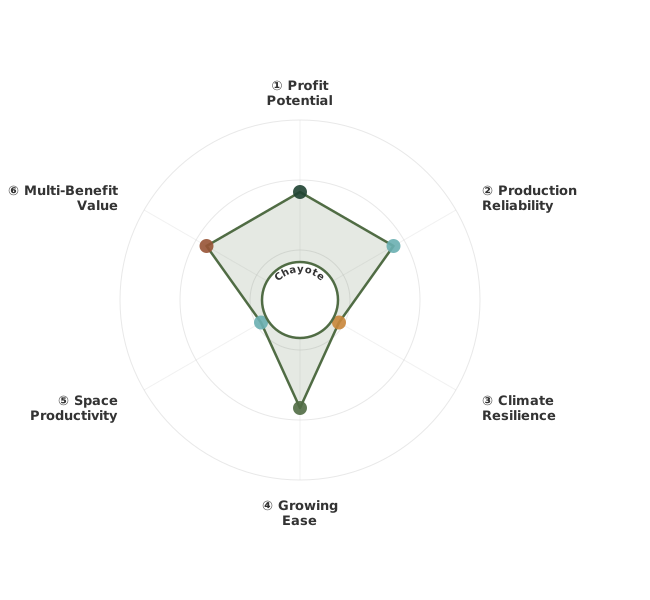
It appears to function primarily as a component in polyculture systems, offering potential as a groundcover or a component in food forests. Its vigorous vining habit suggests a role in biomass production, contributing to soil organic matter when managed appropriately. While not explicitly identified as a nitrogen fixer, its inclusion in diverse plantings can enhance overall system resilience and biodiversity. Integration within agroforestry or perennial cropping systems is implied, where its growth habit can utilize vertical space and potentially outcompete weeds. Direct farmer experiences regarding its specific regenerative benefits or challenges within the knowledge base are not detailed. Further research and observation are needed to fully understand its contributions to soil building, carbon sequestration, and pollinator support within regenerative contexts. While coverage in our knowledge base is limited, the above represents documented uses in regenerative systems.

Regenerative Quick Profile

All recommendations assume integrated, regenerative practices—not conventional inputs.

Climate & Soil Fit

Climate: Tropical Rainforest, Tropical Monsoon, Tropical Savanna, Hot Semi-Arid (Steppe), Cold Semi-Arid (Steppe), Hot Desert, Humid Subtropical, Oceanic (Maritime Temperate), Hot-Summer Mediterranean, Warm-Summer Mediterranean, Monsoon-Influenced Humid Subtropical, Subtropical Highland, Hot-Summer Continental, Warm-Summer Continental

Zones: USDA 9-11, Australian Zones 10-12, EU Mediterranean, Subtropical

Optimal Soil: Loam Soil

System Role & Functions

Primary: Cover Crop System

Secondary: Food Forest, Cash Crop With Services

Management Level

Experience: Beginner-Friendly

Maintenance: Moderate maintenance - Maintaining chayote involves providing consistent moisture through effective water management and ensuring ample space and support structures, integrating it into the farm ecosystem.

Value Streams

  • Vegetable/specialty crop harvest
  • Soil building and erosion control
1

Climate Suitability Assessment

Will this plant thrive in your climate?

IDEALLY SUITED

Köppen Zone: Af (Tropical Rainforest), Am (Tropical Monsoon), Aw (Tropical Savanna), Cfa (Humid Subtropical), Cwa (Monsoon-Influenced Humid Subtropical)
USDA Zone: 7a, 8a, 9a, 10a, 11a, 12a
Australian Zone: tropical, subtropical

Chayote performs exceptionally well in consistently warm, frost-free environments, scoring high in tropical and subtropical Köppen zones (Aw, Am), USDA zones 9a through 13a, and Australian subtropical and tropical regions. These climates provide the long, uninterrupted growing seasons and high humidity necessary for its perennial growth, prolific vining, and abundant fruit production. Its vigorous growth makes it an excellent cover crop, rapidly establishing ground cover, suppressing weeds, and adding significant biomass. In food forests, it contributes to vertical layering and provides a continuous harvest of edible fruits. Minimal management is required beyond initial establishment, and its water needs are generally met by natural rainfall in these regions, making it a highly reliable and productive component for regenerative agriculture systems.

ADEQUATE

Köppen Zone: BSh (Hot Semi-Arid (Steppe)), Cfb (Oceanic (Maritime Temperate)), Csa (Hot-Summer Mediterranean), Csb (Warm-Summer Mediterranean), Cwb (Subtropical Highland)
USDA Zone: 6a
Australian Zone: temperate
EU Climate Region: atlantic

Chayote is adequately suited to climates with warm summers and mild winters where frost is infrequent or manageable, including Köppen Cfa and Cwa zones, USDA zones 8a and 8b, and Australian temperate regions. These areas offer a sufficient growing season for good fruit production and cover crop biomass, but its perennial nature is challenged by occasional freezes. Winter protection or replanting may be necessary, impacting its consistency as a perennial. In food forests, it can be a valuable vining component, but its lifespan may be shorter than in ideal tropical zones. For cover cropping, its performance is strong during the warm season but may be interrupted by cooler periods. Supplemental irrigation might be beneficial during drier spells in some of these regions to maintain optimal growth and productivity.

NOT RECOMMENDED

Köppen Zone: ET (Tundra), BSk (Cold Semi-Arid (Steppe)), BWh (Hot Desert), BWk (Cold Desert), Dfa (Hot-Summer Continental), Dfb (Warm-Summer Continental), Dfc (Subarctic), Dwa (Monsoon-Influenced Hot-Summer Continental)
USDA Zone: 2a, 3a, 3b, 4a, 5a, 5b
EU Climate Region: mediterranean

Chayote is not recommended for climates with significant frost risk and extended dry periods, including Köppen Csa zones, USDA zones 7a and 7b, and EU Mediterranean regions. These zones present substantial challenges to its perennial survival and consistent productivity. Winter temperatures in USDA 7a/7b can cause complete dieback, making it unreliable as a perennial cover crop or food forest element, often requiring annual replanting. Mediterranean climates, with hot, dry summers, stress the plant, reducing fruit yield and biomass, while cool, wet winters with frost risk further hinder its establishment and survival. The need for intensive irrigation and protection makes it economically unviable for its intended functions, with alternative plants offering better resilience and suitability.

Better alternatives for these "not recommended" zones: Sweet Potato (Ipomoea batatas) (Heat and drought tolerant, provides edible roots and ground cover, better adapted to dry spells.), Cowpea (Vigna unguiculata) (Drought tolerant legume, fixes nitrogen, edible pods, better suited to dry heat.), Malabar Spinach (Basella alba) (Heat tolerant vine, tolerates some dryness, provides edible leaves, better suited to warm seasons.), Winter Squash (Cucurbita spp.) (Can tolerate some heat and dryness, provides edible fruit and biomass, more resilient to fluctuating conditions.), Hairy Vetch (Vicia villosa) (Cold-hardy annual legume for nitrogen fixation and biomass, overwinters well in cooler zones.), Winter Rye (Secale cereale) (Extremely cold-hardy, provides excellent biomass, soil protection, and weed suppression in colder zones.)

Note: Zones listed above represent climates where this plant can produce reliably with reasonable management. Climate zones not mentioned would require intensive climate modification (greenhouses, extensive infrastructure) and are not economically viable for regenerative agriculture purposes.

2

Soil Suitability Assessment

Which soil types work best for this plant?

IDEALLY SUITED

Loam Soil

This plant thrives in these soil types without requiring amendments or remediation. Natural soil conditions support optimal growth and productivity.

ADEQUATE

Clay Soil, Rich Soil, Sandy Soil

This plant performs acceptably in these soil types with moderate, manageable remediation such as pH adjustment, compost addition, or drainage improvement. The required amendments are practical and cost-effective for regenerative agriculture.

NOT RECOMMENDED

Acidic Soil, Alkaline Soil, Desert Soil, Rocky Soil, Saline Soil, Wet Soil

Growing this plant in these soil types would require impractical remediation such as complete soil replacement, extensive amendments, or cost-prohibitive infrastructure. These conditions are not economically viable for regenerative agriculture.

Note: Soil suitability assessments focus on remediation requirements. "Ideally Suited" means the plant generally thrives without the need for substantial amendments, "Adequate" means manageable remediation (lime, compost, mulch), and "Not Recommended" means impractical soil changes would be required. Climate factors like rainfall and temperature also influence success.

3

Seasonal Considerations

Planting timing, growth duration, and harvest windows

For chayote, aim to start seeds indoors several weeks before your last expected frost, providing them warmth and light. Transplant seedlings outdoors only after all danger of frost has passed and soil temperatures consistently reach at least 60°F (15°C). Direct seeding is generally not recommended as chayote thrives with a head start.

Once established, chayote vines are vigorous growers, with fruits typically reaching maturity within 45-60 days from flowering. The harvest window is generous, often extending from mid-summer through the fall, right up until the first expected frost. While chayote is a perennial in warmer climates, in zones with colder winters, it’s typically grown as an annual. If you're in a longer-season area, consider planting in succession to ensure a continuous harvest. Chayote tolerates heat well but will be damaged by frost, so protect plants or harvest all remaining fruit before temperatures drop significantly in late fall.

4

System Role & Multi-Benefit Value

Functional roles, integration strategies, and stacked benefits

Functional Role

Total System Value

Chayote contributes to whole-farm resilience through multiple pathways. Its direct harvest value provides a nutritious and calorie-dense food source. As a vigorous vine, it enhances system structure by providing ground cover, which aids in erosion control and weed suppression, thereby reducing the need for external inputs. In appropriate systems like food forests or silvopasture, it can offer dappled shade, benefiting understory crops or livestock. The plant's significant biomass can be incorporated into compost or used as mulch, contributing to soil organic matter and nutrient cycling. While not a nitrogen fixer, its overall contribution to biodiversity and habitat supports beneficial insects and pollinators. Risk diversification is achieved through its perennial nature, ensuring consistent yields year after year, and by adding a diverse food crop to the farm's overall production portfolio, reducing reliance on monocultures.

Integration Characteristics

Multi-Benefit Value: Adequate - Beyond its edible fruit and tubers, chayote's vigorous vine provides substantial ground cover to protect soil from erosion and enhance soil biology.

5

Management & Care Requirements

Integration guidance, maintenance needs, and care practices

How to Integrate This Plant

Chayote (Sechium edule) is a versatile perennial vine that can be integrated into regenerative systems primarily as a food crop and for its biomass. Its primary system role is as a productive element within food forests or perennial polycultures, contributing to ground cover and potentially aiding in erosion control on slopes due to its vining nature. It can also offer shade to understory plants or animals in silvopasture systems or as part of a mixed-species planting in alley cropping, though its primary value lies in edible fruit and stems. Compatible practices include food forests, perennial polycultures, and potentially as a living trellis in alley cropping. Chayote starts providing direct harvest value from Year 1, with significant biomass and cover developing by Year 3-5. Its multi-benefit stacking comes from direct food production, biomass for mulch or compost, and habitat creation for beneficial insects, extending its system value beyond simple harvest.

Integration Practices & Management

While the knowledge base provides limited specific details on the integration of *Sechium edule* within regenerative agriculture systems, its presence suggests potential roles. Direct information on establishment methods, such as seeding rates, optimal timing, or companion planting strategies for *Sechium edule*, is not detailed. Similarly, the knowledge base does not elaborate on its integration with grazing practices like mob or rotational grazing, including specific timing for grazing or necessary rest periods. Termination strategies, whether through natural winterkill, grazing, crimping, mowing, or herbicide use, are also absent from the provided text. Management considerations, including fertility requirements, competition with other species, or succession planning within a regenerative context, are not discussed. Furthermore, its integration with cash crops through relay cropping, intercropping, or specific rotation sequences is not outlined. The limited mentions do not offer practical farmer experiences or insights into how *Sechium edule* is actively managed or utilized on regenerative farms. Therefore, specific guidance on its practical application within these frameworks cannot be derived from the current knowledge base.

Management Profile

Maintenance Intensity: Adequate - Maintaining chayote involves providing consistent moisture through effective water management and ensuring ample space and support structures, integrating it into the farm ecosystem.

6

Economics & Value Streams

Direct harvest, system benefits, ecosystem services, and risk diversification

Comprehensive economic analysis including direct harvest value, system enhancement contributions, ecosystem services, value timeline, and risk diversification strategies.

Vegetable & Specialty Economics

Metric Value
Seed/Transplant Cost 100-200 $/acre 247-494 $/ha
Expected Yield 3000-7000 lbs/acre 3362-7845 kg/ha
Market Price 0.70-1.40 $/lb 1-3 $/kg
Harvest/Handling Cost 600-1200 $/acre 1482-2965 $/ha
Marketing/Distribution Cost 300-600 $/acre 741-1482 $/ha
Net Annual Return* $100-$8800/acre/year

Economics highly variable by market channel (direct vs wholesale), scale, and management. Direct marketing commands premiums but requires labor. Values shown for mid-scale market garden operations.

* Net Annual Return = (Yield × Market Price) − (Amortized Establishment Cost + Annual Maintenance). This return is realized only at/after first harvest; early years have costs but no revenue. Range shows worst case to best case scenarios.

System Enhancement Value

Beyond cost recovery: soil building, nitrogen, biomass, and weed suppression

Soil Building & Weed Suppression

Chayote offers significant value as a late-season nectar source for pollinators, as noted in the knowledge base. This is crucial for supporting pollinator populations as other floral resources diminish. Furthermore, its edible shoots provide an additional food source, diversifying farm output beyond the fruit. The plant's vigorous growth can also act as a living mulch, suppressing weeds and retaining soil moisture, especially when allowed to sprawl over the ground. Its integration into food forests, as mentioned, suggests its role in creating multi-layered ecosystems that enhance biodiversity and provide multiple ecological services. The knowledge base also hints at its use in proximity to other plants, such as loquat trees, indicating its potential role in companion planting scenarios, though the specific benefits in such arrangements are not detailed.

Erosion Control

Variable, likely minimal compared to dedicated windbreak species. Potential for localized soil stabilization and minor wind reduction.

While chayote is primarily a vining plant and not a tree, its dense foliage when grown on trellises or allowed to sprawl can offer some degree of wind reduction and erosion control, particularly in its early growth stages or when used as a living fence. The extensive root system, though not deeply penetrating, can help stabilize soil. In systems where chayote is integrated into hedgerows or along field borders, it can contribute to slowing wind speeds, thereby reducing soil erosion and protecting more sensitive crops or livestock in its lee. Its value as a windbreak is likely more localized and temporary compared to woody perennial windbreaks, but it can still offer marginal benefits in a multi-strata planting system. The extent of this benefit would be highly dependent on the density of the planting and the specific wind conditions. It's important to note that its primary growth habit is vertical, so its protective capacity is often achieved through its canopy rather than its trunk.

Ecosystem Service Contributions

Environmental contributions: carbon, pollinators, wildlife, and water

  • Carbon Sequestration: Chayote, with its vigorous vining growth, has the potential to sequester carbon in its biomass (leaves, stems, roots) and contribute to soil organic matter. The rate of sequestration would depend on the plant's growth rate, lifespan, and how its residues are managed.
  • Pollinator Support: High. The knowledge base explicitly states it is a 'worthwhile addition to the garden' as a 'late-season nectar source for pollinators'.
  • Wildlife Habitat: Provides potential habitat and food sources (nectar) for pollinators. Its dense foliage could offer some cover for small ground-dwelling animals, though this is not a primary function.
  • Water Quality: Not applicable

Value Timeline: Soil Building Process

When you'll see results: immediate soil benefits, compounding over seasons

Years 1-2

Initial soil stabilization from root growth and ground cover. Early weed suppression and moisture retention. Establishment of vining structure. Potential for early, limited shoot harvest. Beginning to function as a pollinator resource in late season.

Years 3-5

Established vine providing more significant ground cover and potential for localized wind reduction. Consistent production of edible shoots and fruits (if climate permits). Increased pollinator support. Integration into food forest canopy structure becomes more evident.

Years 10-20

Mature chayote plants can contribute significantly to the overall biomass and soil health of integrated systems. Continued pollinator support. Persistent weed suppression and soil moisture retention. Potential for greater biomass accumulation for soil organic matter.

20+ Years

Long-term contribution to soil organic matter and ecosystem resilience. Continued provision of food resources and pollinator support. Potential for the root system to persist and continue providing ground cover benefits.

Farm Risk Reduction

How this reduces farm risk: lower input costs and better soil resilience

  • Multiple Revenue Streams: Edible fruit, edible shoots, late-season pollinator support (indirect economic value through increased yields of other crops).
  • Temporal Income Spread: Value is spread across the growing season with edible shoots potentially available earlier and fruits later. Its role as a late-season pollinator resource extends its utility beyond direct harvest, supporting other crops with later harvests.
  • Market Risk Hedge: Provides multiple harvestable products (fruit and shoots), diversifying income. Its role in supporting pollinators hedges against crop failure due to insufficient pollination. Its resilience in certain climates can offer a more reliable food source than more sensitive crops.
7

Regenerative Suitability Details

Comprehensive trait ratings for system integration assessment

Comparative ratings for this plant across key regenerative agriculture traits.

Trait Suitability Explanation
Season Extension Not Recommended As a warm-season tropical vine, chayote thrives in consistent warmth and does not extend the growing season in frost-prone regions.
Space Efficiency Not Recommended This vigorous vine requires robust trellising and ample space, contributing to ground cover rather than concentrated yield in garden settings.
Storage Longevity Adequate Chayote fruits can be preserved for weeks to months in cool, humid conditions, benefiting from careful handling to prevent spoilage.
Yield Reliability Adequate In consistently warm, frost-free environments with adequate support, chayote offers a reliable harvest, though cold snaps can impact production.
Establishment Ease Adequate Chayote readily establishes from its fruit or cuttings in warm soils, its rapid early growth helping to suppress weeds and build soil cover.
Multi Benefit Value Adequate Beyond its edible fruit and tubers, chayote's vigorous vine provides substantial ground cover to protect soil from erosion and enhance soil biology.
Climate Adaptability Not Recommended Adapted to tropical and subtropical climates, chayote thrives with consistent warmth and is highly sensitive to frost, limiting its utility in temperate zones.
Maintenance Intensity Adequate Maintaining chayote involves providing consistent moisture through effective water management and ensuring ample space and support structures, integrating it into the farm ecosystem.
Disease Pest Resistance Adequate Chayote exhibits moderate resilience, with proactive soil health and robust plant vigor, supported by healthy soil ecosystems, mitigating common pest and disease pressures.

Comparative System: Ratings compare plants within their economic category (e.g., cover crop nitrogen fixation compared to other cover crops, not to all plants). Individual farm conditions and management practices significantly influence actual performance.

8

Learn More

Why farmers use this plant and additional resources

Why Regenerative Farmers Use This Plant

Sechium edule, commonly known as chayote or christophine, offers significant regenerative potential for diversified farms seeking high-value specialty crops. Its vigorous vine growth can produce substantial yields and biomass, contributing to soil organic matter and providing ground cover to suppress weeds and reduce soil erosion, particularly on slopes. Mature plants can yield 50-100 fruits per plant, translating to potential revenues of $1,000-$3,000 per acre depending on market access and pricing. The relatively short time from transplant to first harvest, typically 60-90 days, allows for efficient production cycles, with continuous fruiting possible over an extended season of 4-6 months in frost-free areas. Its market appeal spans direct-to-consumer sales, CSA shares, and specialty wholesale channels, making it an excellent addition to farm income streams and a way to capture value in niche markets. The plant's perennial nature in suitable climates also reduces annual establishment costs and labor inputs over time.

Integrating chayote into regenerative systems offers multiple ecosystem benefits. Its extensive root system contributes to soil structure improvement and can scavenge nutrients from deeper soil profiles. While not a nitrogen fixer, its substantial biomass production, when composted or incorporated into the soil, contributes significantly to soil organic matter. In tropical and subtropical regions, it can be intercropped with fruit trees or used as a living mulch, enhancing biodiversity and creating microclimates that benefit other plants. Its ability to produce prolifically in warm seasons also offers a valuable food source for farm families and communities.

Quantitatively, chayote's impact on the local ecosystem can be considerable. Its large, attractive flowers attract a variety of pollinators, including bees and hoverflies, contributing to local pollinator populations and potentially benefiting adjacent crops. The dense foliage provides habitat for beneficial insects that prey on common agricultural pests. Improved soil structure from its root activity can also enhance water infiltration rates, reducing runoff and improving water use efficiency on the farm.

9

How to Integrate This Plant

Practical guidance for regenerative systems

Establishment and Planting: Establishment of Sechium edule is typically done from whole fruits that have begun to sprout or from vegetative cuttings. For direct sowing, fruits should be planted with the pointed end facing upwards or slightly elevated, about 1-4 inches (2.5-10 cm) deep, in well-draining soil. Cuttings, taken from mature vines, are also an effective propagation method. A common spacing for mature plants is 6-10 feet (1.8-3 meters) apart, with rows spaced 8-12 feet (2.4-3.6 meters) apart, which translates to approximately 30-45 plants per acre. Planting is best done in spring after the last frost, typically from March to May in the Northern Hemisphere and September to November in the Southern Hemisphere, when soil temperatures consistently remain above 15°C (59°F). In cooler climates where it is grown as an annual, starting sprouted fruits indoors 4-6 weeks before the last frost is recommended.

Management and Care: Management practices for chayote focus on providing support for its vigorous vining growth and ensuring adequate moisture and fertility. Trellising or staking is essential to support the heavy vine load and improve air circulation, reducing disease pressure. Vines can grow to lengths of 20-50 feet (6-15 meters) or more if given ample support. Water needs are significant, especially during fruit development, requiring approximately 1-2 inches (2.5-5 cm) of water per week, either from rainfall or irrigation. Fertility should be prioritized through biological sources. Incorporating well-rotted compost or aged manure into the planting area at establishment is crucial. As the plant grows, top-dressing with compost or using organic liquid feeds can support continuous production. While chayote can tolerate poor soils, optimal yields are achieved in fertile, well-drained loams.

Production Cycle and Soil Stewardship: Once established from sprouted fruits or transplants, chayote plants typically begin producing edible fruits within 60-120 days. In frost-free climates, they can be perennial, producing for many years. In regions with light frosts, they may die back to the ground but regrow from the roots in spring. For regions with shorter growing seasons, starting sprouted fruits indoors 4-6 weeks before the last frost is recommended. Following chayote in a crop rotation, it is beneficial to plant nitrogen-fixing cover crops like vetch or clover to replenish soil nutrients. Before planting chayote, a well-managed cover crop that has been tilled in or crimped can provide a good soil base. After the final harvest in late fall, a winter cover crop such as cereal rye or oats can be sown to protect the soil and add organic matter. Crop rotation intervals of 3-4 years with unrelated crops are recommended to prevent the buildup of soil-borne diseases.

Pest and Disease Management: Pest and disease management should focus on preventative measures such as good air circulation, proper watering to avoid fungal diseases, and encouraging beneficial insects through habitat planting. Monitoring for common issues like aphids or powdery mildew is important. Cultural practices, such as ensuring good air circulation by pruning excess foliage and maintaining plant health, are key to preventing problems. Biological controls, like encouraging ladybugs for aphid control, are preferred. Post-harvest residue management involves removing dead vines and incorporating any remaining organic matter into the soil, followed by a winter cover crop if the growing season allows for it before the next planting or regrowth.

Regional Adaptations: Chayote has demonstrated success in various regional farm systems.

  • Humid Subtropical Regions: In the southeastern United States (USDA Zones 7b-10a), it is a popular garden and small-scale commercial crop, often grown on sturdy trellises or pergolas, benefiting from long, warm summers. In Australia's coastal regions (Australian Zones 4-5), farmers utilize its heat tolerance and water needs, often integrating it into home gardens and small commercial plots, ensuring adequate irrigation during dry spells. In Florida and California, USA, it is grown as an annual or perennial vine, providing a consistent supply of fruit for local markets and home consumption. In Queensland, Australia, it thrives in similar warm, humid conditions and is a common backyard fruit and vegetable.
  • Mediterranean Climates: In the Mediterranean regions of Europe and North Africa (RHS Zones H1B-H2), its adaptability to warm, dry summers and mild winters makes it suitable for cultivation, particularly with supplemental irrigation and mulching to conserve soil moisture, often planted against walls or fences that offer support. In Southern Europe, it can be grown in warmer microclimates, often with winter protection or as an annual in cooler zones.
  • Tropical and Subtropical Regions: In Central and South America, where it originates, it is a staple crop grown in diverse agroforestry systems and smallholder farms, often integrated with coffee or cocoa plantations. In tropical highland regions of Latin America, it is a staple, grown on simple trellises and integrated into diverse farming systems, benefiting from consistent rainfall and warm temperatures year-round. In Southeast Asia, particularly in countries like Vietnam and the Philippines, it is cultivated extensively for local markets and export. In parts of South America, such as Brazil and Colombia, it is a common backyard and market garden crop, often interplanted with other vegetables or grown on simple trellises.