Focusing primarily on its cultivation with soil amendments. Studies indicate Stevia benefits from organic manures like farmyard manure and vermicompost, which enhance growth metrics such as crop growth rate and dry matter yield. The addition of bamboo biochar, especially at rates of 8 Mg/ha or more, has shown significant increases in leaf and steviol glycoside yield while also improving soil health by reducing bulk density and augmenting pH. This suggests Stevia can be integrated into systems aiming for soil building and potentially carbon sequestration through biochar application. Nutrient analysis highlights positive correlations between nitrogen, phosphorus, magnesium, and copper with steviol glycoside content, indicating its responsiveness to nutrient-rich environments. While not explicitly mentioned as a cover crop or forage, its cultivation with soil-enhancing amendments points to its potential as a component in regenerative cropping systems focused on soil improvement and yield optimization. While coverage in our knowledge base is limited, the above represents documented uses in regenerative systems.

Regenerative Quick Profile

All recommendations assume integrated, regenerative practices—not conventional inputs.

Climate & Soil Fit

Climate: Tropical Rainforest, Tropical Monsoon, Tropical Savanna, Hot Semi-Arid (Steppe), Cold Semi-Arid (Steppe), Hot Desert, Cold Desert, Humid Subtropical, Oceanic (Maritime Temperate), Hot-Summer Mediterranean, Warm-Summer Mediterranean, Monsoon-Influenced Humid Subtropical, Subtropical Highland, Hot-Summer Continental, Warm-Summer Continental, Subarctic, Monsoon-Influenced Hot-Summer Continental, Tundra

Zones: USDA 9-11, Australian Zones 11-14, EU Mediterranean, Subtropical

Optimal Soil: Loam Soil

System Role & Functions

Primary: Cash Crop With Services

Secondary: Soil Remediation, Specialty

Key Benefits: Storage Longevity

Management Level

Experience: Advanced

Maintenance: Moderate maintenance - This perennial thrives with consistent moisture management and well-drained soil, minimizing challenges like root rot through thoughtful system integration.

Value Streams

  • Vegetable/specialty crop harvest
1

Climate Suitability Assessment

Will this plant thrive in your climate?

IDEALLY SUITED

Köppen Zone: Af (Tropical Rainforest), Am (Tropical Monsoon), Aw (Tropical Savanna), Cfa (Humid Subtropical), Cwa (Monsoon-Influenced Humid Subtropical)
USDA Zone: 6a, 7a, 8a, 9a, 10a, 11a, 12a
Australian Zone: tropical, subtropical

Stevia performs exceptionally well in climates with long, frost-free growing seasons and warm to hot temperatures, ideally between 65-80°F (18-27°C). These conditions are met in Köppen zones Cfa, Cwa, and Aw, and extensively across USDA Zones 8b through 13a, Australian subtropical and tropical zones, and EU Mediterranean (with irrigation). These regions offer 210-365 frost-free days, allowing for continuous growth and multiple harvests annually. Rainfall patterns are generally sufficient, though supplemental irrigation may be needed during peak dry periods in some subtropical or tropical areas to maximize yield. High temperatures are well-tolerated, promoting vigorous growth. Establishment is reliable, and multi-year productivity is expected with minimal winter protection. The primary management considerations involve ensuring good drainage to prevent root rot in humid environments and managing water resources during drier spells. Yields are consistently high, making these zones economically optimal for Stevia cultivation.

ADEQUATE

Köppen Zone: BSh (Hot Semi-Arid (Steppe)), Cfb (Oceanic (Maritime Temperate)), Csa (Hot-Summer Mediterranean), Csb (Warm-Summer Mediterranean), Cwb (Subtropical Highland), Dfa (Hot-Summer Continental), Dfb (Warm-Summer Continental)
USDA Zone: 5a, 5b
Australian Zone: grassland, temperate
EU Climate Region: atlantic

Stevia can be grown successfully in climates with adequate growing seasons and manageable temperature ranges, typically requiring 180-210 frost-free days. This includes Köppen zones Cfa, Cwa, Csb, and Aw, and USDA Zones 7a-8a, Australian grassland and temperate zones, and EU Atlantic regions. While these zones provide sufficient warmth for growth, they may experience cooler summers or more pronounced dry periods than ideal. Supplemental irrigation is often necessary during dry spells, particularly in grassland or Atlantic climates, to ensure consistent yields. Winter survival is generally good, but establishment success might be slightly lower than in 'ideally suited' zones if timing is not optimized. Management focuses on water availability and ensuring good drainage. While yields might be 10-20% lower than in optimal regions, these areas still offer economically viable production for Stevia with appropriate agricultural practices.

NOT RECOMMENDED

Köppen Zone: ET (Tundra), BSk (Cold Semi-Arid (Steppe)), BWh (Hot Desert), BWk (Cold Desert), Dfc (Subarctic), Dwa (Monsoon-Influenced Hot-Summer Continental)
USDA Zone: 2a, 3a, 3b, 4a
Australian Zone: arid
EU Climate Region: mediterranean

Stevia is not recommended for cultivation in Köppen zones BSh and BWh, USDA Zones below 7a, Australian arid zones, and EU Mediterranean regions due to extreme environmental challenges that make cultivation economically impractical. In hot, arid to semi-arid regions (BSh, BWh, Australian arid), extreme heat (often exceeding 100°F/38°C) and severe water scarcity (rainfall <20 inches/500 mm) necessitate extensive, costly irrigation infrastructure and lead to low establishment success and yields. Water costs alone can make production unviable. In Mediterranean climates (Csa, EU Mediterranean), while summers are warm, the prolonged lack of rainfall requires significant irrigation, increasing operational expenses and stress on plants. For zones with very short growing seasons and extreme cold (USDA Zones below 7a), winter kill is a major risk, making perennial cultivation unreliable and forcing annual replanting. These conditions result in high management costs, low yields, and poor economic returns compared to alternative crops better suited to these challenging environments.

Better alternatives for these "not recommended" zones: Jojoba (Extremely drought-tolerant perennial adapted to arid and semi-arid conditions, producing valuable oil.), Agave (Drought-tolerant succulent that can be cultivated for fiber or sweeteners, thrives in hot, dry environments.), Sorghum (for biomass/sweetener) (Drought-tolerant grain crop that can be used for sweet syrup or biomass in hot climates.), Lavender (Well-adapted to Mediterranean climates, drought-tolerant, and has a high-value market.)

Note: Zones listed above represent climates where this plant can produce reliably with reasonable management. Climate zones not mentioned would require intensive climate modification (greenhouses, extensive infrastructure) and are not economically viable for regenerative agriculture purposes.

2

Soil Suitability Assessment

Which soil types work best for this plant?

IDEALLY SUITED

Loam Soil

This plant thrives in these soil types without requiring amendments or remediation. Natural soil conditions support optimal growth and productivity.

ADEQUATE

Clay Soil, Rich Soil, Rocky Soil, Sandy Soil

This plant performs acceptably in these soil types with moderate, manageable remediation such as pH adjustment, compost addition, or drainage improvement. The required amendments are practical and cost-effective for regenerative agriculture.

NOT RECOMMENDED

Acidic Soil, Alkaline Soil, Desert Soil, Saline Soil, Wet Soil

Growing this plant in these soil types would require impractical remediation such as complete soil replacement, extensive amendments, or cost-prohibitive infrastructure. These conditions are not economically viable for regenerative agriculture.

Note: Soil suitability assessments focus on remediation requirements. "Ideally Suited" means the plant generally thrives without the need for substantial amendments, "Adequate" means manageable remediation (lime, compost, mulch), and "Not Recommended" means impractical soil changes would be required. Climate factors like rainfall and temperature also influence success.

3

Seasonal Considerations

Planting timing, growth duration, and harvest windows

Stevia thrives in warmth, making its establishment crucial after all danger of frost has passed and soil temperatures consistently reach at least 60°F (15°C). You can begin seed starting indoors several weeks before this critical transplanting window to get a head start. Direct seeding is also an option once the soil has warmed sufficiently. Plants require a long, warm growing season, typically reaching maturity within 90-120 days.

The primary harvest window opens in mid-summer and extends through fall. For continuous leaf production, consider succession planting every 4-6 weeks, though be mindful of the approaching cooler weather. Stevia is not frost-tolerant; its growth will cease with the first significant chill. However, you can extend the harvest by protecting plants with row covers or in a greenhouse as temperatures drop in late fall, allowing you to gather leaves until a hard freeze. In milder climates, it may behave more like a perennial, but for annual production, focus on maximizing the warm season.

4

System Role & Multi-Benefit Value

Functional roles, integration strategies, and stacked benefits

Functional Role

Total System Value

Stevia's primary contribution to whole-farm resilience is through its value as a cash crop, offering an additional income stream. When integrated with regenerative practices, it enhances system value beyond direct harvest. For instance, the application of biochar alongside stevia cultivation has been shown to improve soil bulk density and pH, contributing to better soil structure and water retention. Organic manures like farmyard manure and vermicompost also enrich the soil, increasing crop growth rates and dry matter yield. While not a nitrogen fixer or a primary pollinator attractant, its cultivation can be part of diversified systems that support biodiversity. The use of soil amendments in stevia production contributes to carbon sequestration in the soil. Risk diversification is achieved by adding stevia to a farm's crop portfolio, reducing reliance on single commodities and providing a potentially more stable income source, especially when grown using practices that improve soil health and reduce the need for synthetic inputs.

Integration Characteristics

Multi-Benefit Value: Not Recommended - Primarily valued for its natural sweetness, stevia can contribute to a healthier soil ecosystem by supporting beneficial soil biology when integrated into diverse cropping systems.

5

Management & Care Requirements

Integration guidance, maintenance needs, and care practices

How to Integrate This Plant

Stevia can be integrated into regenerative farming systems primarily as a cash crop that offers soil health benefits. Its cultivation can be enhanced by practices like the addition of biochar, which improves soil structure, increases pH, and boosts nutrient availability, as demonstrated in field trials. Organic amendments such as farmyard manure and vermicompost also significantly improve stevia's growth and yield. While stevia doesn't directly provide shade, nitrogen fixation, or act as a windbreak, its cultivation can be part of diversified cropping systems. It thrives in well-drained soils and can benefit from practices that enhance soil organic matter and nutrient cycling. The timeline to contribution is immediate for harvest, with soil health benefits accumulating over time through the application of amendments and good soil management. Beyond direct harvest, stevia's value lies in its potential to improve soil quality and yield when managed with regenerative inputs, contributing to overall farm resilience and economic diversification.

Integration Practices & Management

While regenerative agriculture principles aim for soil health and ecological balance, the knowledge base focuses on specific cultivation enhancements rather than holistic farm system integration. For instance, sources detail the positive impacts of soil amendments like bamboo biochar and organic manures (farmyard manure, vermicompost) on Stevia's growth, leaf area, and yield in field trials. These studies highlight improved soil properties such as increased pH and reduced bulk density with biochar application. However, information on Stevia establishment methods (seeding, tillage), integration with grazing systems, termination strategies, or its role in crop rotations and intercropping within a regenerative context is not present. The existing data primarily addresses fertility management through organic inputs and biochar to optimize Stevia production on a per-crop basis, rather than detailing its broader role in a regenerative farming system. While coverage in our knowledge base is limited, the above represents documented uses in regenerative systems.

Management Profile

Maintenance Intensity: Adequate - This perennial thrives with consistent moisture management and well-drained soil, minimizing challenges like root rot through thoughtful system integration.

6

Economics & Value Streams

Direct harvest, system benefits, ecosystem services, and risk diversification

Comprehensive economic analysis including direct harvest value, system enhancement contributions, ecosystem services, value timeline, and risk diversification strategies.

Vegetable & Specialty Economics

Metric Value
Seed/Transplant Cost 200-400 $/acre 494-988 $/ha
Expected Yield 500-1000 lbs/acre 560-1120 kg/ha
Market Price 5.00-10.00 $/lb 11-22 $/kg
Harvest/Handling Cost 400-800 $/acre 988-1976 $/ha
Marketing/Distribution Cost 200-400 $/acre 494-988 $/ha
Net Annual Return* $900-$9200/acre/year

Economics highly variable by market channel (direct vs wholesale), scale, and management. Direct marketing commands premiums but requires labor. Values shown for mid-scale market garden operations.

* Net Annual Return = (Yield × Market Price) − (Amortized Establishment Cost + Annual Maintenance). This return is realized only at/after first harvest; early years have costs but no revenue. Range shows worst case to best case scenarios.

System Enhancement Value

Beyond harvest: ecosystem services from regenerative cash crop practices

Ecological Service Contributions

Stevia integration offers significant soil remediation and enhancement benefits, contributing to overall farm system resilience. Knowledge base excerpt highlights that bamboo biochar application, in conjunction with stevia cultivation on silty clay acidic soil, led to a reduction in soil bulk density by 5-8% and an augmentation of soil pH due to biochar's alkaline nature. Furthermore, soil organic carbon increased by 22.7% with an optimal biochar treatment. This indicates stevia systems, particularly when incorporating soil amendments like biochar, can actively improve soil structure and fertility. Excerpt suggests stevia can adapt to urban soils with good organic matter content, implying a role in improving degraded or low-quality soils. The increased nutrient uptake of nitrogen and phosphorus observed with organic manures further points to stevia's capacity to enhance nutrient cycling and availability within the soil profile, reducing reliance on synthetic inputs and contributing to a more closed-loop agricultural system. These soil health improvements create a more robust foundation for all farm enterprises.

Ecosystem Service Contributions

Environmental contributions: carbon, pollinators, wildlife, and water

  • Carbon Sequestration: Stevia, as a perennial or annual crop with significant biomass production, has the potential to sequester carbon in both above- and below-ground biomass, as well as in the soil. The application of organic amendments like biochar and vermicompost, as noted in the knowledge base, further enhances soil organic carbon content, thereby increasing carbon sequestration potential within the agroecosystem.
  • Pollinator Support: Low. While specific pollinator interactions for stevia are not detailed in the provided excerpts, its primary value lies in its direct crop yield and soil improvement services rather than significant floral resources for a broad range of pollinators. Further research would be needed to assess its specific contribution.
  • Wildlife Habitat: Variable. Depending on the cultivation practices and surrounding landscape, stevia fields could offer limited habitat. Dense plantings might provide some cover, but its primary role is not as a significant food source or habitat provider for diverse wildlife compared to more established agroforestry or cover cropping systems. Its contribution is likely indirect through improved soil health supporting a broader soil ecosystem.
  • Water Quality: Not applicable

Value Timeline: Production & Services

When you'll see results: varies by crop (annual harvest vs. perennial establishment)

Years 1-2

Initial soil improvement through organic matter addition and amendment incorporation (e.g., biochar, vermicompost) leading to improved soil structure and water holding capacity. Early establishment of improved nutrient cycling and potential for early-stage soil remediation. First harvest of stevia crop begins, providing an initial income stream.

Years 3-5

Established stevia crop with consistent yield potential. Continued improvement in soil physicochemical properties (e.g., reduced bulk density, increased organic carbon, pH buffering) as organic amendments integrate. Enhanced nutrient availability and uptake by the plants. Potential for increased resilience to soil-borne stresses due to improved soil health.

Years 10-20

Mature stevia system with sustained high yields. Significant long-term benefits from soil carbon sequestration and organic matter accumulation. Potential for reduced input requirements (fertilizers, water) due to enhanced soil fertility and structure. Fully realized soil remediation benefits if applied to degraded lands.

20+ Years

Long-term soil health benefits persist, with enhanced ecosystem services such as improved water infiltration and retention. The established organic matter base contributes to the resilience of the entire farm system. If managed for perenniality or as part of a rotation, continued contribution to soil organic matter and nutrient cycling.

Farm Risk Reduction

How this reduces farm risk: backup income, weather protection, market hedges

  • Multiple Revenue Streams: Direct cash crop revenue from stevia leaf/glycoside sales. Potential for revenue from value-added stevia products. Indirect value from reduced input costs (fertilizers, soil amendments) due to improved soil fertility and nutrient recycling. Potential for sale of biochar or compost if produced on-farm.
  • Temporal Income Spread: Annual or multi-year harvest of stevia crop provides consistent income. Ongoing soil health improvements and ecosystem service provision occur throughout the crop's lifecycle and beyond, creating a steady, non-monetary value. Diversification of revenue streams through potential value-added products spreads market risk.
  • Market Risk Hedge: Stevia, as a high-value specialty crop, can offer a market alternative to commodity crops, providing a hedge against price volatility. Its integration with soil improvement practices reduces reliance on external inputs, mitigating risks associated with input price fluctuations and availability. Enhanced soil health and resilience can buffer against climate-related risks such as drought or extreme weather events, ensuring more stable yields over time.
7

Regenerative Suitability Details

Comprehensive trait ratings for system integration assessment

Comparative ratings for this plant across key regenerative agriculture traits.

Trait Suitability Explanation
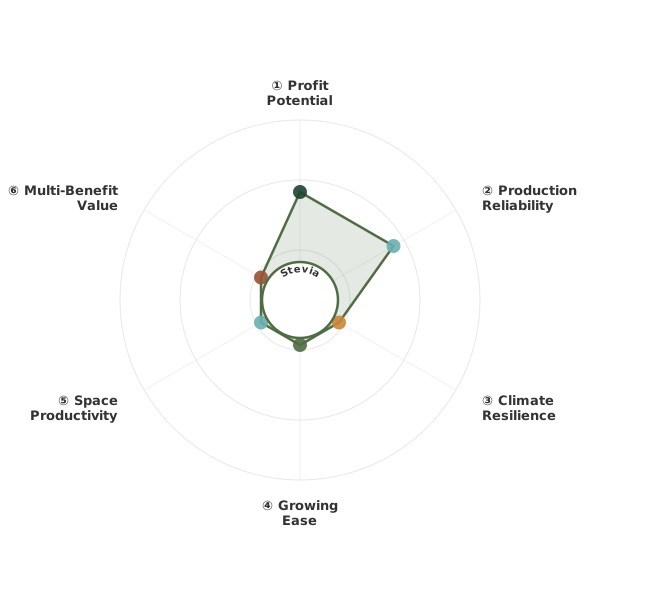
Season Extension Not Recommended Stevia thrives in warm conditions, maximizing its growth window through effective soil moisture management and protection from early/late frosts.
Space Efficiency Adequate This compact perennial efficiently utilizes space, offering concentrated sweetness from its moderate leaf volume per square foot.
Storage Longevity Ideally Suited Dried stevia leaves maintain their potent sweetness for extended periods, showcasing excellent storability when kept in dry conditions.
Yield Reliability Adequate Stevia yields are dependable in warm, sunny environments with consistent moisture management, though its sensitivity to temperature extremes requires careful consideration.
Establishment Ease Not Recommended Successful establishment from seed is enhanced by meticulous soil preparation and consistent moisture retention, supporting the germination of its fine seeds.
Multi Benefit Value Not Recommended Primarily valued for its natural sweetness, stevia can contribute to a healthier soil ecosystem by supporting beneficial soil biology when integrated into diverse cropping systems.
Climate Adaptability Not Recommended As a tender perennial, stevia flourishes in warmer climates, requiring vigilant water management and protection from cold snaps to extend its growing season.
Maintenance Intensity Adequate This perennial thrives with consistent moisture management and well-drained soil, minimizing challenges like root rot through thoughtful system integration.
Disease Pest Resistance Adequate Stevia exhibits moderate resilience, supported by good soil drainage and practices that encourage beneficial insect populations to deter pests and diseases.

Comparative System: Ratings compare plants within their economic category (e.g., cover crop nitrogen fixation compared to other cover crops, not to all plants). Individual farm conditions and management practices significantly influence actual performance.

8

Learn More

Why farmers use this plant and additional resources

Why Regenerative Farmers Use This Plant

Stevia rebaudiana presents a compelling opportunity for regenerative farmers seeking high-value specialty cash crops with significant market potential. Its natural sweetness, derived from steviol glycosides, positions it as a sought-after alternative to artificial sweeteners, driving strong demand in the burgeoning market for sugar alternatives. This offers farmers the potential for substantial revenue per acre, with market prices often reflecting its niche status and labor-intensive processing. For instance, dried stevia leaves can fetch prices significantly higher than conventional field crops.

With a relatively short growing season, typically 90-120 days from transplant to harvest, Stevia allows for efficient crop rotation and succession planting strategies, maximizing land utilization throughout the growing season. This adaptability makes it suitable for direct-to-consumer sales, farmers' markets, CSA shares, and specialty wholesale channels, diversifying farm income streams and building direct relationships with consumers who value natural, sustainably produced sweeteners. In regions like USDA Zones 7-8, successive plantings can yield harvests from mid-summer through early fall, potentially generating upwards of $8,000-$15,000 per acre depending on processing and market access. This provides a consistent cash flow from a specialized crop, allowing farmers to invest more in soil health practices.

Integrating Stevia into regenerative systems can enhance soil health and biodiversity. As a non-leguminous herbaceous plant, it does not fix atmospheric nitrogen but exhibits a moderate, fibrous root system, typically reaching depths of 12-24 inches (30-60 cm), which helps to improve soil structure and aeration. Its dense foliage can contribute to significant above-ground biomass, offering ground cover that aids in suppressing weeds and reducing soil erosion. When managed with practices that promote soil health, such as minimal tillage and cover cropping in rotation, Stevia production can contribute to improved water infiltration and retention, and a gradual increase in soil organic matter over time. Its residue can be incorporated back into the soil, adding organic matter and supporting microbial activity.

Beyond its direct economic benefits and soil-building potential, Stevia integrates well into diversified farm ecosystems. As a relatively low-growing plant, it can be effectively intercropped or used as a border crop, contributing to beneficial insect habitat and potentially deterring certain pests from adjacent crops. Its flowering period can attract pollinators and beneficial insects, including predatory insects that aid in pest management for other crops, contributing to on-farm ecosystem services and local biodiversity. By providing a consistent cash flow from a specialized crop, Stevia allows farmers to invest more in soil health practices, such as cover cropping and reduced tillage, further amplifying the positive environmental impacts of their operations. By incorporating stevia into crop rotations, farmers can break pest and disease cycles that might affect other crops, contributing to a more robust Integrated Pest Management (IPM) strategy that relies less on synthetic interventions.

Stevia has demonstrated success in various regional agricultural contexts. In the humid subtropical climates of the southeastern United States (USDA Zones 7-9), farmers have found success growing Stevia as an annual, often in raised beds to ensure good drainage, achieving yields of 1,500-3,000 lbs of dried leaves per acre (1,680-3,360 kg/ha). In the temperate oceanic climates of the United Kingdom (RHS zones H5-H7), specialty growers are cultivating Stevia, often integrating it into mixed cropping systems. In Australia's temperate regions (Australian Zones 2-4), Stevia is being explored as a niche crop, with farmers adapting planting schedules to suit the local rainfall patterns and temperature ranges, often following cereal crops to diversify income. In the Mediterranean climate of Southern Europe (Köppen Csa), Stevia can be grown as a perennial in well-drained soils, with winter protection or in milder coastal areas, and can be integrated into olive or vineyard systems as an understory crop. In the humid continental climates of the Midwestern United States (USDA Zones 4-6), it is grown as an annual, often in rotation with vegetables or field crops, benefiting from the fertile soils and ample summer warmth.

9

How to Integrate This Plant

Practical guidance for regenerative systems

Establishing Stevia rebaudiana requires careful attention to its specific needs for optimal growth and yield. Seeding rates for direct sowing are typically around 0.5-1 lb per acre (0.56-1.12 kg/ha), though germination can be slow and erratic. Seeds require light to germinate and should be sown shallowly, about 0.125-0.25 inches (0.3-0.6 cm) deep, at a rate of approximately 0.5-1 oz per acre (14-28 grams per acre), which translates to roughly 20,000-40,000 seeds per acre depending on viability. For more consistent results and quicker establishment, transplanting seedlings is highly recommended. Seedlings are usually started indoors 6-8 weeks before the last frost. Transplants should be set at the same depth they were in their nursery pots, with an optimal planting depth of around 0.5 inches (1.3 cm), ensuring the root ball is well-covered.

Spacing between plants is critical for air circulation and to prevent disease; aim for 12-18 inches (30-45 cm) between plants in rows that are 24-36 inches (60-90 cm) apart. This spacing allows for mature plants to reach heights of 1.5-3 feet (0.45-0.9 meters) and spread adequately. In the Northern Hemisphere, planting typically occurs from late April to June, after the risk of frost has passed, while in the Southern Hemisphere, this translates to October to December. Stevia thrives in temperatures between 15-30°C (59-86°F) and can tolerate brief dips to around 10°C (50°F) but is sensitive to frost.

Management practices for Stevia focus on consistent moisture, adequate fertility, and pest prevention. While Stevia is somewhat drought-tolerant once established, it performs best with 1-2 inches (2.5-5 cm) of water per week, especially during its active growth phase. It prefers well-drained soils to prevent root rot. Fertility should be led by biological inputs. Incorporating well-composted organic matter or aged manure into the soil before planting is ideal. Side-dressing with compost tea or a balanced organic fertilizer can provide supplemental nutrients as needed. A balanced organic fertilizer (e.g., a 5-5-5 analysis) at rates of 500-1000 lbs/acre (560-1120 kg/ha) during the growing season can support robust growth.

Integrated pest management (IPM) is crucial. Monitor for common pests like aphids and whiteflies, and encourage beneficial insects by planting attractant species nearby. Good air circulation, achieved through proper spacing, and avoiding overhead watering late in the day can help prevent fungal diseases. Companion planting with basil or marigolds can also deter certain pests.

The production cycle and soil stewardship for Stevia are key to its success in regenerative systems. From transplanting, Stevia typically reaches harvest maturity in 90-120 days. To ensure a continuous harvest, succession planting of transplants can be staggered every 2-3 weeks from late spring through mid-summer, providing a harvest window from mid-summer through fall, often extending to October in warmer regions. In regions with a shorter growing season, starting seeds indoors is essential. Direct sowing is possible in warmer climates with longer growing seasons but requires patience due to slow germination.

After the final harvest in late fall, it is crucial to manage crop residues to benefit soil health. Post-harvest residue management involves chopping and incorporating the plant material back into the soil or using it for compost. If disease is a concern, residues should be removed and composted. Following this with a cover crop such as a winter rye and vetch mix, or cereal rye and hairy vetch, within 2-3 weeks of final harvest will protect the soil from erosion, suppress weeds, and add organic matter. A crop rotation interval of 3-4 years with unrelated crops, such as legumes or grains, is recommended to break potential pest and disease cycles effectively.