Existing research highlights its potential as a beneficial polyculture component and for pest management. Studies indicate *Tagetes erecta* can be intercropped with crops like cabbage and sweet peppers, demonstrating a significant reduction in leaf-eating pests and an increase in beneficial parasitoid diversity. This suggests a role in integrated pest management strategies within diverse cropping systems. One experiment explored its use in improving soil properties when intercropped with tobacco, affecting rhizosphere soil chemical properties and microbial communities. Furthermore, research examined vermicompost as a nutrient source for *Tagetes erecta*, showing it significantly boosted plant growth and flower yield, implying its own potential as a biomass producer that can be composted or incorporated to build soil organic matter. Its use in soilless media to improve phosphorus nutrition also points to its ability to efficiently utilize nutrients. Further investigation is needed to fully understand its broader applications, such as cover cropping or nitrogen fixation, within regenerative systems. While coverage in our knowledge base is limited, the above represents documented uses in regenerative systems.

Regenerative Quick Profile

All recommendations assume integrated, regenerative practices—not conventional inputs.

Climate & Soil Fit

Climate: Tropical Rainforest, Tropical Monsoon, Tropical Savanna, Hot Semi-Arid (Steppe), Cold Semi-Arid (Steppe), Hot Desert, Cold Desert, Humid Subtropical, Oceanic (Maritime Temperate), Hot-Summer Mediterranean, Warm-Summer Mediterranean, Monsoon-Influenced Humid Subtropical, Subtropical Highland, Hot-Summer Continental, Warm-Summer Continental, Subarctic, Monsoon-Influenced Hot-Summer Continental, Tundra

Zones: USDA 7-11, Australian Zones 3-14

Optimal Soil: Loam Soil

System Role & Functions

Primary: Cash Crop With Services

Secondary: Cover Crop System, Pollinator Support

Key Benefits: Storage Longevity, Disease Pest Resistance

Management Level

Experience: Beginner-Friendly

Maintenance: Moderate maintenance - These annuals are straightforward to cultivate, benefiting from a healthy soil ecosystem that provides ample fertility and consistent moisture through practices like mulching.

Value Streams

  • Vegetable/specialty crop harvest
  • Pollinator habitat and support
1

Climate Suitability Assessment

Will this plant thrive in your climate?

IDEALLY SUITED

Köppen Zone: Af (Tropical Rainforest), Am (Tropical Monsoon), Aw (Tropical Savanna), Cfa (Humid Subtropical), Cwa (Monsoon-Influenced Humid Subtropical)
USDA Zone: 6a, 7a, 8a, 9a, 10a, 11a, 12a
Australian Zone: subtropical

African Marigolds perform exceptionally well in climates characterized by long, warm growing seasons and consistent moisture, with minimal risk of frost. These conditions are met in USDA Zones 8a through 13a, and Australian subtropical zones. Temperatures ideally range from 70-85°F (21-29°C) during the day, with nights not dropping below 50°F (10°C) for optimal growth and continuous flowering. Adequate rainfall (25-40 inches/65-100 cm annually) is beneficial, but they can tolerate drier periods with irrigation. Establishment is rapid and successful, with plants reaching maturity and producing abundant blooms throughout the extended warm periods. Minimal pest or disease issues are encountered under these optimal conditions, leading to high yields of high-quality flowers for cash crop purposes. These zones offer the most reliable and economically viable production for African Marigolds.

ADEQUATE

Köppen Zone: BSh (Hot Semi-Arid (Steppe)), BWh (Hot Desert), Cfb (Oceanic (Maritime Temperate)), Csa (Hot-Summer Mediterranean), Csb (Warm-Summer Mediterranean), Cwb (Subtropical Highland), Dfa (Hot-Summer Continental), Dfb (Warm-Summer Continental)
USDA Zone: 5a, 5b
Australian Zone: tropical, grassland, temperate
EU Climate Region: atlantic, mediterranean

African Marigolds are adequately suited to regions with moderate temperatures and sufficient growing days, where they can be grown reliably as annuals or with some management. This includes USDA Zones 7a-7b, Australian grassland, temperate, and tropical zones, as well as EU Atlantic and Mediterranean climates, and Köppen Cfa, Cfb, Aw, Am, and Af zones. These areas typically provide 120-180 frost-free days and average temperatures in the 60-80°F (15-27°C) range during the growing season. While they may not achieve the same level of continuous, prolific flowering as in 'ideally suited' zones, they will produce good yields. Management may involve supplemental irrigation during dry spells (especially in Mediterranean climates), ensuring good drainage to prevent fungal diseases in humid tropical areas, and planting after the last frost in cooler temperate zones. Overall, these regions offer good potential for African Marigold production with standard horticultural practices.

NOT RECOMMENDED

Köppen Zone: ET (Tundra), BSk (Cold Semi-Arid (Steppe)), BWk (Cold Desert), Dfc (Subarctic), Dwa (Monsoon-Influenced Hot-Summer Continental)
USDA Zone: 2a, 3a, 3b, 4a
Australian Zone: arid

African Marigolds are not recommended for climates with extreme heat and aridity, or those with very short growing seasons and severe winter frosts. This includes Köppen BSh, USDA Zones 6a-6b, and Australian arid zones. In hot, dry regions (BSh, arid), extreme temperatures above 90°F (32°C) cause significant plant stress, reduce flowering, and drastically increase water requirements, making intensive irrigation necessary and economically unviable. Establishment is also challenging due to rapid soil drying. In cold regions (USDA 6a-6b), winter lows below 0°F (-18°C) prevent overwintering, and the short growing season limits their productivity as annuals, making them less reliable for a cash crop. Alternative plants like Zinnia, Portulaca, or Calendula are better suited to these challenging conditions, offering more resilience and reliable performance.

Better alternatives for these "not recommended" zones: Zinnia (Tolerates heat and drought well, providing vibrant blooms.), Portulaca (Moss Rose) (Extremely drought and heat tolerant, thrives in arid conditions.), Calendula (More cold-tolerant annual flower that can handle cooler temperatures.), Cosmos (Adaptable to drier conditions and produces abundant flowers with moderate care.)

Note: Zones listed above represent climates where this plant can produce reliably with reasonable management. Climate zones not mentioned would require intensive climate modification (greenhouses, extensive infrastructure) and are not economically viable for regenerative agriculture purposes.

2

Soil Suitability Assessment

Which soil types work best for this plant?

IDEALLY SUITED

Loam Soil

This plant thrives in these soil types without requiring amendments or remediation. Natural soil conditions support optimal growth and productivity.

ADEQUATE

Clay Soil, Rich Soil, Rocky Soil, Sandy Soil

This plant performs acceptably in these soil types with moderate, manageable remediation such as pH adjustment, compost addition, or drainage improvement. The required amendments are practical and cost-effective for regenerative agriculture.

NOT RECOMMENDED

Acidic Soil, Alkaline Soil, Desert Soil, Saline Soil, Wet Soil

Growing this plant in these soil types would require impractical remediation such as complete soil replacement, extensive amendments, or cost-prohibitive infrastructure. These conditions are not economically viable for regenerative agriculture.

Note: Soil suitability assessments focus on remediation requirements. "Ideally Suited" means the plant generally thrives without the need for substantial amendments, "Adequate" means manageable remediation (lime, compost, mulch), and "Not Recommended" means impractical soil changes would be required. Climate factors like rainfall and temperature also influence success.

3

Seasonal Considerations

Planting timing, growth duration, and harvest windows

For African marigolds, aim to start seeds indoors several weeks before your last expected frost. This gives them a strong start before transplanting them into the garden once all danger of frost has passed and soil temperatures have warmed to at least 60°F (15°C). Direct seeding is also an option once soil temperatures are consistently warm.

African marigolds typically reach maturity in 70-90 days, offering a generous harvest window throughout the summer and into the fall. To extend this bounty, consider succession planting every few weeks during the early to mid-summer. These plants are quite tolerant of heat, thriving in the full sun of summer. While they are annuals, they can often persist into early fall. If your climate allows, planting in late summer for a fall harvest is also feasible, provided you can protect them from early frost. They will naturally enter dormancy with colder temperatures.

4

System Role & Multi-Benefit Value

Functional roles, integration strategies, and stacked benefits

Functional Role

Total System Value

African marigold offers substantial system value beyond its direct harvest as a cash crop. Its integration into alley cropping and intercropping systems (e.g., with sweet pepper or tobacco) demonstrates its role in enhancing crop yields and managing pests, reducing the need for synthetic inputs. Excerpts highlight its potential to alter soil microbial communities and improve nutrient retention, contributing to soil health and carbon sequestration. As a companion plant, it supports beneficial insect populations, fostering biodiversity and ecosystem services such as pollination and natural pest control. This multi-functional nature allows for significant risk diversification; by providing pest management and soil enhancement, it bolsters the resilience of the entire farming system against pest outbreaks and soil degradation, complementing direct harvest income with valuable ecological contributions.

Integration Characteristics

Multi-Benefit Value: Adequate - Beyond their ornamental appeal, African marigolds are valued for their natural nematode-repelling properties and attract beneficial insects, contributing to a healthier soil and plant community.

5

Management & Care Requirements

Integration guidance, maintenance needs, and care practices

How to Integrate This Plant

African marigold (Tagetes erecta) can be integrated into regenerative systems primarily as a cash crop offering significant ecosystem services. Its primary functions include pest management and soil improvement. Compatible practices include alley cropping and intercropping, as demonstrated in sweet pepper and tobacco systems. It can also be used in cover cropping mixes or as a border crop. The plant's value begins in Year 1, providing pest deterrence and potential cash income. By Year 3-5, its contribution to soil health through potential microbial community alteration and nutrient cycling becomes more pronounced. Its ability to attract beneficial insects and deter pests offers a multi-benefit stacking opportunity beyond direct harvest, enhancing overall farm resilience by reducing reliance on external inputs and supporting biodiversity.

Integration Practices & Management

The provided knowledge base offers limited insight into the specific regenerative agriculture integration methods for *Tagetes erecta*. While sources highlight its use in organic systems, details on establishment, grazing integration, termination, and nuanced management are sparse. We see *Tagetes erecta* employed as a companion plant in intercropping systems with sweet pepper and cabbage, suggesting a role in diversifying cropping sequences. Its use in nutrient amendment trials, particularly with vermicompost, points to potential benefits in soil fertility, though direct application in regenerative fertility management remains underexplored. Research on phosphorus-charged amendments also indicates its use in soilless media for nutritional studies, but not as a primary regenerative practice. The knowledge base does not detail specific seeding rates, timing, no-till or minimal tillage establishment, integration with grazing practices, or varied termination strategies like crimping or natural winterkill. Consequently, practical farmer experiences and detailed insights into its role in regenerative rotations, succession planning, or fertility needs within the context of regenerative agriculture are not sufficiently represented.

Management Profile

Maintenance Intensity: Adequate - These annuals are straightforward to cultivate, benefiting from a healthy soil ecosystem that provides ample fertility and consistent moisture through practices like mulching.

6

Economics & Value Streams

Direct harvest, system benefits, ecosystem services, and risk diversification

Comprehensive economic analysis including direct harvest value, system enhancement contributions, ecosystem services, value timeline, and risk diversification strategies.

Vegetable & Specialty Economics

Metric Value
Seed/Transplant Cost 100-200 $/acre 247-494 $/ha
Expected Yield 2000-4000 lbs/acre 2241-4483 kg/ha
Market Price 1.00-2.00 $/lb 2-4 $/kg
Harvest/Handling Cost 300-600 $/acre 741-1482 $/ha
Marketing/Distribution Cost 150-300 $/acre 370-741 $/ha
Net Annual Return* $900-$7450/acre/year

Economics highly variable by market channel (direct vs wholesale), scale, and management. Direct marketing commands premiums but requires labor. Values shown for mid-scale market garden operations.

* Net Annual Return = (Yield × Market Price) − (Amortized Establishment Cost + Annual Maintenance). This return is realized only at/after first harvest; early years have costs but no revenue. Range shows worst case to best case scenarios.

System Enhancement Value

Beyond harvest: ecosystem services from regenerative cash crop practices

Ecological Service Contributions

African marigolds (Tagetes erecta) offer significant system benefits beyond their direct cash crop potential. As highlighted in excerpt, they function as an effective insect pest management strategy for vegetable crops like cabbage. By intercropping marigolds (additive or replacement), leaf-eating caterpillar abundance can be drastically reduced, potentially eliminating the need for synthetic insecticides. This not only saves on input costs but also promotes beneficial insect populations, such as ladybird beetles, which are crucial for natural pest control. The repulsive scent of marigolds, mentioned in excerpt, deters pests, while their ability to attract hoverflies further supports biological control of aphid populations. Furthermore, marigolds contribute to soil health and biodiversity. Their flowers can be used in teas and salads, adding to the edible landscape. Their presence in polyculture systems, as seen in excerpt, enhances overall garden ecosystem productivity and resilience. The integration of marigolds into cover crop systems can also improve soil structure and nutrient cycling, contributing to a more robust and self-sustaining farm ecosystem.

Ecosystem Service Contributions

Environmental contributions: carbon, pollinators, wildlife, and water

  • Carbon Sequestration: As an annual flowering plant, African marigolds have a moderate potential for carbon sequestration during their growth cycle. Their biomass contributes to soil organic matter when incorporated after harvest, though this is generally less significant than perennial plants or trees.
  • Pollinator Support: Medium. While primarily known for pest deterrence, marigolds can attract beneficial insects like hoverflies (which prey on aphids) and potentially some pollinators. Excerpt mentions cornflowers attracting bumblebees, implying a general attractiveness of companion planting to pollinators.
  • Wildlife Habitat: African marigolds do not typically provide significant direct habitat or food sources for wildlife in the form of mast, nesting sites, or substantial browse. Their primary wildlife value lies in supporting beneficial insect populations.
  • Water Quality: Not applicable

Value Timeline: Production & Services

When you'll see results: varies by crop (annual harvest vs. perennial establishment)

Years 1-2

Immediate pest management services, attraction of beneficial insects, potential for companion planting benefits in vegetable guilds, and contribution to soil health through biomass incorporation as a cover crop.

Years 3-5

Established role in integrated pest management strategies, consistent performance in polyculture systems, and continued improvement of soil health and biodiversity with repeated cultivation.

Years 10-20

Long-term soil health benefits from consistent cover cropping and reduced reliance on synthetic pesticides, contributing to a more resilient and biodiverse farm ecosystem. Potential for seed saving and propagation within the farm.

20+ Years

Mature ecosystem services, including a well-established beneficial insect population supported by marigolds, enhanced soil microbial communities, and a farm system less susceptible to pest outbreaks due to proactive, natural pest control.

Farm Risk Reduction

How this reduces farm risk: backup income, weather protection, market hedges

  • Multiple Revenue Streams: Direct cash crop revenue from flower sales (potentially for ornamental, medicinal, or culinary uses), income from pest management services reducing costs of other crops, and potential for seed sales.
  • Temporal Income Spread: Annual harvest of flowers provides a distinct income stream, while pest management and soil health services are ongoing throughout the growing season and contribute to the productivity of other crops over time.
  • Market Risk Hedge: Reduces reliance on synthetic pesticides, hedging against price volatility and regulatory changes for chemical inputs. Diversifies farm output beyond a single cash crop, offering resilience against market fluctuations for specific vegetables. Contributes to overall farm health, making other crops more robust and less susceptible to crop failure due to pest issues.
7

Regenerative Suitability Details

Comprehensive trait ratings for system integration assessment

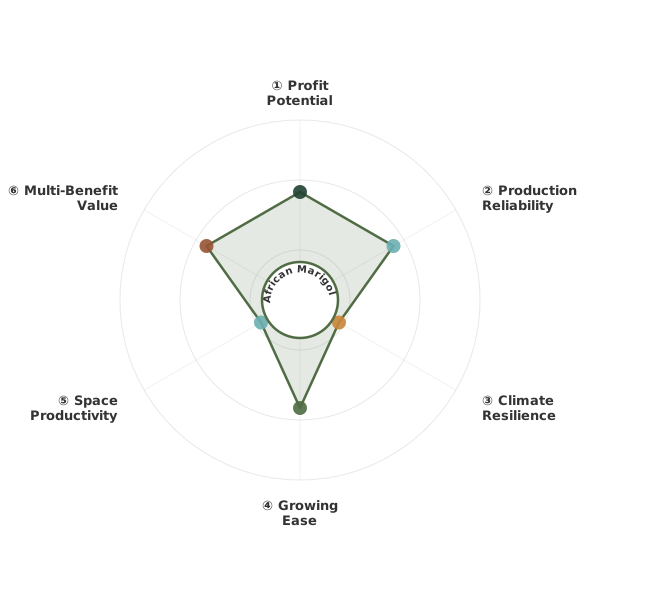
Comparative ratings for this plant across key regenerative agriculture traits.

Trait Suitability Explanation
Season Extension Not Recommended As warm-season annuals sensitive to frost, African marigolds contribute to the vibrant growing season but do not extend it beyond typical warm periods.
Space Efficiency Not Recommended African marigolds are primarily grown for their ornamental and functional qualities, and their spacing requirements are managed to support their role within the broader agroecosystem.
Storage Longevity Ideally Suited Dried marigold flowers, utilized for their natural pigments, exhibit excellent longevity when stored in cool, dry conditions away from light.
Yield Reliability Adequate African marigolds are moderately reliable producers of flowers, offering good yields in sunny conditions, thriving when soil fertility is well-managed and frost is avoided.
Establishment Ease Adequate African marigolds establish readily with adequate warmth and moisture, demonstrating good early vigor and tolerating some competition when the soil is prepared to support healthy growth.
Multi Benefit Value Adequate Beyond their ornamental appeal, African marigolds are valued for their natural nematode-repelling properties and attract beneficial insects, contributing to a healthier soil and plant community.
Climate Adaptability Not Recommended Thriving in warm, sunny conditions, African marigolds are best suited for climates with consistent warmth, requiring protection from frost to ensure optimal growth.
Maintenance Intensity Adequate These annuals are straightforward to cultivate, benefiting from a healthy soil ecosystem that provides ample fertility and consistent moisture through practices like mulching.
Disease Pest Resistance Ideally Suited African marigolds exhibit strong natural resistance to nematodes and many common pests, making them valuable as a living component for plant protection within the system.

Comparative System: Ratings compare plants within their economic category (e.g., cover crop nitrogen fixation compared to other cover crops, not to all plants). Individual farm conditions and management practices significantly influence actual performance.

8

Learn More

Why farmers use this plant and additional resources

Why Regenerative Farmers Use This Plant

Tagetes erecta, commonly known as African Marigold, offers significant regenerative value as a specialty cash crop and an integrated component in diversified farm systems. Their rapid growth and vibrant blooms can generate substantial revenue per acre, making them a high-value option for direct-to-consumer markets, CSAs, and specialty wholesale channels. Varieties can be selected for specific flower sizes and colors, commanding premium prices. With a relatively short days-to-harvest window, typically 70-100 days from transplant (or 60-90 days from transplant for some varieties), marigolds are well-suited for succession planting, allowing for continuous harvest from late spring through fall in many regions. This potential for multiple harvests within a single growing season maximizes land use efficiency and farm income streams, contributing significantly to a resilient and profitable farm enterprise. For instance, in USDA Zones 7-9, a farmer can achieve multiple harvests within a single season, potentially yielding 5,000-10,000 lbs (2,268-4,536 kg) of cut flowers per acre per harvest, depending on variety and management.

Beyond direct sales, marigolds serve crucial ecological roles. Their fibrous and extensive root systems, reaching depths of 12-24 inches (30-60 cm), help to break up soil compaction and improve aeration, contributing to better water infiltration and reduced erosion. Furthermore, marigolds are known for their ability to scavenge nutrients from the soil, particularly phosphorus, making them effective in nutrient cycling within a regenerative system. Their presence can also deter certain soil nematodes and act as a trap crop for some pests, reducing the overall pest pressure on subsequent or interplanted crops. This natural pest management capability aligns perfectly with regenerative principles, minimizing the need for synthetic inputs and fostering a healthier soil ecosystem.

The ecological benefits extend to supporting beneficial insect populations. Marigold flowers are a valuable nectar and pollen source for a variety of pollinators, including bees and butterflies, and can attract predatory insects such as ladybugs and lacewings that help control aphid populations. Studies have indicated that areas with diverse flowering plants, including marigolds, can support higher densities of beneficial arthropods, with some research showing a 20-50% increase in hoverfly and ladybug populations in surrounding fields. By integrating marigolds, farmers enhance biodiversity on their land, contributing to a more stable and self-regulating agricultural ecosystem. This increased biological activity supports soil organic matter development and improves the overall resilience of the farm. When incorporated into the soil after harvest, their biomass contributes organic matter, providing a source of carbon and nutrients, enhancing soil structure, water holding capacity, and microbial activity.

Marigolds have demonstrated success in diverse agricultural landscapes worldwide. In the United States, they are a popular cut flower crop in California and Florida, often grown in rotation with vegetables. Farmers in California and Florida also utilize them as nematode-suppressing cover crops in vegetable rotations, often following crops like tomatoes or peppers. In India, they are cultivated extensively for religious offerings and ornamental purposes, with farmers in states like Tamil Nadu and Karnataka achieving good yields, and it is a staple in agricultural landscapes. European growers in countries like the Netherlands and France utilize them in mixed plantings and for cut flower production; in the Netherlands, large-scale growers use controlled greenhouse environments to produce high-quality blooms. In South America, particularly in Brazil and Colombia, marigolds are grown both as a cash crop and as a component in agroforestry systems, valued for their aesthetic appeal and pest-deterrent properties; in Brazil, they are often intercropped with coffee or other perennial crops as a living mulch. In Australia, they are increasingly being explored as a component of integrated pest management strategies in horticultural systems, particularly in regions with nematode pressure, and can be used as a short-season cover crop in rotation with cereals.

Sources behind this view

Research
9

How to Integrate This Plant

Practical guidance for regenerative systems

Establishing Tagetes erecta for production typically involves starting seeds indoors or direct sowing. For indoor seeding, use a sterile seed-starting mix and sow seeds at a depth of about 0.25-0.5 inches (0.6-1.3 cm), 4-6 weeks before the last expected frost. Optimal germination temperatures are between 21-24°C (70-75°F). Seedlings can be transplanted into the field once they have developed their first true leaves and have been hardened off. For direct sowing, wait until soil temperatures consistently reach 60°F (15.5°C) or are above 15°C (60°F).

Planting and Spacing:

  • Transplanting: Space seedlings 8-12 inches (20-30 cm) apart in rows that are 18-24 inches (45-60 cm) apart. This spacing allows for good air circulation and ease of harvesting.
  • Direct Sowing: Rates vary by variety and seed size. A general guideline is 1-2 lbs/acre (1.1-2.2 kg/ha) for broadcast seeding, or 0.5-1 lb/acre (0.6-1.1 kg/ha) for drilled rows. Ensure adequate seed-to-soil contact by planting at a depth of 0.25-0.5 inches (0.6-1.3 cm). In the Northern Hemisphere, planting typically occurs from April to June (direct sowing from April to June, transplanting after last frost), while in the Southern Hemisphere, this window shifts to September to November (direct sowing September to November, transplanting after last frost). In the UK, they are often sown indoors in March and transplanted outdoors in May, with spacing of 9-12 inches (23-30 cm).

Management Practices:

  • Watering: Consistent moisture is key for optimal flowering and yield. Aim for approximately 1 inch (2.5 cm) of water per week, adjusting based on rainfall and soil type.
  • Soil Fertility: Marigolds perform best in well-drained, fertile soils. Prioritize building soil health through the incorporation of compost and aged manure prior to planting. As marigolds are relatively heavy feeders, especially for phosphorus, they benefit from a balanced organic fertilizer application or the use of compost teas during the growing season, particularly if soil organic matter is low.
  • Growth Cycle: They typically reach maturity and begin flowering within 70-100 days from transplant, with plant heights ranging from 1-3 feet (0.3-0.9 m) depending on the cultivar.

Pest and Disease Management:

  • Focus on preventative measures such as proper spacing for air circulation, choosing disease-resistant varieties, and maintaining soil health.
  • Integrated Pest Management (IPM) should prioritize biological controls; beneficial insects are naturally attracted to marigolds, and companion planting with pest-repelling herbs can further enhance their natural defenses.
  • Crop rotation is crucial. Avoid planting Tagetes species in the same spot year after year to break potential pest and disease cycles, such as those affecting root health. A 2-3 year rotation interval with non-related crops like grains or legumes is recommended for effective disease cycle breaking.

Category-Specific Integration for Intensive Cash Cropping:

  • Succession Planting: For continuous harvest from June through October in USDA Zones 5-7, succession planting every 2-3 weeks is recommended. Seed starting indoors allows for earlier transplanting, typically in April-May, while direct sowing occurs in May-June. For a continuous harvest of flowers or plants, succession planting every 3-4 weeks from early spring through mid-summer (e.g., April through July in USDA Zones 5-7) can provide a continuous harvest from June through October.
  • Cover Cropping: Following the final harvest of marigolds in late fall or early November, it is beneficial to follow with a winter cover crop mix, such as a blend of cereal rye and hairy vetch, within two weeks to protect soil structure, scavenge any remaining nutrients, and add organic matter. Fast-growing cover crops like buckwheat or a mix of oats and peas can be used within 2 weeks after the final harvest to protect the soil and scavenge nutrients. In Australian dryland farming systems, they can be used as a short-season cover crop in rotation with cereals, sown with autumn rains at a rate of 1-1.5 lbs/acre (1.1-1.7 kg/ha).
  • Intercropping: Marigolds can be successfully integrated into various regional farming systems. In the Mediterranean climate of Southern Europe, they can be planted in spring after the risk of frost has passed, often intercropped with vegetables or herbs. In tropical regions like parts of Brazil, they can be grown year-round with proper water management, often used as border plants in coffee or fruit orchards to deter pests and attract beneficial insects. In the Midwestern United States, farmers might interplant marigolds with vegetables like tomatoes or peppers to help suppress root-knot nematodes. In Brazilian coffee plantations, marigolds can be intercropped as a living mulch.