Existing research highlights its potential within regenerative agriculture systems. Multiple studies indicate its integration into cropping sequences, notably with rice cultivation in Nigeria. This suggests its role as a polyculture component, potentially enhancing biodiversity and resource utilization within farming systems. Farmers demonstrate a willingness to pay a premium for organically grown Telfairia occidentalis, indicating consumer demand for sustainably produced vegetables and a potential economic incentive for regenerative practices. Experiments have explored organic amendments like composted maize cob and sawdust for its cultivation, aligning with soil-building principles essential for regenerative agriculture. Further research is needed to fully elucidate its benefits as a cover crop, nitrogen fixer, or forage, and its specific contributions to soil health, carbon sequestration, or pollinator support in various regenerative contexts. However, its inclusion in organic farming trials suggests a positive perception and application within these systems. While coverage in our knowledge base is limited, the above represents documented uses in regenerative systems.

Regenerative Quick Profile

All recommendations assume integrated, regenerative practices—not conventional inputs.

Climate & Soil Fit

Climate: Tropical Rainforest, Tropical Monsoon, Tropical Savanna, Hot Semi-Arid (Steppe), Cold Semi-Arid (Steppe), Hot Desert, Cold Desert, Humid Subtropical, Oceanic (Maritime Temperate), Hot-Summer Mediterranean, Warm-Summer Mediterranean, Monsoon-Influenced Humid Subtropical, Subtropical Highland, Hot-Summer Continental, Warm-Summer Continental, Subarctic, Monsoon-Influenced Hot-Summer Continental, Tundra

Zones: USDA 9-13, Australian Zones 11-14, EU Mediterranean, Subtropical

Optimal Soil: Loam Soil

System Role & Functions

Primary: Cash Crop With Services

Secondary: Cover Crop System, Forage Integration

Management Level

Experience: Intermediate

Maintenance: High maintenance - Maintaining fluted pumpkin involves ensuring warm temperatures, consistent soil moisture through effective water management, and providing adequate support for its vining growth.

Value Streams

  • Vegetable/specialty crop harvest
  • Livestock forage value
1

Climate Suitability Assessment

Will this plant thrive in your climate?

IDEALLY SUITED

Köppen Zone: Af (Tropical Rainforest), Am (Tropical Monsoon), Aw (Tropical Savanna), Cfa (Humid Subtropical), Cwa (Monsoon-Influenced Humid Subtropical)
USDA Zone: 9a, 10a, 11a, 12a
Australian Zone: tropical, subtropical

Fluted pumpkin thrives in tropical and consistently warm climates characterized by high temperatures (ideally 70-90°F / 21-32°C) and ample moisture. Köppen zones Af, Am, and Aw, along with USDA zones 9b through 13, and Australian tropical and subtropical zones, provide these optimal conditions. These regions offer long, frost-free growing seasons, allowing for vigorous vine growth, prolific fruiting, and often perennial cultivation. Rainfall patterns in these zones are typically sufficient, minimizing the need for extensive irrigation, though supplemental watering can boost yields. The high humidity and consistent warmth promote rapid development, leading to high productivity and continuous harvesting opportunities. These environments allow the plant to express its full growth potential, making it a highly reliable cash crop with services and a valuable component in regenerative agriculture systems.

ADEQUATE

Köppen Zone: BSh (Hot Semi-Arid (Steppe)), Cfb (Oceanic (Maritime Temperate)), Csa (Hot-Summer Mediterranean), Csb (Warm-Summer Mediterranean), Cwb (Subtropical Highland)
USDA Zone: 8a
Australian Zone: grassland, temperate
EU Climate Region: atlantic, mediterranean

Fluted pumpkin can be grown adequately in climates with warm summers and sufficient growing seasons, but may require supplemental management. Köppen zones Cfa and Cwa, USDA zones 7a through 9a, Australian grassland and temperate zones, and EU Atlantic and Mediterranean regions fall into this category. These areas typically have a frost-free period long enough for annual cultivation, but cooler winters limit perennial growth. The primary challenge in these zones is managing water availability; while rainfall may be adequate during parts of the growing season, dry spells, particularly in Mediterranean and some temperate climates, necessitate supplemental irrigation to ensure good yields and successful establishment. Temperatures during summer are generally suitable, but consistent warmth is crucial. With careful timing of planting and adequate watering, fluted pumpkin can be a productive crop, contributing to regenerative agriculture goals.

NOT RECOMMENDED

Köppen Zone: ET (Tundra), BSk (Cold Semi-Arid (Steppe)), BWh (Hot Desert), BWk (Cold Desert), Dfa (Hot-Summer Continental), Dfb (Warm-Summer Continental), Dfc (Subarctic), Dwa (Monsoon-Influenced Hot-Summer Continental)
USDA Zone: 2a, 3a, 3b, 4a, 5a, 5b, 6a, 7a
Australian Zone: arid

Fluted pumpkin is not recommended for arid and extreme hot desert climates (Köppen BSh, BWh; Australian arid; and by extension, any USDA zones with extreme heat and severe drought). These regions present significant challenges due to extreme heat, intense solar radiation, and severe water scarcity, which are fundamentally incompatible with the plant's high water requirements and sensitivity to drought. Cultivation would require extensive, energy-intensive irrigation infrastructure and potentially greenhouse modifications, making it economically unviable and technically difficult. Establishment success rates are very low, and yields would be minimal, if any. The plant's growth cycle and physiological needs are not met by the natural conditions in these zones, rendering it an impractical choice for regenerative agriculture. Alternative, more drought-tolerant cucurbits or other native arid-adapted crops are far better suited.

Better alternatives for these "not recommended" zones: Cucurbita foetidissima (Coyote Gourd) (native to arid regions, drought-tolerant, edible seeds and pulp), Citrullus lanatus (Watermelon - drought-tolerant varieties) (can tolerate drier conditions once established, edible fruit), Lagenaria siceraria (Bottle Gourd - drought-tolerant varieties) (can be grown with limited water, edible fruit and mature gourds)

Note: Zones listed above represent climates where this plant can produce reliably with reasonable management. Climate zones not mentioned would require intensive climate modification (greenhouses, extensive infrastructure) and are not economically viable for regenerative agriculture purposes.

2

Soil Suitability Assessment

Which soil types work best for this plant?

IDEALLY SUITED

Loam Soil

This plant thrives in these soil types without requiring amendments or remediation. Natural soil conditions support optimal growth and productivity.

ADEQUATE

Clay Soil, Rich Soil, Sandy Soil

This plant performs acceptably in these soil types with moderate, manageable remediation such as pH adjustment, compost addition, or drainage improvement. The required amendments are practical and cost-effective for regenerative agriculture.

NOT RECOMMENDED

Acidic Soil, Alkaline Soil, Desert Soil, Rocky Soil, Saline Soil, Wet Soil

Growing this plant in these soil types would require impractical remediation such as complete soil replacement, extensive amendments, or cost-prohibitive infrastructure. These conditions are not economically viable for regenerative agriculture.

Note: Soil suitability assessments focus on remediation requirements. "Ideally Suited" means the plant generally thrives without the need for substantial amendments, "Adequate" means manageable remediation (lime, compost, mulch), and "Not Recommended" means impractical soil changes would be required. Climate factors like rainfall and temperature also influence success.

3

Seasonal Considerations

Planting timing, growth duration, and harvest windows

Telfairia Occidentalis thrives in warmth, making it ideal for planting after all danger of frost has passed and soil temperatures reliably reach at least 60°F (15°C). Direct seeding is most successful during the warmer, wetter periods of the year. For earlier harvests, start seeds indoors about 2-3 weeks before your last expected frost, transplanting them out once the soil has warmed. This vigorous vine takes approximately 6-8 weeks from transplanting to reach harvestable maturity, though leaves can be picked earlier as needed.

The primary harvest window extends through the warm, humid months and into early fall, as long as temperatures remain favorable. To ensure a continuous supply of tender leaves, consider succession planting every 3-4 weeks during the peak growing season. Telfairia Occidentalis has limited cold tolerance and will cease production with the onset of cooler weather. While direct fall planting is generally not recommended due to insufficient warmth for establishment, protecting established plants with row covers or in a greenhouse can extend the harvest into cooler periods, especially before the first expected frost.

4

System Role & Multi-Benefit Value

Functional roles, integration strategies, and stacked benefits

Functional Role

Total System Value

Fluted pumpkin offers a multi-faceted contribution to farm resilience and regenerative systems. Its primary value lies in its direct harvest as a cash crop, providing economic returns. Beyond this, its vigorous vining growth and substantial leaf biomass contribute to soil health by increasing organic matter and providing ground cover, which aids in erosion control. In cropping sequences, such as with rice as mentioned in the literature, it can be part of a system that optimizes land use and soil fertility. Furthermore, studies indicate a high willingness to pay for organic fluted pumpkin, suggesting a market premium for sustainably produced crops, which diversifies farm income streams. While direct evidence for specific ecosystem services like windbreaking or significant nitrogen fixation is limited, its role as a biomass producer and potential cover crop enhances soil structure and water retention. This 'stacking' of direct economic output with indirect ecological benefits makes it a valuable component in a diversified regenerative farm.

Integration Characteristics

Multi-Benefit Value: Adequate - This vigorous vine provides edible leaves and seeds, along with significant ground cover that aids in erosion control, contributing to soil health.

5

Management & Care Requirements

Integration guidance, maintenance needs, and care practices

How to Integrate This Plant

Fluted pumpkin (Telfairia occidentalis) is a valuable non-tree crop that can be integrated into regenerative systems primarily as a cash crop with associated services. Its vining nature and leaf production suggest potential for ground cover, contributing to erosion control and weed suppression when managed appropriately. It can be incorporated into alley cropping systems, where it is grown between rows of trees or other taller crops, providing an additional harvest while potentially improving soil health through its root system and biomass. While not a nitrogen fixer, its rapid growth and dense foliage can offer temporary shade and act as a living mulch. Compatible practices include intercropping and potentially as a component in multi-story cropping systems where its vining habit can utilize vertical space. Its primary contribution begins in the first year with harvest, with continued benefits in subsequent years as part of a crop rotation or intercropping strategy. Beyond direct harvest, it contributes to soil organic matter and can support beneficial insects.

Integration Practices & Management

The provided knowledge base offers limited insights into the specific regenerative agriculture practices for integrating Telfairia occidentalis (fluted pumpkin). The sources primarily focus on its use in agricultural experiments and farmer willingness to adopt organic produce. For instance, mentions a cropping sequence involving fluted pumpkin and NERICA rice, suggesting potential for crop rotation or intercropping, though specific methods like timing or tillage are not detailed. Source details a field experiment evaluating organic and inorganic fertilizer treatments for fluted pumpkin, highlighting its management needs regarding fertility, but not regenerative establishment or termination methods. Source indicates farmer willingness to pay a premium for organic fluted pumpkin, underscoring its market potential within organic systems. However, direct information on establishment techniques (seeding rates, tillage), integration with grazing animals, termination strategies, or detailed management for competition and succession within a regenerative framework is not present in these excerpts. The knowledge base does not offer practical farmer experiences on these specific regenerative integration aspects of Telfairia occidentalis.

Management Profile

Maintenance Intensity: Not Recommended - Maintaining fluted pumpkin involves ensuring warm temperatures, consistent soil moisture through effective water management, and providing adequate support for its vining growth.

6

Economics & Value Streams

Direct harvest, system benefits, ecosystem services, and risk diversification

Comprehensive economic analysis including direct harvest value, system enhancement contributions, ecosystem services, value timeline, and risk diversification strategies.

Vegetable & Specialty Economics

Metric Value
Seed/Transplant Cost 100-200 $/acre 247-494 $/ha
Expected Yield 1000-3000 lbs/acre 1120-3362 kg/ha
Market Price 1.50-3.00 $/lb 3-6 $/kg
Harvest/Handling Cost 500-1000 $/acre 1235-2471 $/ha
Marketing/Distribution Cost 250-500 $/acre 617-1235 $/ha
Net Annual Return* $-200 to $8150/acre/year

Economics highly variable by market channel (direct vs wholesale), scale, and management. Direct marketing commands premiums but requires labor. Values shown for mid-scale market garden operations.

* Net Annual Return = (Yield × Market Price) − (Amortized Establishment Cost + Annual Maintenance). This return is realized only at/after first harvest; early years have costs but no revenue. Range shows worst case to best case scenarios.

System Enhancement Value

Beyond harvest: ecosystem services from regenerative cash crop practices

Ecological Service Contributions

Fluted pumpkin (Telfairia occidentalis) offers significant system benefits beyond its primary role as a cash crop. Its integration as a cover crop, as suggested by its use in a rice-pumpkin sequence, contributes to soil health by providing ground cover, reducing erosion, and potentially suppressing weeds. This ground cover improves soil moisture retention and enhances organic matter content over time, creating a more resilient soil structure. Furthermore, the leafy biomass produced by fluted pumpkin can be incorporated into the soil, adding valuable nutrients and improving soil fertility, thereby reducing reliance on external inputs. Its use in forage integration implies it can contribute to animal feed systems, either directly as forage or indirectly by improving the quality of other forages through intercropping. The high willingness to pay for organic pumpkin, driven by awareness of health and environmental benefits, highlights a market premium potential that rewards sustainable farming practices. This plant's ability to thrive in varied conditions and contribute to a more diverse farm ecosystem underscores its value in regenerative systems.

Ecosystem Service Contributions

Environmental contributions: carbon, pollinators, wildlife, and water

  • Carbon Sequestration: As a fast-growing leafy vegetable, fluted pumpkin contributes to carbon sequestration through biomass production and root activity. Its dense foliage can capture atmospheric CO2 during growth. When residues are incorporated into the soil, this carbon is stored in the soil organic matter, enhancing long-term soil carbon sinks.
  • Pollinator Support: Medium. While not primarily grown for its flowers, Telfairia occidentalis does produce flowers that can attract and support pollinators. The extent of this support would depend on the density of planting and the availability of other floral resources in the landscape.
  • Wildlife Habitat: Provides limited direct habitat for wildlife, primarily offering ground cover benefits. Its leafy structure might offer some shelter for small invertebrates and ground-dwelling beneficial insects. It is not a significant source of mast or nesting material for larger wildlife.
  • Water Quality: Not applicable

Value Timeline: Production & Services

When you'll see results: varies by crop (annual harvest vs. perennial establishment)

Years 1-2

Initial establishment of ground cover, contributing to soil erosion control and moisture retention. Beginning of biomass contribution to soil organic matter when incorporated. Potential for early harvests of leaves for cash crop revenue and forage integration.

Years 3-5

Established cover crop benefits become more pronounced, leading to improved soil structure and fertility. Consistent cash crop yields and forage integration. Increased contribution to soil organic matter and nutrient cycling. Potential for market premiums for organically grown produce.

Years 10-20

Mature benefits from enhanced soil health, including improved water infiltration and retention. Sustained high yields as a cash crop. Significant contribution to nutrient cycling within the integrated system. The plant's role in supporting a more resilient and diverse farm ecosystem becomes fully realized.

20+ Years

Long-term benefits of a highly improved soil ecosystem, characterized by enhanced microbial activity and structure. Continued reliable yields as a cash crop and ongoing contribution to farm resilience and biodiversity. The plant's integration supports a robust and self-sustaining agricultural system.

Farm Risk Reduction

How this reduces farm risk: backup income, weather protection, market hedges

  • Multiple Revenue Streams: Cash crop revenue from fresh leaf harvest, potential premium for organically grown produce, forage for livestock integration, soil health improvement (reducing input costs and enhancing future yields).
  • Temporal Income Spread: Annual harvests provide consistent income. Ongoing soil health benefits and ecosystem service provision occur throughout the growing season and accumulate over time. Integration into crop sequences (e.g., with rice) spreads production and income across the year.
  • Market Risk Hedge: Diversifies farm revenue streams beyond a single commodity. High willingness to pay for organic vegetables provides a market hedge against price volatility for conventional produce. Its role as a cover crop enhances resilience to environmental stresses like drought through improved soil moisture retention.
7

Regenerative Suitability Details

Comprehensive trait ratings for system integration assessment

Comparative ratings for this plant across key regenerative agriculture traits.

Trait Suitability Explanation
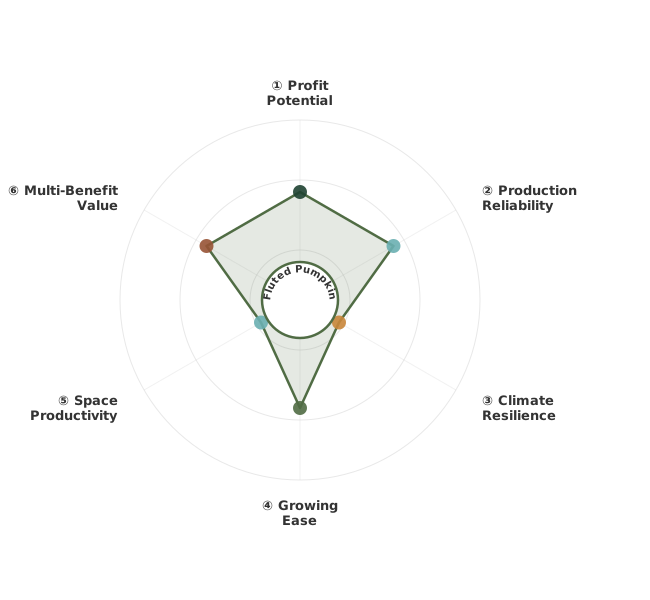
Season Extension Not Recommended As a tropical vine, fluted pumpkin thrives in consistent warmth and is highly sensitive to frost, limiting its growth window in cooler regions. Its best performance is achieved within its native warm climate.
Space Efficiency Not Recommended Fluted pumpkin's vigorous, sprawling vining habit necessitates substantial vertical support and space, making it a less space-efficient choice for compact garden designs.
Storage Longevity Not Recommended Fluted pumpkin leaves are highly perishable and best consumed fresh to capture their nutritional value. Their rapid wilting limits their post-harvest storage potential.
Yield Reliability Adequate In its suitable tropical climate, fluted pumpkin offers reliable yields of nutritious leaves and seeds, though its productivity is diminished by cooler temperatures.
Establishment Ease Adequate Fluted pumpkin germinates readily in warm, healthy soil and its vigorous early growth helps it establish a strong presence, naturally suppressing competitive weeds.
Multi Benefit Value Adequate This vigorous vine provides edible leaves and seeds, along with significant ground cover that aids in erosion control, contributing to soil health.
Climate Adaptability Not Recommended Fluted pumpkin is a warm-season tropical vine (zones 10-11) that requires high temperatures and humidity, making it unsuitable for regions prone to cold and frost.
Maintenance Intensity Not Recommended Maintaining fluted pumpkin involves ensuring warm temperatures, consistent soil moisture through effective water management, and providing adequate support for its vining growth.
Disease Pest Resistance Adequate Fluted pumpkin exhibits moderate resistance to pests and diseases, but optimal air circulation and strategic site selection are key to preventing issues like fungal diseases.

Comparative System: Ratings compare plants within their economic category (e.g., cover crop nitrogen fixation compared to other cover crops, not to all plants). Individual farm conditions and management practices significantly influence actual performance.

8

Learn More

Why farmers use this plant and additional resources

Why Regenerative Farmers Use This Plant

Telfairia occidentalis offers a compelling dual value proposition for regenerative farmers, combining significant economic potential with substantial environmental benefits, making it a strategic choice for warm-climate agricultural systems.

Economic Potential: Its primary economic attraction lies in its capacity to generate multiple revenue streams from a single crop. The highly sought-after tender young leaves can be harvested continuously, providing a steady income, while the mature seeds, rich in oil and protein, command higher prices and cater to consistent demand in local and ethnic markets. Leaf yields can range from 5-15 tonnes per hectare (4.5-13.4 tons/acre) annually, providing a steady income. Fresh leaves are commonly sold in local markets and to ethnic grocers, with prices potentially reaching $1-3 per kilogram ($0.45-$1.36 per pound), with direct-to-consumer sales offering higher margins. Seed yields typically range between 200-500 kg per hectare (178-446 lbs/acre) and offer a higher-value, less frequent harvest. The seeds themselves are a valuable commodity, fetching prices from $5-15 per kilogram ($2.27-$6.80 per pound), offering a substantial return on investment.

Environmental Benefits: Environmentally, its vigorous growth habit and ability to produce substantial biomass contribute to improved soil health, reduced erosion, and enhanced biodiversity within the farming landscape. While not a legume, its rapid growth and dense foliage effectively cover the soil, suppressing weeds and protecting the soil from wind and water erosion. This minimizes the need for mechanical tillage, preserving soil structure and organic matter. Integrating Ugu into intercropping or crop rotation systems increases plant diversity within the farm ecosystem, supporting a broader range of beneficial insects and soil microorganisms, fostering a more resilient and balanced agroecosystem. Its dense foliage canopy effectively outcompetes many common weeds, reducing manual or chemical weeding efforts and contributing to a cleaner field.

As a fast-growing cover crop, Telfairia occidentalis can scavenge nutrients from deeper soil profiles and prevent their leaching, particularly beneficial in systems prone to nutrient loss. Its dense canopy reduces soil disturbance, leading to improved water infiltration and reduced runoff. The plant's rapid growth and biomass production contribute to increasing soil organic matter content over time, acting as a natural soil conditioner.

The synergistic economic and environmental advantages of Telfairia occidentalis make it a strategic addition for farmers seeking to diversify income, enhance soil health, and build more resilient and self-sustaining agricultural systems. It can serve as an effective short-term cover crop between main crop cycles, providing valuable biomass for mulching and improving soil organic matter content, particularly beneficial before planting nutrient-demanding vegetables. Its integration into farming systems can lead to reduced reliance on external inputs, improved soil structure, and a more stable microclimate, all contributing to long-term farm viability and ecological health.

Regional Success Stories: Regional success stories highlight its adaptability and value. In West African farming systems, it is a staple crop, cultivated in smallholder systems and market gardens, demonstrating its consistent demand and economic importance. Farmers integrate Ugu into mixed vegetable farms, utilizing its rapid growth for continuous leaf harvest and its vining nature on trellises to maximize space. In humid tropical regions of Southeast Asia, it is often intercropped with taller trees or trellised alongside staple crops like rice or maize, benefiting from partial shade and utilizing vertical space. In parts of Brazil, it is explored as a component in agroforestry systems, providing ground cover and potential for diversified income alongside perennial crops. In Caribbean nations, it is cultivated in small plots and homestead gardens, valued for its culinary importance and its ability to thrive in humid, tropical conditions. As interest in diverse, nutrient-dense crops grows globally, Ugu is finding its way into specialty markets in North America and Europe, often grown in controlled environments or in regions with suitable warm climates, demonstrating its potential beyond its native range.

9

How to Integrate This Plant

Practical guidance for regenerative systems

Integrating Telfairia occidentalis into a farming system involves understanding its specific physical requirements, managing its economic potential, and implementing effective cultivation and harvesting practices. Its vigorous growth habit and need for warm temperatures dictate where and how it can be most successfully grown, while its dual-use nature requires distinct approaches for leaf and seed production. Success hinges on aligning production with market demand, managing labor-intensive aspects, and leveraging its regenerative properties within a broader farm plan.

Establishment: Establishment is best achieved through direct seeding or stem cuttings. Seeds should be sown at a depth of 0.5-1 inch (1.3-2.5 cm). For optimal leaf production, seeding rates typically range from 5-10 kg per hectare (4.5-9 lbs/acre), or slightly higher for denser ground cover. For seed production, ensuring the presence of both male and female plants is essential for pollination, which typically occurs via insects. Stem cuttings, taken from healthy mature plants, can also be used for rapid propagation. Ugu thrives in well-drained, fertile soils with a pH between 5.5 and 7.0, and requires consistent moisture, ideally receiving about 1 inch (2.5 cm) of water per week, especially during active growth. Trellising or providing other support structures is highly recommended to manage its vining nature, allowing it to reach lengths of 10-15 meters (33-49 feet) and facilitating easier harvesting.

Management Practices: Management practices should focus on maximizing its regenerative benefits. While Ugu can contribute to soil fertility through its biomass, it also benefits from fertile soil. Incorporating compost or well-rotted manure during land preparation can boost yields significantly. Its rapid and dense growth habit effectively suppresses weeds once established, minimizing the need for mechanical cultivation and thus preserving soil structure. Vigilance is required for common pests and diseases that affect leafy vegetables; good air circulation, proper spacing (typically 1-2 feet or 30-60 cm between plants), and avoiding waterlogged conditions are key preventive measures.

Category-Specific Integration:

  • As a Vegetable or Specialty Cash Crop: Telfairia occidentalis offers excellent potential for continuous harvest and diversified income. In tropical and subtropical regions (USDA Zones 10-12), direct seeding can occur year-round, with successive plantings every 2-3 weeks ensuring a continuous supply of young, tender leaves for market. Transplants, started 3-4 weeks prior, can be set at 1-2 feet (30-60 cm) spacing in permanent beds, reaching harvest maturity for leaves in 45-60 days. Continuous leaf harvesting can be managed by selectively picking young, tender leaves, allowing the plant to recover and produce more. For seed production, the fruit matures over several months, typically 3-4 months after flowering. To ensure a steady supply of leaves, farmers can implement succession planting every 3-4 weeks from early spring through late summer in frost-free regions. After the final harvest of leaves or seeds, it is beneficial to follow with a winter cover crop mix, such as a combination of cereal rye and hairy vetch, within 2-3 weeks to protect soil structure, add organic matter, and fix nitrogen for subsequent crops. A 2-3 year rotation interval with non-related crops is recommended to break pest and disease cycles.

Regional Adaptations: Regional adaptations are crucial for successful cultivation. In Nigeria and other West African countries, it is commonly grown in home gardens and intercropped with staple crops like yam and cassava, benefiting from the shade and residual fertility. In the Caribbean, it is often grown on trellises in small plots, providing a continuous supply of fresh leaves for local markets. In Southeast Asian farming systems, it is often intercropped with fruit trees, providing a valuable ground cover and income source. In parts of Central and South America, where frost is not a concern, it can be integrated into mixed cropping systems with fruit trees or perennial vegetables, providing ground cover and supplemental income. In regions with milder winters, such as parts of Florida or Australia, it can be grown year-round or as a significant seasonal crop, often integrated into mixed vegetable farms. In areas with more distinct seasons, it can be grown as an annual, starting with transplants in spring after the last frost, or as a perennial in protected environments or greenhouses.

View Full Document (Printable single-page version)