Available data suggests its potential as a polyculture component. A study in a steep-sloped vineyard integrated thyme with grapevines, noting impacts on topsoil properties. While nutrient and moisture levels decreased, particulate organic carbon (POC) stocks showed a slight increasing trend, hinting at potential soil-building benefits. Thyme cultivation, even under different systems like open field versus foil tunnels, yielded significant herb biomass and varying concentrations of essential oils, phenolic acids, and flavonoids across harvests. Evidence for specific regenerative roles like nitrogen fixation or direct pollinator support is not detailed in these excerpts. However, its inclusion in a diversified planting system alongside other aromatic herbs points towards its utility in creating complex, multi-functional agricultural landscapes. Further research is needed to fully understand its broader regenerative contributions. While coverage in our knowledge base is limited, the above represents documented uses in regenerative systems.

Regenerative Quick Profile

All recommendations assume integrated, regenerative practices—not conventional inputs.

Climate & Soil Fit

Climate: Tropical Rainforest, Tropical Monsoon, Tropical Savanna, Hot Semi-Arid (Steppe), Cold Semi-Arid (Steppe), Hot Desert, Cold Desert, Humid Subtropical, Oceanic (Maritime Temperate), Hot-Summer Mediterranean, Warm-Summer Mediterranean, Monsoon-Influenced Humid Subtropical, Subtropical Highland, Hot-Summer Continental, Warm-Summer Continental, Subarctic, Monsoon-Influenced Hot-Summer Continental, Tundra

Zones: USDA 5-9, Australian Zones 3-7

Optimal Soil: Sandy Soil

System Role & Functions

Primary: Cash Crop With Services

Secondary: Pollinator Support, Cover Crop System

Key Benefits: Multi-benefit value, Low maintenance, Space Efficiency

Management Level

Experience: Beginner-Friendly

Maintenance: Very low maintenance - As a hardy perennial, thyme thrives with proactive fertility management through compost and mulch, demonstrating natural pest resistance and requiring minimal intervention for system health.

Value Streams

  • Vegetable/specialty crop harvest
  • Pollinator habitat and support
1

Climate Suitability Assessment

Will this plant thrive in your climate?

IDEALLY SUITED

Köppen Zone: Cfa (Humid Subtropical), Cfb (Oceanic (Maritime Temperate)), Csa (Hot-Summer Mediterranean), Csb (Warm-Summer Mediterranean)
USDA Zone: 5b, 6a, 7a, 8a, 9a, 10a
Australian Zone: temperate
EU Climate Region: atlantic

Thyme thrives in climates characterized by mild winters and warm, dry summers, with optimal growing temperatures ranging from 60-85°F (15-29°C). These conditions are met in Köppen Csa and Csb zones, USDA zones 7a through 10b, Australian temperate regions, and EU Atlantic climates. The plant benefits from at least 150-200 frost-free days, allowing for robust perennial growth and high-quality essential oil production. Its natural drought tolerance is a significant advantage in these regions, minimizing the need for extensive irrigation. Establishment is typically straightforward in well-drained soils, with minimal pest or disease pressure. Yields are consistently high, and plants exhibit excellent longevity, often persisting for 5-10 years or more. These zones provide the ideal balance of warmth, sunlight, and moisture deficit that thyme requires to reach its full potential as a cash crop and for pollinator support.

ADEQUATE

Köppen Zone: Aw (Tropical Savanna), BSh (Hot Semi-Arid (Steppe)), BSk (Cold Semi-Arid (Steppe)), BWk (Cold Desert), Cwa (Monsoon-Influenced Humid Subtropical), Cwb (Subtropical Highland), Dfa (Hot-Summer Continental), Dfb (Warm-Summer Continental)
USDA Zone: 5a, 11a, 12a
Australian Zone: subtropical
EU Climate Region: continental

Thyme can perform adequately in climates with moderate temperature fluctuations and a reasonable growing season, typically 100-150 frost-free days. This includes Köppen Dfb zones, USDA zones 5b through 6b, Australian subtropical regions, and EU continental climates. While not ideal, these zones can support thyme with careful management. Challenges include colder winters requiring some consideration for perennial survival (though many varieties are hardy to 0°F/-18°C with good drainage) and potentially hotter, more humid summers that can increase disease susceptibility. Yields may be moderate, and essential oil quality might be slightly lower than in ideal climates. Supplemental irrigation might be needed during extended dry spells, and good drainage is paramount to prevent root rot, especially in humid continental or subtropical areas. Despite these considerations, thyme can still be a viable cash crop and provide pollinator support with appropriate variety selection and management practices.

NOT RECOMMENDED

Köppen Zone: Af (Tropical Rainforest), Am (Tropical Monsoon), ET (Tundra), BWh (Hot Desert), Dfc (Subarctic), Dwa (Monsoon-Influenced Hot-Summer Continental)
USDA Zone: 2a, 3a, 3b, 4a

Thyme is not recommended for cultivation in climates with extreme temperature fluctuations, very short growing seasons, or prolonged periods of high humidity and heat. This includes Köppen Dfa, Dwa, and Dwb zones, USDA zones 3a through 5a, and Australian subtropical regions experiencing significant humidity. In cold zones (USDA 3a-5a), extreme winter lows (-40 to -15°F) and short growing seasons make perennial survival highly improbable and establishment difficult, leading to inconsistent yields and high failure rates. In hot, humid continental or monsoon climates (Dfa, Dwa), summer heat and moisture stress can lead to reduced vigor, increased disease susceptibility, and lower essential oil production, making it an unreliable cash crop. While technically possible with intensive management, the economic viability is questionable due to high inputs required for drainage, disease control, and potential winter protection, with establishment success often below 70%. Alternative plants better adapted to these challenging conditions are recommended.

Better alternatives for these "not recommended" zones: Mint (more cold-hardy and adaptable to varied moisture), Oregano (more drought and heat tolerant, better perennial in marginal zones), Chives (hardy allium, tolerates cold and moderate heat, good for cover cropping), Hairy Vetch (cold-hardy annual legume for nitrogen fixation)

Note: Zones listed above represent climates where this plant can produce reliably with reasonable management. Climate zones not mentioned would require intensive climate modification (greenhouses, extensive infrastructure) and are not economically viable for regenerative agriculture purposes.

2

Soil Suitability Assessment

Which soil types work best for this plant?

IDEALLY SUITED

Sandy Soil

This plant thrives in these soil types without requiring amendments or remediation. Natural soil conditions support optimal growth and productivity.

ADEQUATE

Clay Soil, Desert Soil, Loam Soil, Rich Soil, Rocky Soil

This plant performs acceptably in these soil types with moderate, manageable remediation such as pH adjustment, compost addition, or drainage improvement. The required amendments are practical and cost-effective for regenerative agriculture.

NOT RECOMMENDED

Acidic Soil, Alkaline Soil, Saline Soil, Wet Soil

Growing this plant in these soil types would require impractical remediation such as complete soil replacement, extensive amendments, or cost-prohibitive infrastructure. These conditions are not economically viable for regenerative agriculture.

Note: Soil suitability assessments focus on remediation requirements. "Ideally Suited" means the plant generally thrives without the need for substantial amendments, "Adequate" means manageable remediation (lime, compost, mulch), and "Not Recommended" means impractical soil changes would be required. Climate factors like rainfall and temperature also influence success.

3

Seasonal Considerations

Planting timing, growth duration, and harvest windows

Thyme thrives in well-drained soil and prefers warmth, so aim to start seeds indoors about 6-8 weeks before your last expected frost. Transplant seedlings outdoors once all danger of frost has passed and soil temperatures consistently reach at least 60°F (15°C). For direct seeding, wait until after the last frost and soil has warmed sufficiently. Thyme typically reaches maturity in 8-10 weeks, with a generous harvest window extending through summer and into fall. To ensure a continuous supply, consider succession planting every 4-6 weeks during the early to mid-summer growing season. This hardy herb tolerates moderate heat well, but may struggle in extreme summer conditions. As temperatures cool in late fall, thyme can often be harvested until the first hard frost. While considered an annual in some climates, thyme can overwinter in milder zones, potentially extending its harvest into the following spring.

4

System Role & Multi-Benefit Value

Functional roles, integration strategies, and stacked benefits

Functional Role

Total System Value

Thyme offers a multi-faceted contribution to farm resilience. Its direct harvest value as a cash crop provides consistent income. Beyond this, it enhances the agroecosystem by potentially increasing soil organic carbon stocks, as indicated by a slight upward trend in POC in field studies. Although not a primary pollinator attractant like some other herbs, its flowers can provide supplementary nectar. In systems with mechanical tillage, its presence may contribute to reduced soil disturbance effects over time. By diversifying the plant row in systems like alley cropping, thyme can improve the overall resource utilization of the land. Its inclusion in a farm plan diversifies income streams and contributes to soil health, thereby reducing reliance on external inputs and mitigating risks associated with monoculture or extreme weather events. Its ability to thrive in drier conditions also adds to its resilience within the farm system.

Integration Characteristics

Multi-Benefit Value: Ideally Suited - This plant offers significant ecosystem services, attracting pollinators and beneficial insects, while also providing culinary value and aromatic ground cover that enhances soil health.

5

Management & Care Requirements

Integration guidance, maintenance needs, and care practices

How to Integrate This Plant

Thyme (Thymus vulgaris) can be integrated into regenerative systems primarily as a cash crop with service provision, particularly in alley cropping or as a groundcover in food forests. Its low growth habit makes it suitable for interplanting with larger crops or trees. As a cash crop, it offers direct harvest value for culinary or medicinal use. Mechanically tilled systems with thyme showed a slight increasing trend in particulate organic carbon (POC) stocks, suggesting a role in soil health improvement over time. While not a nitrogen fixer or a direct erosion control plant, its dense mat can offer some surface protection. It can also support beneficial insects. Integration should consider its relatively low water requirements and potential competition with certain crops. It is best suited for warmer temperate climates and can be grown under tunnels for enhanced yield. Its contribution to soil organic matter and potential to reduce nutrient leaching make it a valuable component in diverse cropping systems.

Integration Practices & Management

The provided knowledge base offers limited insight into the specific integration methods of *Thymus vulgaris* within regenerative agriculture systems. While source mentions *Thymus vulgaris* as an aromatic plant diversified in a vineyard row under grapevine, it primarily focuses on the impact on topsoil properties, noting a reduction in soil nutrient content and moisture compared to mechanical tillage. It does not detail establishment methods like seeding rates, timing, or tillage practices used for integration. Similarly, the sources do not address the integration of *Thymus vulgaris* with grazing animals, its termination strategies, specific fertility needs, competition management, or succession planning. Source details organic cultivation under open field versus foil tunnel conditions, focusing on yield and chemical composition changes over successive cuts, but not its role within a broader regenerative system. Source examines heavy metal content in various herbs, including thyme, but does not provide information on agricultural integration practices. Therefore, specific regenerative farmer experiences or practical insights regarding the establishment, grazing integration, termination, or management of *Thymus vulgaris* within the regenerative framework are not detailed in these mentions.

Management Profile

Maintenance Intensity: Ideally Suited - As a hardy perennial, thyme thrives with proactive fertility management through compost and mulch, demonstrating natural pest resistance and requiring minimal intervention for system health.

6

Economics & Value Streams

Direct harvest, system benefits, ecosystem services, and risk diversification

Comprehensive economic analysis including direct harvest value, system enhancement contributions, ecosystem services, value timeline, and risk diversification strategies.

Vegetable & Specialty Economics

Metric Value
Seed/Transplant Cost 100-200 $/acre 247-494 $/ha
Expected Yield 1000-2000 lbs/acre 1120-2241 kg/ha
Market Price 3.00-6.00 $/lb 6-13 $/kg
Harvest/Handling Cost 400-800 $/acre 988-1976 $/ha
Marketing/Distribution Cost 200-400 $/acre 494-988 $/ha
Net Annual Return* $1600-$11300/acre/year

Economics highly variable by market channel (direct vs wholesale), scale, and management. Direct marketing commands premiums but requires labor. Values shown for mid-scale market garden operations.

* Net Annual Return = (Yield × Market Price) − (Amortized Establishment Cost + Annual Maintenance). This return is realized only at/after first harvest; early years have costs but no revenue. Range shows worst case to best case scenarios.

System Enhancement Value

Beyond harvest: ecosystem services from regenerative cash crop practices

Ecological Service Contributions

Thyme (Thymus vulgaris) offers significant system benefits beyond its primary function as a cash crop. As indicated in the knowledge base, thyme flowers attract bees and other pollinators, which is crucial for the reproductive success of many other crops and wild plants within an integrated farm system. Its drought tolerance and ability to survive low-nutrient conditions make it a resilient component in diverse planting schemes, potentially reducing the need for supplemental irrigation and fertilization in intercropping or cover cropping scenarios. Furthermore, thyme possesses beneficial antibacterial and anti-fungal properties, suggesting a potential role in reducing pathogen loads in the soil or on livestock, though this requires further investigation within a specific farm context. Its low-growing nature and resistance to pests and diseases also contribute to soil health and stability, acting as a living mulch that can suppress weeds and improve soil structure over time. The knowledge base also notes its deer resistance, making it a reliable groundcover or intercropping option in areas prone to browsing. Its inclusion in cover crop systems, as suggested by its secondary function, can contribute to soil organic matter accumulation and erosion control.

Ecosystem Service Contributions

Environmental contributions: carbon, pollinators, wildlife, and water

  • Carbon Sequestration: Thyme is a low-growing perennial herb. While it contributes to soil organic matter through root exudates and decomposition, its overall carbon sequestration potential is likely modest compared to larger woody perennials or dense biomass-producing cover crops. Studies noted a slight increasing trend in particulate organic carbon stocks when thyme was intercropped with grapevines.
  • Pollinator Support: High. Thyme flowers are explicitly mentioned as attracting bees and other pollinators. This is a critical ecosystem service in integrated farm systems, enhancing biodiversity and supporting the pollination of other crops.
  • Wildlife Habitat: Limited direct habitat value for larger wildlife, but its flowers provide a nectar source for pollinators. Its dense, low growth may offer some microhabitat for beneficial insects.
  • Water Quality: Not applicable

Value Timeline: Production & Services

When you'll see results: varies by crop (annual harvest vs. perennial establishment)

Years 1-2

Initial establishment of groundcover, beginning to attract pollinators, and contributing to soil structure. Potential for early, small harvests as a cash crop.

Years 3-5

Established plants provide consistent pollinator support. Increased contribution to soil health and weed suppression. First significant harvests as a cash crop, with potential for dried product sales. Continued groundcover benefits.

Years 10-20

Mature, well-established stands provide consistent and robust pollinator support. Significant contribution to soil organic matter and resilience. Ongoing cash crop revenue. Potential for expansion of its role within cover crop systems.

20+ Years

Long-term, stable provision of ecosystem services, including pollinator support and soil health benefits. Continued cash crop production, potentially with reduced input requirements due to established resilience.

Farm Risk Reduction

How this reduces farm risk: backup income, weather protection, market hedges

  • Multiple Revenue Streams: ['Direct harvest revenue (fresh and dried herbs)', 'Value from enhanced pollination services for other crops', 'Reduced input costs (water, fertilizer, pest control) due to resilience']
  • Temporal Income Spread: Value is spread temporally through continuous ecosystem services (pollinator support, soil health) from establishment onwards, combined with periodic harvest revenue from the cash crop function.
  • Market Risk Hedge: Thyme's drought tolerance and ability to grow in low-nutrient conditions provide a hedge against adverse weather and soil quality issues. Its inclusion as a secondary function plant diversifies farm output beyond a single primary crop, reducing reliance on any one market. Its role in attracting pollinators indirectly supports the yield and quality of other crops, further diversifying overall farm productivity and resilience.
7

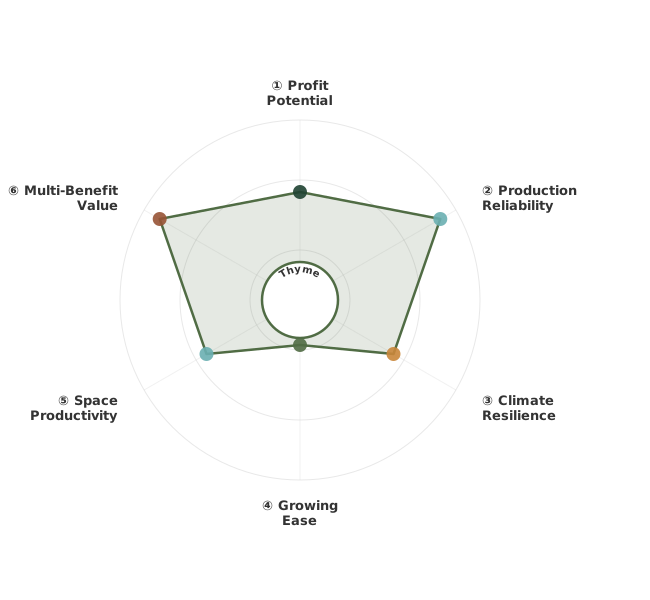
Regenerative Suitability Details

Comprehensive trait ratings for system integration assessment

Comparative ratings for this plant across key regenerative agriculture traits.

Trait Suitability Explanation
Season Extension Adequate This hardy perennial herb extends harvest potential through fall and winter by tolerating light frost, contributing to year-round system productivity.
Space Efficiency Ideally Suited Its compact, low-growing habit allows for dense planting, maximizing harvestable foliage from a small footprint and enhancing overall system resource utilization.
Storage Longevity Not Recommended Fresh sprigs offer short-term use, while dried thyme provides exceptional long-term storage, contributing to food security and reducing post-harvest losses within the system.
Yield Reliability Ideally Suited Thyme consistently produces aromatic foliage with remarkable resilience to drought and diverse soil conditions, underpinning stable system output.
Establishment Ease Adequate Germinating reliably with warmth and good drainage, this herb establishes well with minimal soil disturbance and tolerates early dryness, supporting low-input system establishment.
Multi Benefit Value Ideally Suited This plant offers significant ecosystem services, attracting pollinators and beneficial insects, while also providing culinary value and aromatic ground cover that enhances soil health.
Climate Adaptability Adequate Thriving in zones 5-9 and exhibiting excellent drought tolerance, this herb requires well-drained soils and consideration for extreme wet winters or heat to ensure its integration within diverse microclimates.
Maintenance Intensity Ideally Suited As a hardy perennial, thyme thrives with proactive fertility management through compost and mulch, demonstrating natural pest resistance and requiring minimal intervention for system health.
Disease Pest Resistance Ideally Suited Thriving in well-drained conditions and requiring minimal intervention, thyme's inherent resistance to pests and diseases contributes to a robust and resilient agricultural system.

Comparative System: Ratings compare plants within their economic category (e.g., cover crop nitrogen fixation compared to other cover crops, not to all plants). Individual farm conditions and management practices significantly influence actual performance.

8

Learn More

Why farmers use this plant and additional resources

Why Regenerative Farmers Use This Plant

Thymus vulgaris, or common thyme, is a high-value specialty cash crop offering significant economic and ecological benefits within regenerative agricultural systems. Its compact growth habit and potent aromatic qualities make it a sought-after herb for culinary, medicinal, and cosmetic markets. With a relatively short days-to-harvest window, typically 70-90 days from transplant, thyme is well-suited for succession planting in suitable climates, allowing for continuous harvests from late spring through autumn. This potential for multiple harvests per season directly translates to higher revenue per acre, especially when targeting direct-to-consumer sales through farmers' markets, CSAs, or online platforms, as well as specialty wholesale channels. Its inclusion diversifies farm income streams, providing a stable and profitable niche crop that complements other agricultural enterprises.

Beyond its direct market value, thyme plays a crucial role in enhancing farm ecosystem health. As a perennial herb, it contributes to soil structure with its fibrous root system, which can extend 6-24 inches (15-60 cm) deep, aiding in water infiltration and reducing erosion. While not a nitrogen fixer, its presence can support beneficial soil microbial communities and scavenge nutrients from deeper soil profiles, making them available to companion crops. Thyme is an excellent attractor for pollinators and beneficial insects, providing a nectar and pollen source that supports biodiversity across the farm landscape. Its dense foliage can offer some weed suppression, particularly in established plantings or as a living mulch component in intercropping systems.

The ecological contributions of thyme extend to its role in integrated pest management (IPM) and its ability to reduce reliance on external inputs. Its strong scent can act as a deterrent to certain common garden pests, and its flowers attract predatory insects like ladybugs and lacewings. By fostering a balanced ecosystem, thyme contributes to a more resilient farm. Its relatively low water and nutrient requirements once established mean it can thrive in marginal areas or as part of a diverse planting that optimizes resource utilization. The biomass generated, though modest, contributes to soil organic matter when managed appropriately post-harvest.

Regional success stories highlight thyme's adaptability. In the Mediterranean basin, it has been cultivated for centuries, forming the backbone of many herb farms. Farmers in California's Central Valley integrate thyme into their diverse vegetable rotations, capitalizing on its drought tolerance and market demand. In the UK, many small-scale organic farms grow thyme for local markets and artisanal food producers, often intercropping it with vegetables to maximize land use and pest control benefits. Similarly, in parts of Australia, thyme is cultivated for its essential oils and culinary use, demonstrating its viability across varying climatic conditions and farming scales. Specialty herb farms in Oregon and North Carolina have successfully cultivated thyme for both fresh and dried markets. In Brazilian coffee plantations, thyme can be integrated as a ground cover or intercrop, contributing to soil cover and potentially attracting beneficial insects that support the coffee crop.

9

How to Integrate This Plant

Practical guidance for regenerative systems

Establishing thyme can be achieved through direct seeding, transplanting seedlings, or vegetative propagation, with transplants often preferred for quicker establishment and more predictable results, especially for commercial production.

Seeding & Planting:

  • Direct Seeding Rate: 0.5-3 lbs/acre (0.56-3.4 kg/ha).
  • Seed Depth: 0.125-0.25 inches (0.3-0.6 cm).
  • Transplant Spacing: 8-12 inches (20-30 cm) between plants.
  • Row Spacing: 18-24 inches (45-60 cm) apart.
  • Northern Hemisphere Planting:
  • Start seeds indoors: Late winter (February-March) or 6-8 weeks before last frost.
  • Direct sow outdoors: Spring (April-May) after last frost and soil has warmed.
  • Transplant outdoors: Late spring to early summer (May-June).
  • Southern Hemisphere Planting:
  • Start seeds indoors: August-September.
  • Direct sow outdoors: September-October.
  • Transplant outdoors: October-November.

Management Practices:

  • Soil Preference: Well-drained soil is crucial. Raised beds or amended soils are recommended in areas with poor drainage or high rainfall.
  • Watering: Minimal supplemental irrigation required once established. Provide approximately 0.5-1 inch (1.3-2.5 cm) of water per week during dry periods, especially during establishment and the first year. Drip irrigation is preferred to minimize foliar disease.
  • Fertility: Low fertility needs. Incorporate well-composted organic matter at 5-10 tons/acre (11-22 metric tons/ha) prior to planting. A top-dressing of compost or aged manure annually is generally sufficient. Over-fertilization, particularly with nitrogen, can reduce essential oil content and flavor.
  • Mature Size: Typically reaches a height of 6-12 inches (15-30 cm) with a spread of 12-18 inches (30-45 cm).
  • Pest & Disease Management: Uncommon in well-managed thyme. Prioritize preventative measures: good air circulation, proper watering, and avoiding waterlogged conditions. Encourage beneficial insect populations through companion planting or habitat provision. Resistant varieties are also a consideration.

Specialty Cash Crop Integration:

  • Harvest Timeline: From transplanting, plants generally reach harvestable size in 60-90 days. First light harvests can occur as early as July, with full harvest potential from late July through October in USDA Zones 5-7. Subsequent harvests are possible every 4-6 weeks.
  • Succession Planting: To ensure a continuous supply for markets, farmers can implement succession planting by setting out new transplants every 2-3 weeks from early spring through mid-summer.
  • Crop Rotation: Integrate thyme into rotations, ideally following legumes (e.g., peas, beans) that leave residual nitrogen, or after cover crops like buckwheat that scavenge nutrients and improve soil structure. After the final harvest in late autumn, apply a light layer of compost and sow a winter cover crop mix (e.g., cereal rye and vetch blend) to protect the soil and add organic matter.
  • Crop Rotation Intervals: 3-4 years are recommended to prevent potential soil-borne disease buildup, particularly for plants in the Lamiaceae family.
  • Post-Harvest Residue Management: Lightly till spent plants into the soil surface to decompose, or leave them as surface mulch if winter cover crops are to be established.

Regional Adaptations:

  • Dryland Farming Regions (Pacific Northwest USA, Australia): Grown in raised beds or containers to ensure drainage; thrives with minimal supplemental irrigation. In Australia, establishing with autumn rains allows root development before summer heat.
  • Mediterranean Climates (Southern Europe, parts of Australia): Integrates into mixed herb plantings, benefiting from drought tolerance and synergy with other herbs. Often grown on stony, well-drained slopes with lower input systems.
  • Humid Subtropical Climates (Southeastern USA): Careful attention to drainage and air circulation is key; raised beds are often employed to prevent root rot.
  • Temperate Oceanic Climates (UK): Overwinters successfully in most regions; often grown in herb gardens or as part of mixed cropping systems.
  • Cooler Continental Climates (Midwestern USA, Canada): Excellent drainage through raised beds or amended soils is crucial. Greenhouse production or season extension techniques may be employed to maximize the harvest window.