Existing research highlights its potential within regenerative agricultural systems. Studies indicate its role in enhancing pollinator populations, with research exploring the impact of floral enhancements on wild bee communities visiting blueberry orchards. Furthermore, highbush blueberry is being investigated for its soil-building capabilities, with trials evaluating organic amendments like biochar and grape pomace compost to improve low-organic matter soils. Research also touches upon improving plant health and fruit quality through beneficial fungal inoculations, such as ericoid mycorrhizal fungi, and the use of biostimulants alongside fertilization to boost antioxidant content in fruits. These studies suggest integration into systems focused on soil health improvement, carbon sequestration through organic matter amendment, and supporting biodiversity through pollinator attraction. While not explicitly mentioned as a cover crop or nitrogen fixer, its cultivation with organic amendments and focus on beneficial soil biology aligns with regenerative principles. While coverage in our knowledge base is limited, the above represents documented uses in regenerative systems.

Regenerative Quick Profile

All recommendations assume integrated, regenerative practices—not conventional inputs.

Climate & Soil Fit

Climate: Tropical Rainforest, Tropical Monsoon, Tropical Savanna, Hot Semi-Arid (Steppe), Cold Semi-Arid (Steppe), Hot Desert, Cold Desert, Humid Subtropical, Oceanic (Maritime Temperate), Hot-Summer Mediterranean, Warm-Summer Mediterranean, Monsoon-Influenced Humid Subtropical, Subtropical Highland, Hot-Summer Continental, Warm-Summer Continental, Subarctic, Monsoon-Influenced Hot-Summer Continental, Tundra

Zones: USDA 4-8, Australian Zones 3-5

Optimal Soil: Acidic Soil, Sandy Soil

System Role & Functions

Primary: Cash Crop With Services

Secondary: Pollinator Support, Soil Remediation

Key Benefits: Multi-benefit value

Management Level

Experience: Advanced

Maintenance: Moderate maintenance - System integration through consistent mulching and robust soil fertility management supports healthy growth, requiring ongoing observation for beneficial insect activity and natural disease suppression.

Value Streams

  • Vegetable/specialty crop harvest
  • Pollinator habitat and support
1

Climate Suitability Assessment

Will this plant thrive in your climate?

IDEALLY SUITED

Köppen Zone: Cfa (Humid Subtropical), Dfb (Warm-Summer Continental)
USDA Zone: 6a, 7a, 8a
Australian Zone: temperate
EU Climate Region: atlantic

Highbush blueberries thrive in climates offering a balance of sufficient winter chilling hours and a long, warm growing season, typically found in Köppen Cfa and Cfb zones, USDA zones 5b through 8b, Australian temperate zones, and the EU Atlantic climate region. These areas provide 180-240 frost-free days with average summer temperatures between 65-80°F (18-27°C), ideal for fruit development. Consistent precipitation (40-60 inches/100-150 cm annually) or reliable irrigation is crucial, along with acidic, well-drained soils (pH 4.5-5.5). These conditions allow for optimal plant growth, high fruit yields (3-5 tons/acre or 7-12 tonnes/ha), and reliable perennial productivity. Minimal management beyond soil preparation, pruning, and pest/disease monitoring is required, making them economically viable cash crops with services like pollinator support.

ADEQUATE

Köppen Zone: Cfb (Oceanic (Maritime Temperate)), Csa (Hot-Summer Mediterranean), Csb (Warm-Summer Mediterranean), Cwa (Monsoon-Influenced Humid Subtropical), Cwb (Subtropical Highland), Dfa (Hot-Summer Continental)
USDA Zone: 5a, 5b, 9a, 10a
Australian Zone: subtropical

Highbush blueberries can be grown adequately in climates with some limitations, including Köppen Dfb zones, USDA zones 4b through 5a and 9a through 9b, and Australian subtropical zones. These regions may have shorter growing seasons, colder winters requiring cold-hardy varieties, or warmer summers that can cause heat stress and require more irrigation. USDA zones 9a/9b and Australian subtropical zones often lack sufficient winter chilling hours for traditional varieties, necessitating the use of low-chill Southern Highbush or Rabbiteye types. While yields might be 10-25% lower than in ideal zones, and management inputs (e.g., irrigation, specific variety selection, potential winter protection) are higher, profitable production is still achievable with careful planning and site-specific adaptation. Soil acidity and drainage remain critical factors for success.

NOT RECOMMENDED

Köppen Zone: Af (Tropical Rainforest), Am (Tropical Monsoon), Aw (Tropical Savanna), ET (Tundra), BSh (Hot Semi-Arid (Steppe)), BSk (Cold Semi-Arid (Steppe)), BWh (Hot Desert), BWk (Cold Desert), Dfc (Subarctic), Dwa (Monsoon-Influenced Hot-Summer Continental)
USDA Zone: 2a, 3a, 3b, 4a, 11a, 12a

Highbush blueberries are not recommended in climates with extreme winter cold, very short growing seasons, or prolonged high summer heat and insufficient chilling hours. This includes Köppen Dfc zones, USDA zones 1a through 4a, USDA zones 10a through 10b, and Australian subtropical zones where heat and low chill are problematic. In very cold zones (USDA 1-4a, Köppen Dfc), winter kill is highly probable, and the growing season is too short for reliable fruit maturation. In hot, low-chill zones (USDA 10a-10b, parts of subtropical), insufficient winter chilling prevents dormancy and flowering, while intense summer heat causes severe plant stress and reduces fruit quality. Establishment success is low (<50%), and yields are unreliable, making cultivation economically unviable without extreme, impractical interventions like greenhouses. Alternative native or adapted berry species are far better suited to these challenging environments.

Better alternatives for these "not recommended" zones: Lingonberry (Vaccinium vitis-idaea) (extremely cold-hardy, adapted to subarctic and cold temperate conditions), Lowbush Blueberry (Vaccinium angustifolium) (naturally adapted to cold, acidic environments, spreads via rhizomes), Southern Highbush varieties (e.g., 'Sunshine Blue', 'Sharpblue') (bred for lower chilling requirements and better heat tolerance, suitable for warmer marginal zones), Rabbiteye Blueberry (Vaccinium virgatum) (tolerates heat and lower chill, requires cross-pollination, suitable for warmer marginal zones)

Note: Zones listed above represent climates where this plant can produce reliably with reasonable management. Climate zones not mentioned would require intensive climate modification (greenhouses, extensive infrastructure) and are not economically viable for regenerative agriculture purposes.

2

Soil Suitability Assessment

Which soil types work best for this plant?

IDEALLY SUITED

Acidic Soil, Sandy Soil

This plant thrives in these soil types without requiring amendments or remediation. Natural soil conditions support optimal growth and productivity.

ADEQUATE

Clay Soil, Loam Soil, Rich Soil, Rocky Soil

This plant performs acceptably in these soil types with moderate, manageable remediation such as pH adjustment, compost addition, or drainage improvement. The required amendments are practical and cost-effective for regenerative agriculture.

NOT RECOMMENDED

Alkaline Soil, Desert Soil, Saline Soil, Wet Soil

Growing this plant in these soil types would require impractical remediation such as complete soil replacement, extensive amendments, or cost-prohibitive infrastructure. These conditions are not economically viable for regenerative agriculture.

Note: Soil suitability assessments focus on remediation requirements. "Ideally Suited" means the plant generally thrives without the need for substantial amendments, "Adequate" means manageable remediation (lime, compost, mulch), and "Not Recommended" means impractical soil changes would be required. Climate factors like rainfall and temperature also influence success.

3

Seasonal Considerations

Planting timing, growth duration, and harvest windows

For highbush blueberries, successful establishment is key. Begin by starting seeds indoors in late winter, aiming for transplanting outdoors after the last expected frost when soil temperatures consistently reach at least 60°F (15°C). Direct seeding is generally not recommended for this perennial fruit. Blueberries require several years before reaching full production, so patience is a virtue.

As plants mature, expect a significant harvest window spanning the mid to late summer months. While not an annual in the typical sense, understanding its perennial cycle is crucial for consistent yields. Blueberries exhibit good cold tolerance, allowing them to overwinter effectively in your climate zones, entering dormancy during the cooler periods. They prefer to be protected from extreme heat during their establishment phase. There are no practical succession planting intervals for blueberries due to their perennial nature. Focus on providing optimal conditions for long-term health and fruit production.

4

System Role & Multi-Benefit Value

Functional roles, integration strategies, and stacked benefits

Functional Role

Total System Value

Highbush blueberry offers significant multi-benefit stacking in regenerative agriculture. Its direct harvest value as a popular fruit is augmented by its role as a valuable resource for wild pollinators, as suggested by studies investigating bee communities. This support for pollinators can indirectly benefit adjacent crops by enhancing overall pollination services on the farm. While not a nitrogen-fixer or a windbreak species, its cultivation can contribute to soil health through its root system and the organic matter it generates. The plant's contribution to ecosystem services includes supporting biodiversity by providing habitat and food for some wildlife, and its presence in a diversified planting scheme contributes to farm resilience by creating multiple income streams and reducing reliance on monocultures. Risk diversification is achieved through its dual role as a cash crop and an ecological asset, making the farm system more robust against market fluctuations and environmental changes.

Integration Characteristics

Multi-Benefit Value: Ideally Suited - This plant serves as a valuable food source and habitat for beneficial wildlife, while its presence contributes to ground cover and soil health in an integrated system.

5

Management & Care Requirements

Integration guidance, maintenance needs, and care practices

How to Integrate This Plant

Highbush blueberry (Vaccinium corymbosum) integrates well into regenerative systems primarily as a cash crop that also provides ecosystem services. Its primary system role is as a pollinator-attracting understory or mid-story plant, supporting wild bee communities as indicated by research on floral enhancements. Compatible practices include food forests and potentially alley cropping if managed appropriately for light and moisture. It can also serve as a component in hedgerows. Blueberry bushes begin providing value in Year 1-2 with establishment, with significant fruit production typically starting by Year 3-5. The total system value extends beyond direct harvest through its support of beneficial insects, contributing to overall farm biodiversity and potentially enhancing pollination services for other nearby crops. While not a nitrogen-fixer or a primary erosion control plant, its dense root system can offer some soil stabilization. Its value is stacked by providing a marketable product alongside ecological benefits.

Integration Practices & Management

The provided knowledge base offers limited insight into the specific regenerative agriculture integration methods for Vaccinium corymbosum (highbush blueberry). The sources primarily focus on research trials examining the plant's response to specific agricultural inputs and practices rather than detailing farmer-led integration strategies. For instance, one study evaluated organic amendments like biochar and compost for blueberry production on low-organic matter soils, while another explored the impact of mycorrhizal fungi inoculation on blueberry genotypes. A third study investigated the effect of floral enhancements on wild bee communities visiting blueberries. These examples highlight research into fertility management and ecological interactions but do not describe establishment techniques, integration with grazing, termination strategies, or comprehensive management considerations in a regenerative context as practiced by farmers. Consequently, detailed information on how regenerative farmers establish, manage, or integrate Vaccinium corymbosum within broader regenerative systems, such as through specific tillage practices, grazing regimes, or crop rotations, is not available in this knowledge base.

Management Profile

Maintenance Intensity: Adequate - System integration through consistent mulching and robust soil fertility management supports healthy growth, requiring ongoing observation for beneficial insect activity and natural disease suppression.

6

Economics & Value Streams

Direct harvest, system benefits, ecosystem services, and risk diversification

Comprehensive economic analysis including direct harvest value, system enhancement contributions, ecosystem services, value timeline, and risk diversification strategies.

Vegetable & Specialty Economics

Metric Value
Seed/Transplant Cost 1000-2000 $/acre 2471-4942 $/ha
Expected Yield 3000-7000 lbs/acre 3362-7845 kg/ha
Market Price 1.50-3.00 $/lb 3-6 $/kg
Harvest/Handling Cost 1000-2000 $/acre 2471-4942 $/ha
Marketing/Distribution Cost 500-1000 $/acre 1235-2471 $/ha
Net Annual Return* $-500 to $18500/acre/year

Economics highly variable by market channel (direct vs wholesale), scale, and management. Direct marketing commands premiums but requires labor. Values shown for mid-scale market garden operations.

* Net Annual Return = (Yield × Market Price) − (Amortized Establishment Cost + Annual Maintenance). This return is realized only at/after first harvest; early years have costs but no revenue. Range shows worst case to best case scenarios.

System Enhancement Value

Beyond harvest: ecosystem services from regenerative cash crop practices

Ecological Service Contributions

Highbush blueberries contribute significantly to farm system value beyond their primary role as a cash crop. Their cultivation in acidic soils, as highlighted by, can indirectly support soil remediation by encouraging specific microbial communities and improving soil structure when organic amendments are used. The practice of using amendments like biochar and compost directly enhances soil organic matter, nutrient availability (Total N, P, K), and microbial activity, contributing to overall soil health and reducing the need for synthetic inputs. Furthermore, blueberries can indirectly support pollinator populations. While one study found that herbaceous floral enhancements did not directly increase wild bee abundance on blueberry flowers, these enhancements did attract greater bee abundance and species richness compared to controls, including more floral specialists. This suggests that the presence of blueberry patches within a diversified farm landscape, especially when integrated with other flowering plants, can contribute to a more robust pollinator community, which benefits other crops on the farm through enhanced pollination services. The acidic soil requirement can also be a niche benefit, allowing for cultivation on land less suitable for other crops.

Ecosystem Service Contributions

Environmental contributions: carbon, pollinators, wildlife, and water

  • Carbon Sequestration: Highbush blueberries are perennial woody shrubs with a moderate growth rate. Their root systems and above-ground biomass contribute to soil organic matter accumulation over time, thus sequestering carbon. The rate of sequestration is dependent on management practices, soil type, and climate, but as a perennial, it offers a consistent, albeit moderate, carbon sink compared to annual crops.
  • Pollinator Support: Medium. While blueberry flowers themselves attract pollinators, the primary benefit may be indirect. Enhancements around blueberry plantings can increase overall bee abundance and species richness, benefiting other crops. The extended bloom period of some blueberry varieties can also provide a food source for pollinators during a critical time.
  • Wildlife Habitat: Moderate. Blueberry bushes provide some cover and nesting sites for small birds and insects. The fruit is also a food source for various wildlife, including birds and small mammals, though this can also present a challenge for commercial harvest. Their perennial nature contributes to habitat stability.
  • Water Quality: Not applicable

Value Timeline: Production & Services

When you'll see results: varies by crop (annual harvest vs. perennial establishment)

Years 1-2

Initial establishment of plants, potential for early erosion control on slopes. Soil amendment applications begin to improve soil structure and microbial activity.

Years 3-5

First significant harvests of blueberries begin, establishing a new income stream. Soil health improvements from amendments become more pronounced. Establishment of consistent pollinator attraction if integrated with other plantings.

Years 10-20

Mature blueberry bushes achieve full production, providing consistent cash crop revenue. Established perennial system contributes to ongoing soil carbon sequestration and habitat provision. Reduced need for intensive soil management due to improved soil health.

20+ Years

Long-term, stable cash crop production. Continued ecosystem service provision (soil health, carbon sequestration, potential for wildlife support). Potential for plant replacement or rejuvenation to maintain productivity and system benefits.

Farm Risk Reduction

How this reduces farm risk: backup income, weather protection, market hedges

  • Multiple Revenue Streams: Primary income from fresh or processed blueberry sales. Potential for value-added products (jams, juices). Indirect economic benefits from enhanced pollination of other farm crops. Reduced input costs over time due to improved soil health.
  • Temporal Income Spread: Annual harvest revenue from a perennial crop. Ongoing ecosystem services (soil health, pollinator support) provide continuous, non-harvest-related value. Diversification of income streams beyond annual crops.
  • Market Risk Hedge: Introduces a perennial cash crop, diversifying farm revenue away from annual market fluctuations. Blueberries can be processed if fresh market demand is low. Their specific soil pH requirements can create a niche market and reduce competition from generalist crops. Improved soil health contributes to drought resilience and reduced reliance on external inputs.
7

Regenerative Suitability Details

Comprehensive trait ratings for system integration assessment

Comparative ratings for this plant across key regenerative agriculture traits.

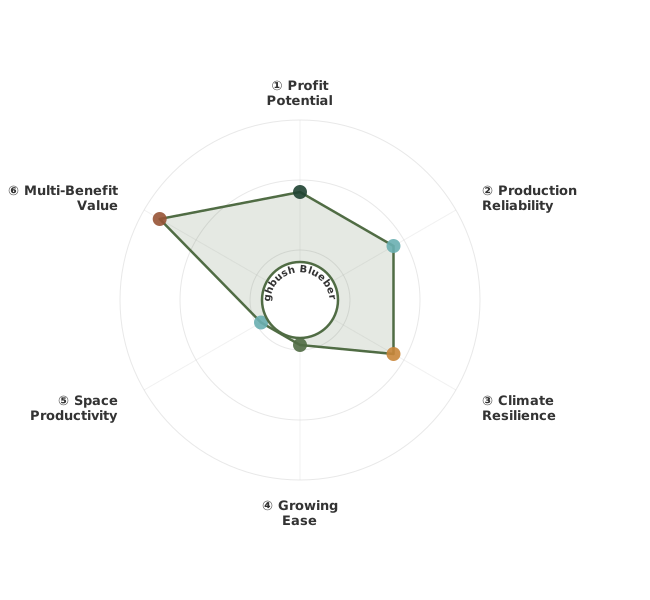
Trait Suitability Explanation
Season Extension Adequate This hardy perennial shrub contributes to extended harvest windows, with its perennial nature ensuring continued fruiting potential year after year.
Space Efficiency Not Recommended As a substantial shrub, highbush blueberries establish a strong perennial presence, best integrated into dedicated zones within a diverse agroecosystem that accommodates their soil and spatial needs.
Storage Longevity Adequate Freshly harvested berries offer a short-term bounty, with quality best preserved for longer durations through methods like freezing or other preservation techniques.
Yield Reliability Adequate This crop offers reliable yields when supported by thriving soil biology and consistent moisture management, though extreme weather events can influence harvest outcomes.
Establishment Ease Not Recommended Establishing highbush blueberries benefits from nurturing soil health and moisture retention, as young plants thrive in living soil rich in organic matter and consistent moisture.
Multi Benefit Value Ideally Suited This plant serves as a valuable food source and habitat for beneficial wildlife, while its presence contributes to ground cover and soil health in an integrated system.
Climate Adaptability Adequate Adapting to a range of climates, this shrub thrives with healthy, acidic soil and consistent moisture management, benefiting from practices that build resilience against heat and drought.
Maintenance Intensity Adequate System integration through consistent mulching and robust soil fertility management supports healthy growth, requiring ongoing observation for beneficial insect activity and natural disease suppression.
Disease Pest Resistance Adequate While possessing moderate resilience, this plant benefits from a biodiverse system that encourages beneficial predators and promotes healthy soil, which are key to mitigating disease and pest pressures.

Comparative System: Ratings compare plants within their economic category (e.g., cover crop nitrogen fixation compared to other cover crops, not to all plants). Individual farm conditions and management practices significantly influence actual performance.

8

Learn More

Why farmers use this plant and additional resources

Why Regenerative Farmers Use This Plant

Vaccinium corymbosum, commonly known as highbush blueberry, is a valuable addition to regenerative agriculture systems, offering significant revenue potential as a high-value specialty cash crop. Its perennial nature and long productive lifespan, often 15-30 years or more, contribute to long-term farm stability and reduce the annual replanting effort common with annual vegetables. With careful management and variety selection, yields can range from 5,000 to 15,000 lbs/acre (5,600 to 16,800 kg/ha) annually for mature plants, with premium varieties fetching higher prices. The market for highbush blueberries is robust, with strong demand in direct-to-consumer channels like farmers' markets and CSA shares, as well as specialty wholesale markets. Their consistent yield and premium pricing make them a cornerstone for diversifying farm income and enhancing profitability.

Integrating highbush blueberries into a regenerative system offers substantial ecological benefits beyond direct crop production. As a perennial, it contributes significantly to soil health by building organic matter through its extensive root system, which can reach depths of 1-4 feet (0.3-1.2 m) over time. This deep root structure improves soil aggregation, water infiltration, and aeration, reducing erosion and enhancing the soil's capacity to store carbon. Blueberries also provide critical habitat and food sources for pollinators and beneficial insects, with studies indicating high visitation rates from bees and other native pollinators, contributing to overall farm biodiversity. Their dense foliage can also offer some weed suppression and act as a living mulch in certain intercropping scenarios, further reducing the need for external inputs.

The ecosystem services provided by blueberry plantings are multifaceted. The flowers are a rich nectar and pollen source, attracting a diverse array of beneficial insects that can help manage pest populations in adjacent crops. The perennial root systems are instrumental in improving soil structure and water holding capacity, leading to enhanced drought resilience and reduced runoff. Over their lifespan, established blueberry bushes sequester significant amounts of carbon in the soil and biomass. Furthermore, their role in supporting pollinator populations is crucial for the health of the broader agricultural landscape, as these pollinators often move between crops, increasing yields and quality in other parts of the farm.

Highbush blueberries have demonstrated success in various regional farm systems. In the Pacific Northwest of the United States, large-scale commercial operations have perfected management techniques for high yields in suitable climates (USDA Zones 7-9). In parts of Europe, such as Poland and Germany, smaller farms are increasingly incorporating them into diversified fruit production. In Australia, while requiring careful site selection due to climate and soil acidity needs, they are grown in cooler, higher rainfall regions like Tasmania and Victoria (Australian Zones 3-4), often integrated into mixed horticultural enterprises. In Canada (Zones 3a-7b), adapted varieties are grown in areas with sufficient winter chill and summer warmth, often with careful site selection to mitigate extreme cold. In the humid subtropical climates of the southeastern United States (USDA Zones 7-9), growers often select low-chill varieties and manage for heat tolerance and disease pressure. In the cooler, maritime climates of the UK and parts of Western Europe (RHS Zones H5-H7), growers may need to protect plants from late frosts and ensure sufficient summer warmth for ripening. In South America, countries like Chile have developed significant export markets by optimizing growing conditions and post-harvest handling.

Sources behind this view

Research
9

How to Integrate This Plant

Practical guidance for regenerative systems

Establishing highbush blueberries requires careful planning and execution, typically starting with dormant, bare-root plants or containerized nursery stock. Seeding is not a practical method for commercial fruit production due to the long time to maturity and genetic variability. Plants are usually spaced 4-6 feet (1.2-1.8 m) apart in rows that are 8-12 feet (2.4-3.6 m) apart, creating a planting density of approximately 800-1,100 plants per acre (1,975-2,718 plants/ha). Planting depth is critical; plants should be set at the same depth or slightly higher than they were in the nursery container, ensuring the crown is not buried, typically with the root flare visible at the soil surface. The ideal planting window is in early spring, typically March through May in the Northern Hemisphere, or September through November in the Southern Hemisphere, to allow roots to establish before extreme temperatures.

Management practices for highbush blueberries focus on creating and maintaining an acidic soil environment (pH 4.5-5.5) and ensuring consistent moisture. This often necessitates amending the soil with sulfur or using raised beds with acidic growing media. Water needs are significant, especially during fruit development, requiring approximately 1-2 inches (2.5-5 cm) of water per week, often supplied through drip irrigation. Fertility management in regenerative systems prioritizes soil health. Incorporating compost, aged manure, and relying on the natural nitrogen-fixing capabilities of companion cover crops, if used in the inter-row, are primary strategies. While blueberries are slow to establish and may take 2-4 years to reach significant production, they can achieve full maturity and yield potential within 5-7 years, with plants reaching a height of 4-7 feet (1.2-2.1 m) at maturity, depending on the variety. Pest and disease management prioritizes preventative cultural practices: ensuring good air circulation, proper pruning, selecting resistant varieties, and fostering beneficial insect populations. Vigilant monitoring for issues like mummy berry, spotted wing drosophila, and fungal diseases is essential.

The production cycle for highbush blueberries is perennial, with plants requiring several years to reach full commercial production. Established bushes typically begin bearing fruit in their third or fourth year after planting, with peak yields occurring from year five onwards, continuing for 15-30 years or more. Succession planting is not applicable in the traditional annual vegetable sense; instead, growers focus on selecting varieties with staggered ripening times to extend the harvest season, which can typically run from late May through August in many temperate regions. For example, early-season varieties like 'Duke' might be planted alongside mid-season 'Bluecrop' and late-season 'Elliott' to provide a staggered harvest. Following the final harvest in late summer, it is crucial to manage the soil. A cover crop mix of perennial ryegrass and crimson clover can be sown in the inter-rows to protect soil structure, scavenge any available nutrients, and add organic matter. This mix can be managed through mowing or grazing until the blueberry plants require the space and light for their spring growth. Before establishing a new blueberry planting, consider a 2-3 year rotation with crops like buckwheat, rye, or clover to improve soil structure and organic matter. Crop rotation intervals for blueberries are very long, as they are perennial; however, the land should not be replanted with blueberries for at least 3-5 years after removal to prevent soil-borne disease buildup. Post-harvest residue management involves allowing pruned branches and any fallen leaves to decompose naturally or incorporating them into the soil surface, followed by a winter cover crop mix of cereal rye and hairy vetch within 2-3 weeks of final harvest to protect and enrich the soil.

View Full Document (Printable single-page version)