
Ginger
While Zingiber officinale (ginger) is primarily cultivated as a high-value specialty crop, research indicates its potential integration into regenerative agricultural systems. Studies show ginger can serve as a valuable rotation crop, offering an alternative to tomatoes susceptible to disease from monoculture, thereby supporting crop diversity and breaking pest cycles. Intercropping ginger with other plants, such as chrysanthemum, has demonstrated significant benefits, reducing disease severity and increasing biomass, likely through the enhancement of beneficial soil microbes like Burkholderia species. This suggests ginger can contribute to a more resilient rhizo-microbiome. Furthermore, applications of organic fertilizers have been shown to improve ginger yield and rhizome quality, while also enhancing soil properties and facilitating the translocation of heavy metals from edible parts to foliage, a key aspect of soil health management. Research also explores the impact of amendments like biochar and poultry manure on ginger performance, highlighting ginger's role in systems that aim to improve soil health and fertility.
For a full botanical description see: Plants For A Future(opens in new window) (external link)
Regenerative Quick Profile
All recommendations assume integrated, regenerative practices—not conventional inputs.
Climate & Soil Fit
Climate: Tropical Rainforest, Tropical Monsoon, Tropical Savanna, Hot Semi-Arid (Steppe), Cold Semi-Arid (Steppe), Hot Desert, Cold Desert, Humid Subtropical, Oceanic (Maritime Temperate), Hot-Summer Mediterranean, Warm-Summer Mediterranean, Monsoon-Influenced Humid Subtropical, Subtropical Highland, Hot-Summer Continental, Warm-Summer Continental, Subarctic, Monsoon-Influenced Hot-Summer Continental, Tundra
Zones: USDA 9-11, Australian Zones 11-14, EU Mediterranean, Subtropical
Optimal Soil: Loam Soil
System Role & Functions
Primary: Cash Crop With Services
Secondary: Cover Crop System, Specialty
Key Benefits: Storage Longevity
Management Level
Experience: Advanced
Maintenance: High maintenance - Maintaining optimal conditions for ginger involves ensuring rich soil fertility through compost and mulch, consistent moisture retention, and protection from temperature extremes.
Value Streams
- Vegetable/specialty crop harvest
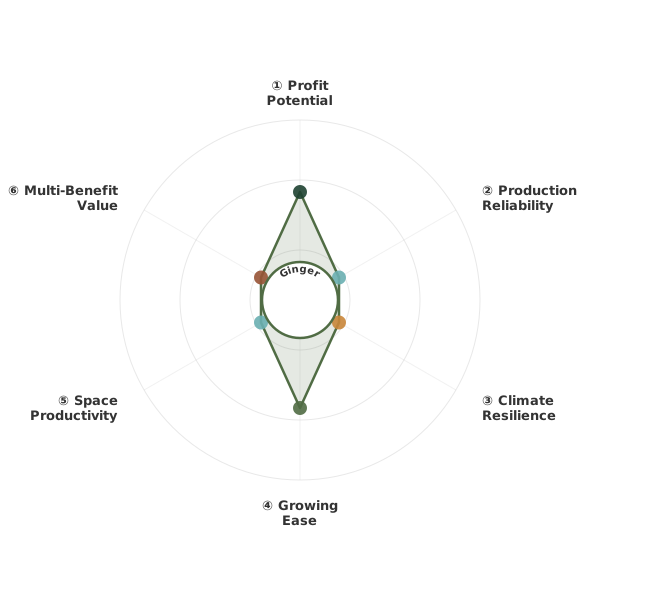
How These Traits Are Calculated
Trait dimensions are ordered clockwise starting from the top of the chart (12 o'clock position):
1. Profit Potential
Net returns per acre from yield, pricing, input costs, and labor efficiency
WHAT: Synthesizes gross revenue potential, input costs, labor requirements, and storage/marketing advantages into net profitability per acre. Captures the complete economic picture from planting to sale.
WHY: Not all vegetables are equally profitable. High-value crops with efficient production can return $10,000-30,000/acre versus $2,000-5,000/acre for lower-value options. Profit potential guides crop selection for maximum return on limited land and determines viable scale for farm businesses.
HOW: Scored via LLM synthesis of economics data (yields, prices, costs), storage advantages (season extension, value-added potential), and labor intensity. Exceptional (3.0): High yields × premium prices with moderate inputs and good storage (garlic, high-value salad greens). Typical (2.0): Moderate returns (tomatoes, squash). Limited (1.0): Low yields, commodity pricing, or intensive labor requirements (low-value greens).
2. Production Reliability
Weighted: yield consistency (60%) + disease/pest resistance (40%)
WHAT: Combines yield reliability (harvest consistency year-to-year) with disease and pest resistance to measure predictable production. Reliable vegetables deliver consistent harvests without catastrophic failures from pests or weather.
WHY: Market commitments and CSA subscriptions require dependable production. Unreliable crops that fail in bad years or require intensive pest management create cash flow gaps and customer dissatisfaction. Reliable producers allow confident planning and reduce input costs from emergency pest interventions.
HOW: Weighted formula prioritizes yield reliability (60% weight) for overall consistency, with disease/pest resistance (40% weight) to prevent total failures. Exceptional (3.0): Consistent yields across variable seasons with strong natural pest resistance. Typical (2.0): Generally reliable with some pest/weather sensitivity. Limited (1.0): Highly variable yields or severe pest vulnerability requiring intensive management.
3. Climate Resilience
Temperature and rainfall tolerance across diverse growing conditions
WHAT: Measures the breadth of climatic conditions where the vegetable produces successfully—temperature extremes, humidity ranges, and rainfall variability. Climate-resilient crops work across diverse regions and weather patterns.
WHY: Climate variability is increasing—unexpected heat waves, cold snaps, or drought periods can wipe out entire vegetable harvests. Resilient crops provide insurance against weather uncertainty and allow geographic expansion for market growth. This is especially critical for direct-market farmers who can't easily substitute crops mid-season.
HOW: Ratings based on the climate_adaptability trait documenting temperature tolerance and geographic range. Exceptional (3.0): Grows successfully in diverse climates (cold to hot, humid to dry) with wide hardiness zone range. Typical (2.0): Moderate climate flexibility. Limited (1.0): Narrow climate requirements (tropical-only, cool-season-only, humidity-sensitive).
4. Growing Ease
Weighted: establishment ease (50%) + low maintenance requirements (50%)
WHAT: Combines establishment difficulty (germination, transplanting) with ongoing maintenance needs (watering, fertilizing, pest management) to measure total labor requirements. Easy crops grow reliably with minimal intervention.
WHY: Labor is the primary cost for small-scale vegetable production. Easy-care crops allow farmers to manage more production area with the same labor, improving profitability. Difficult crops requiring constant attention, precise timing, or specialized skills reduce overall farm productivity and increase risk.
HOW: Weighted formula balances establishment ease (50% weight) for reliable startup and inverted maintenance intensity (50% weight) for ongoing care. Exceptional (3.0): Direct-seeded or easy transplants with minimal water/fertility/pest needs. Typical (2.0): Moderate care requirements. Limited (1.0): Difficult establishment or intensive ongoing management (daily watering, heavy feeding, constant pest monitoring).
5. Space Productivity
Weighted: yield per square foot (60%) + season extension potential (40%)
WHAT: Combines spatial productivity (yield per square foot) with temporal productivity (extended harvest windows from succession planting or season extension). Maximizes production from limited growing area.
WHY: Land is the primary constraint for vegetable farmers—especially those near urban markets. Space-efficient crops delivering high yields in small areas improve per-acre profitability dramatically. Season extension (spring tunnels, fall protection) adds bonus production windows when competing supply is limited and prices are higher.
HOW: Weighted formula prioritizes space efficiency (60% weight) for core yield per area, with season extension potential (40% weight) for bonus production opportunities. Exceptional (3.0): High yields per square foot (10,000+ lbs/acre equivalents) with season extension options. Typical (2.0): Moderate yields and extension potential. Limited (1.0): Low yields or crops unsuitable for season extension.
6. Multi-Benefit Value
Ecosystem services beyond harvest—pollinator support, nitrogen fixing, pest habitat
WHAT: Measures ecosystem services provided beyond harvestable yield. Multi-benefit vegetables contribute to farm ecology through nitrogen fixation (legumes), pollinator support (flowering crops), beneficial insect habitat, soil building, or erosion control.
WHY: Cash crops can either extract from farm ecosystems or contribute to them. Vegetables with strong multi-benefit value build soil fertility, support pollinators needed for fruit/vine crops, and create habitat for pest predators—reducing external input needs. Nitrogen-fixing vegetables (beans, peas) provide $40-80/acre worth of fertility for following crops.
HOW: Ratings based on the multi_benefit_value trait documenting service contributions. Exceptional (3.0): Significant ecosystem services (nitrogen fixation, heavy pollinator support, soil building, pest habitat). Typical (2.0): Some ecosystem contributions. Limited (1.0): Single-purpose cash crops with minimal farm ecology benefits.
Ratings are based on documented performance in regenerative systems, not conventional high-input scenarios. All traits assume integrated management practices focused on soil health and ecosystem services.
5
Management & Care Requirements
Integration guidance, maintenance needs, and care practices
Management & Care Requirements
Integration guidance, maintenance needs, and care practices
How to Integrate This Plant
Ginger (Zingiber officinale), a non-tree cash crop, can be integrated into regenerative systems primarily as a high-value specialty crop, offering rotation benefits with other vegetables like tomatoes to disrupt disease cycles (Excerpt 1). Its cultivation fits well within intensive annual systems or potentially as an understory component in established food forests or agroforestry systems where microclimate conditions are suitable. Compatible practices include alley cropping, where ginger could be interplanted between rows of trees or perennial crops, and potentially as part of a diverse market garden. Ginger's primary contribution is its direct harvest value, but it also supports soil health through its root exudates, which can promote beneficial microbes like Burkholderia species (Excerpt 3). These microbes are associated with disease resistance, enhancing the resilience of companion plants and the overall soil microbiome. By diversifying income streams and potentially improving soil biological activity, ginger contributes to multi-benefit stacking. Its value begins in Year 1 with rhizome establishment and harvest, with potential for improved soil function in subsequent years.
Integration Practices & Management
Regenerative farmers integrate *Zingiber officinale* (ginger) primarily as a specialty cash crop, emphasizing its role in crop rotation and soil health. Research indicates ginger can be a valuable alternative to crops like tomatoes, helping to break disease cycles when grown in the same location repeatedly. Establishment in regions with unsuitable climates requires starting ginger indoors in late winter (February-March) using certified rhizome sets, to be transplanted into containers or beds. While specific no-till or minimal tillage integration with ginger isn't detailed in the provided sources, its potential for crop rotation suggests it can fit into diverse systems. Intercropping ginger with other crops, such as chrysanthemum, has shown benefits, including reduced disease severity and increased biomass, attributed to the influence of the ginger's rhizo-microbiome. Ginger root exudates have been observed to promote beneficial bacteria like *Burkholderia*, suggesting a positive interaction with soil microbial communities. Management considerations include fertility needs, as amendments like biochar and poultry manure have demonstrated improvements in soil properties and ginger yield. Competition management would be crucial, particularly in intercropping scenarios. The knowledge base does not detail integration with grazing, termination strategies, or specific succession planning beyond its role in rotation.
Management Profile
Maintenance Intensity: Not Recommended - Maintaining optimal conditions for ginger involves ensuring rich soil fertility through compost and mulch, consistent moisture retention, and protection from temperature extremes.
Sources behind this view
 Community
-
Seeks permaculture cultivation tips for Ruhi ginger in Zone 5a, exploring forest soil and hay for hilling as alternatives to commercial soil amendments and soil, with a focus on increasing beneficial
Read more (opens in new window) permies.com
 Research
-
Effect of Various Organic Amendments on Growth of Ginger (Zingiber officinale Rosc.) under Coconut Cropping System (opens in new window)
Chicken manure + beneficial microbes best improved ginger growth under coconut trees, increasing plant height, leaf count, and stems over other organic amendments.
-
Impact of Organic Additives on Soil Organic Carbon and Enzyme Activities in Intensive Ginger Agro-ecosystems (opens in new window)
In India, ginger farmers using high organic matter and high synthetic fertilizers had higher soil carbon. Organic additions boost soil carbon and soil life in intensive ginger systems.
6
Economics & Value Streams
Direct harvest, system benefits, ecosystem services, and risk diversification
Economics & Value Streams
Direct harvest, system benefits, ecosystem services, and risk diversification
Comprehensive economic analysis including direct harvest value, system enhancement contributions, ecosystem services, value timeline, and risk diversification strategies.
Vegetable & Specialty Economics
| Metric | Value |
|---|---|
| Seed/Transplant Cost | 500-1000 $/acre 1235-2471 $/ha |
| Expected Yield | 5000-10000 lbs/acre 5604-11208 kg/ha |
| Market Price | 1.00-2.00 $/lb 2-4 $/kg |
| Harvest/Handling Cost | 800-1600 $/acre 1976-3953 $/ha |
| Marketing/Distribution Cost | 400-800 $/acre 988-1976 $/ha |
| Net Annual Return* | $1600-$18300/acre/year |
Economics highly variable by market channel (direct vs wholesale), scale, and management. Direct marketing commands premiums but requires labor. Values shown for mid-scale market garden operations.
* Net Annual Return = (Yield × Market Price) − (Amortized Establishment Cost + Annual Maintenance). This return is realized only at/after first harvest; early years have costs but no revenue. Range shows worst case to best case scenarios.
System Enhancement Value
Beyond harvest: ecosystem services from regenerative cash crop practices
Ecological Service Contributions
Ginger (Zingiber officinale) demonstrates significant potential for enhancing farm systems through its role in disease suppression and microbiome modulation, particularly when intercropped. Research indicates that intercropping ginger with susceptible crops like chrysanthemum can significantly reduce disease severity, such as Fusarium wilt, and increase plant biomass compared to monoculture systems. This benefit is attributed to the modulation of the rhizosphere microbiome, specifically the enrichment of beneficial bacteria like Burkholderia species. Ginger root exudates are shown to promote the proliferation and colonization of these disease-resistance-associated microbes in the rhizosphere of neighboring plants. Furthermore, ginger's own metabolic profile, including compounds like sinapyl alcohol and 6-gingerol, plays a role in this beneficial interaction. This suggests ginger can act as a bio-control agent, contributing to a healthier and more resilient farm ecosystem by reducing the need for chemical interventions and improving overall plant health. The ability of ginger to positively influence soil microbial communities points to its value in building soil health and promoting a more robust agricultural environment.
Ecosystem Service Contributions
Environmental contributions: carbon, pollinators, wildlife, and water
- Carbon Sequestration: Ginger, as a herbaceous perennial, contributes to soil organic matter through root and rhizome decomposition, thereby sequestering carbon. Its growth cycle and biomass production add organic material to the soil, enhancing its carbon storage capacity over time. The extent of sequestration is dependent on cultivation practices and soil health.
- Pollinator Support: Low. While ginger flowers, its primary agricultural value is not as a significant pollinator attractant. Its contribution to pollinator support is minimal compared to dedicated flowering crops or hedgerows.
- Wildlife Habitat: Minimal. As a cultivated crop, ginger does not typically provide significant mast, nesting, or browse for wildlife. Its value in this regard is incidental to its cultivation and not a primary ecosystem service.
- Water Quality: Not applicable
Value Timeline: Production & Services
When you'll see results: varies by crop (annual harvest vs. perennial establishment)
Years 1-2
Initial establishment of ginger plants, potential for early 'baby ginger' harvest (4 months), and the beginning of soil health benefits through rhizome development and root exudates. Early indications of microbiome modulation when intercropped.
Years 3-5
Mature ginger plants providing full rhizome yield, established soil health benefits, and more pronounced microbiome modulation effects in intercropped systems. Continued contribution to soil organic matter. Potential for early overwintering success in suitable climates.
Years 10-20
Sustained high-value harvest of ginger rhizomes. Deepened soil health improvements and robust microbiome enhancement from established ginger stands or rotations. Potential for increased resilience in intercropped systems against soil-borne diseases.
20+ Years
Long-term contribution to soil organic matter and soil structure. If managed as a perennial or in extended rotations, ginger can contribute to sustained soil health and a reduced need for external inputs in the overall farm system.
Farm Risk Reduction
How this reduces farm risk: backup income, weather protection, market hedges
- Multiple Revenue Streams: Direct harvest revenue from ginger rhizomes (fresh or processed), potential revenue from 'baby ginger'. Indirect benefits include reduced disease pressure in associated crops, potentially leading to higher yields and lower input costs for those crops.
- Temporal Income Spread: Ginger offers a relatively short harvest window for 'baby ginger' (4 months) and a longer window for mature rhizomes (typically November). Its value as a specialty crop can be realized annually, while its soil health benefits are ongoing.
- Market Risk Hedge: Ginger's status as a high-value specialty crop provides a market hedge against volatile commodity prices. Its ability to improve soil health and suppress diseases in intercropped systems can reduce reliance on costly inputs and mitigate risks associated with crop failure due to disease.
Sources behind this view
 Videos & Podcasts
-
Ginger cultivation is highly profitable for market gardeners. Use certified organic seed ginger, sprout in flats, and transplant to warm, fertile, moist soil (ideally in a hothouse or low tunnel) arou
-
Ginger is a valuable cash crop, selling for $8-10/lb fresh. The entire plant is usable. Harvest in late October, overwinter potted plants for spring sale, and store fresh ginger for six months in a co
-
Market gardeners should grow ginger for high profit per square foot, even in cooler climates like northern Quebec. Key to success are proper greenhouse planting, watering, and fertilization, followed
-
Details growing ginger and turmeric in tunnels, achieving good yields. Discusses value-added products like frozen ginger, ginger tea, fire cider, and capsules. Value-added processing offers optionalit

Research
-
Influence of Mother Rhizome Retrieval and Organic Treatment of the Retrieved Plants on Economic Yield of Ginger at Salyan, Nepal (opens in new window)
In Nepal, vermicompost significantly boosted ginger yields (22.8 mt/ha vs 15.5 mt/ha), reduced disease, and improved profitability (BCR 1.74 vs 1.32) compared to control.
8
Learn More
Why farmers use this plant and additional resources
Learn More
Why farmers use this plant and additional resources
Why Regenerative Farmers Use This Plant
Zingiber officinale, commonly known as ginger, represents a compelling opportunity for regenerative farmers seeking high-value specialty cash crops. Its cultivation can yield significant revenue per acre, particularly when targeting direct-to-consumer markets, CSAs, or specialty wholesale channels. A typical harvest can yield between 5,000-25,000 lbs/acre (5,600-28,000 kg/ha), depending on variety, soil fertility, and management practices, translating to substantial revenue per acre. The plant's relatively short growing season, often ranging from 8 to 10 months from planting to harvest, allows for efficient land use and potential for succession planting in warmer climates or through greenhouse propagation. This rapid turnaround contributes to diversified farm income streams, offering a consistent cash flow throughout the year if managed strategically. The demand for fresh, locally grown ginger is consistently strong, driven by its culinary, medicinal, and health-conscious applications, making it a resilient component of a diversified farm economy.
Integrating ginger into regenerative systems offers substantial benefits beyond direct market revenue. While not a nitrogen fixer, its deep root system (typically 1-2 feet or 30-60 cm) can help break up soil compaction and improve aeration, especially in perennial systems or after intensive cash cropping. Its vigorous growth can also contribute to significant biomass production, which, when managed appropriately, enhances soil organic matter upon decomposition. The dense foliage canopy provides excellent ground cover, suppressing weeds and reducing soil erosion during its growth cycle. Ginger's intensive nutrient requirements mean it can effectively scavenge residual nutrients from previous crops or compost applications, making efficient use of on-farm fertility. Furthermore, its inclusion can complement other crops by occupying a different niche in terms of nutrient uptake and growth habits. Ginger's presence in a diversified system can also support a wider array of beneficial soil microbes and arthropods that contribute to natural pest and disease regulation.
The quantitative ecosystem benefits of ginger cultivation, while not as extensively documented as for cover crops, are tied to its role in a diverse agricultural landscape. By promoting healthy soil structure through its root activity, ginger can contribute to improved water infiltration and reduced erosion, particularly when grown on contour or with appropriate soil management practices. By encouraging healthy soil biology through organic matter inputs and reduced disturbance, ginger cultivation can enhance water infiltration and retention. While specific data on carbon sequestration for ginger is limited, healthy soil ecosystems fostered by its cultivation contribute to long-term soil carbon storage. The focus on organic fertility and biological pest management further minimizes off-farm inputs and supports a thriving soil food web, leading to a more resilient and self-sustaining agricultural system. By reducing reliance on synthetic inputs through integrated pest management and soil health practices, ginger production aligns with the principles of ecological farming, fostering a more sustainable and resilient agricultural environment.
Ginger has found success in various regional farm systems globally. In the humid subtropical regions of Southeast Asia, it has been a staple crop for centuries, often grown in rotation with rice or other vegetables. In the Caribbean, particularly Jamaica, ginger is a well-established cash crop, often cultivated on smallholder farms and contributing significantly to local economies. In parts of Latin America, such as Brazil and Peru, it's grown in agroforestry systems or as a primary cash crop in regions with suitable microclimates. In the United States, its cultivation is primarily concentrated in Florida and Hawaii, where the warm climate is ideal. In Australia, it can be grown in frost-free coastal areas, often with irrigation, as a specialty crop. In cooler regions, protected cultivation techniques such as raised beds covered with plastic sheeting or greenhouse production can extend the growing season and enable successful cultivation, allowing farmers in USDA Zones 7-8 to access this high-value crop. In India's tropical and subtropical zones, ginger is a traditional crop often intercropped with other species or grown in rotation with rice paddies after they have been drained and prepared. In New Zealand's temperate regions, ginger is often grown in protected environments like greenhouses or polytunnels.
Sources behind this view
Research
-
Metabolome-driven microbiome assembly in ginger (Zingiber officinale) enhances nutrient cycling and crop yield through keystone taxa. (opens in new window)
Ginger's plant compounds shape beneficial root microbes, enhancing nutrient cycling and yield. High-yield varieties have complex microbe networks and specific compounds linked to nitrogen-fixing and g
-
Efficacy and economics evaluation of seed rhizome treatment combined with preplant soil fumigation on ginger soilborne disease, plant growth, and yield promotion (opens in new window)
Treating ginger rhizomes with specific methods, combined with soil fumigation, significantly reduced soil diseases, increased yields by an average of 12%, and boosted profits by nearly 20% while being
-
Effects of Tissue Culture and Mycorrhiza Applications in Organic Farming on Concentrations of Phytochemicals and Antioxidant Capacities in Ginger (
<i>Zingiber officinale</i>
Roscoe) Rhizomes and Leaves (opens in new window)
Organic ginger grown with tissue culture and mycorrhizae showed significantly higher levels of antioxidants and health-boosting compounds compared to conventional ginger.
-
Effects of Organic Agricultural Materials and Cultivation Methods on the Control of Ginger Rhizome Rot Disease and Growth in Organic Ginger Farming (opens in new window)
Organic treatments, including beneficial bacteria and microalgae, improved ginger growth and reduced disease. Raised beds also enhanced yields and lowered infection rates.